Osaka in 3 Days: Dotonbori and Osaka Castle

Dotonbori · Osaka Castle · Keitakuen Garden · Shinsekai District · Umeda Sky Building · Osaka Museum of Housing and Living
3-day Osaka itinerary. Day-by-day route, attractions and food.
Osaka centers on aggressive hospitality and chaotic street food, unlike the curated, quiet temple-hopping required in Kyoto. Where Kyoto demands silence and reverence, Osaka asks you to eat until you drop in Dotonbori. This itinerary prioritizes the sensory overload of neon signs and deep-fried skewers over the manicured Zen gardens found elsewhere in Kansai. This trip is built for travelers who prefer messy, late-night energy and famous street food over the serene, often restrictive formality of temple culture.

Kuromon Ichiba Market
Day 1 · Street Food and Markets
Osaka Castle
Day 2 · Historic Sites

Umeda Sky Building
Day 3 · Panoramic Viewpoints
Pick travel dates to see the weather for your month.
Osaka is most comfortable during the mild spring and crisp autumn, when clear skies make for ideal walking weather. Summer months turn sweltering and frequently wet, while winter stays cool and dry, requiring a sturdy coat for long days spent outdoors.
Best time to go: Spring and autumn
The whole year
| Month | High | Low | Rainy days | Sunrise – sunset |
|---|---|---|---|---|
| Jan | 50°F / 10°C | 36°F / 2°C (cold) | 4 | 7:05 AM – 5:09 PM |
| Feb | 52°F / 11°C | 37°F / 3°C (cold) | 6 | 6:44 AM – 5:40 PM |
| Mar | 60°F / 16°C | 43°F / 6°C (cold) | 8 | 6:09 AM – 6:05 PM |
| Apr | 70°F / 21°C | 51°F / 11°C | 8 | 5:27 AM – 6:29 PM |
| May | 79°F / 26°C | 60°F / 16°C | 7 | 4:55 AM – 6:53 PM |
| Jun | 84°F / 29°C | 68°F / 20°C | 10 | 4:44 AM – 7:12 PM |
| Jul | 90°F / 32°C (hot) | 76°F / 25°C | 14 | 4:56 AM – 7:11 PM |
| Aug | 93°F / 34°C (hot) | 78°F / 26°C | 11 | 5:18 AM – 6:46 PM |
| Sep | 85°F / 30°C (hot) | 71°F / 22°C | 12 | 5:40 AM – 6:05 PM |
| Oct | 76°F / 24°C | 60°F / 16°C | 8 | 6:03 AM – 5:23 PM |
| Nov | 66°F / 19°C | 50°F / 10°C | 7 | 6:31 AM – 4:53 PM |
| Dec | 55°F / 13°C | 40°F / 5°C (cold) | 6 | 6:57 AM – 4:48 PM |
- Morning
8:30 AM - Arrive at Kansai International Airport (KIX)· 2 hrs
USD 8 (~JPY 1,266) Fotointheworld (CC BY 4.0)
After landing, take the Nankai Airport Express train to Namba Station (approx 45 min, $8). Check in to your hotel near Namba to drop off bags before heading out.
- Afternoon
12:00 PM - Lunch: Takoyaki in Dotonbori· 1 hr
USD 7 (~JPY 1,108)Iconic dish heiwa4126 (CC BY 2.0)
Head to the Dotonbori canal area to grab fresh octopus-filled takoyaki balls. The exterior is crisp while the center is molten; watch the cook use a pick to flip them in the molded iron pan.
Often found around DotonboriTypical USD 3-7 (~JPY 475-1,108)
- Evening
7:30 PM - Dinner: Yakiniku in Tsuruhashi· 1 hr 30 min
USD 45 (~JPY 7,121)Try the dish Jonathan Lin (CC BY-SA 2.0)
Travel to the Tsuruhashi district, famous for its dense concentration of yakiniku joints. Grill your own seasoned beef on a charcoal table in this neighborhood with deep Korean-Japanese heritage.
Often found around TsuruhashiTypical USD 20-50 (~JPY 3,165-7,912)
Where to Stay Tonight
Namba
· Namba serves as the central transit hub and is walkable to the city's best food districts, making it the most convenient base for a solo traveler.- Morning
- Afternoon
1:00 PM - Lunch: Oshizushi in Shinsaibashi· 1 hr
USD 15 (~JPY 2,374)Try the dish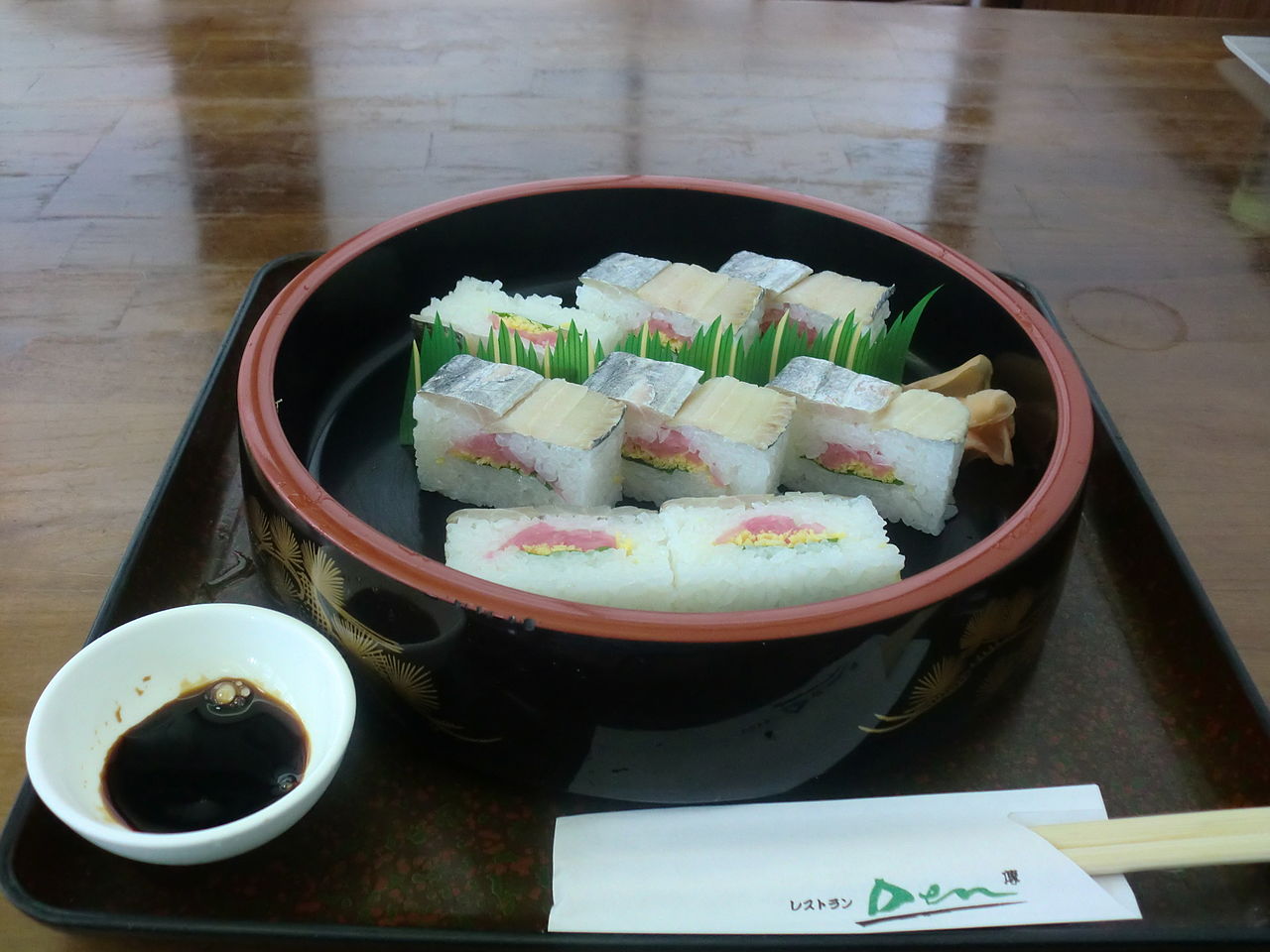 hyolee2 (CC BY-SA 3.0)
Experience the traditional Osaka-style pressed sushi, characterized by its square-cut shape and cured fish toppings.
Often found around ShinsaibashiTypical USD 8-20 (~JPY 1,266-3,165)
- Evening
7:30 PM - Dinner: Okonomiyaki in Sennichimae· 1 hr
USD 12 (~JPY 1,899)Try the dish ume-y (CC BY 2.0)
Enjoy a hearty, savory pancake cooked on a griddle with cabbage, pork, and specialized sauces in a lively district.
Often found around SennichimaeTypical USD 7-12 (~JPY 1,108-1,899)
Staying at Namba since Day 1
- Morning
- Afternoon
12:00 PM - Lunch: Kitsune Udon in Umeda· 1 hr
USD 9 (~JPY 1,424)Try the dish MemColorLab (CC BY-SA 4.0)
Enjoy a comforting bowl of thick noodles with sweet deep-fried tofu, a classic regional dish.
Often found around MinamiTypical USD 5-10 (~JPY 791-1,582)
3:30 PM - Hotel Checkout & Luggage Collection· 30 min
FREEReturn to your hotel in Namba to settle your account and gather your belongings for the flight home.
- 3C
4:00 PM - Depart from Kansai International Airport (KIX)· 5 hrs
USD 30 (~JPY 4,748)Final transfer to the airport for your 9:00 PM international departure. Budget 3 hours for security and check-in.
Google Maps
Like this plan? Make it yours
Same destination, your dates, group, and pace. Generated free in about a minute.
Customize this tripFreeFood, shopping & festivals
Top 5 dishes to try
Tap any photo for more photos, the story, and where to find it.

Takoyaki
Day 1 · lunch

Kitsune Udon
Day 3 · lunch

Okonomiyaki
Day 2 · dinner
Oshizushi
Day 2 · lunch

Yakiniku
Day 1 · dinner
Where to eat · Dotonbori, Shinsekai, Tsuruhashi
- Dotonbori · Osaka — The neon-lit heart of Osaka street food; famous for takoyaki stands and late-night izakayas.
- Shinsekai · Osaka — Retro atmosphere focused on kushikatsu, which is deep-fried meat and vegetable skewers.
- Tsuruhashi · Osaka — The city center for Korean food in Japan; densely packed with yakiniku restaurants and kimchi stalls.
Good to know · meal times, tipping, water, vegetarian, payment, etiquette
- Meal times
- Lunch is typically 12 PM to 2 PM. Dinner starts around 6 PM, with many kitchens closing by 10 PM. Check late-night spots if you eat after 11 PM.
- Tipping
- No tipping in Japan. The price on the menu is exactly what you pay, tax included.
- Water
- Tap water is safe and clean throughout the city. Most restaurants will provide free iced water or green tea upon seating.
- Vegetarian
- Dashi, a fish-based broth, is in almost everything including noodle soups and sauces. Vegetarians must ask specifically for no fish stock, though options remain limited.
- Payment
- Carry cash. While large restaurants and department stores accept cards, many authentic hole-in-the-wall shops and street stalls operate on a cash-only basis.
- Etiquette
- Do not tip; it is not expected and can confuse staff. When eating at a counter, keep your area tidy and place your tray back on the counter when done.
Top 6 souvenirs
Tap any photo for more photos, the story, and where to find it.

Dried Konbu (kelp)

Plastic food samples (Sanpuru)

Sakai kitchen knives

Tenugui hand towels

Vintage denim
Stationery
Japanese paper, planners, and pens that turn daily note-taking into a precision craft.
Where to shop · Kuromon Ichiba, Nakazakicho, Amerikamura
- Kuromon Ichiba · Osaka — High-end dried ingredients, tea, and regional snacks.
- Nakazakicho · Osaka — Artisan crafts, vintage accessories, and handmade textiles.
- Amerikamura · Osaka — Vintage denim, streetwear, and curated secondhand fashion.
Good to know · customs, tax refund, payment, bargaining
- Customs
- Japan restricts taking raw meat or soil-heavy plants out of the country. Check your home nation for agricultural import restrictions before packing large food items.
- Tax refund
- Tourists can get tax-free shopping on purchases over 5,000 JPY. Bring your passport to the store checkout to handle the deduction immediately.
- Payment
- Cash is standard at market stalls, while major retail stores and department stores accept credit cards.
- Bargaining
- Prices are strictly fixed in all shops and markets. Haggling is considered rude and will not be successful.
The big events across the year
Tap any photo for more photos and the story.
Shogatsu (Japanese New Year)
Jan 1 – 3
Japan's biggest and most important holiday — the entire country shuts down Dec 31-Jan 3. Businesses, most restaurants, and even convenience stores reduce hours. Shinto shrines host millions for hatsumōde (first shrine visit of the year) — Meiji Shrine in Tokyo gets 3 million visitors in 3 days. NHK's Kouhaku Uta Gassen music show is a national tradition. Traditional osechi ryōri bento boxes prepared in advance.

Cherry Blossom Season
Mar 25 – Apr 7

Golden Week
Apr 29 – May 5
Tenjin Matsuri
Jul 24 – 25
One of Japan's three great festivals, held at Osaka Tenmangu shrine on July 24-25. The second day features a river procession (funatogyo) of 100+ illuminated boats carrying shrine officials and performers along the Okawa River, followed by a fireworks display of 3,000 shells visible across Osaka. Draws over 1.3 million visitors across the two days.

Obon Festival
Aug 13 – 16
Costs
Estimated total · For 2 travelers · 1 room · 3 days
USD 1,028Flights from your city not included.
Getting there and betweenUSD 0
AccommodationUSD 360
- Osaka · 2 nights1 roomUSD 360
| City | Simple | Comfortable | Upscale |
|---|---|---|---|
| Osaka | USD 120 | USD 180 | USD 240 |
ActivitiesUSD 110
- Day 1 · Arrive at Kansai International Airport (KIX)USD 16
- Day 1 · Kuromon Ichiba MarketUSD 40
- Day 2 · Osaka CastleUSD 12
- Day 2 · Keitakuen GardenUSD 4
- Day 3 · Umeda Sky BuildingUSD 30
- Day 3 · Osaka Museum of Housing and LivingUSD 8
FoodUSD 450
- Osaka · 3 daysUSD 450
Local transportUSD 108
- Osaka · 3 daysUSD 108
Not included: visas, travel insurance, SIM cards, tips, shopping.
Money tips
Moderate overall -- expect $100/night for mid-range hotels and $5-15 for high-quality casual meals. Tap water is safe; use Seven Bank ATMs for fee-free cash withdrawals if you run low.
Load a digital Suica or Pasmo card into your phone wallet before departure to tap through subway gates instantly. This saves you from hunting for fare charts at every station.
Dedicate one evening to an omakase dinner in the Kitashinchi district, where $100-150 covers an exceptional multi-course meal. Book these counters at least 14 days in advance as seats fill fast.
Avoid the premium markups in the heart of Dotonbori; walk five minutes south to the Sennichimae side streets for equally fresh takoyaki at lower prices. A 7-Eleven egg salad sandwich is the gold standard for a quick, cheap breakfast on the go.
Grab the 1-day Osaka Amazing Pass for 3,300 JPY if you plan on visiting the Umeda Sky Building or Osaka Castle. It bundles entry fees with unlimited metro access, which is worth the cost if you hit at least three major sites.
Before you go
Travel and stays
Round-trip flight, Kansai International Airport (KIX)
Day 1–3
Hotel in Osaka
Nights 1–2 · Namba · about USD 360 · Comfortable hotel range
Book ahead · most urgent first
Dinner reservation at Dotonbori Michelin or high-end restaurant
Day 1 · Book 2 months ahead · Peak-season Michelin-starred or high-end kaiseki restaurants in Namba/Dotonbori fill up very quickly and often require credit card guarantees.
Klook Osaka Amazing Pass
Day 1 · Book 7 days ahead · Purchase this digital pass online to cover entry for Osaka Castle and Umeda Sky Building, plus local transport. It is highly efficient for a 3-day trip.
eSIM setup (Airalo or Ubigi)
Day 1 · Book 7 days ahead · Ensure your phone is eSim compatible and purchase your data plan in advance to avoid roaming scams or connectivity issues upon landing at KIX.
Umeda Sky Building Observatory
Day 3 · Book 7 days ahead · Sunset slots are popular and often sell out; booking via their website or as part of a city pass ensures entry at your desired time.
Osaka Castle main tower admission
Day 2 · Book 2 days ahead · While you can buy at the door, pre-purchasing tickets via the official website or a pass avoids long queues at the ticket office during peak hours.
Travel tips
Pre-load a Suica or Pasmo card to your digital wallet (Apple/Google Pay) before arrival to tap through all Tokyo trains and buses.
Withdraw cash at 7-Eleven or Japan Post ATMs inside Lawson stores; they accept foreign cards 24/7, while bank ATMs often close at night.
Avoid the Yamanote line during rush hour (7:30-9:30am) — it is dangerously packed; if you must travel, try to wait until 10am.
Carry a small plastic bag for your trash; public waste bins were removed years ago, so you must carry everything back to your hotel.
Set your phone to silent mode ('manner mode') on all trains; talking on the phone in carriages is considered disrespectful.
Book Ghibli Museum tickets precisely one month in advance on the 10th at 10am JST; they sell out within 15 minutes.
At Shibuya Station, use the Hachiko exit to reach the scramble crosswalk; other exits can add 15 minutes of walking.
Check the last train time for your route on Google Maps, as most lines stop service between midnight and 1am, and taxis are expensive.
Buy travel insurance and save the policy offline
Keep a backup card and emergency cash apart from your wallet
Get JPY cash / a no-forex-fee card
Check visa requirements for Japan
Universal Studios Japan Express Pass
Copies of passport and bookings (paper + phone)
Tell your bank your travel dates and check foreign transaction fees
Leave your itinerary, emergency contacts and a passport copy with someone at home
Register with your embassy's traveler program (STEP for US citizens)
Japan Rail Pass
Passport (valid 6+ months past your return)
Wallet with ID and payment cards
Transit card: Suica (also Pasmo, ICOCA) · Osaka
Coin purse
Pen for arrival forms
Coin locker change
The plan organizes these three days to build from the city's historical roots toward its neon-lit modern identity. Day 1 lands you directly into the food culture to establish the city's mood. Day 2 tackles the historical heavyweight of Osaka Castle while your energy is still high.
Day 3 moves to the modern, vertical cityscapes, saving the expansive, panoramic views for the final transition before departure. This structure ensures you see the cultural bones first before losing yourself in the nightlife intensity. This three-day sprint favors the dense urban core, food markets, and central historic sites.
You are skipping a day trip to Nara's deer park and the expansive, tomb-filled trails of Koyasan. You also miss the quieter, residential neighborhoods of the southern wards where the pace slows significantly. This shape is right if you came for the quintessential, high-energy Osaka experience; it is the wrong cut if you were hunting for mountain retreats or the quieter, rural fringes of the Kansai region.
Add one full day to head south to Koyasan. Spend the day walking the moss-covered, lantern-lit paths of Okunoin Cemetery, which offers a stillness entirely absent from Osaka's city streets. This quiet, mountain-bound detour provides a necessary contrast to the relentless, concrete-heavy pace of the city center.
Interest coverage
1 of 4 coveredEntry and safety
| Visa & entry | US, UK, EU, and Australian citizens enjoy 90-day visa-free entry for tourism. Ensure your passport is valid for the duration of your stay. Other nationalities should check the MOFA Japan website for e-visa availability. |
|---|---|
| US risk level | Exercise normal precautionsUpdated May 14, 2025 |
| Official advice | US State Department · UK Foreign Office |
| Emergency | Police 110 · Ambulance 119 · Fire 119English support available at #7119 (medical) and #9110 (police non-emergency) |
Money and tipping
| Tipping: restaurants | Not expected — tipping can be considered rude |
|---|---|
| Tipping: taxis | Not expected |
| Tipping: hotels | Not expected; leave a tip in an envelope if desired |
| Cards | Accepted at major stores and hotels; less common at small restaurants |
| Contactless | IC cards (Suica/Pasmo) widely accepted at convenience stores and transit |
| Cash | Cash is still widely used, especially at small shops and rural areas |
| Payment tip | Carry cash — many places are cash-only. 7-Eleven ATMs accept foreign cards. |
Plugs
| Plugs | Type A, B100V · 50/60Hz |
|---|
Staying connected
| SIM | Price | Where to buy |
|---|---|---|
| Ubigi eSIM | $10 for 10GB / 30 days | Ubigi app / website before arrival |
| Airalo eSIM | $15 for 10GB / 30 days | Airalo app before arrival |
| Japan Wireless Pocket WiFi | $45 for 7 days | Narita or Haneda Airport counters |
Do not rely on airport roaming; it is expensive and unreliable. Download your Google Maps area offline before you board your flight.
About USD 1,028 for 2 travelers · 1 room · 3 days: hotels, food, activities, local transport and travel between places. Flights from your city not included.
Many Western passport holders, including US and EU citizens, get 90 days visa-free. Always confirm your status with the official Japanese embassy website before booking.
While major hotels and malls take cards, many smaller restaurants, ramen shops, and temples are cash-only. Keep at least 10,000 Yen in cash on you at all times.
Yes. Tokyo is one of the safest cities in the world. Stick to main streets in nightlife areas, and use common sense if drinking in Roppongi or Shinjuku.
The Narita Express (NEX) train goes directly to major stations like Shinjuku and Tokyo. The Keisei Skyliner is faster to Nippori. Do not take a taxi as it can cost over 25,000 Yen.
You will rarely find trash cans on the street. Keep a small bag in your daypack to hold your trash until you return to your hotel or find a bin at a convenience store.
Not at all. Slurping your ramen or soba is a sign to the chef that you are enjoying the meal.
Dress modestly by keeping shoulders and knees covered. Slip-on shoes are vital because you will be taking them off frequently.
Most restaurants serve dinner between 6pm and 9pm. Some izakayas stay open until midnight, but standard kitchens close earlier.
These 7 experiences didn't make it into this itinerary

Modern Attractions
e.g., Universal Studios Japan, Osaka Aquarium Kaiyukan

Historic Day Trips
e.g., Nara Park, Todaiji
An Independent Record Store Crawl
e.g., FLAKE RECORDS, King Kong Records

An Underground Jazz Bar Experience
e.g., Jazz Bar Day by Day, Jazz Spot 845

A Specialized Japanese Craft Workshop
e.g., Osaka Kendama Workshop, Sample Village Iwasaki
A Boutique Coffee and Design Cafe Hop
e.g., Brooklyn Roasting Company Kitahama, LiLo Coffee Roasters
A High End Omakase Sushi Counter
e.g., Sushi Harasho, Sushi Saeki
Create Your Custom Version
Download this Osaka, Japan itinerary — day-by-day plan, maps, budget, and more.
You Might Also Like

Tokyo, Japan
Japan
This packed 3-day Tokyo journey for a couple delves into contrasting districts, blending traditional spiritual sites like Sensō-ji Temple in Asakusa with the cutting-edge digital art of teamLab Planets TOKYO. Explore the iconic Shibuya Crossing, enjoy a performance at Kabuki-za Theatre, and...
Tokyo, Japan
Japan
5 days exploring Tokyo's diverse character through food, spiritual sites, and local culture. Experience the historic Senso-ji Temple and Meiji Jingu, browse the vintage shops of Shimokitazawa, and dine at Tsukiji Outer Market. Maintain a comfortable pace with one neighborhood focus per day and...

Kyoto, Japan; Tokyo, Japan
Japan
7 days across Kyoto and Tokyo. Begin with 3 nights in Kyoto (Fushimi Inari, Kiyomizu-dera, Arashiyama Bamboo Grove, based in Higashiyama), then ride the Shinkansen to Tokyo for 4 nights (Shibuya Crossing, Tsukiji Outer Market, teamLab Planets, Asakusa). Packed pace with 4-5 activities daily,...

Beijing, China; Shanghai, China; Kyoto, Japan; Tokyo, Japan
China And Japan
This 14-day trip spans China and Japan, starting with Beijing's imperial history, moving to Shanghai's modern skyline, then to Kyoto's serene temples and concluding in Tokyo's neon-lit districts. You will explore sites like the Great Wall, Shanghai's Bund, Kyoto's Fushimi Inari Shrine and...
Prefer to plan it yourself?
Start from a free, no-signup travel itinerary template. The Excel and Google Sheets versions auto-total the budget and split costs by who paid.
Free travel itinerary template (all formats) →