Two Weeks in China and Japan: Beijing, Shanghai, Kyoto and Tokyo

The Palace Museum · Jingshan Park · Explore Nanjing Road · Shanghai Tower · Arashiyama Bamboo Forest · Ginkaku-ji

Reviewed by Shobhit Shrivastava · Founder
14-day China trip — Beijing to Shanghai to Kyoto to Tokyo. Day-by-day route, attractions and food.
This journey through Beijing, Shanghai, Kyoto, and Tokyo immerses you in East Asia's profound historical arcs and dynamic present. It covers imperial grandeur, spiritual depth, and cutting-edge urban life. Choosing these specific cities over focusing solely on Japan, for instance, means gaining China's vast imperial narratives, from the Forbidden City to the Great Wall, alongside Shanghai's distinct, rapid modernity. This route is built for those seeking a deep dive into ancient dynastic power, future-forward metropolises, and rich cultural traditions across two major East Asian nations, over a deep dive into just one country or a beach-focused escape.
Beijing
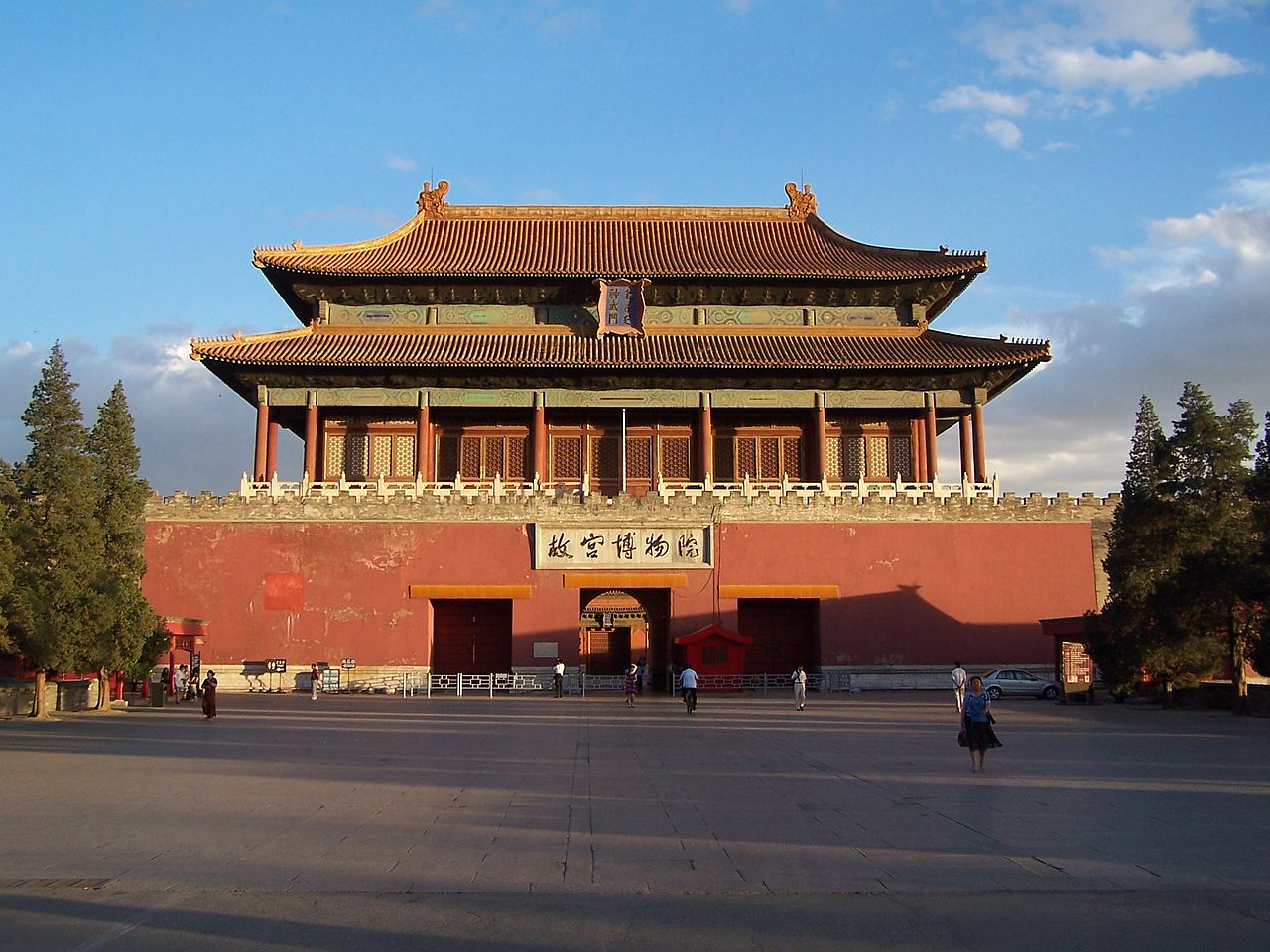
The Palace Museum
Day 1 · Explore Imperial Palaces and Temples

Mutianyu Great Wall
Day 2 · Hike a Section of the Great Wall

798 Art Zone
Day 2 · A Contemporary Art District

Wangfujing Snack Street
Day 3 · A Local Street Food & Market Exploration

Beijing Ancient Observatory
Day 4 · An Ancient Observatory or Temple of the Sun
Wander Through Historic Hutongs near Shichahai Lake Area
Day 1 · Wander Through Historic Hutongs
Peking Roasted Duck in Qianmen
Day 1 · Indulge in Beijing's Signature Cuisine
Baozi in Sanlitun
Day 2 · A Modern Shopping and Dining Hub
Shanghai

Shanghai Tower
Day 6 · Iconic Waterfront & Cityscape Viewpoint

Yuyuan Garden
Day 6 · Traditional Garden & Old City Exploration

The Former French Concession
Day 6 · Historic European Neighborhood Stroll

Jade Buddha Temple
Day 7 · A Serene Buddhist Temple Visit
Kyoto

Nishiki Market
Day 8 · Traditional Kyoto Culinary Experience

Arashiyama Bamboo Forest
Day 9 · Kyoto's Natural Beauty

Kiyomizu-dera
Day 10 · An Iconic Temple or Shrine

Wander Higashiyama District
Day 10 · A Historic District Walk
Tokyo

teamLab Planets TOKYO DMM
Day 12 · Ancient Temples and Traditional Gardens

Shibuya Crossing
Day 13 · Vibrant Neighborhoods and Iconic Crossings

Shibuya Sky
Day 13 · Panoramic City Viewpoints
Pick travel dates to see the weather for your month.
Beijing, Shanghai, Kyoto, and Tokyo share a common seasonal rhythm, moving from crisp, dry winters to hot and humid midsummers. Spring and autumn are the most pleasant times to explore, as the temperatures are moderate and the frequent rains of the summer months hold off. Pack layers for the chilly transitions in early spring or late autumn, especially if you plan to walk through these cities during the evenings.
Best time to go: Spring and autumn
The whole year
Beijing
| Month | High | Low | Rainy days | Sunrise – sunset |
|---|---|---|---|---|
| Jan | 37°F / 3°C (cold) | 18°F / -8°C (cold) | 0 | 7:34 AM – 5:13 PM |
| Feb | 43°F / 6°C (cold) | 22°F / -6°C (cold) | 1 | 7:07 AM – 5:49 PM |
| Mar | 58°F / 14°C | 35°F / 2°C (cold) | 2 | 6:26 AM – 6:20 PM |
| Apr | 71°F / 22°C | 48°F / 9°C | 2 | 5:37 AM – 6:52 PM |
| May | 82°F / 28°C | 58°F / 14°C | 3 | 5:00 AM – 7:22 PM |
| Jun | 89°F / 32°C (hot) | 67°F / 19°C | 6 | 4:45 AM – 7:44 PM |
| Jul | 90°F / 32°C (hot) | 72°F / 22°C | 11 | 4:58 AM – 7:41 PM |
| Aug | 88°F / 31°C (hot) | 70°F / 21°C | 8 | 5:26 AM – 7:11 PM |
| Sep | 82°F / 28°C | 60°F / 16°C | 6 | 5:55 AM – 6:23 PM |
| Oct | 67°F / 19°C | 45°F / 7°C (cold) | 3 | 6:24 AM – 5:35 PM |
| Nov | 51°F / 11°C | 32°F / 0°C (cold) | 2 | 6:59 AM – 4:58 PM |
| Dec | 40°F / 4°C (cold) | 20°F / -6°C (cold) | 0 | 7:28 AM – 4:49 PM |
Shanghai
| Month | High | Low | Rainy days | Sunrise – sunset |
|---|---|---|---|---|
| Jan | 50°F / 10°C | 38°F / 3°C (cold) | 7 | 6:53 AM – 5:13 PM |
| Feb | 52°F / 11°C | 40°F / 4°C (cold) | 8 | 6:36 AM – 5:40 PM |
| Mar | 62°F / 16°C | 47°F / 8°C (cold) | 9 | 6:04 AM – 6:01 PM |
| Apr | 70°F / 21°C | 54°F / 12°C | 8 | 5:26 AM – 6:22 PM |
| May | 79°F / 26°C | 64°F / 18°C | 10 | 4:58 AM – 6:42 PM |
| Jun | 83°F / 28°C | 71°F / 22°C | 13 | 4:49 AM – 6:59 PM |
| Jul | 91°F / 33°C (hot) | 79°F / 26°C | 12 | 5:00 AM – 6:59 PM |
| Aug | 91°F / 33°C (hot) | 79°F / 26°C | 11 | 5:19 AM – 6:37 PM |
| Sep | 83°F / 29°C | 72°F / 22°C | 10 | 5:38 AM – 6:00 PM |
| Oct | 75°F / 24°C | 62°F / 17°C | 6 | 5:56 AM – 5:22 PM |
| Nov | 65°F / 18°C | 52°F / 11°C | 7 | 6:21 AM – 4:55 PM |
| Dec | 53°F / 12°C | 39°F / 4°C (cold) | 5 | 6:45 AM – 4:52 PM |
Kyoto
| Month | High | Low | Rainy days | Sunrise – sunset |
|---|---|---|---|---|
| Jan | 48°F / 9°C | 34°F / 1°C (cold) | 6 | 7:04 AM – 5:07 PM |
| Feb | 50°F / 10°C | 35°F / 2°C (cold) | 7 | 6:43 AM – 5:38 PM |
| Mar | 58°F / 15°C | 41°F / 5°C (cold) | 10 | 6:08 AM – 6:03 PM |
| Apr | 68°F / 20°C | 49°F / 9°C | 10 | 5:25 AM – 6:28 PM |
| May | 78°F / 25°C | 58°F / 15°C | 8 | 4:54 AM – 6:53 PM |
| Jun | 82°F / 28°C | 67°F / 19°C | 11 | 4:42 AM – 7:12 PM |
| Jul | 89°F / 32°C (hot) | 75°F / 24°C | 17 | 4:54 AM – 7:11 PM |
| Aug | 92°F / 33°C (hot) | 77°F / 25°C | 12 | 5:16 AM – 6:45 PM |
| Sep | 83°F / 28°C | 69°F / 21°C | 12 | 5:39 AM – 6:04 PM |
| Oct | 73°F / 23°C | 58°F / 15°C | 9 | 6:02 AM – 5:22 PM |
| Nov | 64°F / 18°C | 47°F / 8°C (cold) | 7 | 6:31 AM – 4:51 PM |
| Dec | 52°F / 11°C | 38°F / 3°C (cold) | 6 | 6:57 AM – 4:46 PM |
Tokyo
| Month | High | Low | Rainy days | Sunrise – sunset |
|---|---|---|---|---|
| Jan | 51°F / 10°C | 34°F / 1°C (cold) | 5 | 6:50 AM – 4:50 PM |
| Feb | 52°F / 11°C | 36°F / 2°C (cold) | 6 | 6:28 AM – 5:22 PM |
| Mar | 60°F / 15°C | 43°F / 6°C (cold) | 9 | 5:52 AM – 5:48 PM |
| Apr | 67°F / 20°C | 50°F / 10°C | 10 | 5:09 AM – 6:13 PM |
| May | 77°F / 25°C | 60°F / 15°C | 9 | 4:36 AM – 6:38 PM |
| Jun | 80°F / 27°C | 67°F / 19°C | 12 | 4:25 AM – 6:58 PM |
| Jul | 87°F / 30°C (hot) | 74°F / 23°C | 13 | 4:36 AM – 6:57 PM |
| Aug | 89°F / 32°C (hot) | 76°F / 24°C | 10 | 5:00 AM – 6:31 PM |
| Sep | 82°F / 28°C | 69°F / 20°C | 12 | 5:23 AM – 5:48 PM |
| Oct | 72°F / 22°C | 58°F / 15°C | 11 | 5:47 AM – 5:06 PM |
| Nov | 64°F / 18°C | 48°F / 9°C | 9 | 6:16 AM – 4:34 PM |
| Dec | 55°F / 13°C | 38°F / 3°C (cold) | 6 | 6:43 AM – 4:28 PM |
- Morning
8:00 AM - Arrive at Beijing Capital International Airport (PEK)· 2 hrs 30 min
USD 5 (~JPY 791) Calvin411 (CC BY 4.0)
After landing, clear customs and immigration. Take the Airport Express train to Dongzhimen (25 min, $4) and transfer to the subway to your hotel area, or opt for a taxi directly (~60-90 min, $15-20 depending on traffic and exact destination).
10:30 AM - Hotel check-in· 30 min
FREECheck into your accommodation and drop off your luggage. Take some time to freshen up before heading out.
- Afternoon
1:00 PM - Lunch: Peking Roasted Duck in Qianmen· 1 hr 15 min
USD 30 (~JPY 4,748)Iconic dish City Foodsters (CC BY 2.0)
Indulge in Beijing's most iconic dish. Peking Roasted Duck, known for its crispy skin and tender meat, is served with thin pancakes and savory condiments. Qianmen area is a good spot for established restaurants serving this classic.
Often found around Qianmen / Wangfujing (for established restaurants)Typical USD 20-50 (~JPY 3,165-7,912)
- Evening
5:00 PM - Wander Through Historic Hutongs near Shichahai Lake Area· 1 hr 30 min
FREEExplore the narrow alleyways of Beijing's historic hutongs around Shichahai Lake. These ancient residential lanes offer a glimpse into traditional Beijing life, contrasting sharply with the city's modern facade. You can see locals playing mahjong or tending to small gardens. This area provides an authentic cultural experience.
7:30 PM - Dinner: Yangrou Chuan in Ghost Street (Guijie)· 1 hr 15 min
USD 18 (~JPY 2,848)Iconic dish Alpha from Melbourne, Australia (CC BY-SA 2.0)
Head to Ghost Street (Guijie), famous for its vibrant night scene and diverse eateries. Here, you can enjoy Yangrou Chuan, succulent lamb skewers grilled over charcoal, seasoned heavily with cumin and chili, a beloved Beijing street food.
Often found around Wangfujing Snack Street / Ghost Street (Guijie)Typical USD 0-2 (~JPY 0-316)
Where to Stay Tonight
Dongcheng District (near Wangfujing or Qianmen)
· This area is central to many major historical sites like the Forbidden City and Tiananmen Square. It offers good subway connections, a wide range of dining options, and is walkable for evening strolls.- Morning
- Afternoon
1:00 PM - Lunch: Wonton in Huairou· 1 hr
USD 18 (~JPY 2,848)Try the dish Oldie~commonswiki (CC BY-SA 3.0)Wonton
Enjoy a comforting bowl of Wonton soup, a classic Chinese dumpling dish, in the town near Mutianyu before heading back to the city.
- Evening
8:30 PM - Dinner: Baozi in Sanlitun· 1 hr
USD 18 (~JPY 2,848)Try the dish Nikolaj Potanin from Russia (CC BY-SA 2.0)Baozi
Savor some Baozi, steamed buns filled with various ingredients like meat or vegetables, at a local eatery in the lively Sanlitun district.
Where to Stay Tonight
Dongcheng District
· This area remains an excellent base for its central location near major historical sites like the Forbidden City and Jingshan Park, as well as easy access to public transport for exploring other parts of Beijing. You'll find a good mix of local eateries and shopping, balancing convenience with authentic atmosphere.- Morning
- Afternoon
12:15 PM - Lunch: Chao Gan in Huguosi Street· 1 hr
USD 8 (~JPY 1,266)Try the dish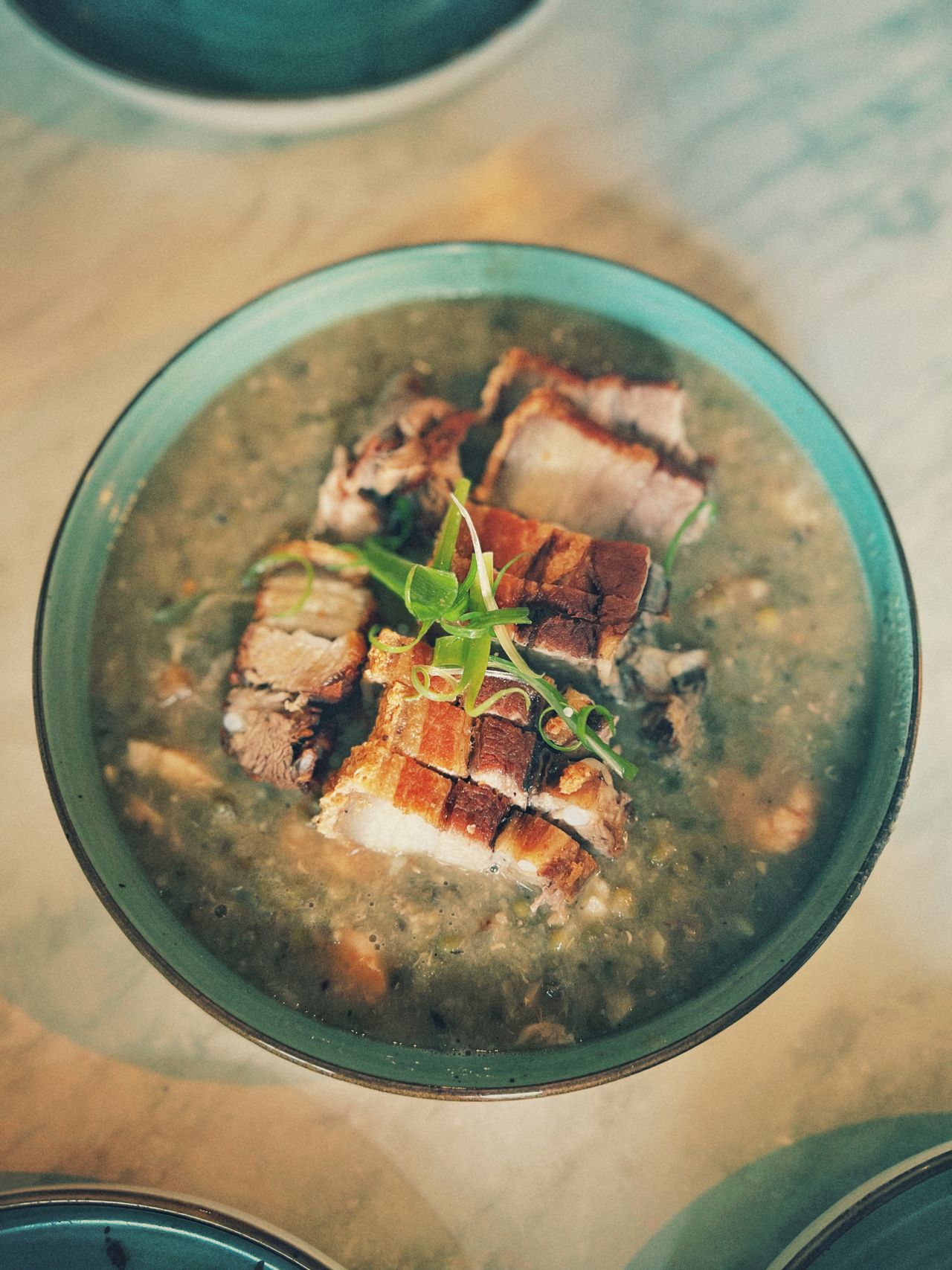 Photo by I Am The Girl 🫶🏻 on PexelsChao Gan
Experience a true Beijing staple, Chao Gan. This hearty stew, thickened with starch and flavored with garlic, features pork liver and intestines. It is a robust and authentic local meal, often enjoyed without a spoon for a real local touch.
- Evening
5:00 PM - Wangfujing Snack Street· 1 hr 30 min
USD 15 (~JPY 2,374)Anagoria (CC BY 3.0)Dive into Beijing's vibrant street food scene at Wangfujing Snack Street. This is an essential stop for sampling local delights and unique snacks, offering a true taste of Beijing's culinary culture.
7:30 PM - Dinner: Douzhi and Jiaoquan in Huguosi Street· 1 hr
USD 5 (~JPY 791)Douzhi and JiaoquanTry Douzhi, a unique fermented mung bean drink known for its sour, earthy taste. Pair it with Jiaoquan, crispy fried dough rings, for a classic local breakfast that can also be a unique dinner experience.
Staying at Dongcheng District since Day 2
- Morning
- Afternoon
12:15 PM - Lunch: Aiwowo in Huguosi Street· 1 hr
USD 8 (~JPY 1,266)Try the dish Erell (CC BY-SA 3.0)
Savor Aiwowo, a sweet, steamed glutinous rice ball dessert. It comes with fillings like red bean paste or sesame, offering a soft, chewy texture. Huguosi Street is a perfect spot for traditional Beijing snacks.
Often found around Longfusi Street / Huguosi Snack StreetTypical USD 1-2 (~JPY 158-316)
- Evening
8:00 PM - Dinner: Youtiao in Chaoyang· 1 hr
USD 5 (~JPY 791)Iconic dish Popo le Chien (CC0)
Enjoy Youtiao, a popular savory breakfast item, for a lighter dinner. These crispy, deep-fried dough sticks are perfect for a casual meal in the bustling Chaoyang district.
Typical USD 1-2 (~JPY 158-316)
Staying at Dongcheng District since Day 2
- Morning
8:00 AM - Check out from Beijing hotel· 30 min
FREEFinish your stay in Beijing. Prepare for your train journey to Shanghai.
9:00 AM - High-speed train to Shanghai· 5 hrs 30 min
USD 90 (~JPY 14K)Board the high-speed train for a comfortable journey to Shanghai. This trip offers views of the changing Chinese landscape.
- Afternoon
2:30 PM - Check in to Shanghai hotel· 1 hr
FREEArrive in Shanghai and check into your new hotel. Settle in before exploring the city.
- Evening5B
5:30 PM - Explore Yuyuan Garden Bazaar· 1 hr 30 min
FREEChainwit. (CC BY 4.0)Wander through the lively Yuyuan Garden Bazaar, an area surrounding the historical Yuyuan Garden and City God Temple. This bustling marketplace offers traditional Chinese goods, souvenirs, street food, and a chance to experience local culture and architecture under evening lights.
7:30 PM - Dinner: Shengjianbao in Old City· 1 hr
USD 18 (~JPY 2,848)Iconic dish Luca Mascaro (CC BY-SA 2.0)
Try Shengjianbao, pan-fried buns with a crispy bottom and juicy pork filling. Approach them carefully; the soup inside is hot.
Typical USD 2-6 (~JPY 316-950)
Where to Stay Tonight
The Bund
· Staying near The Bund puts you close to iconic waterfront views, historic architecture, and convenient metro connections. You can easily walk to Nanjing Road and have many dining options.- Morning
- Afternoon
12:30 PM - Lunch: Xiaolongbao in Lujiazui· 1 hr
USD 18 (~JPY 2,848)Iconic dish Eason Lai from 上海 (CC BY-SA 2.0)
Savor delicate soup dumplings, Xiaolongbao, filled with savory pork and hot broth. Take care as you nibble a corner to slurp the soup before enjoying the rest of the dumpling.
Typical USD 3-8 (~JPY 475-1,266)
- Evening
7:45 PM - Dinner: Yangchun Mian in Xintiandi· 1 hr
USD 18 (~JPY 2,848)Try the dishPhoto by Kirill Tonkikh on UnsplashYangchun MianEnjoy a simple yet comforting bowl of Yangchun Mian, or 'Spring Noodle'. This classic Shanghainese dish features plain noodles in a clear, light broth, perfect for a warming evening meal.

Staying at The Bund since Day 5
- Morning
- Afternoon
1:00 PM - Lunch: Wonton Soup in Jing'an· 1 hr
USD 8 (~JPY 1,266)Try the dish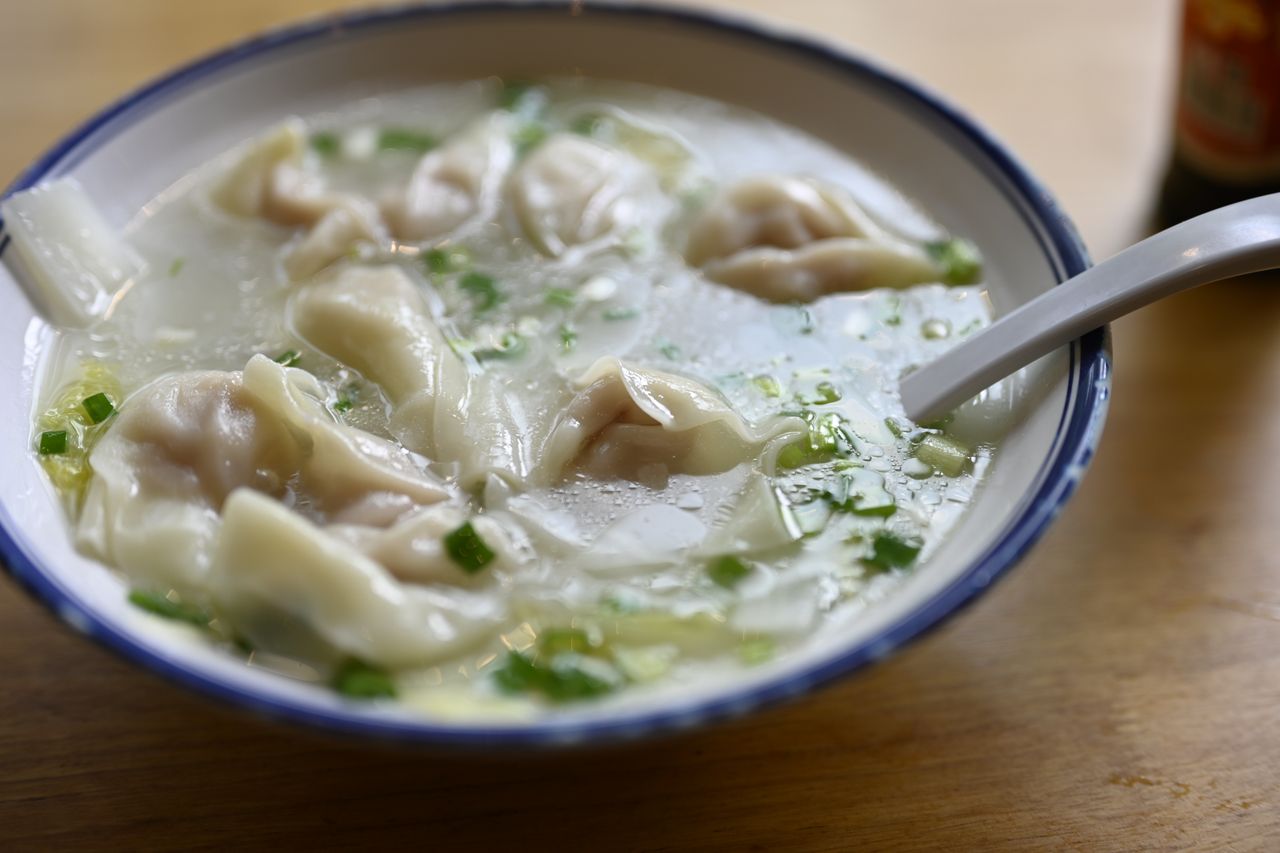 Photo by J.D. Books on PexelsWonton Soup
Enjoy a comforting bowl of Wonton Soup. These delicate, thin-skinned dumplings filled with savory pork are a Shanghai staple, served in a light, clear broth.
- 7C
2:30 PM - 50 Moganshan Road (M50 Creative Park)· 2 hrs 30 min
FREEDoubles back across the city — check the order - Evening
7:30 PM - Dinner: Tangyuan in Huangpu· 1 hr
USD 6 (~JPY 950)Try the dish cherrylet (CC BY 2.0)Tangyuan
End your day with a sweet treat. Tangyuan, glutinous rice balls typically filled with black sesame or peanut, are a traditional dessert, symbolizing family reunion.
Staying at The Bund since Day 5
- Morning
8:30 AM - Shanghai Pudong International Airport (PVG) transfer· 1 hr 30 min
USD 25 (~JPY 3,956)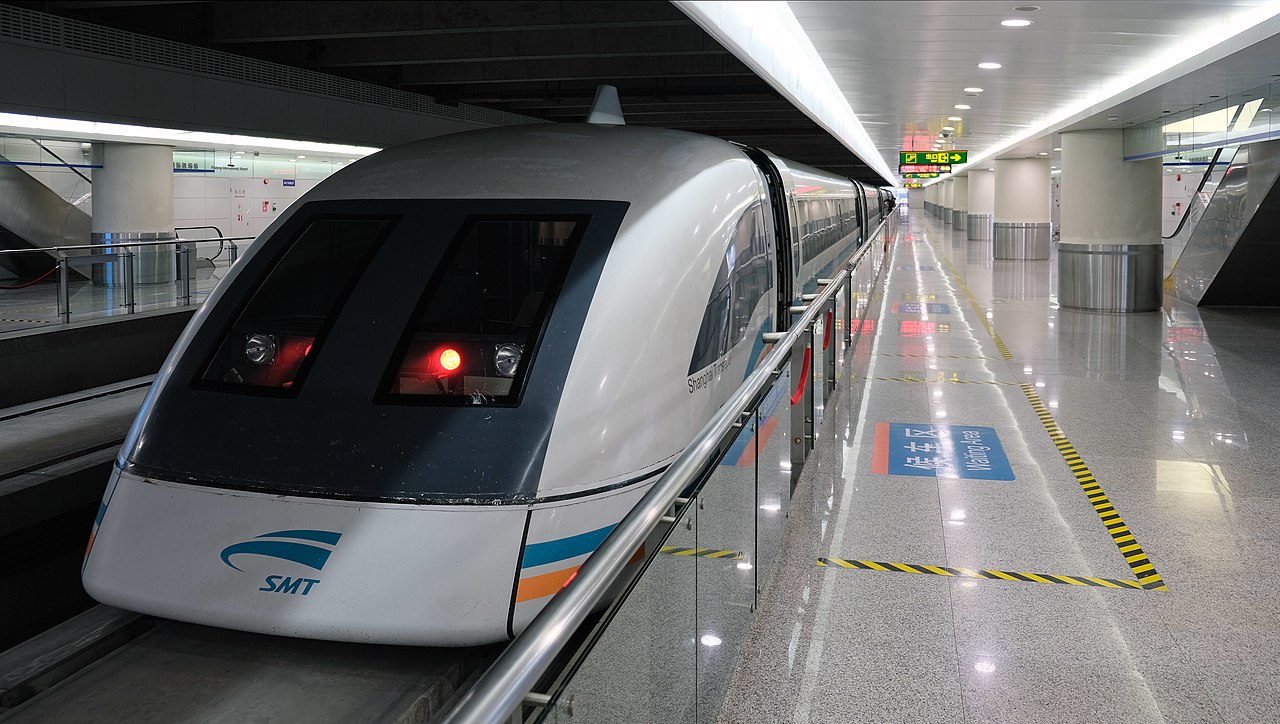 kallerna (CC BY-SA 4.0)
Travel to Shanghai Pudong International Airport to begin your journey to Japan. Allow ample time for traffic and check-in procedures.
10:00 AM - Depart from Shanghai Pudong International Airport (PVG)· 2 hrs 30 min
USD 200 (~JPY 32K)Take your flight from Shanghai to Kansai International Airport (KIX). The flight itself is about 2.5 hours.
- Afternoon
1:30 PM - Arrive at Kansai International Airport (KIX) and transfer to Kyoto· 1 hr 30 min
USD 30 (~JPY 4,748) Fotointheworld (CC BY 4.0)
Upon arrival at KIX, clear customs and board a train to Kyoto Station. The journey from KIX to Kyoto typically takes about an hour.
3:00 PM - Hotel check-in in Kyoto· 1 hr
FREECheck into your hotel in Kyoto, settle in, and prepare for an afternoon exploring the city.
- Evening
5:30 PM - Explore Gion District· 2 hrs
FREE Wolfiewolf from Pontocho street in Nakagyo, Kyoto (CC BY 2.0)
Wander through Kyoto's historic Gion district, known for its traditional wooden machiya houses and geisha culture. Take a peaceful stroll along Hanamikoji Street, keeping an eye out for geiko and maiko in the early evening.
7:30 PM - Dinner: Yakitori in Gion· 1 hr
USD 20 (~JPY 3,165)Iconic dish 竹麦魚(Searobin) (CC BY-SA 3.0)
Enjoy yakitori in Gion, where small izakayas grill premium local chicken and seasonal vegetables over binchotan charcoal. Each smoky, tender skewer offers a simple yet flavorful taste.
Typical USD 12-25 (~JPY 1,899-3,956)
Where to Stay Tonight
Gion
· Gion is an excellent base for Kyoto, placing you right in the heart of traditional culture. You are close to many historic temples, shrines, and the famous Gion geisha district, perfect for evening strolls. It offers an abundance of authentic dining options and good transit connections for exploring further afield.- Morning
- Afternoon
1:30 PM - Lunch: Yudofu in Arashiyama· 1 hr
USD 20 (~JPY 3,165)Try the dish Flickr user cobacco(hiro kobashi) (CC BY 2.0)Yudofu
Enjoy delicate Kyoto tofu, served in a simple hot pot that highlights its pure flavor. This is a calming, deeply satisfying meal, especially after the morning's activities.
- Evening
7:30 PM - Dinner: Sushi in Downtown Kyoto· 1 hr 15 min
USD 30 (~JPY 4,748)Iconic dish Yumi Kimura (CC BY-SA 2.0)
Savor fresh sushi in downtown Kyoto. Being inland, Kyoto historically focused on cured or freshwater fish, but today offers excellent quality with local ingredients and elegant presentation.
Often found around Gion / DowntownTypical USD 15-40 (~JPY 2,374-6,330)
Staying at Gion since Day 8
- Morning
11:45 AM - Wander Higashiyama District· 1 hr 30 min
FREEBasile Morin (CC BY-SA 4.0)After Kiyomizu-dera, explore the Higashiyama District. This historic area retains a traditional feel with narrow streets, wooden buildings, and artisan shops. You'll find pottery, sweets, and traditional crafts.
- Afternoon
1:30 PM - Lunch: Tempura in Higashiyama· 1 hr
USD 18 (~JPY 2,848)Try the dish Yaco* (CC BY 2.0)Vegetable Tempura
Enjoy a selection of vegetable tempura, lightly battered and fried. This dish showcases seasonal produce with a delicate crispness, a perfect light yet satisfying lunch.
4:30 PM - Relax or shop around Kyoto Station· 2 hrs 30 min
FREEAfter visiting Sanjusangendo Temple, head towards the Kyoto Station area. You can relax at a cafe, browse the numerous shops, or explore the station's impressive architecture and amenities. This also positions you well for dinner.
- Evening
7:30 PM - Dinner: Tonkotsu Ramen in Kyoto Station Area· 1 hr
USD 15 (~JPY 2,374)Iconic dish Guilhem Vellut from Paris, France (CC BY 2.0)
Indulge in a rich, creamy bowl of Tonkotsu Ramen. This pork-bone broth ramen is a hearty, deeply savory dish, perfect after a day of exploration. The Kyoto Station area has many excellent ramen shops.
Typical USD 9-16 (~JPY 1,424-2,532)
Staying at Gion since Day 8
- Morning
- 11B
11:15 AM - Nijo Castle· 2 hrs 30 min
USD 8 (~JPY 1,266) Keith Pomakis (CC BY-SA 2.5)
Explore the former imperial residence of the Tokugawa Shogunate, known for its Nightingale Floors and ornate interiors. The extensive grounds offer a glimpse into feudal Japan.
- Afternoon
1:45 PM - Lunch: Yuba in Central Kyoto· 45 min
USD 20 (~JPY 3,165)Try the dish 花よりキヨエ (CC BY 4.0)
Savor delicate yuba, a Kyoto specialty made from simmering soy milk. Enjoy it fresh, deep-fried, or in various other dishes, showcasing the city's refined culinary traditions.
Often found around Nishiki Market / GionTypical USD 10-25 (~JPY 1,582-3,956)
- Evening11D
5:00 PM - Byodo-in Temple· 30 min
USD 7 (~JPY 1,108) Martin Falbisoner (CC BY-SA 4.0)
Visit the Byodo-in Temple in Uji, known for its stunning Phoenix Hall. This Pure Land Buddhist temple is depicted on the 10 yen coin and offers a spiritual atmosphere by the river.
7:30 PM - Dinner: Washoku Teishoku in Uji· 1 hr
USD 15 (~JPY 2,374)Iconic dish 経済特区 (CC BY-SA 4.0)
Dine on a traditional Washoku Teishoku, a balanced set meal with grilled fish, rice, miso soup, and various small vegetable dishes. It's a true taste of local Japanese home cooking.
Typical USD 7-15 (~JPY 1,108-2,374)
Staying at Gion since Day 8
- Morning
10:30 AM - Lunch: Zaru Soba in Central Kyoto· 1 hr
USD 15 (~JPY 2,374)Try the dish akira yamada from Yokohama (CC BY-SA 2.0)Zaru Soba
Before departing, enjoy a light, refreshing meal of Zaru Soba. These chilled buckwheat noodles are served with a savory dipping sauce and offer a perfect balance of flavor and texture.
11:45 AM - Check out from Kyoto hotel· 15 min
FREEComplete your check-out from your Kyoto accommodation.
- Afternoon
1:00 PM - High-speed train to Tokyo· 2 hrs 30 min
USD 85 (~JPY 13K)Take the Shinkansen (bullet train) from Kyoto Station to Tokyo Station. Enjoy the scenic journey as you traverse through Japan's countryside, preparing for the vibrant energy of Tokyo.
3:45 PM - Check in to Tokyo hotel· 45 min
FREEArrive in Tokyo and check into your hotel. Settle in before heading out to explore the city.
- Evening
7:00 PM - Dinner: Unagi (Kanto-style) in Ginza· 1 hr 15 min
USD 45 (~JPY 7,121)Try the dish Wei-Te Wong from Taipei City, Taiwan, Republic of China (CC BY-SA 2.0)
Experience Unagi, freshwater eel steamed then grilled with a sweet soy-based tare sauce, served over rice. Kanto-style eel is particularly tender and flaky due to the steaming process, making for a truly delicate flavor.
Typical USD 25-50 (~JPY 3,956-7,912)
Where to Stay Tonight
Shinjuku
· Shinjuku offers excellent transit links to all major Tokyo areas, abundant dining options, and a mix of modern attractions like the Metropolitan Government Building with vibrant nightlife. It is a central, well-connected base for exploring Tokyo.- Morning
- Afternoon
1:30 PM - Lunch: Tonkotsu Ramen in Harajuku· 1 hr
USD 15 (~JPY 2,374)Iconic dishGuilhem Vellut from Paris, France (CC BY 2.0)Savor a rich, creamy bowl of Tonkotsu Ramen. This classic pork-bone broth is simmered for hours, offering deep flavor with chewy noodles and tender chashu pork, perfect for a satisfying mid-day meal.
Typical USD 9-16 (~JPY 1,424-2,532)
- Evening
7:30 PM - Dinner: Vegetable Tempura in Shibuya· 1 hr
USD 20 (~JPY 3,165)Try the dishYaco* (CC BY 2.0)Vegetable TempuraEnjoy a lighter dinner with a spread of Vegetable Tempura. Fresh seasonal vegetables, lightly battered and fried to a perfect crisp, are served with a delicate dashi dipping sauce. It is a refined culinary experience.
Staying at Shinjuku since Day 12
- Morning
- Afternoon
1:00 PM - Lunch: Tsukemen in Oshiage· 1 hr
USD 15 (~JPY 2,374)Try the dish City Foodsters (CC BY 2.0)
Try Tsukemen, a delicious style of ramen where noodles are served separately from a rich, concentrated dipping broth. Dip your thick, chewy noodles into the savory broth, often infused with seafood or pork, for a satisfying meal.
Typical USD 10-18 (~JPY 1,582-2,848)
2:30 PM - Hotel Checkout & Luggage Collection· 30 min
FREEHead back to your Shinjuku hotel to check out and collect your luggage, preparing for your journey to Narita International Airport.
4:00 PM - Depart from Narita International Airport (NRT)· 5 hrs
USD 35 (~JPY 5,539) :ja:User:(WT-ja) Tatata (CC BY-SA 4.0)
Travel to Narita International Airport (NRT) for your evening flight. Allow ample time for the transfer, check-in, and security procedures.
Staying at Shinjuku since Day 12
Like this plan? Make it yours
Same destination, your dates, group, and pace. Generated free in about a minute.
Customize this tripFreeFood, shopping & festivals
Top 14 dishes to try
Tap any photo for more photos, the story, and where to find it.
Shanghai

Shengjianbao
Day 5 · dinner

Xiaolongbao
Day 6 · lunch
Beijing
Peking Roasted Duck
Day 1 · lunch

Aiwowo
Day 4 · lunch

Yangrou Chuan
Day 1 · dinner

Youtiao
Day 4 · dinner

Washoku Teishoku
Day 11 · dinner

Tonkotsu Ramen
Days 10 and 13

Yakitori
Day 8 · dinner

Sushi
Day 9 · dinner
Kyoto

Tsukemono

Yuba
Day 11 · lunch
Tokyo

Tsukemen
Day 14 · lunch
Unagi (Kanto-style)
Day 12 · dinner
Where to eat · Nishiki Market, Tsukiji Outer Market, Ghost Street (Guijie), Ginza, Gion, Huguosi Snack Street, Jing'an District, Koenji, Kyoto Station Area
- Nishiki Market · Kyoto — A bustling covered market known as 'Kyoto's Kitchen', offering a vast array of local produce, fresh seafood, tsukemono (pickles), and street snacks.
- Tsukiji Outer Market · Tokyo — Even with the fish market moved, Tsukiji's outer market still thrives with fresh seafood vendors, sushi stalls, and small restaurants serving classic Japanese breakfast and lunch dishes.
- Ghost Street (Guijie) · Beijing — Famous for its vibrant nightlife and diverse dining options, especially at night. Many restaurants here specialize in hotpot and Sichuan-style dishes, including the popular crayfish.
- Ginza · Tokyo — An upscale shopping district, but its department store basements (depachika) host incredible food halls with gourmet bentos, sweets, and prepared dishes perfect for picnics or high-quality takeaways.
- Gion · Kyoto — Traditional geisha district with elegant restaurants and tea houses, often specializing in Kyoto cuisine (Kyo-ryori) and delicate tofu dishes. Expect higher prices here.
- Huguosi Snack Street · Beijing — A historic street offering traditional Beijing snacks and breakfast items. This is where locals go for dishes like Douzhi, Chao Gan, and various pastries. It feels more authentic than tourist-focused areas.
- Jing'an District · Shanghai — While known for its modern feel, Jing'an also houses many local noodle shops and smaller restaurants serving everyday Shanghainese fare, from wontons to simple stir-fries.
- Koenji · Tokyo — Known for its vintage shopping and laid-back atmosphere, this area offers many small, independent eateries and izakayas with a local, bohemian feel.
- Kyoto Station Area · Kyoto — Despite being a transport hub, it has numerous dining options inside the station building and nearby malls. Good for quick, convenient meals, including ramen and tempura.
Good to know · meal times, tipping, water, vegetarian, payment, etiquette
Japan
- Meal times
- Lunch typically runs from 11:30 AM to 2:00 PM, and dinner from 6:00 PM to 9:00 PM. Many smaller restaurants close between these hours. Breakfasts are often earlier, starting around 7:00 AM.
- Tipping
- Tipping is not customary in Japan and can sometimes be seen as insulting. Service charges may be included at higher-end establishments, but otherwise, the price listed is what you pay.
- Water
- Tap water in Kyoto is safe to drink. Restaurants will typically provide free water. Bottled water is widely available from convenience stores and vending machines.
- Vegetarian
- Finding purely vegetarian or vegan options can be challenging, but not impossible. Look for 'shojin ryori' (temple cuisine) or specifically ask if dashi (broth) is kombu-based for vegetarian options. Many 'Washoku Teishoku' include good vegetable variety, and 'Vegetable Tempura' is a safe bet. Konbini (convenience stores) salads and cooked vegetables can supplement your meals.
- Payment
- Cash is still widely used, especially at smaller restaurants, street stalls, and some traditional eateries. Larger restaurants, department stores, and hotels readily accept credit cards, but always carry some yen.
- Etiquette
- It's polite to finish everything on your plate. Slurping noodles is a sign of enjoyment. Avoid sticking chopsticks upright in your rice or passing food between chopsticks, as these are associated with funerals. When sharing, use the serving end of your chopsticks or ask for separate ones.
China
- Meal times
- Breakfast runs from 7-9:30am, lunch from 12-1pm, and dinner from 6-8pm. Many smaller eateries may close between lunch and dinner service, especially outside central areas.
- Tipping
- Tipping is generally not practiced in China and is not expected in restaurants, taxis, or hotels. Service charges may be included at high-end establishments, but this is clearly stated.
- Water
- Tap water in Shanghai is not safe for direct consumption. Always drink bottled water. Avoid ice at small street stalls or questionable venues to prevent stomach issues.
- Vegetarian
- For vegetarians, ask for 'su cai' (vegetarian dishes) or 'mei rou' (no meat). Be aware that many broths, even clear ones, are often meat-based. Communicate allergies clearly, perhaps using a translation app for specific ingredients.
- Payment
- Mobile payments via WeChat Pay or Alipay are overwhelmingly dominant. Cash is accepted but increasingly less common, especially at smaller vendors. Credit cards are mostly used at larger hotels and international restaurants.
- Etiquette
- Chinese dining usually involves sharing dishes. Don't stick your chopsticks upright in your rice bowl, as this resembles incense at a funeral. It is generally polite to offer food to others at the table first.
Top 14 souvenirs
Tap any photo for more photos, the story, and where to find it.
Beijing

Beijing opera masks or figures

High-grade Chinese tea

Silk products (scarves, clothing)

Hand-painted porcelain

Cloisonne enamelware
Shanghai

Longjing Green Tea

Jingdezhen Porcelain

Shanghai Silk Products

Bespoke Qipao or Changshan
Tokyo
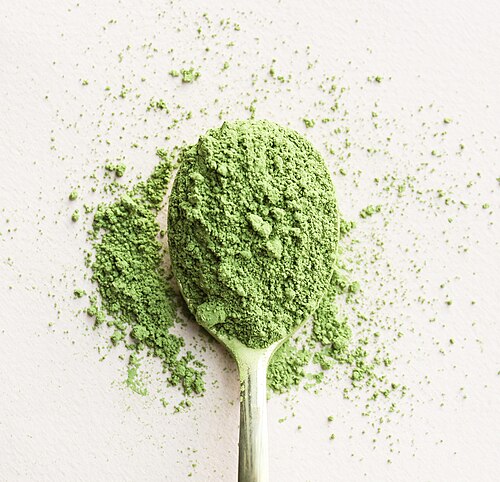
High-Quality Matcha Green Tea

Anime and Manga Merchandise
Kyoto

Uji Matcha Green Tea

Traditional Japanese Fans (Sensu)

Japanese Kitchen Knives
Where to shop · Nishiki Market (Nishiki Ichiba), Panjiayuan Flea Market, Yu Garden Bazaar
- Nishiki Market (Nishiki Ichiba) · Kyoto — Fresh food, local produce, specialty pickles, gourmet spices, and high-quality Japanese kitchen knives.
- Panjiayuan Flea Market · Beijing — Antiques, vintage porcelain, calligraphy, paintings, wood carvings, cloisonne, and old tea sets.
- Yu Garden Bazaar · Shanghai — Traditional Chinese crafts, tea sets, small jade items, and local snacks.
Good to know · customs, tax refund, payment, bargaining
Japan
- Customs
- You can generally bring in up to 5kg of food products and limited amounts of alcohol/tobacco. Check your home country's specific import regulations for plants, seeds, or animal products.
- Tax refund
- Tourists can claim an 8-10% consumption tax refund on purchases over JPY 5,000 at tax-free eligible stores. Present your passport at the designated counter on the day of purchase for immediate processing or a refund later.
- Payment
- Major credit cards are accepted in most department stores and larger shops. Smaller traditional shops, market stalls, and some restaurants often prefer cash.
- Bargaining
- Bargaining is not customary in Japan; prices are fixed at all shops, markets, and department stores. Asking for a discount is generally considered impolite.
China
- Customs
- Be aware of restrictions on certain antiques, endangered species products, and cultural artifacts. Declare anything over personal limits to avoid issues.
- Tax refund
- VAT refunds are typically available for non-Chinese citizens on purchases over a certain amount (usually 500 CNY) at participating stores. Request a tax refund form and present it with your passport and receipts at the airport customs desk.
- Payment
- Cash is king at smaller markets, but major shops and department stores accept UnionPay, WeChat Pay, Alipay, and international credit cards.
- Bargaining
- Bargaining is expected in markets like Yu Garden Bazaar and smaller independent shops; start at 50% of the asking price. Prices are generally fixed in department stores and major retail chains.
The big events across the year
Tap any photo for more photos and the story.
Shogatsu (Japanese New Year)
Jan 1 – 3
Japan's biggest and most important holiday — the entire country shuts down Dec 31-Jan 3. Businesses, most restaurants, and even convenience stores reduce hours. Shinto shrines host millions for hatsumōde (first shrine visit of the year) — Meiji Shrine in Tokyo gets 3 million visitors in 3 days. NHK's Kouhaku Uta Gassen music show is a national tradition. Traditional osechi ryōri bento boxes prepared in advance.

Chinese New Year
Feb 17 – Mar 3

Kanda Matsuri
May

Shanghai International Film Festival
Jun 13 – 22

Gion Matsuri
Jul 1 – 31
Costs
Estimated total · For 2 travelers · 1 room · 14 days
USD 5,338Flights from your city not included.
Getting there and betweenUSD 930
- Beijing → Shanghai · trainUSD 390
- Shanghai → SHA · airport transfer1 taxiUSD 24
- Shanghai → Kyoto · flightUSD 280
- ITM → Kyoto · airport transfer1 taxiUSD 76
- Kyoto → Tokyo · trainUSD 160
AccommodationUSD 1,780
- Beijing · 4 nights1 roomUSD 400
- Shanghai · 3 nights1 roomUSD 300
- Kyoto · 4 nights1 roomUSD 720
- Tokyo · 2 nights1 roomUSD 360
| City | Simple | Comfortable | Upscale |
|---|---|---|---|
| Beijing | USD 60 | USD 100 | USD 140 |
| Shanghai | USD 60 | USD 100 | USD 140 |
| Kyoto | USD 120 | USD 180 | USD 240 |
| Tokyo | USD 120 | USD 180 | USD 240 |
ActivitiesUSD 570
- Day 1 · Arrive at Beijing Capital International Airport (PEK)USD 10
- Day 1 · The Palace MuseumUSD 20
- Day 1 · Jingshan ParkUSD 4
- Day 2 · Mutianyu Great WallUSD 80
- Day 2 · Temple of HeavenUSD 10
- Day 3 · Summer PalaceUSD 10
- Day 3 · Beijing Temple of ConfuciusUSD 11
- Day 3 · Confucius Temple and Guozijian MuseumUSD 11
- Day 3 · Wangfujing Snack StreetUSD 30
- Day 4 · Prince Gong MansionUSD 20
- Day 4 · Beijing Ancient ObservatoryUSD 6
- Day 4 · Today Art MuseumUSD 20
- Day 6 · Shanghai TowerUSD 50
- Day 6 · Yuyuan GardenUSD 12
- Day 7 · Jade Buddha TempleUSD 10
- Day 7 · Jing'an TempleUSD 10
- Day 7 · Propaganda Poster Art CentreUSD 10
- Day 8 · Nishiki MarketUSD 30
- Day 9 · Arashiyama Monkey Park IwatayamaUSD 10
- Day 9 · Tenryu-ji Temple GardenUSD 6
- Day 10 · Kiyomizu-deraUSD 5
- Day 10 · Sanjusangendo TempleUSD 12
- Day 11 · Kinkaku-jiUSD 6
- Day 11 · Nijo CastleUSD 10
- Day 11 · To-ji TempleUSD 10
- Day 11 · Byodo-in TempleUSD 9
- Day 12 · Ginkaku-ji (Silver Pavilion)USD 6
- Day 12 · teamLab Planets TOKYO DMMUSD 60
- Day 12 · Tokyo TowerUSD 19
- Day 13 · Shibuya SkyUSD 40
- Day 14 · Tokyo SkytreeUSD 23
FoodUSD 1,666
- Beijing · 4 daysUSD 352
- Shanghai · 3 daysUSD 264
- Kyoto · 4 daysUSD 600
- Tokyo · 3 daysUSD 450
Local transportUSD 392
- Beijing · 4 daysUSD 80
- Shanghai · 3 daysUSD 60
- Kyoto · 4 daysUSD 144
- Tokyo · 3 daysUSD 108
Not included: visas, travel insurance, SIM cards, tips, shopping.
Money tips
Mid-priced overall, but expect costs to vary: China offers street food for under $5 USD per meal, while Japan averages $8-15 USD for casual lunches and $100-180 USD per night for business hotels. Tap water is safe in Japan; use bottled water in China.
For transport in Japan, set up a Mobile Suica card on your phone before arrival; it covers trains and buses, saving you both time and the 500 yen ($3.50 USD) deposit fee for physical cards. The Japan Rail Pass only makes financial sense if you complete multiple long-distance Shinkansen trips, such as Tokyo to Kyoto and back, plus another major leg.
In China, rely on WeChat Pay or Alipay for most transactions; many vendors do not accept cash. Set up one of these mobile payment apps before you go; a simple street meal often costs under 35 RMB ($5 USD).
Consider one high-end cultural experience in Kyoto, like a traditional kaiseki dinner; these typically run $120-200 USD per person and offer a deep immersion you cannot replicate cheaply.
In Japan, convenience stores like FamilyMart or 7-Eleven offer high-quality pre-made meals and snacks for $4-7 USD, which are excellent for budget-friendly breakfasts or quick lunches.
Before you go
Travel and stays
Flight into Beijing Capital International Airport (PEK)
Day 1
Hotel in Beijing
Nights 1–4 · Dongcheng District (near Wangfujing or Qianmen) · about USD 400 · Comfortable hotel range
Train from Beijing to Shanghai
Day 5 · Book 2 weeks ahead · about 4 hrs 30 min · about USD 390 · Book via the 12306 official website or the Trip.com app.
Hotel in Shanghai
Nights 5–7 · The Bund · about USD 300 · Comfortable hotel range
Flight from Shanghai to Kyoto
Day 8 · Book 4 weeks ahead · about 3 hrs · about USD 280 · Book via major airline websites like Air China or ANA.
Hotel in Kyoto
Nights 8–11 · Gion · about USD 720 · Comfortable hotel range
Train from Kyoto to Tokyo
Day 12 · Book 4 weeks ahead · about 2 hrs 20 min · about USD 160 · Book via the SmartEX app or at JR ticket machines.
Hotel in Tokyo
Nights 12–13 · Shinjuku · about USD 360 · Comfortable hotel range
Flight out of Narita International Airport (NRT)
Day 14
Book ahead · most urgent first
teamLab Planets TOKYO DMM tickets
Day 12 · Book 4 weeks ahead · TeamLab Planets tickets are date and time specific and often sell out weeks in advance, especially for popular weekend or evening slots.
Palace Museum (Forbidden City) entry tickets
Day 1 · Book 7 days ahead · Tickets for the Palace Museum (Forbidden City) can sell out, especially for morning slots or peak days. Book online via the official website.
Mutianyu Great Wall tour or entry tickets + transport
Day 2 · Book 7 days ahead · Essential for securing transport (bus or private car) and entry tickets to Mutianyu Great Wall, especially if you prefer specific time slots or a guided tour.
Shanghai Tower observation deck tickets
Day 6 · Book 3 days ahead · While often available same-day, booking ahead ensures your preferred time slot, especially for sunset views.
Shibuya Sky observation deck tickets
Day 13 · Book 3 days ahead · Shibuya Sky has timed entry slots that are highly popular, particularly for sunset. Booking ahead is strongly recommended.
Travel tips
In Japan, pre-load a Mobile Suica or Pasmo card to your phone (Apple Pay/Google Pay) before arriving; it works on all Tokyo and Kyoto transit and at most convenience stores.
For China, install WeChat and link an international credit card to WeChat Pay for mobile payments; cash is rarely used for daily transactions now.
Book Ghibli Museum tickets for Tokyo exactly 1 month in advance on the 10th of the month at 10am JST via Lawson Ticket; they often sell out in under 15 minutes.
Carry small bills (¥1,000-¥5,000) and coins in Japan for vending machines and small shops; many small eateries are cash-only.
Use Baidu Maps or Amap for navigation in Chinese cities; Google Maps often has inaccurate public transport data or shows incorrect locations.
Avoid trying to cross Tokyo from one end to the other multiple times a day; focus on a few neighborhoods per day to prevent burnout on trains.
Withdraw Chinese Yuan (CNY) cash at a Bank of China or ICBC ATM; smaller banks may not accept international cards.
In Kyoto, visit popular temples like Kinkaku-ji and Ginkaku-ji right at their 9am opening to avoid the worst of the tour bus crowds.
For train tickets between Chinese cities (e.g., Beijing to Shanghai), book via Trip.com or at a train station a few days in advance, especially for high-speed rail.
Buy travel insurance and save the policy offline
Keep a backup card and emergency cash apart from your wallet
Get CNY cash / a no-forex-fee card
Check visa requirements for China
Get JPY cash / a no-forex-fee card
Check visa requirements for Japan
Reserve Forbidden City tickets
Register for Alipay
Register for WeChat Pay
Copies of passport and bookings (paper + phone)
Tell your bank your travel dates and check foreign transaction fees
Leave your itinerary, emergency contacts and a passport copy with someone at home
Register with your embassy's traveler program (STEP for US citizens)
Passport (valid 6+ months past your return)
Wallet with ID and payment cards
Transit card: Yikatong · Beijing
Transit card: Shanghai Public Transportation Card · Shanghai
Transit card: Suica (also Pasmo, ICOCA) · Kyoto, Tokyo
Coin purse
Pen for arrival forms
Beijing takes the first four days, allowing you to hit major imperial and historical sites like the Forbidden City and Great Wall while fresh. The initial transit to Shanghai lands mid-trip, creating a natural reset after the Beijing intensity. Kyoto receives four nights, followed by a final four in Tokyo, balancing Japan's traditional heart with its modern capital.
This structure keeps travel days distinct from full exploration, allowing you to settle into each city's unique rhythm. This trip prioritizes major urban centers and their historical, cultural and modern landmarks across both China and Japan. You get comprehensive views of each city's main attractions, from Beijing's ancient imperial sites to Tokyo's futuristic districts.
However, this focused city itinerary means skipping experiences like exploring China's scenic karst landscapes around Guilin or Japan's rural onsen towns and alpine regions like Hakone or the Japan Alps. There's no time for deeper dives into regional cuisines beyond the main hubs. This shape is right if your priority is grand city sights and cultural contrasts; choose differently if vast natural landscapes or quiet village life is your aim.
To extend this trip, add three days in Xi'a China, after Beijing, before flying to Shanghai. Xi'an offers the sight of the Terracotta Army, ancient city walls and a Muslim Quarter, deepening your understanding of China's imperial past beyond the capital.
Interest coverage
6 of 6 coveredEntry and safety
| Topic | China | Japan |
|---|---|---|
| Visa & entry | For Japan, US, UK, EU, Australian, and most Canadian citizens are granted 90 days visa-free. Indian citizens require a visa. For China, US, UK, EU, Australian, Canadian, and Indian citizens generally require a visa in advance. China offers a 144-hour visa-free transit policy for many nationalities at Beijing Capital (PEK) and Shanghai Pudong (PVG) airports when transiting to a third country. For both countries, passports must be valid for at least six months beyond your intended stay. Always check official embassy websites for the most current requirements based on your specific nationality. | |
| US risk level | Exercise increased cautionUpdated Nov 26, 2024 | Exercise normal precautionsUpdated May 14, 2025 |
| Official advice | US State Department · UK Foreign Office | US State Department · UK Foreign Office |
| Emergency | Police 110 · Ambulance 120 · Fire 119Limited English support — have your hotel address written in Chinese | Police 110 · Ambulance 119 · Fire 119English support available at #7119 (medical) and #9110 (police non-emergency) |
Visa & entry: For Japan, US, UK, EU, Australian, and most Canadian citizens are granted 90 days visa-free. Indian citizens require a visa. For China, US, UK, EU, Australian, Canadian, and Indian citizens generally require a visa in advance. China offers a 144-hour visa-free transit policy for many nationalities at Beijing Capital (PEK) and Shanghai Pudong (PVG) airports when transiting to a third country. For both countries, passports must be valid for at least six months beyond your intended stay. Always check official embassy websites for the most current requirements based on your specific nationality.
China
| US risk level | Exercise increased cautionUpdated Nov 26, 2024 |
|---|---|
| Official advice | US State Department · UK Foreign Office |
| Emergency | Police 110 · Ambulance 120 · Fire 119Limited English support — have your hotel address written in Chinese |
Japan
| US risk level | Exercise normal precautionsUpdated May 14, 2025 |
|---|---|
| Official advice | US State Department · UK Foreign Office |
| Emergency | Police 110 · Ambulance 119 · Fire 119English support available at #7119 (medical) and #9110 (police non-emergency) |
Money and tipping
| Topic | China | Japan |
|---|---|---|
| Tipping: restaurants | Not expected — may be refused | Not expected — tipping can be considered rude |
| Tipping: taxis | Not expected; round up fare if desired | Not expected |
| Tipping: hotels | Not expected in most hotels | Not expected; leave a tip in an envelope if desired |
| Cards | International cards rarely accepted outside luxury hotels | Accepted at major stores and hotels; less common at small restaurants |
| Contactless | WeChat Pay and Alipay are essential; some now allow foreign card linking | IC cards (Suica/Pasmo) widely accepted at convenience stores and transit |
| Cash | China is nearly cashless — mobile payment dominates | Cash is still widely used, especially at small shops and rural areas |
| Payment tip | Set up Alipay or WeChat Pay before arrival. Carry some cash for rural areas. | Carry cash — many places are cash-only. 7-Eleven ATMs accept foreign cards. |
China
| Tipping: restaurants | Not expected — may be refused |
|---|---|
| Tipping: taxis | Not expected; round up fare if desired |
| Tipping: hotels | Not expected in most hotels |
| Cards | International cards rarely accepted outside luxury hotels |
| Contactless | WeChat Pay and Alipay are essential; some now allow foreign card linking |
| Cash | China is nearly cashless — mobile payment dominates |
| Payment tip | Set up Alipay or WeChat Pay before arrival. Carry some cash for rural areas. |
Japan
| Tipping: restaurants | Not expected — tipping can be considered rude |
|---|---|
| Tipping: taxis | Not expected |
| Tipping: hotels | Not expected; leave a tip in an envelope if desired |
| Cards | Accepted at major stores and hotels; less common at small restaurants |
| Contactless | IC cards (Suica/Pasmo) widely accepted at convenience stores and transit |
| Cash | Cash is still widely used, especially at small shops and rural areas |
| Payment tip | Carry cash — many places are cash-only. 7-Eleven ATMs accept foreign cards. |
Plugs
| Topic | China | Japan |
|---|---|---|
| Plugs | Type A, C, I220V · 50Hz | Type A, B100V · 50/60Hz |
China
| Plugs | Type A, C, I220V · 50Hz |
|---|
Japan
| Plugs | Type A, B100V · 50/60Hz |
|---|
Staying connected
| SIM | Price | Where to buy |
|---|---|---|
| Airalo eSIM (China + Japan) | $20-40 for 10-20GB / 15-30 days | Online before departure via Airalo app |
| China Unicom physical SIM | $15-25 for 10GB / 30 days (local calls included) | Beijing Capital (PEK) or Shanghai Pudong (PVG) airports, major Unicom stores |
| Mobal Japan SIM (physical or eSIM) | $20-30 for 5-10GB / 30 days | Online before departure; physical SIM delivered to first hotel, eSIM instantly via app |
For China, download and set up your VPN app before you land; many VPN websites are blocked within the country. For Japan, pre-loading Mobile Suica to your phone saves time and works across all train lines, buses, and many small purchases.
About USD 5,338 for 2 travelers · 1 room · 14 days: hotels, food, activities, local transport and travel between places. Flights from your city not included.
For Japan, many nationalities including US, UK, EU, and Australian citizens receive visa-free entry for up to 90 days. Indian citizens need a visa. For China, most nationalities including US, UK, EU, Australian, and Indian citizens require a visa in advance, though a 144-hour visa-free transit policy applies to certain international flights through Beijing and Shanghai. Always check the specific requirements with the respective country's embassy or consulate well before your trip, as rules can change.
In all cities, public transportation is highly efficient. Beijing and Shanghai have extensive subway systems; use Baidu Maps for navigation in China. Tokyo and Kyoto rely on their impressive train and subway networks; Google Maps provides excellent directions. For Japan, a Mobile Suica or Pasmo card on your phone simplifies all transit payments. Taxis are available but generally more expensive than public transport.
Yes, both Japan and China are considered very safe for solo female travelers. Violent crime rates are extremely low in both countries. In Japan, watch for specific tout bars in entertainment districts like Tokyo's Roppongi. In China, general precautions against petty theft in crowded tourist areas are advisable. Overall, you should feel comfortable walking alone in most areas at night in major cities.
In China, the currency is the Chinese Yuan (CNY). Mobile payments via WeChat Pay or Alipay are dominant; cash is rarely used for daily transactions. In Japan, the currency is the Japanese Yen (JPY). Cash is still widely used, especially at smaller shops and restaurants, though credit cards are accepted at most major establishments. Carry some cash in Japan; mobile payments like Mobile Suica are also common for small purchases.
Tipping is not customary in Japan and is often politely refused, as a service charge is usually included or exceptional service is simply expected. In China, tipping is also generally not part of the culture and is not expected in restaurants or taxis. However, it may sometimes be accepted by tour guides or hotel staff in very tourist-focused settings.
Spring (late March to May) and autumn (September to November) are ideal for visiting both countries. These seasons offer mild temperatures, comfortable weather, and less humidity. Spring brings cherry blossoms to Japan and clear skies to China, while autumn features stunning fall foliage. Summers are hot, humid, and often rainy in both regions, while winters are cold, especially in Beijing.
Pack a compact umbrella for unexpected rain, especially in Japan. Slip-on shoes are practical for Japan due to frequent shoe removal at temples and homes. A portable power bank is essential for heavy phone use. For China, a VPN app pre-downloaded is crucial for internet access. Layered clothing is useful for varying temperatures, and some cash in both JPY and CNY will be helpful for smaller purchases.
To access international websites and apps (like Google, Facebook, Instagram, WhatsApp) in China, you will need a VPN (Virtual Private Network). Download and install a reliable VPN app on all your devices before arriving in China, as many VPN websites are blocked within the country. An international eSIM or a local China Unicom SIM can provide data, but the VPN is necessary to bypass the 'Great Firewall'.
These 10 experiences didn't make it into this itinerary

Ancient Water Town Day Trip
e.g., Zhujiajiao Ancient Town, Zhouzhuang Water Town

Culinary Exploration at Markets
e.g., Tsukiji Outer Market, Toyosu Market

A Scenic Mountain Park Day Trip
e.g., Xiangshan Park, Miaofeng Mountain
A Unique Regional Cuisine Experience
e.g., Haidilao Hot Pot (multiple locations), Sichuan Impression
A Traditional Craft Workshop
e.g., Kyoto Handicraft Center, Kamishichiken Hanafusa (Wagashi Making)

A Serene Zen Garden
e.g., Ryoan-ji, Daitoku-ji

An Upscale Modern Japanese Restaurant
e.g., Gion Sasaki, Kitcho Arashiyama

A Modern Art and Architecture Spot
e.g., Kyoto National Museum of Modern Art, Fukuda Art Museum

A Traditional Cultural Performance
e.g., Ryogoku Kokugikan, National Theatre of Japan

An Offbeat Themed Cafe or Bar
e.g., Bar Benfiddich, Mermaid Coffee
Create Your Custom Version
Download this Beijing, China; Shanghai, China; Kyoto, Japan; Tokyo, Japan itinerary — day-by-day plan, maps, budget, and more.
You Might Also Like
Beijing, Xi'an, and Shanghai, China
China
This 10-day journey for a couple spans China's historical and modern heart, moving from Beijing to Xi'an, then Shanghai. Experience Beijing's Forbidden City, Xi'an's Terracotta Army and bustling Muslim Quarter, then Shanghai's iconic Bund, all at a balanced pace. High-speed rail efficiently...

Hong Kong, China; Macau, China; Taipei, Taiwan
China And Taiwan
This 10-day trip for two explores the contrasting urban landscapes and cultural richness of Hong Kong, Macau, and Taipei. Begin with 4 days in Hong Kong, experiencing Victoria Peak and the bustling Tsim Sha Tsui district, then take a ferry to Macau for 2 days to discover the historic Ruins of...

Kyoto, Japan; Tokyo, Japan
Japan
7 days across Kyoto and Tokyo. Begin with 3 nights in Kyoto (Fushimi Inari, Kiyomizu-dera, Arashiyama Bamboo Grove, based in Higashiyama), then ride the Shinkansen to Tokyo for 4 nights (Shibuya Crossing, Tsukiji Outer Market, teamLab Planets, Asakusa). Packed pace with 4-5 activities daily,...

Tokyo, Japan
Japan
5 days exploring Tokyo's diverse character through food, spiritual sites, and local culture. Experience the historic Senso-ji Temple and Meiji Jingu, browse the vintage shops of Shimokitazawa, and dine at Tsukiji Outer Market. Maintain a comfortable pace with one neighborhood focus per day and...
Prefer to plan it yourself?
Start from a free, no-signup travel itinerary template. The Excel and Google Sheets versions auto-total the budget and split costs by who paid.
Free travel itinerary template (all formats) →