Which places in Sicily are worth the trip, and what should you book ahead? Start with the Valley of the Temples at Agrigento, the Ancient Theatre at Taormina and a cable-car trip up Mount Etna; all three sell tickets that run out in summer.
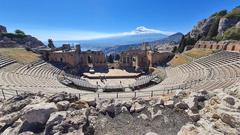
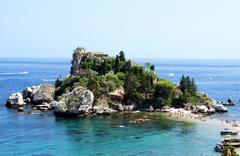
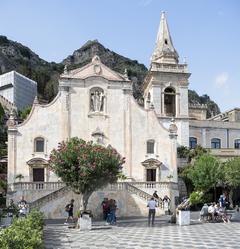
Taormina
Must-visitGo for the Ancient Theatre, Isola Bella
Top sights
- Teatro Antico di Taormina1 to 1.5 hours; EUR 14 full, EUR 7 reduced; book ahead for a summer performance
- Isola Bellahalf a day; free to the beach, a small fee for the nature-reserve museum
Book ahead: Ancient Theatre
Read the full sectionShowing Taormina
A week covers Palermo, Taormina, Syracuse and Agrigento at an easy pace. With ten days to two weeks, add the Aeolian Islands, the Baroque towns of the Val di Noto and western Sicily around Trapani. Each place and experience below carries the time it takes, what to book and the official price where one exists.
- Book the Valley of the Temples and Mount Etna first. Summer tickets and cable-car slots sell out, and Etna's upper station can close without notice.
- Rent a car for the Val di Noto and the west. Trains and buses cover the big cities; Noto, Modica, Ragusa and Segesta go faster with a car or a guided day trip.
- Give the Aeolian Islands two full days, not one. A Milazzo day trip only reaches one or two islands at a rush.
Where to go in Sicily
These 16 towns and islands run from the must-sees down. A MonkeyEatingMango itinerary tags each sight Must-do, Maybe or Skip if tired.
Taormina
Must-visit
- Teatro Antico di Taormina: 1 to 1.5 hours; EUR 14 full, EUR 7 reduced; book ahead for a summer performance
- Isola Bella: half a day; free to the beach, a small fee for the nature-reserve museum
- Plan it: 7-day Sicily itinerary
Taormina is Sicily's best-known resort town, a clifftop resort packed solid in July and August and nearly empty between November and Easter. Its Ancient Theatre, built in the 2nd century BC, still frames Mount Etna behind the stage.
Walk Corso Umberto, the pedestrian spine between the old town's two gates, up to Piazza IX Aprile's clock tower and terrace view. Isola Bella, a small island on a sandbar below the town, has a marine reserve for snorkeling. The Alcantara Gorges, a basalt canyon cut by Etna's lava, are a short drive away for a cooler afternoon.
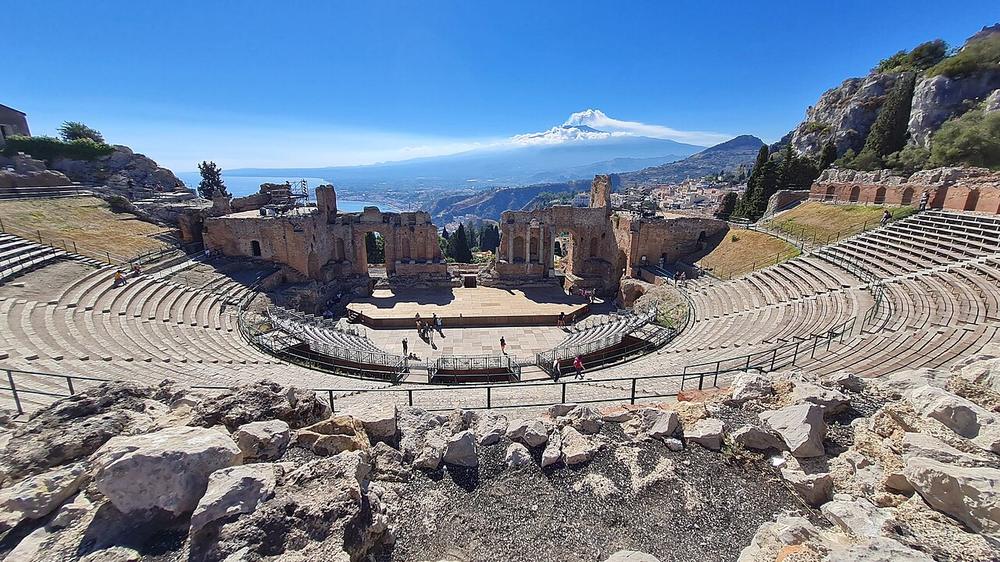 Derbrauni (CC BY 4.0)
The ancient Greek theater of Taormina, with Mount Etna behind the stage
Palermo
Must-visit
- Palazzo dei Normanni and the Cappella Palatina: 1.5 to 2 hours; Thu-Mon EUR 14.50 full, Tue-Wed EUR 10.00; book online in peak season; UNESCO (Arab-Norman Palermo and the Cathedral Churches of Cefalù and Monreale, 2015)
- Mercato di Ballarò: 2 to 3 hours, best in the morning
- Plan it: 7-day Sicily itinerary, Palermo in June
Palermo is Sicily's capital and the gateway airport for most trips to the island, a city of Arab-Norman palaces built over a Baroque and Spanish past.
The Cappella Palatina, inside the Palazzo dei Normanni, covers its walls in Byzantine gold mosaics commissioned by the Norman king Roger II in 1140. At Ballarò, Palermo's oldest market, vendors have sold produce and street food for close to a thousand years. Order arancine or pane câ meusa, a Palermo sandwich of boiled and fried calf spleen, then walk on to the nearby Vucciria and Capo markets.
For a different side of the city, the No Mafia Memorial on Corso Vittorio Emanuele traces Palermo's Mafia and anti-Mafia history in a palazzo a few streets from the markets.
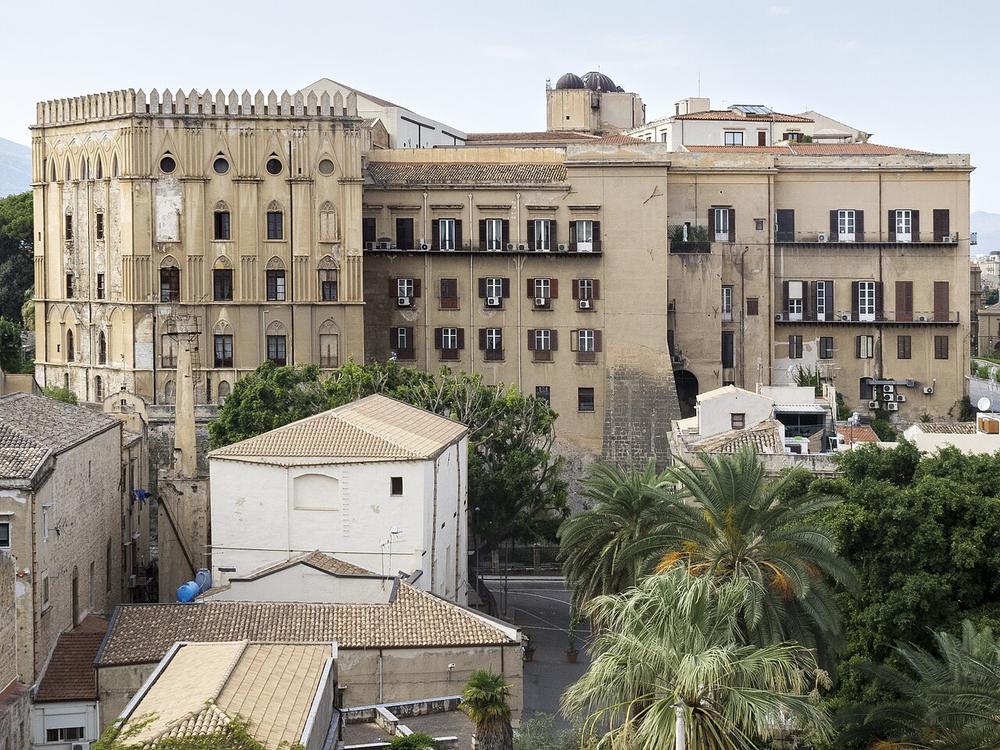 Jules Vaulont (CC BY-SA 4.0)
Palazzo dei Normanni, home to the Cappella Palatina
Cefalù
Must-visit
- Cathedral and La Rocca: 2 to 3 hours including the climb; UNESCO (Arab-Norman Palermo and the Cathedral Churches of Cefalù and Monreale, 2015)
- Plan it: 7-day Sicily itinerary
Cefalù is a fishing village turned beach town an hour from Palermo, its Norman cathedral part of the same Arab-Norman UNESCO listing as Palermo and Monreale.
Climb La Rocca, the cliff behind the old town, for a view down over the cathedral and rooftops to the sea. The town beach sits just below the medieval streets and gets crowded for its size in summer, so a shoulder-season visit is easier.
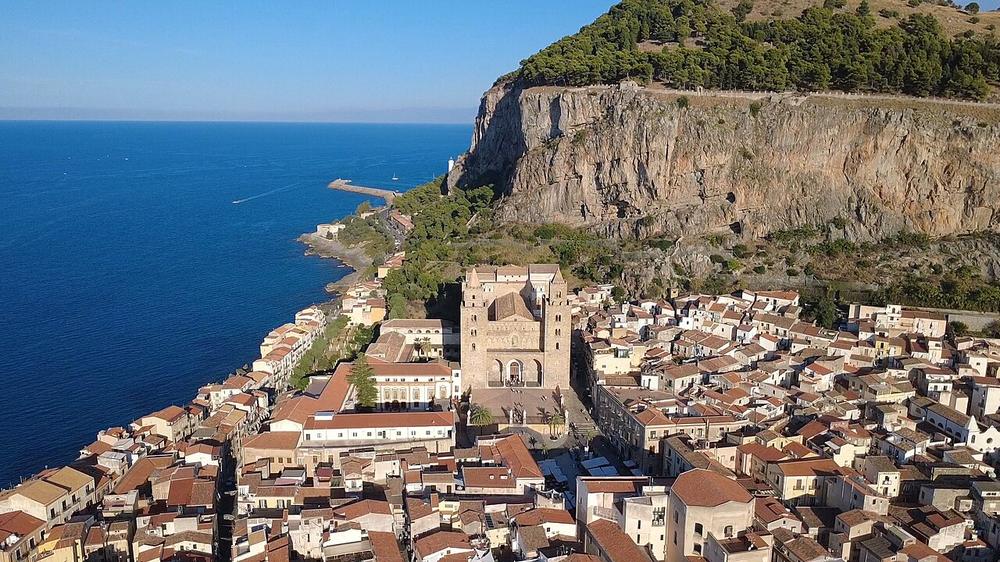 Enricopis (CC BY-SA 4.0)
Cefalu's Norman cathedral below La Rocca
Noto
Must-visit
- The Baroque old town: half a day to a full day; UNESCO (Late Baroque Towns of the Val di Noto, 2002)
- Infiorata flower festival: May
- Plan it: 7-day Sicily itinerary
Noto was rebuilt in honey-colored limestone after the earthquake of 1693 destroyed the original hill town, one of four Val di Noto towns most trips combine on a single day.
Climb the steps of Noto's cathedral, then walk a few doors along Via Nicolaci to Palazzo Nicolaci di Villadorata for its carved stone balconies. Noto's Infiorata, a flower-petal street festival, fills the same street every May.
Vendicari Nature Reserve, with its unspoiled beaches and migratory birds, sits just south of town.
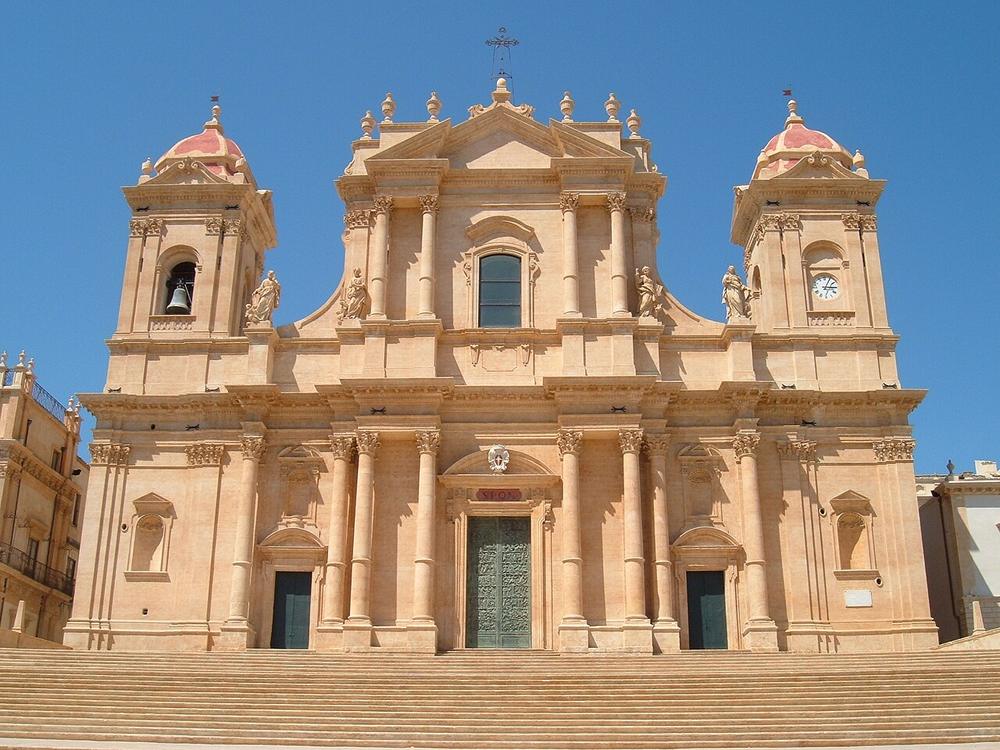 Pequod76 (CC BY-SA 3.0)
Noto's cathedral, rebuilt in honey-colored limestone
Syracuse and Ortigia
Must-visit
- Neapolis Archaeological Park: half a day; EUR 14 full, EUR 7 reduced; book ahead for the May-June drama festival; UNESCO (Syracuse and the Rocky Necropolis of Pantalica, 2005)
- Ortigia old town and market: half a day
- Plan it: 7-day Sicily itinerary
Syracuse was, by Cicero's account, the largest city in the ancient world in its heyday, bigger than Athens or Corinth. Its Greek theater at the Neapolis Archaeological Park still seats a classical drama festival every May and June.
Ortigia, the small island connected to the mainland by two short bridges, holds the old town's cathedral and a daily market for lunchtime oysters. The Ear of Dionysius, an artificial limestone cave famous for its acoustics, sits inside the park. Pantalica, a Bronze Age necropolis of more than 5,000 rock-cut tombs in a river gorge nearby, shares Syracuse's UNESCO listing.
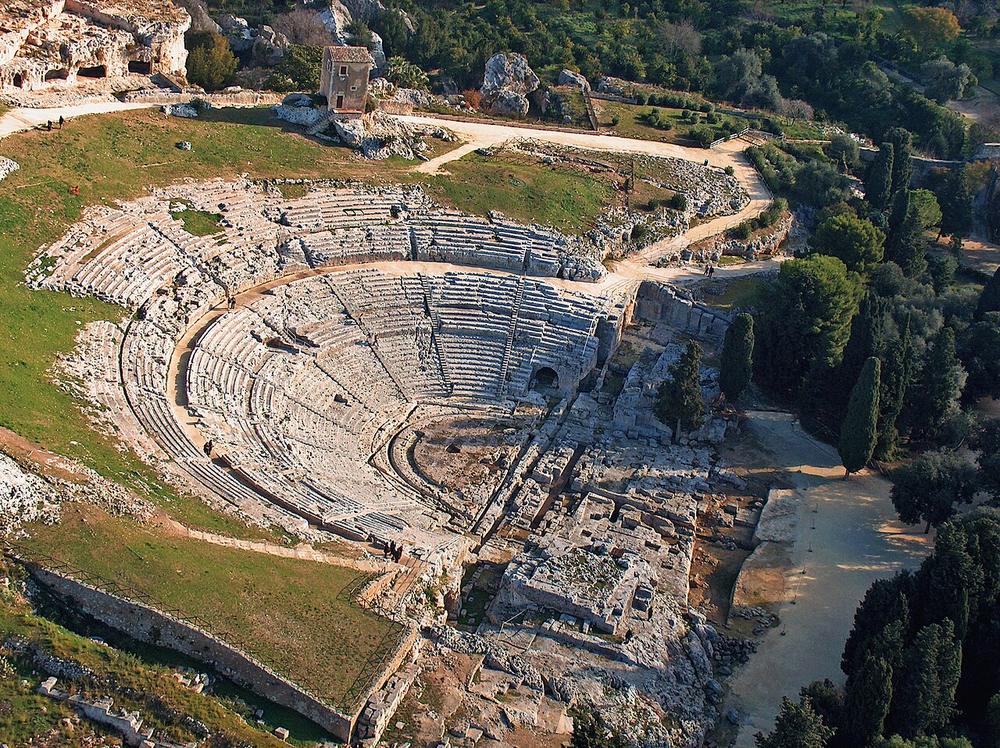 fotovideomike (CC BY-SA 2.0)
Syracuse's Greek theater, part of the Neapolis Archaeological Park
Agrigento
Must-visit
- Valley of the Temples: 3 to 4 hours; EUR 14 full, EUR 7 reduced, EUR 20/15 combined with the Kolymbethra Garden; book ahead for the summer night openings; UNESCO (Archaeological Area of Agrigento, 1997)
- Plan it: 7-day Sicily itinerary
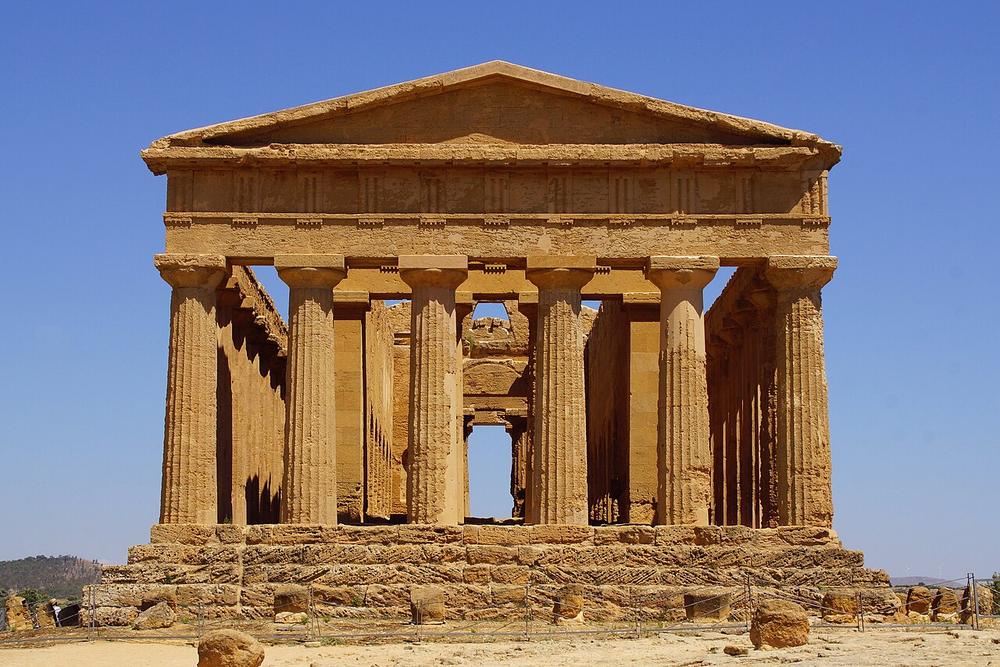
Agrigento's Valley of the Temples holds eight Doric temples from the 5th and 6th centuries BC strung along a ridge above the modern town.
The Temple of Concordia is one of the best-preserved Doric temples anywhere. A summer evening ticket lets you walk the ridge by moonlight after the day's heat breaks. Scala dei Turchi, the white limestone cliff that steps down into the sea, lies a short drive west of town.
 Wolfgang Pehlemann (CC BY-SA 3.0 de)
The Temple of Concordia, Valley of the Temples
Catania
Must-visit
- La Pescheria fish market: 2 to 3 hours, best in the morning
- Plan it: 7-day Sicily itinerary
Catania, Sicily's second city, was rebuilt in black lava stone after a 17th-century earthquake, close enough to Mount Etna to work as the volcano's main gateway town.
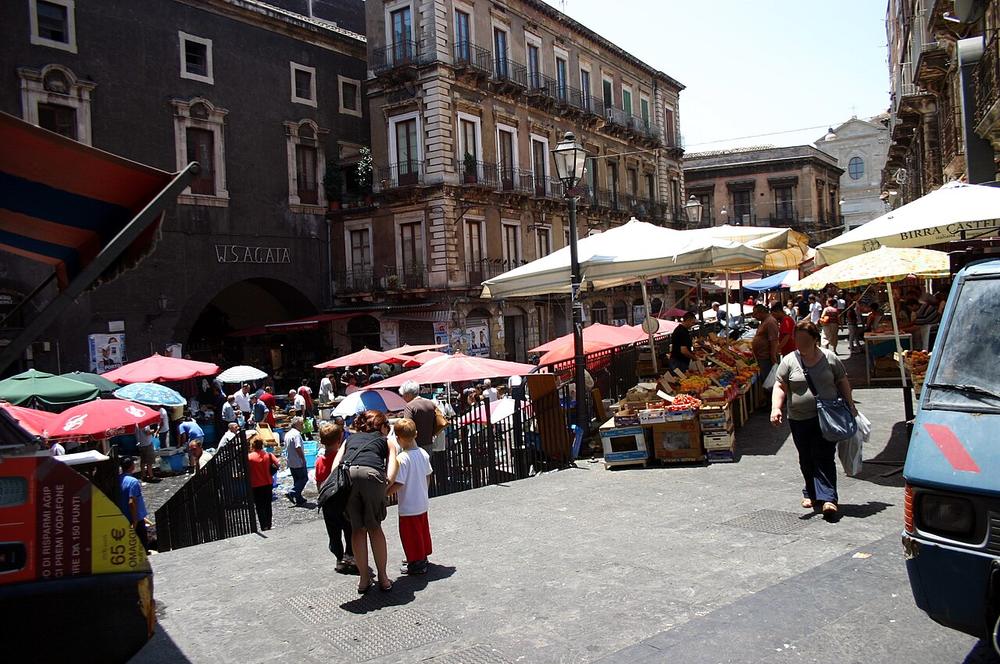
La Pescheria, the morning fish market behind Piazza del Duomo, is as much theater as shopping, with vendors calling out prices over ice-packed swordfish and tuna. Via Crociferi, lined with Baroque churches and convents, runs a few streets north for a quieter walk.
Catania and Palermo share much of Sicily's street food, from arancine to granita with brioche, sold from both cities' markets and corner stalls.
 Giovanni Dall'Orto
La Pescheria, Catania's fish market
Ragusa
- Ragusa Ibla: half a day to a full day; UNESCO (Late Baroque Towns of the Val di Noto, 2002)
- Plan it: 7-day Sicily itinerary
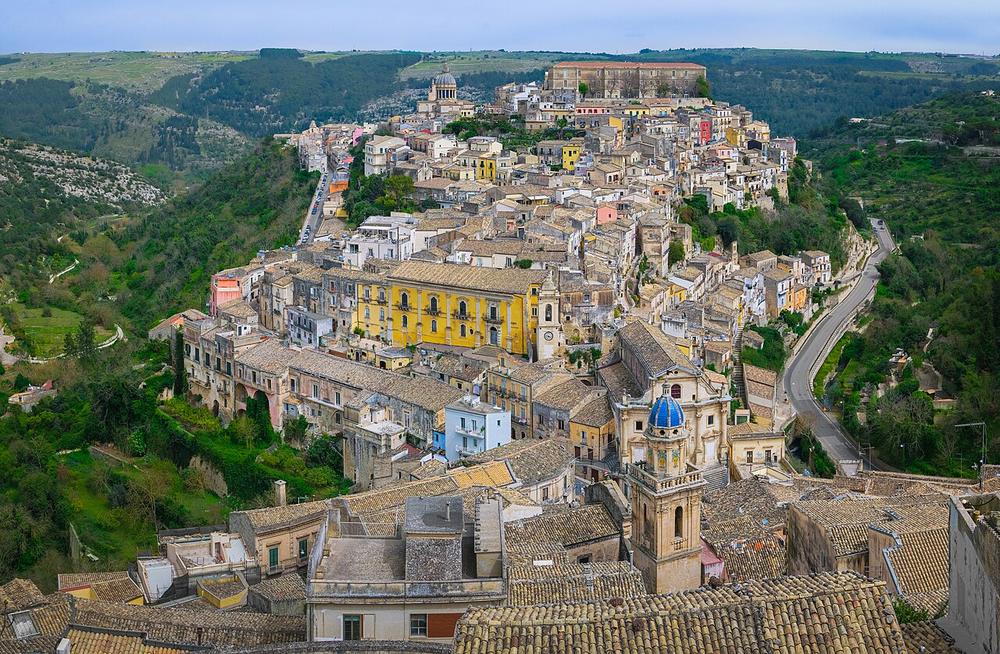
Ragusa splits into two halves: Ragusa Superiore, the newer upper town, and Ragusa Ibla, the Baroque old town below it, linked by a deep ravine and steep stone steps.
Walk down into Ibla past the Gothic portal of San Giorgio's church and the elevated terrace of Santa Maria dell'Itria for a view back over the rooftops. Climb the stepped walk between the two halves early, before the afternoon heat sets in.
 Chris Down (CC BY 4.0)
Ragusa Ibla, the old half of Ragusa
Trapani
- The salt pans of Trapani and Paceco: 1 to 2 hours; book a sunset tour ahead
- Plan it: 7-day Sicily itinerary
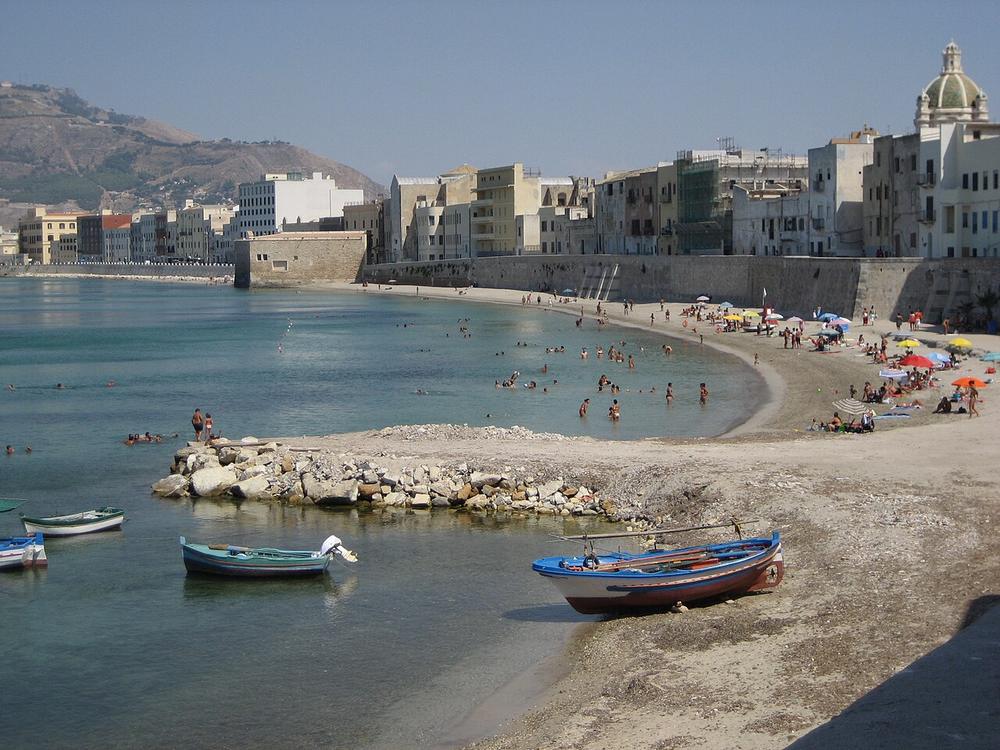
Trapani is the practical base for western Sicily, a port city with ferries to the Egadi Islands and a historic center built on a narrow spit of land.
The salt pans just outside town, worked since Norman times and now a protected wetland, draw flamingos from February through August and still use windmills to pump seawater between the ponds. From Trapani, Erice is a cable-car ride up, and Segesta's temple is a short drive east.
 TrapaneseEricino (CC BY-SA 3.0)
Trapani's old town along its sea walls
Favignana
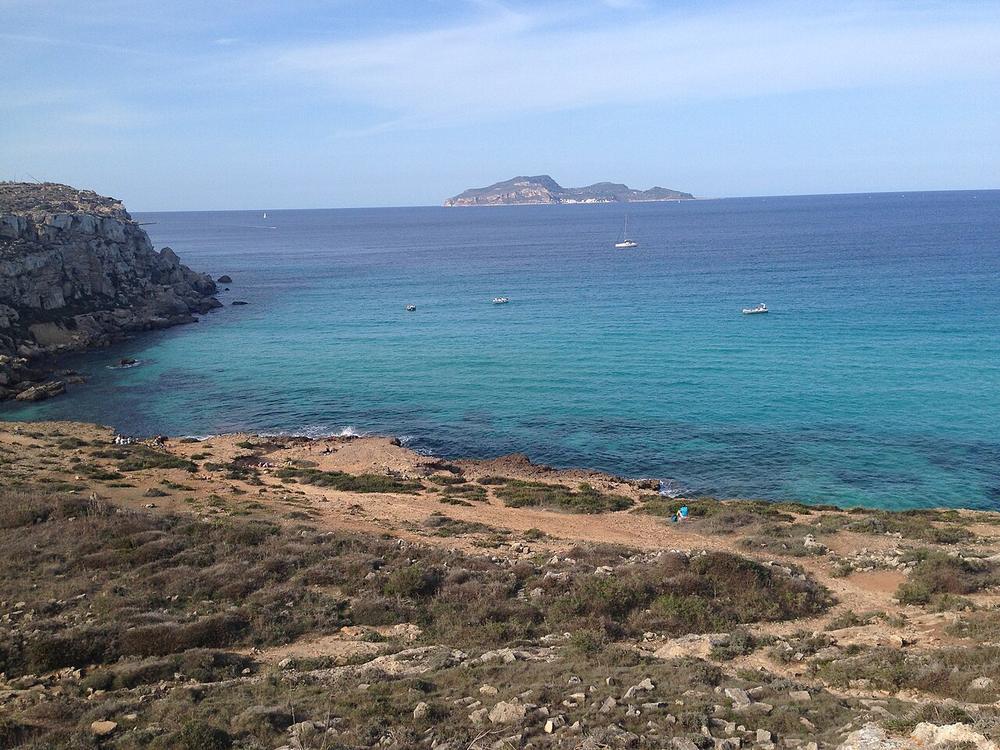
- Cala Rossa: a day trip, or 2 to 3 nights to stay over; hydrofoil tickets book up in July and August
- Plan it: 7-day Sicily itinerary
Favignana, the largest of the five Egadi Islands, is a 45-minute hydrofoil ride from Trapani and flat enough to cross entirely by bicycle.
Cala Rossa, cut into the island's old tuff quarries, is Favignana's best-known cove for swimming. Levanzo, a smaller neighboring island, holds Paleolithic cave art of goats and dolphins reached by a short boat ride from Favignana's port; book the cave visit online at least 48 hours ahead.
 Davide Mauro (CC BY-SA 4.0)
Cala Rossa, Favignana's best-known cove
Monreale
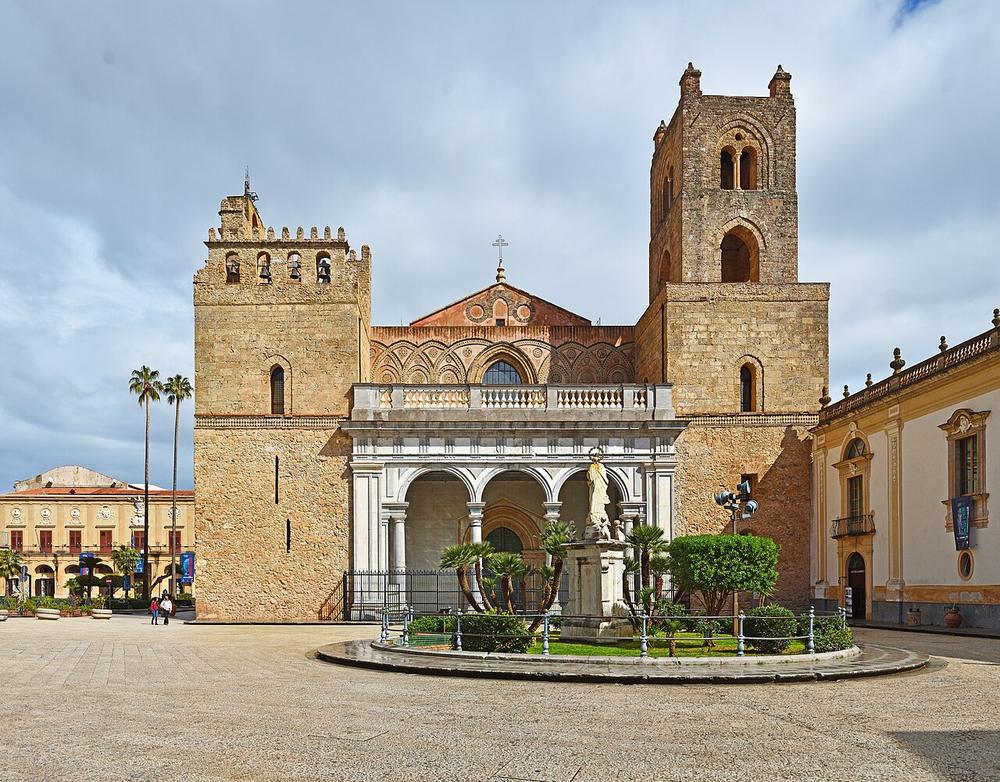
- Cathedral and cloister: half a day; EUR 8 full, EUR 4 reduced for the cloister; book online in peak season; UNESCO (Arab-Norman Palermo and the Cathedral Churches of Cefalù and Monreale, 2015)
- Plan it: 7-day Sicily itinerary
Monreale sits on a hill just outside Palermo, built around a cathedral whose interior is covered almost entirely in gold mosaic.
Go in the morning, before the tour-bus groups arrive from Palermo's cruise port. The adjoining cloister, ringed by carved marble columns, is the cathedral complex's only ticketed section.
 Ludvig14 (CC BY-SA 4.0)
Monreale Cathedral's facade
San Vito Lo Capo
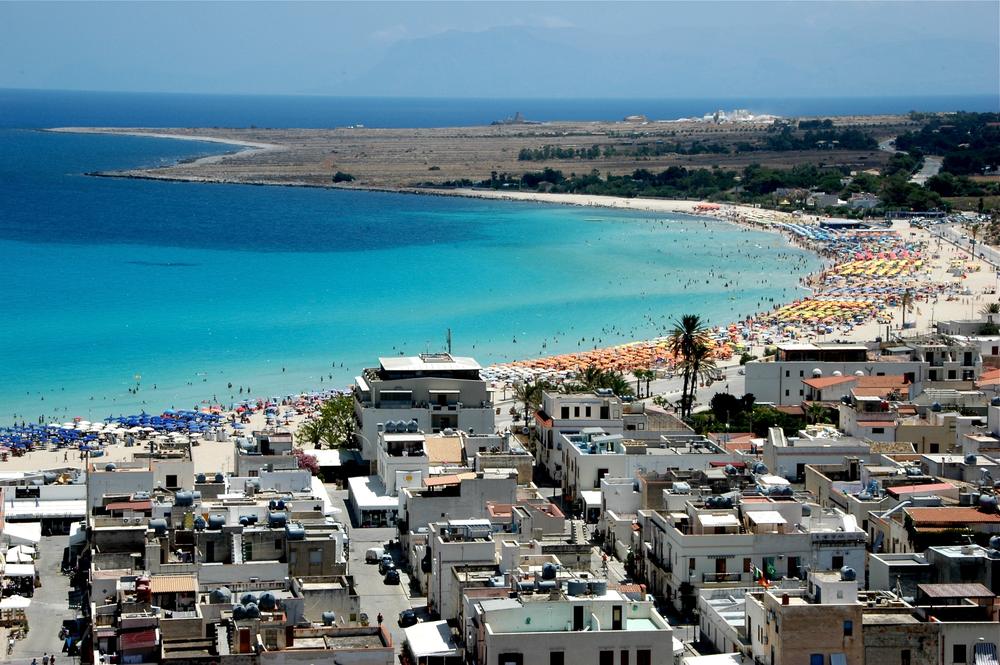
- The beach: a beach day, or an overnight; book a sunbed ahead in August
- Plan it: 7-day Sicily itinerary
San Vito Lo Capo sits on Sicily's northwest tip, a 3-kilometer bay of white sand and turquoise water that was once a quiet fishing village.
The Riserva dello Zingaro, Sicily's first nature reserve, begins just south of town and is reached only on foot once you're inside. Swim June through September, when the water is warm enough to linger in.
 Roberto Fontana (CC BY 2.0)
San Vito Lo Capo's beach
Segesta
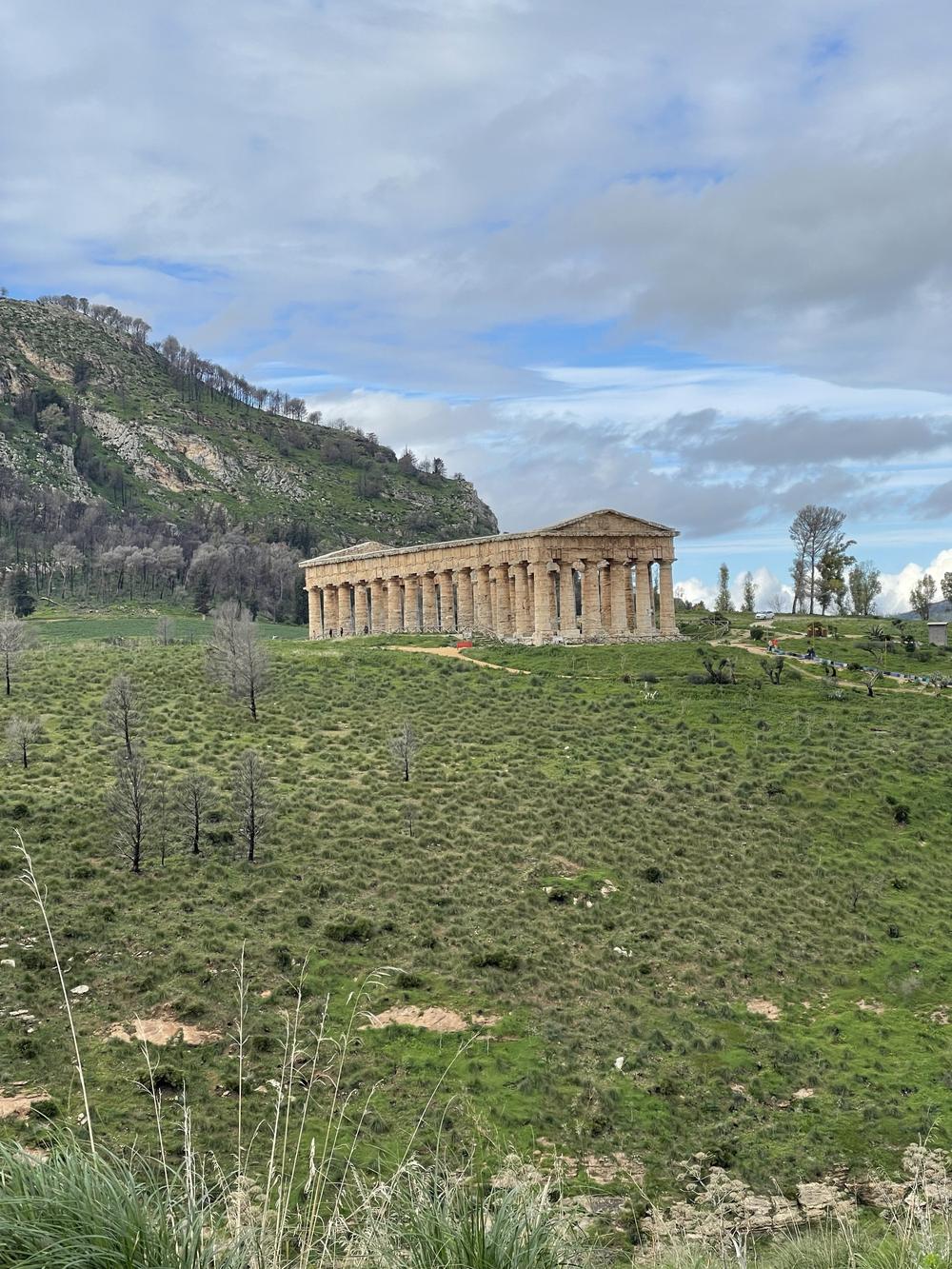
- The Doric Temple and theater: 2 hours; UNESCO: not inscribed, on Italy's Tentative List
- Plan it: 7-day Sicily itinerary
Segesta's Doric temple, raised by the ancient Elymians in the 5th century BC, was never finished, and its columns still stand without the fluting a completed temple would carry.
A Greek theater caps the hill above the temple, with views that reach the surrounding hills in good weather. Segesta pairs naturally with Selinunte, a sea-facing temple site further south, for a day that covers two of western Sicily's ancient sites.
 Kned Wiki (CC0)
The Doric temple at Segesta
Modica
- Modica Alta and the chocolate workshops: half a day; UNESCO (Late Baroque Towns of the Val di Noto, 2002)
- Plan it: 7-day Sicily itinerary
Modica, known as the City of a Hundred Churches, climbs a ravine in two tiers, with the Duomo di San Giorgio's staircase as its centerpiece view.
The town's chocolate is ground cold rather than conched, a method that traces to Spanish colonial Mexico and leaves the bars grainy with visible sugar crystals. Antica Dolceria Bonajuto, in Modica Alta, still works this way and offers samples.
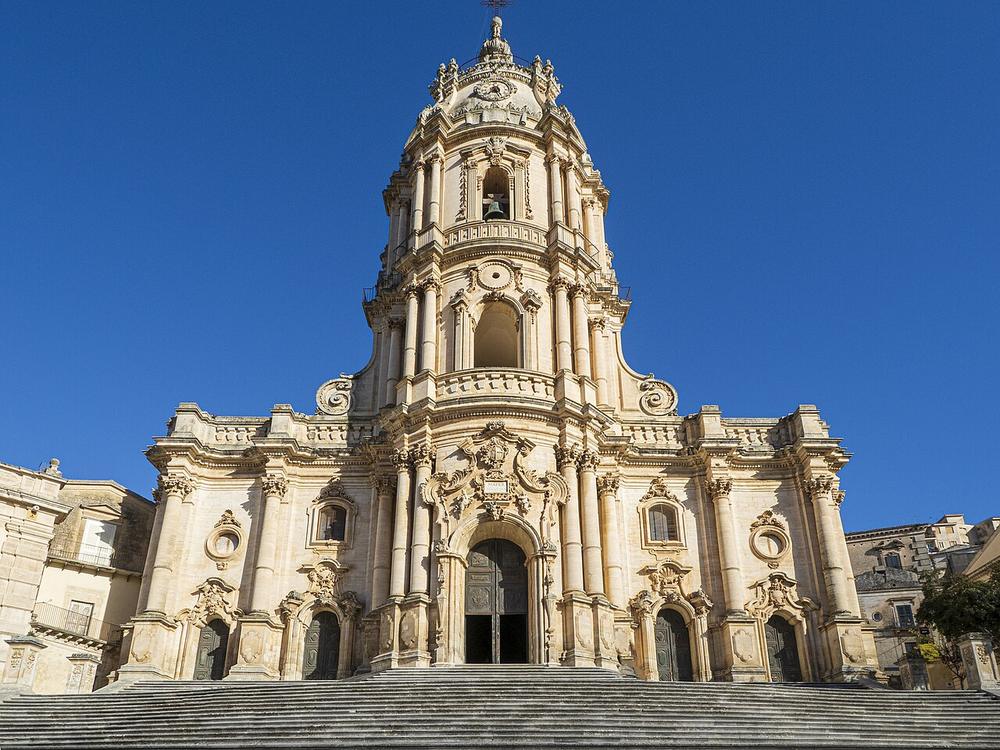 Pasquale Relvini (CC BY-SA 4.0)
The Church of San Giorgio in Modica
Erice
- Castello di Venere: half a day; cable car from Trapani
- Plan it: 7-day Sicily itinerary
Erice sits atop a mountain above Trapani, a medieval village reached by cable car and often wrapped in cloud even when the coast below is clear.
Castello di Venere, a Norman castle, crowns the town's highest point. Built over an ancient Elymian and Phoenician temple to Venus, its view reaches the salt pans and, on a clear day, Tunisia. Stop at Pasticceria Maria Grammatico, Erice's well-known pastry shop, before heading back down.
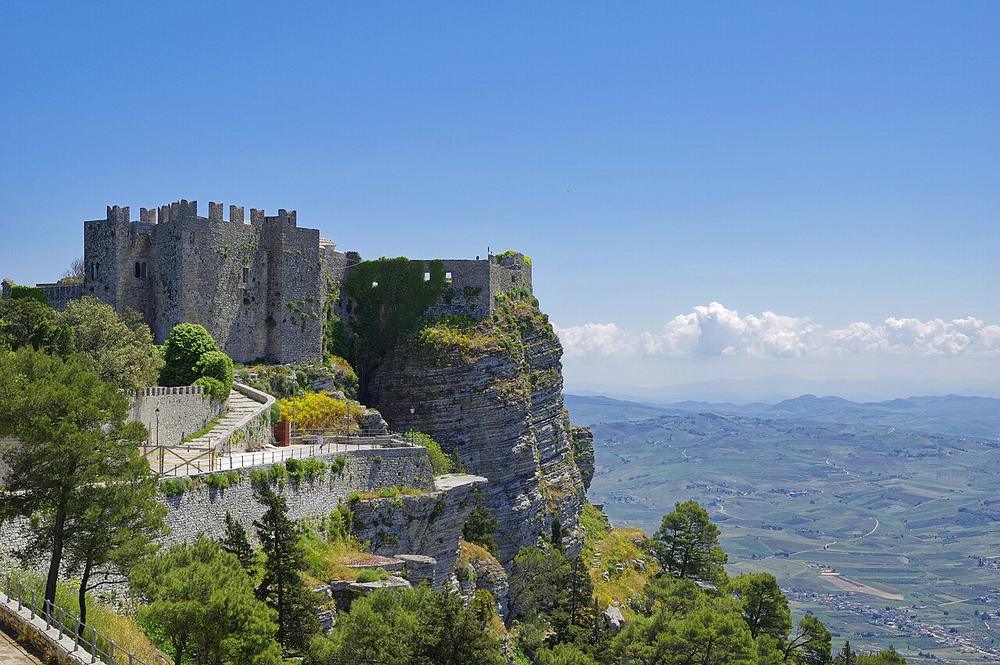 Berthold Werner (CC BY-SA 4.0)
Castello di Venere, Erice
Piazza Armerina
- Villa Romana del Casale: 2 to 3 hours; EUR 14 full, EUR 7 reduced; UNESCO (Villa Romana del Casale, 1997)
- Plan it: 7-day Sicily itinerary
Villa Romana del Casale, in the hills outside Piazza Armerina, holds the world's largest in-situ collection of Roman mosaics. A mudslide buried the villa for most of the 20th century, until excavation began in the 1950s.
The villa's best-known mosaic, ten women in exercise dress, covers a room near the baths. Come in the morning for the best light on the floors.
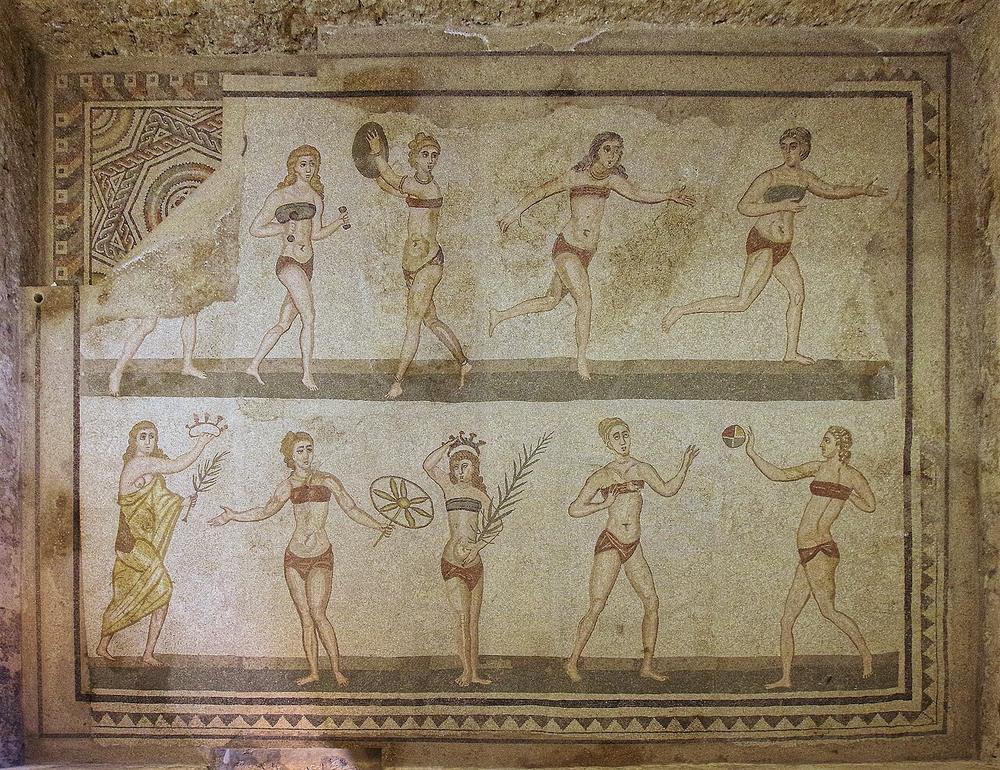 Berthold Werner (CC BY-SA 4.0)
The bikini girls mosaic at Villa Romana del Casale
Things to do across Sicily
Hike Mount Etna and taste its wines
- Cable car and guide package: half a day; the Tour 3000 package EUR 82, the 2500m cable car EUR 54; book ahead, weather and activity can close the upper station without notice
- Wine tasting: half a day, along the Strada del Vino dell'Etna
- Best months: year-round for the volcano; September and October for the wine harvest
Mount Etna, Europe's largest and most active volcano, rises to about 3,330 meters. UNESCO calls its eruptive record "one of the world's longest documented records of historical volcanism," spanning at least 2,700 years.
Above the cable car's upper station, a guide is required; book the cable car, 4x4 bus and guide together for the trip to around 3,000 meters. On the lower slopes, vineyards planted in volcanic soil grow the Nerello Mascalese and Carricante grapes, best tasted during the September and October harvest.
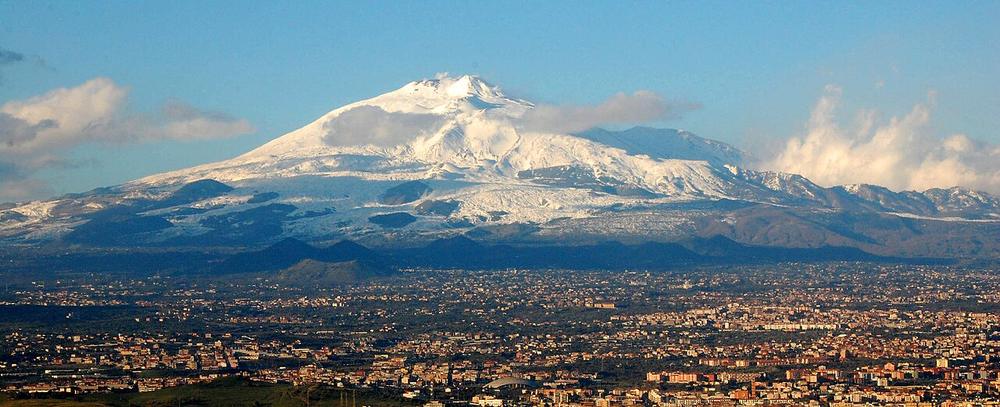 BenAveling (CC BY-SA 4.0)
Mount Etna above Catania
Island-hop the Aeolian Islands
- Hydrofoils: book ahead for July and August
- Stromboli's volcano: guided excursions reach 400m above sea level, unguided to 290m; EUR 30 per person, EUR 25 under 12
- Best months: May to October
The Aeolian Islands, seven volcanic islands off Sicily's northeast coast, need at least two days to see properly rather than a rushed day trip from Milazzo.
Since the paroxysmal eruptions of 2019, access to Stromboli's summit has been closed. A certified guide can lead an evening excursion to 400 meters above sea level to watch the volcano's lava activity; without a guide, the limit is 290 meters.
Lipari, the archipelago's main island, has the region's archaeological museum and the most ferry connections; Salina and Vulcano sit on the same hydrofoil network for an island-hopping day.
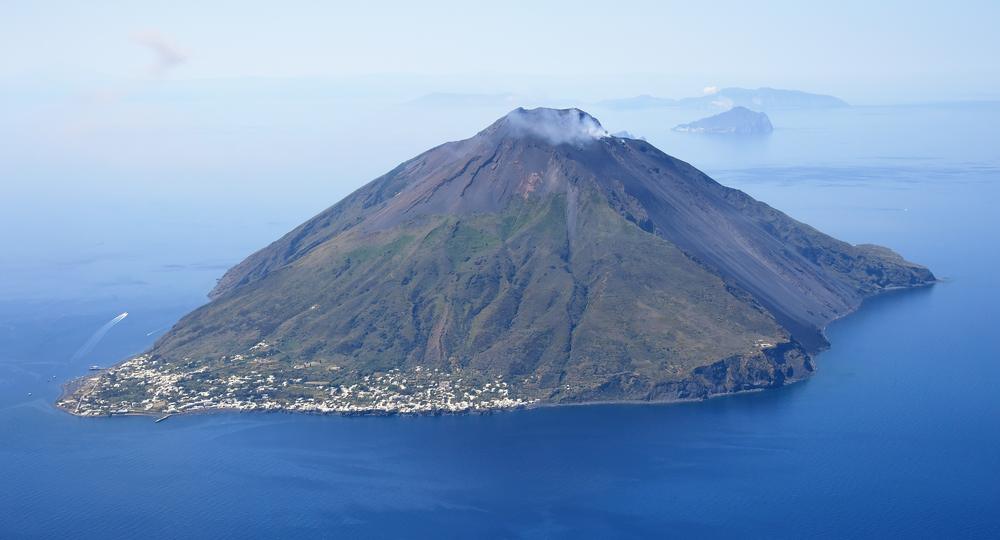 Carsten Steger (CC BY-SA 4.0)
Stromboli, seen from the air, with Panarea in the background
Tour the Baroque towns of the Val di Noto
- Noto, Modica, Ragusa and Scicli: a full day for two or three towns; a rental car or a guided day trip links them
- Best months: spring and autumn
Eight towns in southeastern Sicily were rebuilt in a matching Baroque style after the earthquake of 1693, and Noto, Modica, Ragusa and Scicli are the four most trips combine into a single day.
Caltagirone, a fifth inscribed town further north, is known for hand-painted ceramics and the 142-step Scalinata di Santa Maria del Monte, a tiled staircase up to the church of the same name. Lamps light the steps each July for the Festa di San Giacomo.
Scicli, the fourth inscribed town on the usual route, is quieter than its three neighbors and worth a stop for its own Baroque town hall.
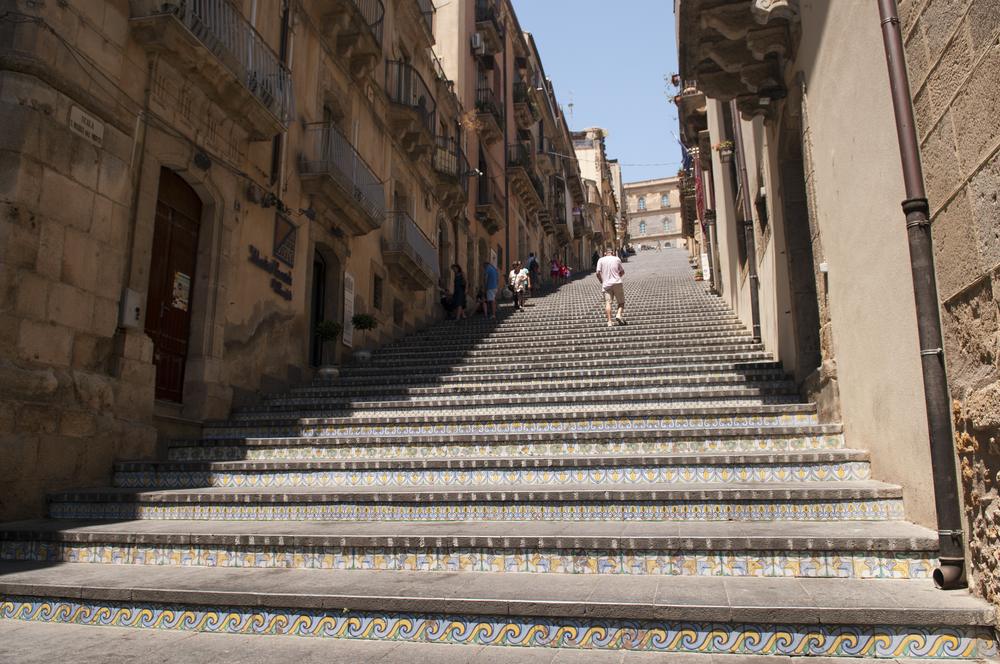 Michal Osmenda (CC BY-SA 2.0)
Caltagirone's tiled Scalinata di Santa Maria del Monte
Visit Scala dei Turchi
- The Blue Pass: EUR 5 per person, including insurance
- Best time: sunset
Scala dei Turchi, a white limestone cliff that steps down into the sea near Agrigento, was closed to foot access to protect the rock from erosion.
An ordinance from May 2025 reopened part of the promontory to controlled pedestrian access through a paid Blue Pass, which includes insurance for the walk down. Go at sunset, when the white stone catches the light best; the cliff is a short drive from the Valley of the Temples.
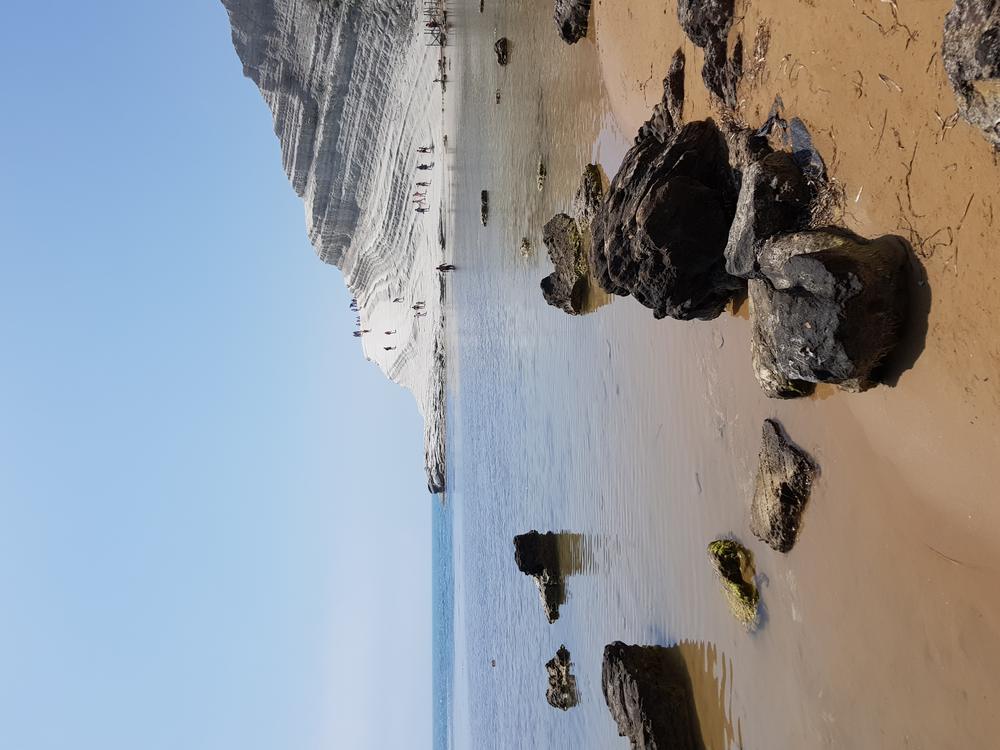 Gloria Gilda (CC BY-SA 4.0)
Scala dei Turchi, the white limestone cliff near Agrigento
Hike the Riserva dello Zingaro
- The reserve: half a day to a full day; a small entry fee is paid at the gate
- Best months: spring and autumn for hiking, summer for the coves
The Riserva dello Zingaro was Sicily's first nature reserve, created in 1981 to protect 7 kilometers of coastline that has no road, only a footpath.
Coves like Cala Berretta are reached only on foot from one of the reserve's two entrance gates, so bring water: there are no services once you're inside. Hike in spring or autumn for cooler temperatures, or come in summer for a swim along the way.
Try free
Plan your Sicily trip in about 2 minutes
Tap through 8 quick cards for a complete itinerary with budget, maps, and packing lists. No account required.
Plan your Sicily trip →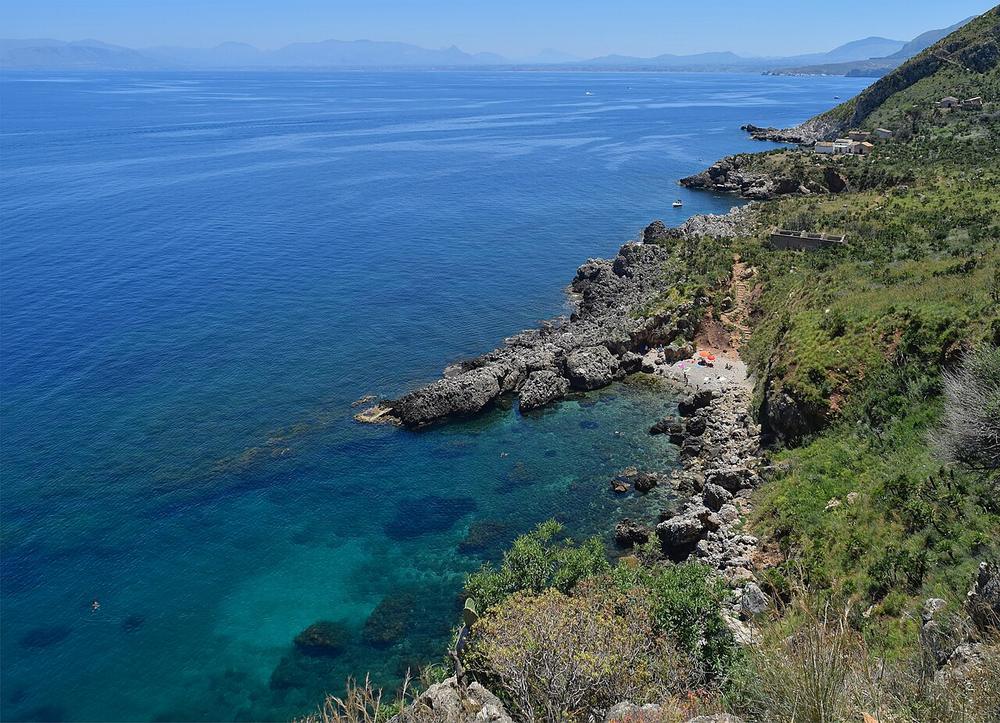 The Cosmonaut (CC BY-SA 4.0)
Cala Berretta, a cove in the Zingaro Nature Reserve
More places to add to a trip
| Place | Go for | Region |
|---|---|---|
| Marsala | fortified wine cellars and the Phoenician ruins of Mozia | Trapani province |
| Scopello | a historic tuna tonnara at the Zingaro reserve's southern gate | Trapani province |
| Pantelleria | volcanic coastline, Moscato di Pantelleria and traditional dammusi | Pantelleria |
| Castelmola | a hilltop village above Taormina with views over Etna | Messina province |
Day trips from Palermo, Taormina and Trapani
| Base | Day trips |
|---|---|
| Palermo | Monreale, Cefalù |
| Taormina | Mount Etna, Castelmola |
| Trapani | Erice, Favignana and the Egadi Islands |
The best places to visit in Sicily at a glance
| Place | Go for | Book ahead |
|---|---|---|
| Taormina | the Ancient Theatre, Isola Bella | Ancient Theatre |
| Palermo | the Palazzo dei Normanni, street markets | Palazzo dei Normanni |
| Cefalù | the Norman cathedral and town beach | no |
| Noto | the Baroque old town | no |
| Syracuse and Ortigia | Neapolis Archaeological Park, Ortigia's old town | Neapolis park, peak season |
| Agrigento | the Valley of the Temples | summer night openings |
| Catania | the fish market, gateway to Etna | no |
| Ragusa | Ragusa Ibla | no |
| Trapani | the salt pans, gateway to Erice and the Egadi Islands | no |
| Favignana | Cala Rossa and the Egadi Islands | hydrofoil, summer |
| Monreale | the cathedral and cloister | cloister, peak season |
| San Vito Lo Capo | the beach, gateway to the Zingaro reserve | sunbeds in August |
| Segesta | the Doric Temple and theater | no |
| Modica | chocolate and the Baroque old town | no |
| Erice | Castello di Venere | no |
| Piazza Armerina | Villa Romana del Casale's mosaics | no |
Plan your Sicily trip
For trip length, getting around and costs, start with the Sicily guide. The Sicily food guide covers what to eat at each stop, and the Italy things to do guide picks up the mainland's own sights. When you build a trip with MonkeyEatingMango, the booking checklist lists what to book and how many weeks ahead, and every sight on a day's plan is marked Must-do, Maybe or Skip if tired.
Last updated October 2026.
Common questions
What is the best place to visit in Sicily?
Taormina, Palermo and Agrigento are Sicily's best places to visit on a first trip. Taormina has the Ancient Theatre with Mount Etna behind the stage, Palermo holds the Arab-Norman Palazzo dei Normanni and its street markets, and Agrigento's Valley of the Temples holds eight Doric temples from the 5th century BC.
How many days do I need in Sicily?
A week covers Palermo, Taormina, Syracuse and Agrigento at an easy pace. Ten days to two weeks adds the Aeolian Islands, the Baroque towns of the Val di Noto and western Sicily around Trapani.
What should you not miss in Sicily?
The Valley of the Temples at Agrigento, Mount Etna and Taormina's Ancient Theatre are Sicily's best-known sights. The Baroque towns of the Val di Noto and a trip to the Aeolian Islands round out a first visit.
Do I need a car to get around Sicily?
Trains and buses link Palermo, Catania, Syracuse and Taormina, but a rental car is close to mandatory for the Val di Noto's hill towns and western Sicily around Trapani and Segesta. Ferries and hydrofoils, not a car, reach the Aeolian and Egadi Islands.
Is the Aeolian Islands a day trip or its own trip?
The Aeolian Islands need at least two dedicated days, not a rushed day trip from Milazzo. Hydrofoils between the seven islands fill up in July and August, so book ferry tickets ahead for summer travel.
Can I still climb the Scala dei Turchi?
Yes. A pedestrian path onto part of the promontory reopened under a paid Blue Pass in May 2025, after an earlier closure to protect the limestone. The pass costs 5 euros per person and includes insurance.
Do I need to book Mount Etna or the Valley of the Temples in advance?
Book the Mount Etna cable car and guide package ahead for summer, since weather and volcanic activity can close the upper station without notice. The Valley of the Temples is worth booking ahead for its summer night openings, though a daytime ticket is usually available on the day.
What are the best day trips from Palermo?
Monreale and its Arab-Norman cathedral are the closest day trip from Palermo, half a day away. Cefalù, with its Norman cathedral and sandy beach, is about an hour by train.
What are the best day trips from Taormina?
Mount Etna is the classic day trip from Taormina, reached by cable car and 4x4 tour from the town. Castelmola, a hilltop village with views over Etna, is a short drive or hike above Taormina.
Is Sicilian food different from mainland Italian food?
Yes. Sicily sat under Greek, Arab and Spanish rule in turn, which left it rice, citrus, couscous and sweets the Italian mainland doesn't share in the same way.
How many UNESCO World Heritage Sites does Sicily have?
Sicily has seven UNESCO World Heritage Sites: the Archaeological Area of Agrigento, Villa Romana del Casale, the Aeolian Islands, the Baroque Towns of the Val di Noto, Syracuse and the Rocky Necropolis of Pantalica, Arab-Norman Palermo with the cathedral churches of Cefalù and Monreale, and Mount Etna. The most recent to join the list, Mount Etna, was inscribed in 2013.

Written by Shobhit Shrivastava · Founder
Related reading
Italy travel guide
5 Days on the Amalfi Coast: Positano and Amalfi
5 days split between Positano and Amalfi: 3 nights in Positano (Franco's Bar, Arienzo Beach Club, linen shopping) followed by 2 nights in Amalfi (Duomo di Amalfi, Museo della Carta, Pasticceria Pansa). Comfortable pace with a mix of beach clubs, coastal hiking, and hands-on pasta classes....
A Week on the Amalfi Coast: Positano, Amalfi and Ravello
This 7-day comfortable trip for a couple explores the iconic Amalfi Coast, beginning in Positano for cliffside views and Spiaggia Grande beach, then moving to Amalfi for its Duomo di Sant'Andrea and historic center. The journey concludes in the elevated gardens of Ravello at Villa Rufolo,...
10 Days in Italy: Rome and Florence, from the Colosseum to the Vatican
10 days across Rome and Florence: 6 nights in Rome exploring the Colosseum, Pantheon, and Trastevere, followed by 4 nights in Florence for the Uffizi Gallery, Duomo, and Oltrarno district. Comfortable pace with 5-7 activity hours daily, relying on walking and local metro, featuring private...
Two Weeks in Italy: Rome, Florence and Sorrento on the Amalfi Coast
14 days covering Rome, Florence, and Sorrento. Experience the Colosseum, Uffizi Gallery, and cliffside views of the Tyrrhenian Sea. Comfortable pace with 5-6 hours of daily sightseeing, blending urban historical sites with coastal relaxation. Includes one base per city, frequent walking, and...
Things to Do in Sardinia: 16 Places to Visit
Where to go in Sardinia and what to do there: 16 places from Alghero to Cagliari, plus 10 experiences across the island. Each entry carries the time it takes, what to book and the official price where one exists.
Things to Do on the Amalfi Coast: 12 Towns
Where to go on the Amalfi Coast and what to do there: 12 towns from Positano to Vietri sul Mare, the Path of the Gods, a Capri day trip, and what to book ahead.
Things to Do in Italy and the Best Places to Visit
Where to go in Italy and what to do there: 12 cities and regions with their top sights, then 10 experiences across the country, each with the time it takes, what to book and the official price where one exists.