What should you eat in Sicily, and how does it differ from food on the Italian mainland? Start with arancina in Palermo, a plate of pasta alla Norma in Catania and a slice of sfincione from a street stall. Add pane câ meusa if you want to eat like a Palermitano, couscous alla trapanese in the west and a glass of dry Marsala with dinner. Greek, Arab and Spanish rule each left Sicily something the mainland does not share: rice, sugar and citrus from the Arabs, tomatoes and chocolate from Spain, olives and almonds from Greece.
- Order arancina in Palermo, arancino in Catania. The same fried rice ball goes by two names, two shapes and two genders depending which coast you're on.
- Eat granita with brioche for breakfast, the way Sicilians do, not as an afternoon treat.
- Save the sweet Marsala for after dinner. Sicilians drink the dry style with the meal, not the dessert one.
The Sicilian dishes to eat first
Pasta alla Norma
Iconic dish
- From: Catania
- When: primo, lunch or dinner
- Contains: dairy; vegetarian
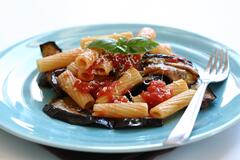
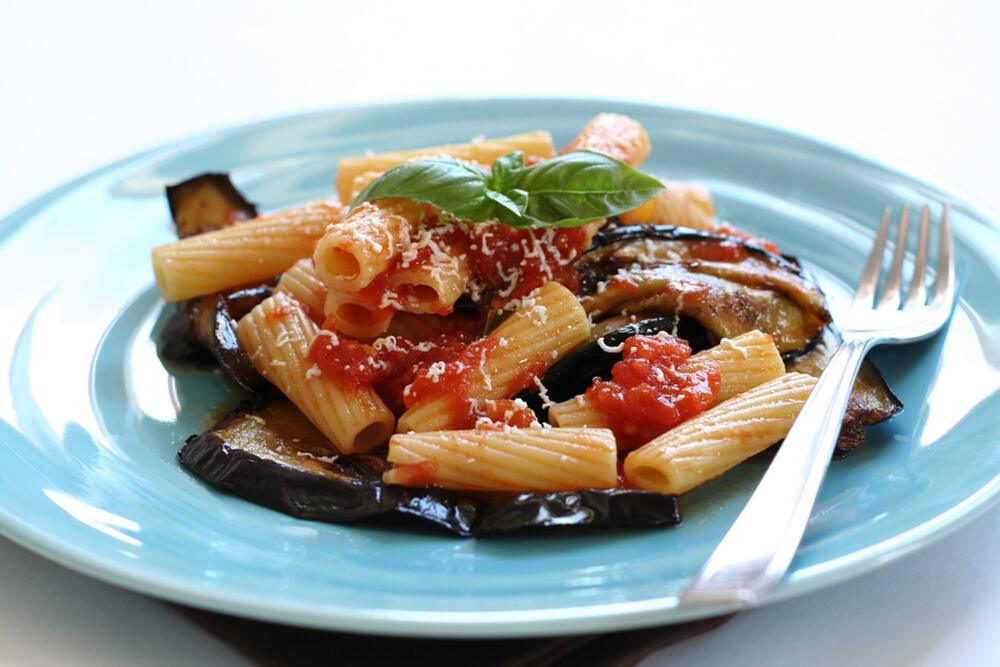
Pasta alla Norma pairs fried eggplant with tomato sauce, basil and a grating of ricotta salata, a salted and aged sheep's-milk ricotta. The dish began in Catania and is now one of the most ordered pastas on the island, the Sicilian answer to a question about the mainland's carbonara or cacio e pepe.
Order it with rigatoni or tortiglioni, the shapes that hold the sauce best. A tomato sugo this simple only works when the eggplant is fried properly, so a bland plate usually means a kitchen that rushed it.
 Paoletta S. (CC BY 2.0)
Pasta alla Norma topped with ricotta salata and basil
Caponata
- From: Sicily-wide
- When: antipasto or contorno, served at room temperature
- Contains: vegan
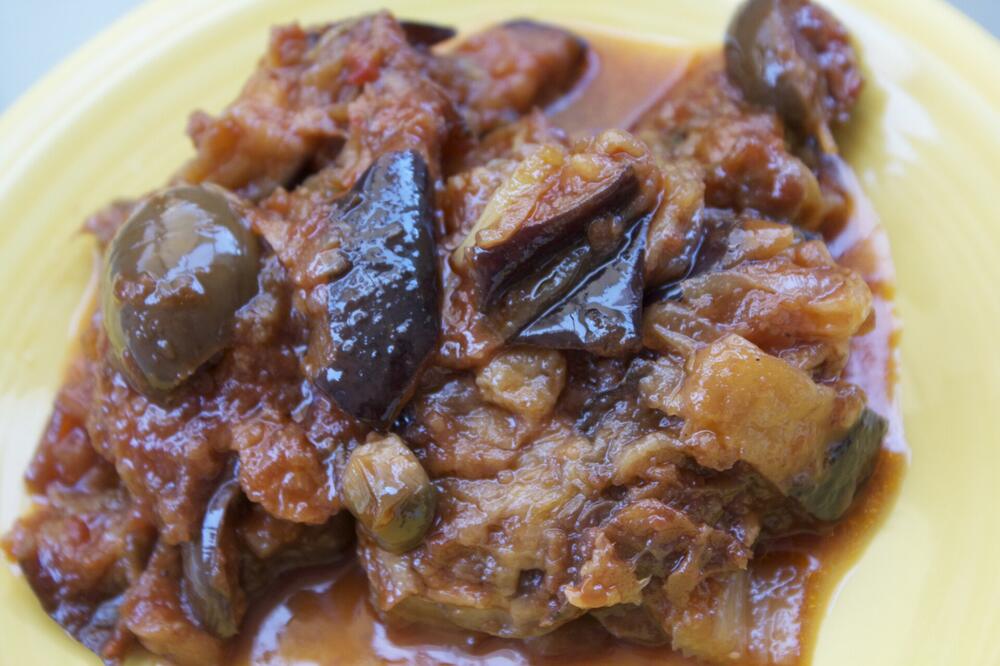
Caponata cooks eggplant in a sweet-and-sour agrodolce sauce with celery, olives, capers and tomato. Sicilians serve it at room temperature, often made a day ahead, and the flavor only improves as it sits.
Every town has its own version. Expect pine nuts and raisins in some, potatoes in others, and treat it as a starter rather than a side.
 Massimoweb (CC BY-SA 3.0)
Sicilian caponata served on a plate
Pasta con le sarde
- From: Palermo
- When: primo
- Contains: fish, nuts
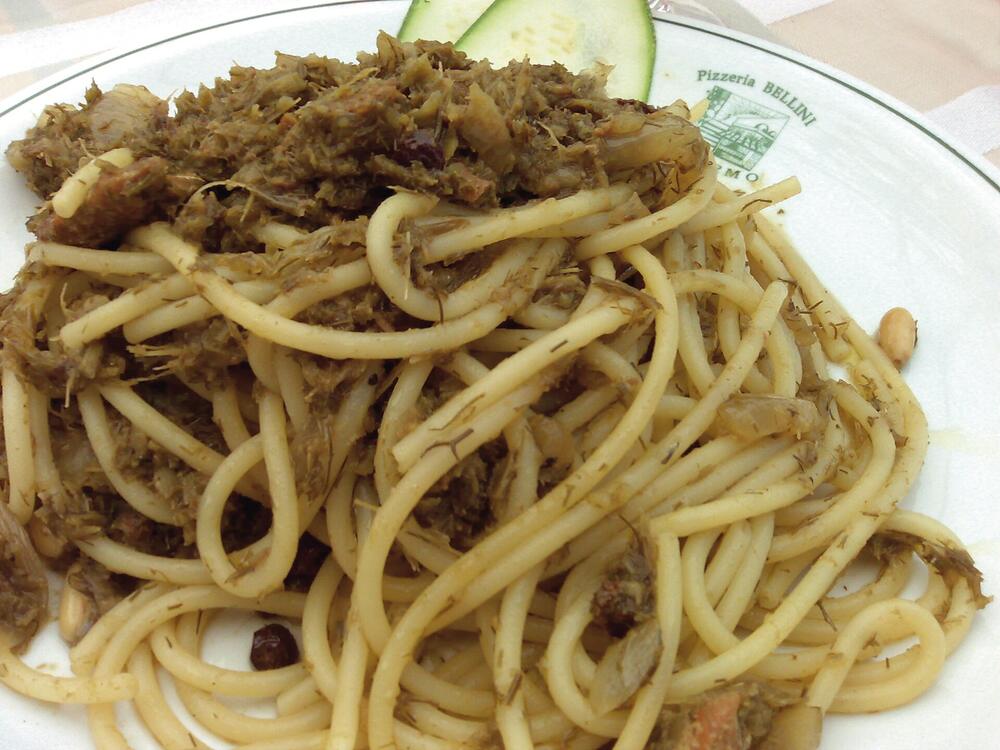
Pasta con le sarde tosses bucatini with sardines, wild fennel, pine nuts, raisins and a thread of saffron, a sweet-and-savory combination that reads strange on paper and works on the plate. Palermo claims the dish.
Ask for it when wild fennel is in season for the version closest to how Palermo eats it.
 Adriao (CC BY 3.0)
Pasta con le sarde served in Palermo
Couscous alla trapanese
- From: Trapani, by way of North Africa
- When: primo, served like a pasta course
- Contains: fish, shellfish
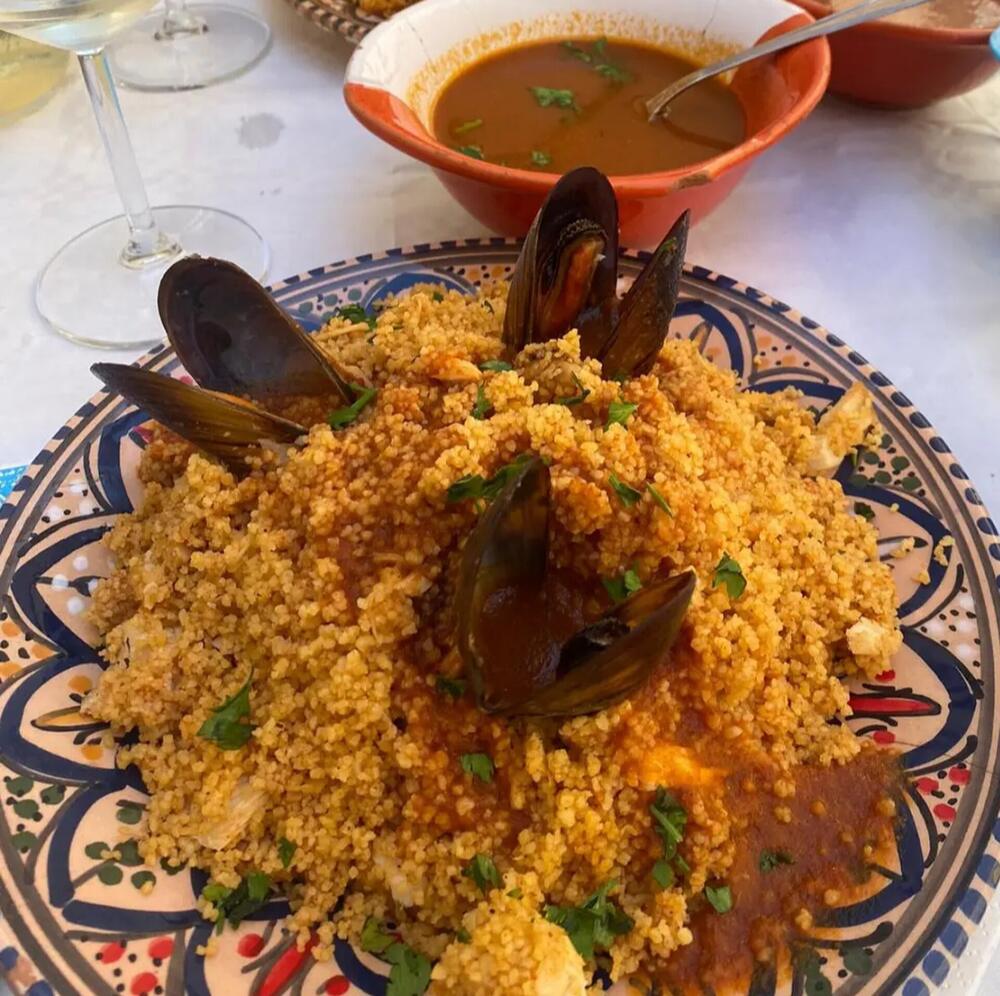
Couscous alla trapanese steams semolina and ladles a saffron fish broth over it, a dish Trapani inherited directly from Tunisia across the strait. Treat it like a first course, the way Trapani does, not a side dish.
Order it in Trapani itself or in San Vito Lo Capo, the two towns most associated with the dish.
 Civa61 (CC BY 4.0)
Couscous alla trapanese with mussels and fish broth
Busiate alla Trapanese
- From: Trapani province
- When: primo
- Contains: nuts, dairy; vegetarian
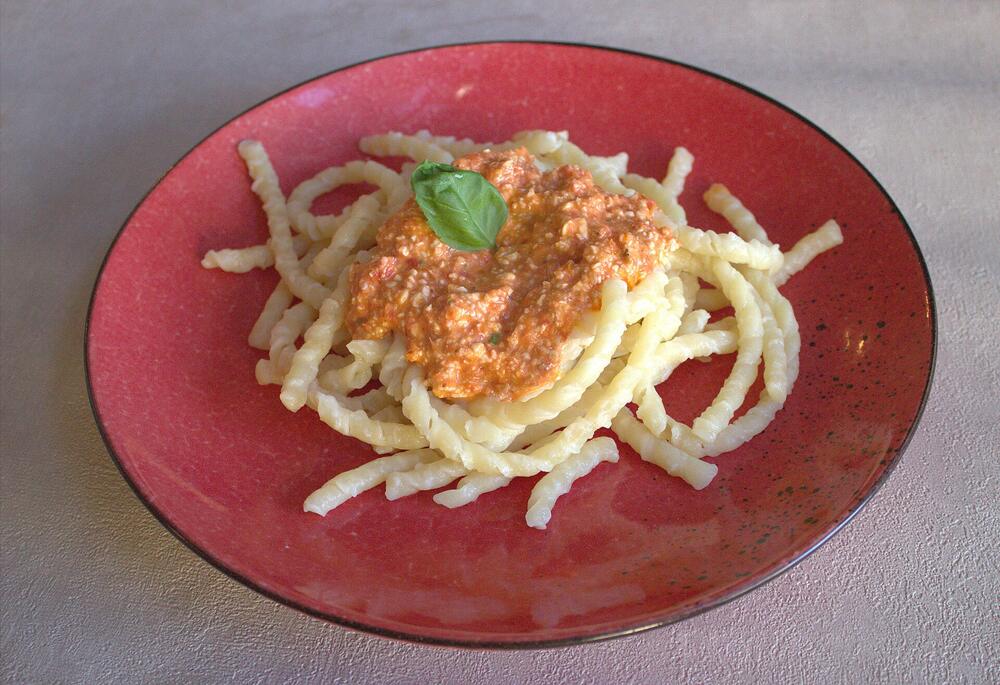
Busiate, a hand-rolled spiral pasta, carries a raw pesto of almonds, tomato, basil, garlic and pecorino, a cousin of pesto Genovese with an Arab-Sicilian accent. The almonds instead of pine nuts are the giveaway that this dish came from Trapani's trade with North Africa, not from Liguria.
Order it as a vegetarian primo; the pesto needs no meat to carry a full plate.
 8w9d (CC0)
Busiate pasta with pesto alla trapanese
Sicily's street food
Arancina (Palermo) and arancino (Catania)
Iconic dish
- From: Palermo (round) and Catania and Messina (conical)
- When: street-food snack, any time of day
- Price: around one euro each at a street stall
- Contains: meat or vegetarian filling, dairy, gluten
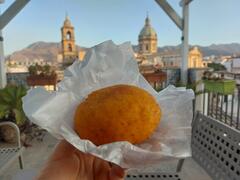
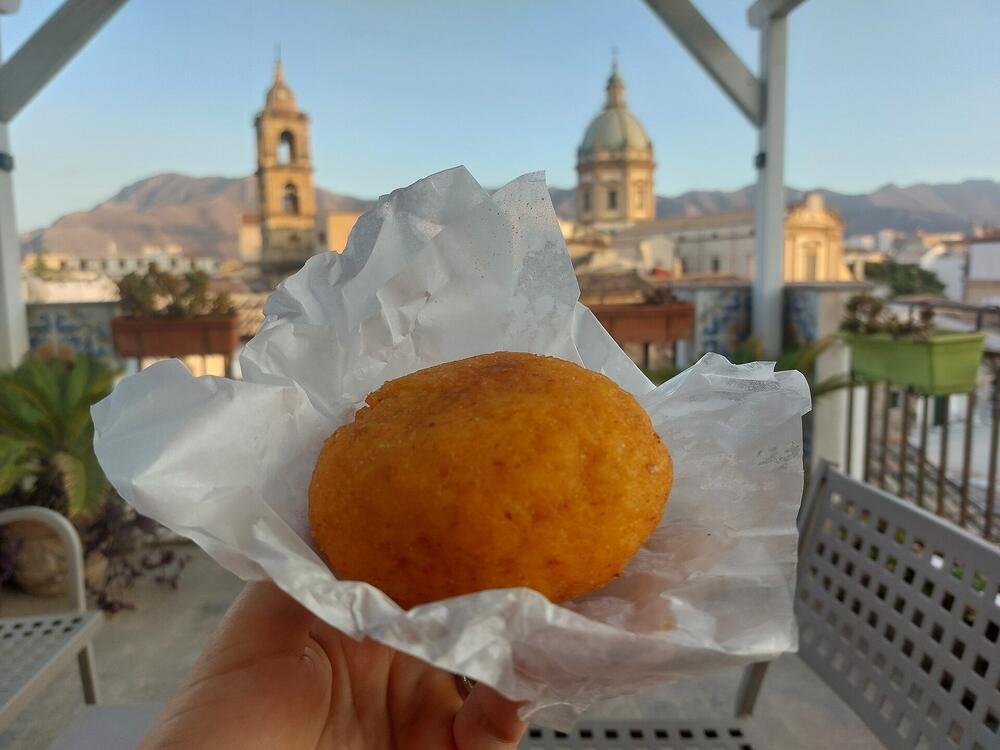
Arancina is a breadcrumbed, deep-fried ball of risotto rice that usually hides ragù, peas and mozzarella or caciocavallo at its center. Palermo shapes it round and calls it arancina, feminine. Catania and Messina shape theirs into a cone, arancino, masculine, a form said to echo Mount Etna's silhouette.
Order it from a rosticceria counter rather than a sit-down menu, where it's made fresh through the day and still costs about a euro. The 7-day Sicily itinerary builds a week around Palermo's street food and the rest of the island. Palermo is also a June and October pick for the same reason.
 Mediocrity (CC0)
An arancina with the skyline of Palermo in the background
Pane câ meusa
Iconic dish
- From: Palermo
- When: street food, any time of day
- Contains: offal, meat, gluten; maritatu adds dairy
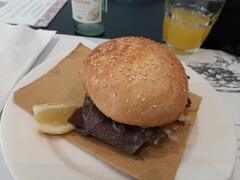
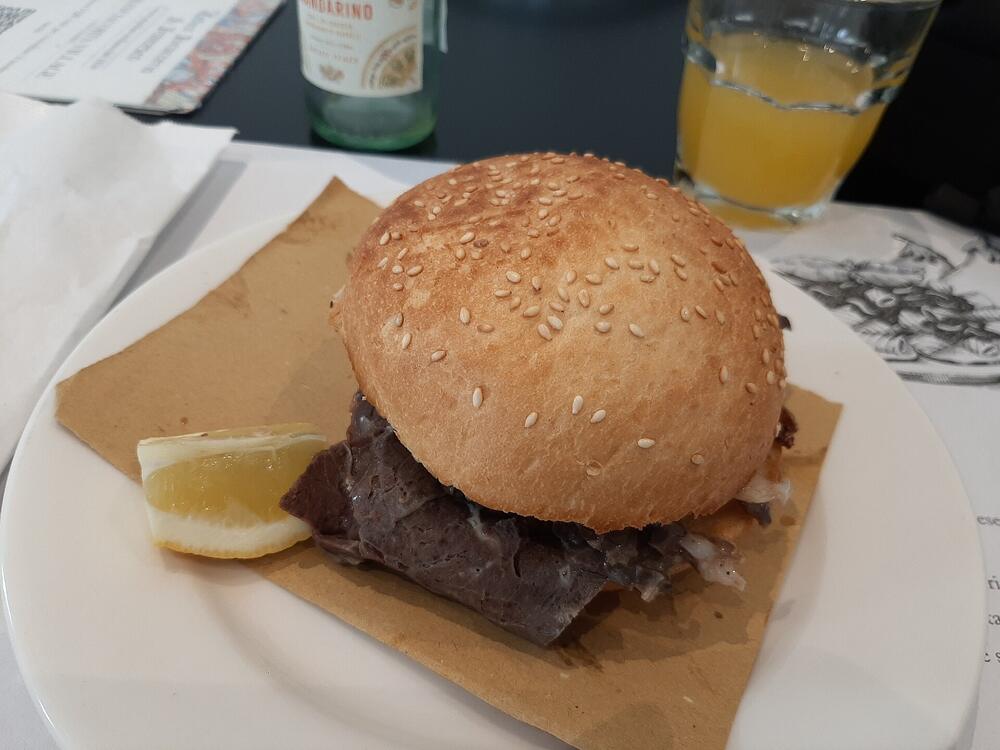
Pane câ meusa stuffs a sesame roll with calf spleen and lung, boiled then fried in lard. Order it schietto, plain with lemon, or maritatu, married, topped with fresh ricotta or shredded caciocavallo. Palermo's historic focaccerie, among them Antica Focacceria San Francesco, open since 1834, still serve both.
If you want to feel like a local, taste the "ca meusa" bread, that is, with the boiled milza, Italy's own tourism board advises. Palermitani traditionally eat it on the evening of December 7, the eve of a feast day, though vendors sell it year-round.
 Ensahequ (CC BY-SA 4.0)
Pane ca meusa served at Antica Focacceria San Francesco, Palermo
Sfincione
- From: Palermo
- When: street-food snack or light meal
- Contains: fish (anchovy), dairy, gluten
Sfincione is Palermo's own pizza: a thick, spongy, rectangular crust topped with tomato, onion, anchovy, caciocavallo and breadcrumbs, with no fresh mozzarella anywhere near it. Detroit-style pizza is said to descend from exactly this shape.
Buy it by the slice from a Palermo bakery rather than a pizzeria, where it's baked in trays through the morning.
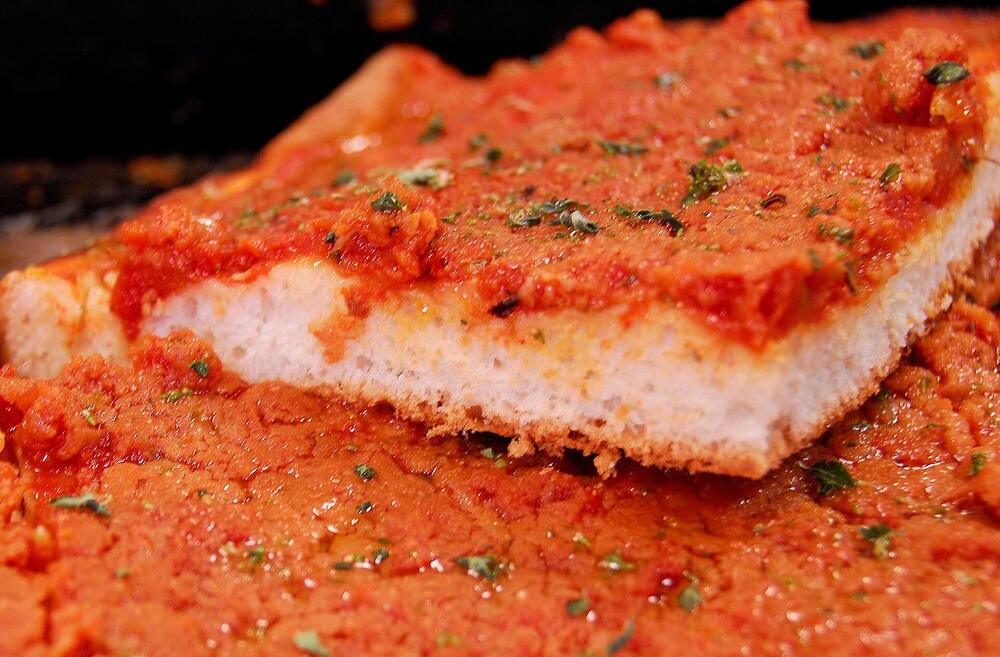 Rino Porrovecchio (CC BY-SA 2.0)
A slice of sfincione, Palermo's thick-crust pizza
Panelle
- From: Palermo
- When: street food, lunch or snack
- Contains: vegan
Panelle are thin chickpea-flour fritters, fried until crisp and usually stuffed into a sesame roll as pane e panelle. Palermo's sandwich stands sell them alongside pane câ meusa, so you can order both at the same counter and split the difference between offal and something gentler.
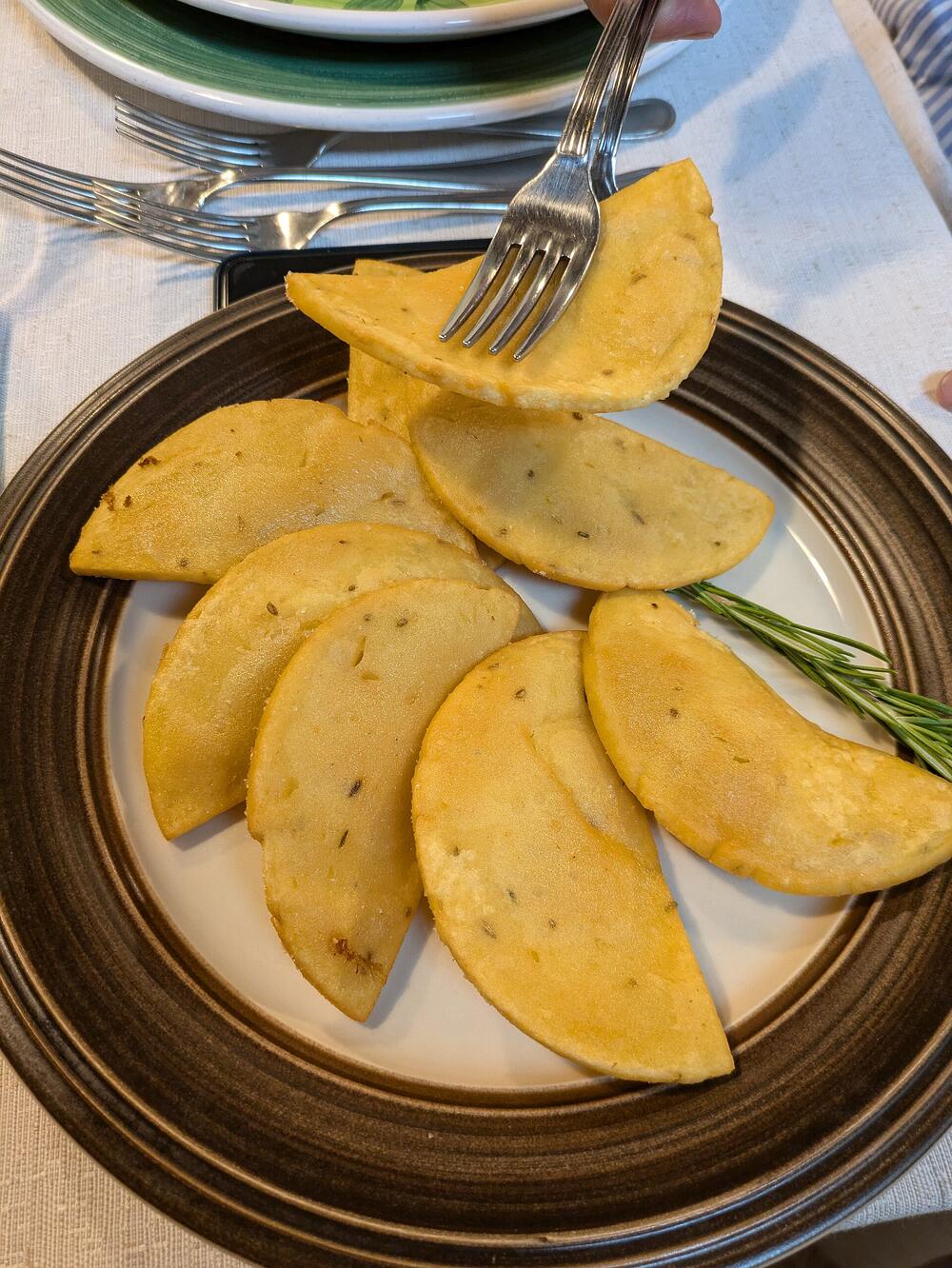 Auregann (CC BY-SA 4.0)
Panelle served on a plate
Stigghiola
- From: Palermo and Catania
- When: street food, grilled to order
- Contains: offal, meat
Stigghiola wraps lamb or veal intestine around a spring onion and grills it over charcoal at a market stall, smoking as it comes off the fire. Palermo sells it at the Ballarò and Vucciria markets; in Catania, look for it around the Pescheria, the city's fish market.
Stigghiola is the strongest-flavored dish on this list, offal lovers aside, and worth trying standing up at the stall where it's made.
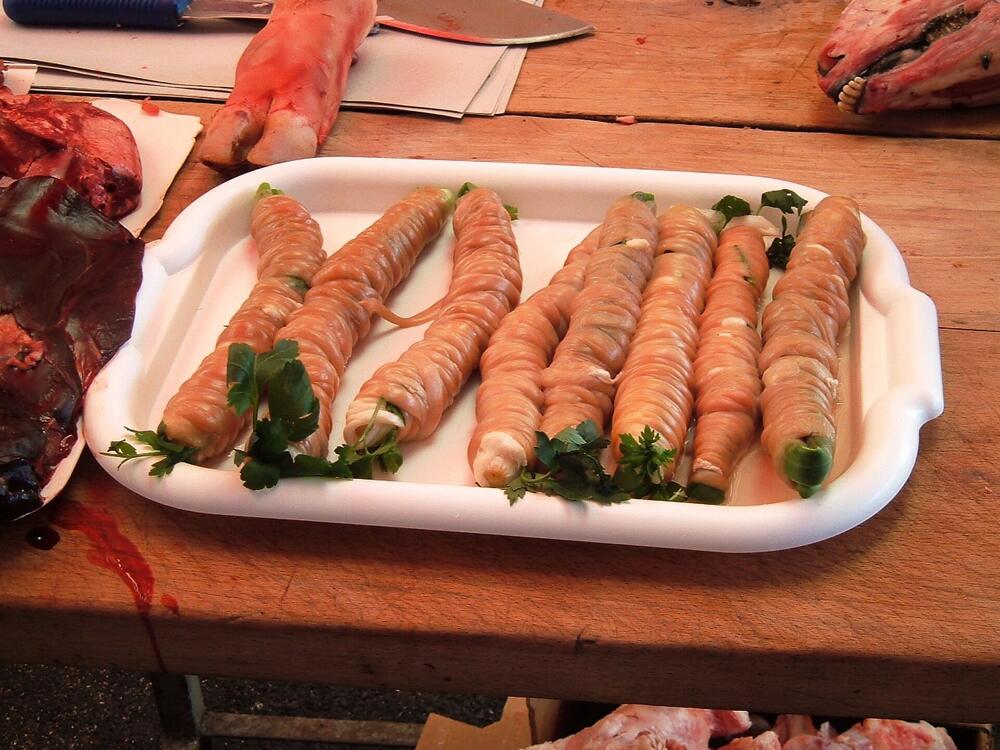 Pequod76 (public domain)
Raw stigghiole wrapped around onions on a tray, Catania
Sicilian sweets
Cannolo
Iconic dish
- From: Sicily-wide, Palermo and Catania pasticcerie
- When: dessert, any time
- Contains: dairy, gluten
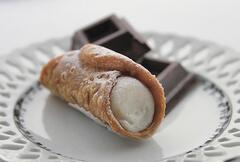
A cannolo is a fried pastry tube filled to order with sweetened ricotta, the ends often dipped in candied fruit, chocolate chips or crushed pistachio. A good pasticceria fills it only when you order, so the shell stays crisp instead of softening in a display case.
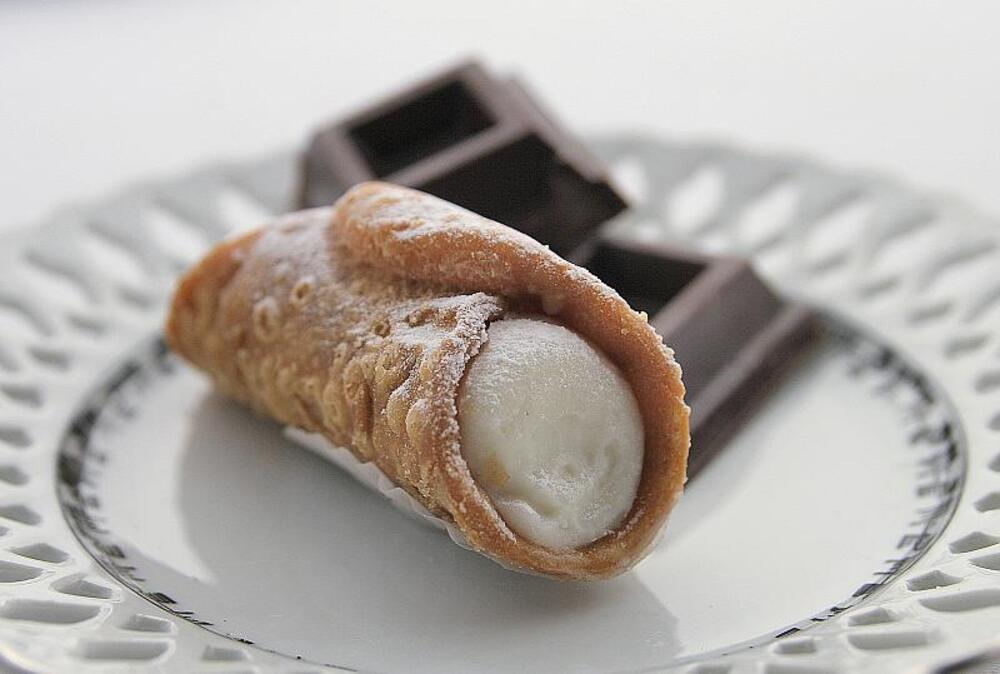 Paolo Piscolla (CC BY-SA 2.0)
A cannolo on a plate with pieces of chocolate
Cassata siciliana
- From: Palermo
- When: dessert, traditionally Easter
- Contains: dairy, egg, gluten, nuts
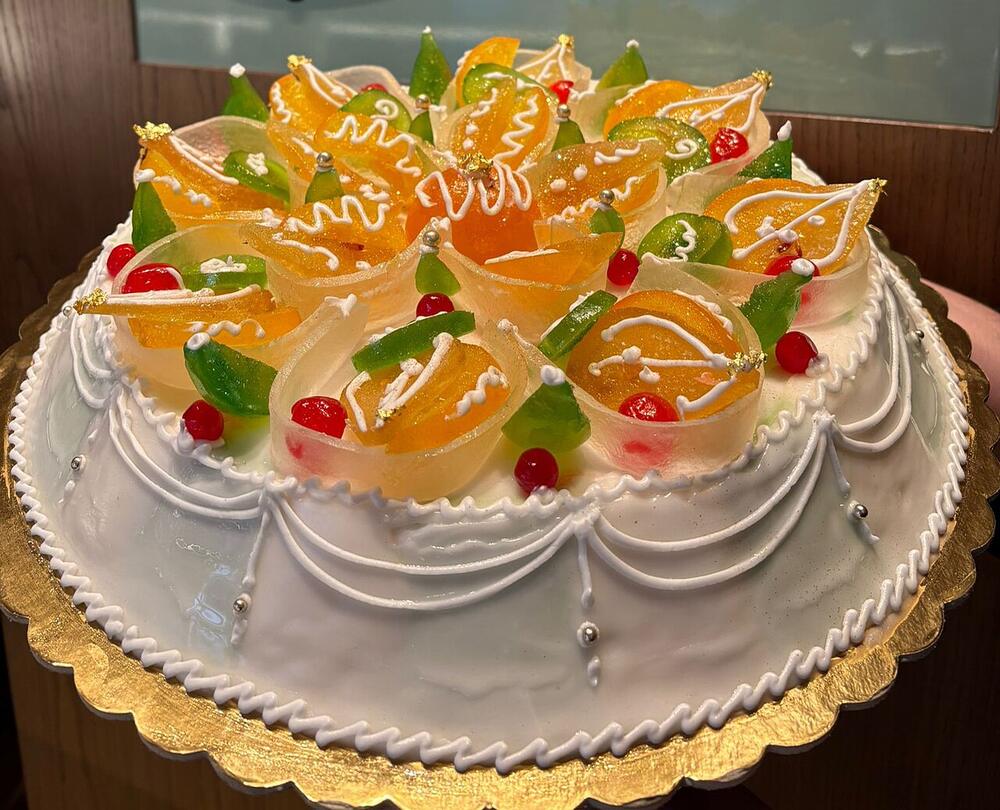
Cassata siciliana layers sponge cake with sweetened ricotta, soaks it in liqueur, then wraps the whole thing in marzipan and icing before decorating it with candied fruit. Palermo bakes it most for Easter, though pasticcerie across the island sell it by the slice year-round.
 CC BY-SA 4.0
A Cassata Siciliana cake decorated with candied fruit
Frutta martorana
- From: Palermo
- When: dessert, traditionally around All Souls' Day, November 2
- Contains: nuts (almonds)
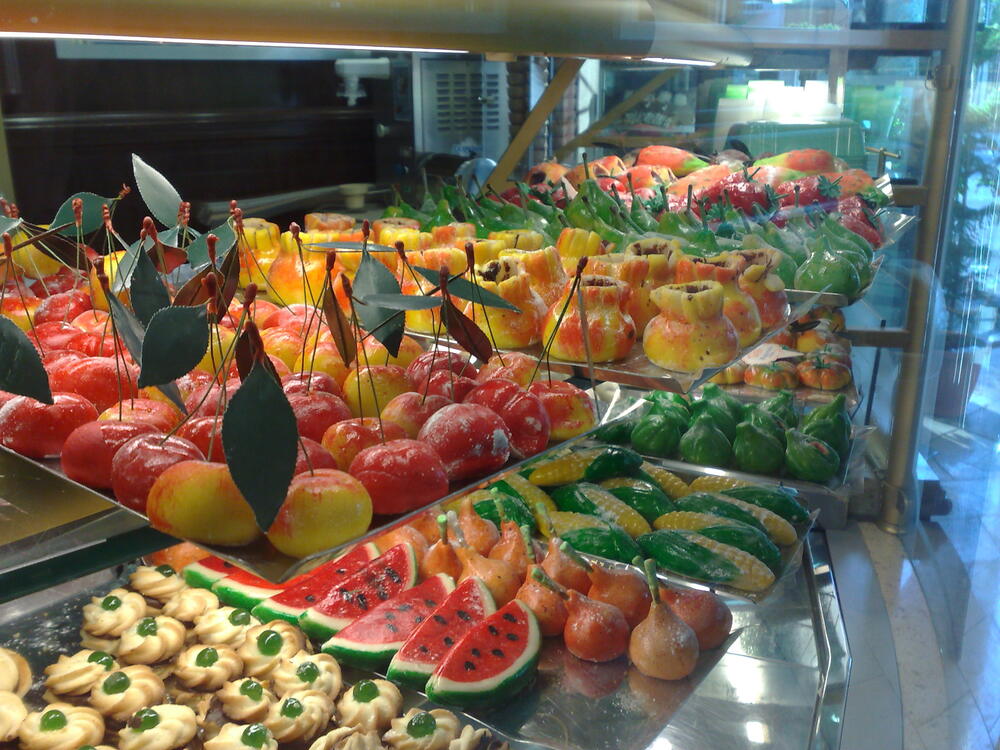
Frutta martorana shapes almond-paste marzipan into miniature fruits and vegetables, painted bright enough to fool a glance from across a pasticceria window. The sweet may trace to the Convent of Eloise at Martorana in Palermo, and it still appears heaviest around All Souls' Day.
 Dedda71 (CC BY 3.0)
A window display of frutta martorana, marzipan shaped like fruit
Breakfast in Sicily: granita e brioche
Granita e brioche
Iconic dish
- From: Sicily-wide, especially Catania and Messina
- When: summer breakfast, or a refreshment any hot day
- Contains: vegan (fruit flavors) or dairy (almond, coffee)
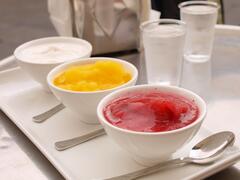
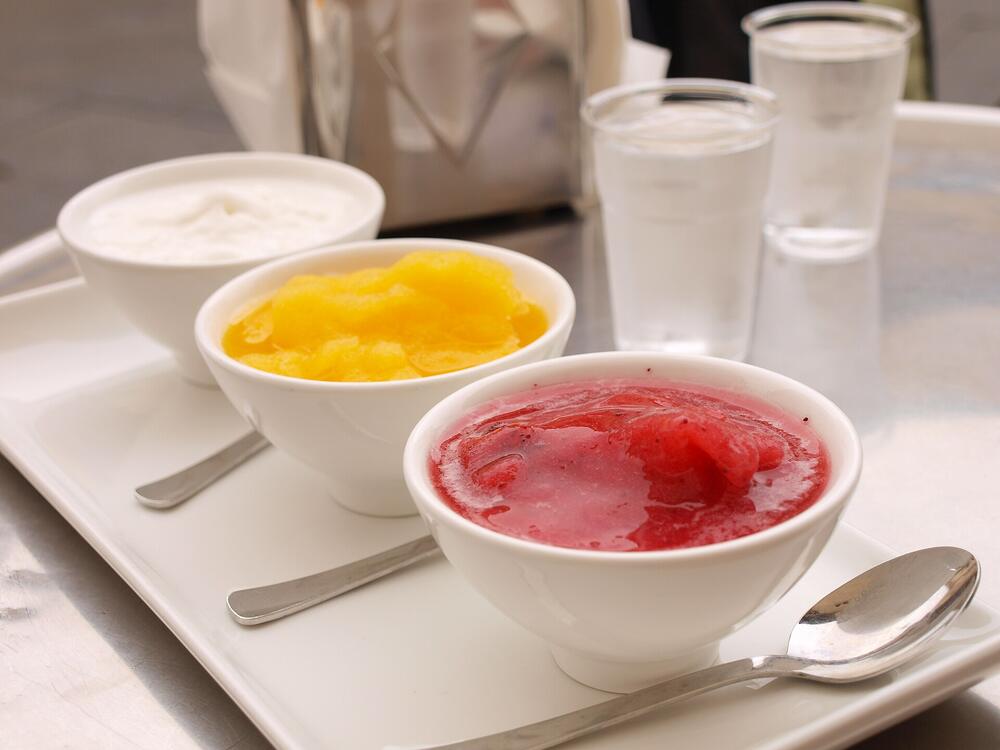
Granita served with a brioche is a Sicilian breakfast, not a dessert, strongest as a summer habit in Catania and Messina. The coarse, flavored ice comes in almond, lemon, coffee or pistachio, and the warm brioche col tuppo, named for its topknot-shaped bun, is there for dunking.
Catania and Messina still argue over which city invented granita; the texture is chunkier on Palermo's side of the island and smoother in the east. Order it in the morning to eat it the way locals do, with the brioche still warm from the oven.
 Adriao (CC BY 3.0)
Three bowls of granita on a serving tray
Sicilian wines and other drinks
Marsala
- From: Marsala, Trapani province
- When: aperitivo (dry) or dessert wine (sweet)
- Contains: alcohol (15 to 20 percent)
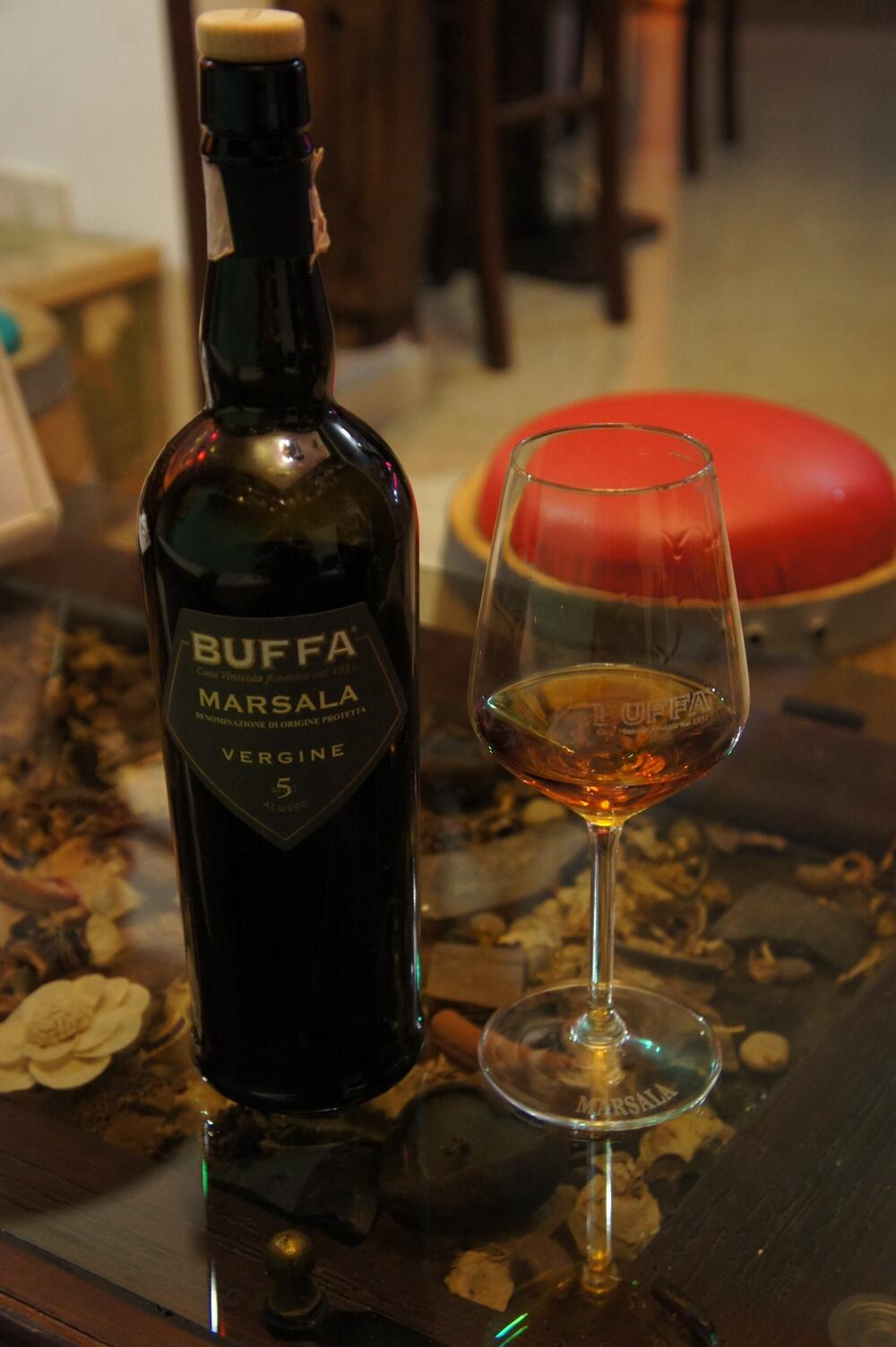
Marsala has carried DOC status since 1969, and it comes dry or sweet, similar in strength to port. Drink the dry style chilled with cheese before a meal, and save the sweet style, Sicily's classic dessert wine, for after.
 Chris (CC BY-SA 2.0)
A bottle of Buffa Vergine Marsala wine with a filled glass
Etna wine
- From: Mount Etna's slopes, Catania province
- When: with a meal
- Contains: alcohol
Etna's volcanic soil grows Nerello Mascalese for a mineral-driven red (at least 80 percent of the blend) and Carricante for a crisp white (at least 60 percent). Old vines here are still trained low, alberello-style, rather than on modern trellises.
Follow the Etna Wine Road through Piedimonte Etneo, Zafferana Etnea and Randazzo for a cellar-door tasting with the volcano in view.
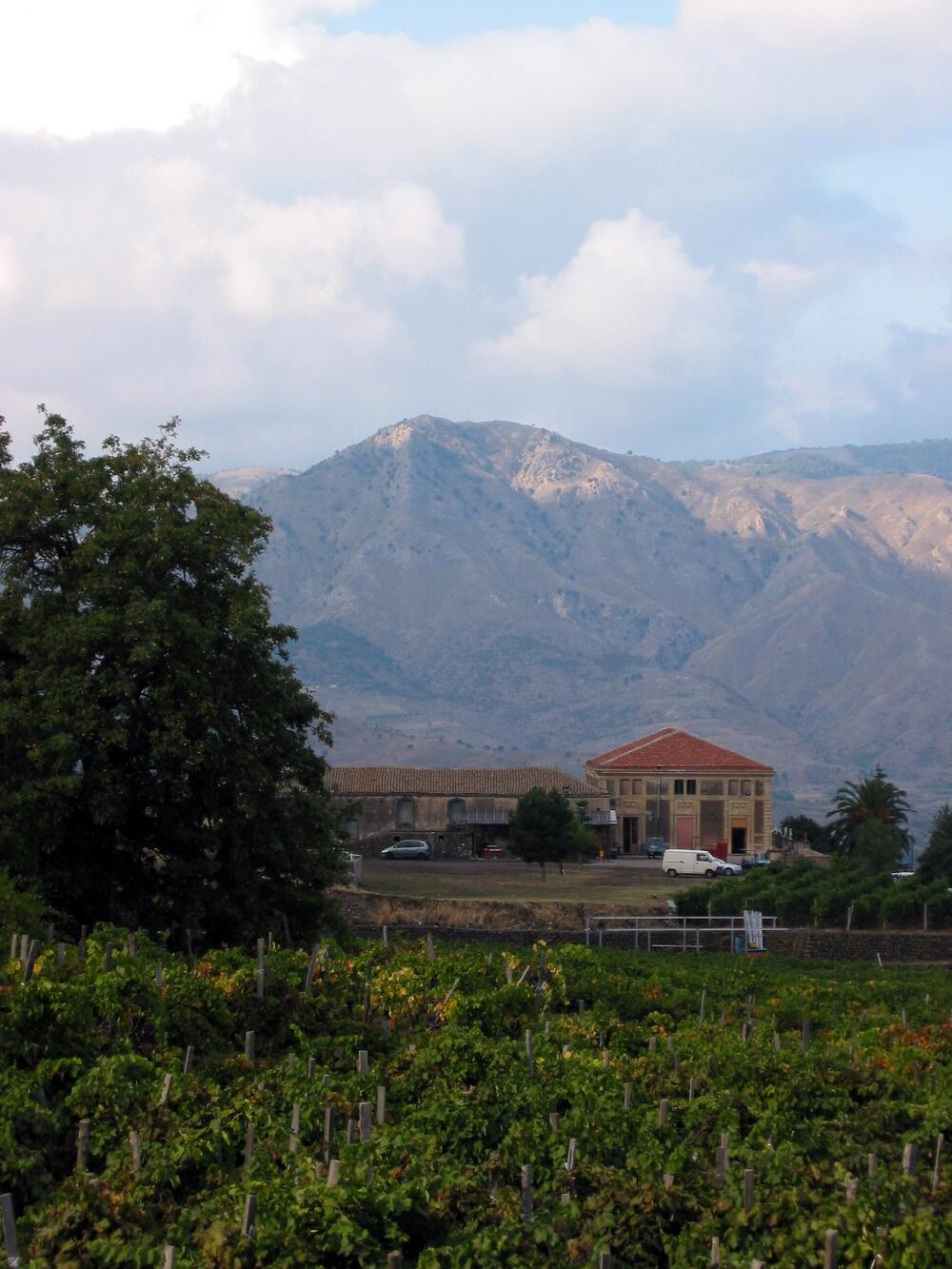 Neil Weightman (CC BY 2.0)
A vineyard at an Etna wine estate near Passopisciaro, Sicily
Cerasuolo di Vittoria
- From: Vittoria, Ragusa province
- When: with a meal
- Contains: alcohol
Cerasuolo di Vittoria, Sicily's only DOCG and Italy's top wine-quality tier, blends Nero d'Avola with Frappato grapes from around Vittoria, in Ragusa province. Look for it across the Val di Noto wine zone, the stretch of towns around Noto, Ragusa and Vittoria that produces it.
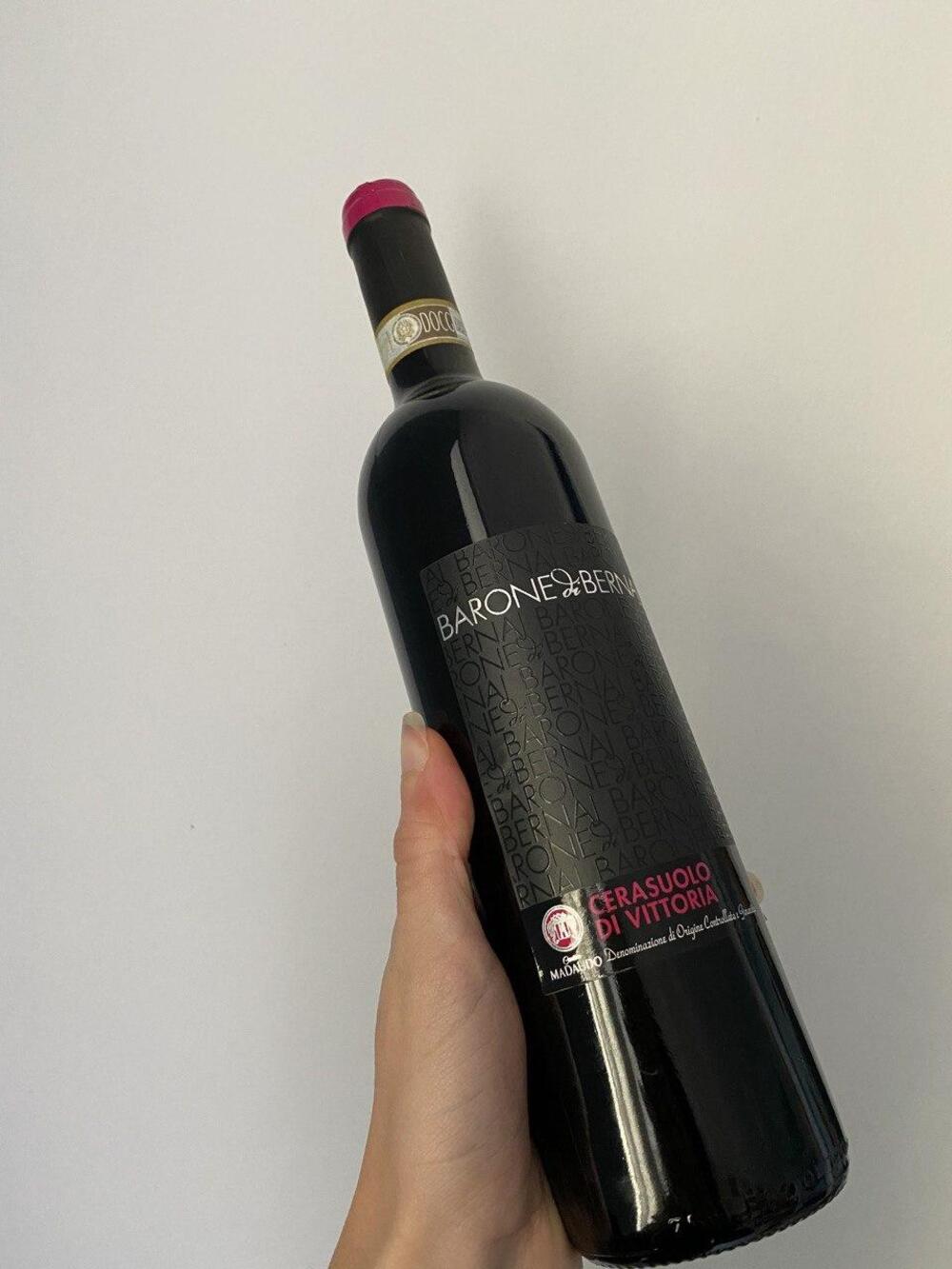 LiaFla (CC BY-SA 4.0)
A bottle of Cerasuolo di Vittoria DOCG wine
More Sicilian wines and one classic digestivo round out a list already built on Marsala, Etna and Cerasuolo di Vittoria.
Try free
Plan your Sicily trip in about 2 minutes
Tap through 8 quick cards for a complete itinerary with budget, maps, and packing lists. No account required.
Plan your Sicily trip →| Drink | What it is | From |
|---|---|---|
| Nero d'Avola | full-bodied red grape and wine, Sicily's signature red | mainly around Noto, Siracusa province |
| Malvasia delle Lipari | sweet, aromatic dessert wine from sun-dried grapes | the Aeolian Islands |
| Moscato di Pantelleria | sweet dessert wine from sun-dried Zibibbo grapes | the island of Pantelleria |
| Amaro Averna | bitter, herbal digestivo, drunk after a meal | Caltanissetta |
| Bianco d'Alcamo | Sicily's oldest DOC, since 1972, a dry white | Alcamo, Trapani province |
Specialty products to look for
Cioccolato di Modica
- From: Modica, Ragusa province
- When: dessert or snack, any time
- Contains: vegan (dark varieties)
Cioccolato di Modica is ground cold, at around 40 °C (104 °F), rather than conched, which leaves it grainy with visible flecks of sugar instead of smooth like ordinary chocolate. The method traces to techniques the Spanish brought over from Aztec Mexico, and the EU granted it protected geographical status in October 2018.
Antica Dolceria Bonajuto, open in Modica since 1880 and the oldest chocolate maker in Sicily, is the best-known shop for tasting the plain version against chili or citrus-flavored bars.
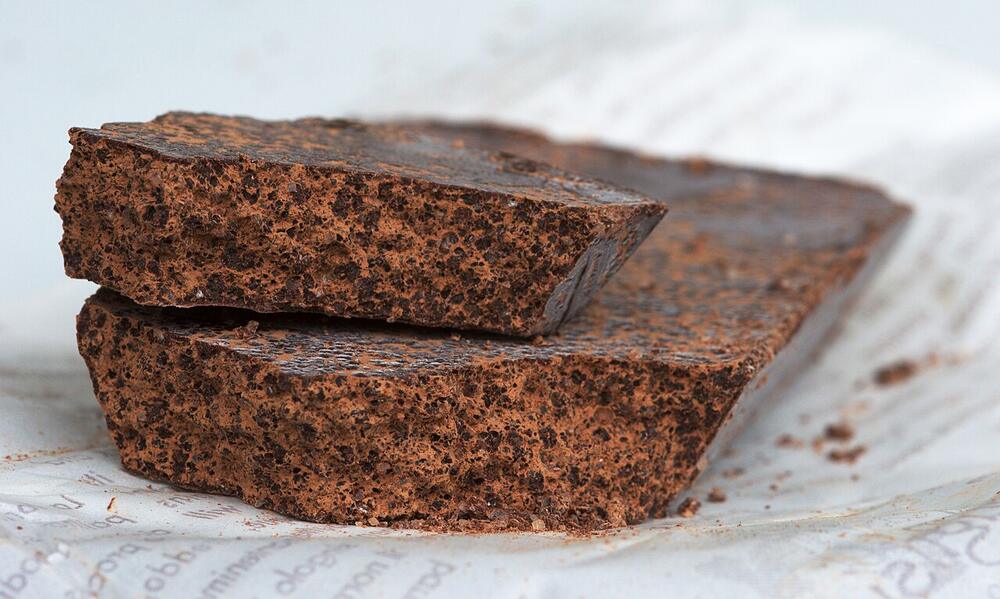 Mussklprozz (CC BY-SA 3.0)
Pieces of grainy, cold-processed Modica chocolate
Syracuse province adds its own short list of products: Pachino's tomatoes and the almonds grown around Avola. Avola is easily confused with nearby Noto, which is famous for almond pastries and granita rather than for growing the nuts.
| Product | What it is | From |
|---|---|---|
| Pomodoro di Pachino | PGI cherry, plum and vine tomatoes, grown since 2003 | Pachino, Siracusa province |
| Pistacchio Verde di Bronte | PDO green pistachio, harvested every other year | Bronte, Catania province |
| Pecorino Siciliano | firm, aged sheep's-milk cheese, DOP since 1996 | Agrigento, Caltanissetta, Enna, Trapani and Palermo provinces |
| Nocellara del Belice | large, mild green olive, sold abroad as Castelvetrano olives, DOP for both the olive and its oil | the Belice valley, around Castelvetrano |
| Gambero Rosso di Mazara | sweet, deep-red prawn, usually eaten raw | Mazara del Vallo, Trapani province |
What to eat area by area
A MonkeyEatingMango trip carries the right dishes for every stop on your Sicily route, since Palermo, Catania and the smaller provinces each cook differently.
| Area | Eat | Drink |
|---|---|---|
| Palermo | arancina, pane câ meusa, panelle, sfincione, cassata siciliana, frutta martorana | |
| Catania | arancino, granita e brioche, pasta alla Norma, stigghiola, Nebrodi black pig | Etna wine |
| Syracuse and the east | Pachino tomatoes, Avola almonds, Cioccolato di Modica | Nero d'Avola, Cerasuolo di Vittoria |
| Trapani and the west | couscous alla trapanese, busiate alla trapanese, Gambero Rosso di Mazara, Nocellara del Belice olives | Marsala |
| The islands | Malvasia delle Lipari (Aeolian), Moscato di Pantelleria (Pantelleria), bottarga di tonno (Favignana) |
When and how do Sicilians eat?
A Sicilian meal follows the same structure as the rest of Italy: antipasto, then primo, then secondo with a contorno, then dolce, though a weekday lunch usually stops after the primo. Ordering only a pasta course at a trattoria is normal and never flagged as skimping.
Shopping for the meal happens at the market rather than the supermarket in Palermo's old quarters. Ballarò, in the Albergheria district, opens most mornings into the evening and closes early on Wednesdays. The Vucciria, once the city's main produce market, is now better known for its evening bar scene than for its stalls.
Eating out in Sicily: tipping, the bill and water
Tipping is not obligatory in Sicily, and many bills already add a small coperto, a per-person cover charge for bread and table service, listed on the menu. Where there is no coperto, rounding up or leaving a few coins covers good service.
Nobody rushes the bill to your table. Ask for "il conto, per favore" when you're ready to leave.
Tap water in Sicily's towns and cities is safe to drink, the same as the rest of Italy. Most Sicilians still order bottled water at a restaurant table, either still (naturale) or sparkling (frizzante).
Restaurants must disclose 14 listed allergens under EU rules, from gluten and milk to shellfish and nuts. Ask about allergeni before you order if one applies to you. The same hygiene standards that cover a sit-down restaurant apply to a market stall selling street food.
Plan your Sicily trip around the food
Start with the Sicily guide for how to move between Palermo, Catania and the smaller towns. The Italy food guide shows how Sicily's dishes fit the rest of the country's. The 7-day Sicily itinerary covers Palermo, Taormina with a day on Mount Etna, and Syracuse in a week.
Each day of a MonkeyEatingMango itinerary names what to eat at lunch and dinner, matched to the city you're in that day.
Last updated October 2026.
Common questions
What is traditional food in Sicily?
Arancina (a fried rice ball), pasta alla Norma, caponata and cannoli are Sicily's best-known dishes. Street food stands for much of the everyday eating: pane câ meusa, panelle and sfincione all began as stalls and sandwich counters rather than restaurant plates.
Is Sicilian food different from food on the Italian mainland?
Yes. Sicily sat under Greek, Arab and Spanish rule in turn, and each left a mark the mainland does not share: Arab traders brought rice, sugar, citrus and saffron, Spain brought the New World's tomatoes and chocolate, and Greek settlers left olives and almonds. The result leans on fish, olive oil, citrus and almonds rather than the cream and butter common further north.
What do Sicilians eat for breakfast?
Granita with a warm brioche col tuppo is a Sicilian summer breakfast, strongest in Catania and Messina. The ice is flavored with almond, lemon, coffee or pistachio, and the brioche is for dunking.
What is the most famous Sicilian dish?
Arancina is the dish most closely tied to Sicily, sold on street corners from Palermo to Taormina. Pasta alla Norma, cannoli and granita e brioche are the island's other defining foods.
Why do Palermo and Catania call the same rice ball something different?
Palermo's version is round and feminine, arancina. Catania and Messina shape theirs into a cone, arancino, said to recall the silhouette of Mount Etna, and the fillings vary slightly between the two cities.
What is pasta alla Norma made of?
Pasta alla Norma is pasta, usually rigatoni, with fried eggplant, tomato sauce, basil and grated ricotta salata, a salted and aged sheep's-milk ricotta. The dish comes from Catania and is one of the most ordered pastas on the island.
What is pane câ meusa?
Pane câ meusa is a Palermo sandwich of boiled and fried calf spleen and lung in a sesame roll. Order it schietto, plain with a squeeze of lemon, or maritatu, topped with fresh ricotta or shredded caciocavallo.
Is Marsala wine sweet or dry?
Marsala comes both ways. The dry style is an aperitivo, often poured with cheese, and the sweet style closes a meal as a dessert wine; both are fortified to 15 to 20 percent alcohol.
What is Sicily's only DOCG wine?
Cerasuolo di Vittoria, Sicily's only DOCG and the top tier of Italian wine classification, blends Nero d'Avola with the lighter Frappato grape. The wine comes from around Vittoria, in Ragusa province.
What is Cioccolato di Modica?
Cioccolato di Modica is a chocolate ground cold at a low temperature rather than conched, which leaves it grainy and studded with visible sugar crystals. The method traces to techniques the Spanish brought from Aztec Mexico, and the chocolate has held EU protected status since 2018.
Can I bring Sicilian cheese or olive oil home to the US?
Hard cheeses and olive oil are often allowed, so Pecorino Siciliano and a bottle of Nocellara del Belice oil can usually travel; check current USDA guidance before you pack them. Cured meat cannot: US Customs does not allow fresh, dried or canned meat products from most foreign countries, so eat any Nebrodi pork in Sicily.

Written by Shobhit Shrivastava · Founder
Related reading
Italy travel guide
5 Days on the Amalfi Coast: Positano and Amalfi
5 days split between Positano and Amalfi: 3 nights in Positano (Franco's Bar, Arienzo Beach Club, linen shopping) followed by 2 nights in Amalfi (Duomo di Amalfi, Museo della Carta, Pasticceria Pansa). Comfortable pace with a mix of beach clubs, coastal hiking, and hands-on pasta classes....
A Week on the Amalfi Coast: Positano, Amalfi and Ravello
This 7-day comfortable trip for a couple explores the iconic Amalfi Coast, beginning in Positano for cliffside views and Spiaggia Grande beach, then moving to Amalfi for its Duomo di Sant'Andrea and historic center. The journey concludes in the elevated gardens of Ravello at Villa Rufolo,...
10 Days in Italy: Rome and Florence, from the Colosseum to the Vatican
10 days across Rome and Florence: 6 nights in Rome exploring the Colosseum, Pantheon, and Trastevere, followed by 4 nights in Florence for the Uffizi Gallery, Duomo, and Oltrarno district. Comfortable pace with 5-7 activity hours daily, relying on walking and local metro, featuring private...
Two Weeks in Italy: Rome, Florence and Sorrento on the Amalfi Coast
14 days covering Rome, Florence, and Sorrento. Experience the Colosseum, Uffizi Gallery, and cliffside views of the Tyrrhenian Sea. Comfortable pace with 5-6 hours of daily sightseeing, blending urban historical sites with coastal relaxation. Includes one base per city, frequent walking, and...
Sardinian Food: What to Eat in Sardinia, Dish by Dish
The Sardinian dishes to eat first, casu marzu's real legal status, the island's only DOCG wine, and how Sardinians actually eat, course by course.
Italian Food: What to Eat in Italy, Region by Region
The Italian dishes to eat first, one per region, then the cheeses and cured meats behind them, the desserts, the wines, and how a day of eating in Italy actually runs.
Best Time to Visit Sicily: Month by Month
When to go to Sicily, month by month: measured weather across the coast and the Aeolian Islands, why September is worth the trip, and the dates behind its almond-blossom and saint's-day festivals.