What should you eat in Italy, and which dish comes from where? Start with carbonara in Rome, a plate of tagliatelle al ragù in Bologna, and a wood-fired pizza in Naples. Add risotto alla milanese with osso buco in Milan, bistecca alla fiorentina in Florence, and arancina on a Sicilian street corner. Italy has no single national dish: every region defends its own, down to the cheese and the wine on the table.
- Order by region, not by habit. Carbonara belongs to Rome, risotto alla milanese to Milan. Order the local dish, not the one you know from home.
- Skip the cappuccino after 11am. It marks you as a tourist; ask for a macchiato or a plain espresso instead.
- Cured meat does not travel. US Customs does not allow prosciutto or other cured meats from most countries, so eat yours in Italy.
The pastas and mains to eat first
Carbonara
Iconic dish
- From: Lazio, Rome
- When: any meal, classically dinner
- Contains: pork, egg, dairy
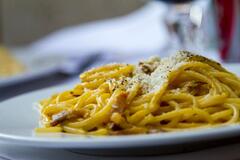
Carbonara is spaghetti or rigatoni with egg yolk, pecorino romano, guanciale and black pepper. No cream, ever: the sauce comes together off the heat, the egg cooked only by the pasta's own warmth and a splash of its starchy water. Find it in Rome's Testaccio and Trastevere trattorias, where it sits alongside cacio e pepe and amatriciana as one of the city's four defining pastas.
Plan a Roman trattoria crawl around the four: carbonara, cacio e pepe, amatriciana and the less-exported gricia. The 3-day Rome itinerary builds a short trip around them.
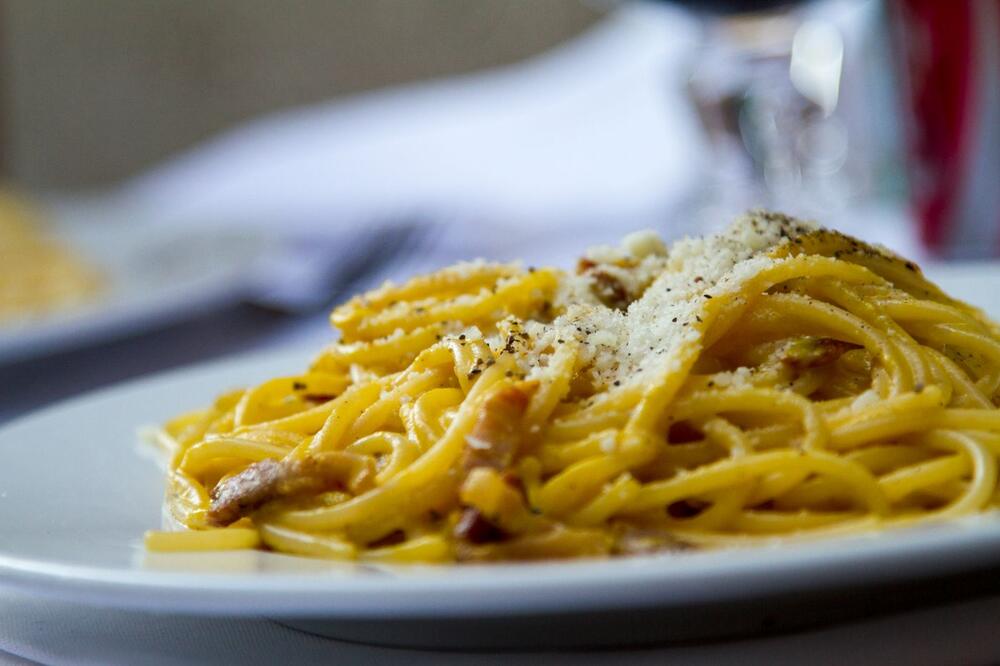 Photo by Maurijn Pach on Pexels
Spaghetti alla carbonara topped with grated cheese
Cacio e pepe
Iconic dish
- From: Lazio, Rome
- When: any meal
- Contains: dairy; vegetarian
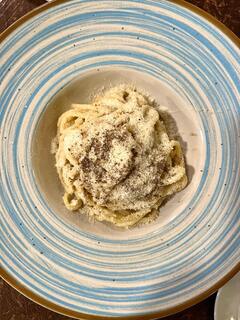
Cacio e pepe has only three ingredients: tonnarelli or spaghetti, pecorino romano and cracked black pepper, emulsified into a sauce with pasta water. There is nowhere to hide a shortcut in a dish this short, so a good plate of it separates a serious Roman kitchen from a tourist trap.
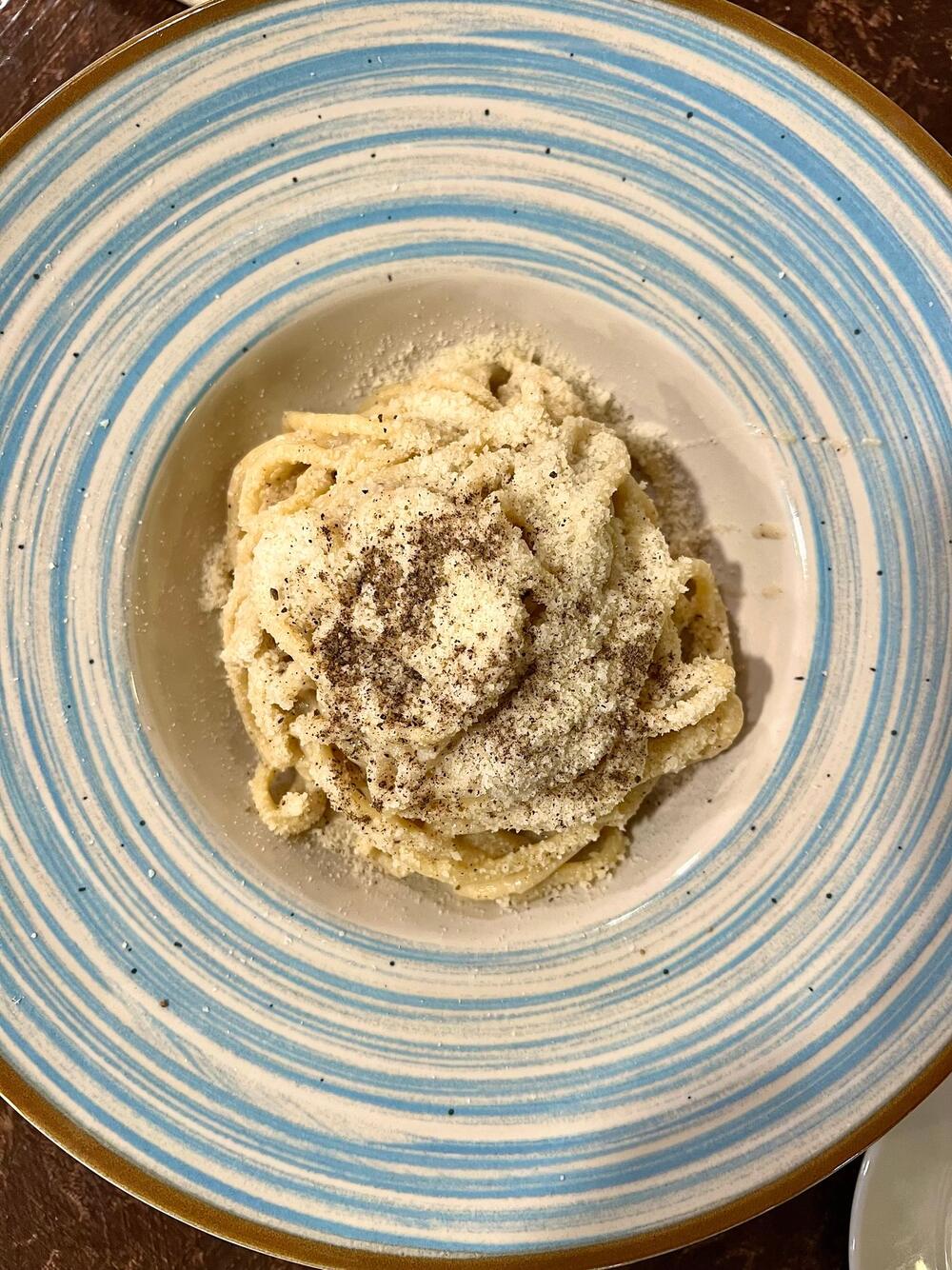 Photo by Luca Volpe Productions on Pexels
Cacio e pepe, pasta tossed with cheese and black pepper
Tagliatelle al ragù
Iconic dish
- From: Emilia-Romagna, Bologna
- When: lunch or dinner
- Price: €4.90 at a cheap trattoria to €12 to €18 at a traditional sit-down restaurant
- Contains: meat, dairy
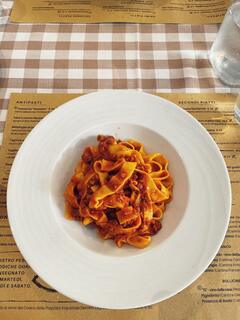
Bologna's ragù is a slow-cooked sauce of beef, pork, soffritto, wine and milk, and locals toss it with fresh egg tagliatelle, never spaghetti. Outside Italy the dish travels as "spaghetti bolognese"; inside Bologna, ordering it that way marks you as a visitor.
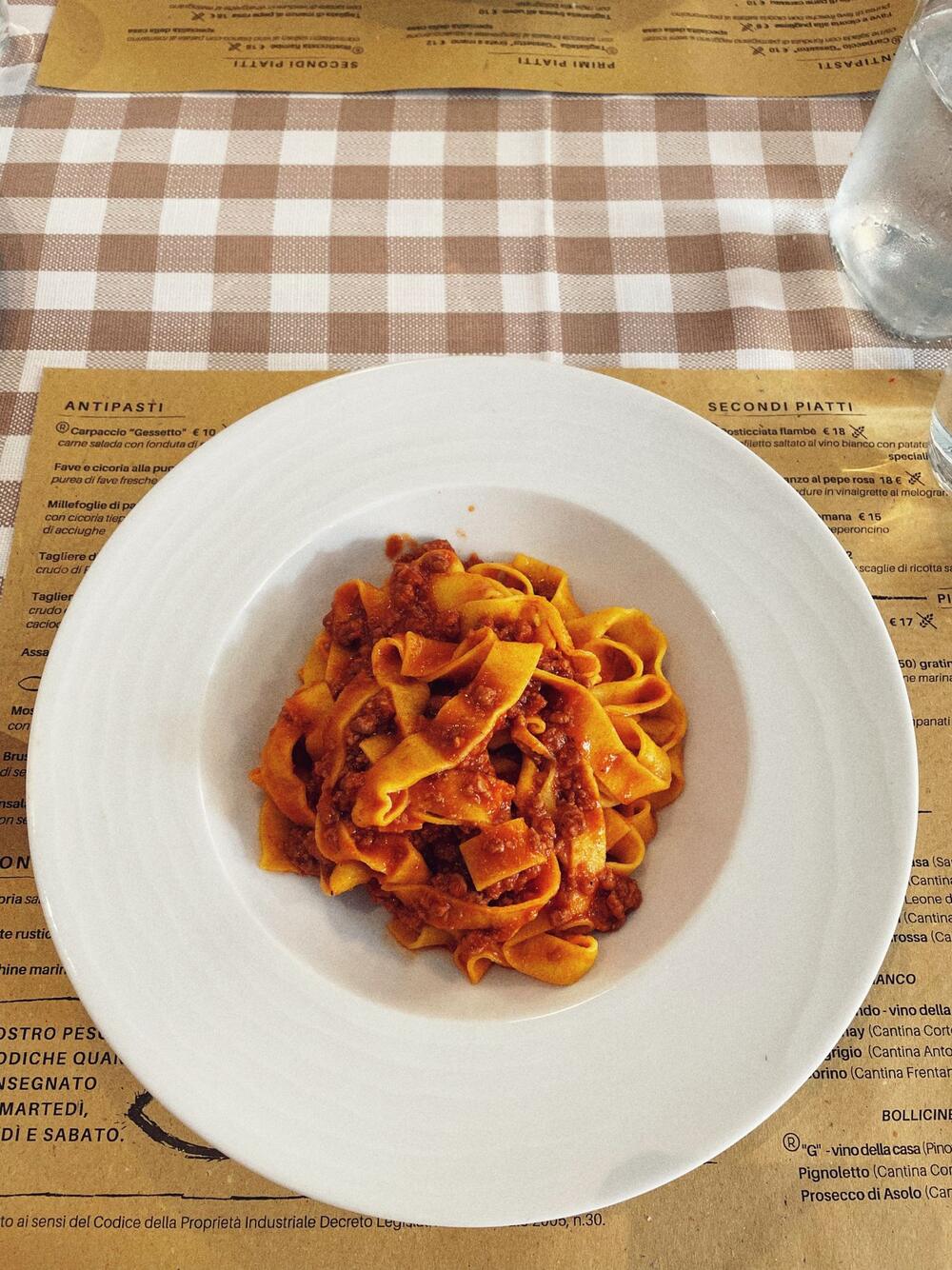 Photo by Tugce Turan on Pexels
Tagliatelle with a rich ragu sauce, served in Bologna
Tortellini in brodo
Iconic dish
- From: Emilia-Romagna, Bologna and Modena
- When: winter, holiday lunches
- Contains: meat, dairy
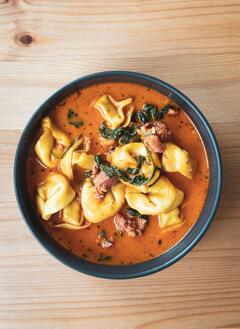
Tortellini in brodo are small ring-shaped pasta parcels, stuffed with meat, prosciutto and parmesan, served in a clear capon or beef broth. Bologna and Modena both claim the dish, and both serve it most around Christmas, when a bowl of it often opens the holiday lunch. Order a small bowl of it as a starter; the stuffing is rich enough without a larger portion.
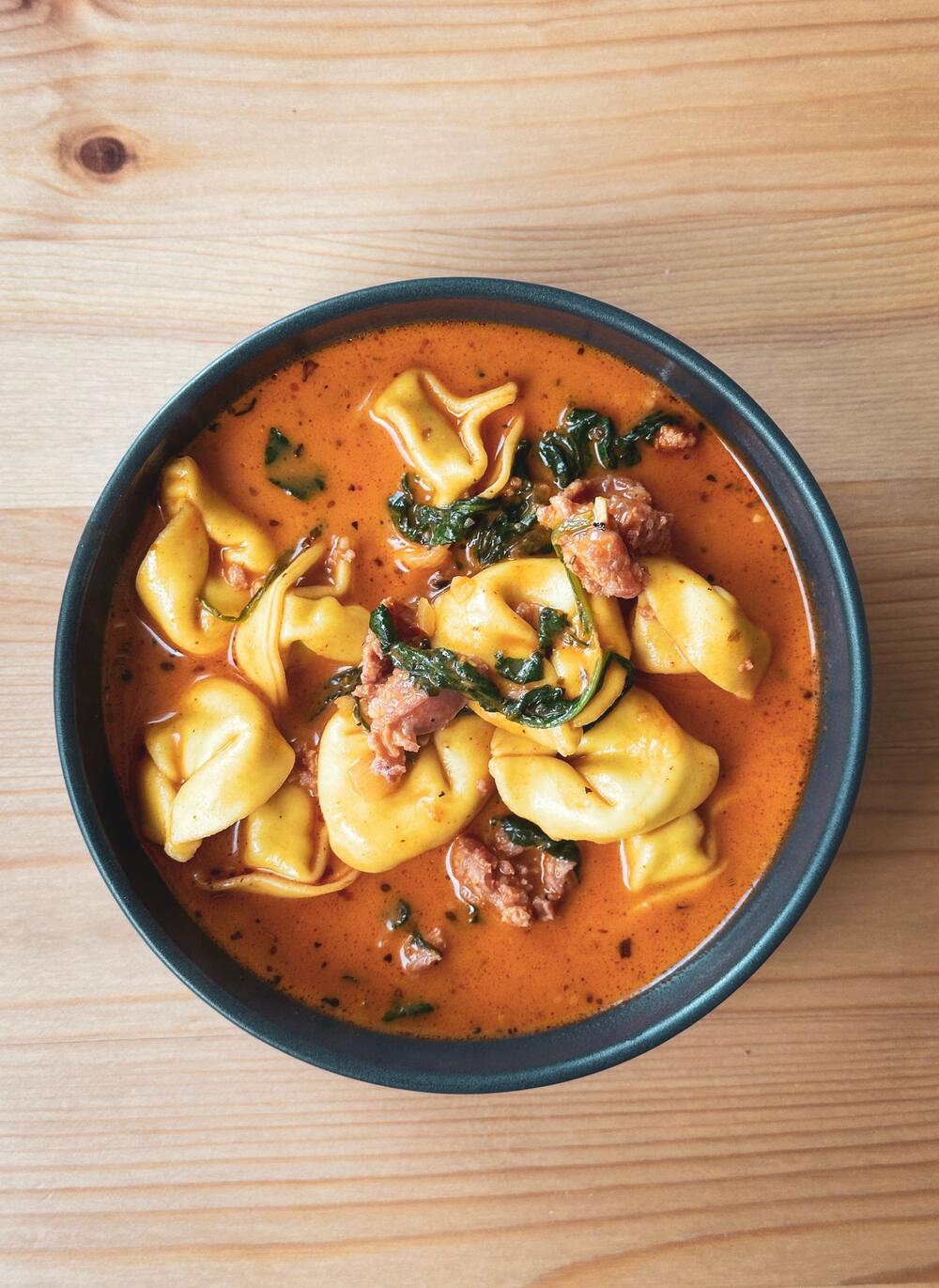 Photo by Jonas F on Pexels
Tortellini served in a hot broth
Lasagna alla bolognese
Iconic dish
- From: Emilia-Romagna, Bologna
- When: traditionally Sunday lunch, any day commercially
- Price: €7 for a basic plate to €12 to €18 at a traditional trattoria
- Contains: meat, dairy
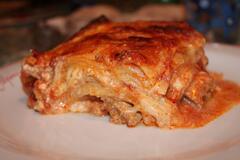
Bologna's lasagna layers fresh pasta sheets with a slow-cooked ragù, bound with béchamel and parmesan, then baked. The dish began as a Sunday tradition, the kind a family spends the morning building before a long lunch together.
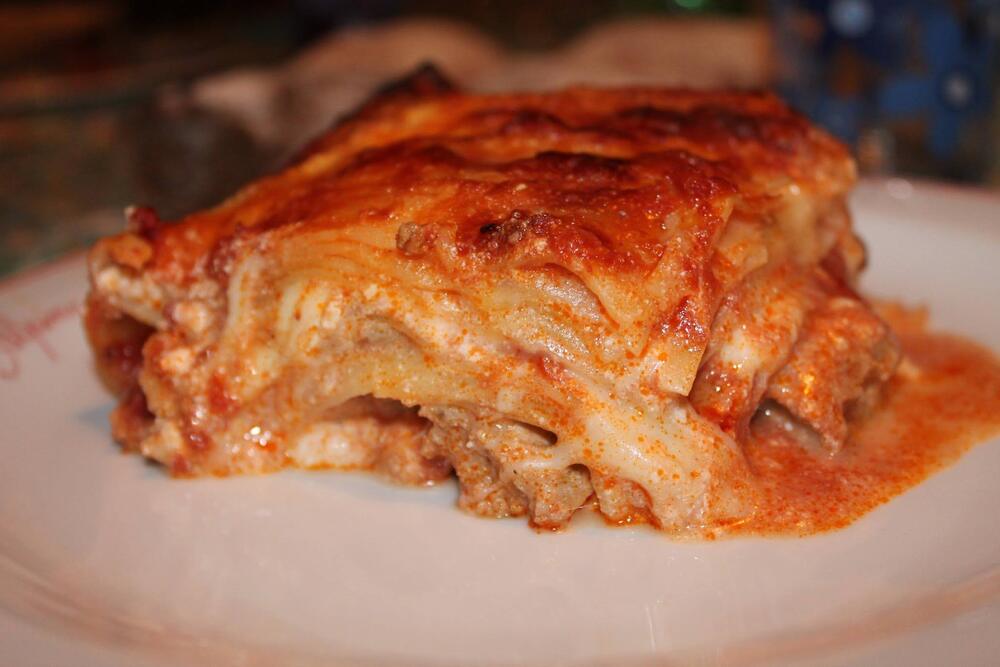 Schellenberg (CC BY-SA 4.0)
Lasagna al forno fresh from the oven
Risotto alla milanese
Iconic dish
- From: Lombardy, Milan
- When: primo, lunch or dinner
- Contains: dairy, bone marrow (can be made vegetarian)
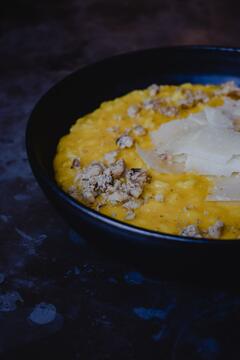
Milan cooks its risotto alla milanese slowly, Carnaroli rice in a broth of beef marrow and saffron that turns the dish a deep gold. The city serves it most often beside osso buco, the two sharing a plate as its signature pairing.
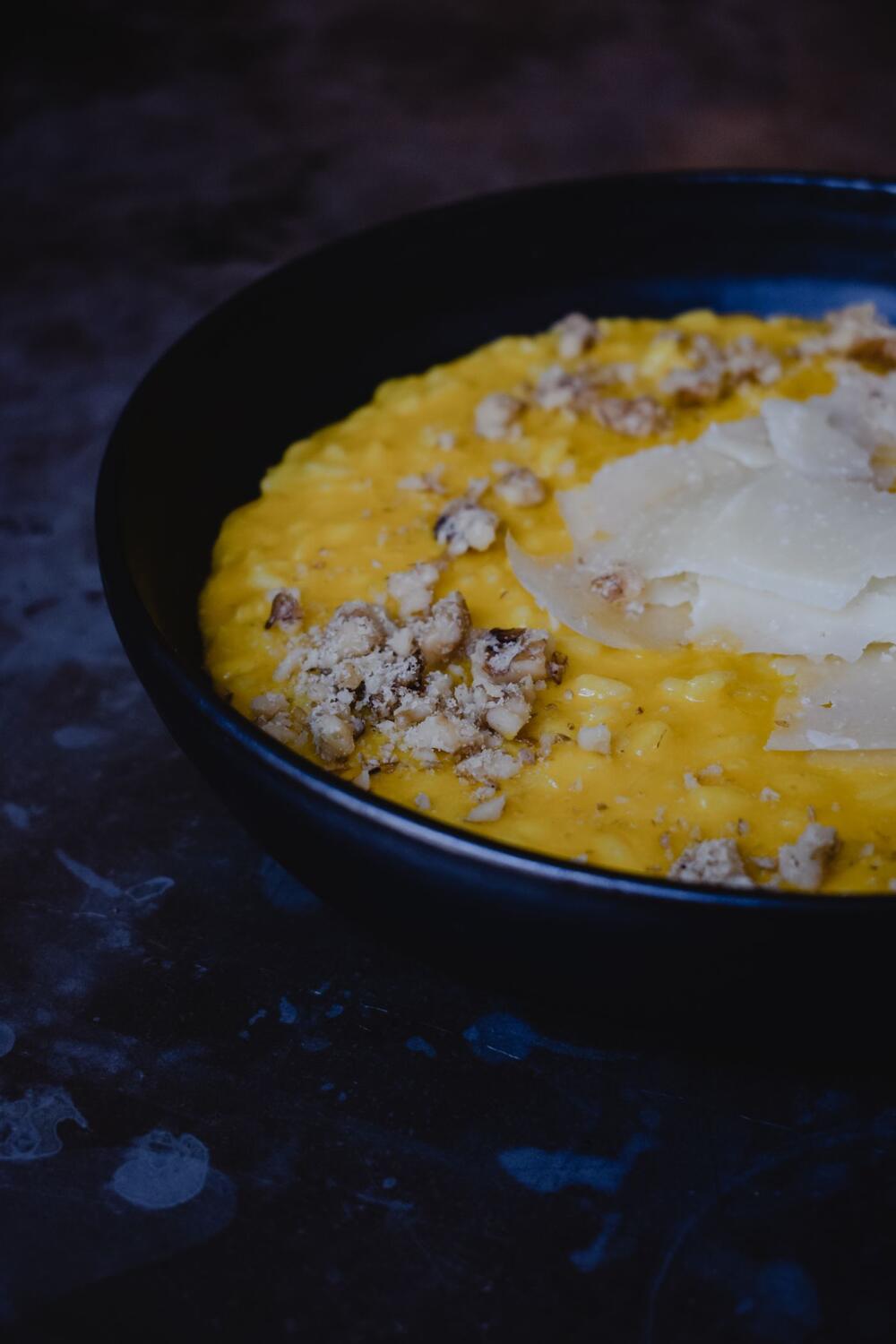 Photo by Eva Bronzini on Pexels
Risotto alla milanese finished with shaved truffle
Osso buco
Iconic dish
- From: Lombardy, Milan
- When: secondo, a winter comfort dish
- Contains: veal
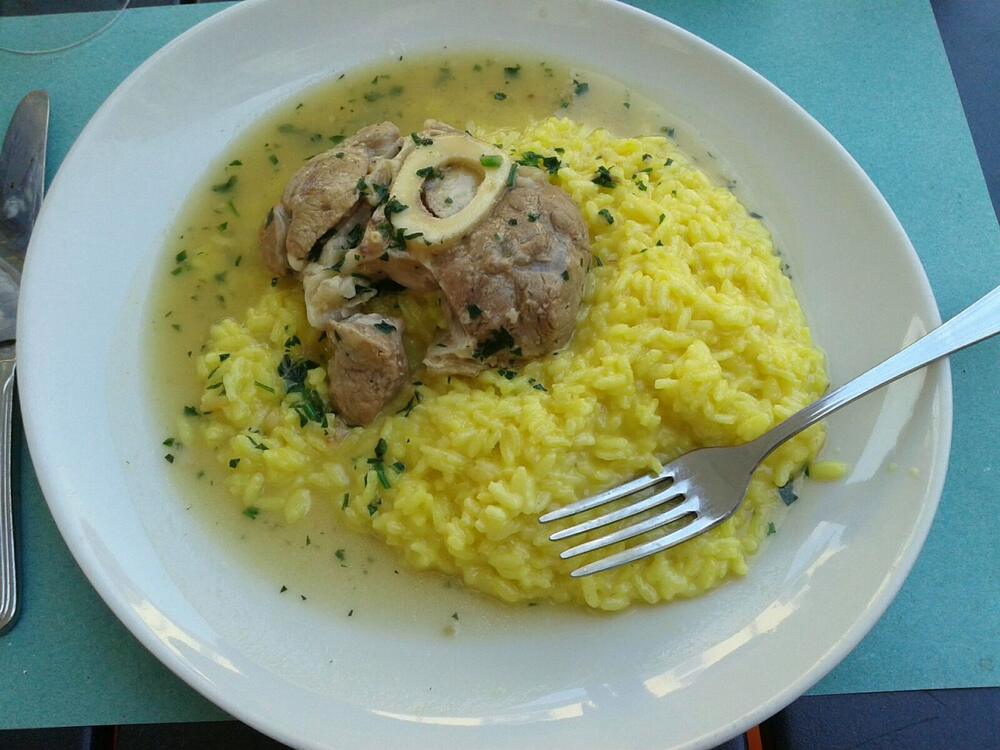
Osso buco is a braised veal shank, the bone's marrow left in, finished with gremolata, a sharp mix of lemon zest, garlic and parsley. Order it with risotto alla milanese, Milan's own match for it, and ask for extra bread to work the marrow out of the bone.
 pier (CC BY-SA 4.0)
Ossobuco served over risotto alla milanese, its traditional pairing
Bistecca alla fiorentina
Iconic dish
- From: Tuscany, Florence
- When: secondo, often shared
- Contains: beef
Order a bistecca alla fiorentina rare: a thick, bone-in T-bone cut from Chianina cattle, grilled over charcoal and sold by weight, usually for two people or more. Florence's trattorias will not cook it past rare; ask for well-done and expect a polite refusal.
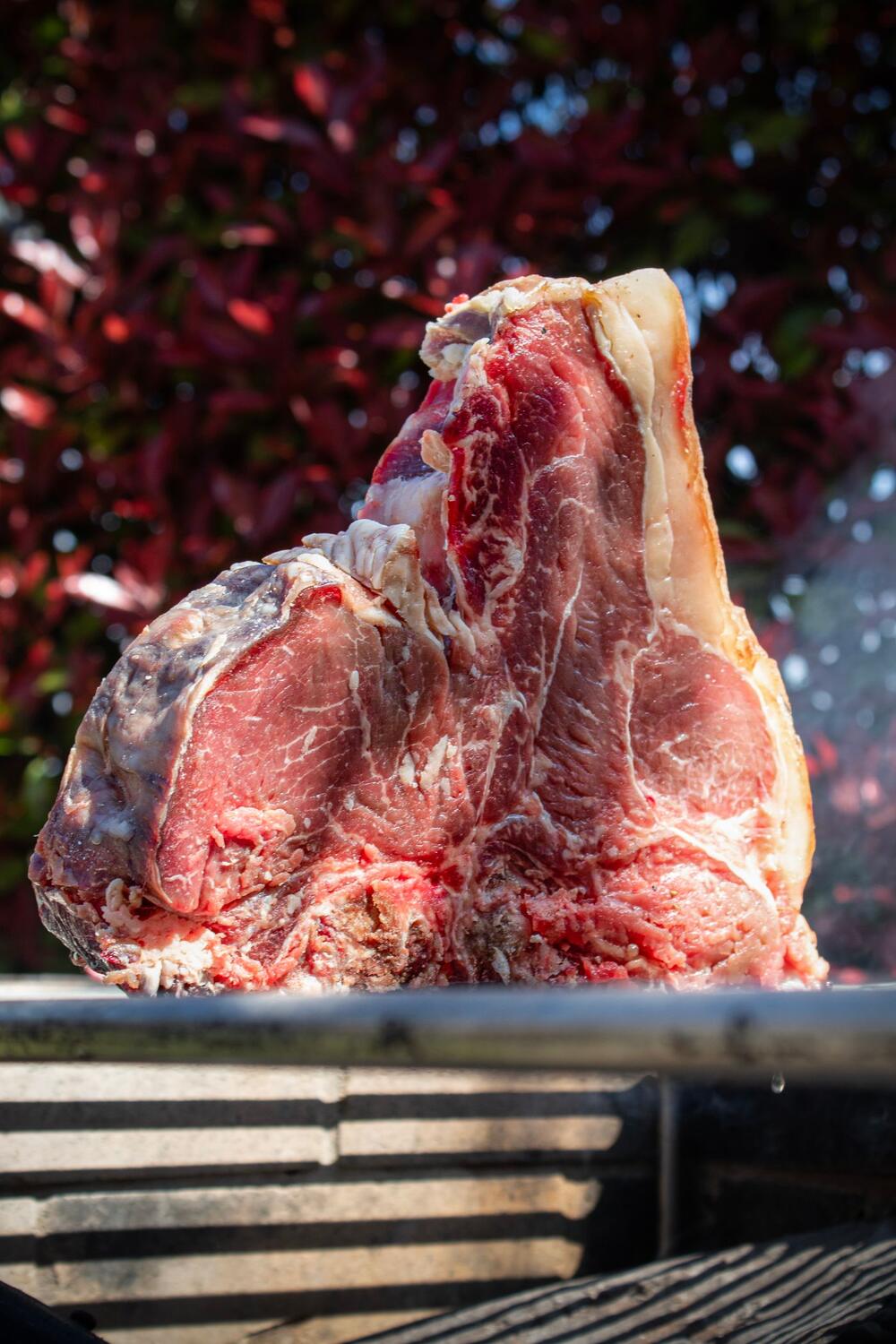 Photo by Regina Tommasi on Pexels
A raw bistecca alla fiorentina, ready for the grill
Orecchiette con cime di rapa
Iconic dish
- From: Puglia, Bari
- When: primo, autumn and winter
- Contains: fish; vegetarian-adaptable
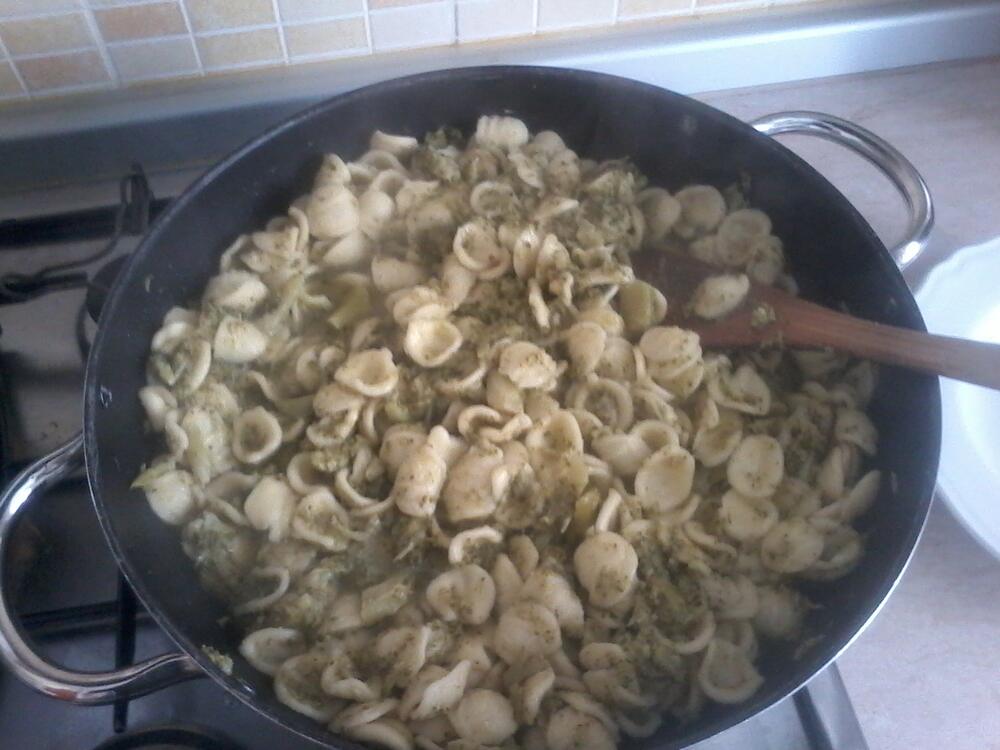
Puglia's ear-shaped orecchiette pasta is tossed with bitter turnip tops, garlic, anchovy and chili, a dish built around a vegetable most other regions skip. Bari's pasta-makers still shape the dumplings by hand on wooden boards set up outside their doors.
 Florixc (CC0)
Orecchiette con cime di rapa cooking in the pot
Gnocchi di patate
Iconic dish
- From: national, with regional styles
- When: primo, traditionally Thursday
- Contains: gluten; dairy optional
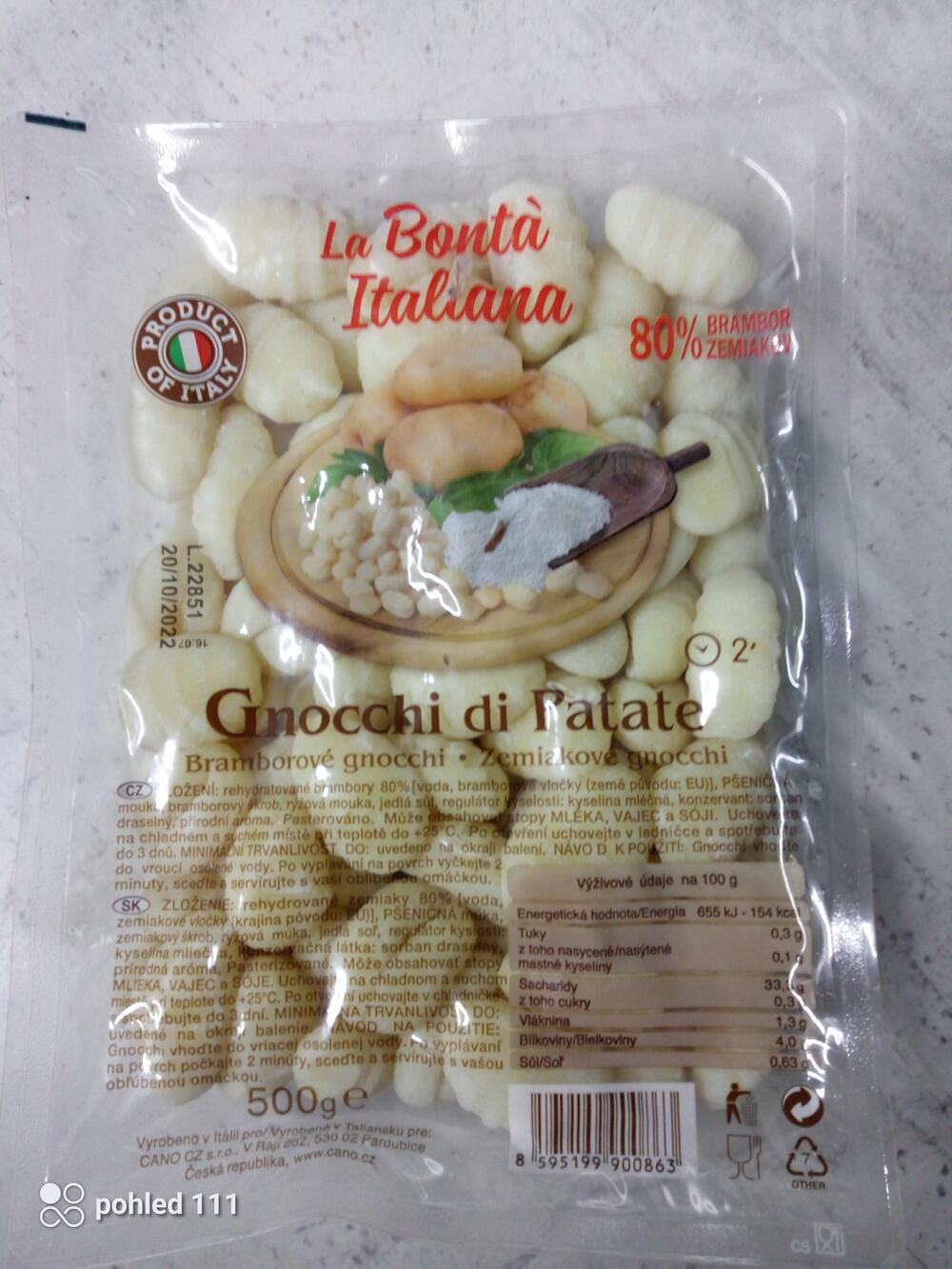
Gnocchi di patate are soft potato dumplings, light when made well and heavy when the dough is overworked. The plain butter-and-sage version shows the dumpling off; a tomato or meat ragù is the heartier choice.
 Pohled 111 (CC BY-SA 4.0)
Gnocchi di patate, soft potato dumplings
Pizza and street food
Pizza margherita
Iconic dish
- From: Campania, Naples
- When: any meal
- Price: €4 to €5 on average at a pizzeria, sometimes as low as €3
- Contains: gluten, dairy; vegetarian
Margherita is a topping: tomato, mozzarella (or fior di latte) and basil, a combination the story credits to Queen Margherita's 1889 visit to Naples. A pizza al taglio shop sells a square, cheaper slice of the same topping for a quick lunch anywhere in Italy.
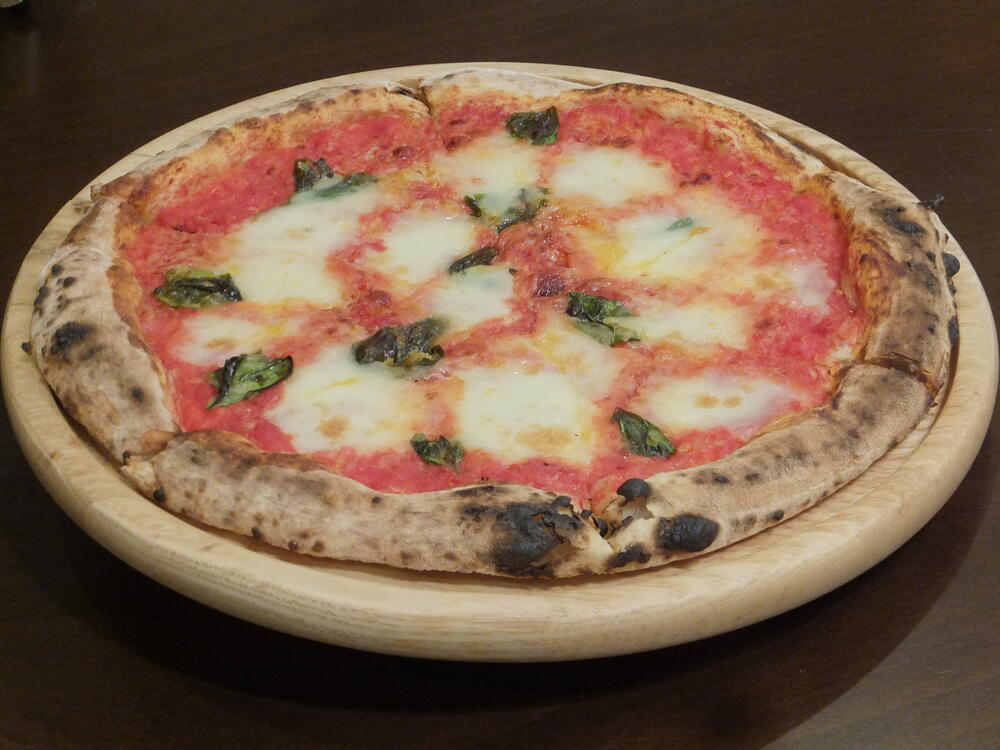 Lombroso (CC BY-SA 4.0)
A pizza margherita, with tomato, mozzarella and basil
Pizza napoletana
Iconic dish
- From: Campania, Naples
- When: any meal
- Contains: gluten, dairy
Pizza napoletana is a style, not a topping: a wood-fired pizza with a soft, thick-rimmed crust, made to rules that earned it EU protection as a Traditional Speciality Guaranteed in 2009. Eat it with a fork and knife, as Naples does, or fold a slice to eat it on foot.
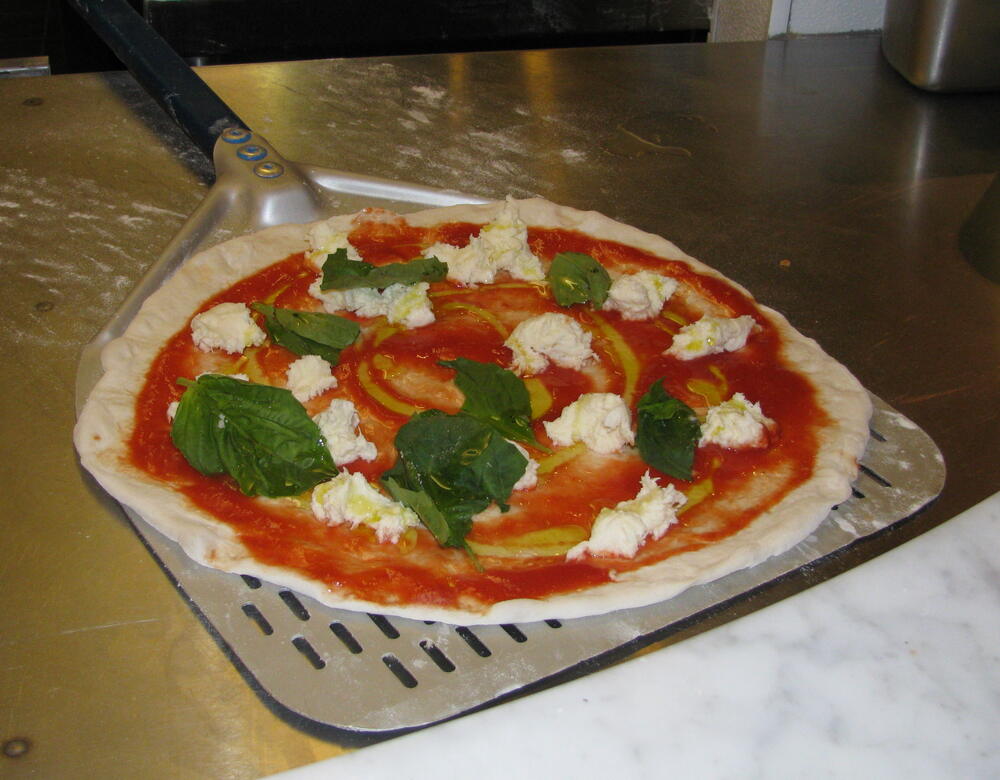 Stevemconst61 (public domain)
A Neapolitan pizza with its soft, thick crust
Arancina
Iconic dish
- From: Sicily
- When: street-food snack, any time
- Contains: meat, dairy, gluten
Fried and breaded, arancina wraps a ball of rice around ragù, peas and mozzarella. Palermo and the west of the island shape it round; Catania and the east shape it conical and call it arancino. Sicilians argue over the shape as fiercely as the filling.
Palermo's street-food counters make a good base for a wider Sicily trip: the 7-day Sicily itinerary builds a week around the island. Palermo is also a June pick for exactly this kind of street food.
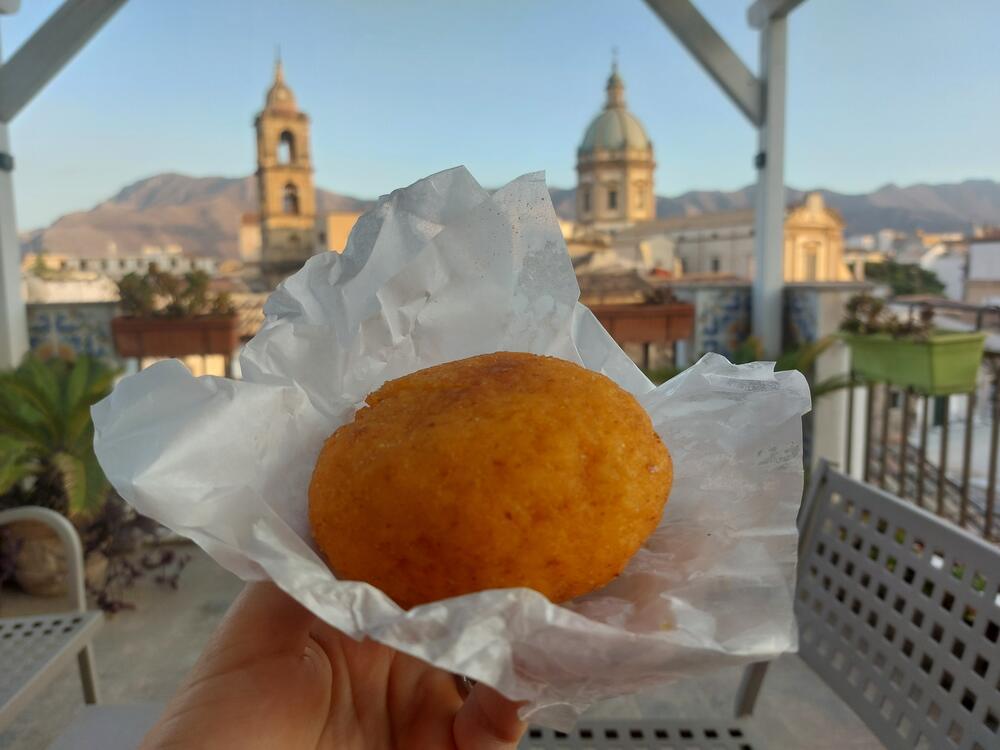 Mediocrity (CC0)
An arancina alla Norma from Palermo, Sicily
Cheeses, cured meats and the ingredients behind the sauce
Carbonara runs on guanciale and pecorino, lasagna on parmesan, and a Roman antipasto plate on prosciutto. Most of these are worth tasting or buying on their own.
Parmigiano Reggiano
Iconic dish
- From: Emilia-Romagna, Parma and Reggio Emilia
- When: any course, grated or shaved
- Contains: dairy
Parmigiano Reggiano is a hard cow's-milk cheese, aged under a strict DOP recipe for 12 to 36 months or more. The wheels are stamped with their name and the dairy's details across the rind, so a real one is identifiable before you ever cut it.
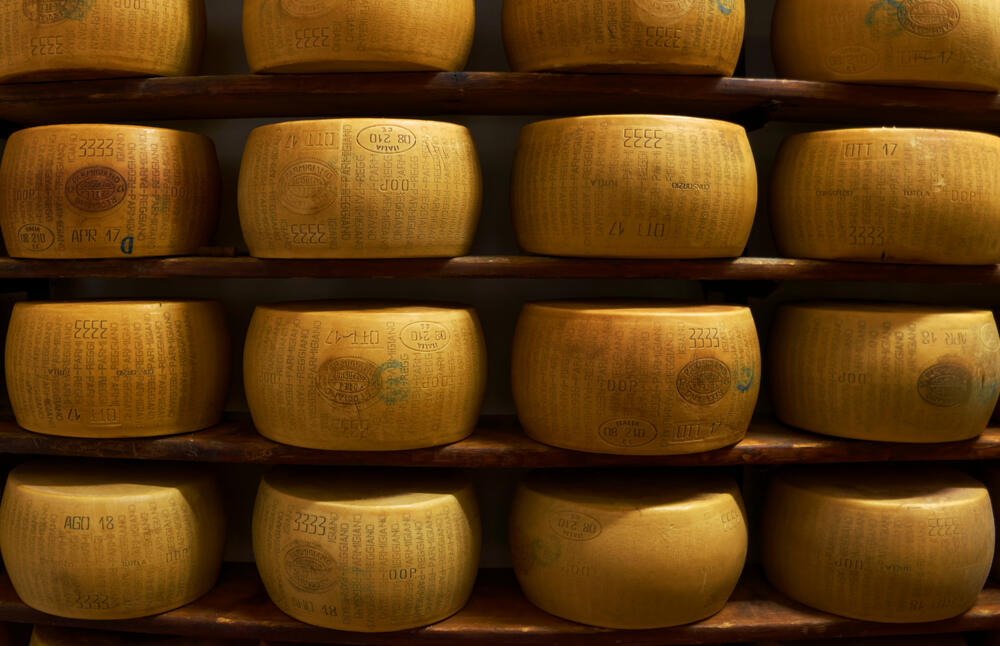 Gilles Desjardins (CC BY-SA 4.0)
Wheels of Parmigiano Reggiano ageing
Prosciutto di Parma
Iconic dish
- From: Emilia-Romagna, Parma
- When: antipasto
- Contains: pork
Salt and at least 12 months of air-drying, nothing else, turn raw ham into Prosciutto di Parma. Served thin-sliced as antipasto, it classically comes with melon or a few grissini breadsticks to wrap it around.
Cured ham is one of the meat products US Customs prohibits from most foreign countries, so finish your prosciutto before you fly home.
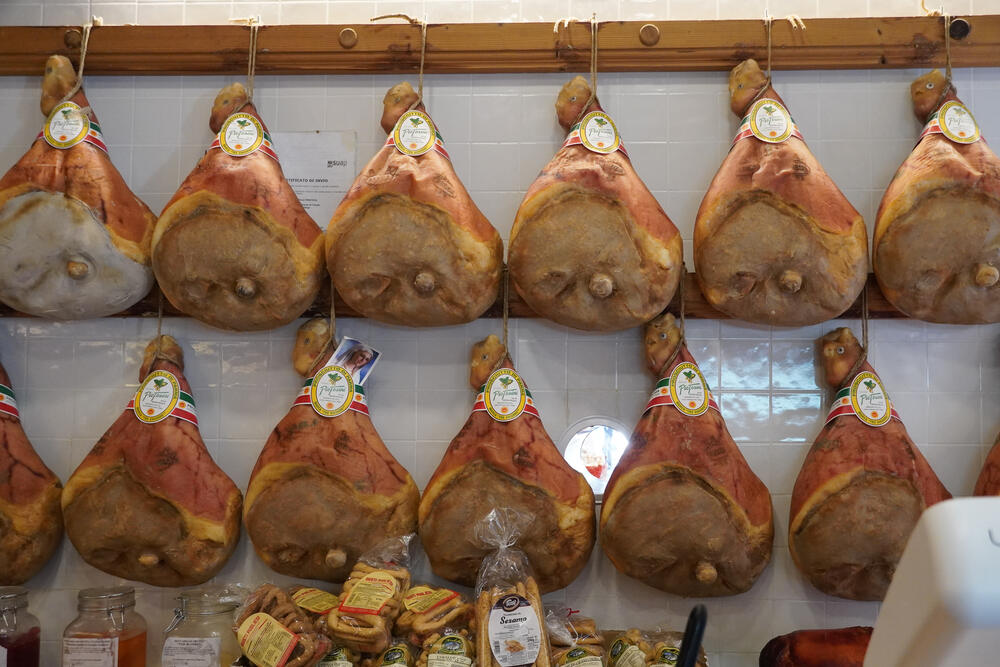 Naturpuur (CC BY-SA 4.0)
Prosciutto di Parma, dry-cured ham
Pecorino Romano
Iconic dish
- From: Lazio, also produced in Sardinia and Tuscany under the same DOP
- When: any course, grated
- Contains: dairy
Pecorino Romano is a hard, salty sheep's-milk cheese aged at least 5 months. Grated over carbonara, cacio e pepe, amatriciana and gricia, its sharper bite is the reason none of those four pastas uses parmesan instead.
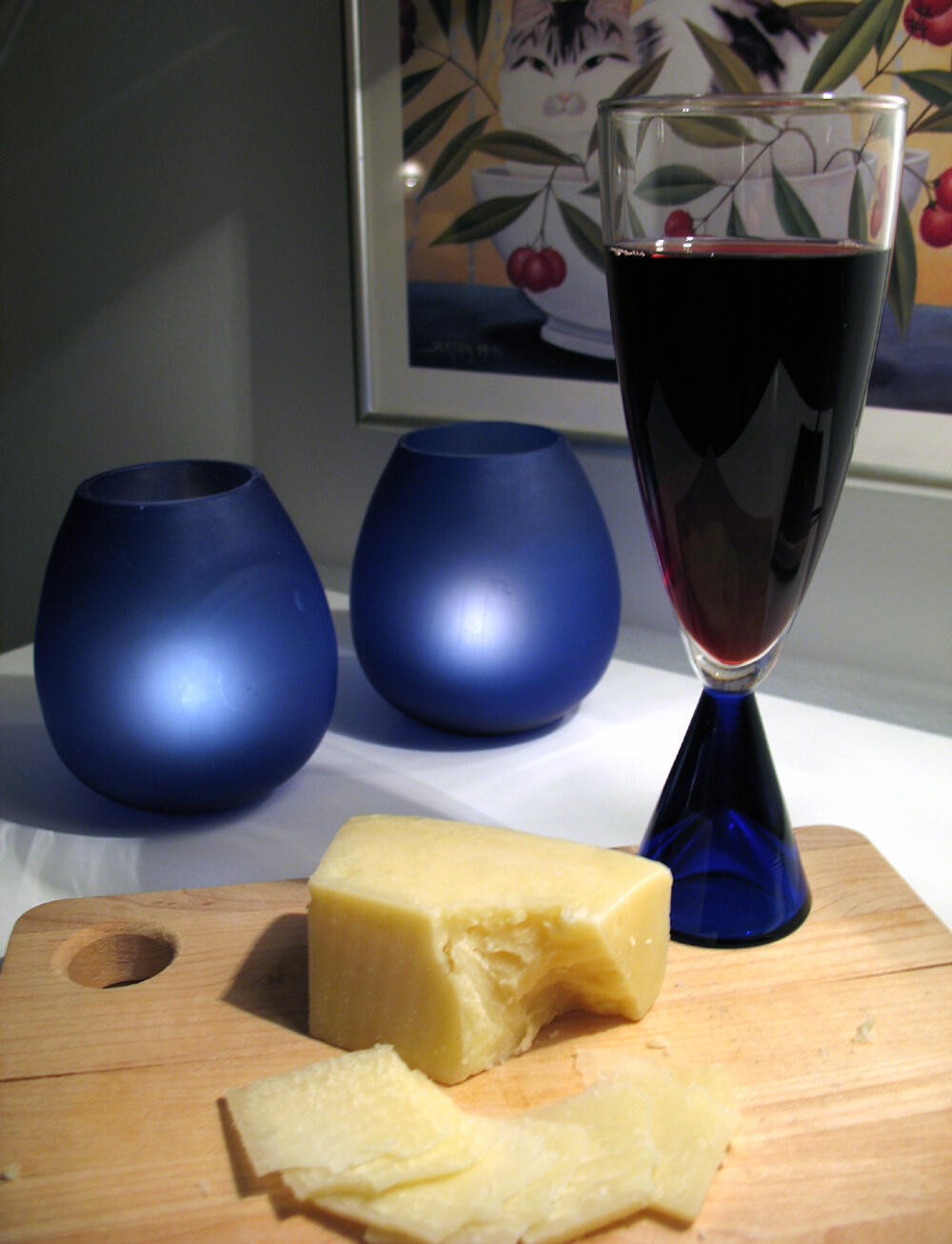 Deanna from Chicago 'burbs (CC BY-SA 2.0)
A wedge of Pecorino Romano, the hard sheep's-milk cheese
Mozzarella di Bufala Campana
Iconic dish
- From: Campania
- When: antipasto, or on pizza
- Contains: dairy
Campania makes Mozzarella di Bufala Campana fresh from water-buffalo milk, curded and stretched the same day it is eaten. The dairies around Caserta and Paestum sell it still warm, a different cheese from the shelf-stable version sold abroad.
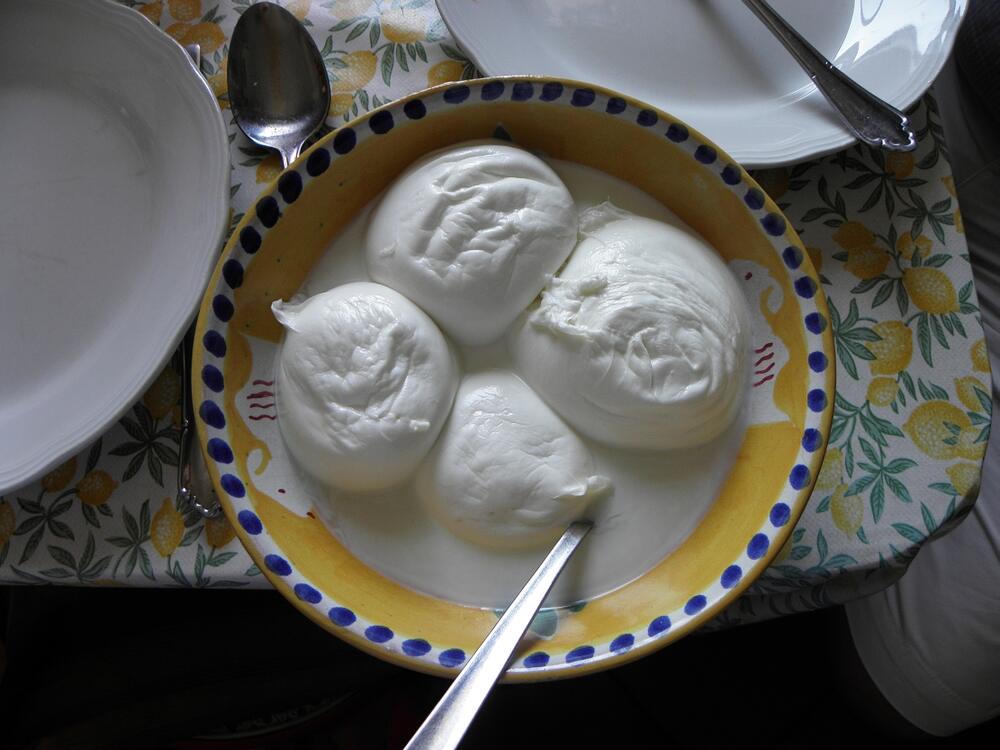 Ra Boe (CC BY-SA 3.0 de)
Mozzarella di Bufala Campana, fresh buffalo mozzarella
Guanciale
Iconic dish
- From: Lazio, also Umbria
- When: cooking ingredient
- Contains: pork
Guanciale is cured, unsmoked pork cheek, rendered down into the fat base of carbonara, amatriciana and gricia, and nothing like pancetta or bacon. No Roman kitchen calls a dish carbonara without it.
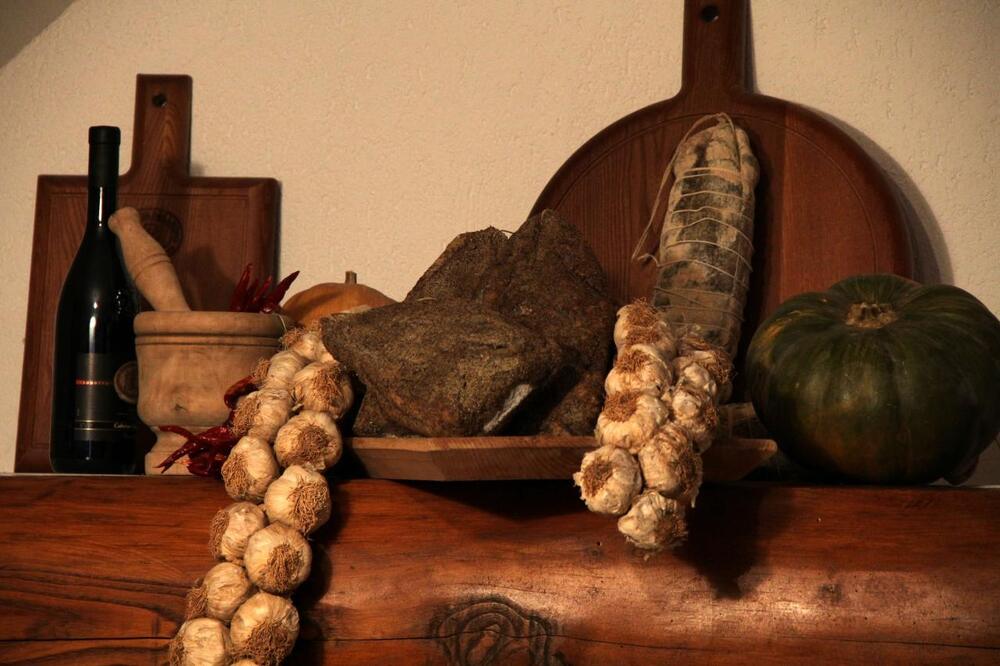 Emanuele Persiani (CC BY-SA 2.0)
Guanciale di Norcia, cured pork cheek
Mortadella
Iconic dish
- From: Emilia-Romagna, Bologna
- When: antipasto, sandwich filling
- Contains: pork
Buy mortadella thin-sliced from a Bologna deli counter: a large, smooth pork sausage studded with cubes of fat and sometimes pistachio, not the pre-packed version sold elsewhere. American "baloney" descends from it, at a considerable distance.
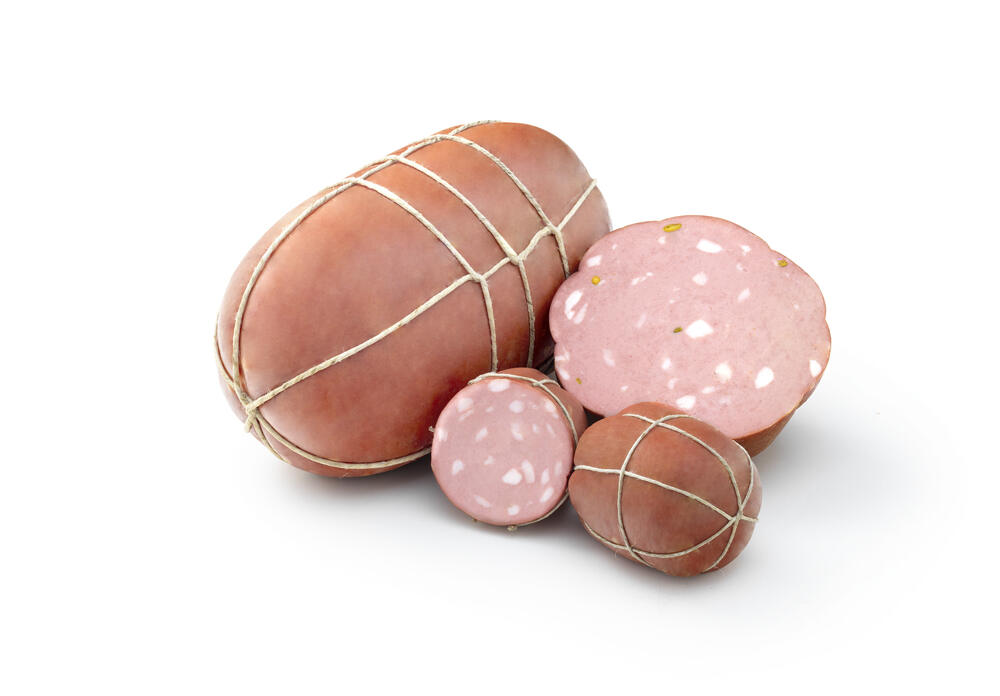 Stefano Brush Parisi (CC BY-SA 4.0)
Mortadella Bologna IGP, studded with cubes of fat
Truffles
Iconic dish
- From: Piedmont (Alba, white) and Umbria (Norcia, black)
- When: autumn and winter
- Contains: vegetarian
White truffle from Alba and black truffle from Norcia are shaved raw over pasta, eggs or risotto rather than cooked into a dish. Alba holds its truffle fair every October and November, the one time of year the region's whole economy turns toward a single fungus.
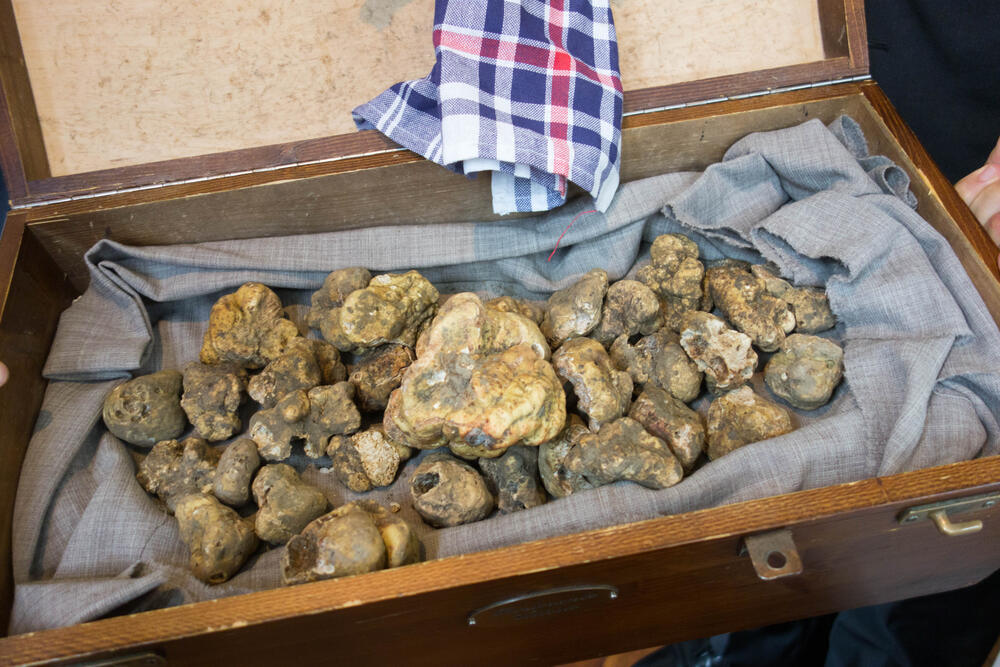 Kent Wang from London, United Kingdom (CC BY-SA 2.0)
White truffles from Alba, Piedmont
Breakfast and desserts
A day in Italy opens small: a cornetto and a cappuccino, taken standing at a bar counter. Genoa's version swaps the pastry for a square of focaccia, dipped straight into the coffee.
Focaccia genovese
Iconic dish
- From: Liguria, Genoa
- When: breakfast or snack, any time
- Contains: vegetarian, gluten
Genoa's focaccia is an olive-oil flatbread, dimpled across the top and salted, baked fresh through the morning in every neighborhood bakery. Locals eat it for breakfast dipped in a cappuccino, a combination that looks strange until you try the salt against the milk.
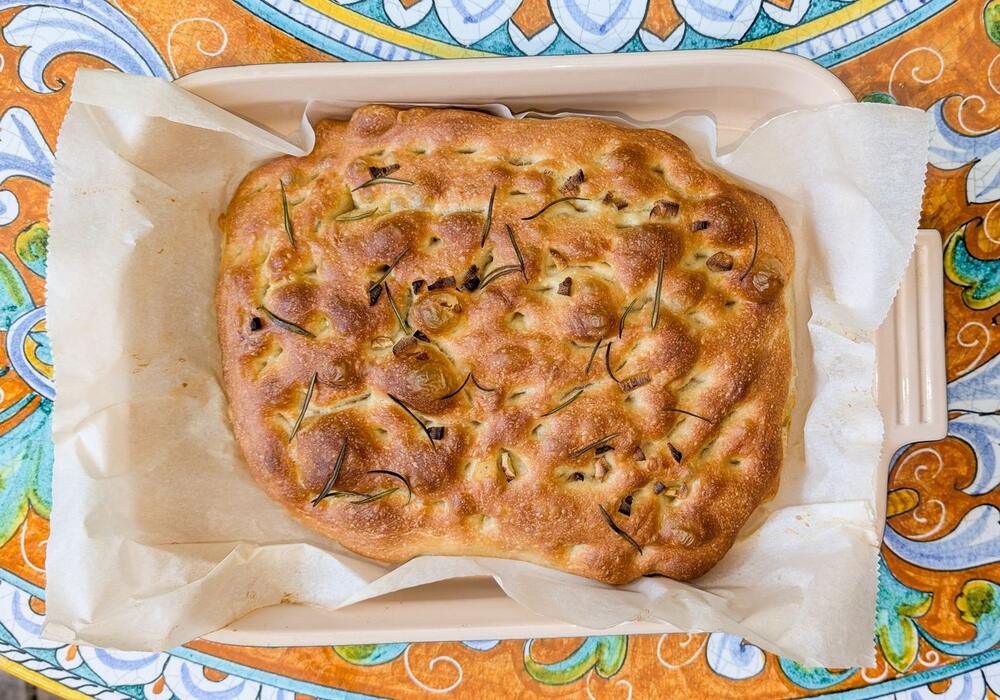 Photo by George Piskov on Pexels
Golden focaccia, dimpled and topped with rosemary
Gelato
Iconic dish
- From: national, Florence credited with the earliest version
- When: any time, especially the evening passeggiata
- Price: about €2.50 for a small cone in Rome in 2020, €3 for medium and €3.50 for large
- Contains: dairy (fruit flavors are often dairy-free)
Gelato is churned slower than industrial ice cream, with less air and less fat beaten in, and served a few degrees warmer so the flavor reads stronger. A good gelateria shows muted, natural colors; a pile of neon pistachio or banana is the sign to walk on.
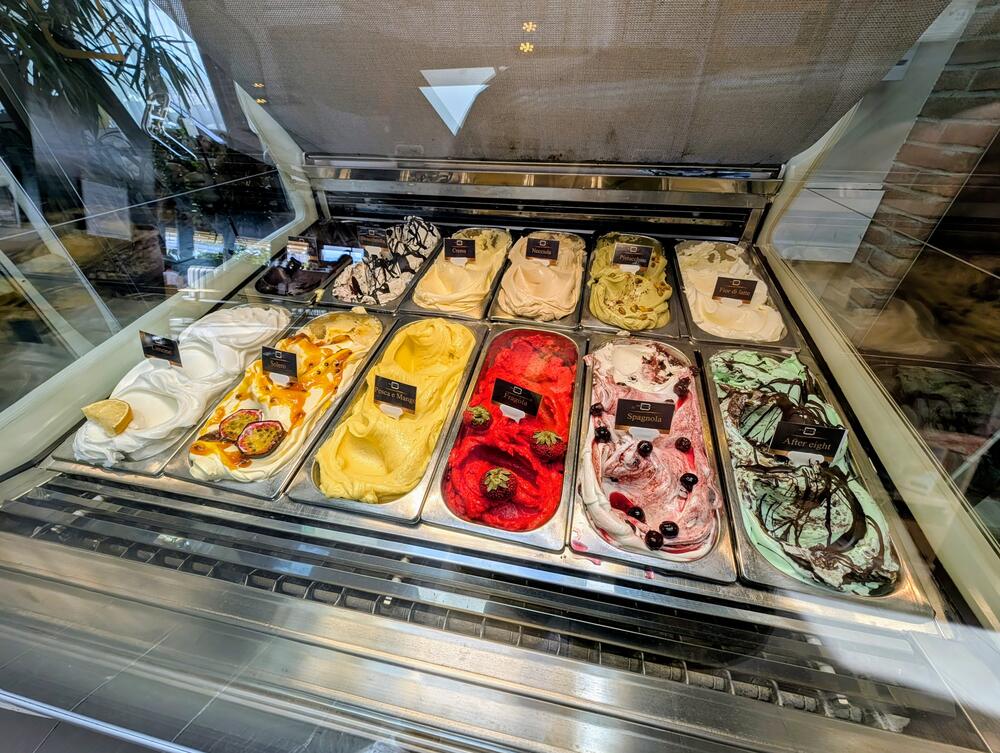 Basilicofresco (CC BY-SA 4.0)
Artisanal gelato, with its natural, muted colors
Tiramisù
Iconic dish
- From: Veneto, Treviso (a disputed origin)
- When: dessert
- Contains: dairy, egg, gluten
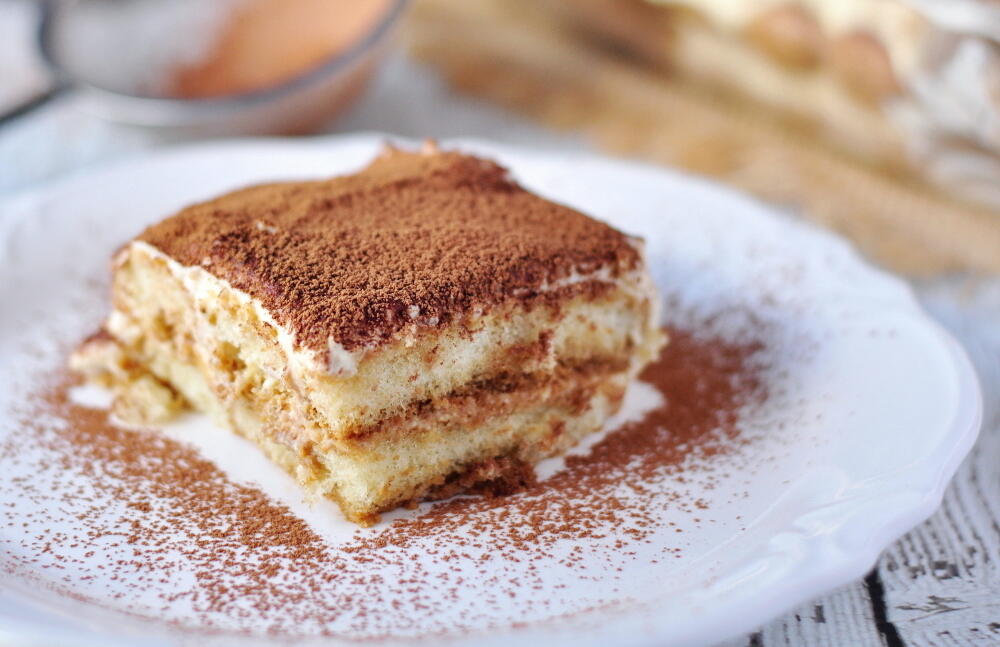
Tiramisù layers coffee-soaked savoiardi biscuits with mascarpone cream, finished under a dusting of cocoa. Treviso claims to have invented it, though the dish is served everywhere in Italy today and the claim is disputed even inside Veneto. Order it to close the meal, the traditional spot for it at a trattoria dinner, rather than as a stand-alone treat.
 Sharon Chen from Austin, United States (CC BY 2.0)
A classic tiramisu, layered with coffee-soaked biscuits and mascarpone
Cannolo
Iconic dish
- From: Sicily
- When: dessert, any time
- Contains: dairy, gluten
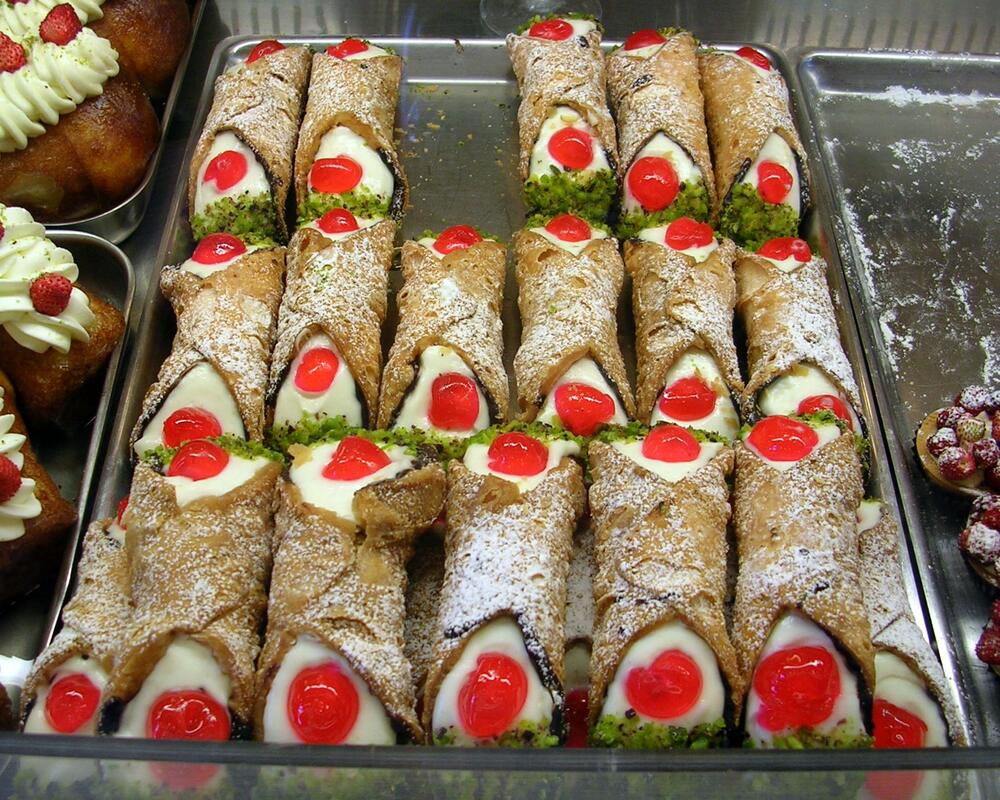
A cannolo is a fried pastry tube filled with sweetened ricotta, often finished with candied fruit or chocolate chips at each end. A good pasticceria fills it to order, so the shell is still crisp when it reaches the counter rather than softened from sitting.
 Stefano Mortellaro from Catania, Italy (CC BY 2.0)
Cannoli siciliani, fried pastry filled with sweetened ricotta
More desserts turn up by season and region, from Milan's Christmas panettone to a Sicilian summer granita.
Try free
Plan your Italy trip in about 2 minutes
Tap through 8 quick cards for a complete itinerary with budget, maps, and packing lists. No account required.
Plan your Italy trip →| Sweet | What it is | Where or when |
|---|---|---|
| Panettone | tall, dome-shaped sweet bread with candied fruit and raisins | Milan, Christmas season |
| Pandoro | star-shaped, butter-rich Christmas sponge cake | Verona, Christmas season |
| Cassata siciliana | sponge cake layered with sweetened ricotta, marzipan and candied fruit | Sicily |
| Granita (e brioche) | coarse flavored ice, often eaten with a warm brioche for breakfast | Sicily, especially Catania and Messina in summer |
| Sfogliatella | shell-shaped, crisp pastry filled with sweetened ricotta and semolina | Naples |
| Panna cotta | set cream dessert, often with a caramel, berry or chocolate sauce | Piedmont |
What to drink in Italy
Italians drink wine with the meal, not before it.
Chianti
Iconic dish
- From: Tuscany
- When: with a meal
- Contains: n/a
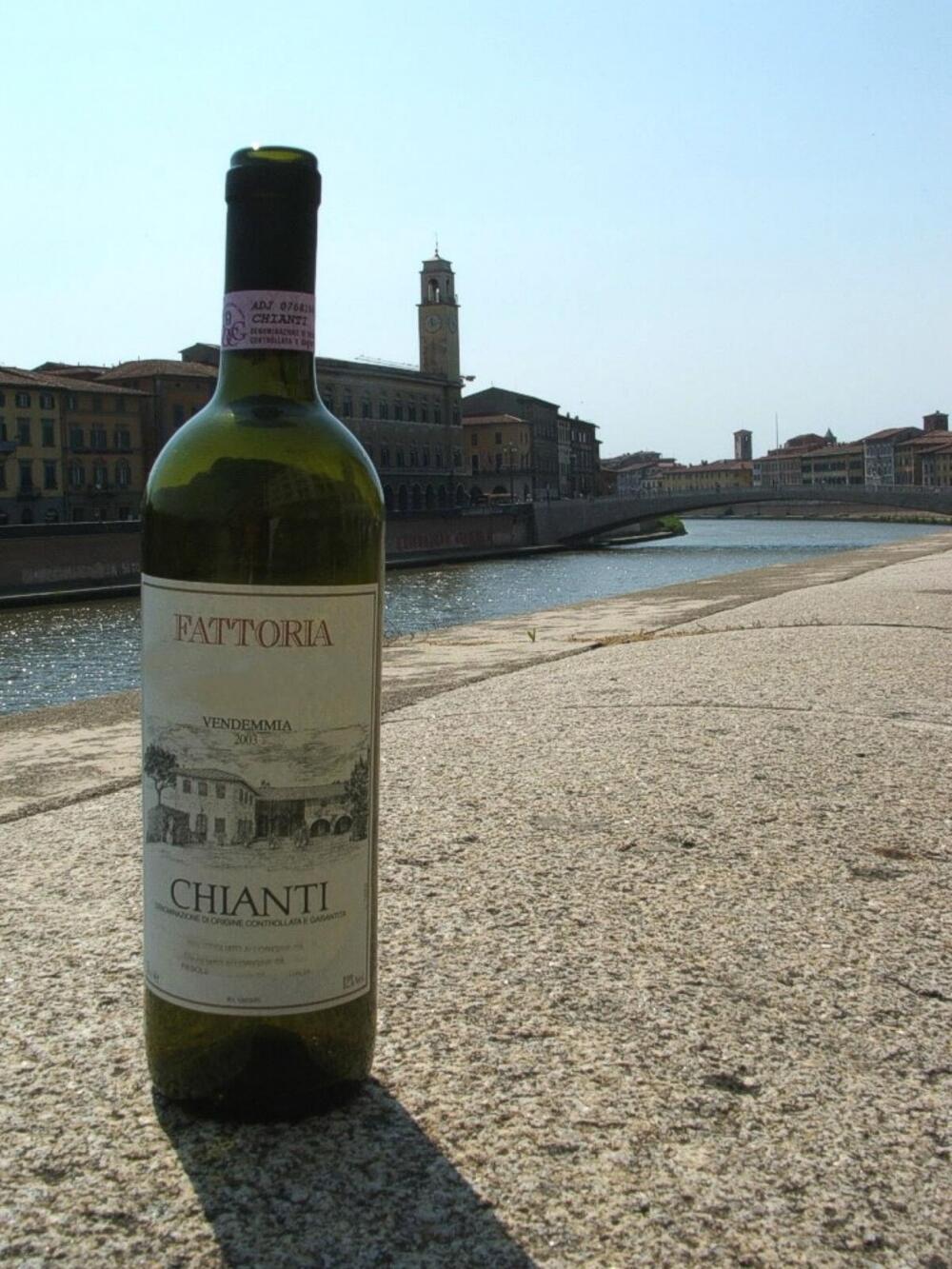
Chianti is a Sangiovese-based red wine grown in the Tuscan hill country south of Florence. Order a glass with bistecca alla fiorentina, the pairing every Tuscan trattoria builds its wine list around.
 Twice25 (CC BY-SA 3.0)
A bottle of Chianti wine
Prosecco
Iconic dish
- From: Veneto and Friuli, Conegliano-Valdobbiadene
- When: aperitivo, celebration
- Contains: n/a
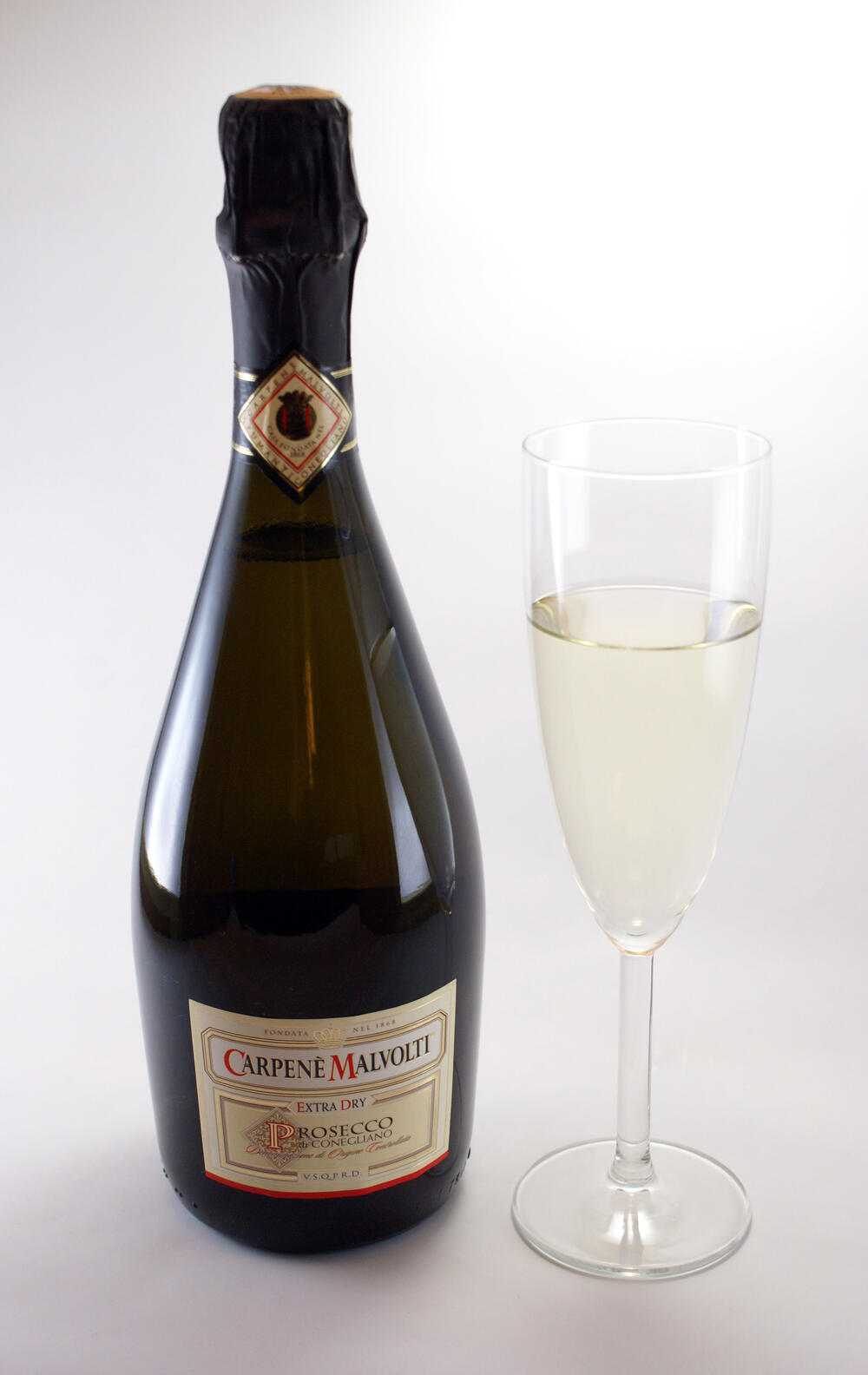
Glera grapes from Veneto and Friuli make prosecco, a light, fruity sparkling wine and Italy's everyday choice for a celebration. Most aperitivo spritzes use it as the base, poured over ice with Aperol or Campari and a little soda.
 Sandstein (CC BY 3.0)
A bottle and glass of Prosecco from Conegliano
Barolo
Iconic dish
- From: Piedmont, the Langhe
- When: with a meal, dinner
- Contains: n/a
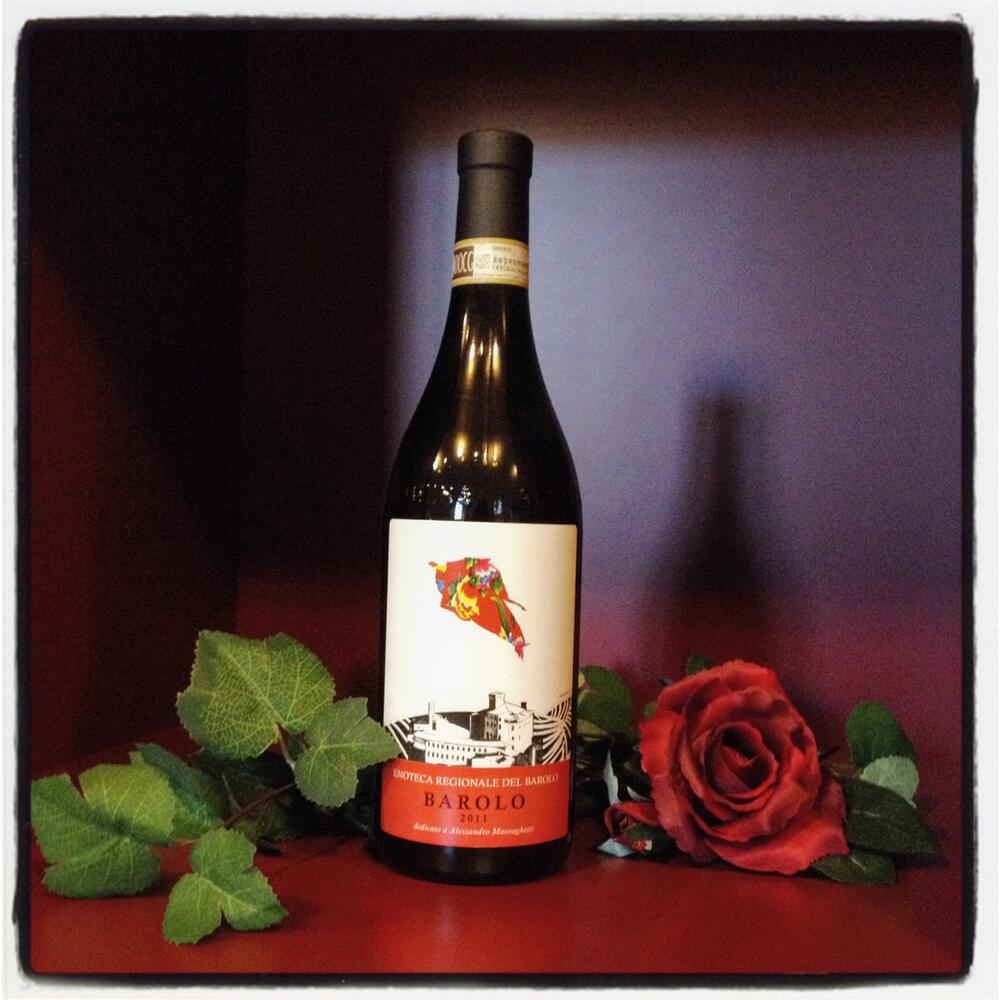
Barolo is a full-bodied Nebbiolo red, aged at least 38 months and considered Piedmont's most prestigious wine. Drink it with brasato al Barolo, beef braised in the same wine, in one of the Langhe's wine bars.
 Cristiana Grimaldi (CC BY 3.0)
A bottle of Barolo, Piedmont's Nebbiolo wine
Limoncello
Iconic dish
- From: Campania, the Amalfi Coast and Sorrento
- When: digestif, after a meal
- Contains: n/a
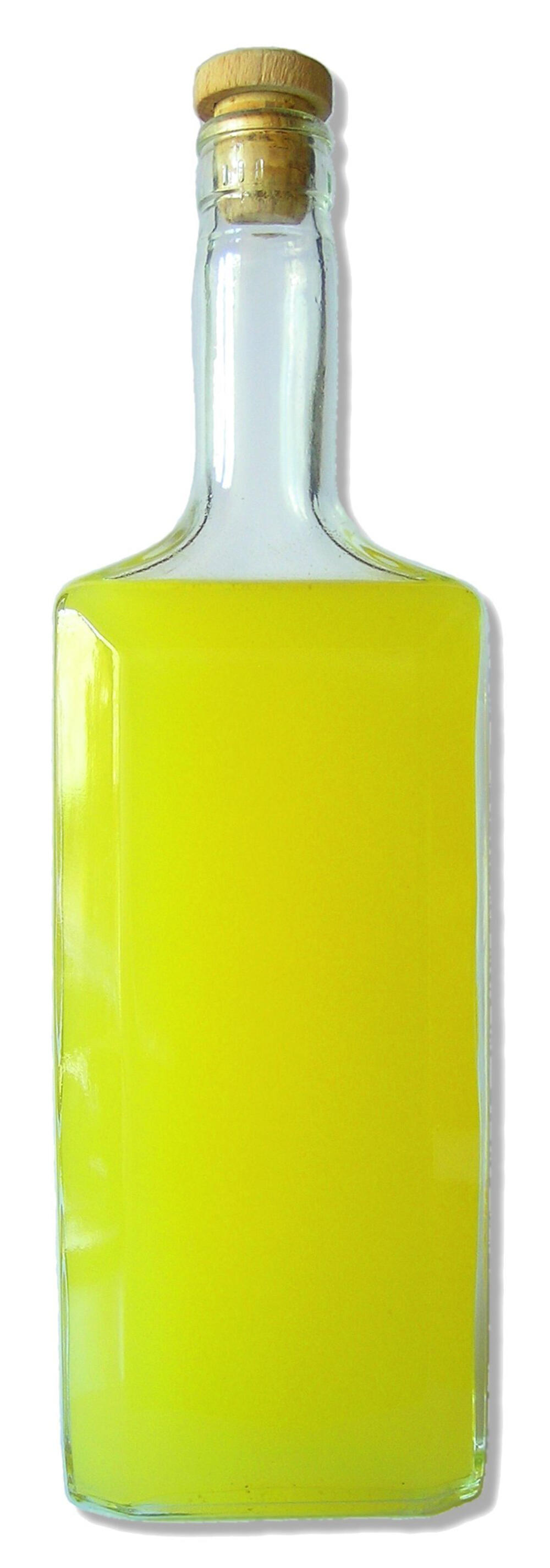
Amalfi and Sorrento lemon peel, soaked in alcohol and sugar syrup, makes limoncello, a sweet digestif. Drink it ice-cold, in a small glass, at the end of a meal rather than during it.
 Alessio Damato (CC BY-SA 3.0)
Homemade limoncello, steeped from lemon peel
Beyond the four above, a handful of other drinks turn up on nearly every menu.
| Drink | What it is | Note |
|---|---|---|
| Aperol spritz | Aperol, prosecco and soda over ice with an orange slice | early-evening aperitivo |
| Grappa | clear brandy distilled from grape pomace | a digestif, strongest tradition in the north |
| Negroni | equal parts gin, Campari and sweet vermouth | invented in Florence |
| Vin Santo | sweet amber dessert wine from dried grapes | Tuscany, dunked with cantucci biscuits |
| Amaro (digestivo) | bitter, herbal after-dinner liqueur | many regional recipes, including Fernet and Averna |
Coffee runs on its own rules, tightest of all.
| Coffee | What it is | When |
|---|---|---|
| Espresso (un caffè) | a short, concentrated shot | any time |
| Cappuccino | espresso topped with steamed, frothy milk | breakfast only, rarely after about 11am |
| Macchiato | espresso "stained" with a dash of milk | any time of day |
| Caffè corretto | espresso with a shot of spirit, usually grappa | after a meal |
What to eat in each region of Italy
Each of Italy's twenty regions cooks its own dishes and often its own wine to go with them, and a MonkeyEatingMango trip carries the right ones for every city on your route.
| Region | Headline dishes | Drink |
|---|---|---|
| Lazio | Carbonara, cacio e pepe, amatriciana, supplì, gricia | |
| Emilia-Romagna | Tagliatelle al ragù, tortellini in brodo, lasagna, Parmigiano Reggiano, Prosciutto di Parma | |
| Campania | Pizza napoletana, mozzarella di bufala, sfogliatella | Limoncello |
| Tuscany | Bistecca alla fiorentina, ribollita, pecorino toscano | Chianti, Vin Santo |
| Lombardy | Risotto alla milanese, osso buco, cotoletta alla milanese, gorgonzola, panettone | |
| Piedmont | White truffles, agnolotti del plin, bagna cauda | Barolo |
| Veneto | Tiramisù, cicchetti, polenta | Prosecco, Aperol spritz |
| Sicily | Arancina, cannolo, pasta alla Norma, granita, caponata | |
| Sardinia | Culurgiones, malloreddus, bottarga, pane carasau | |
| Puglia | Orecchiette con cime di rapa, burrata, taralli | |
| Umbria | Black truffles, porchetta | |
| Trentino-Alto Adige | Canederli, strudel di mele, speck Alto Adige | |
| Liguria | Focaccia genovese, pesto Genovese, farinata | |
| Calabria | 'Nduja | |
| Marche | Brodetto all'anconetana |
When and how do Italians eat?
An Italian meal runs antipasto, then primo (pasta, rice or soup), then secondo with a contorno on the side, then dolce, though a weekday lunch often stops after the primo. Ordering only a pasta course is normal; nobody expects a full four courses at a casual table.
A ristorante is the most formal option, with full table service and a longer wine list. A trattoria is family-run and simpler, usually cheaper, with a short menu that changes with what the kitchen bought that morning. An osteria began as a wine tavern and today still leans casual, sometimes with the day's dishes recited rather than printed.
In the north, especially Milan, Turin and Venice, bars lay out an aperitivo from about 5 to 9pm: a drink such as a spritz or prosecco, with snacks, cheese, olives and bruschetta on the counter. Order one before dinner, not instead of it.
Order a single espresso (un caffè) after a meal, never a cappuccino; milk with food is a breakfast habit, not a dinner one. If you want a shot of something stronger in your coffee, ask for it corretto.
Eating out in Italy: tipping, the bill and water
Tipping is not obligatory in Italy, and restaurant staff do not expect it the way servers do in the US. Many bills already add a small coperto, a per-person cover charge for bread and table service, listed on the menu rather than hidden in the prices. Where there is no coperto, rounding up the bill or leaving a few coins is enough.
Nobody will bring the bill before you ask for it. Say "il conto, per favore" when you are ready to go; a waiter who rushes you out the door is the exception, not the norm.
Tap water in Italy is safe to drink in its cities and towns, and Rome runs public drinking fountains, the nasoni, free across the city. Even so, most Italians order bottled water at a restaurant table, either still (naturale) or sparkling (frizzante), rather than asking for tap water free.
EU rules require a restaurant to disclose 14 named allergens, from gluten and milk to eggs and shellfish, in anything it serves. Ask about allergeni before you order if one applies to you. A market stall selling street food still falls under EU food hygiene rules, the same ones that cover a sit-down restaurant.
Plan your Italy trip around the food
Start with the Italy travel guide for how long to stay and how to move between cities, then the things to do in Italy guide to pair each city with its sights. For a trip built around several regions at once, the 14-day Italy itinerary covers Rome, Florence, Venice and more. Florence, the home of Chianti, is also a September pick for its grape harvest.
Each day of a MonkeyEatingMango itinerary names what to eat at lunch and dinner, matched to the city you are in that day.
Last updated October 2026.
Common questions
What is the national dish of Italy?
Italy has no official national dish. Its food is built around regional identity instead: carbonara and cacio e pepe belong to Rome, risotto alla milanese to Milan, pizza to Naples and bistecca alla fiorentina to Florence. Each region defends its own dishes rather than a single national one.
What's the difference between a trattoria, an osteria and a ristorante?
A ristorante is the most formal, with full table service and a longer menu. A trattoria is family-run and simpler, often cheaper and with a shorter, changing menu. An osteria began as a wine tavern and today usually means a small, casual spot, sometimes with no printed menu at all.
Do you have to order every course of an Italian meal?
No. The full structure runs antipasto (starter), primo (pasta, rice or soup), secondo with a contorno (meat or fish with a side), then dolce (dessert), but a weekday lunch is often just one or two courses. Ordering only a primo is normal and never flagged as skimping.
Does real carbonara ever have cream in it?
No. Carbonara is spaghetti or rigatoni with egg yolk, pecorino romano, guanciale and black pepper. The sauce gets its creaminess from egg and starchy pasta water, not from cream.
What is the difference between gelato and ice cream?
Gelato is churned more slowly than industrial ice cream, with less air and less fat beaten in, and served a few degrees warmer so the flavor comes through more intensely. Good gelato shows in muted, natural colors rather than the neon shades of a flavored syrup.
Why shouldn't you order a cappuccino after 11am in Italy?
Cappuccino is a breakfast drink in Italy, taken with a cornetto before about 11am. Ordering one later, or after a meal, marks you as a tourist; ask for a macchiato or a plain espresso instead.
What is aperitivo, and when does it happen?
Aperitivo is the early-evening ritual of a drink, such as an Aperol spritz or prosecco, with a spread of light snacks before dinner. The custom runs from about 5 to 9pm and is strongest in the north, especially Milan, Turin and Venice.
What's the difference between pizza margherita and pizza napoletana?
Margherita is a topping: tomato, mozzarella and basil, on any pizza anywhere. Napoletana is a style: a wood-fired, soft, thick-rimmed crust made to the rules of Naples' pizzaiuoli, an EU-protected Traditional Speciality Guaranteed since 2009. A pizza can be both margherita and napoletana at once.
Can I bring Parmigiano Reggiano or prosciutto home to the US?
No for prosciutto: US Customs does not allow fresh, dried or canned meat products from most foreign countries, and cured ham counts. Hard cheeses like Parmigiano Reggiano are often allowed, but check current USDA guidance before you pack a wheel home.
Is tipping expected in Italian restaurants?
No. Tipping is not obligatory in Italy, and many bills already carry a small coperto, a per-person cover charge, in place of a tip. Rounding up the bill or leaving a few coins for good service is enough.
Is tap water safe to drink in Italy?
Yes, tap water in Italy is safe to drink in cities and towns. Rome's public nasoni fountains run drinking water for free, though many Italians still order bottled water, still (naturale) or sparkling (frizzante), at a restaurant table.

Written by Shobhit Shrivastava · Founder
Related reading
Italy travel guide
5 Days on the Amalfi Coast: Positano and Amalfi
5 days split between Positano and Amalfi: 3 nights in Positano (Franco's Bar, Arienzo Beach Club, linen shopping) followed by 2 nights in Amalfi (Duomo di Amalfi, Museo della Carta, Pasticceria Pansa). Comfortable pace with a mix of beach clubs, coastal hiking, and hands-on pasta classes....
A Week on the Amalfi Coast: Positano, Amalfi and Ravello
This 7-day comfortable trip for a couple explores the iconic Amalfi Coast, beginning in Positano for cliffside views and Spiaggia Grande beach, then moving to Amalfi for its Duomo di Sant'Andrea and historic center. The journey concludes in the elevated gardens of Ravello at Villa Rufolo,...
10 Days in Italy: Rome and Florence, from the Colosseum to the Vatican
10 days across Rome and Florence: 6 nights in Rome exploring the Colosseum, Pantheon, and Trastevere, followed by 4 nights in Florence for the Uffizi Gallery, Duomo, and Oltrarno district. Comfortable pace with 5-7 activity hours daily, relying on walking and local metro, featuring private...
Two Weeks in Italy: Rome, Florence and Sorrento on the Amalfi Coast
14 days covering Rome, Florence, and Sorrento. Experience the Colosseum, Uffizi Gallery, and cliffside views of the Tyrrhenian Sea. Comfortable pace with 5-6 hours of daily sightseeing, blending urban historical sites with coastal relaxation. Includes one base per city, frequent walking, and...
Traditional Australian Food: What to Eat in Australia
The Australian dishes to eat first, by category: iconic savory mains, spreads and sweets, seafood, coffee and brunch, then a short bush-food section, sourced throughout.
Traditional Thai Food: What to Eat in Thailand
The Thai dishes to eat first, organized by region, what each one is, its spice level and when to order it, then more dishes, curries, desserts, drinks and how Thailand eats.
Traditional Portuguese Food: What to Eat in Portugal
The 16 Portuguese dishes to eat first, what each one is, where it comes from and when to order it, then more petiscos, coffee, what to drink, and how a Portuguese day of eating runs.