What should you buy in Japan, and what changes on November 1, 2026? That day, Japan replaces its point-of-sale tax exemption with a refund claimed at the airport: travelers pay full price at the register, then get the consumption tax back after a customs check before departure. Matcha, sake and a Kyoto-made folding fan top what travelers actually bring home, alongside a hand-forged kitchen knife and ceramics from one of five government-designated pottery towns. Wagyu beef is the one standout that has to stay behind, since US customs bans it outright.
- Claim your tax refund at the airport, not the register, from November 1, 2026. The purchase minimum is 5,000 yen per store, per day, before tax.
- Buy the Geographical Indication or the government craft designation by name. A "Sakai Forged Blades" knife or a nationwide-GI bottle of sake tells you exactly what you're holding.
- Leave the wagyu in Japan. US Customs bans fresh, dried or canned meat from most countries, with no exception for vacuum sealing.
Japan's tourism board confirms the switch moves to a refund system which will allow travelers to receive the consumption tax as a refund as they exit the country. These 12 are worth the suitcase space either way.
The 12 Japan souvenirs worth bringing home
Matcha and other Japanese green tea
Must-buy
- From: Uji, Kyoto
- Buy it at: Tea shops in Uji and Kyoto, or Tokyo department-store food halls
- Look for: the "Japanese tea" Geographical Indication
- Can it fly home to the US? Yes: condiments, oils, packaged spices, coffee and tea are admissible.
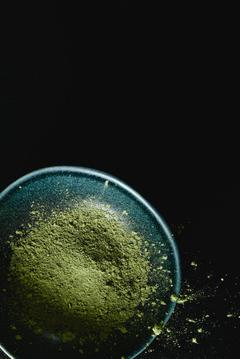
Matcha traces to Uji, the Kyoto town that became Japan's foremost tea-producing region in the 13th century. Japanese tea earned nationwide Geographical Indication status in July 2026, only the second product after sake allowed that protection regardless of where in the country it grows.
Tea shops line Uji's own streets, and a lane near Kyoto's Kiyomizu-dera sells it alongside incense and sweets. Tokyo's department-store food halls stock the same tins for travelers who skip a side trip to Kyoto.
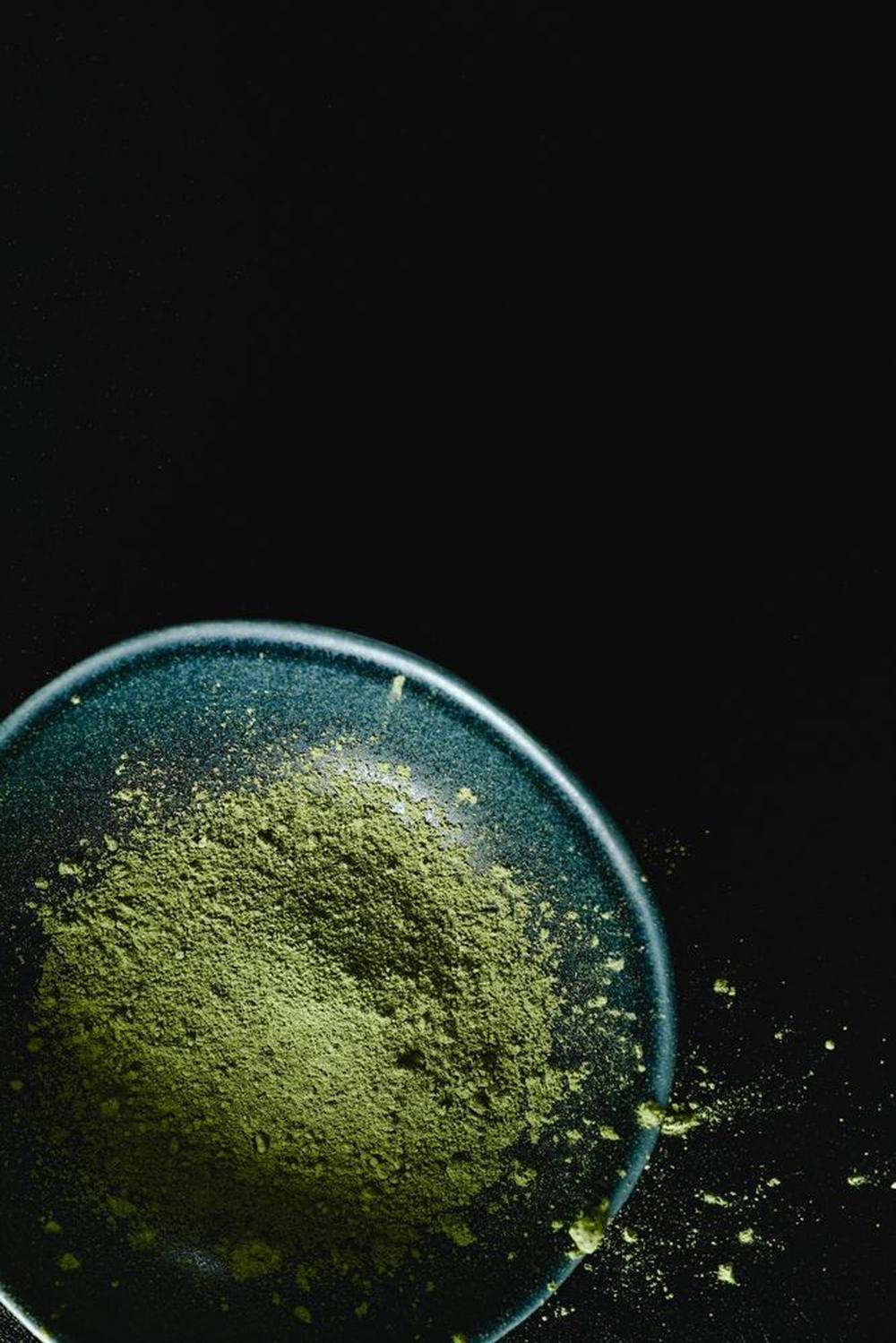 Photo by Eva Bronzini on Pexels
Matcha powder in a ceramic bowl
Sake
Must-buy
- From: Nada (Hyogo), Fushimi (Kyoto) and Niigata
- Buy it at: Department-store liquor floors, or brewery shops in Nada, Fushimi and Niigata
- Look for: the nationwide "Nihonshu" Geographical Indication
- Can it fly home to the US? Yes, within the 1-liter duty-free allowance; pack bottles over 3.4 ounces in checked baggage.
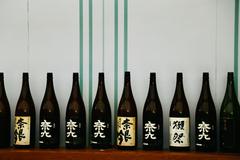
Nada, in Hyogo Prefecture, is Japan's largest producer of modern sake, a status it built up over centuries of brewing near Kobe's port. Fushimi in Kyoto and the prefecture of Niigata are the country's other two historic brewing centers, and sake itself has carried a nationwide Geographical Indication since 2015.
Sake shops and department-store liquor floors (Isetan, Takashimaya) stock bottles from all three regions side by side. A brewery's own shop in Nada, Fushimi or Niigata sells styles that rarely leave the prefecture.
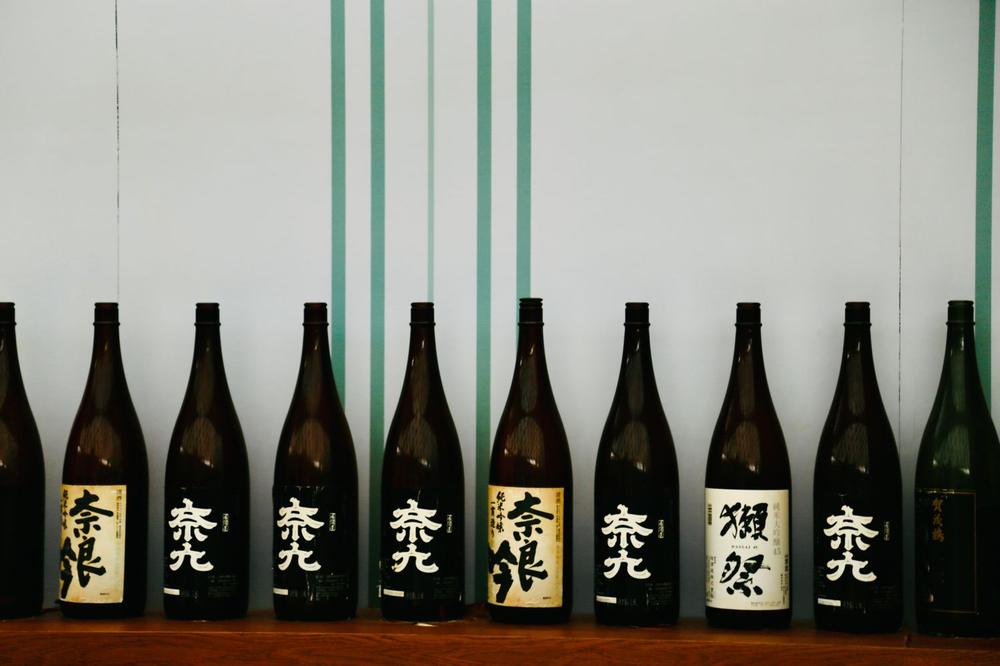 Photo by Andy Lee on Pexels
A row of Japanese sake bottles on a wooden shelf
Japanese Kit Kat flavors
Must-buy
- From: nationwide, no single region
- Buy it at: Convenience stores, Don Quijote, or an airport's last-chance souvenir shop
- Look for: a region-exclusive flavor not sold outside its home area
- Can it fly home to the US? Yes: packaged confectionery carries no restriction.
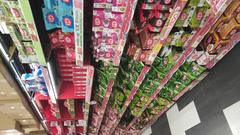
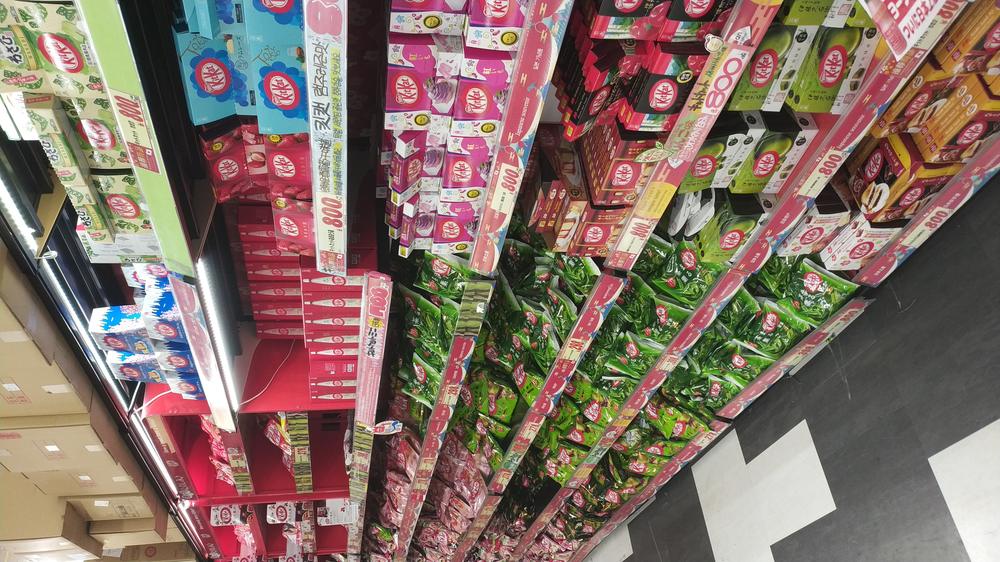
Nestle Japan sells dozens of region-exclusive Kit Kat flavors, from matcha and sake to wasabi and purple sweet potato, none of them sold anywhere else. A box of the matcha or sake flavor travels in a suitcase as easily as any other packaged snack.
Skip the standard flavors sold at every convenience store and look for the one exclusive to the prefecture being visited. A regional flavor rarely turns up again once a traveler leaves, outside of an airport's last-chance display.
 Haha169 (CC BY-SA 4.0)
A variety of Japanese Kit Kat flavors on display in an Osaka store
Japanese whisky
- From: Yoichi, Hokkaido, and Yamazaki, Osaka
- Buy it at: Department-store liquor floors, Don Quijote, or the Yamazaki and Yoichi distillery shops
- Look for: the 2021 industry-standard "Japanese whisky" label; there is no government Geographical Indication for it
- Can it fly home to the US? Yes, within the 1-liter duty-free allowance.
Suntory's Yamazaki distillery, near Kyoto and Osaka, and Nikka's Yoichi distillery in Hokkaido anchor Japan's whisky industry. Taketsuru, Nikka's founder, chose Yoichi for a terrain and climate he thought resembled Scotland's. Unlike sake, "Japanese whisky" carries no government Geographical Indication, only a voluntary labeling standard the industry adopted in 2021.
Department-store liquor floors and Don Quijote stock entry blends alongside single malts, and both distilleries sell limited releases at their own gift shops that rarely reach export markets.
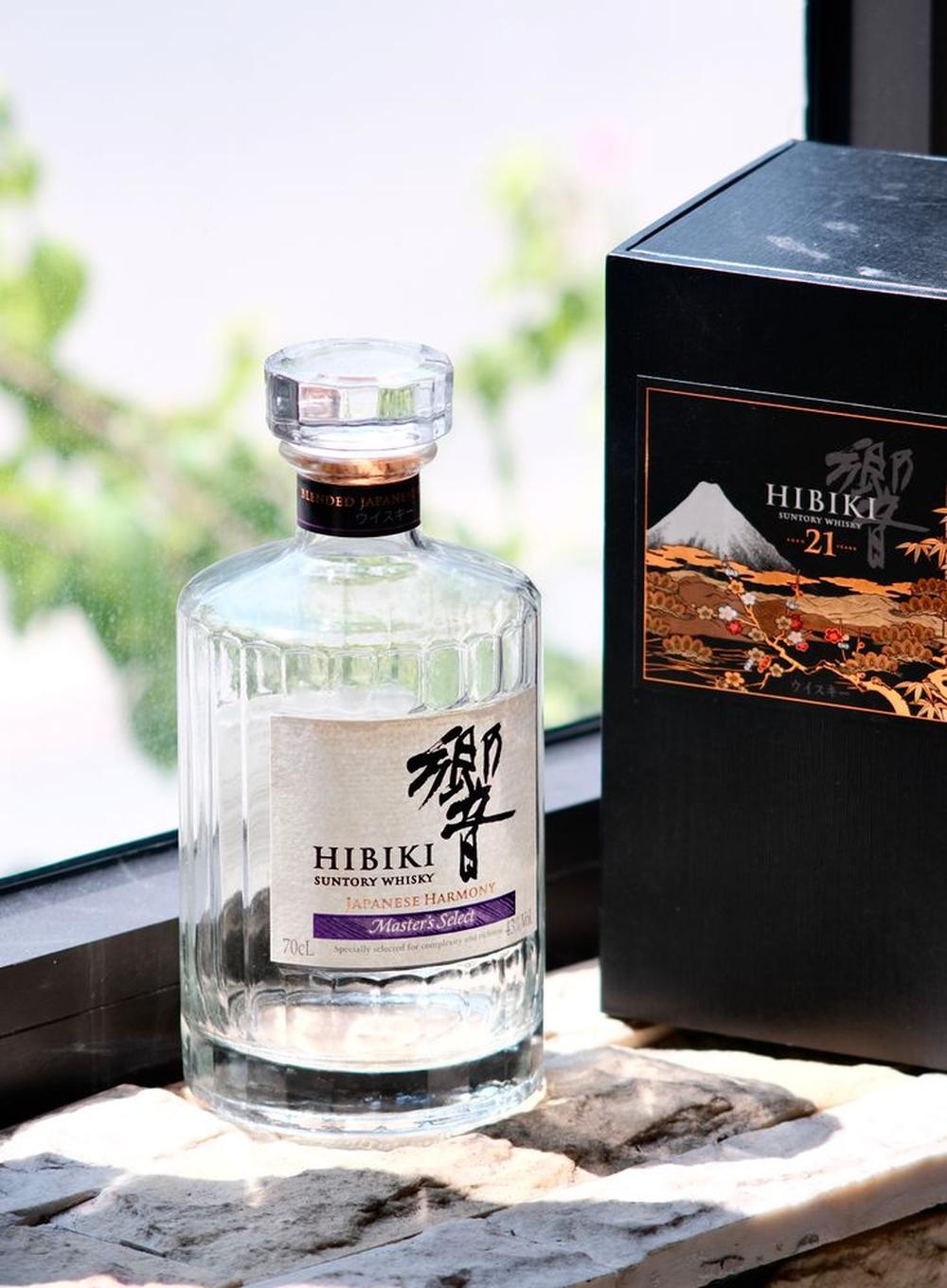 Photo by TBD Tuyên on Pexels
A Hibiki Japanese whisky bottle
Japanese ceramics and pottery
Must-buy
- From: Arita (Saga), Kyoto, Mashiko (Tochigi), Kutani (Ishikawa) and Bizen (Okayama)
- Buy it at: Kappabashi in Tokyo, the Arita Ceramic Fair, or Kyoto's Chawan-zaka near Kiyomizu-dera
- Look for: the kiln town's own government Traditional Craft Product designation
- Can it fly home to the US? Yes, if wrapped well; fragile pieces carry no restriction.
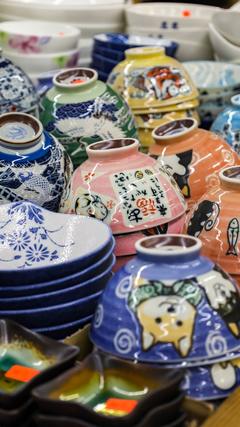
Arita, in Saga Prefecture, is considered the birthplace of porcelain in Japan. Four other towns hold their own government Traditional Craft Product designation: Kyoto's Kyo-yaki, Tochigi's Mashiko-yaki, Ishikawa's Kutani-yaki and Okayama's Bizen-yaki, one of the country's oldest unglazed stoneware traditions.
Kappabashi in Tokyo sources pottery from every one of those towns in one street. Kyoto's own Chawan-zaka, literally "Teapot Lane," runs down from Kiyomizu-dera and sells tea sets close to where some of them are fired.
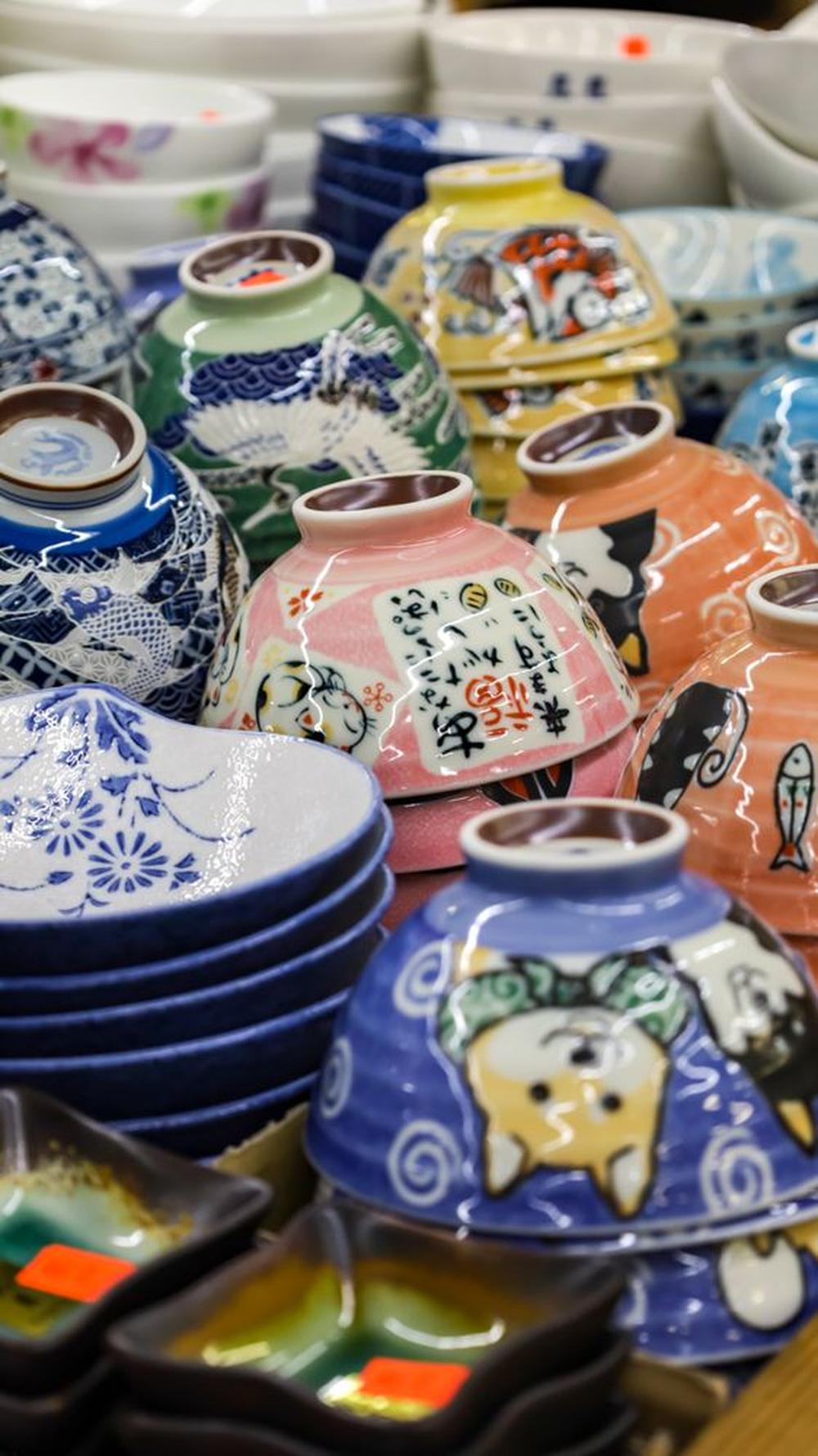 Photo by Hanawasthere on Pexels
A collection of Japanese ceramic bowls
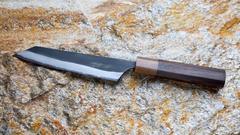
Japanese kitchen knife
Must-buy
- From: Sakai (Osaka), Seki (Gifu) and Echizen (Fukui)
- Buy it at: Kappabashi "Kitchen Town" in Tokyo, or Sennichimae Doguyasuji in Osaka
- Look for: the "Sakai Forged Blades" or "Echizen Forged Blades" government designation
- Can it fly home to the US? Yes, but only in a checked bag, sheathed or wrapped: TSA bans knives from carry-ons.
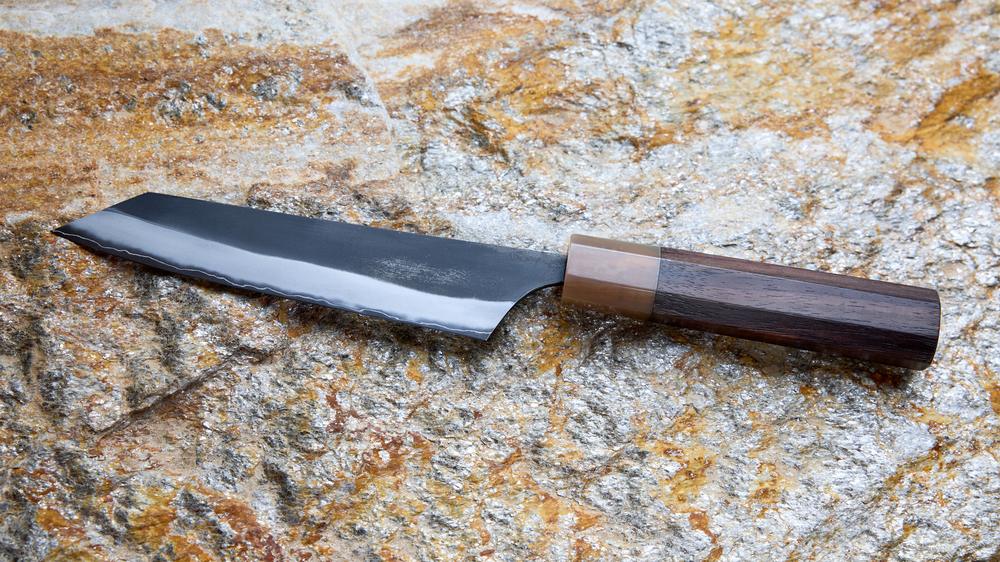
Seki, in Gifu Prefecture, was once a center of samurai sword-making and is now known for high-quality blades, while Sakai in Osaka carries its own government-designated "Sakai Forged Blades" tradition. One Kappabashi knife shop, Kamata, has sold hand-forged blades there for more than a century.
Kappabashi in Tokyo and Sennichimae Doguyasuji in Osaka are the two dedicated knife-shopping streets, and several shops will engrave a buyer's name on the blade at purchase. Pack the knife in checked luggage, sheathed, since security will not let it through a carry-on.
 Frank Schulenburg (CC BY-SA 4.0)
A hand-forged Japanese kitchen knife
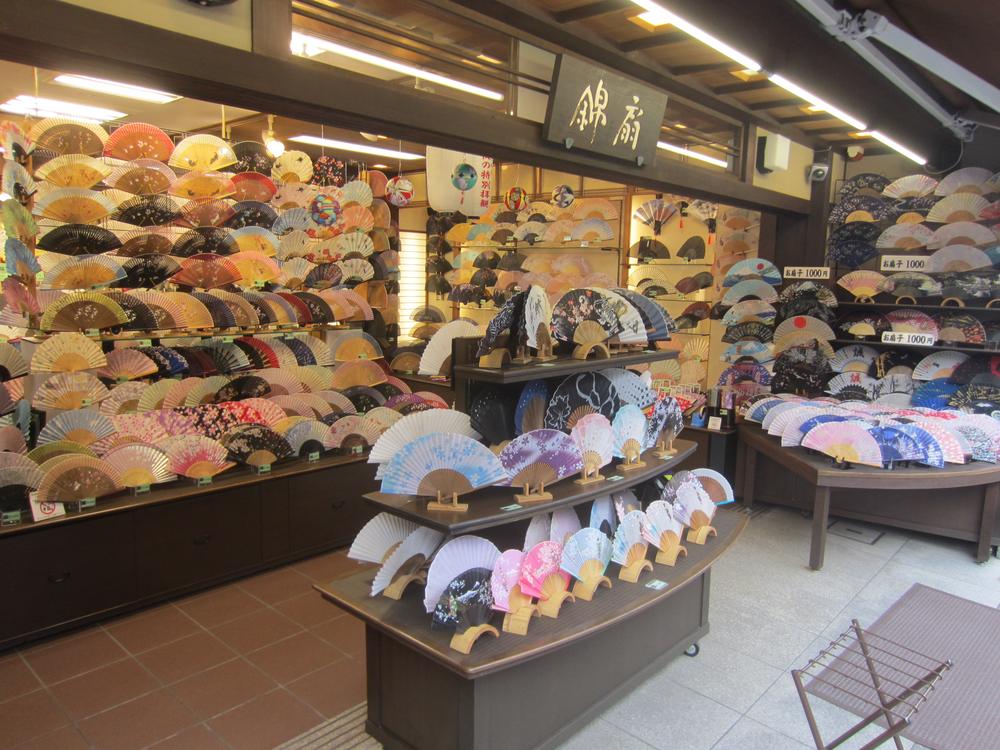
Folding fan (sensu)
- From: Kyoto and Marugame, Kagawa
- Buy it at: Fan shops in Kyoto's Higashiyama district
- Look for: the "Kyo-sensu" designation for a Kyoto-made folding fan
- Can it fly home to the US? Yes; folding fans carry no restriction.
The folding fan is credited as a Japanese invention, later introduced to China in the 10th century, and Kyoto's own Kyo-sensu carries a government craft designation. Marugame, in Kagawa Prefecture, makes the large majority of Japan's round uchiwa fans, the folding fan's flat-handled cousin.
Fan shops cluster in Kyoto's Higashiyama district, within walking distance of Kiyomizu-dera. Most sell the folding Kyo-sensu beside the flat uchiwa, so a buyer can compare the two before choosing.
 Another Believer (CC BY-SA 4.0)
A fan shop in Kyoto's Higashiyama district
Kimono and yukata
- From: Kyoto
- Buy it at: Shops near Gion and Kiyomizu-dera, department stores for yukata, or a secondhand kimono shop
- Look for: Nishijin-ori silk on a formal kimono's fabric
- Can it fly home to the US? Yes; textiles carry no restriction.
A yukata, the casual cotton robe, is the practical, wearable alternative to a formal kimono, which is most associated with Kyoto's Nishijin-ori weaving district. A new formal kimono can run into the hundreds of thousands of yen, which is why secondhand shops do steady business with visitors.
Shops near Gion and Kiyomizu-dera sell both new yukata and rental sets, and a secondhand kimono shop offers a formal piece for a fraction of what it cost new.
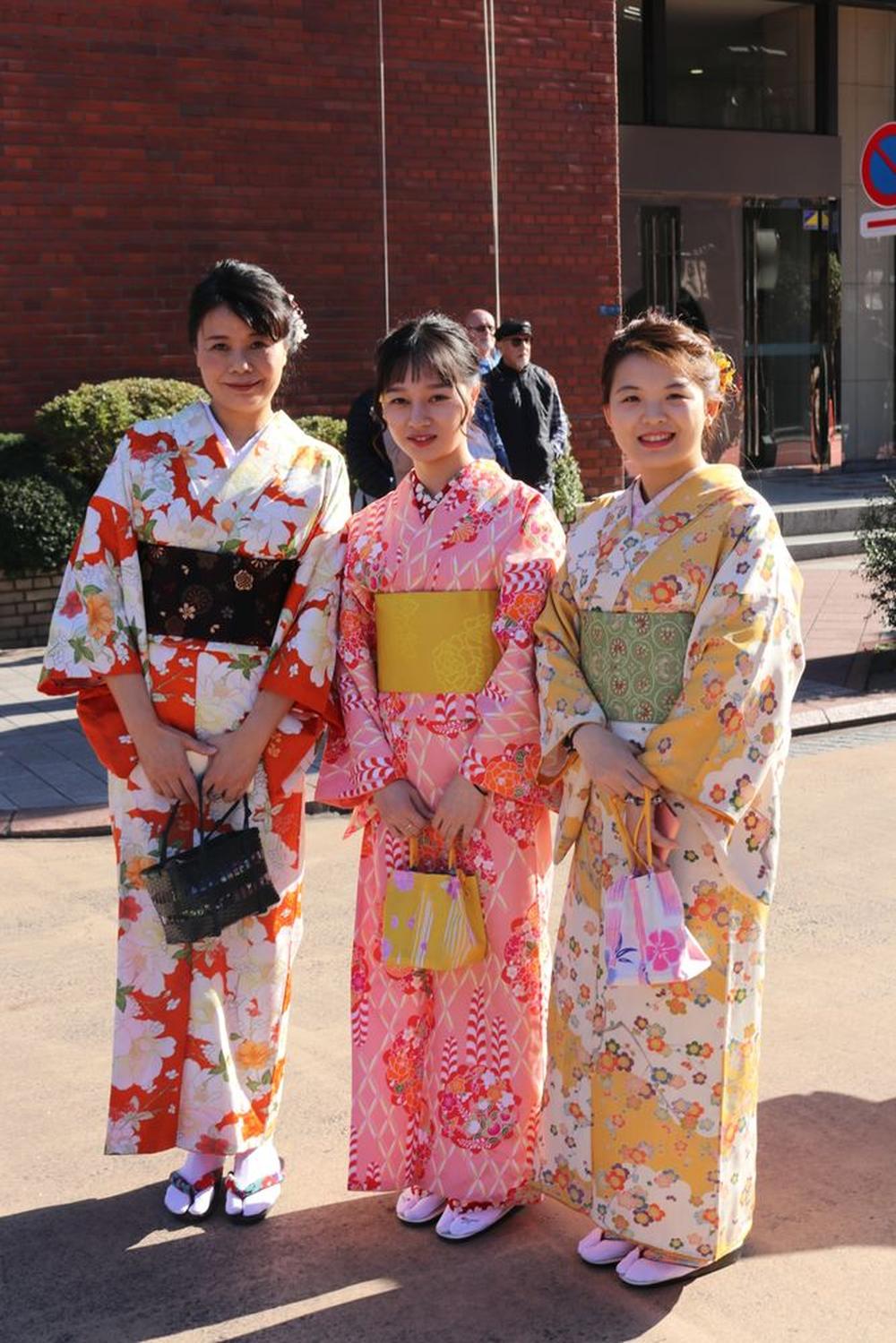 Photo by Rocharles Pidal on Pexels
Women in kimono on a Tokyo street
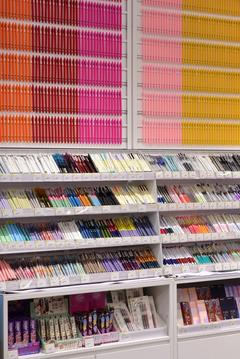
Japanese stationery
Must-buy
- From: nationwide, no single region
- Buy it at: Itoya in Ginza, Loft, Tokyu Hands, or Muji
- Look for: a Japanese-brand pen (Pilot, Uni-ball, Zebra) or notebook (Hobonichi, Midori, Kokuyo)
- Can it fly home to the US? Yes; stationery carries no restriction.
Pilot, Uni-ball and Zebra pens and Hobonichi, Midori and Kokuyo notebooks are the brand names shoppers look for by name. A Japanese pen or notebook packs flat and light, which is part of why it turns up in so many suitcases.
Itoya in Ginza stocks floor after floor of stationery, while Loft, Tokyu Hands and Muji branches carry the same brands well beyond Tokyo.
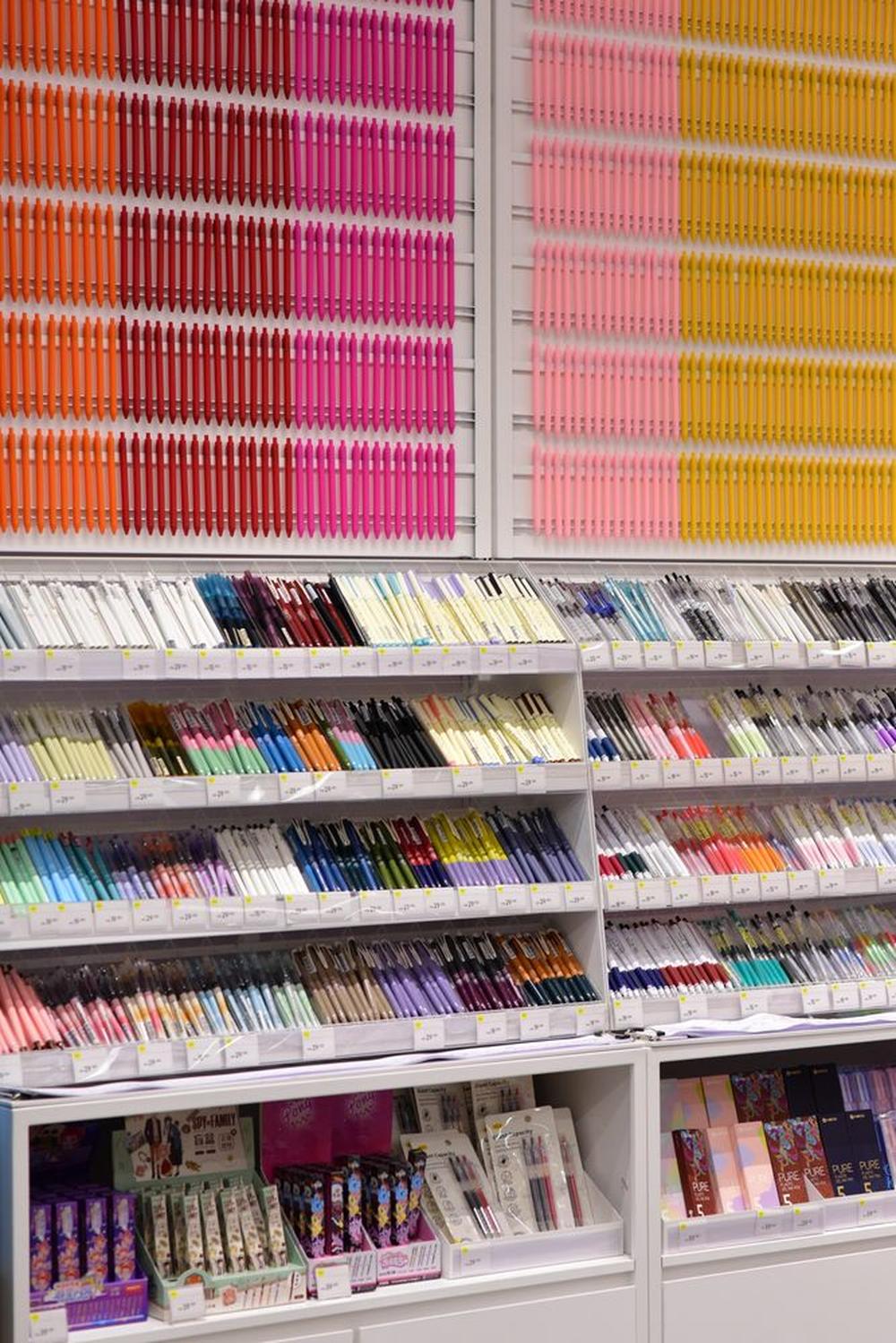 Photo by Sóc Năng Động on Pexels
A pen display at a Japanese stationery store
Anime and manga merchandise
- From: Akihabara and Nakano, Tokyo
- Buy it at: Akihabara and Nakano Broadway, Animate stores nationwide, or Den Den Town in Osaka
- Look for: a secondhand or limited-edition figure at a Nakano Broadway resale shop
- Can it fly home to the US? Yes; figures and manga carry no restriction.
Akihabara and Nakano Broadway are Tokyo's two dedicated shopping destinations for figures, character goods and manga, each with a large secondhand and limited-edition market behind the new-release shelves.
Animate, a nationwide chain, carries official merchandise in nearly every Japanese city, while Osaka's Den Den Town gives Kansai-based travelers the same kind of shopping without a trip to Tokyo.
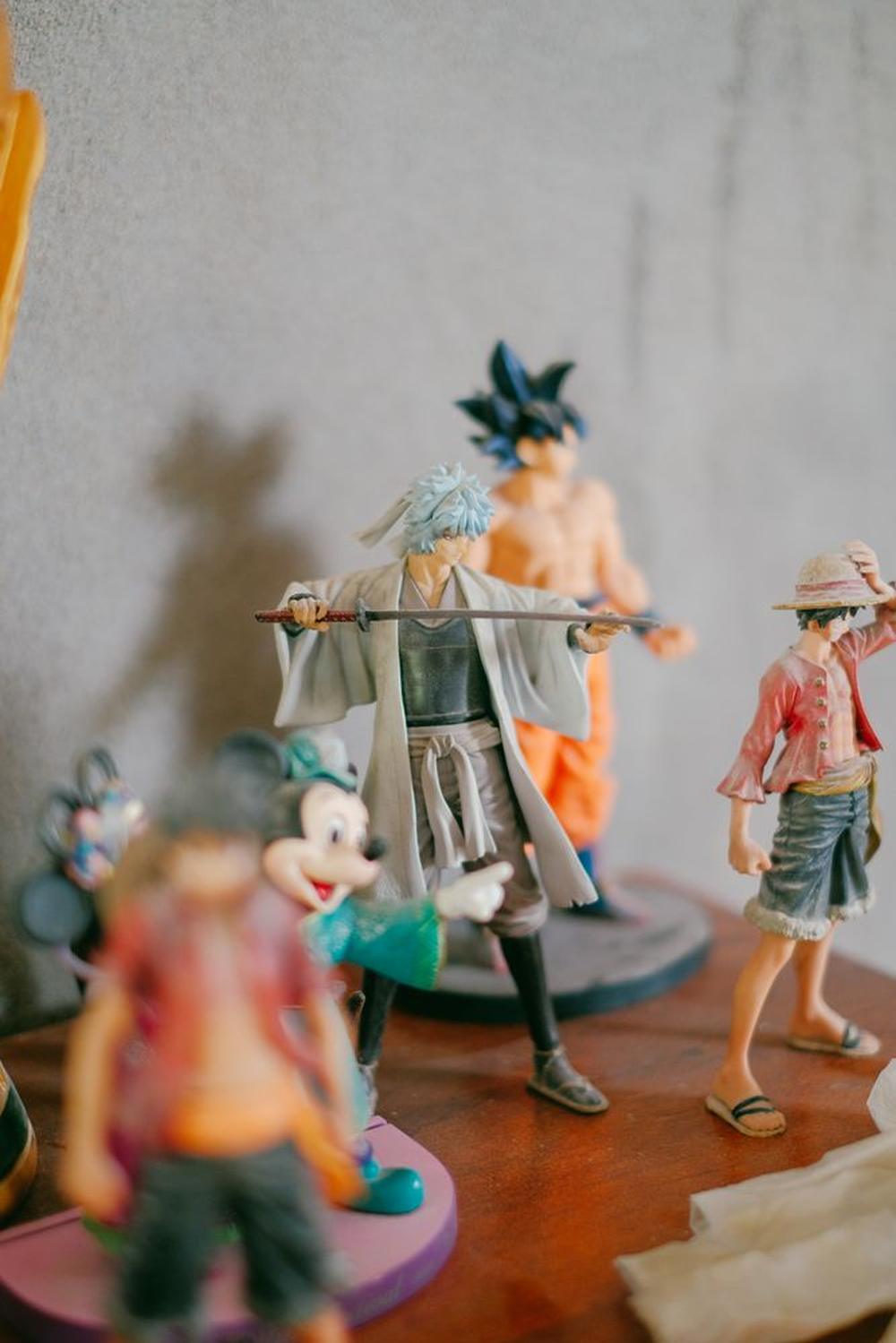 Photo by Pew Nguyen on Pexels
A collection of anime figurines
Japanese sunscreen
Must-buy
- From: nationwide, no single region
- Buy it at: Drugstores, convenience stores, or Don Quijote
- Look for: a light, non-greasy finish (Biore UV, Anessa, Skin Aqua)
- Can it fly home to the US? Yes, but only in a checked bag if over 3.4 ounces; the TSA liquids rule applies to a carry-on.
Japanese sunscreen brands built a reputation abroad for a light, non-greasy finish that Western formulas often lack, and Biore UV, Anessa and Skin Aqua are the three names shoppers ask for directly. Each sells at ordinary drugstore prices in Japan rather than the specialty-import prices they carry once shipped abroad.
Drugstores, convenience stores and Don Quijote all stock the major brands side by side, and a bottle over 3.4 ounces has to travel home in checked luggage under the standard TSA liquids rule.
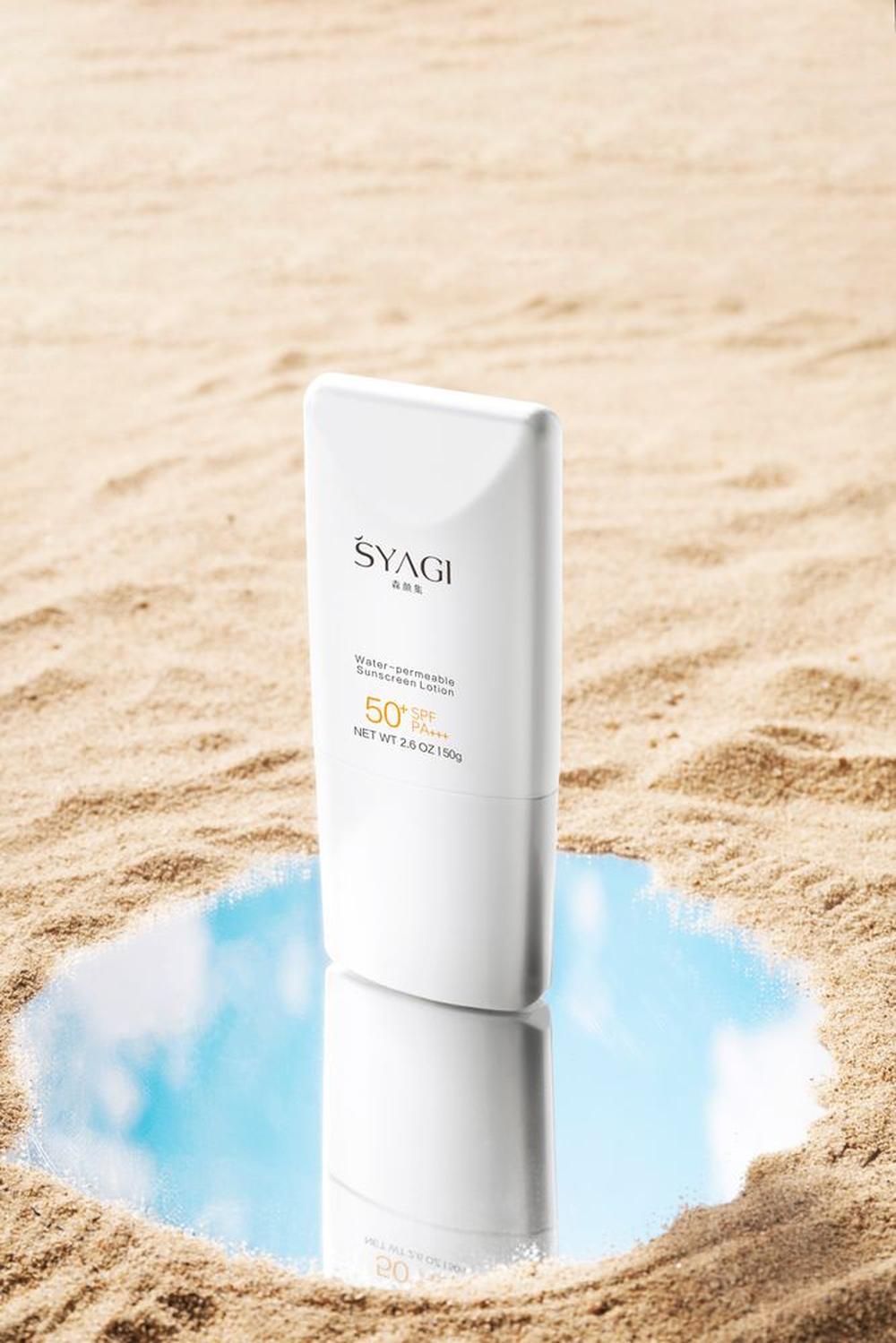 Photo by mearlywan on Pexels
A sunscreen bottle
Daruma doll
Must-buy
- From: Takasaki, Gunma
- Buy it at: Takasaki's Shorinzan temple, or temple-street shops in Kyoto and Asakusa
- Look for: a blank-eyed doll, ready for one eye to be filled in when you set a goal
- Can it fly home to the US? Yes; papier-mache dolls carry no restriction.
Takasaki, in Gunma Prefecture, makes about 80% of Japan's daruma dolls and holds an annual Daruma Doll Festival that draws more than 400,000 visitors. A buyer fills in one blank eye when setting a goal and the other once it's achieved, a tradition that gives the round papier-mache figure its lasting appeal as a souvenir.
A daruma bought at Shorinzan comes from the temple that holds the annual festival itself. One bought at a temple-street shop in Kyoto or Tokyo's Asakusa is simply the easier stop for a traveler who skips Gunma.
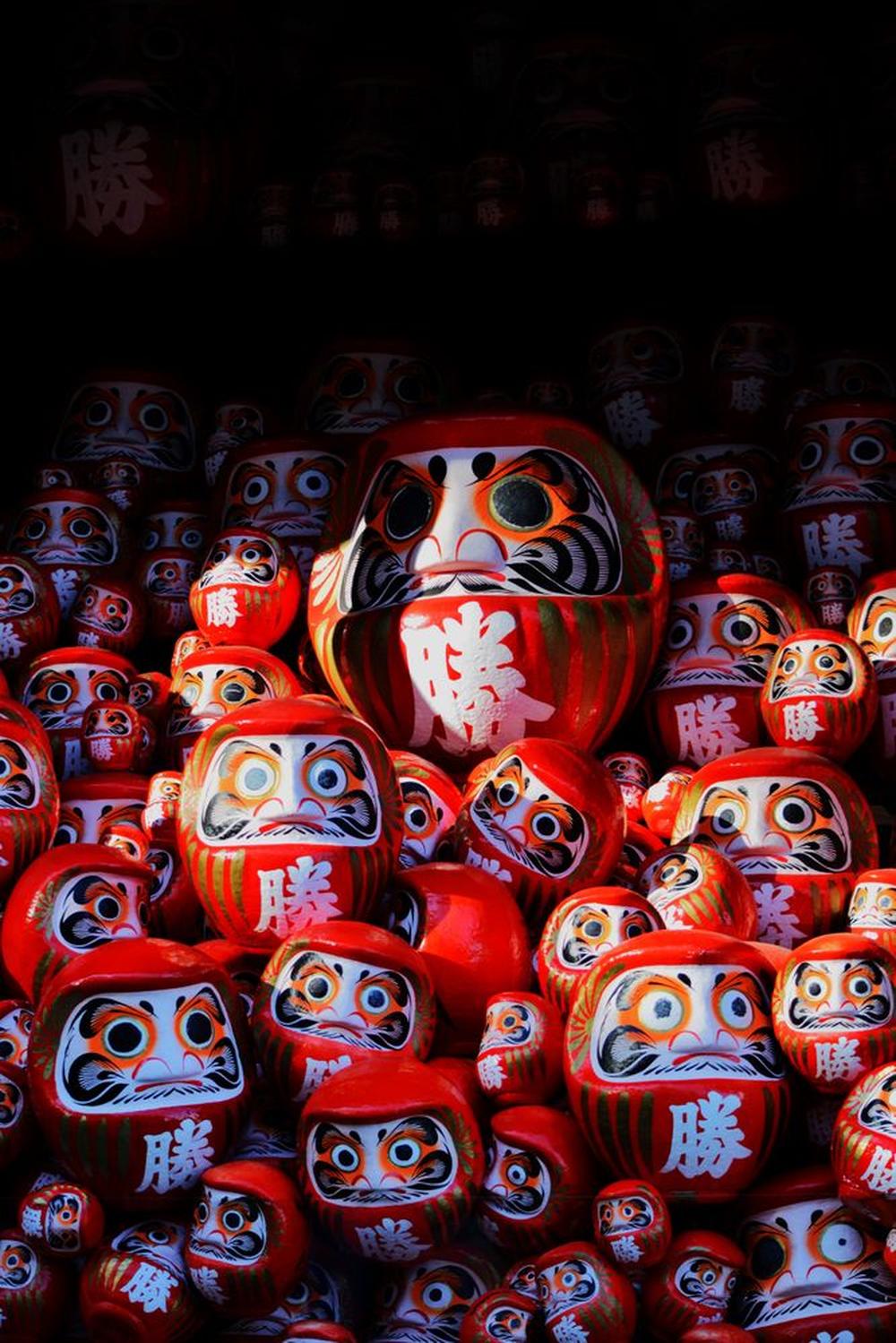 Photo by Noe Garde on Pexels
A collection of red daruma dolls
Japan's tax-free shopping is changing on November 1, 2026
The point-of-sale exemption that lets a tourist skip the consumption tax at the register ends that day.
From November 1, 2026, a traveler pays the full tax-inclusive price at a tax-free shop, then presents the goods for a customs inspection at the airport or seaport before departure. Once customs confirms the goods are leaving Japan, the consumption tax amount is refunded to a credit card or another payment method. Japan Customs sets the purchase minimum at 5,000 yen per store, per day, before tax, and the refund procedure has to finish before boarding.
The old split between general goods and consumables disappears in the same change. Special sealed packaging for consumables such as food, drinks and cosmetics is no longer required, though an item eaten or used in Japan before departure no longer qualifies for a refund. The outgoing system, which ran through the end of October 2026, capped consumable purchases at 500,000 yen per store per day while leaving general goods uncapped. The new rule drops both the split and the cap.
Can you bring wagyu beef home to the US?
No. US Customs and Border Protection states that travelers "may not import fresh, dried or canned meats or meat products from most foreign countries into the United States." The rule covers Kobe beef (Hyogo), Matsusaka beef (Mie) and Omi beef (Shiga), Japan's three best-known wagyu brands, and it applies to beef jerky the same way it applies to a fresh cut.
Vacuum-sealing or cooking the meat first changes nothing about the rule. Kobe Beef itself carries its own Japanese Geographical Indication, administered by the Kobe Beef Marketing and Distribution Promotion Association rather than the government registers that cover matcha or sake. Eat it at a teppanyaki counter in Kobe or Osaka instead, and declare any meat that ends up packed by accident; a declared item gets confiscated, not penalized.
What to buy at a Japanese convenience store, drugstore or department-store food hall
Snacks, drinks and drugstore basics cost less at a convenience store or department-store food hall than at a shop built for tourists, and nearly all of them travel well.
| Buy | What it is | Where |
|---|---|---|
| Wagashi (mochi, manju, yatsuhashi) | traditional sweets paired with tea; Kyoto's nama yatsuhashi comes in 20-plus flavors | confectionery shops near Kiyomizu-dera |
| Tokyo Banana | a banana-custard sponge cake, Tokyo's signature omiyage since 1991 | every Tokyo station and airport |
| Senbei | soy-glazed or sweet rice crackers | convenience stores and specialty shops |
| Umeshu | a sweet plum liqueur; Wakayama's own "Wakayama Umeshu" carries a protected name | department-store liquor floors |
| Yuzu products | citrus soap, ponzu, kosho paste and sweets from Kochi and Tokushima | supermarkets and gift shops |
| Soy sauce, miso and dashi | Shodoshima Island brews soy sauce; Hatcho miso is a distinct dark style from Aichi | supermarkets |
| Furikake and shichimi | rice-seasoning blends from Kyoto's centuries-old spice shops | supermarkets and specialty shops |
| Umeboshi | sour, salt-cured plums from Wakayama, Japan's top ume-producing prefecture | supermarkets |
| Nori and other seaweed | dried sheets from the Ariake Sea, Japan's top nori-growing area | supermarkets |
| Royce and Shiroi Koibito | Hokkaido's two best-known confections, both headquartered in Sapporo | convenience stores and airports |
| Sheet masks | Lululun's mass-market masks, made by an Ehime company, sold in large multi-packs | drugstores |
| Drugstore extras | eye drops, Salonpas-style pain patches and camellia hair oil | drugstores and Don Quijote |
| 100-yen shop goods | stationery, snacks and kitchen tools priced near 100 yen before tax | Daiso, Seria and Can Do |
| Origami and washi tape | patterned folding paper and the Okayama-made "mt" masking-tape brand | stationery shops and 100-yen shops |
Daiso, founded in 1977 in Takamatsu and now headquartered in Hiroshima Prefecture, prices almost everything at 100 yen before tax, a claim its own stores confirm on the shelf tag. Seria and Can Do run the same model at their own branches nationwide.
Try free
Plan your Japan trip in about 2 minutes
Tap through 8 quick cards for a complete itinerary with budget, maps, and packing lists. No account required.
Plan your Japan trip →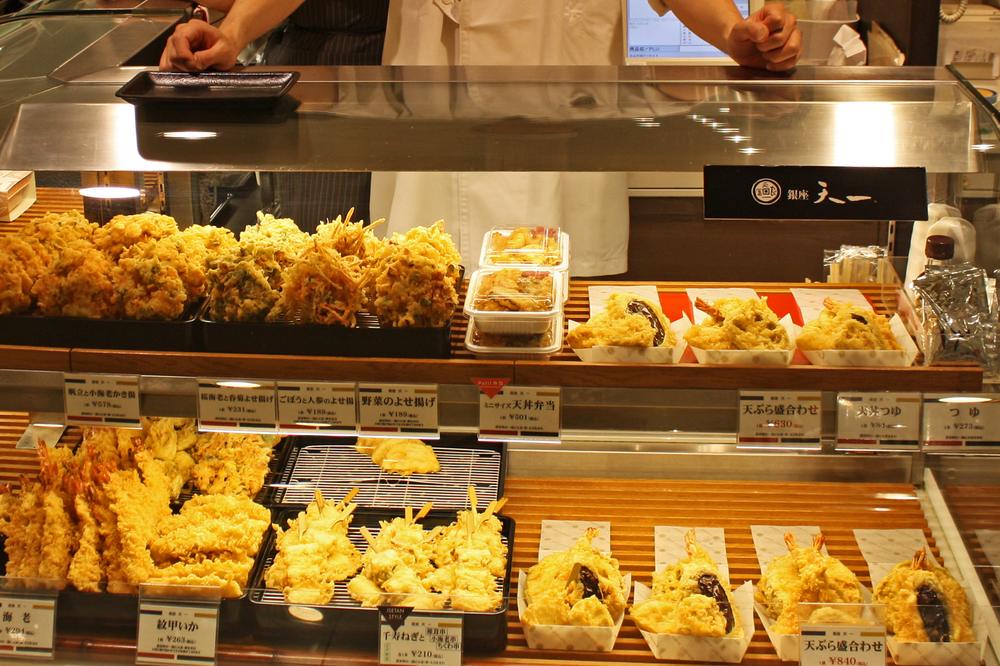 istolethetv (CC BY 2.0)
The depachika food hall in a Tokyo department store
Crafts by prefecture
Beyond Kyoto and Tokyo, a handful of smaller prefectures each produce a specific craft at a scale the rest of the country doesn't match.
| Prefecture | Buy | What it is |
|---|---|---|
| Fukui | Wakasa-nuri chopsticks | lacquered chopsticks, a government craft since 1978, often engraved on the spot |
| Ishikawa | Wajima-nuri lacquerware | one of Japan's most prestigious lacquer traditions |
| Gifu, Fukui, Kochi | Washi paper | Mino-washi, Echizen-washi and Tosa-washi, three government-designated handmade papers |
| Kyoto | Nishijin-ori textiles | gold-and-silver silk brocade, a National Traditional Craft since 1976 |
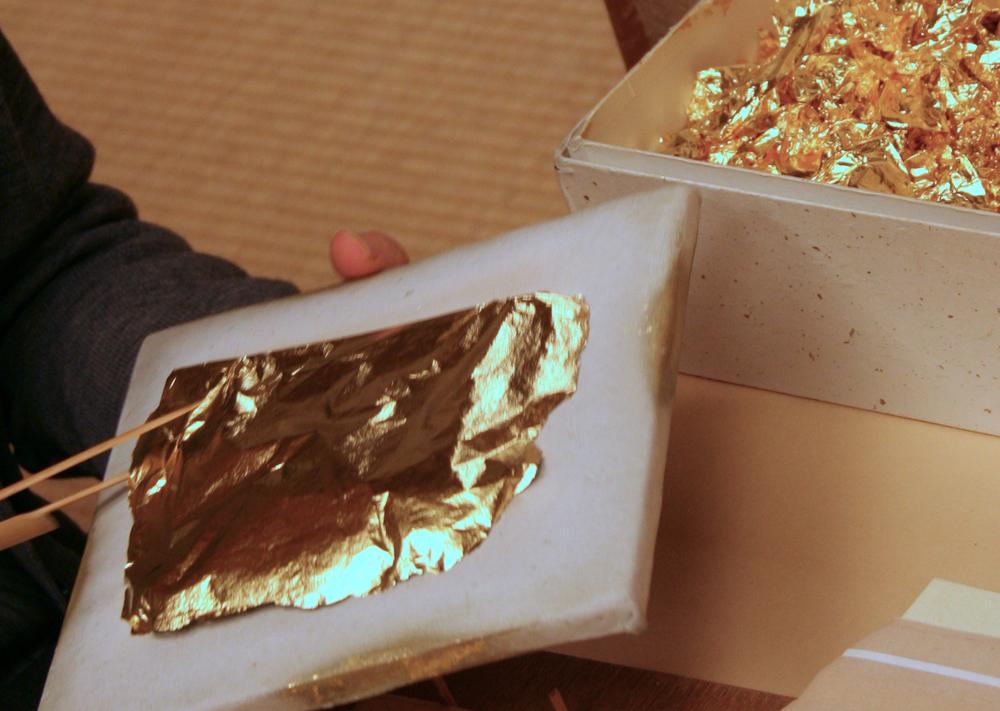
| Ishikawa | Kanazawa gold leaf | Kanazawa makes about 99% of Japan's gold leaf |
| Iwate | Nambu tekki teapots | cast-iron tetsubin, a government craft since 1975 |
| Tokyo | Edo kiriko | hand-cut faceted glass, a government craft since 2002 |
| Okinawa | Ryukyu glass | hand-blown glass, once made from recycled post-war bottles |
| Fukui | Sabae eyeglasses | Sabae and Fukui City make about 95% of Japan's eyeglass frames |
| Mie | Mikimoto pearls | Kokichi Mikimoto created the first cultured pearl in Toba in 1893 |
| Miyagi | Kokeshi dolls | hand-turned wooden dolls, with 11 styles made across 6 Tohoku prefectures |
| Hiroshima | Calligraphy brushes | Kumano, Hiroshima makes most of Japan's writing and makeup brushes |
| Ehime | Imabari towels | Imabari makes about 60% of Japan's towels |
| Gifu | Nail clippers | made by the same Seki blade-smiths who forge kitchen knives |
Shop for a craft in its own prefecture where the trip allows it. A Wajima-nuri bowl bought in Ishikawa or a Kutani plate bought near its own kiln is the maker's own work, not a mainland import sold where the tourists already are.
 Eckhard Pecher (CC BY 2.5)
Gold leaf processing at a workshop in Kanazawa
Pop culture, charms, electronics and fashion
Every shrine and temple sells omamori, small charms themed around travel safety, health or luck, most for under 1,000 yen. Maneki-neko, the beckoning cat, traces to Imado ware made in Asakusa, Tokyo, during the Edo period, not Kyoto as some accounts claim. Its raised paw and color each carry a meaning: white for happiness, gold for wealth. A goshuincho collects hand-written temple and shrine stamps for a small donation at each counter.
Pokemon Center, Nintendo Tokyo, Nintendo Kyoto and Sanrio stores all sell character goods not available outside Japan, and vending-machine gachapon capsules add a cheap, collectible option on nearly every block. Rice cookers and cameras anchor the electronics category, with large chains offering tax-free purchase on export-voltage models.
Tsubame and Sanjo, both in Niigata, are known nationally for tableware and cutlery, sold at Tokyo's Kappabashi district alongside everyone else's kitchenware. Tokyo's Shimokitazawa and Koenji neighborhoods anchor a secondhand and vintage-clothing scene known internationally for well-curated, well-priced finds.
What not to buy in Japan
- Wagyu beef or beef jerky, if flying home to the US. US Customs bans it outright, however it's packed.
- A bonsai tree. USDA rules require a phytosanitary certificate for any plant intended for growing, and no soil is allowed into the US without a separate permit.
Plan your Japan trip
For trip length and which cities to see, start with the Japan travel guide. Kyoto, a buying stop for much of this list, anchors the 7-day Japan itinerary and the 5-day Tokyo itinerary; Osaka's own knife and craft shopping gets a 3-day Osaka itinerary. The things to do in Japan and Japanese food guides cover the rest of a first trip.
A trip you plan on MonkeyEatingMango comes with a shopping guide for every city you stop in, naming what to buy and where. The packing list generator, free for now, builds the list for your destination and month.
Common questions
What is the best souvenir to buy in Japan?
Matcha, sake and a Kyoto-made folding fan top most shortlists, alongside a hand-forged kitchen knife from Sakai or Seki. Each carries a Geographical Indication or a government Traditional Craft Product designation that names where it genuinely comes from.
What should I bring back to the US from Japan?
Matcha, sake, stationery, ceramics, lacquerware and kitchen knives all clear US customs without restriction, though a knife has to travel in checked baggage, not a carry-on. Wagyu beef is the major exception: it cannot legally come home at all.
Can I bring wagyu beef or beef jerky back to the US?
No. US Customs and Border Protection states that travelers may not import fresh, dried or canned meat or meat products from most foreign countries, a rule that covers Kobe, Matsusaka and Omi beef and any beef jerky regardless of packaging.
What should I not bring back from Japan?
Wagyu beef and beef jerky cannot legally enter the United States under any packaging. A bonsai tree is also impractical: US rules require a phytosanitary certificate for any plant intended for growing, and no soil is allowed in without a permit.
Is there a tax-free shopping system for tourists in Japan, and did it change in 2026?
Yes. From November 1, 2026, Japan replaces its point-of-sale tax exemption with a refund claimed at the airport before departure, after a customs inspection confirms the goods are leaving the country, with a 5,000-yen-per-store, per-day purchase minimum.
What luxury products are cheaper in Japan?
J-beauty brands such as SK-II, Shiseido and Hada Labo sell at ordinary Japan drugstore prices rather than the import markup they carry once shipped abroad. Large electronics chains add their own tax-free purchase on export-voltage cameras and small gadgets.
Can I bring sake or whisky home from Japan?
Yes, within the standard 1-liter duty-free alcohol allowance that applies to any country. Pack bottles over 3.4 ounces in checked luggage, since the TSA liquids rule still applies to a carry-on.
What is the difference between a Geographical Indication and a Traditional Craft Product in Japan?
A Geographical Indication is a legal food or drink protection administered by Japan's agriculture ministry or National Tax Agency, covering products such as sake and, since July 2026, Japanese tea. A Traditional Craft Product is a separate designation under a 1974 law covering 243 handicrafts, including specific ceramics, lacquerware and blades.
Where is the best place in Tokyo to buy a Japanese kitchen knife?
Kappabashi, nicknamed Kitchen Town, is Tokyo's dedicated kitchenware street, with knife shops that have sold hand-forged blades for decades. Osaka's Sennichimae Doguyasuji offers the same kind of shopping for travelers based in Kansai.
What should I buy at a Japanese 100-yen shop?
Daiso, Seria and Can Do price nearly everything at 100 yen before tax (110 yen after), covering stationery, snacks, kitchen tools and novelty items. A handful of larger items run 300 to 2,000 yen instead.
What are some good non-food souvenirs from Japan?
Ceramics, lacquerware, a folding fan, stationery and anime or manga merchandise all travel well and carry no customs restriction. A secondhand kimono or a daruma doll from Takasaki adds a souvenir with a specific regional story behind it.

Written by Shobhit Shrivastava · Founder
Related reading
Japan travel guide
A Week in Japan: Tokyo and Kyoto, from teamLab to Kinkaku-ji
7 days across Kyoto and Tokyo. Begin with 3 nights in Kyoto (Fushimi Inari, Kiyomizu-dera, Arashiyama Bamboo Grove, based in Higashiyama), then ride the Shinkansen to Tokyo for 4 nights (Shibuya Crossing, Tsukiji Outer Market, teamLab Planets, Asakusa). Packed pace with 4-5 activities daily,...
Osaka in 3 Days: Dotonbori and Osaka Castle
3 days in Osaka: focus on the food and nightlife districts of Namba and Dotonbori, with a dedicated day for the modern installations at teamLab Botanical Garden. This trip uses a central Namba base to keep transport simple. Expect a packed pace with 4-5 activities daily, balancing neon-lit...
Tokyo in 3 Days: Sensō-ji, Shibuya Crossing and More
This packed 3-day Tokyo journey for a couple delves into contrasting districts, blending traditional spiritual sites like Sensō-ji Temple in Asakusa with the cutting-edge digital art of teamLab Planets TOKYO. Explore the iconic Shibuya Crossing, enjoy a performance at Kabuki-za Theatre, and...
5 Days in Tokyo: Senso-ji, Tsukiji Market and the Tokyo Skytree
5 days exploring Tokyo's diverse character through food, spiritual sites, and local culture. Experience the historic Senso-ji Temple and Meiji Jingu, browse the vintage shops of Shimokitazawa, and dine at Tsukiji Outer Market. Maintain a comfortable pace with one neighborhood focus per day and...
Thailand Souvenirs: What to Buy and Bring Home
The 15 Thailand souvenirs worth bringing home, where to buy each one, how to bargain for it, and what actually clears US customs, plus Chatuchak, the night markets and the Buddha-image export rule.
Italy Souvenirs: What to Buy in Italy and Bring Home
The 12 Italy souvenirs worth bringing home, where to buy each one, the label that proves it's real, and whether it clears US customs. Plus supermarket buys and Italy's ceramic towns.
Traditional Japanese Food: What to Eat in Japan
The Japanese dishes to eat first, from sushi to ramen to izakaya favorites, where each one comes from, the sweets and drinks that go with them, and how a meal in Japan actually runs.