
What should you buy in Italy, and which of it can actually fly home to the US? Buy what carries a DOP or PGI name and a town behind it: Aceto Balsamico di Modena, Parmigiano Reggiano, a bottle of Chianti Classico with its black-rooster neck seal. For something to wear or display, Murano glass and Florentine leather are the two names every list agrees on. Prosciutto di Parma is the one must-eat that has to stay in Italy, since it cannot cross US customs no matter how it's wrapped.
- Buy the label, not just the name. A PGI "Aceto Balsamico di Modena" and a PDO "Aceto Balsamico Tradizionale di Modena" sit on the same shelf as two different products.
- Pack liquids in your checked bag. Olive oil, Chianti and limoncello over 3.4 ounces go in the hold, not your carry-on.
- Leave the prosciutto in Italy. Eat it there; US customs bans Italian cured meat outright, however it's packed.
Italy's own tourism board calls the hunt for one of these "an essential part of your holiday." These 12 are the ones worth the suitcase space.
The 12 Italy souvenirs worth bringing home
Aceto Balsamico di Modena
Must-buy
- From: Modena and Reggio Emilia, Emilia-Romagna
- Buy it at: Acetaia Giusti and Acetaia Pedroni in Modena, Mercato Centrale in Florence, or any supermarket
- Look for: the PGI name on the label
- Can it fly home to the US? Yes: vinegars are admissible.
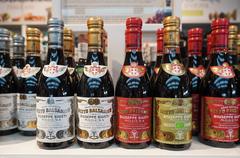
Aceto Balsamico di Modena carries a Protected Geographical Indication, and only vinegar made in Modena or Reggio Emilia can use the name. A near-identical name sits one shelf over, on Aceto Balsamico Tradizionale di Modena, a different and far pricier product below.
Supermarkets across Italy sell the everyday PGI grade cheaply. Taste a few at Modena's own acetaie before you buy; brands vary more than the shared name suggests.
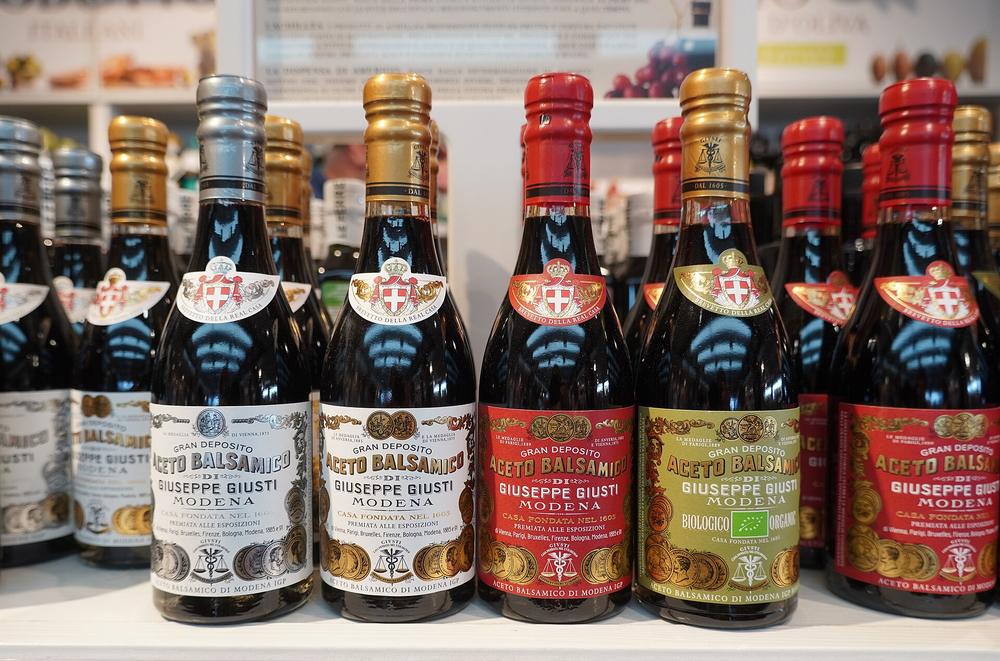 Naturpuur (CC BY-SA 4.0)
A bottle of Aceto Balsamico di Modena from Emilia-Romagna
Aceto Balsamico Tradizionale di Modena
Must-buy
- From: Modena or Reggio Emilia only, Emilia-Romagna
- Buy it at: Acetaia Giusti and Acetaia Pedroni in Modena
- Look for: the PDO seal and an age statement of 12 years or more
- Can it fly home to the US? Yes.
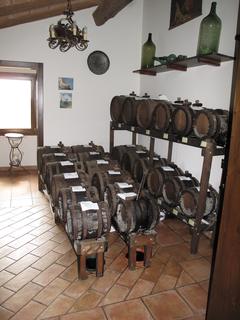
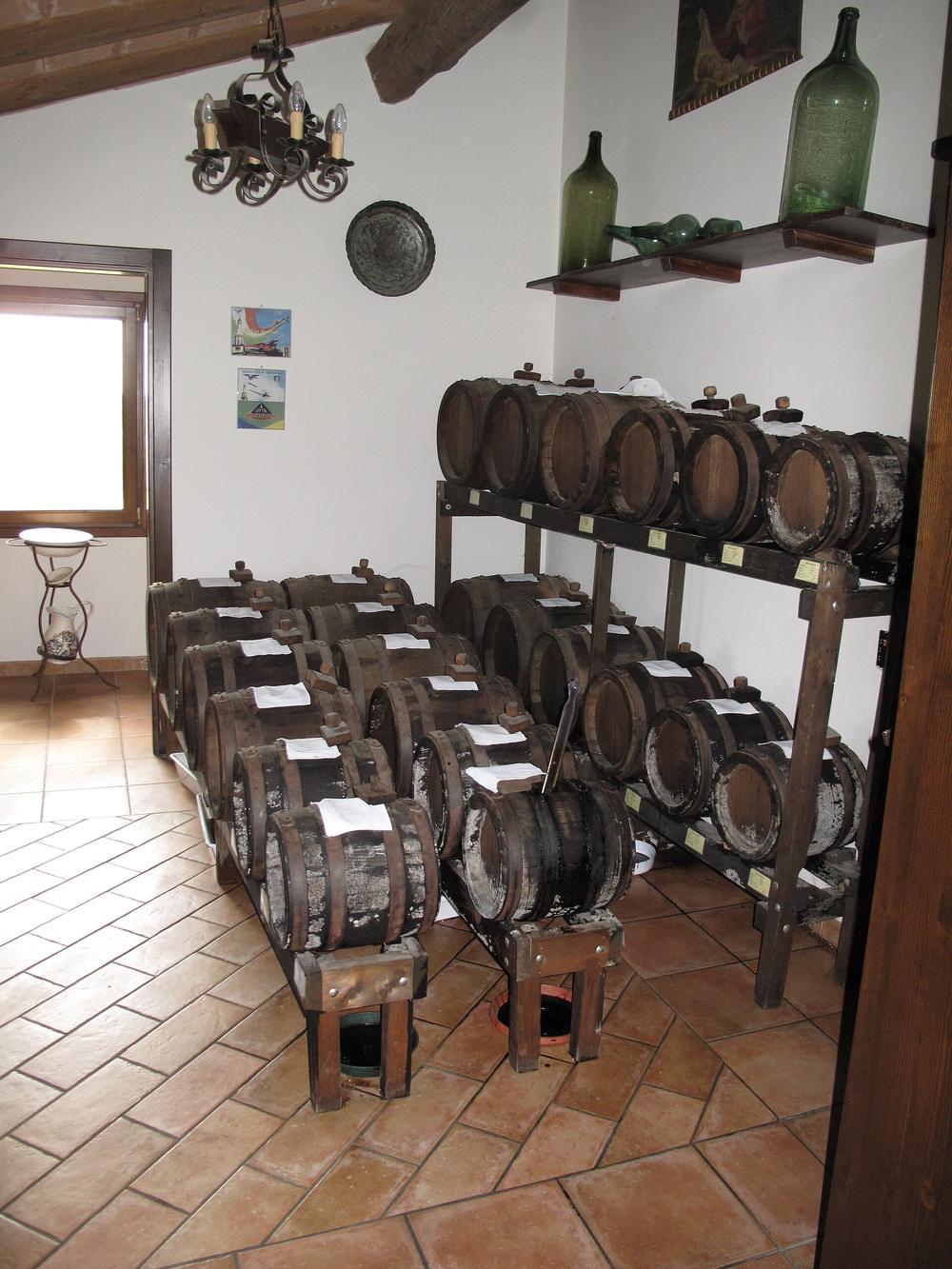
Aceto Balsamico Tradizionale di Modena is the aged, Protected Designation of Origin version, legally separate from the PGI vinegar next to it. Its PDO rules require aging a minimum of 12 years, sometimes past 25, in a succession of wooden casks. The bottle costs far more for it.
An acetaia in Modena will usually pour a taste before you buy. A few drops go a long way, which is just as well, since the real thing is sold in small bottles.
 Chapeau.judicael (CC BY-SA 3.0)
Wooden casks aging vinegar in a Modena acetaia
Parmigiano Reggiano
Must-buy
- From: Parma, Reggio Emilia, Modena, Bologna and Mantua, in Emilia-Romagna and Lombardy
- Buy it at: Antica Caciara and Beppe e I Suoi Formaggi in Rome's Trastevere and Jewish Ghetto, or any supermarket
- Look for: the PDO stamp and an age statement
- Can it fly home to the US? Yes: certain cheeses are admissible.
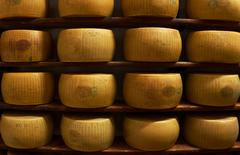
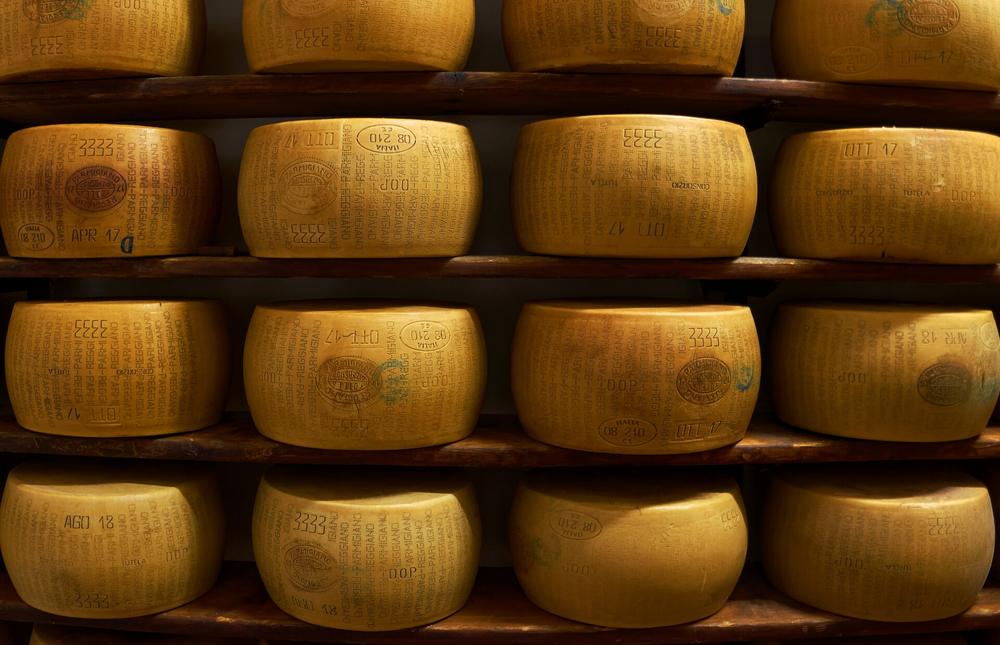
Parmigiano Reggiano must age at least 12 months under its PDO rules, and wheels sold at 24 or 36 months carry a sharper, grainier bite than the youngest grade. Ask a shop to let you taste a few ages side by side before you choose.
Supermarkets sell it cheaply pre-cut and vacuum-sealed, which also travels better than a wedge cut fresh from the wheel.
 G. Garitan (CC BY-SA 4.0)
Wheels of Parmigiano Reggiano
Chianti Classico
Must-buy
- From: the Chianti Classico zone of Tuscany, between Florence and Siena
- Buy it at: Fratelli Zanobini near Florence's San Lorenzo market, Enoteca Italiana in Bologna, or a Chianti winery direct
- Look for: the Gallo Nero, the black-rooster seal on the neck
- Can it fly home to the US? Yes, within the 1-liter duty-free allowance.
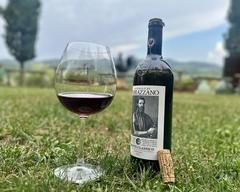
Chianti Classico is a DOCG wine, Italy's highest classification, and its black-rooster seal marks a bottle from the historic zone rather than the wider Chianti region that shares its name. Small producers often sell only locally, so a bottle bought at the winery is genuinely harder to find back home.
A winery visit usually ends at a shop where you can buy what you just tasted, which beats guessing from a supermarket shelf.
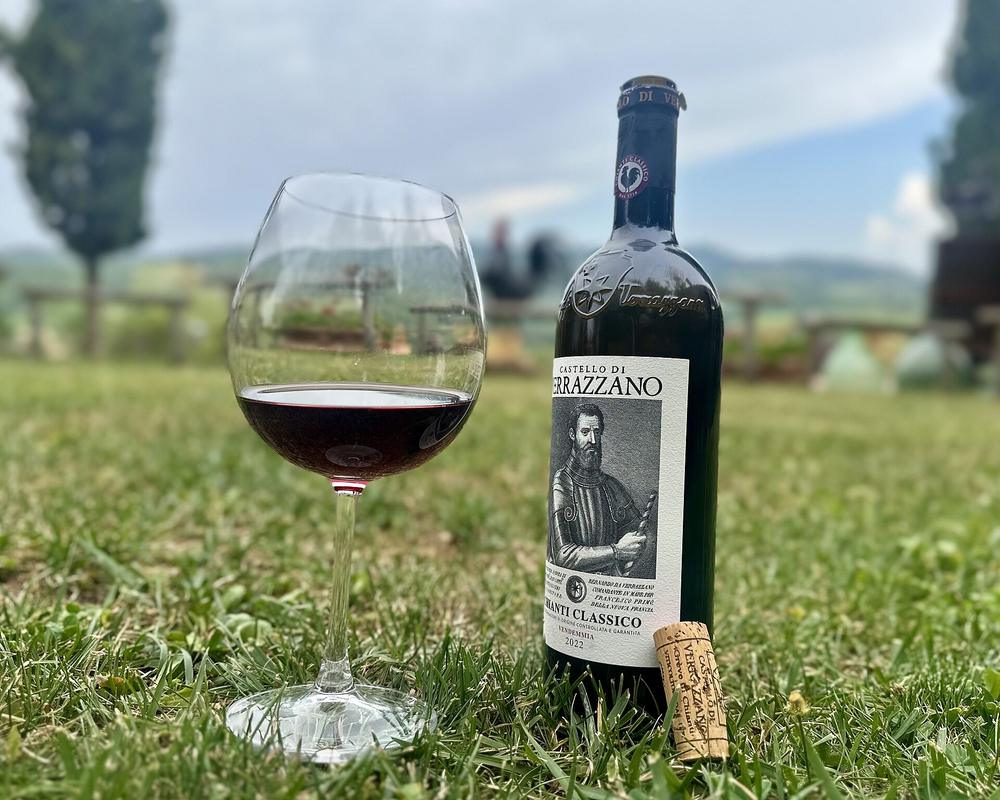 FranzKafka2000 (CC BY-SA 4.0)
A bottle of Chianti Classico with a vineyard in Radda in Chianti behind it
Limoncello
Must-buy
- From: Sorrento, the Amalfi Coast and Capri, Campania
- Buy it at: Limonoro and I Giardini di Cataldo in Sorrento, or souvenir shops the length of the Amalfi Coast
- Look for: real lemon zest and clear spirits on the label, not an artificially flavored version
- Can it fly home to the US? Yes, within the 1-liter duty-free allowance.
Limoncello is made from the zest of the large Sorrento lemon, soaked in alcohol and sweetened. The liqueur belongs mainly to the Gulf of Naples, the Amalfi Coast and Sicily, not the rest of Italy.
Keep a bottle in the freezer once home; it's meant for drinking ice cold.
Buy it where the lemons grow rather than at an airport shop, where a cheaper version often swaps real zest for flavoring.
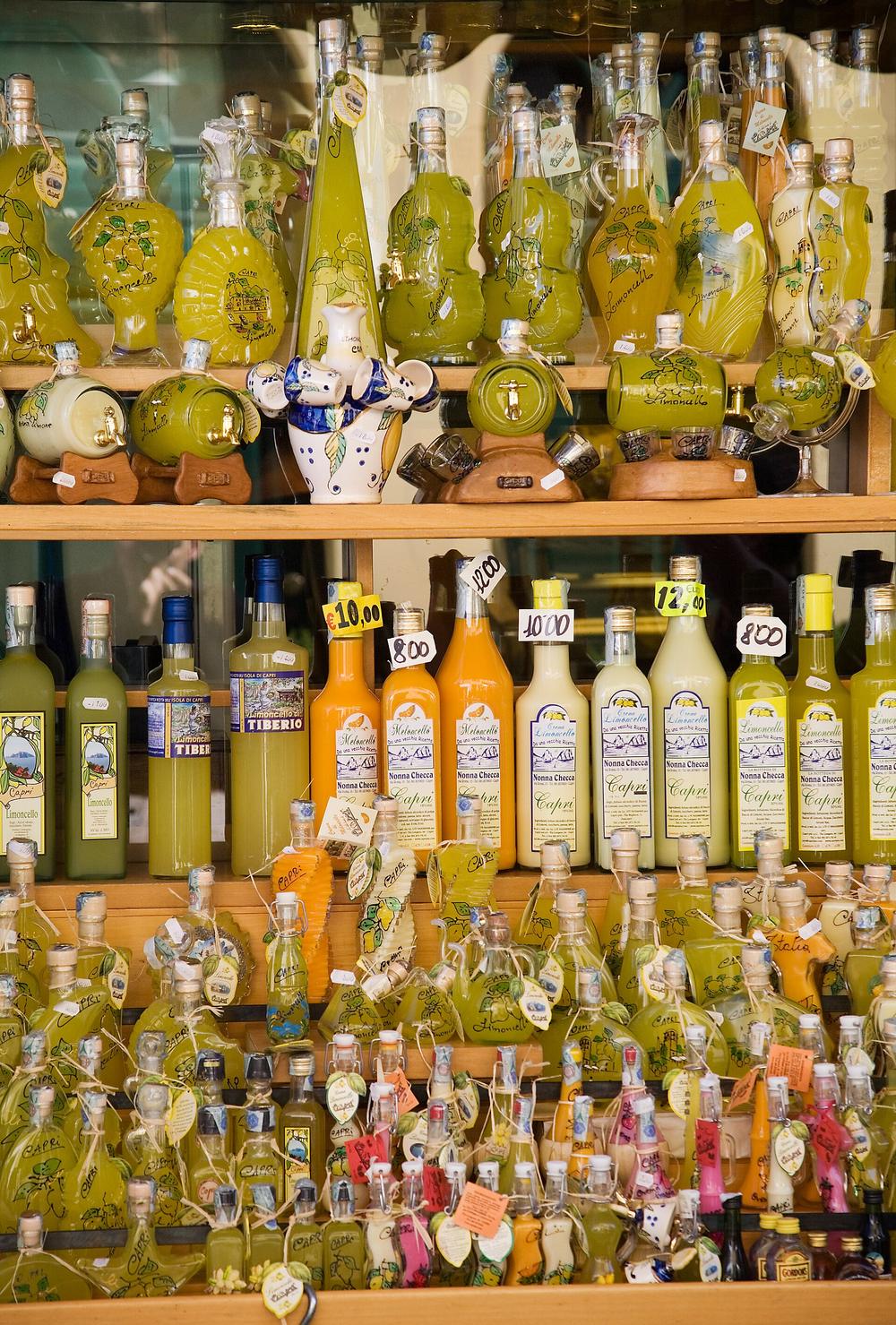 Jorge Royan (CC BY-SA 3.0)
Limoncello bottles for sale on Capri
Murano glass
Must-buy
- From: the island of Murano, Venice
- Buy it at: a workshop on Murano itself, where you can watch the glass blown
- Look for: a demonstration or a workshop stamp; be wary near the Rialto Bridge
- Can it fly home to the US? Yes. Wrap it well and pack it in your checked bag.
Murano has made glass since the 13th century, when Venice moved its glassworks to the island over fire risk. The island invented both cristallo, near-transparent glass, and lattimo, an opaque white glass that imitates porcelain. Some shops around Venice's Rialto Bridge now sell imported pieces passed off as Murano work.
Go to the island itself, where a workshop will blow a piece in front of you before you buy it.
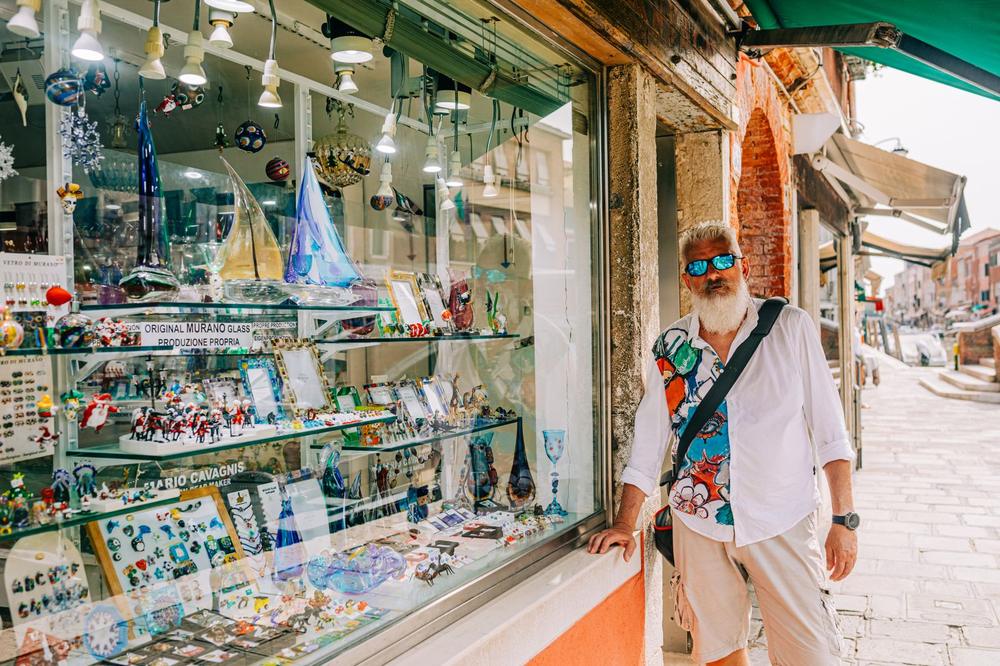 Photo by Helena Jankovičová Kováčová on Pexels
A Murano glass shop in Venice
Extra virgin olive oil
- From: Tuscany, Puglia, Sicily and Liguria
- Buy it at: farm shops and agriturismi in Chianti, Eataly stores, or local markets nationwide
- Look for: a harvest date and a DOP or IGP name such as Chianti Classico DOP or Terra di Bari DOP
- Can it fly home to the US? Yes: oils are admissible.
Italy's regional olive oils range from Tuscany's peppery, grassy pressings to Puglia's milder, high-volume harvest and Sicily's bold oils from groves grown in volcanic soil. No single PDO covers Italian olive oil as a category; each region's oil carries its own instead.
Check the harvest date on the label before the brand name. An Italian bottling address alone doesn't prove the olives themselves grew in Italy.
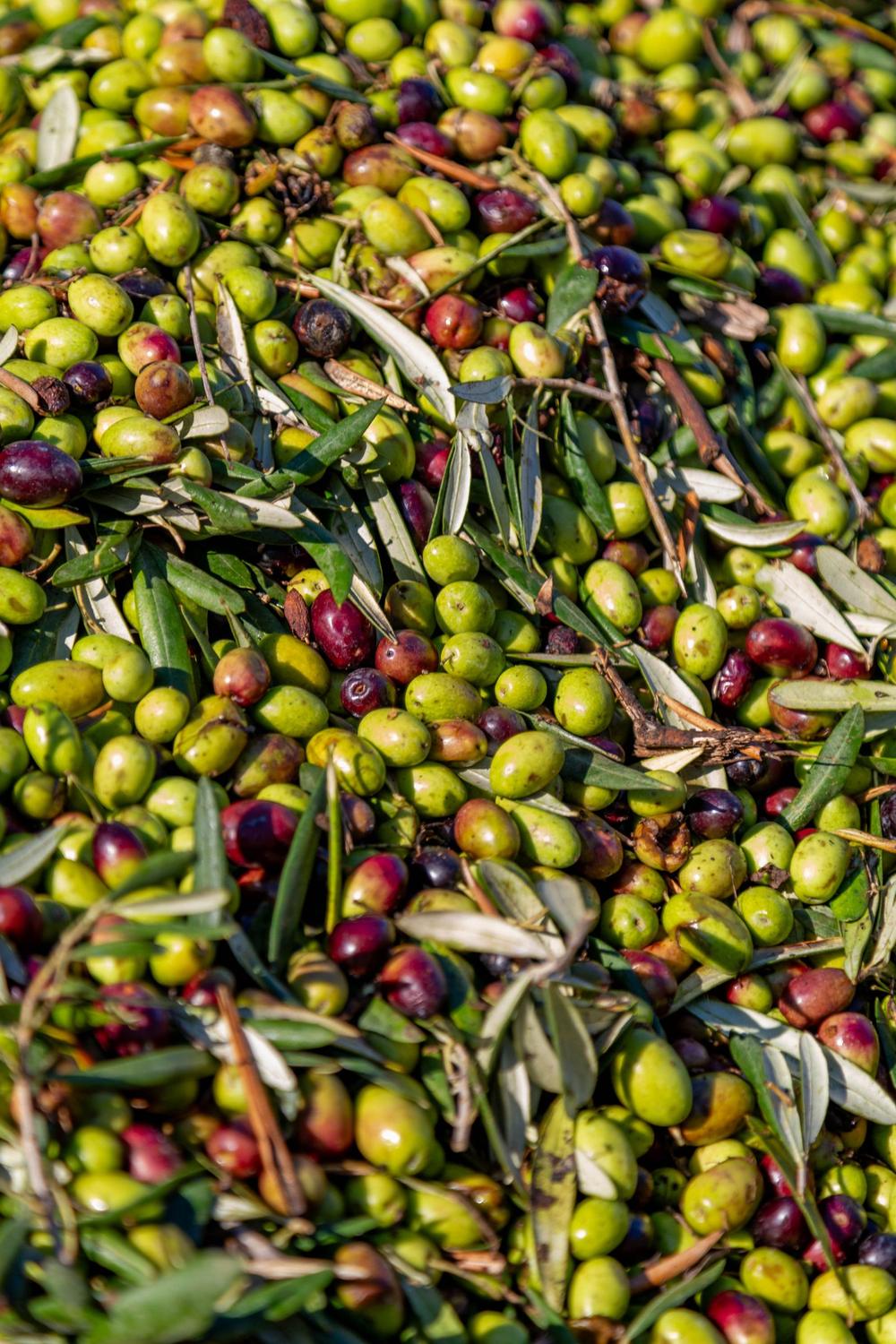 Photo by Leonardo Delsabio on Pexels
Freshly harvested olives in Puglia
Italian coffee and espresso
- From: roasters nationwide, no single region
- Buy it at: Tazza d'Oro in Rome, Illy and Lavazza shops in Milan, or any supermarket
- Look for: a grind marked "per moka" for a stovetop pot, a different grind for an espresso machine
- Can it fly home to the US? Yes: coffee is admissible.
Italian coffee roasters sell whole-bean, ground and moka-specific grinds. Match the grind to how you'll brew it at home before you worry about the name on the bag; a bag marked for a moka pot isn't automatically right for every espresso machine.
Supermarket prices beat a specialty shop's for the same bag. Even a known brand like Illy costs less at a grocery store such as Conad than it does at a tourist-facing shop.
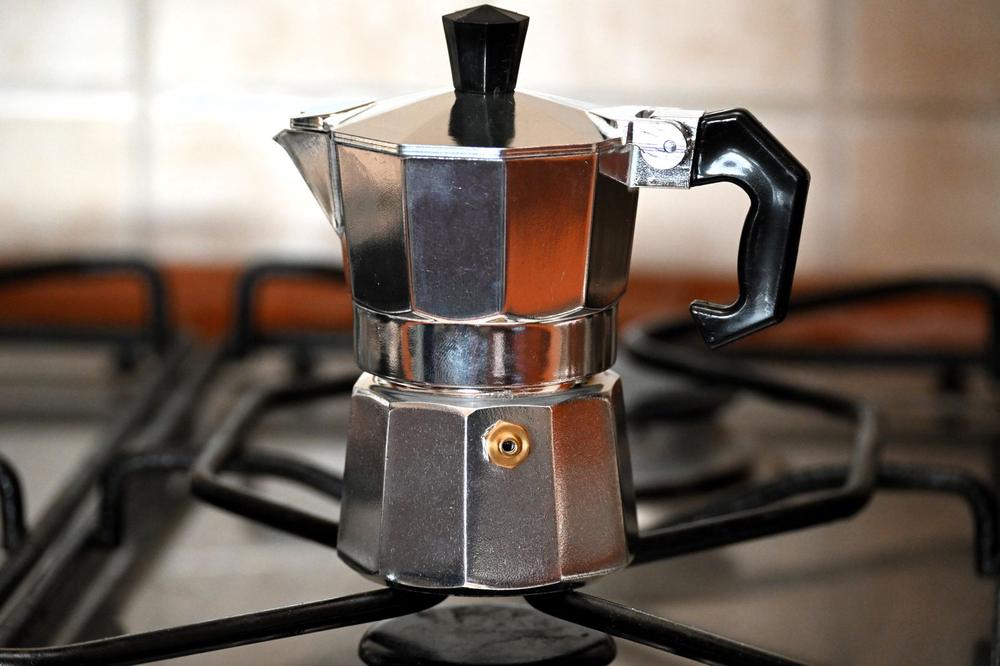 Photo by Giuseppe De Bergolis on Pexels
A moka pot brewing coffee on a gas stove in Fondi, Italy
Dried pasta, regional shapes
- From: Puglia, Veneto, Tuscany and Campania
- Buy it at: Volpetti and specialty food shops in Rome, Pegna in Florence, or any supermarket
- Look for: a bronze-die finish, rougher to the touch, which holds sauce better than a smooth industrial shape
- Can it fly home to the US? Yes: pasta is admissible.
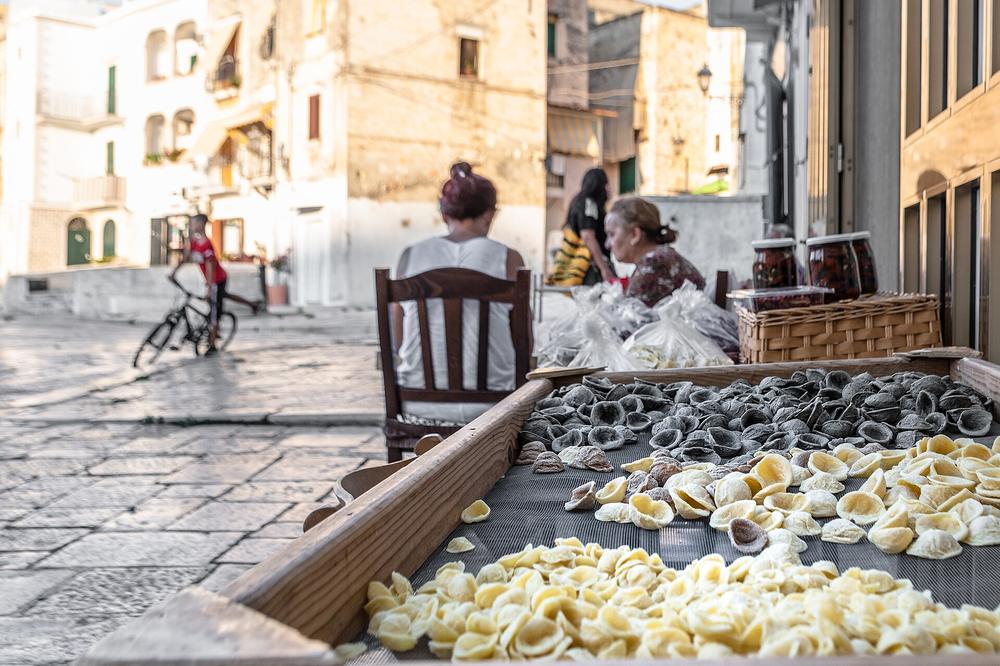
Each region shapes its own pasta: orecchiette from Puglia, bigoli from Veneto, pici from Tuscany, and the bronze-die pasta of Gragnano in Campania, which holds its own Protected Geographical Indication. None of these are quite what gets sold abroad under the same name.
A few bags weigh almost nothing, so load up on shapes you can't easily find at home rather than one you already know.
 Isago10 (CC BY-SA 4.0)
Orecchiette, the ear-shaped pasta of Puglia
Truffle products
- From: Alba, Piedmont, for white truffles; Umbria and the Marche for black
- Buy it at: truffle shops at Florence's Mercato Centrale, Tartuflanghe in Turin, or truffle farms around Alba
- Look for: oil, cream or salt rather than a fresh truffle, which won't survive the trip
- Can it fly home to the US? Yes: truffle products are admissible.
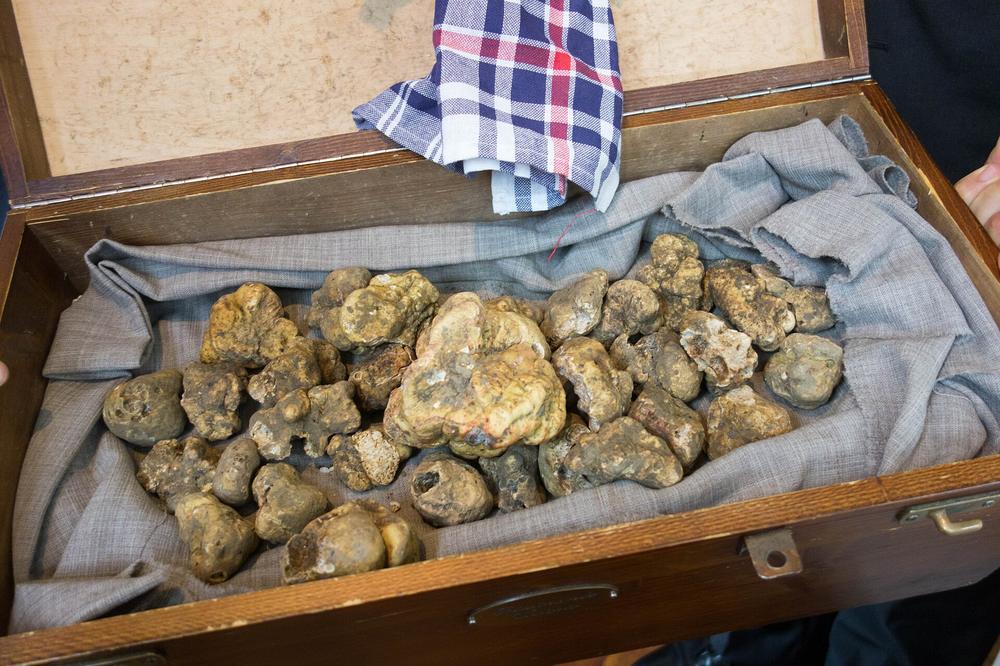
The white truffle of Alba is one of the most expensive foods in the world and can't be farmed, unlike the more affordable black truffles of Umbria and the Marche. Both show up as oils, creams and salts, a cheaper and far more packable way to bring the flavor home.
Black truffle products are the better value for a souvenir; save the fresh white truffle for a meal while you're there.
 CC BY-SA 2.0
White truffles from Alba, Piedmont
Florentine leather goods
- From: Florence, Tuscany
- Buy it at: the Scuola del Cuoio and San Lorenzo Market in Florence, or a reputable shop rather than an open-air stall for an investment piece
- Look for: a rich, earthy smell rather than a chemical one
- Can it fly home to the US? Yes, as long as it isn't an exotic skin.
Florence's leather tradition runs from the Middle Ages to today's Scuola del Cuoio, the Leather School, where you can watch a piece made by hand. A genuine piece smells of leather, not of the chemical finish a cheap stall copy often carries.
Shop at a named workshop for anything you'll wear for years; save the market stalls for a cheap wallet you won't mind replacing.
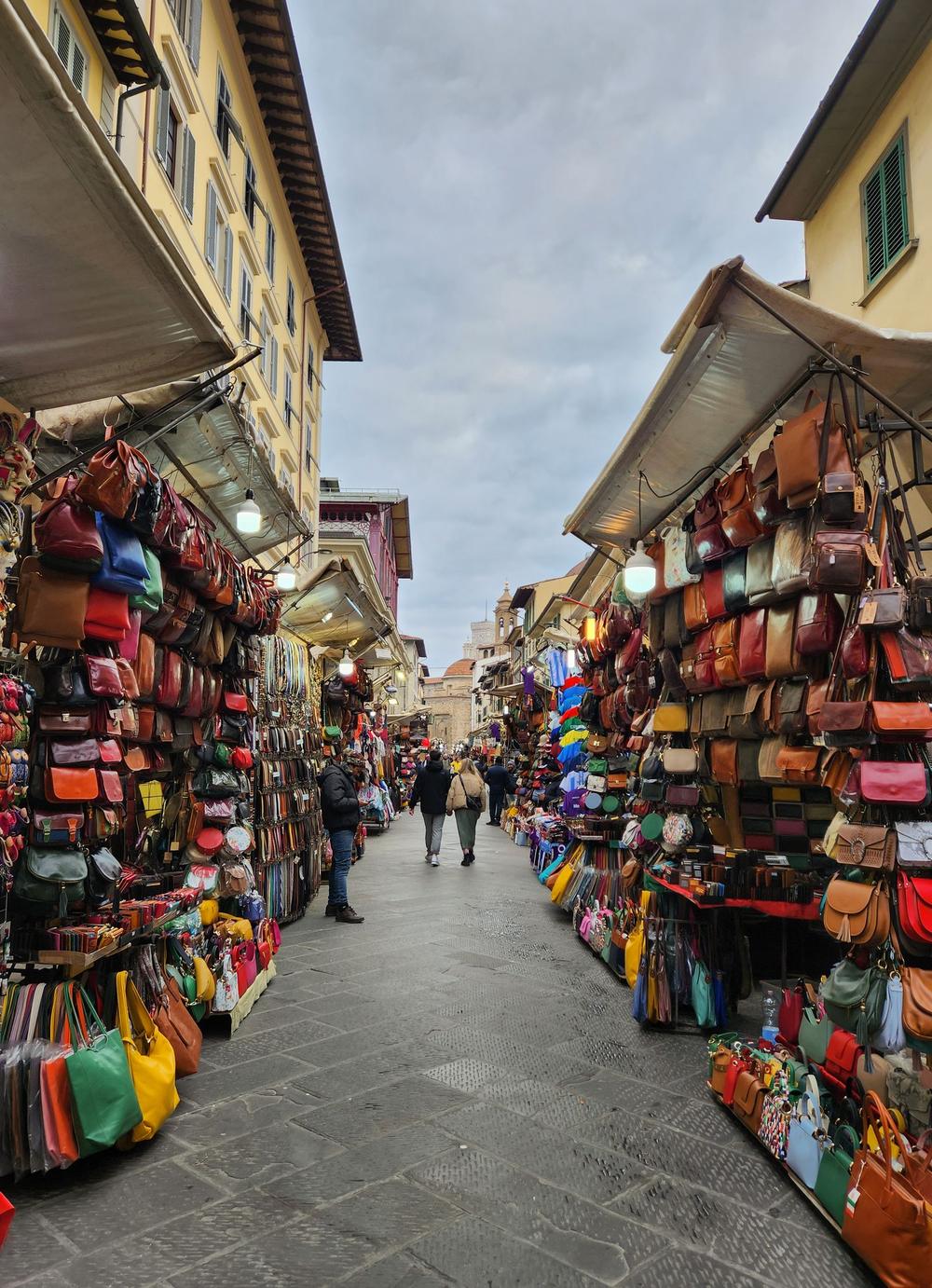 Photo by Solange Dini on Pexels
A street market selling leather bags in Florence
Risotto rice
- From: the Po Valley paddies of Piedmont, Lombardy and Veneto
- Buy it at: any supermarket
- Look for: Carnaroli, Arborio or Vialone Nano on the label
- Can it fly home to the US? The CBP advises against bringing rice, since it can carry insects.
Carnaroli, Arborio and Vialone Nano are the short-grain rice varieties behind risotto's creaminess, grown in the paddies of Piedmont, Lombardy and Veneto. None of them are easy to match with rice bought outside Italy.
Weigh the CBP's own caution against how much you want one of these three before you pack a bag of it.
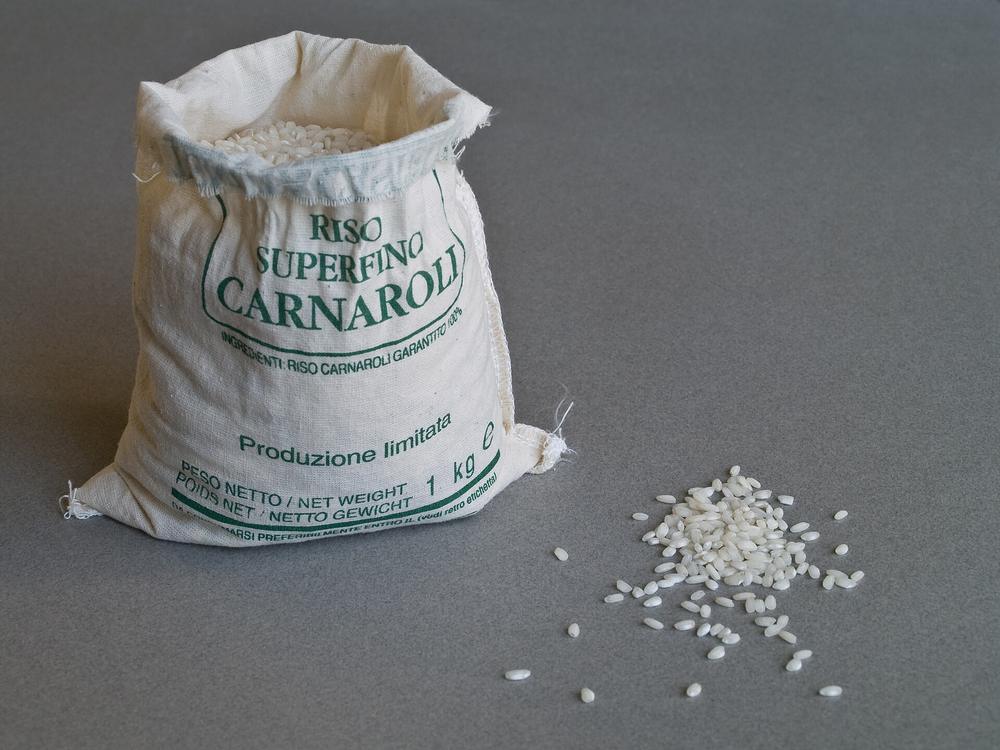 Myrabella (CC BY-SA 3.0)
A bag of Carnaroli, an Italian risotto rice
Can you bring prosciutto home to the US?
No. The USDA states that "cured hams (prosciutto, Serrano ham, Iberian ham) and salami from areas within France, Germany, Italy and Spain may not be brought into the United States by travelers." Prosciutto di Parma falls under that ban, dry-cured for a minimum of 12 months to earn its PDO name. So does Prosciutto di San Daniele, its counterpart from Friuli-Venezia Giulia, however it's vacuum-packed or sealed.
The same ban covers salami, mortadella and every other Italian cured meat: CBP does not allow fresh, dried or canned meat products from most foreign countries. Prosciutto reaches US shops only in commercial shipments carrying extra certification.
Eat it in Italy instead, at the salumerie of Parma and across Emilia-Romagna. If meat does end up in your bag, declare it; a declared item is confiscated, not penalized.
What to buy at an Italian supermarket
Cheese, chocolate, nougat and jarred condiments cost far less at an Italian supermarket than at a shop built for tourists, and most of them travel well.
| Buy | What it is | Pack it |
|---|---|---|
| Pecorino Romano | sharp, salty sheep's-milk cheese, PDO | checked bag, vacuum-packed |
| Grana Padano | a milder, cheaper hard cheese than Parmigiano, PDO | checked bag, vacuum-packed |
| Gorgonzola | Italy's best-known blue cheese, PDO | checked bag, vacuum-packed |
| Torrone | almond or hazelnut nougat from Cremona or Benevento | carry-on |
| Baci Perugina | hazelnut-chocolate kiss, made by Perugina in Perugia | carry-on |
| Pocket Coffee | an espresso shot wrapped in a chocolate shell | carry-on |
| Taralli | ring-shaped Puglia crackers, often fennel or chili | carry-on |
| Cantucci | twice-baked Prato almond biscuits, for dipping in Vin Santo | carry-on |
| Panettone or Pandoro | Milan's or Verona's Christmas cakes, boxed | carry-on |
| Saffron | threads from San Gimignano, Sardinia or L'Aquila, each DOP | carry-on |
| Colatura di Alici | Cetara's amber anchovy extract | checked bag |
| Dried porcini | concentrated mushroom flavor for risotto and pasta | carry-on |
| Pesto alla Genovese | Genoa's basil sauce, shelf-stable in a jar | checked bag |
| Barolo or Prosecco | Piedmont's top red or Veneto's sparkling wine | checked bag |
| Grappa or Mirto | a pomace brandy, or Sardinia's myrtle-berry liqueur | checked bag |
Fresh Mozzarella di Bufala Campana is the one cheese to skip. It's made to be eaten within days, so even if it clears customs as a solid cheese, it won't survive the flight; eat it fresh in Campania instead.
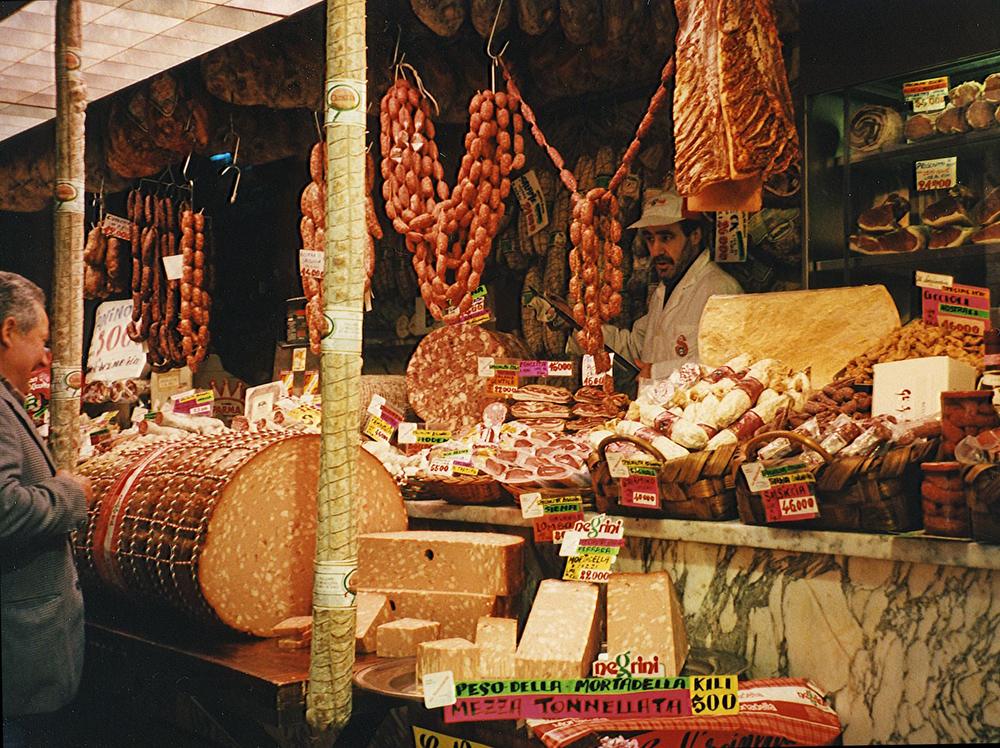 Photo by Pam Crane on Pexels
A deli counter in Florence with cured meats and cheeses
Ceramics and crafts, town by town
Italy's craft towns each have a signature: a color, a glaze or a technique nobody else makes quite the same way.
| Town | Buy | What it is |
|---|---|---|
| Deruta, Umbria | maiolica pottery | hand-painted earthenware, a centuries-old tradition |
| Vietri sul Mare, Campania | polychrome ceramics | lemon-and-sun motifs, the gateway to the Amalfi Coast |
| Caltagirone, Sicily | maiolica and terracotta | a pottery tradition older than 1000 CE |
| Capodimonte, Naples | porcelain figurines | a style set by the original 1743-1759 manufactory |
| Burano, Venice | needle lace | hand-stitched since the 16th century |
| Venice | Carnevale masks | leather, porcelain or papier-mache, hand-painted |
| Volterra, Tuscany | alabaster carving | vases and sculpture from locally quarried stone |
| Torre del Greco, Campania | coral and cameo jewelry | carved since the 18th century |
| Naples (Via San Gregorio Armeno) | presepe figures | hand-carved Nativity scenes |
| Palermo and Catania, Sicily | Opera dei Pupi puppets | UNESCO-recognized marionette tradition |
| Florence (Ponte Vecchio) | gold jewelry | goldsmiths' shops on the bridge for centuries |
Buy in the town itself where you can. A Vietri plate bought in Vietri or an Alabaster vase bought in Volterra is the real workshop's work, not a mainland import sold where the tourists already are.
Try free
Plan your Italy trip in about 2 minutes
Tap through 8 quick cards for a complete itinerary with budget, maps, and packing lists. No account required.
Plan your Italy trip →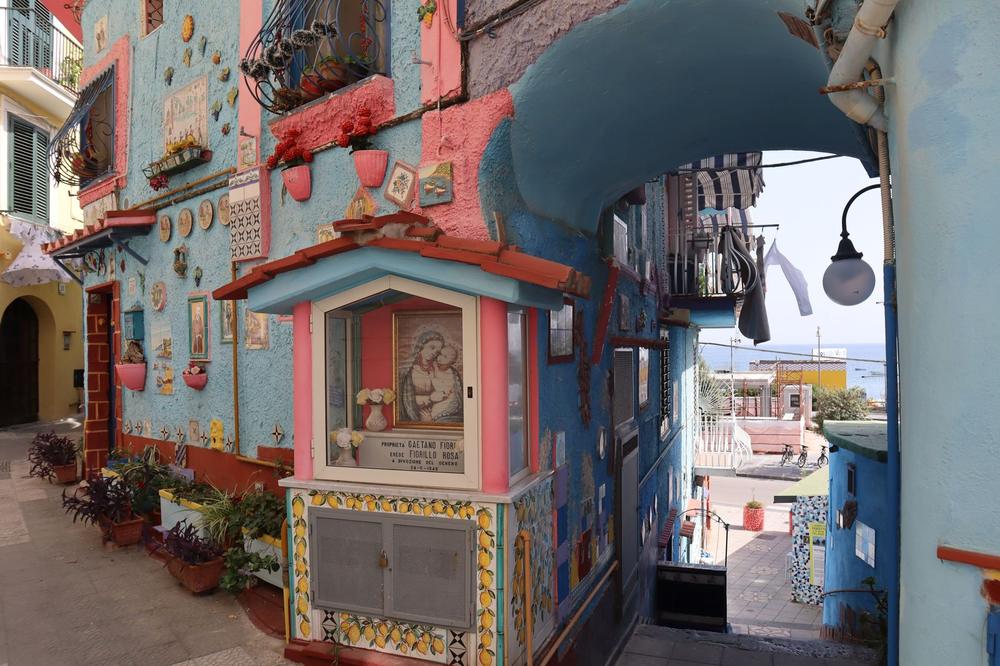 Photo by Mihaela Claudia Puscas on Pexels
A street in Vietri sul Mare, the Amalfi Coast's ceramics town
Italian beauty, home and fashion
Santa Maria Novella, in Florence, has sold herbal remedies and perfume from the same site since Dominican friars began making them there in the 14th century; the Medici family were once among its patrons. Marvis, a bright Italian toothpaste in flavors like cinnamon and jasmine, costs far less at a pharmacy or supermarket than it does shipped abroad. A moka pot, patented in the 1930s by Alfonso Bialetti's company in Piedmont, is the one kitchen souvenir that earns its place in a carry-on.
Como has woven silk since mulberry trees went in around its lake in the 1400s, and its mills still supply much of Europe's luxury trade. A scarf or tie from a Como shop is finer than most souvenir silk. Tuscan mills turn imported cashmere fiber into sweaters and scarves sold in Florence boutiques. For designer labels at prices without North American import duties added, Milan's Quadrilatero d'Oro and Florence's Via de' Tornabuoni are where Gucci, Prada, Armani and Versace sell at home. KIKO Milano, a Milan-founded drugstore makeup brand, sells eyeshadows and polish for a fraction of department-store prices.
VAT refunds and getting it home
If you live outside the European Union, you can claim back the VAT on what you buy. The rule is EU-wide: the goods must leave the EU within 3 months of purchase with a customs-stamped refund document. Their value must also clear a minimum purchase that each EU member state sets for itself.
Olive oil, wine, limoncello and jarred sauces over 3.4 ounces go in your checked bag rather than a carry-on. Keep receipts and original packaging as proof of where something came from, and declare all food on arrival. Travelers also get an $800 personal exemption before duty applies to what they bring home.
What not to buy in Italy
- "Murano glass" from a shop right beside the Rialto Bridge. Some of it is imported. Buy on the island of Murano, where a workshop will blow it in front of you.
- Fresh Mozzarella di Bufala Campana to carry home. It won't survive the trip; eat it in Campania instead.
- Rice for risotto, if you'd rather not risk it. The CBP itself discourages bringing rice into the US.
- Prosciutto, salami or any other cured meat, if you are flying home to the US.
- A cheap leather wallet from an open-air stall, if you want it to last. A chemical smell instead of a leather one is the tell.
Plan your Italy trip
For trip length and which cities to see, start with the Italy travel guide. Florence, a buying stop for much of this list, anchors the 7-day Italy itinerary and the 10-day Italy itinerary; Venice gets its own 3-day Venice itinerary.
A trip you plan on MonkeyEatingMango comes with a shopping guide for every city you stop in, naming what to buy and where. The packing list generator, free for now, builds the list for your destination and month.
Common questions
What is the best thing to buy in Italy?
Aceto Balsamico di Modena, Parmigiano Reggiano and Chianti Classico are Italy's most recommended souvenirs, and all three travel well since they are the kind of food that keeps. For something you wear or display, Murano glass and Florentine leather are the two names that come up again and again.
What food can I bring back from Italy to the US?
You can bring olive oil, dried pasta, aged cheese, packaged spices, coffee, and wine or spirits within the 1-liter duty-free allowance. You cannot bring prosciutto, salami or any other cured meat. Declare all food on arrival.
Can I bring prosciutto or other Italian cured meat back to the US?
No. The USDA states that cured hams, including prosciutto, and salami from Italy may not be brought into the United States by travelers. Prosciutto di Parma reaches US shops only in commercial shipments with extra certification.
Can I bring olive oil or wine in my carry-on?
Only in containers of 3.4 ounces (100 ml) or less. Larger bottles of olive oil, Chianti or limoncello go in your checked bag.
Can I bring Italian cheese to the US?
Yes, if it is solid. US Customs allows bakery items and certain cheeses, so a wedge of aged Parmigiano Reggiano or Pecorino Romano is fine. Fresh Mozzarella di Bufala Campana won't survive the trip home even if it clears customs.
What is the difference between Aceto Balsamico di Modena and the 'Traditional' version?
Aceto Balsamico di Modena is a PGI vinegar sold everywhere at everyday prices. Aceto Balsamico Tradizionale di Modena is a different, PDO-protected vinegar aged a minimum of 12 years in wooden casks in Modena or Reggio Emilia only, and it costs far more.
Is real Murano glass different from what's sold in souvenir shops?
Yes. Murano has made glass since the 13th century, but some shops near Venice's Rialto Bridge sell imported imitations instead. Buy on the island of Murano itself, where workshops demonstrate the glassblowing in front of you.
Can I get a tax refund on shopping in Italy?
Yes, if you live outside the European Union. The goods must leave the EU within 3 months of purchase with a customs-stamped refund document, and their value must clear a minimum that each EU country sets for itself.
What should I buy at an Italian supermarket?
An Italian supermarket sells many of the best edible souvenirs: dried pasta, olive oil, vacuum-packed cheese, torrone, Baci Perugina, and jars of pesto or colatura di alici. Coffee and vinegar both cost less there than at a tourist shop.
Is there a souvenir specific to each region of Italy?
Yes. Balsamic vinegar belongs to Modena, Murano glass to Venice, white truffles to Alba, limoncello to the Amalfi Coast and Sorrento, and leather to Florence. Buying in the town that makes it is how you know it's the real thing.

Written by Shobhit Shrivastava · Founder
Related reading
Italy travel guide
5 Days on the Amalfi Coast: Positano and Amalfi
5 days split between Positano and Amalfi: 3 nights in Positano (Franco's Bar, Arienzo Beach Club, linen shopping) followed by 2 nights in Amalfi (Duomo di Amalfi, Museo della Carta, Pasticceria Pansa). Comfortable pace with a mix of beach clubs, coastal hiking, and hands-on pasta classes....
A Week on the Amalfi Coast: Positano, Amalfi and Ravello
This 7-day comfortable trip for a couple explores the iconic Amalfi Coast, beginning in Positano for cliffside views and Spiaggia Grande beach, then moving to Amalfi for its Duomo di Sant'Andrea and historic center. The journey concludes in the elevated gardens of Ravello at Villa Rufolo,...
10 Days in Italy: Rome and Florence, from the Colosseum to the Vatican
10 days across Rome and Florence: 6 nights in Rome exploring the Colosseum, Pantheon, and Trastevere, followed by 4 nights in Florence for the Uffizi Gallery, Duomo, and Oltrarno district. Comfortable pace with 5-7 activity hours daily, relying on walking and local metro, featuring private...
Two Weeks in Italy: Rome, Florence and Sorrento on the Amalfi Coast
14 days covering Rome, Florence, and Sorrento. Experience the Colosseum, Uffizi Gallery, and cliffside views of the Tyrrhenian Sea. Comfortable pace with 5-6 hours of daily sightseeing, blending urban historical sites with coastal relaxation. Includes one base per city, frequent walking, and...
Thailand Souvenirs: What to Buy and Bring Home
The 15 Thailand souvenirs worth bringing home, where to buy each one, how to bargain for it, and what actually clears US customs, plus Chatuchak, the night markets and the Buddha-image export rule.
Best Time to Visit the Amalfi Coast: Month by Month
When to go to the Amalfi Coast, month by month: measured weather across Positano, Praiano and Vietri sul Mare, the coast road's odd-even plate rule, and the dates behind Sant'Andrea and the Regata.
Japan Souvenirs: What to Buy in Japan and Bring Home
The 12 Japan souvenirs worth bringing home, Japan's tax-free shopping change on November 1, 2026, where to buy each item, and whether it clears US customs.