What should you eat in Japan, and where does each dish come from? Start with sushi, sashimi and ramen, then tempura, udon, soba and yakitori. Okonomiyaki, takoyaki and yakiniku follow close behind, and Japan's everyday cooking, washoku, runs on rice, miso soup and whatever is in season, a tradition UNESCO added to its Intangible Cultural Heritage list in 2013.
- Order by course, not one long list. Noodles, grilled skewers, rice bowls and hot pot each hold a different place at the table, and a good meal mixes courses rather than picking one dish all night.
- Skip the tip, everywhere. Japan has no tipping culture at restaurants, bars or taxis, and leaving cash behind can confuse or even offend the staff.
- Ask about dashi before you order. The fish stock hides in miso soup, most noodle broths and even natto's sauce packet, so a vegetarian traveler needs to ask.
The dishes to eat first
Sushi
Iconic dish
- From: Tokyo (Edo-period origin); nationwide
- When: lunch, dinner, special occasions
- Contains: pescatarian variants exist; many pieces raw fish
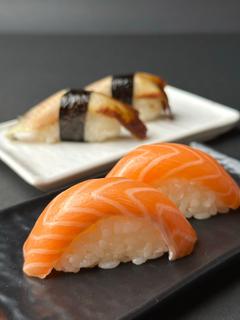
Sushi is vinegared rice topped with or wrapped around fish, seafood or vegetables, pressed by hand into nigiri, rolled into maki or scattered as chirashi. Nigiri-zushi began in late Edo-period Tokyo as a quick snack, rice and fresh catch pressed together by hand. It only later became the special-occasion order it is today. Pick nigiri off a kaiten-zushi belt, order piece by piece at a counter, or hand the choices to an omakase chef and let the order run itself.
Tokyo's sushi counters anchor the 5-day Tokyo itinerary, which builds a trip around the city at a slower pace.
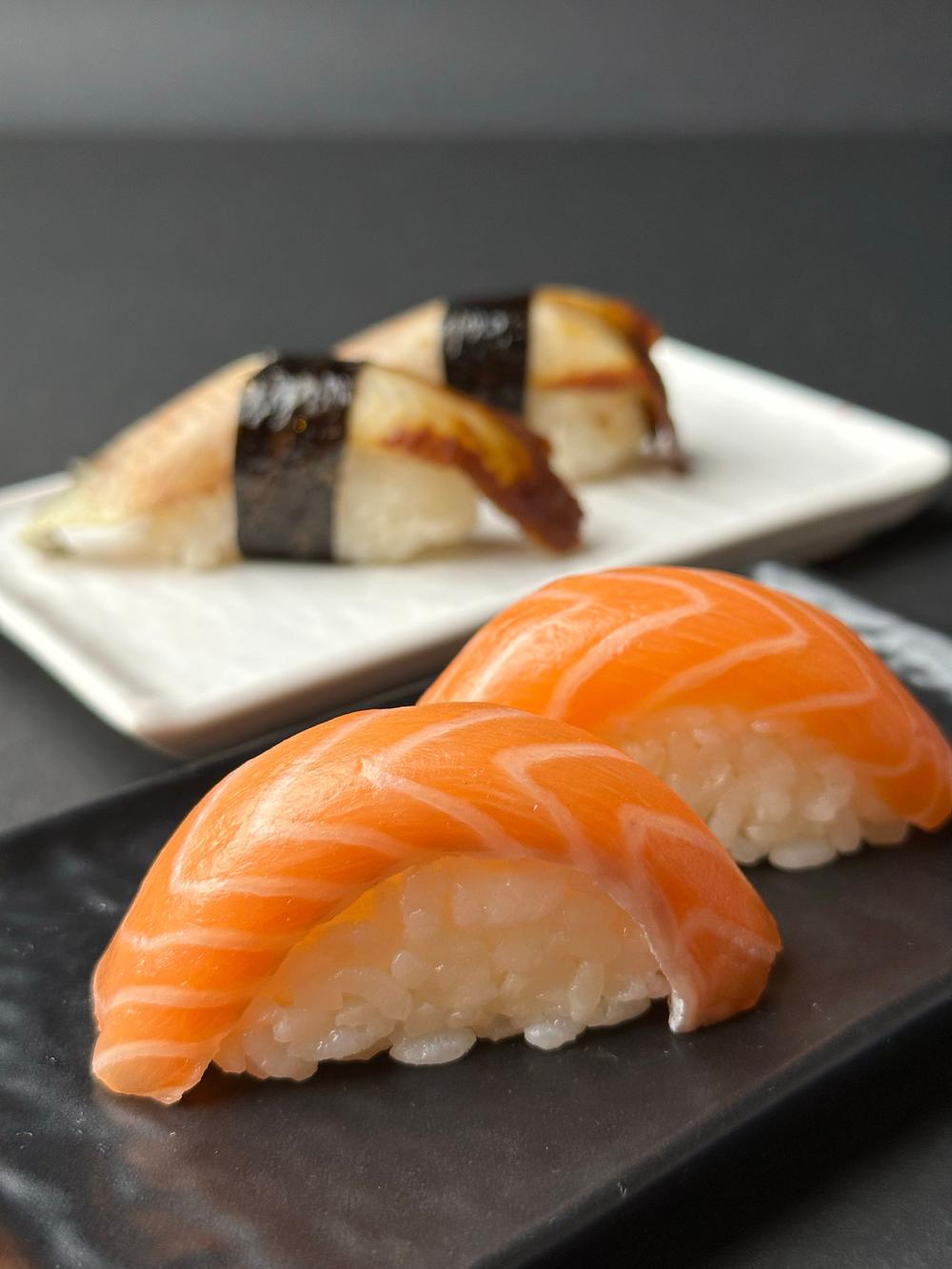 Photo by Anastasya Stasya on Pexels
Salmon and eel nigiri sushi, close up
Sashimi
Iconic dish
- From: Nationwide; coastal Japan
- When: as a course within a set meal or izakaya order
- Contains: pescatarian; gluten-free with tamari
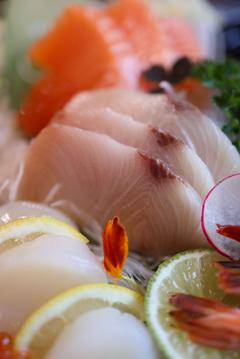
Sashimi is thinly sliced raw fish or seafood, served with no rice: soy sauce, wasabi and a little grated daikon on the side. The cut decides the dish more than the fish does: a trained chef slices against the grain so each piece keeps its texture on the tongue. Eat it as a course inside a set meal or an izakaya round, not as a meal on its own.
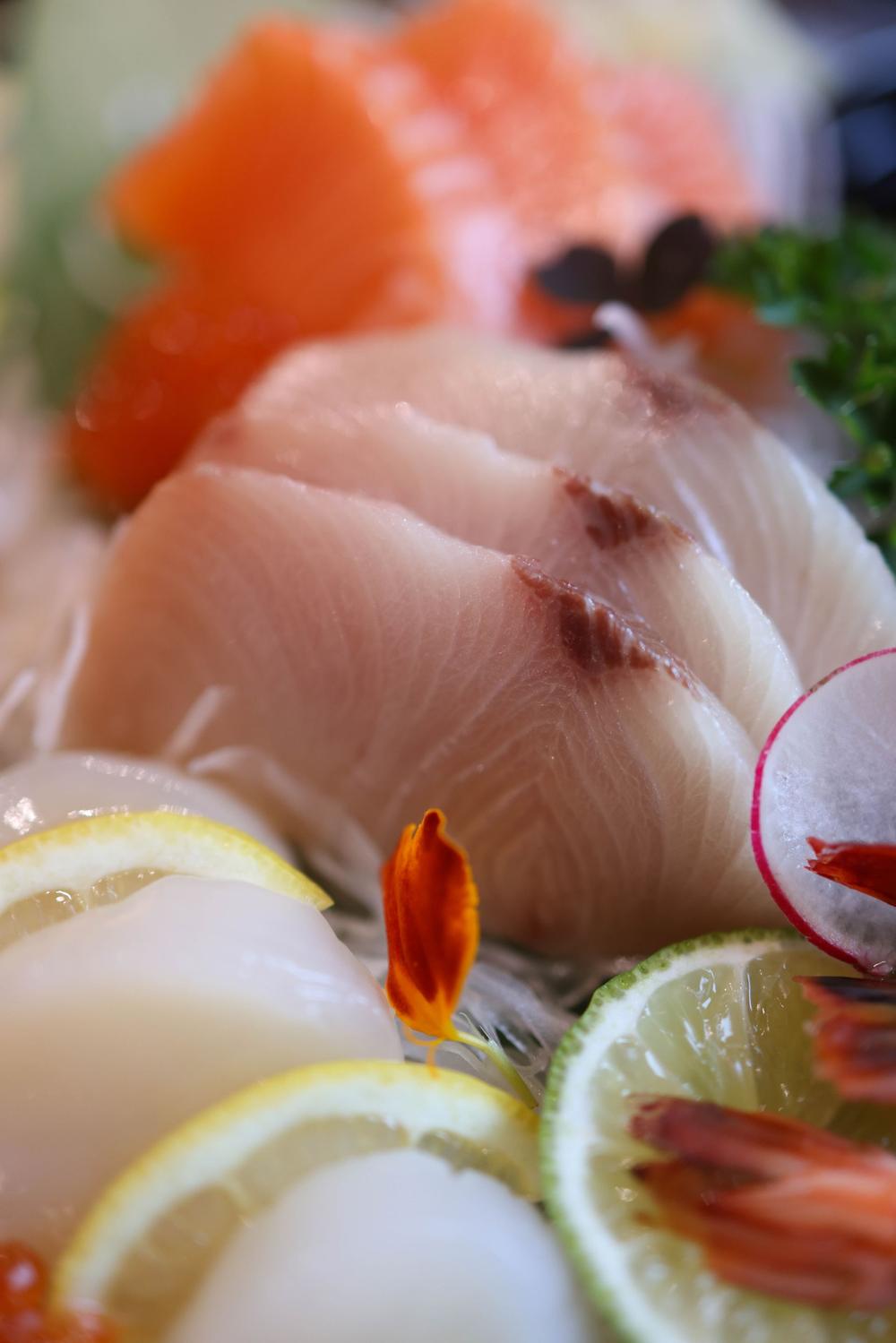 Photo by Valeria Boltneva on Pexels
A plate of fresh sashimi with lemon
Ramen
Iconic dish
- From: Nationwide; broth style varies by city
- When: lunch or late-night, fast and casual
- Contains: usually a meat-based broth; vegetarian versions are rare
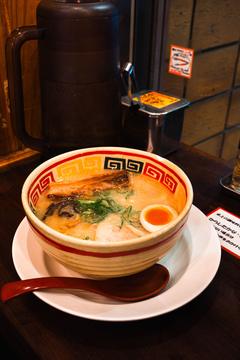
Ramen is wheat noodles in a broth built from one of four bases, tonkotsu pork bone, shoyu soy, miso or shio salt, topped with sliced chashu pork, a soft egg and scallion. Most shops commit to one base and perfect it. The broth on the sign out front tells you what to expect inside. Order at the ticket machine by the door, and budget time for a short, fast-moving line outside a good shop at lunch.
Plan a ramen crawl around the 7-day Japan itinerary, which moves through Tokyo, Kyoto and Osaka in one trip.
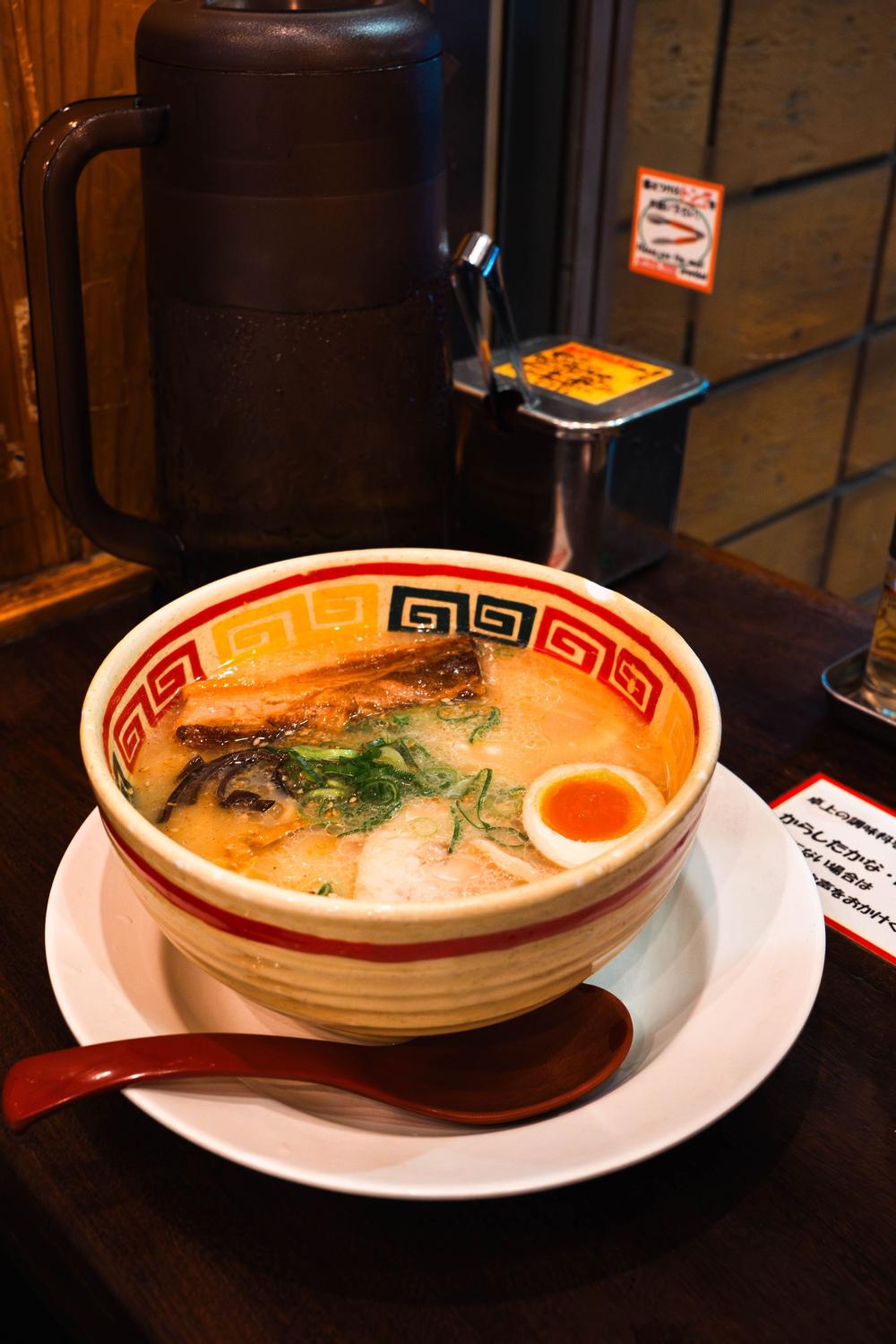 Photo by Brittany Salatino on Pexels
A bowl of ramen with egg and pork at a Tokyo restaurant
Tempura
Iconic dish
- From: Edo-period Tokyo; nationwide
- When: lunch sets, a kaiseki course, or a dedicated tempura dinner
- Contains: vegetarian versions common; batter often has egg
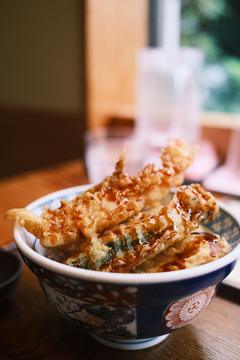
Tempura reached Japan with Portuguese traders and took hold during the Edo period: seafood and vegetables dipped in a light batter and deep-fried until the coating turns crisp instead of heavy. It comes with tentsuyu sauce and grated daikon, or over rice as tendon. A dedicated tempura counter fries each piece to order, so nothing sits long enough to soften.
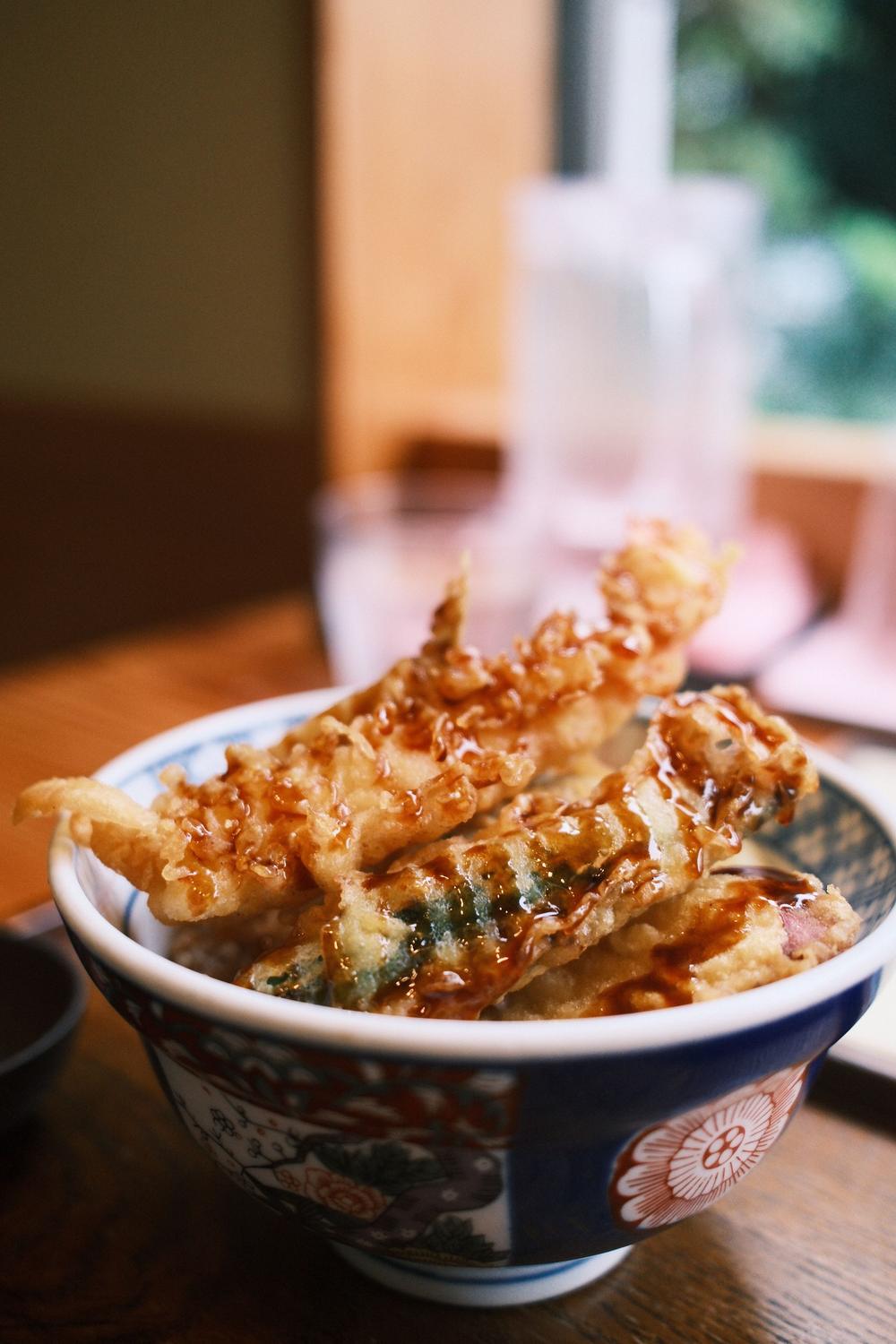 Photo by zhen ciang huang on Pexels
Crispy tempura served on a traditional plate
Udon
Iconic dish
- From: Nationwide; Sanuki (Kagawa) is the famous style
- When: any meal, especially lunch
- Contains: broth is often fish-based; vegetarian broths exist
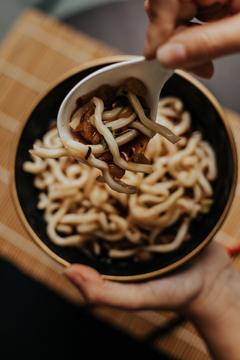
Kagawa Prefecture's Sanuki udon is the style other regions measure themselves against, firmer and more elastic than a standard bowl of this thick, chewy wheat noodle. Served hot in broth or cold with a dipping sauce on a bamboo tray, it works either way. Try it hot with tempura or a raw egg stirred in, or cold as zaru udon on a hot afternoon.
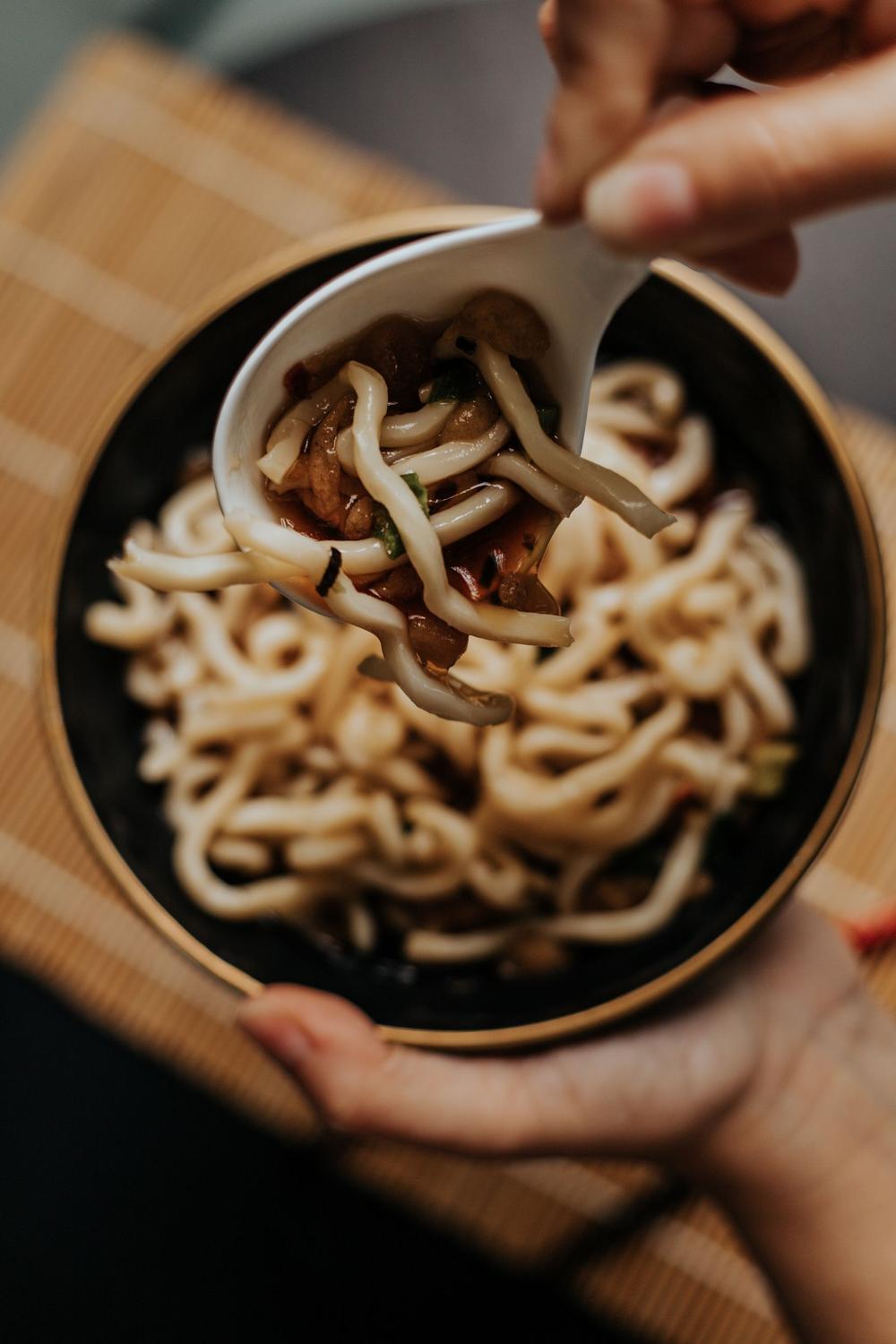 Photo by Layanne Aguiar on Pexels
A bowl of udon noodles with chopsticks
Soba
Iconic dish
- From: Nationwide; Nagano is known for it
- When: lunch, and on New Year's Eve as toshikoshi soba
- Contains: buckwheat; broth is usually dashi-based (fish)
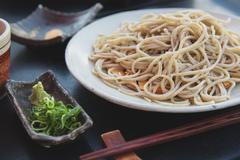
Soba is a thin buckwheat noodle, served hot in broth or cold on a bamboo tray with a dipping sauce called tsuyu. Japanese households eat it on New Year's Eve as toshikoshi soba, the noodle's length standing in for a long life into the next year. Slurping is normal here, even expected: it cools the noodles and pulls in air that carries the broth's aroma.
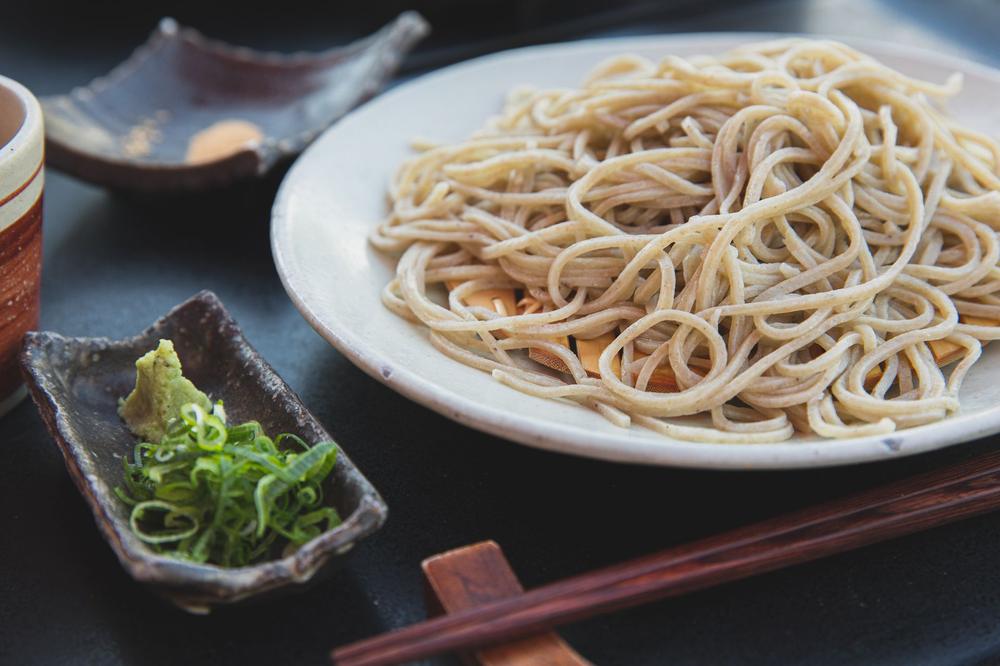 Photo by Ryutaro Tsukata on Pexels
Soba noodles served with wasabi and scallion
Yakitori
Iconic dish
- From: Nationwide; an izakaya staple
- When: evening, at izakaya and dedicated yakitori counters
- Contains: chicken; vegetable skewers (negi, shiitake) available
Threaded onto skewers and grilled over charcoal, yakitori is chicken, and often chicken offal, seasoned with salt or a sweet soy tare sauce. A full order works through the bird piece by piece: thigh, skin, cartilage, liver, each its own skewer with its own name. Order a few kinds at a time and let a round of beer or sake carry you through the rest of the menu.
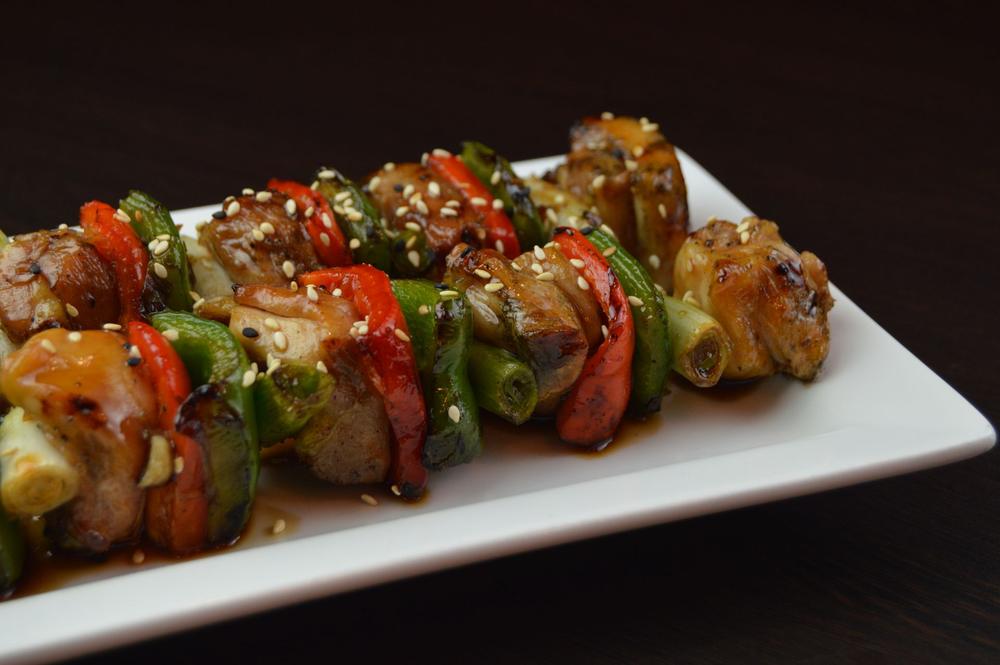 Photo by Checo Juarez on Pexels
Grilled chicken skewers with peppers and sesame
Okonomiyaki
Iconic dish
- From: Osaka; Hiroshima has its own layered style
- When: casual dinner, often cooked at the table
- Contains: batter has egg and wheat; vegetarian fillings possible
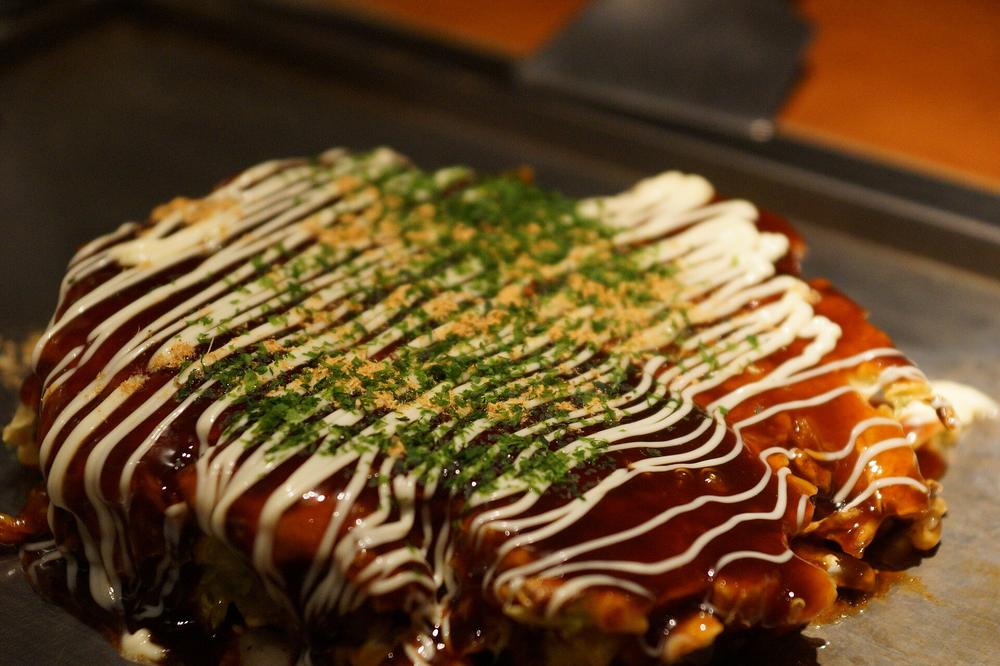
Okonomiyaki is a savory pancake of batter, shredded cabbage and a filling of your choosing, finished with a sweet-savory sauce, mayonnaise and bonito flakes. Osaka mixes everything into the batter before it hits the griddle; Hiroshima layers it instead, building the pancake over a bed of fried noodles. Cut it with the small spatula that comes with it, a hera, and eat straight off the griddle plate.
Osaka's okonomiyaki counters fit naturally into the 3-day Osaka itinerary.
 ume-y (CC BY 2.0)
A whole okonomiyaki, finished with sauce and bonito flakes
Miso soup
Iconic dish
- From: Nationwide
- When: breakfast, and alongside nearly every set meal
- Contains: dashi is often fish-based; contains soy
Miso soup is dashi stock with miso paste dissolved into it, usually finished with cubes of tofu and a scatter of wakame seaweed. It arrives as a side to almost everything, breakfast included, rather than as a dish anyone orders on its own. A traveler avoiding fish should ask first: the dashi underneath is rarely vegetarian unless the kitchen says so.
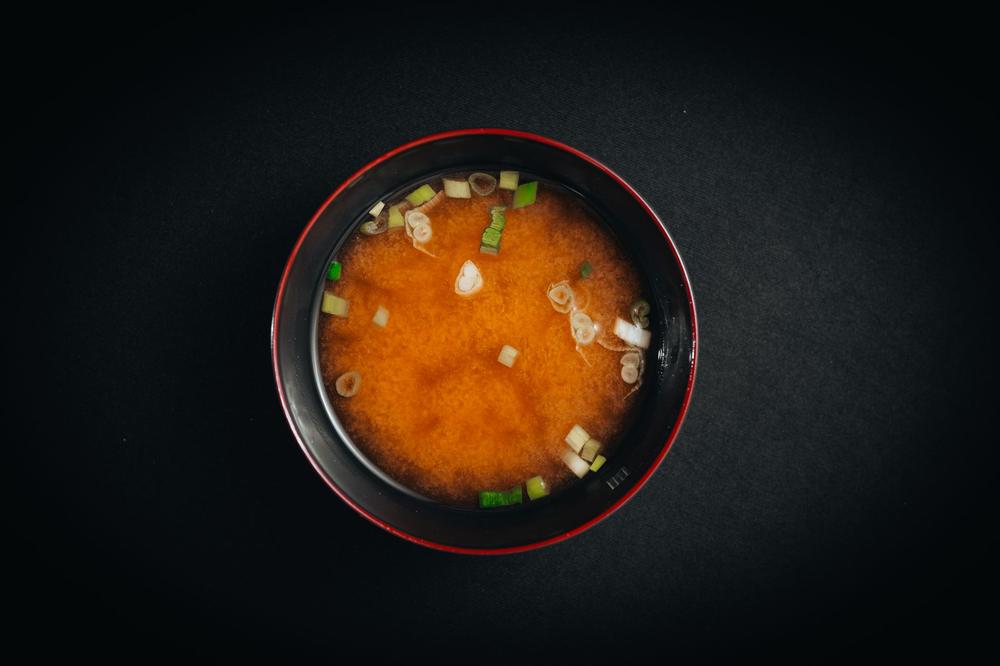 Photo by Rafael Nicida on Pexels
Miso soup with tofu and scallion, seen from above
Onigiri
Iconic dish
- From: Nationwide
- When: breakfast, lunch, snack, anywhere portable
- Contains: fillings vary; plum and kombu fillings are vegetarian
Onigiri is a rice ball, usually triangular and wrapped in a sheet of nori, filled with something like salted salmon, tuna mayonnaise or a sour umeboshi plum. Convenience stores sell them cold from an open fridge case, pulled apart by a plastic tab that keeps the nori crisp until the moment you eat it. Grab one for a train platform breakfast or a park-bench lunch; nobody treats it as a lesser meal.
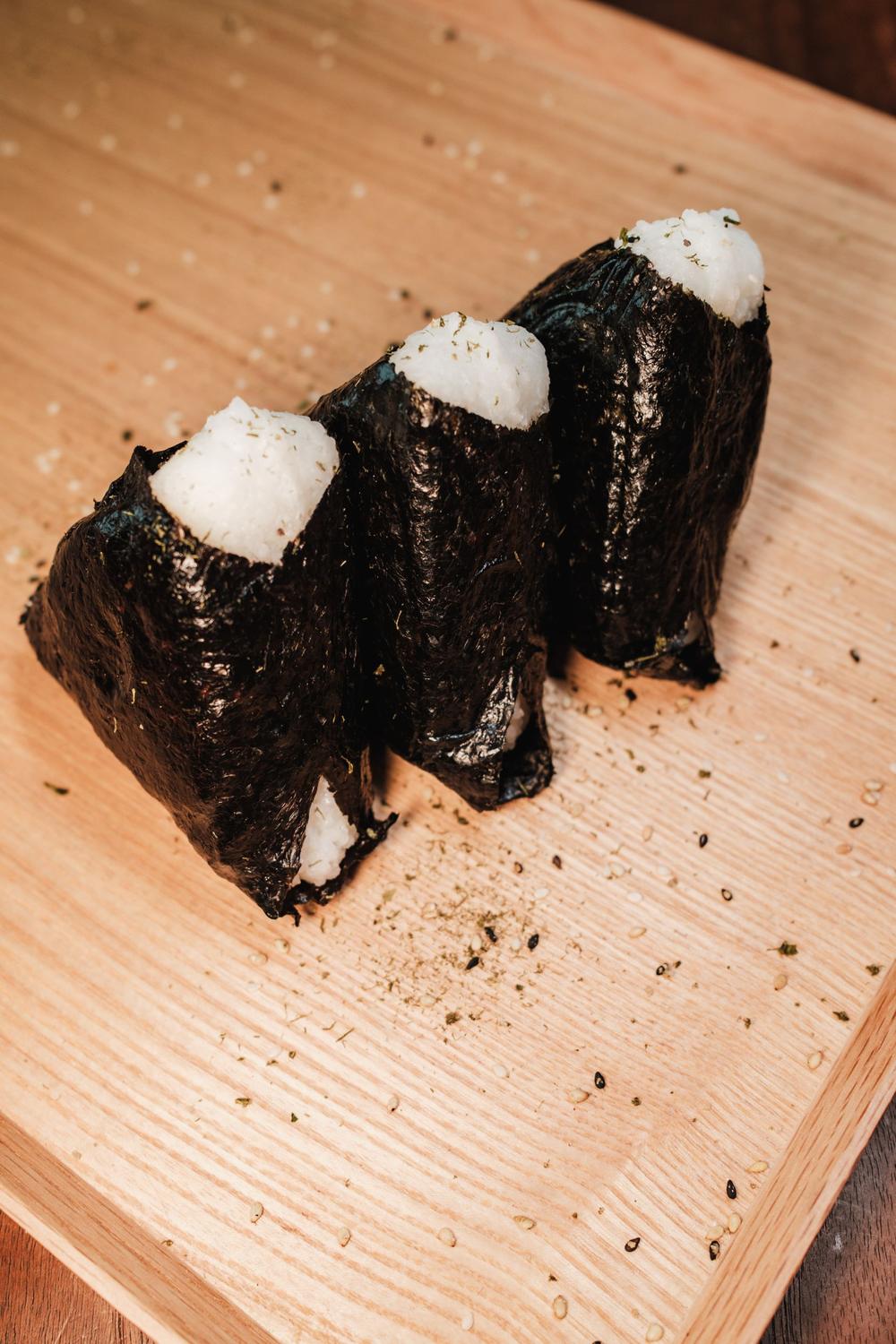 Photo by Airam Dato-on on Pexels
Three onigiri wrapped in nori on a wooden board
Tonkatsu
Iconic dish
- From: Tokyo (Western-influenced, Meiji era); nationwide
- When: lunch set or dinner
- Contains: pork, breaded; chicken (katsu) versions exist
Tonkatsu is a thick-cut pork cutlet, breaded and deep-fried, served with shredded cabbage and a tangy brown tonkatsu sauce. The dish dates to Meiji-era Tokyo, when Western cooking techniques were folded into Japanese kitchens and came out looking nothing like their European source. Get it as a set meal with rice and miso soup, or let it ride on top of rice as katsudon or curry as katsu kare.
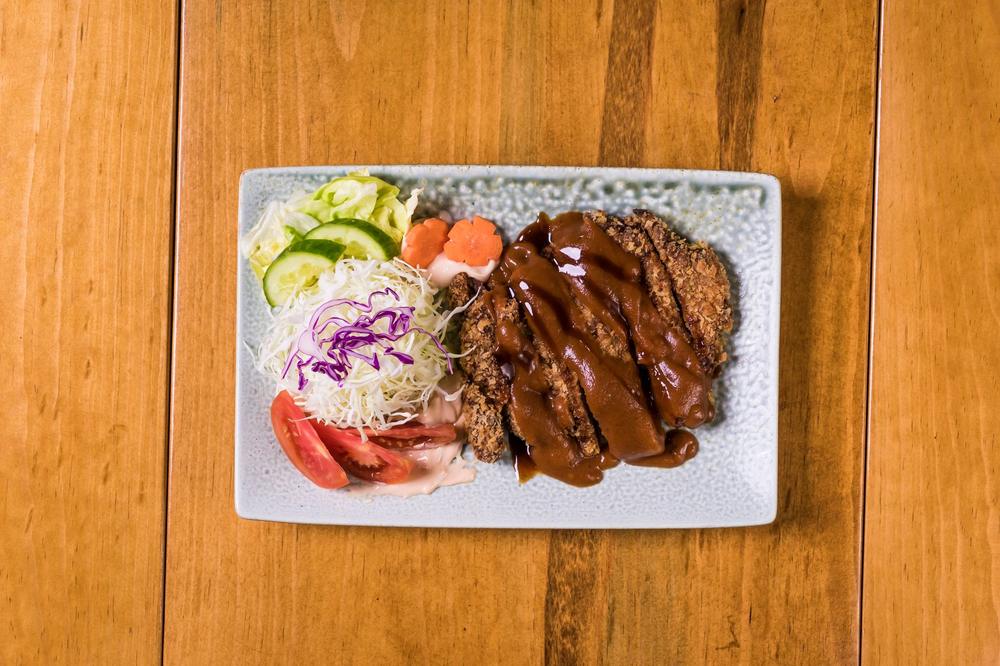 Photo by Luis Becerra Fotografo on Pexels
A crispy tonkatsu pork cutlet with vegetables
Japanese curry
Iconic dish
- From: Yokohama (British-Indian origin via the navy); nationwide
- When: everyday lunch or dinner, home cooking and school lunches
- Contains: usually a meat-based roux; vegetable curry possible
Japanese curry is a thick, mild roux poured over rice, a dish that arrived by way of the British navy and took root in the port city of Yokohama before becoming a national comfort food. It tastes closer to a stew than to the curries of India or Thailand, built from a roux block rather than fresh ground spice. Find it at a chain counter for a fast, cheap meal, or look for katsu kare, the same roux poured over a breaded pork cutlet.
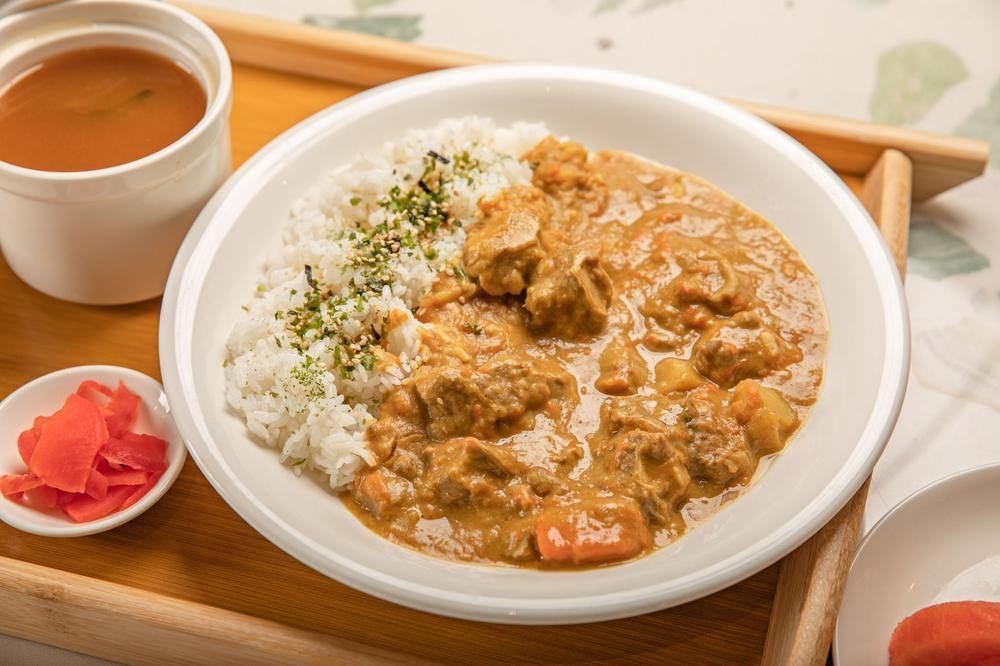 Photo by Change C.C on Pexels
Japanese curry served with rice, miso soup and tsukemono on a tray
Izakaya plates and street food
Gyoza
Iconic dish
- From: Utsunomiya (Tochigi), "the Capital of Gyoza"; nationwide
- When: a side at a ramen counter, or a shared izakaya plate
- Contains: usually pork; vegetable versions available
Gyoza is a pan-fried dumpling of pork and vegetables, crisp on the bottom and steamed soft on top, a dish that arrived with Chinese cooking and became a Japanese staple of its own. Utsunomiya, north of Tokyo, calls itself the Capital of Gyoza, and the city's restaurants compete hard enough over the title that trying several in one visit is the point. Dip each piece in a mix of soy sauce, vinegar and chili oil rather than soy sauce alone.
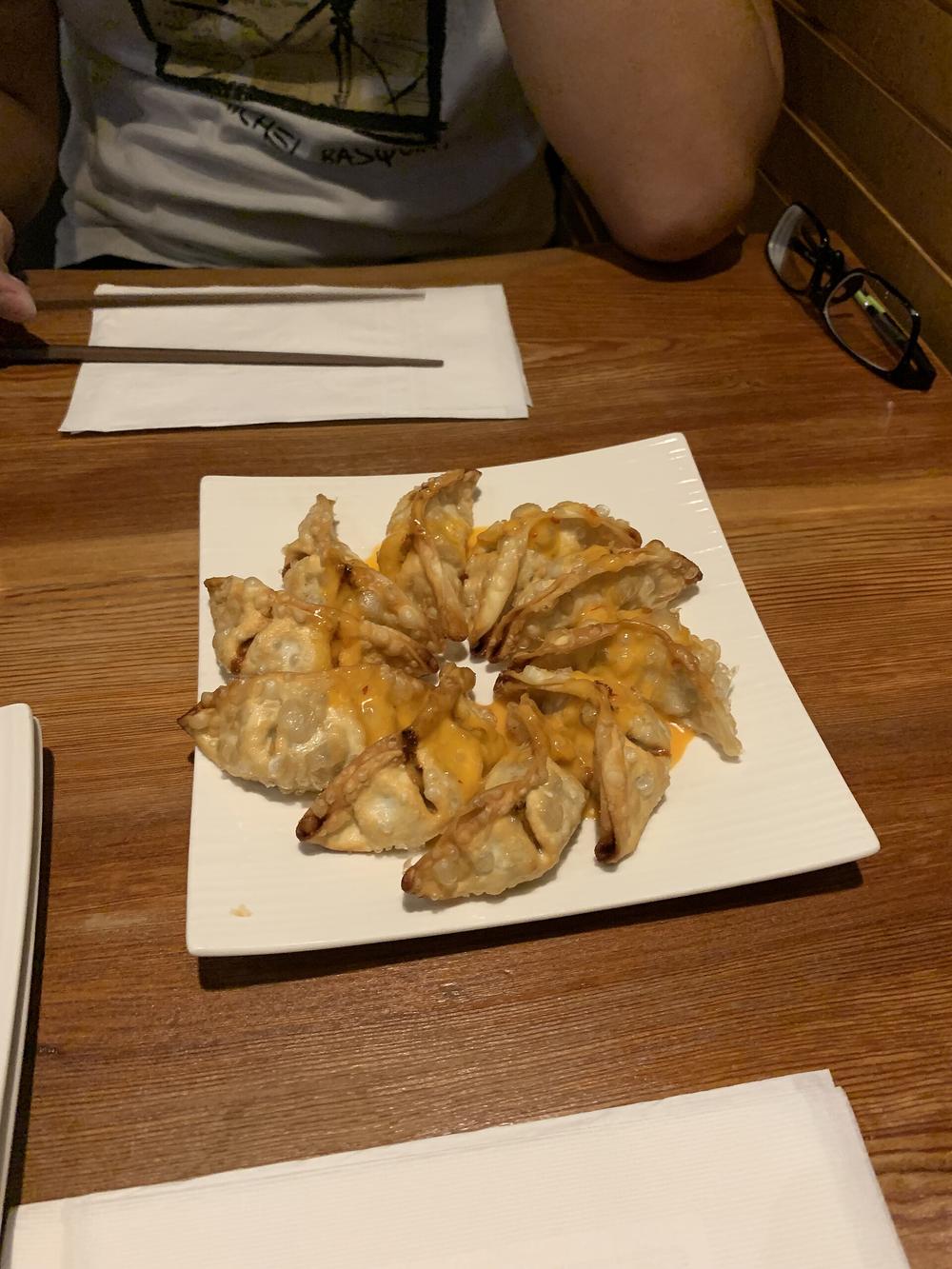 Wesoree (CC BY-SA 4.0)
A plate of ten pan-fried gyoza
Karaage
Iconic dish
- From: Nationwide; Nakatsu (Oita) claims the origin
- When: izakaya order, bento filler, konbini snack
- Contains: chicken; soy and gluten in the marinade
Karaage is Japanese-style fried chicken, marinated in soy sauce, ginger and garlic before a light flour coating goes into the fryer. It shows up everywhere at once: a hot case at the convenience store, a lunchbox filler, an izakaya order that arrives before anything else. Squeeze the lemon wedge it comes with over the top rather than skipping it; the acid cuts through the fry.
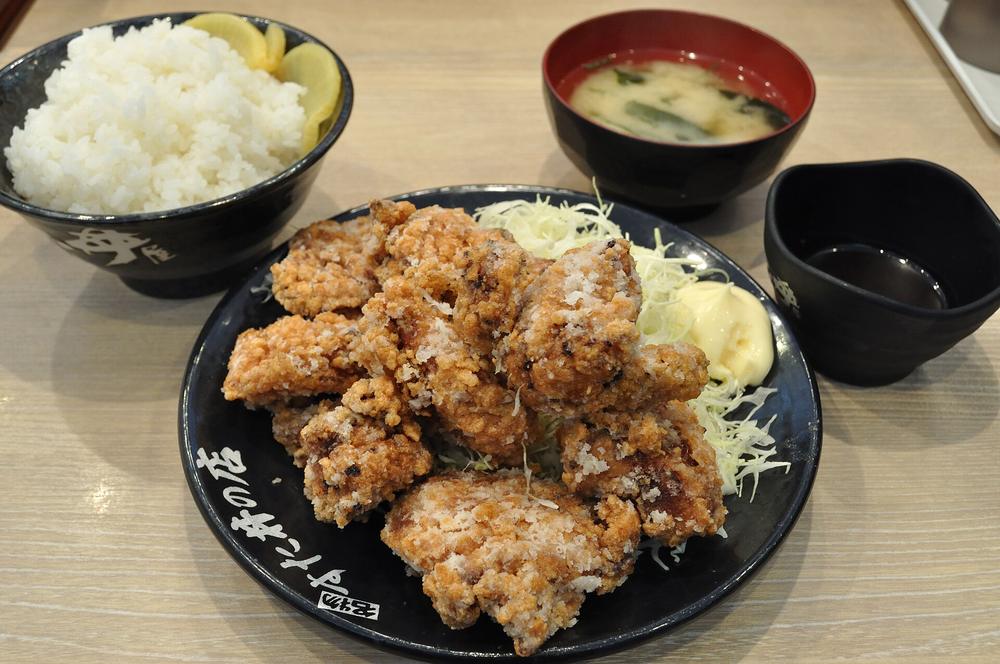 Ocdp (CC0)
Japanese fried chicken, karaage
Oden
Iconic dish
- From: Nationwide; Shizuoka has its own black-broth version
- When: winter, sold at convenience-store hot cases and street stalls
- Contains: dashi is often fish-based
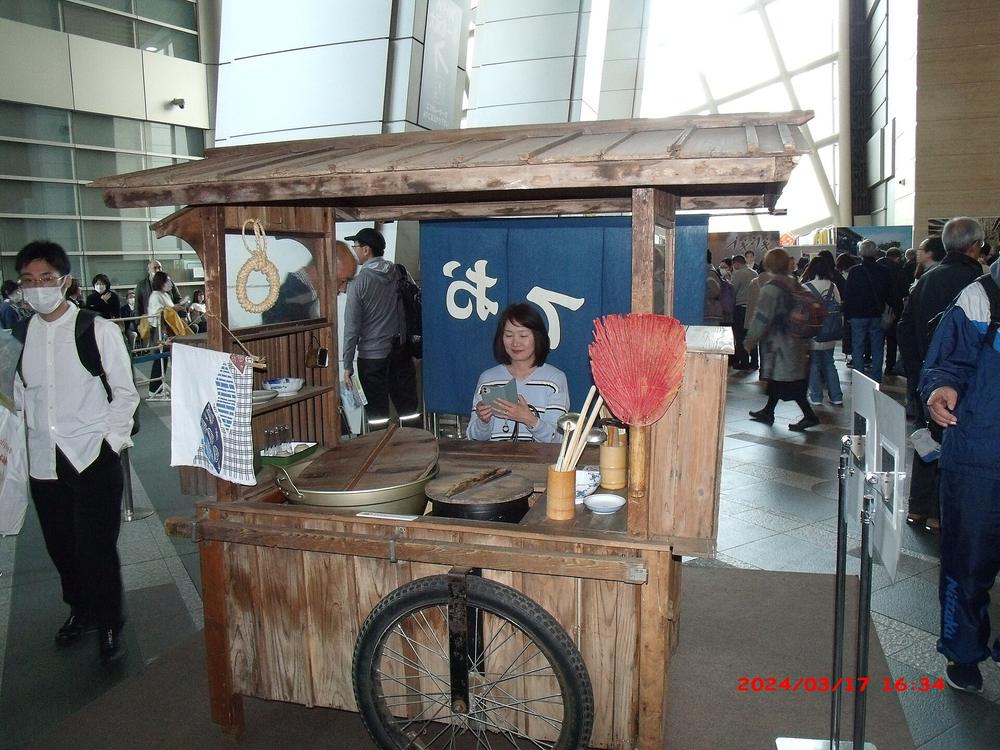
Oden simmers through the winter in a light soy-dashi broth: daikon, boiled egg, fish cakes and konjac, each one soaking up the stock slowly. Convenience stores keep a steaming oden case by the register all winter, and picking your own mix of ingredients from it is a normal way to eat dinner standing at the counter. Add a dab of karashi mustard on the side; it is sharper than most Western mustards and meant to be used sparingly.
 Mr.churasan (CC0)
An oden street stall in winter
Takoyaki
Iconic dish
- From: Osaka
- When: street food, festivals
- Contains: octopus; wheat batter
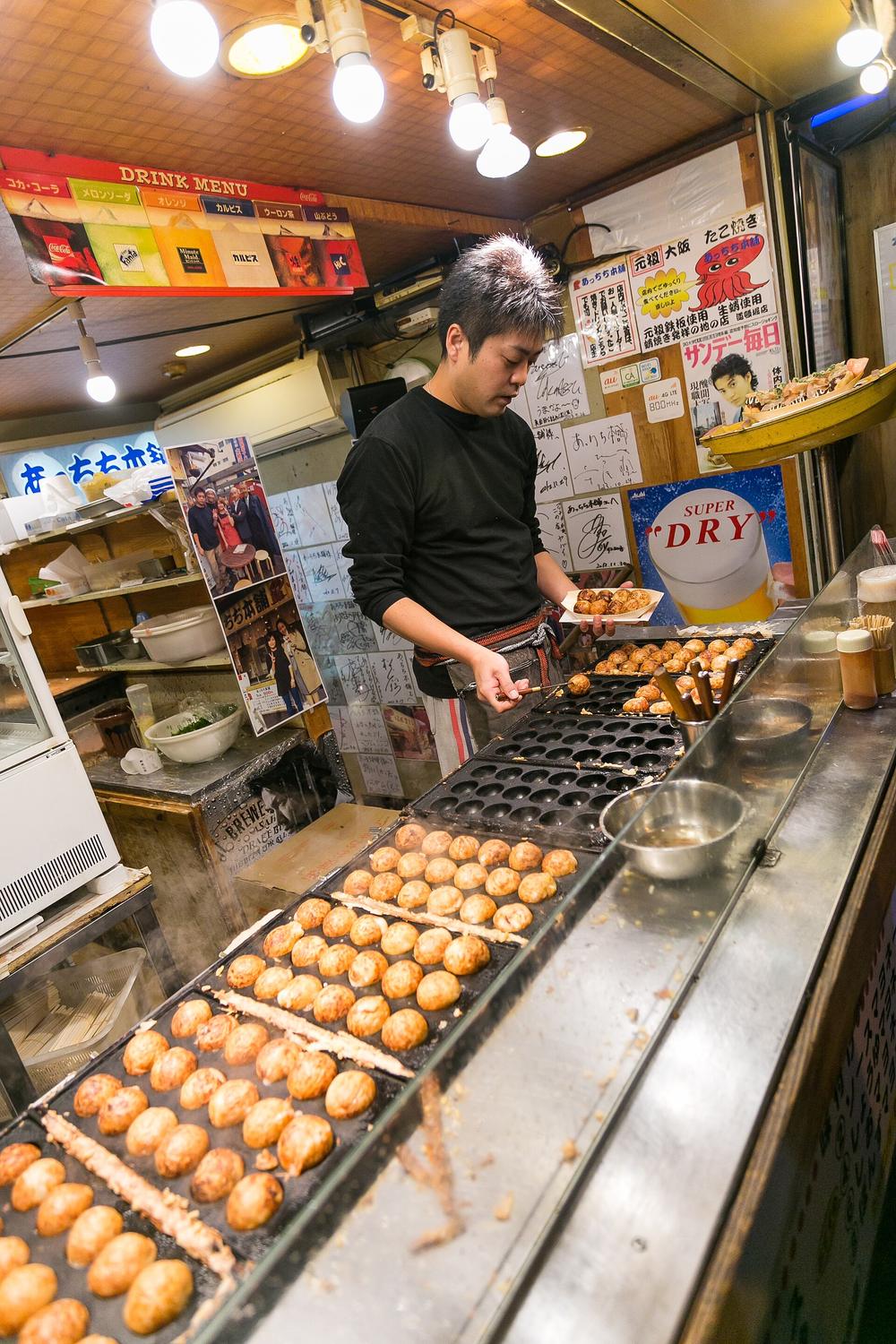
Takoyaki is a ball of batter fried around a piece of diced octopus in a molded pan, topped with a sweet brown sauce, mayonnaise and a flutter of bonito flakes. It stays a street-corner food in the city that invented it, sold six or eight to a tray from stalls across Dotonbori. Let the balls cool for a minute before biting in; the center holds heat longer than the crisp shell suggests.
Plan a street-food evening around the 3-day Osaka itinerary.
 City Foodsters (CC BY 2.0)
Takoyaki topped with sauce, mayonnaise and bonito flakes
Hot pot and shared dinners
Shabu-shabu
Iconic dish
- From: Nationwide; named in Osaka in the 1950s
- When: winter dinner, communal
- Contains: meat-based broth; vegetable-only pots possible
Shabu-shabu is thin-sliced beef or pork and vegetables, swished through a pot of simmering broth at the table until just cooked, then dipped in ponzu or a sesame sauce. The name imitates the sound of the meat swishing through the broth, a detail that makes more sense once you are doing it yourself. Cook a little at a time rather than dropping the whole plate in at once; the broth needs room to stay hot.
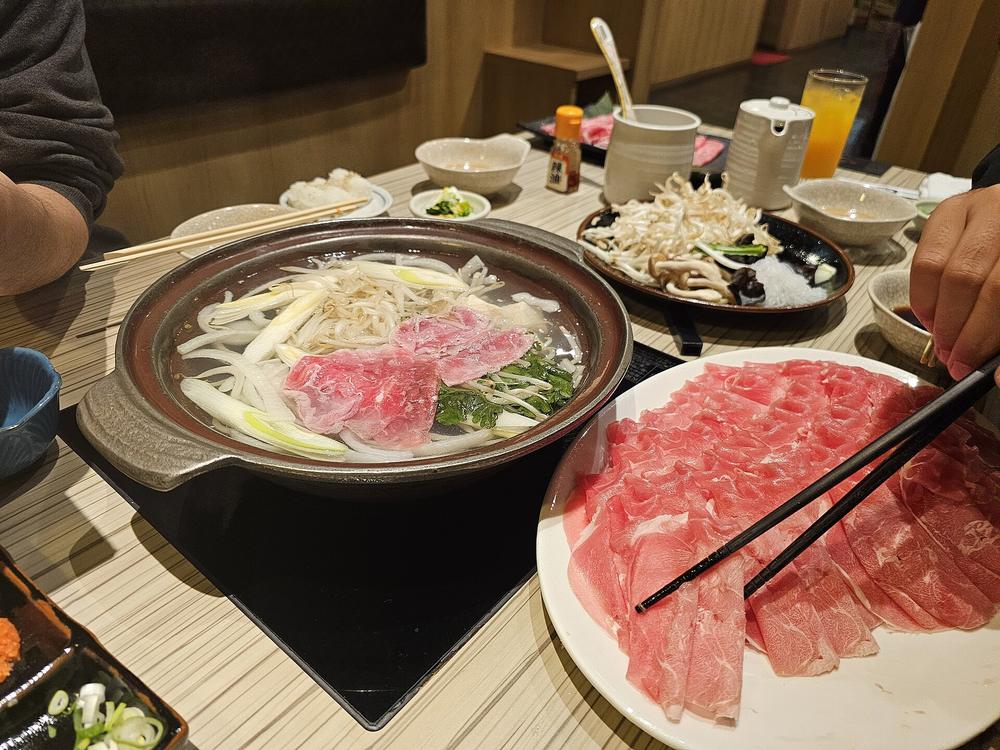 Photo via Wikimedia Commons (CC0)
A shabu-shabu hot pot in Sapporo
Sukiyaki
Iconic dish
- From: Kansai and Kanto both claim a version
- When: special-occasion dinner, winter
- Contains: beef, raw egg
Sukiyaki simmers thin-sliced beef, vegetables and tofu together in a sweet soy broth at the table, each bite dipped in raw beaten egg before eating. Kansai and Kanto each hold to their own version of it, a rare case of the two halves of Japan disagreeing on how to cook something this simple. Crack the egg into your own small bowl rather than sharing a dish, the usual way it is served.
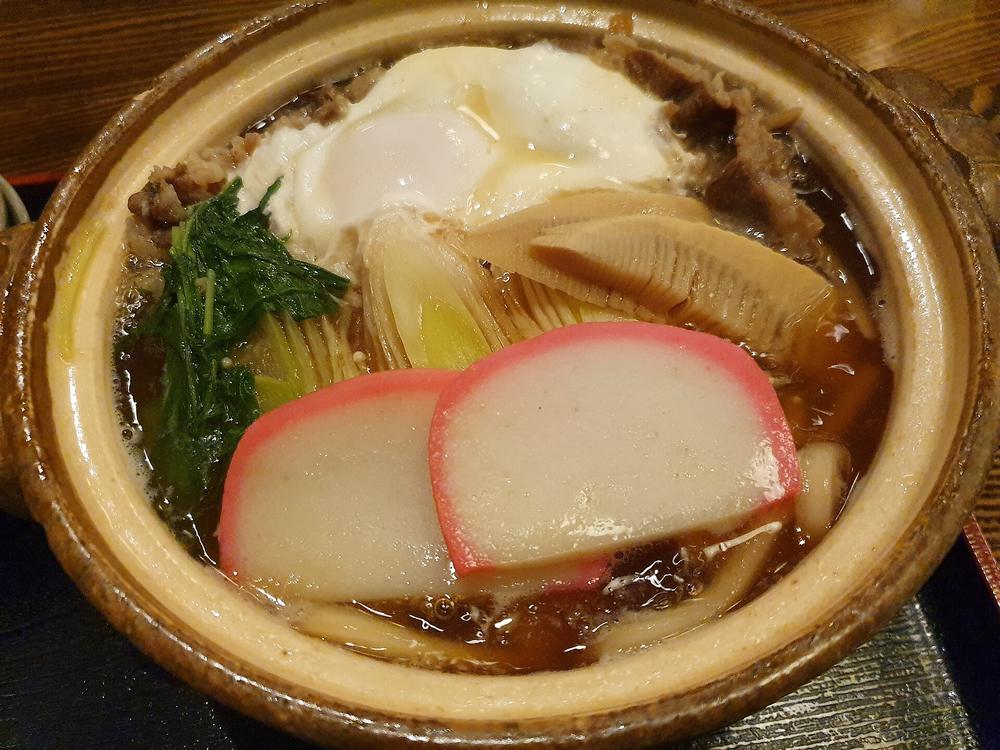 Photo via Wikimedia Commons (CC0)
A sukiyaki hot pot in Yuzawa
Yakiniku
Iconic dish
- From: Nationwide; Korean-Japanese origin
- When: dinner, a social or group meal
- Contains: beef, pork, offal
Yakiniku is Japanese-style grilled meat, cut thin and cooked over a tabletop grill by the diners themselves, then dipped in a tare sauce. The format came from Japan's Korean community and kept its own identity rather than folding into an existing Japanese dish category. Order a mixed plate of cuts to start, then grill the fattier ones first so the grill is seasoned by the time the leaner cuts go on.
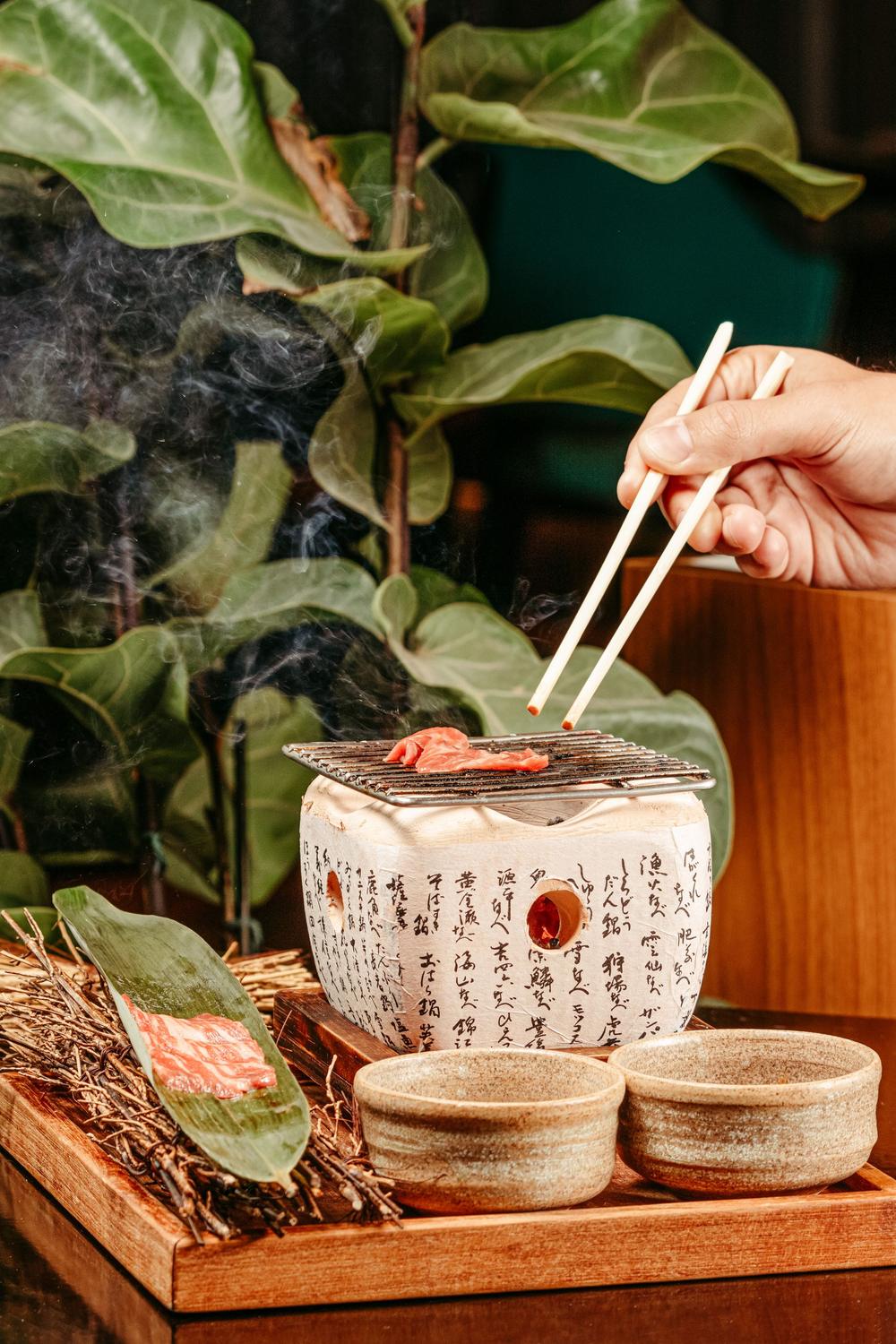 Photo by Jonathan Borba on Pexels
Meat and chopsticks on a Japanese grill
Noodles and rice bowls beyond the basics
Tonkotsu ramen
Iconic dish
- From: Hakata, Fukuoka
- When: lunch or late-night
- Contains: pork-based broth
Tonkotsu ramen is ramen built on a cloudy, rich pork-bone broth, the Hakata style that gave Fukuoka its reputation as a ramen city in its own right. Shops here serve thin, straight noodles cooked firm, and let you order a kae-dama, a fresh batch of noodles added to the same bowl once the first serving runs out. Ask for your noodles' firmness when you order; a Hakata counter expects the question.
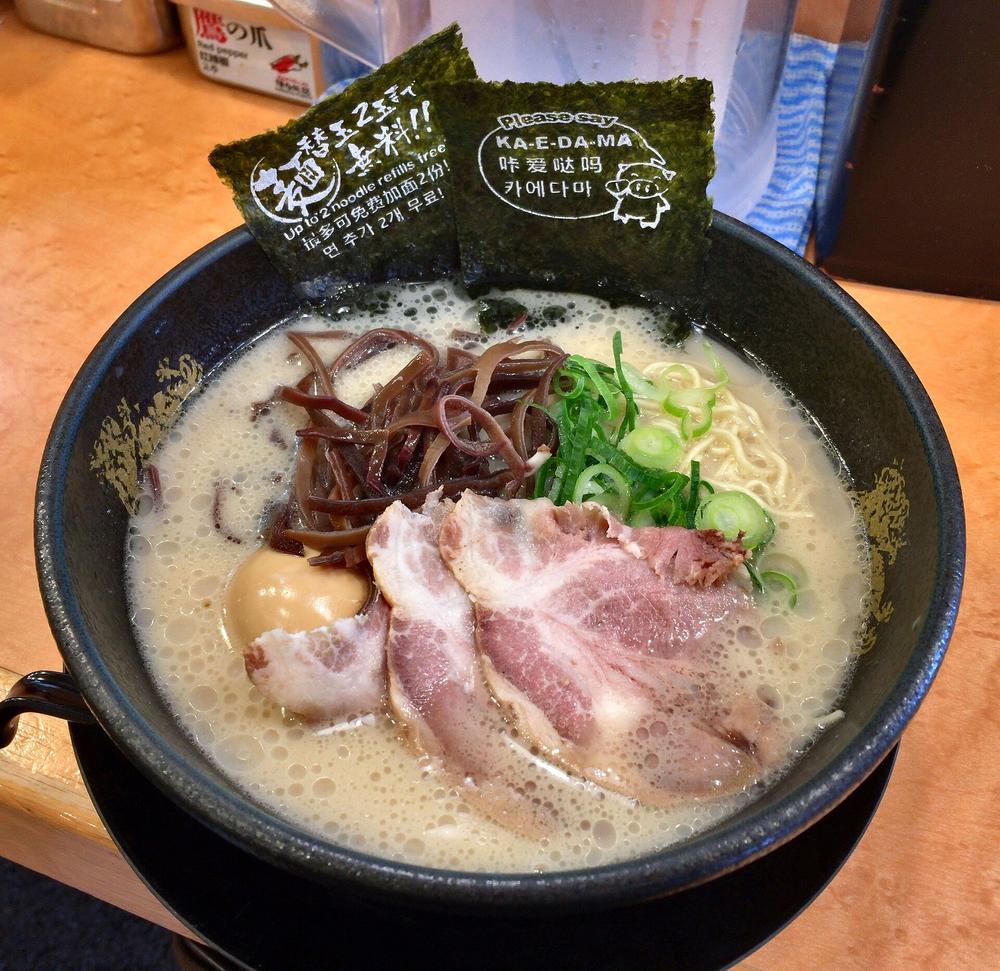 Photo via Wikimedia Commons (CC0)
Hakata-style tonkotsu ramen
Gyudon
Iconic dish
- From: Nationwide; a Tokyo chain-food staple
- When: a quick lunch or dinner, at chains like Yoshinoya, Sukiya and Matsuya
- Contains: beef
Gyudon ladles thin-sliced beef and onion, simmered in a sweet-savory sauce, over a bowl of rice for a meal that is usually on the table within a couple of minutes of ordering. The big three chains, Yoshinoya, Sukiya and Matsuya, compete on price and speed rather than variety, and each has its own loyal regulars. Add a raw or onsen egg on top if the menu offers it; the yolk turns the sauce into something closer to a gravy.
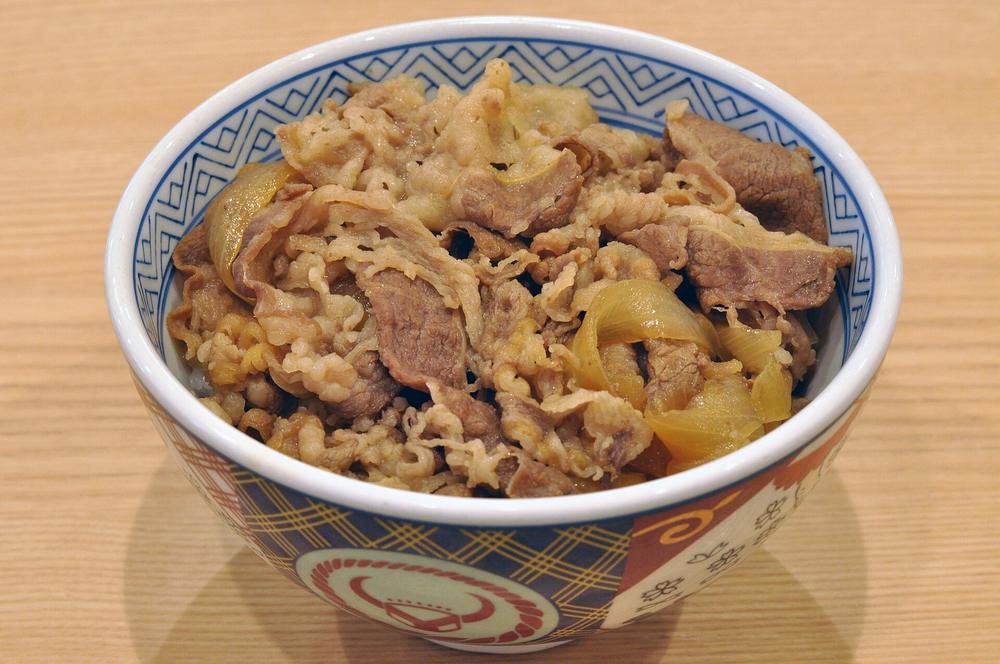 Ocdp (CC0)
A bowl of gyudon beef and rice
Grilled eel
Iconic dish
- From: Nationwide
- When: summer, especially around the Day of the Ox
- Contains: eel
Grilled eel, unagi, is butterflied freshwater eel basted in a sweet soy glaze called tare and grilled until the skin turns glossy, then served over rice as unadon or unaju. Japan built a whole eating custom around the Day of the Ox in midsummer, when eating unagi is said to help the body handle the heat. Order the unaju version at a sit-down counter if you want the eel served in a lacquered box rather than an everyday bowl.
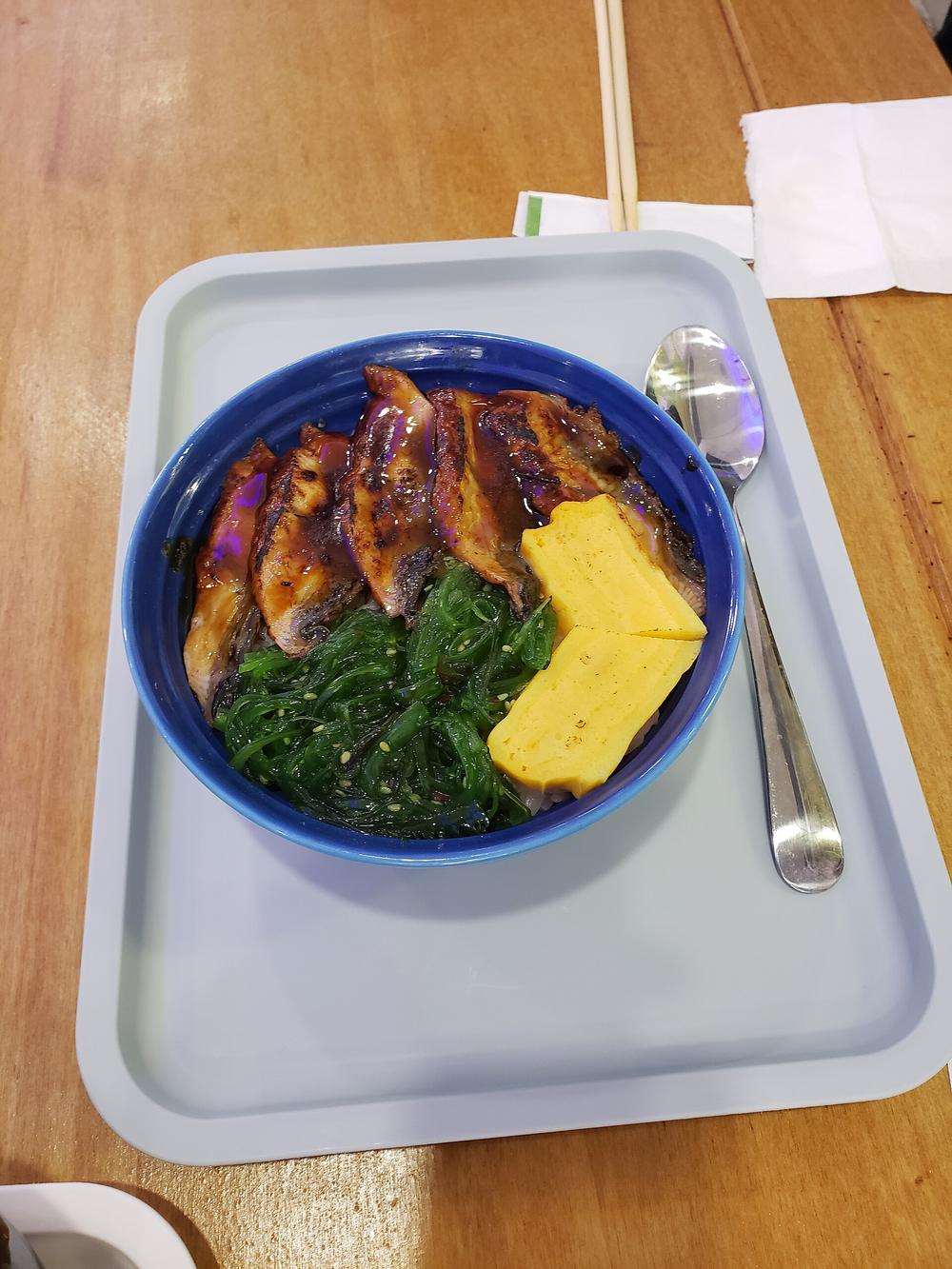 Andy Li (CC0)
Unagi don, grilled eel over rice
Wagyu, natto and the ingredients behind the menu
Wagyu beef
Iconic dish
- From: Kobe (Hyogo), Matsusaka (Mie), Omi (Shiga), Hida (Gifu)
- When: special-occasion dinner
- Contains: beef
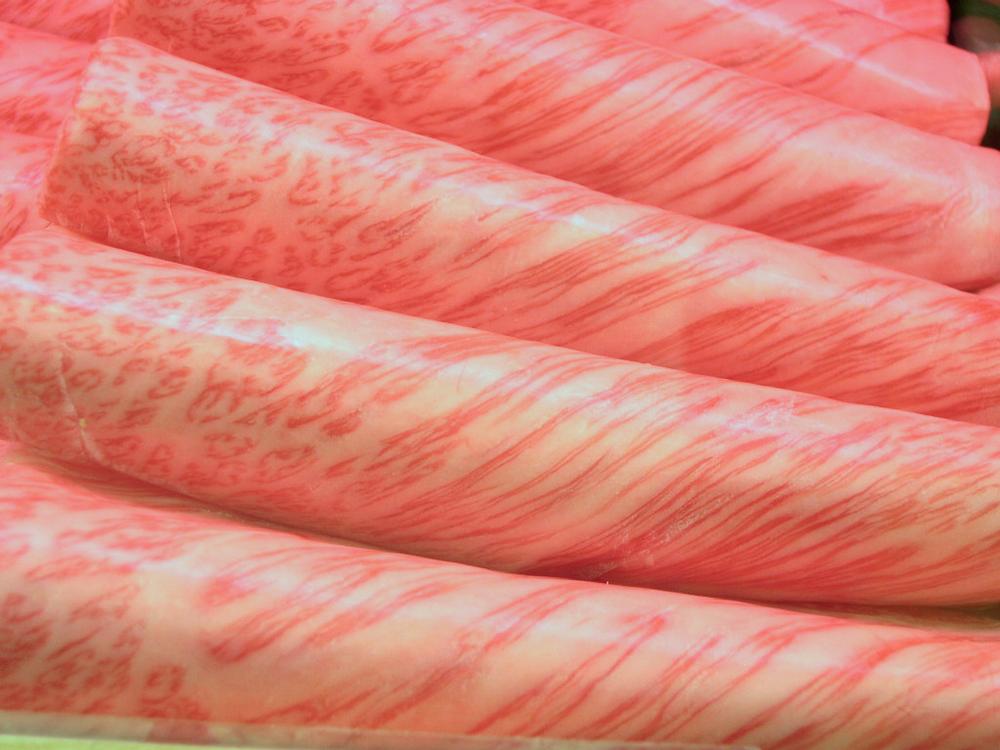
Wagyu is Japanese beef from a small number of cattle breeds prized for how finely the fat marbles through the muscle, graded and sold under regional brand names rather than as one generic product. Kobe is the most famous of those brands, but Matsusaka, Omi and Hida each have their own following among people who actually cook the stuff. Ask for it as yakiniku, shabu-shabu or sukiyaki rather than a thick steak; thin slices let the marbling melt into the dish instead of pooling on a plate.
 Public domain, via Wikimedia Commons
A close view of wagyu beef marbling
Natto
Iconic dish
- From: Eastern Japan (Kanto, Tohoku); strongest tradition there
- When: breakfast, over rice
- Contains: vegan
Natto is fermented soybeans, sticky, stringy and pungent enough that it splits the country into people who grew up eating it and people who never will. Stir it hard with the soy sauce and mustard packet it comes with until it turns stringy and pale, then pour the whole thing over a bowl of rice for breakfast. Eastern Japan eats it far more than the west does, so don't judge the dish by one bad hotel breakfast in Osaka.
Try free
Plan your Japan trip in about 2 minutes
Tap through 8 quick cards for a complete itinerary with budget, maps, and packing lists. No account required.
Plan your Japan trip →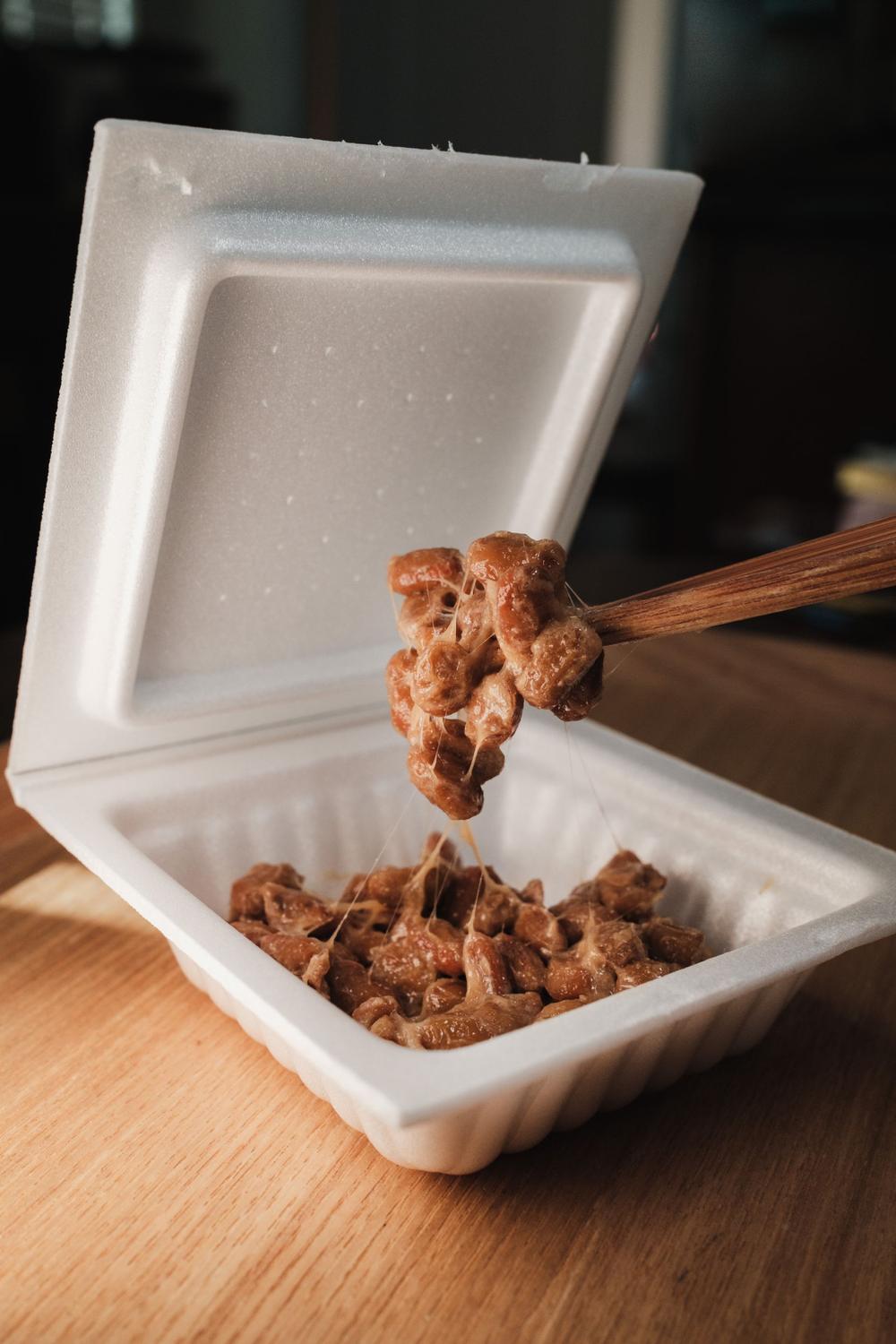 Photo by Airam Dato-on on Pexels
Sticky fermented soybeans, natto, with chopsticks
More everyday staples
| Dish | What it is |
|---|---|
| Edamame | Young soybeans, boiled in the pod and lightly salted |
| Zaru soba | Cold soba noodles on a bamboo tray, dipped in cold tsuyu sauce |
| Tamagoyaki | Rolled, lightly sweetened omelette, sliced into thin rectangles |
| Yakisoba | Stir-fried wheat noodles with pork and cabbage in a Worcestershire-style sauce |
| Katsudon | Breaded pork cutlet simmered with egg and onion over rice |
| Korokke | Breaded, deep-fried potato and minced-meat croquette |
| Tsukemono | Preserved vegetables, fermented or cured in salt or vinegar |
| Somen | Very thin wheat noodles, served cold with a dipping sauce |
Sweets
Mochi
Iconic dish
- From: Nationwide; a New Year tradition
- When: New Year (mochitsuki), year-round as a snack
- Contains: vegan; a choking-hazard texture, chew carefully
Mochi starts as pounded glutinous rice, worked into a chewy cake that is eaten plain, grilled, or wrapped around sweet bean paste as daifuku. Families still gather for mochitsuki around New Year, taking turns pounding steamed rice in a stone mortar until it turns into one smooth mass. Chew it slowly and in small bites. The dense, sticky texture is a genuine choking hazard.
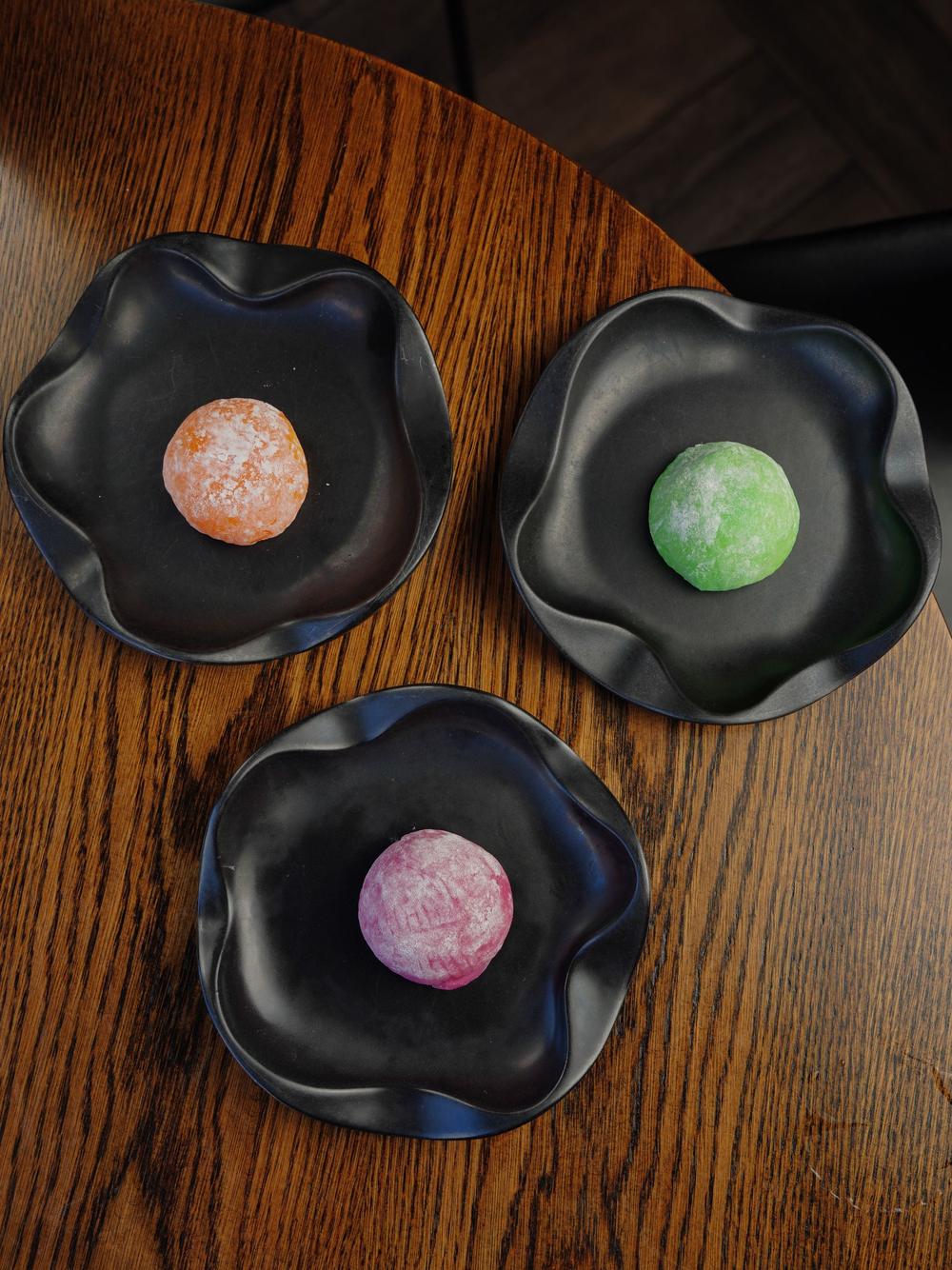 Photo by Nadin Sh on Pexels
Colorful mochi desserts on a plate
Wagashi
- From: Kyoto
- When: with tea, especially a tea ceremony
- Contains: typically vegan
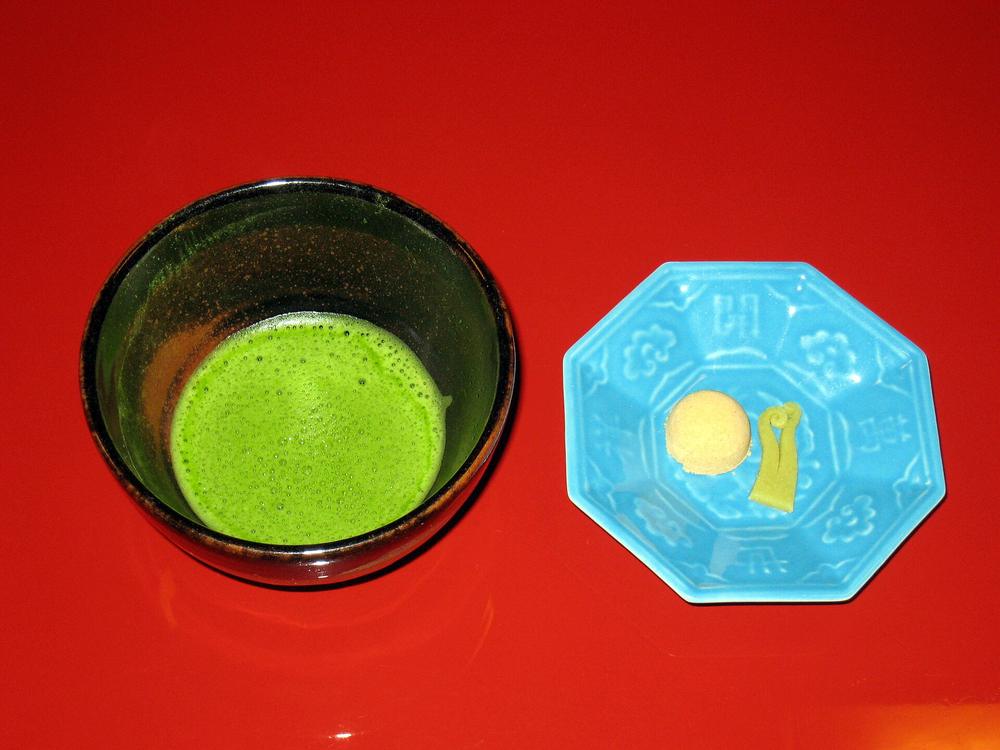
Wagashi is the umbrella name for Kyoto's traditional confections, usually built from sweet red bean paste and shaped to match the season, a maple leaf in autumn or a cherry blossom in spring. A tea ceremony serves one alongside matcha specifically to balance the tea's bitterness with something sweet. Buy a box from a Kyoto confectioner to take home; they are made to travel well for a day or two. Kyoto is also a March pick for its cherry blossoms, the same season the city's tea houses are busiest.
 rhosoi (CC BY 2.0)
Wagashi served alongside matcha in Kyoto
More sweets turn up by region and season.
| Sweet | What it is | Where or when |
|---|---|---|
| Dango | Rice-flour dumplings on a skewer, glazed in sweet soy (mitarashi) or bean paste | Tea houses, cherry-blossom viewing |
| Taiyaki | Fish-shaped waffle cake filled with sweet red bean paste | Tokyo origin, street snack |
| Dorayaki | Two pancake-like disks sandwiching sweet red bean paste | Snack, tea accompaniment |
| Castella | Nagasaki's honey sponge cake, a Portuguese-missionary import | Souvenir sweet (omiyage) |
| Shaved ice (kakigori) | Fine shaved ice topped with flavored syrup or condensed milk | Summer |
| Melon bread | Sweet bun with a cookie crust scored like a melon rind, no melon flavor inside | Bakery and convenience-store snack |
| Warabi mochi | Jelly-like mochi made from bracken-fern starch, dusted with roasted soybean flour | Summer dessert, Kansai |
What to drink in Japan
Sake
Iconic dish
- From: Nationwide; Niigata and Hyogo's Nada district are noted brewing regions
- When: dinner, toasts
- Contains: alcohol; gluten-free (rice-based)
Sake, also called nihonshu, is rice wine brewed and filtered rather than distilled, served warm or chilled depending on its grade. Niigata's cold winters and Hyogo's Nada district both built reputations as brewing regions long before sake became a global export. Order it by the small ceramic cup, poured from a flask called a tokkuri, and let a server or menu point you toward a grade that suits the meal rather than guessing.
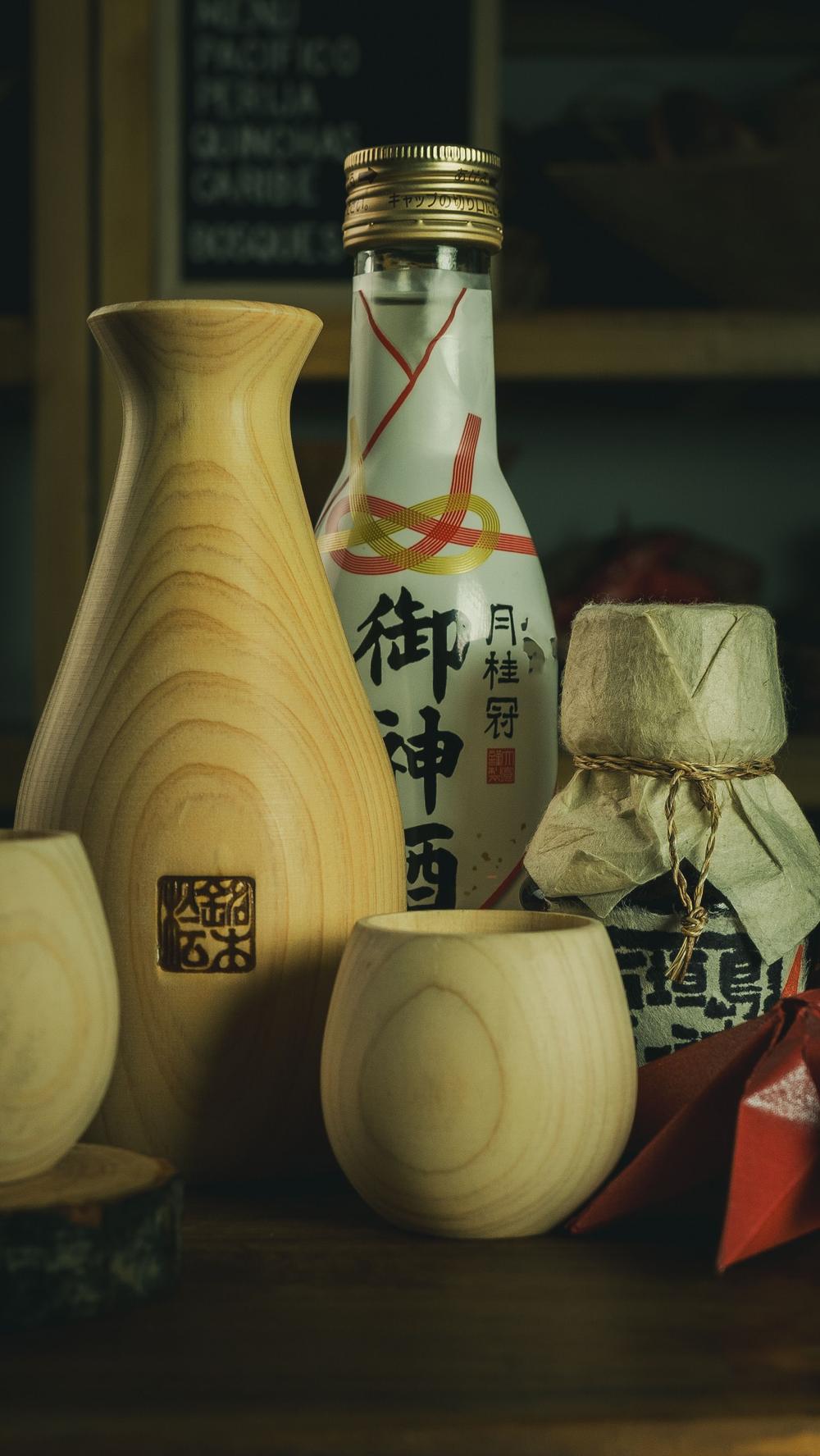 Photo by Jose Luis Rivera Correa on Pexels
A sake bottle and traditional vessels on a wooden table
Japanese beer
Iconic dish
- From: Nationwide; Asahi, Kirin, Sapporo and Suntory are the majors
- When: the default first drink of a night out
- Contains: alcohol, usually barley and gluten
Japanese beer runs light and crisp, dominated by four big brewers, Asahi, Kirin, Sapporo and Suntory, with a smaller craft scene growing alongside them. Ordering "toriaezu biiru", beer for now, is the standard way a group starts a night at an izakaya, before anyone has decided what else to drink. Ask for nama, draft, over a bottle if the counter has it on tap; it comes colder and fresher.
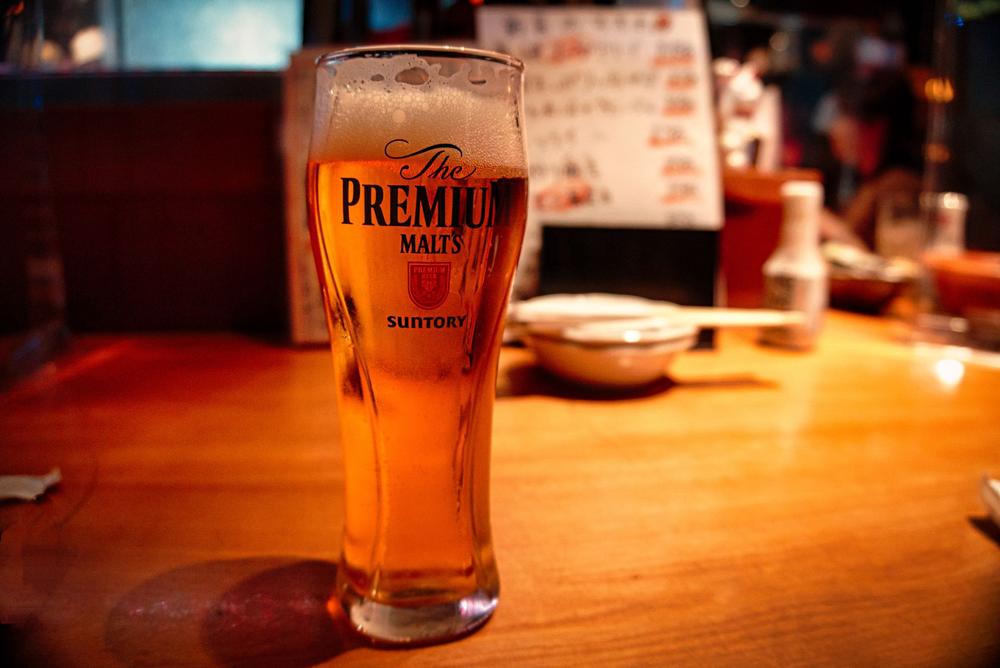 Photo by Saiu / Matenrou Opera on Pexels
A cold draft beer in a Tokyo bar
Matcha
Iconic dish
- From: Uji (Kyoto), Nishio (Aichi)
- When: tea ceremony, cafe drink, dessert flavoring
- Contains: vegan as tea; lattes and sweets may add dairy
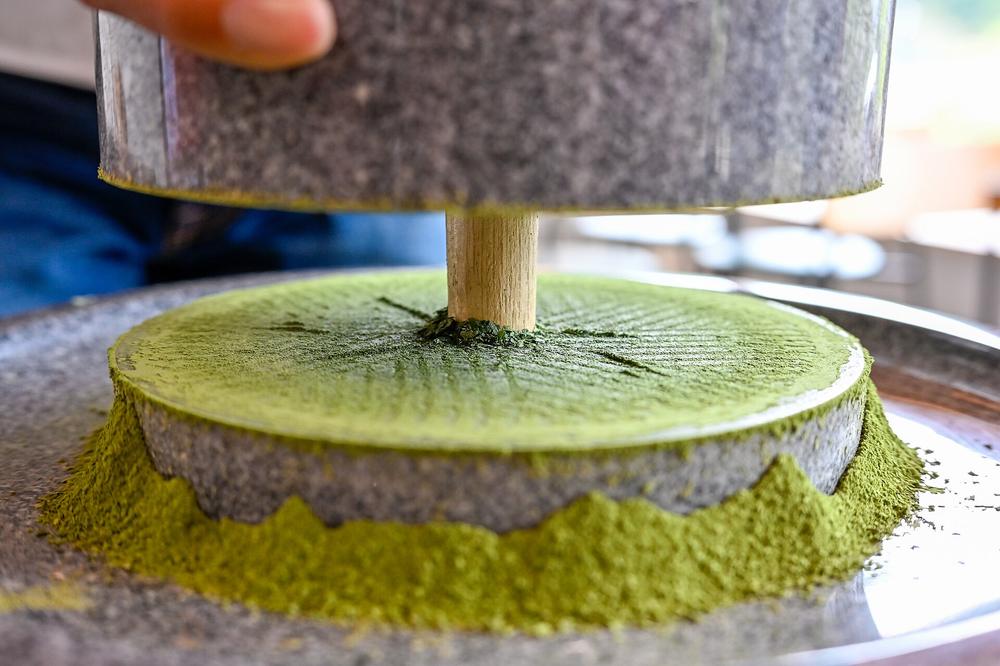
Matcha is finely ground green tea, whisked rather than steeped, which is why it turns a bowl of hot water cloudy and bright green instead of clear. Uji, just south of Kyoto, and Nishio in Aichi are the two regions serious drinkers look for on a label. Drink it the traditional way, whisked into usucha for an everyday bowl, or try it folded into a latte or dessert if the ceremony version is too bitter for your taste.
 Derjochenmeyer (CC BY-SA 4.0)
A stone mill grinding tencha leaves into matcha powder
More drinks round out the table, with coffee running on its own schedule.
| Drink | What it is | Note |
|---|---|---|
| Green tea | Unfermented tea: sencha (everyday), hojicha (roasted), genmaicha (with toasted rice) | Served free with most meals |
| Shochu | Distilled spirit from sweet potato, barley, rice or buckwheat, stronger than sake | Kyushu (Kagoshima, Miyazaki, Kumamoto) is the heartland |
| Japanese whisky | Internationally awarded whisky | Yamazaki (Suntory, Osaka) and Yoichi (Nikka, Hokkaido) are the flagship distilleries |
| Plum wine (umeshu) | Sweet-tart liqueur made by steeping ume plums in alcohol and sugar | Wakayama is the top plum-growing region |
| Amazake | Sweet, low-alcohol or non-alcoholic fermented rice drink, served warm | New Year and Hinamatsuri (Girls' Day) |
| Kissaten coffee | Showa-era retro coffeehouse, hand-drip coffee, often paired with coffee jelly or an egg sandwich | Mid-morning or afternoon break |
What to eat in each region of Japan
Japan's regions each keep their own specialties, and a MonkeyEatingMango itinerary works the local one into your day wherever you land. Hokkaido's Sapporo is also a February pick for its Snow Festival, the same season its miso ramen is at its best.
| Region | Headline dishes |
|---|---|
| Hokkaido | Sea urchin (uni), crab, Sapporo miso ramen, Genghis Khan lamb barbecue (jingisukan) |
| Tokyo | Monjayaki, omelette rice (omurice), dipping ramen (tsukemen), sumo stew (chanko-nabe) |
| Osaka | Fried skewers (kushikatsu) |
| Kyoto | Tofu dishes (yudofu) |
| Hiroshima | Layered okonomiyaki |
| Fukuoka | Offal hot pot (motsunabe), spicy cod roe (mentaiko) |
| Nagoya | Grilled-eel rice (hitsumabushi), miso katsu, fried chicken wings (tebasaki), kishimen noodles |
| Sendai | Grilled beef tongue (gyutan) |
| Shimonoseki | Pufferfish (fugu) |
| Kumamoto and Nagano | Horse sashimi (basashi) |
| Nagasaki | Champon, castella |
| Okinawa | Taco rice, bitter melon stir-fry (goya champuru), Okinawa soba |
How and when do people eat in Japan?
An izakaya dinner runs as a string of shared small plates rather than one main course each. Each diner gets a small plate called a torizara to portion food from the group's order, and a first round of beer, "toriaezu biiru", usually arrives before anyone has decided what to eat. Choose a few dishes at a time rather than everything at once, and let the table keep ordering as the night goes on.
A teishoku at a shokudo diner runs about ¥500 to ¥1,000 and nearly always pairs one main, rice, soup and pickled vegetables on a single tray. Look for "kyo no teishoku", today's set meal, on a chalkboard or paper strip taped to the wall; it changes daily and is usually the kitchen's best value.
Kaiseki is the other end of the scale: a multi-course dinner built entirely around the season. The menu is fixed, and the only choice a diner makes is how many courses to have. Expect grilled fish, a clear soup and a rice course worked in among dishes built around a single vegetable you may never have heard of, each plated on tableware chosen to match it.
Omakase runs on the same idea at a sushi counter. Tell the chef your budget, and let the order come to you piece by piece.
Shojin ryori is the vegan end of Japanese cooking, built by Buddhist monks around a rule against harming living things, so it skips meat, fish and even pungent alliums like garlic and onion. It survives almost entirely inside temple lodgings today, so trying it usually means booking a night at a shukubo rather than a restaurant table.
A convenience store, or konbini, is a genuine meal option, not a backup one. Onigiri sit in the fridge case by the register, bento boxes get warmed on request, and a hot case by the counter holds karaage and oden through the colder months. It is also one of the easiest places to eat on a budget without planning ahead.
Eating out in Japan: tipping, the bill and water
"Tipping practices in Japan differ significantly from those in many other countries," says the Japan National Tourism Organization. It is not common to tip at bars, cafes, restaurants, taxis or hotels, and offering cash can confuse or even offend staff with no custom for handling it. A private guide used to overseas visitors may accept a small gratuity, called kokorozuke, offered discreetly in an envelope rather than handed over bare.
Some restaurants add a table charge instead of a tip, most often at an izakaya, where a small appetizer called otoshi arrives before you have ordered anything. That appetizer is the cover charge, not a free sample. Ask the staff first if you are unsure whether one applies.
Nobody brings the bill to the table unprompted. At many counters and shokudo diners, you pay at a register near the door on the way out rather than settling up where you sat.
Tap water is safe to drink nationwide, and most restaurants serve it free alongside a meal with no need to ask for bottled.
Japan's Consumer Affairs Agency requires a restaurant or packaged food to name eight specific ingredients on its label: shrimp, crab, walnut, wheat, buckwheat, egg, dairy and peanut. Another 20 ingredients are recommended for labeling but not required. A vegetarian or vegan traveler should ask about dashi before ordering anything that looks meat-free. The fish stock hides in miso soup, most noodle broths and even the little sauce packet that comes with a package of natto.
Chopsticks carry their own rules at the table, both tied to funeral rites. Never stick a pair upright in a bowl of rice: that is how rice is offered to the dead. Never pass food directly from one set of chopsticks to another, either: that is how cremated bones are passed between mourners.
Plan your trip around the food
The Japan travel guide covers trip length and routing between cities, and things to do in Japan pairs each stop with its sights. The 7-day Japan itinerary threads Tokyo, Kyoto and Osaka into one trip. For a shorter stay built around a single city, the 3-day Osaka itinerary and 5-day Tokyo itinerary do the job instead.
A MonkeyEatingMango itinerary builds the day's food around the city on the schedule, so lunch and dinner match what that stop is actually known for.
Last updated October 2026.
Common questions
What are the top traditional Japanese dishes to try first?
Sushi, ramen, tempura, udon, soba and yakitori are Japan's best-known dishes, followed by okonomiyaki, miso soup, onigiri, tonkatsu and Japanese curry. Each one is nationwide, so a first trip can try all of them without leaving the common tourist route.
What is the difference between sushi and sashimi?
Sushi is vinegared rice topped with or wrapped around fish, seafood or vegetables. Sashimi is the raw fish or seafood alone, thinly sliced with no rice, served with soy sauce and wasabi.
Do you tip in Japan?
No. Tipping is not customary at restaurants, bars, taxis or hotels in Japan, and offering cash can confuse or offend staff rather than please them. Some restaurants charge a table fee instead, most often an otoshi appetizer at an izakaya.
Is Japan easy for vegetarians and vegans?
It takes some care. Dashi, a fish stock, hides in miso soup, most noodle broths and even the sauce packet that comes with natto, so a vegetarian traveler needs to ask before ordering anything that looks meat-free.
What is washoku?
Washoku is the traditional cooking of Japan, built around rice, miso soup and whatever is in season. UNESCO added it to its Intangible Cultural Heritage list in 2013.
What is izakaya dining, and how does ordering work?
An izakaya is a casual after-work pub where food comes as a series of shared small plates rather than one main course each. Each diner gets a small plate to portion food from the group order, and a first round of beer usually arrives before anyone has decided what to eat.
What is kaiseki?
Kaiseki is a multi-course Japanese dinner built entirely around the season, with a fixed menu and only the number of courses left to choose. Expect grilled fish, a clear soup and a rice course worked in among dishes built around a single seasonal ingredient.
What should I drink in Japan: sake, shochu, whisky or beer?
Sake is a brewed rice wine served warm or chilled, and shochu is a stronger spirit distilled from sweet potato, barley, rice or buckwheat. Japanese whisky is internationally awarded and often served as a highball. Beer, dominated by Asahi, Kirin, Sapporo and Suntory, is the default first drink of a night out.
Is Osaka-style okonomiyaki the same as Hiroshima-style?
No. Osaka mixes the batter, cabbage and filling together before cooking it as one pancake. Hiroshima layers the ingredients instead, building the pancake over a bed of fried noodles rather than mixing everything in.
What should I never do with chopsticks in Japan?
Never stick a pair of chopsticks upright in a bowl of rice, which echoes how rice is offered to the dead, and never pass food directly from one set of chopsticks to another, which echoes how cremated bones are passed between mourners at a funeral.

Written by Shobhit Shrivastava · Founder
Related reading
Japan travel guide
A Week in Japan: Tokyo and Kyoto, from teamLab to Kinkaku-ji
7 days across Kyoto and Tokyo. Begin with 3 nights in Kyoto (Fushimi Inari, Kiyomizu-dera, Arashiyama Bamboo Grove, based in Higashiyama), then ride the Shinkansen to Tokyo for 4 nights (Shibuya Crossing, Tsukiji Outer Market, teamLab Planets, Asakusa). Packed pace with 4-5 activities daily,...
Osaka in 3 Days: Dotonbori and Osaka Castle
3 days in Osaka: focus on the food and nightlife districts of Namba and Dotonbori, with a dedicated day for the modern installations at teamLab Botanical Garden. This trip uses a central Namba base to keep transport simple. Expect a packed pace with 4-5 activities daily, balancing neon-lit...
Tokyo in 3 Days: Sensō-ji, Shibuya Crossing and More
This packed 3-day Tokyo journey for a couple delves into contrasting districts, blending traditional spiritual sites like Sensō-ji Temple in Asakusa with the cutting-edge digital art of teamLab Planets TOKYO. Explore the iconic Shibuya Crossing, enjoy a performance at Kabuki-za Theatre, and...
5 Days in Tokyo: Senso-ji, Tsukiji Market and the Tokyo Skytree
5 days exploring Tokyo's diverse character through food, spiritual sites, and local culture. Experience the historic Senso-ji Temple and Meiji Jingu, browse the vintage shops of Shimokitazawa, and dine at Tsukiji Outer Market. Maintain a comfortable pace with one neighborhood focus per day and...
Traditional Australian Food: What to Eat in Australia
The Australian dishes to eat first, by category: iconic savory mains, spreads and sweets, seafood, coffee and brunch, then a short bush-food section, sourced throughout.
Traditional Thai Food: What to Eat in Thailand
The Thai dishes to eat first, organized by region, what each one is, its spice level and when to order it, then more dishes, curries, desserts, drinks and how Thailand eats.
Traditional Portuguese Food: What to Eat in Portugal
The 16 Portuguese dishes to eat first, what each one is, where it comes from and when to order it, then more petiscos, coffee, what to drink, and how a Portuguese day of eating runs.