Which festivals in Japan are worth planning a trip around, and when are they in 2027? Start with the big ones: the Aomori Nebuta Matsuri runs August 2 to 7, and Kyoto's Gion Matsuri processions fall on July 17 and 24. The Sapporo Snow Festival fills Odori Park for a week every February, and Awa Odori brings more than a million spectators to Tokushima from August 12 to 15. Book rooms in Aomori, Kyoto and Tokushima months ahead. If you can make only one trip, go in July: Gion Matsuri, Tenjin Matsuri, Hakata Gion Yamakasa and the Sumida River fireworks all land in the same four weeks.
- Shogatsu, Japan's New YearJan 1 to 3, nationwide
- Sapporo Snow FestivalFeb, dates tbc
- Cherry Blossom SeasonMar to Apr, nationwide
- Golden WeekApr 29 to May 5, nationwide
- Kanda Matsuri, TokyoMay 9 to 10
- Gion Matsuri, KyotoJul 1 to 31
- Sumida River Fireworks FestivalJul, dates tbc
- Hakata Gion Yamakasa, FukuokaJul 1 to 15
- Tenjin Matsuri, OsakaJul 24 to 25
- Aomori Nebuta MatsuriAug 2 to 7
- Awa Odori, TokushimaAug 12 to 15
- ObonAug 13 to 16, nationwide
- Koyo, Japan's Autumn Leaves SeasonNov, nationwide
- Karatsu KunchiNov 2 to 4
- Chichibu Night FestivalDec 2 to 3
RegionalNationwideSeasonDates tbc
- Book rooms 2 to 3 months ahead for the Aomori Nebuta Matsuri, Gion Matsuri and Awa Odori, all in cities with limited hotel stock.
- Plan a July trip around festivals: Gion Matsuri, Tenjin Matsuri, Hakata Gion Yamakasa and the Sumida River fireworks all fall in July.
- Go in 2027 for Kanda Matsuri: its grand parade runs only in odd-numbered years.
Japan's most famous festivals, with 2027 dates
"Festivals are deeply rooted in Japanese culture," the country's tourism board says. The calendar backs it up: some version of a matsuri, the Japanese word for festival, runs somewhere in the country almost every week of the year.
Aomori Nebuta Matsuri
Major festival
- Where: Aomori, Aomori Prefecture
- 2027 dates: August 2 to 7, fixed every year
- Tickets: free to watch from the street; paid grandstand seating on the main street
- Official site: nebuta.jp
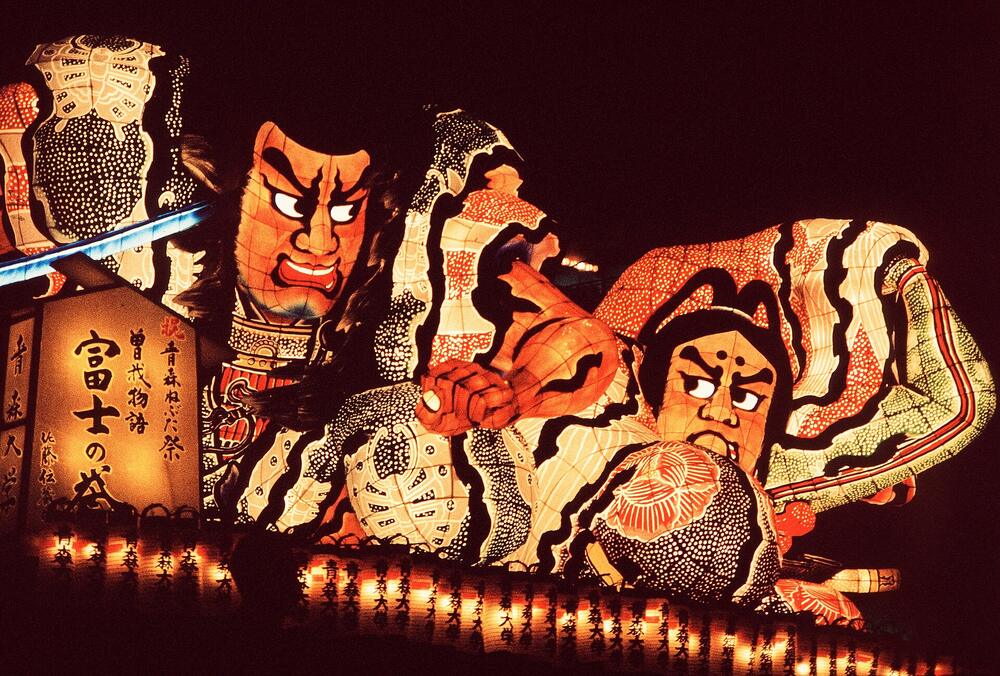
Giant illuminated floats called nebuta, some standing 9 meters tall, move through downtown Aomori for six evenings every August 2 to 7. Thousands of haneto dancers in bells and lantern-lit costumes jump through the streets beside each float, chanting the word "Rassera." The final evening moves the floats onto boats for a lantern-lit harbor cruise, closing with fireworks.
More than 3 million visitors attend across the week, so Aomori's limited hotels book out two months ahead. Many stay instead in nearby Hirosaki or Hachinohe and day-trip in for the evening parade. A haneto costume can be rented for anyone who wants to dance rather than watch from the curb.
 Marie-Sophie Mejan (CC BY 4.0)
An illuminated nebuta warrior float at the Aomori Nebuta Matsuri
Gion Matsuri, Kyoto
Major festival
- Where: Yasaka Shrine, Kyoto
- 2027 dates: processions on July 17 and 24; the festival itself runs all of July
- Tickets: free to watch from the street
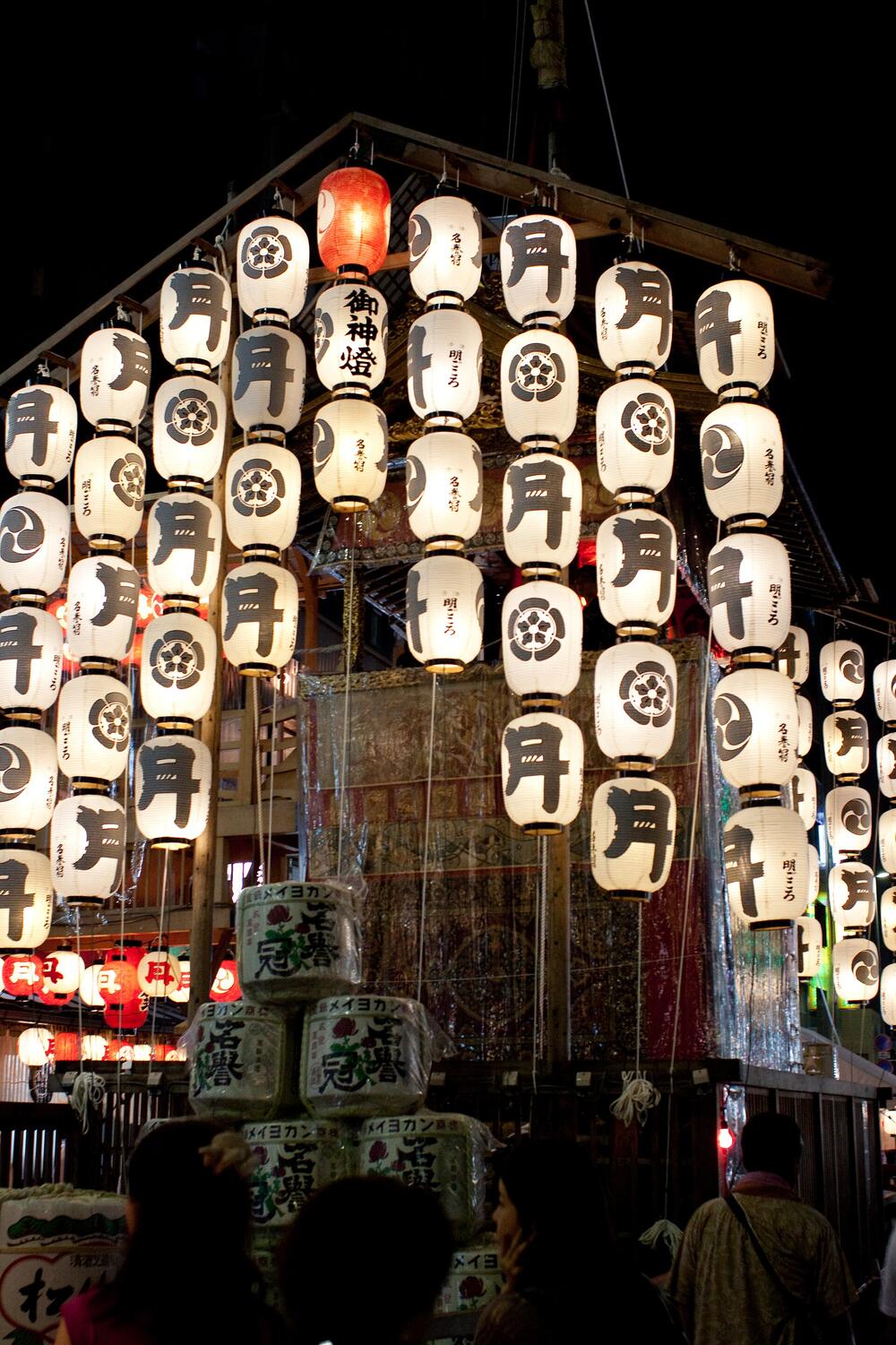
Kyoto's Yasaka Shrine festival fills the whole of July with rituals, but the two processions travelers plan around are the Saki Matsuri on July 17 and the Ato Matsuri on July 24. Elaborately decorated yamaboko floats, some weighing several tons, are pulled through central Kyoto by hand on both days.
The Yoiyama evenings before each procession, July 14 to 16 and July 21 to 23, close streets to traffic for food stalls and lantern-lit floats on display. UNESCO lists Gion Matsuri among Japan's Yama, Hoko, Yatai float festivals, inscribed in 2016. Book a Kyoto hotel two months ahead for mid-July, since the whole city fills for the processions.
 nekonomania (CC BY 2.0)
A lantern-lit yamaboko float at Gion Matsuri, Kyoto, July 2010
Awa Odori, Tokushima
Major festival
- Where: Tokushima, Shikoku
- 2027 dates: August 12 to 15, fixed every year
- Tickets: paid grandstand seats along part of the route; free dancing zones open to anyone
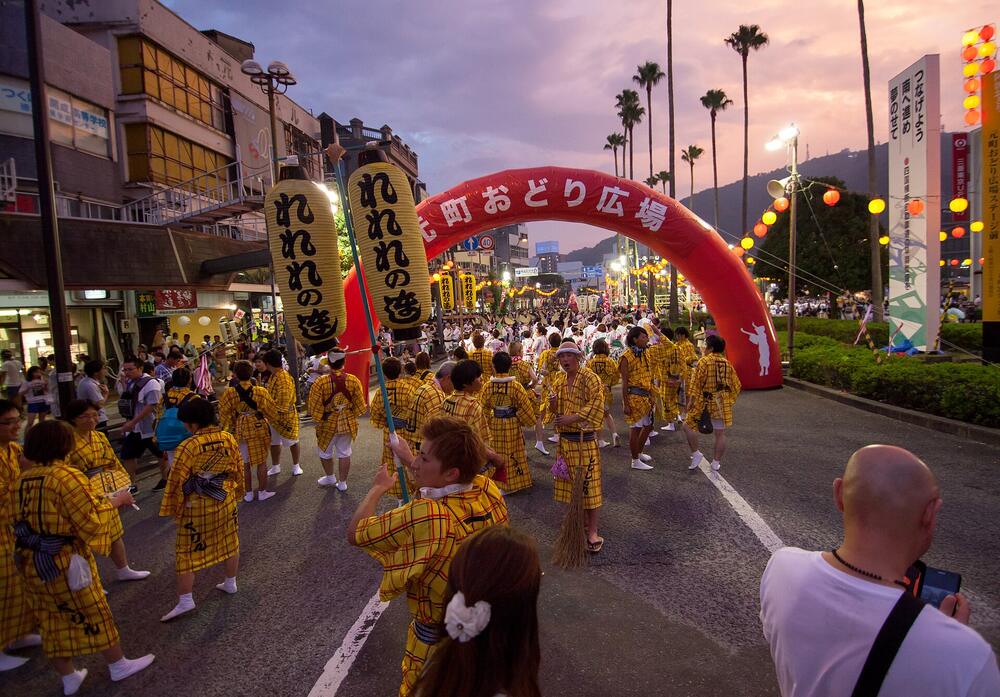
For four nights every August 12 to 15, more than a million spectators watch and join thousands of dancers moving through Tokushima's lantern-lit streets. Dancers perform Japan's two-step Awa Odori rhythm in distinct male and female styles, in ren, the troupes that parade and compete through the city together.
Free dancing zones let any visitor join the dance circles rather than just watch. Book Tokushima and the surrounding towns 2 to 3 months ahead, and fly into Tokushima Airport directly if the trip is built around the festival alone.
 George N (CC BY 2.0)
Dancers in yukata at Awa Odori's Motomachi dance plaza, Tokushima, August 12, 2015
Obon
Major festival
- Where: nationwide; Kyoto's Daimonji bonfires are the best-known closing rite
- 2027 dates: August 13 to 16 in most of Japan; mid-July in Tokyo and the rest of the east
Obon is a Buddhist custom honoring ancestors, observed nationwide from August 13 to 16; Tokyo and the rest of eastern Japan keep it in mid-July instead. Families return to hometowns to visit graves, and bon-odori dances fill parks and shrine grounds in every town.
Kyoto closes its own Obon with Gozan Okuribi, five bonfires shaped as kanji characters and symbols, lit on the hillsides around the city on the night of August 16 to send the ancestors' spirits back. Obon is not a legal public holiday, but it is one of Japan's three biggest domestic travel weeks, so trains and highways fill nationwide. Book any travel across these dates well ahead, or avoid them if the trip has no reason to touch Obon itself.
 jinkemoole (CC BY 2.0)
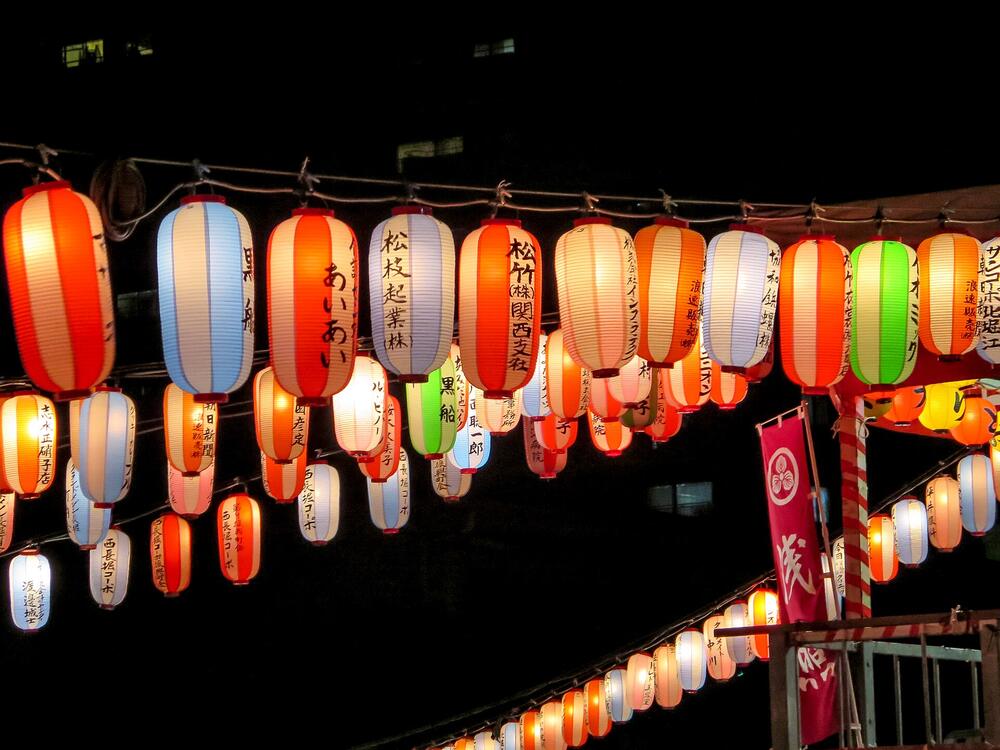
Paper lanterns hung for an Obon festival, Japan, August 2014
Sapporo Snow Festival
Major festival
- Where: Odori Park, Sapporo
- 2027 dates: not yet published; the organizer announces 3 to 6 months ahead, typically for early February
- Tickets: free at the Odori Park site
- Official site: snowfes.com
Sapporo's Odori Park and Susukino district fill with illuminated snow and ice sculptures, including life-size building replicas, for one week every February. More than 2 million visitors attend, and the festival had not published 2027 dates at the time of writing.
The Odori Park site is free to walk through, and temperatures there regularly fall to −10 °C (14 °F), so pack extreme cold-weather layers. Book a Sapporo hotel three months ahead, since rooms sell out even before exact dates are confirmed.
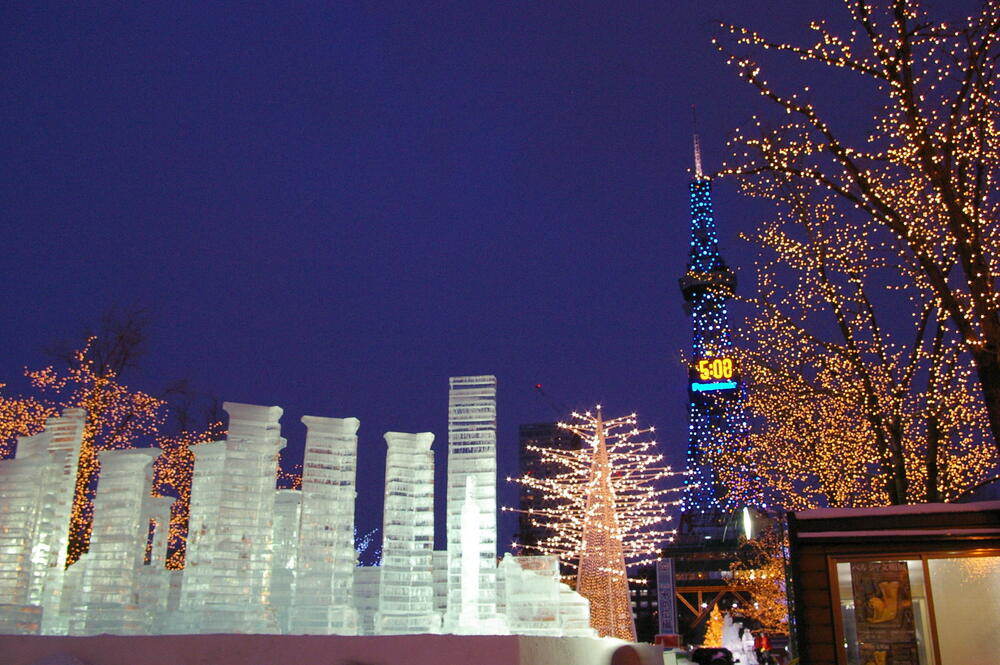 Materialscientist (CC BY-SA 3.0)
A large snow sculpture lit at night during the Sapporo Snow Festival, Odori Park
Cherry Blossom Season
Major festival
- Where: nationwide; Tokyo and Kyoto are the classic viewing cities
- 2027 dates: not knowable years ahead; weather-dependent
Cherry blossoms turn much of Japan pink for about two weeks, moving north from Kyushu in March to Hokkaido by May, with Tokyo and Kyoto typically peaking in late March to early April. The exact timing shifts by several weeks from year to year with the spring weather, so no organizer publishes a bloom date this far ahead. Japan's own forecasters commit to a forecast only about a month out.
Hanami, flower-viewing picnics under the blooming trees, is a national pastime. The season overlaps the start of the new school and fiscal year on April 1, which crowds trains and hotels further. Book a Tokyo or Kyoto hotel three months ahead if the trip depends on catching the bloom.
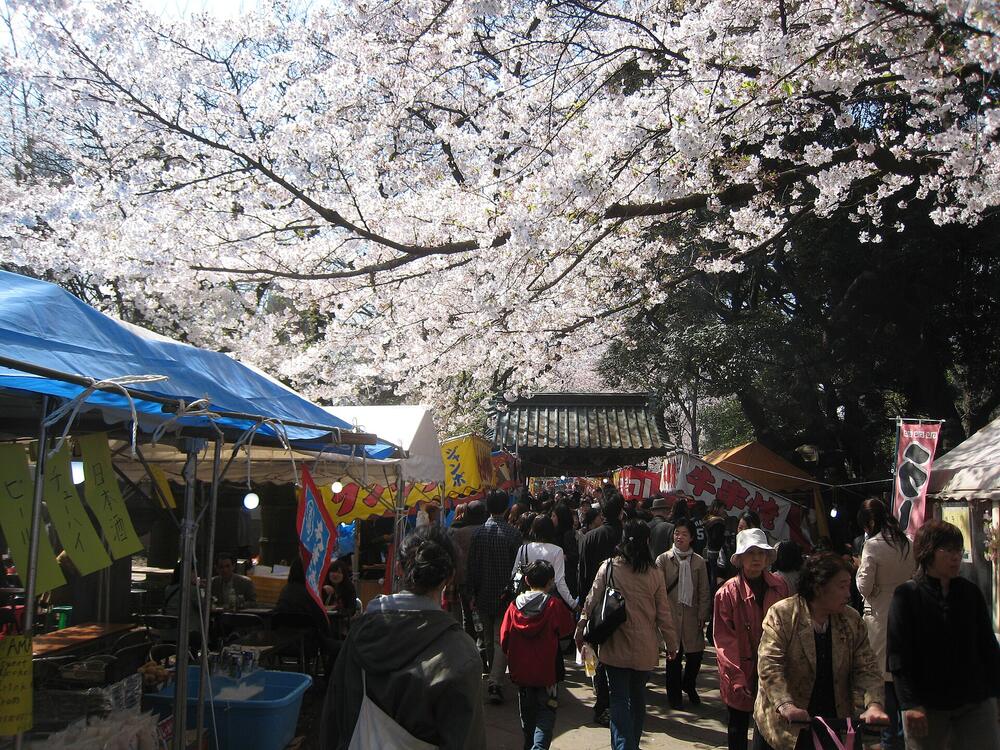 Syced (CC0)
A crowded path under blooming cherry trees during hanami at Ueno Park, Tokyo
Koyo, Japan's Autumn Leaves Season
Major festival
- Where: nationwide; Nikko and Kyoto are the classic viewing spots
- 2027 dates: not knowable years ahead; weather-dependent
Peak foliage moves south through Japan from late September in Hokkaido to early December in Kyushu, with Kyoto and Tokyo typically peaking in mid-to-late November. Momijigari, leaf-viewing hikes, draw visitors to Nikko's lakes and the Japan Alps, while Kyoto lights temple gardens such as Kiyomizu-dera and Eikan-do after dark.
Like the cherry blossoms, the color shifts by weeks with the year's weather, so no organizer commits to a date this far ahead. Temple gardens and mountain trails post real-time reports as the season approaches. Book a Kyoto hotel two months ahead for peak late-November color.
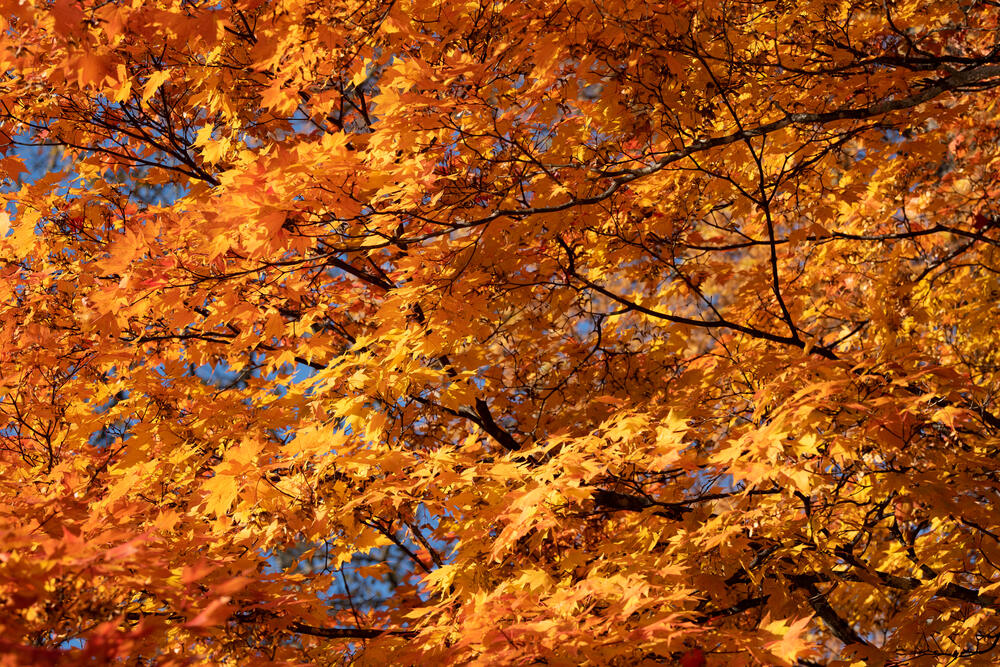 Raita Futo (CC BY 2.0)
Autumn leaves in Nikko, November 2022
Shogatsu, Japan's New Year
Major festival
- Where: nationwide; Meiji Shrine, Tokyo is the busiest hatsumode site
- 2027 dates: January 1 to 3, fixed every year
Japan's biggest holiday largely shuts the country down from December 31 to January 3: businesses, most restaurants and even convenience stores reduce their hours. Shinto shrines host millions for hatsumode, the first shrine visit of the year, and Meiji Shrine in Tokyo alone draws about 3 million visitors over three days.
Temple bells toll 108 times at midnight in joya no kane, and NHK's Kouhaku Uta Gassen music show is a New Year's Eve tradition watched nationwide. Book hotels 4 to 6 months ahead, since every bullet train and domestic flight from December 30 to January 3 sells out completely.
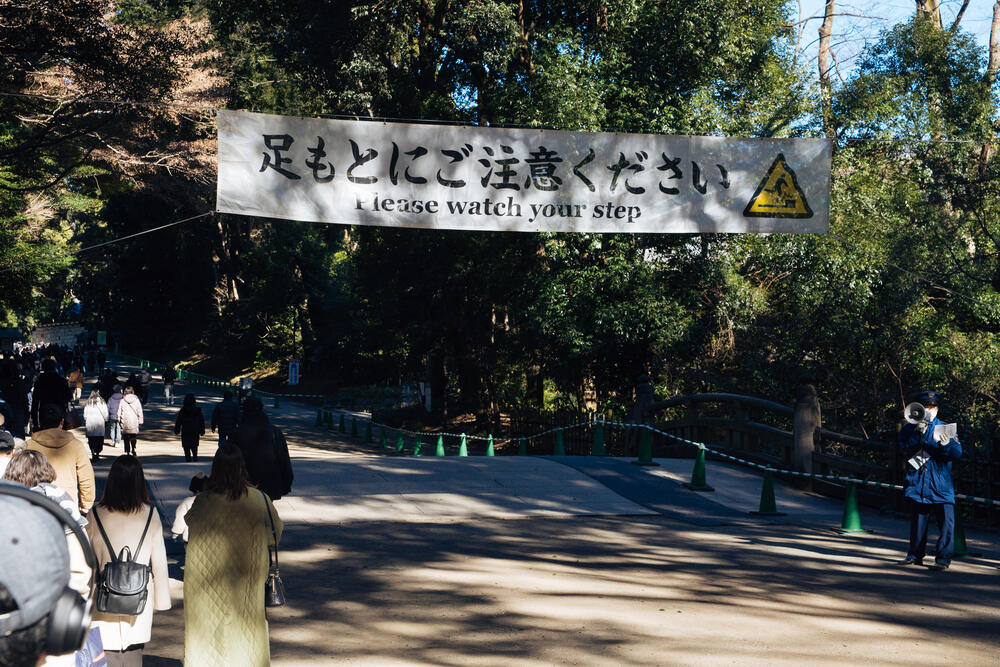 Dick Thomas Johnson (CC BY 2.0)
Crowds for hatsumode, the first shrine visit of the year, at Meiji Shrine, Tokyo, January 1
Golden Week
Major festival
- Where: nationwide
- 2027 dates: April 29 to May 5, plus the following weekend
Golden Week strings four national holidays into most of the country's longest break of the year. The dates fall April 29, May 3, May 4 and May 5: Showa Day, Constitution Memorial Day, Greenery Day and Children's Day. The 2027 holidays run April 29 to May 5, with the following weekend extending it further for most workers.
Domestic travel surges nationwide: trains, flights and hotels sell out and prices spike well before the break starts. Avoid traveling within Japan during Golden Week unless the trip is built around it, and book months ahead if it can't be avoided.
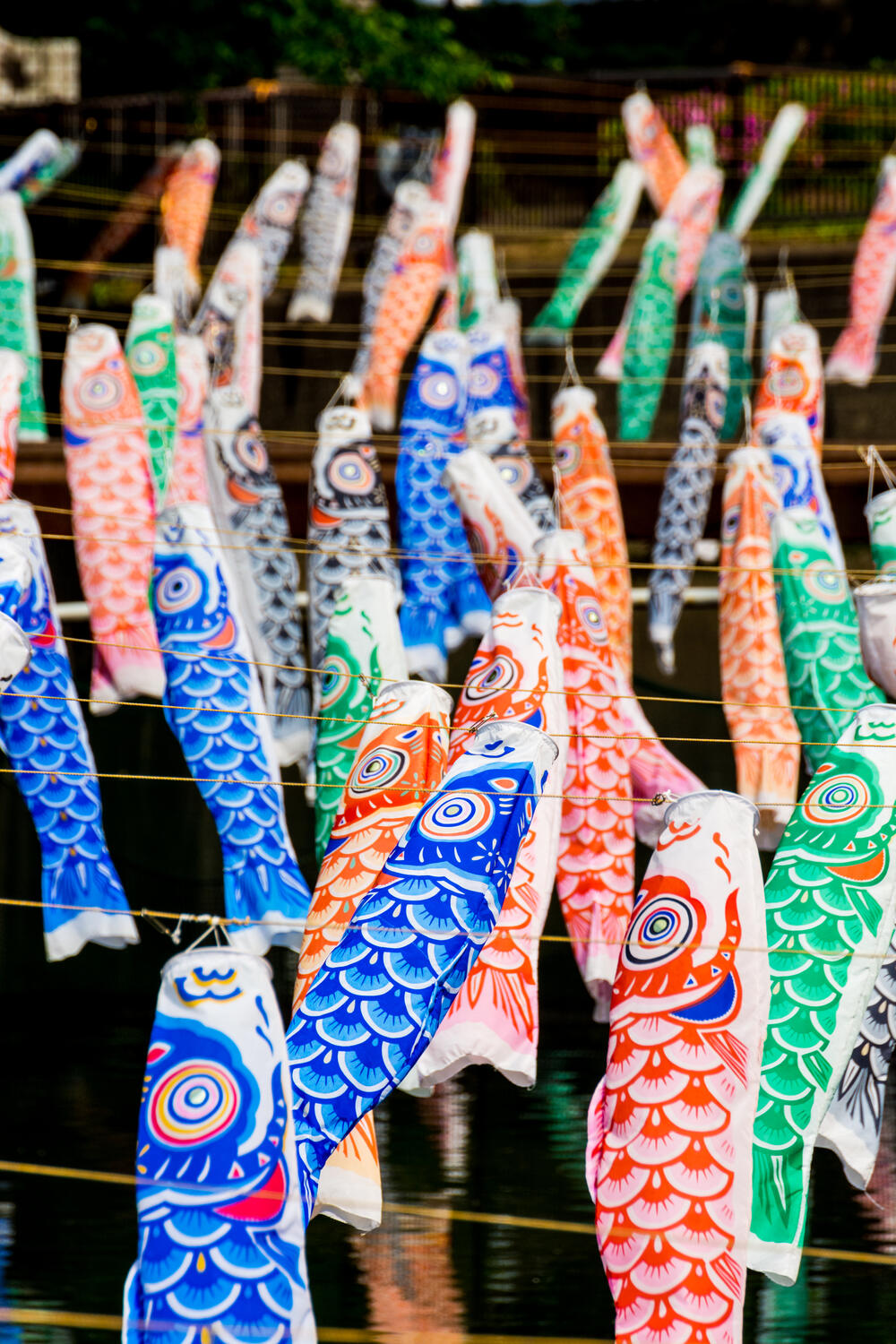 Yoshikazu Takada (CC BY 2.0)
Koinobori carp streamers flying for Children's Day, Tatebayashi, Gunma, May 2014
Kanda Matsuri, Tokyo
- Where: Kanda Myojin Shrine, Tokyo
- 2027 dates: grand festival year (odd years only); parade on the Saturday closest to May 15, exact date not yet confirmed by the shrine
- Tickets: free to watch from the street
Kanda Matsuri runs its full grand procession only in odd-numbered years, so 2027 is one of them after a smaller edition in 2026. More than 300 mikoshi, portable shrines, are carried through Akihabara, Nihonbashi and Kanda by hundreds of participants on the Saturday closest to May 15, the largest festival procession in eastern Japan.
Kanda Myojin shrine alternates the grand year with Sanno Matsuri at nearby Hie Shrine, which takes 2026 and 2028 instead. The 2027 parade date is not yet announced.
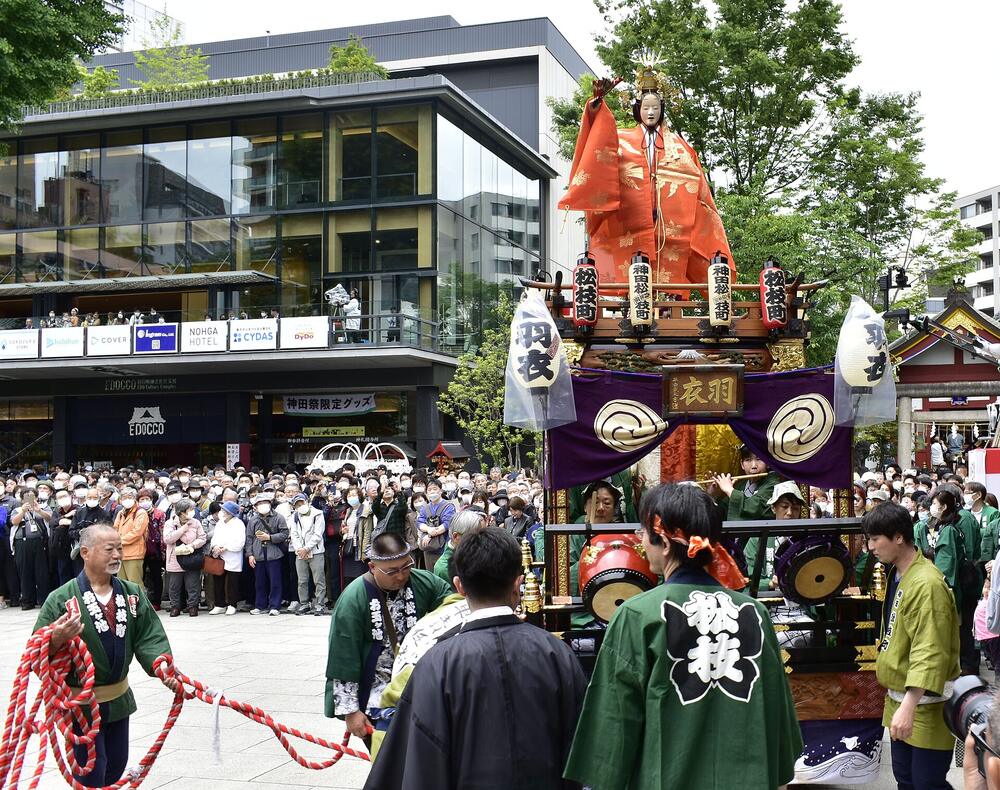 Edomura no Tokuzo (CC BY-SA 4.0)
A float in the Kanda Matsuri procession, Tokyo, May 2023
Tenjin Matsuri, Osaka
- Where: Osaka Tenmangu Shrine, Osaka
- 2027 dates: July 24 and 25, fixed every year
- Tickets: free to watch from the riverbanks and bridges
Osaka Tenmangu Shrine's Tenjin Matsuri runs July 24 and 25 every year, one of Japan's three great festivals alongside Gion Matsuri and Kanda Matsuri. The second day's funatogyo sends more than 100 illuminated boats carrying shrine officials and performers along the Okawa River.
The procession closes with a fireworks display of about 3,000 shells, visible across the city, and the two days draw more than 1.3 million visitors. Watch from the riverbanks or bridges along the Okawa River for free, and arrive early for a clear view near the fireworks.
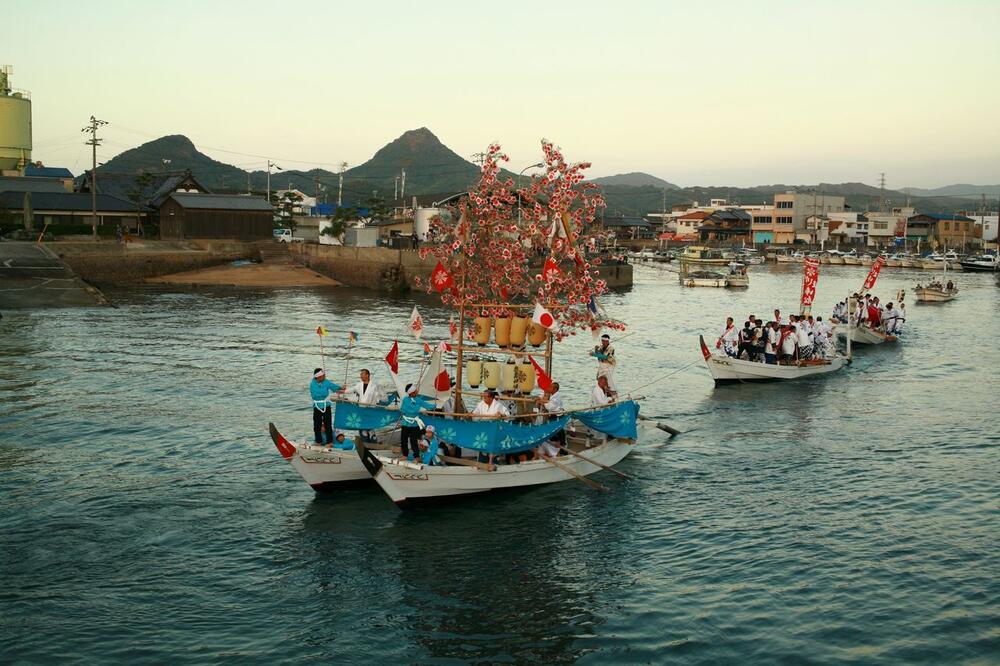 Photo by MATSUDA Akihiro on Pexels
Decorated boats on the river procession at Tenjin Matsuri, Osaka
Sumida River Fireworks Festival
- Where: Asakusa to Ryogoku, Tokyo
- 2027 dates: not yet published; the pattern is the last Saturday of July, and 2026's 49th edition ran July 25
- Tickets: free to watch from riverside parks and bridges
- Official site: sumidagawa-hanabi.com
Tokyo's oldest fireworks display lights the Sumida River between Asakusa and Ryogoku most years on the last Saturday of July; the 2026 edition, the 49th, ran as scheduled on July 25. Two competing firing points launch roughly 20,000 shells, watched by around a million spectators from riverside parks, bridges and the base of the Tokyo Skytree.
The organizer had not published a 2027 date at the time of writing, so check the official site closer to the date. Arrive hours early for a riverside spot, since the free viewing areas fill long before the first shell launches.
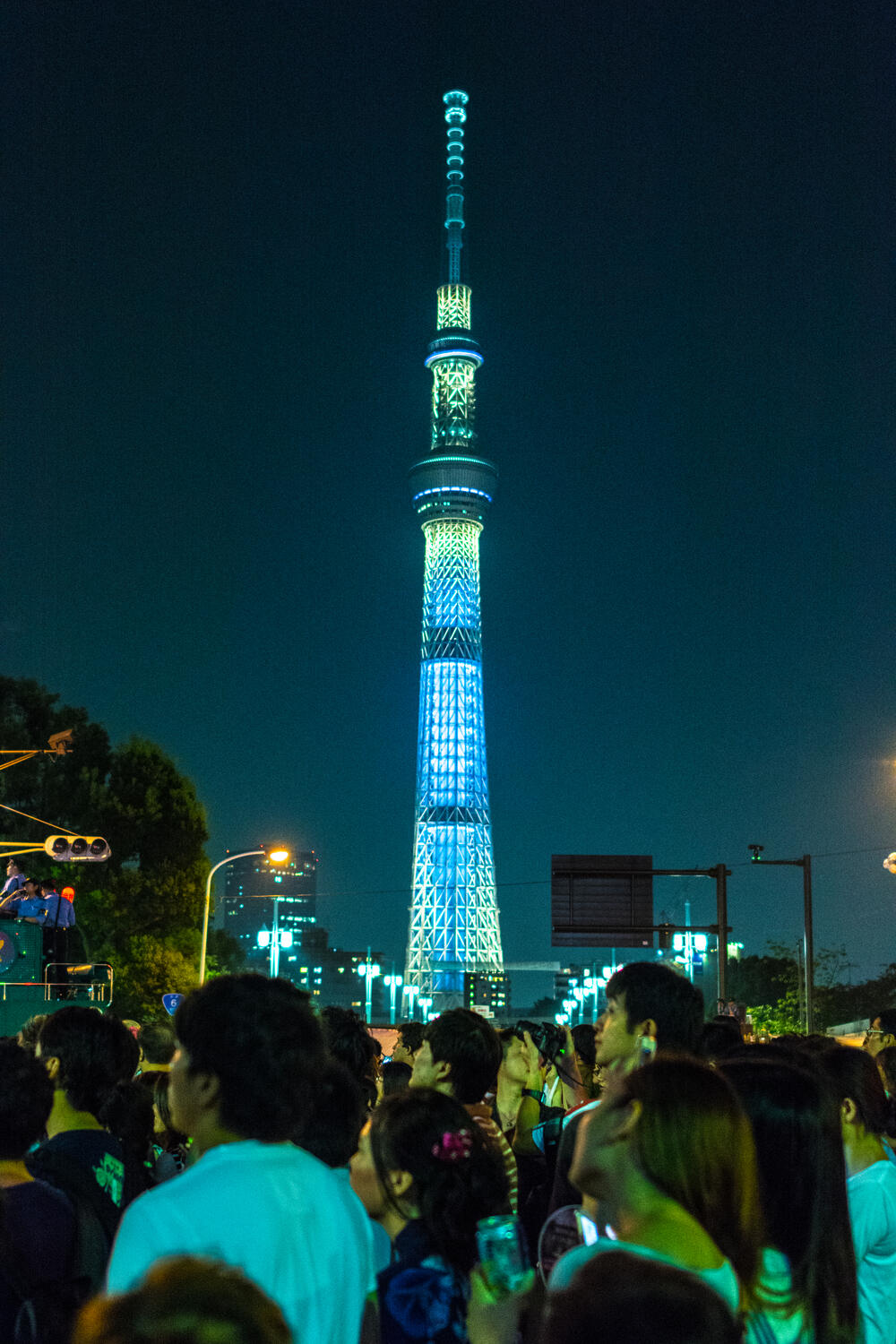 Yoshikazu Takada (CC BY 2.0)
Fireworks over the Tokyo Skytree during the Sumida River Fireworks Festival, Asakusa, July 2014
Hakata Gion Yamakasa, Fukuoka
- Where: Hakata district, Fukuoka
- 2027 dates: July 1 to 15, fixed every year
- Tickets: free to watch from the street
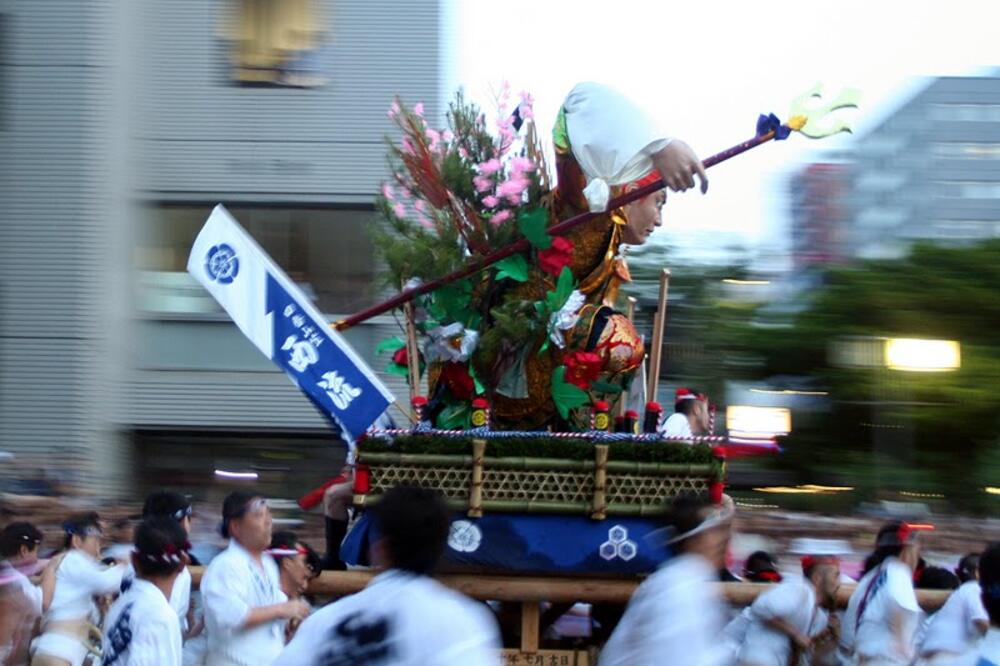
Teams of men in loincloths carry one-ton decorated floats called yamakasa at a sprint through a 5-kilometer course across Fukuoka's Hakata district every July 1 to 15. The 700-year tradition closes before dawn on July 15 with Oiyama, a timed race between the teams.
Hakata Gion Yamakasa is one of eight Japanese festivals on UNESCO's 2016 Yama, Hoko, Yatai list. Arrive before dawn on the 15th for Oiyama, the festival's fastest and most crowded morning.
 Chochoji (CC BY 3.0)
Runners racing a kakiyama float during the Oiyama finale of Hakata Gion Yamakasa, Fukuoka, July 15, 2008
Chichibu Night Festival
- Where: Chichibu Shrine, Chichibu, Saitama
- 2027 dates: December 2 and 3, fixed every year
- Tickets: free to watch from the street
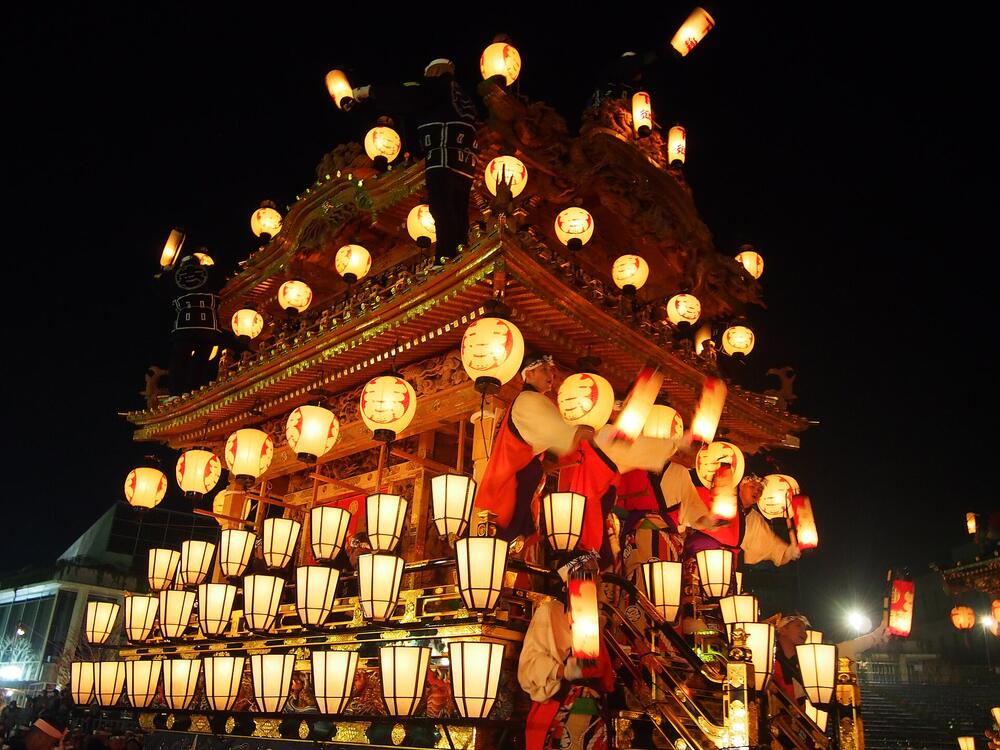
Six ornate floats weighing up to 19 tons are hauled through Chichibu's narrow streets on the main night of its Night Festival, December 3, with fireworks launching from the hillside above as they pass. The Chichibu Night Festival is one of Japan's three great float festivals, alongside Gion Matsuri and Takayama Matsuri. All three carry the same UNESCO Yama, Hoko, Yatai listing.
Chichibu is about 90 minutes from Tokyo by direct train from Ikebukuro, so the festival also works as a winter day trip. Chichibu's own hotel stock is tiny, so book a room in Saitama or Tokyo instead if staying overnight.
 Chichibian (CC BY-SA 4.0)
A lantern-lit float at the Chichibu Night Festival
Karatsu Kunchi
- Where: Karatsu Shrine, Karatsu, Saga
- 2027 dates: November 2 to 4, fixed every year
- Tickets: free to watch from the street
- Official site: karatsu-kankou.jp
Fourteen huge lacquered floats called hikiyama, each weighing 2 to 5 tons and shaped as helmets, dragons, lions or sea creatures, are pulled through Karatsu every November 2 to 4. Teams chant in unison as they haul each float through the streets, and the final day sends them onto the sand at Nishino-hama beach.
Karatsu's city tourism board confirms the same three-day dates on its own site every year. The festival carries both a UNESCO Yama, Hoko, Yatai listing and Japan's own Important Intangible Folk Cultural Property designation. Book a Karatsu hotel a month ahead, since the city's rooms fill for the three days.
 Katainaka (CC BY 3.0)
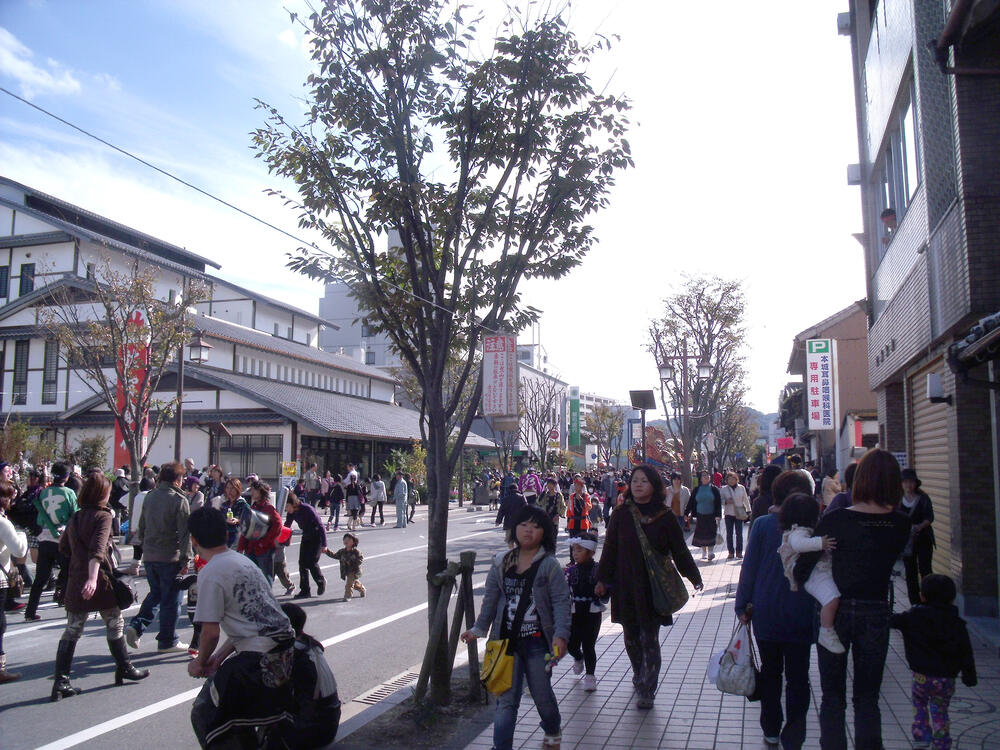
The pedestrianized street by Karatsu Station during Karatsu Kunchi, November 2009
Japan's festivals month by month, 2027
Every month of the year holds at least one of Japan's 49 festivals worth building a trip around. "Not yet published" marks an item whose organizer had not released a 2027 date as of October 2026.
| Month | Festival | Where | 2027 dates |
|---|---|---|---|
| January | Shogatsu, Japan's New Year | Nationwide | January 1 to 3 |
| January | Nozawa Onsen Fire Festival | Nozawa Onsen, Nagano | January 15 |
| January | Nagasaki Lantern Festival | Nagasaki | follows the Lunar New Year; not yet published |
| February | Sapporo Snow Festival | Sapporo | not yet published |
| February | Setsubun | Nationwide | usually February 3; not yet confirmed |
| February | Yokote Kamakura | Yokote, Akita | February 15 |
| February | Hadaka Matsuri (Saidaiji Eyo) | Okayama | the third Saturday of February; not yet published |
| March | Hinamatsuri | Nationwide | March 3 |
| March | Omizutori | Nara | March 1 to 14 |
| March | Cherry Blossom Season | Nationwide | not knowable years ahead |
| April | Takayama Matsuri (spring) | Takayama | April 14 and 15 |
| April | Kanamara Matsuri | Kawasaki | the first Sunday of April; not yet published |
| April | Golden Week begins | Nationwide | April 29 |
| May | Hakata Dontaku | Fukuoka | May 3 and 4 |
| May | Aoi Matsuri | Kyoto | May 15 |
| May | Kanda Matsuri, Tokyo | Tokyo | grand year; exact date not yet confirmed |
| June | Sanno Matsuri | Tokyo | 2026 was the grand year; 2027's smaller edition not yet published |
| June | Hyakumangoku Matsuri | Kanazawa | not yet published |
| July | Gion Matsuri, Kyoto | Kyoto | processions July 17 and 24 |
| July | Tenjin Matsuri, Osaka | Osaka | July 24 and 25 |
| July | Hakata Gion Yamakasa, Fukuoka | Fukuoka | July 1 to 15 |
| July | Sumida River Fireworks Festival | Tokyo | not yet published |
| July | Fuji Rock Festival | Naeba, Niigata | 2026 ran July 24 to 26; not yet published |
| July | Hachinohe Sansha Taisai | Hachinohe, Aomori | July 31 to August 5 |
| August | Aomori Nebuta Matsuri | Aomori | August 2 to 7 |
| August | Awa Odori, Tokushima | Tokushima | August 12 to 15 |
| August | Obon | Nationwide | August 13 to 16 |
| August | Gozan Okuribi (Daimonji) | Kyoto | August 16 |
| August | Akita Kanto Matsuri | Akita | August 3 to 6 |
| August | Sendai Tanabata Matsuri | Sendai | August 6 to 8 |
| August | Yosakoi Matsuri | Kochi | August 9 to 12 |
| August | Koenji Awa Odori | Tokyo | the last weekend of August; not yet published |
| August | Shoro Nagashi | Nagasaki | August 15 |
| August | Nagaoka Festival Fireworks | Nagaoka | August 2 and 3 |
| August | Omagari Fireworks Competition | Daisen, Akita | not yet published |
| August | Summer Sonic | Tokyo and Osaka | mid-August; not yet published |
| September | Kishiwada Danjiri Matsuri | Kishiwada, Osaka | the third weekend of September; not yet published |
| October | Jidai Matsuri | Kyoto | October 22 |
| October | Kurama Fire Festival | Kyoto | October 22, the same day as Jidai Matsuri |
| October | Nagasaki Kunchi | Nagasaki | October 7 |
| October | Kawagoe Festival | Kawagoe, Saitama | the third weekend of October; not yet published |
| October | Takayama Matsuri (autumn) | Takayama | October 9 and 10 |
| October | Tokyo International Film Festival | Tokyo | not yet published |
| November | Karatsu Kunchi | Karatsu | November 2 to 4 |
| November | Koyo, Japan's Autumn Leaves Season | Nationwide | not knowable years ahead |
| November | Tori no Ichi | Tokyo (Asakusa) | each Day of the Rooster in November; dates vary |
| November | Yatsushiro Myoken Festival | Yatsushiro, Kumamoto | usually November 22 and 23 |
| December | Chichibu Night Festival | Chichibu | December 2 and 3 |
| December | Christmas | Nationwide | December 25 |
| December | Namahage | Oga, Akita | December 31 |
A dated trip built with MonkeyEatingMango shows the festivals and public holidays landing on your travel days in its Festivals and events section.
Try free
Plan your Japan trip in about 2 minutes
Tap through 8 quick cards for a complete itinerary with budget, maps, and packing lists. No account required.
Plan your Japan trip →Music festivals in Japan
| Festival | Where | 2027 dates |
|---|---|---|
| Fuji Rock Festival | Naeba Ski Resort, Niigata | 2026 ran July 24 to 26; not yet published |
| Summer Sonic | Tokyo and Osaka | mid-August; not yet published |
Fuji Rock, held in the Niigata mountains since 1997, is Japan's best-known outdoor music festival and pairs international headliners with forested mountain stages. Summer Sonic pairs Tokyo and Osaka on the same mid-August weekend, with many headline acts playing both cities on consecutive nights.
Japan's public holidays in 2027
Japan's 2027 public holidays are the 17 national days below, from the Cabinet Office's own tables. Confirm a sight's opening hours before building a day of sightseeing around any of these dates.
| Date | Holiday | Japanese name |
|---|---|---|
| January 1 | New Year's Day | 元日 |
| January 11 | Coming of Age Day | 成人の日 |
| February 11 | National Foundation Day | 建国記念の日 |
| February 23 | Emperor's Birthday | 天皇誕生日 |
| March 21 | Vernal Equinox Day | 春分の日 |
| March 22 | Substitute holiday | 休日 |
| April 29 | Showa Day | 昭和の日 |
| May 3 | Constitution Memorial Day | 憲法記念日 |
| May 4 | Greenery Day | みどりの日 |
| May 5 | Children's Day | こどもの日 |
| July 19 | Marine Day | 海の日 |
| August 11 | Mountain Day | 山の日 |
| September 20 | Respect for the Aged Day | 敬老の日 |
| September 23 | Autumnal Equinox Day | 秋分の日 |
| October 11 | Sports Day | スポーツの日 |
| November 3 | Culture Day | 文化の日 |
| November 23 | Labor Thanksgiving Day | 勤労感謝の日 |
Obon, August 13 to 16, carries no legal holiday status and so is absent from this list, even though it drives as much domestic travel as any week on it.
Plan a trip around a Japanese festival
Build a Kyoto trip around Gion Matsuri or the autumn Jidai Matsuri with the 7-day Japan itinerary, which already reaches Tokyo, Kyoto and Osaka. Around Tenjin Matsuri, the 3-day Osaka itinerary covers the rest of the city, and the 3-day or 5-day Tokyo itinerary does the same for Shogatsu, Kanda Matsuri or the Sumida River fireworks. The Japan guide and its things-to-do page cover trip length and sights for festivals the itineraries don't reach, like the Aomori Nebuta Matsuri or Awa Odori in Tokushima.
The Japan best-time-to-visit guide puts these dates against the weather, and the typhoon season guide covers what an August or September storm can do to a summer festival trip.
Pick your festival dates, and the MonkeyEatingMango planner builds the days around them, with a time and a cost on every stop.
Last updated October 2026
Common questions
What are the main festivals of Japan?
Japan's best-known festivals are the Aomori Nebuta Matsuri, Kyoto's Gion Matsuri, Awa Odori in Tokushima and the Sapporo Snow Festival. Obon in August and Shogatsu, the New Year period, draw the whole country into holiday mode even though neither is a single staged event.
What are the top 3 festivals in Japan?
The Aomori Nebuta Matsuri, Gion Matsuri and Awa Odori are the three staged festivals named most often across travel guides and the tourism board's own calendar. All three run in summer: Nebuta in early August, Gion's processions on July 17 and 24, and Awa Odori from August 12 to 15.
What is Japan's biggest festival?
The Aomori Nebuta Matsuri draws more than 3 million visitors over six nights every August, more than any other named Japanese festival. Awa Odori in Tokushima follows close behind, with more than a million spectators over four nights the same month.
When is the best time of year to visit Japan for festivals?
July is Japan's busiest month for major festivals: Gion Matsuri's processions, Tenjin Matsuri, Hakata Gion Yamakasa and the Sumida River fireworks all fall within the same four weeks. August follows close behind with the Aomori Nebuta Matsuri, Awa Odori and Obon.
Are festivals in Japan free? Do I need tickets?
Most Japanese festivals are free to watch from the street, including the Nebuta Matsuri, Gion Matsuri, Awa Odori and Obon's bon-odori dances. Reserved grandstand seating costs extra at the largest ones, and free viewing spots at events like the Sumida River fireworks still fill up hours early.
How far ahead should I book accommodation for a festival?
Book 2 to 3 months ahead for the Aomori Nebuta Matsuri, Gion Matsuri and Awa Odori, each of which has limited hotel stock during the festival. Shogatsu, Japan's New Year, needs 4 to 6 months of notice, since every bullet train and domestic flight sells out from December 30 to January 3.
Which festivals in Japan are UNESCO-listed?
Gion Matsuri, Hakata Gion Yamakasa, the Chichibu Night Festival and Karatsu Kunchi are among the eight Japanese festivals on UNESCO's Yama, Hoko, Yatai list, inscribed in 2016 and expanded in December 2025. Takayama Matsuri, the Kawagoe Festival, the Yatsushiro Myoken Festival and Hachinohe Sansha Taisai round out the eight.
What's the difference between a matsuri and a festival?
Matsuri, the Japanese word for festival, usually marks a specific event or honors a Shinto or Buddhist deity, so most carry a religious origin even when the modern event feels secular. A matsuri typically mixes a shrine ritual with a street procession, food stalls and music, while the English word festival can describe anything from a flower show to a film festival.
Can tourists join in, or only watch?
Awa Odori and Koenji's own version of it both run open dance circles that any visitor can join, and the Aomori Nebuta Matsuri rents out a haneto costume for anyone who wants to dance in its parade instead of watch. Float-pulling events such as Gion Matsuri and Kishiwada Danjiri Matsuri are watched from the street, and Kishiwada's danjiri racing is also dangerous to approach up close.
What should I wear to a Japanese festival?
A yukata, a light cotton kimono, is common summer festival wear and rentable near most big events, including Awa Odori and the Nebuta Matsuri. Winter festivals need the opposite: the Sapporo Snow Festival regularly sees temperatures fall well below freezing, so pack extreme cold-weather layers.
When is Golden Week, and should I avoid traveling to Japan then?
Golden Week runs from Showa Day, April 29, through Children's Day, May 5, 2027, four national holidays in one week that give most of the country its longest break of the year. Trains, flights and hotels sell out and prices spike nationwide, so it is worth avoiding unless a trip is built specifically around it.

Written by Shobhit Shrivastava · Founder
Related reading
Japan travel guide
A Week in Japan: Tokyo and Kyoto, from teamLab to Kinkaku-ji
7 days across Kyoto and Tokyo. Begin with 3 nights in Kyoto (Fushimi Inari, Kiyomizu-dera, Arashiyama Bamboo Grove, based in Higashiyama), then ride the Shinkansen to Tokyo for 4 nights (Shibuya Crossing, Tsukiji Outer Market, teamLab Planets, Asakusa). Packed pace with 4-5 activities daily,...
Osaka in 3 Days: Dotonbori and Osaka Castle
3 days in Osaka: focus on the food and nightlife districts of Namba and Dotonbori, with a dedicated day for the modern installations at teamLab Botanical Garden. This trip uses a central Namba base to keep transport simple. Expect a packed pace with 4-5 activities daily, balancing neon-lit...
Tokyo in 3 Days: Sensō-ji, Shibuya Crossing and More
This packed 3-day Tokyo journey for a couple delves into contrasting districts, blending traditional spiritual sites like Sensō-ji Temple in Asakusa with the cutting-edge digital art of teamLab Planets TOKYO. Explore the iconic Shibuya Crossing, enjoy a performance at Kabuki-za Theatre, and...
5 Days in Tokyo: Senso-ji, Tsukiji Market and the Tokyo Skytree
5 days exploring Tokyo's diverse character through food, spiritual sites, and local culture. Experience the historic Senso-ji Temple and Meiji Jingu, browse the vintage shops of Shimokitazawa, and dine at Tsukiji Outer Market. Maintain a comfortable pace with one neighborhood focus per day and...
Things to Do in Japan and the Best Places to Visit
Where to go in Japan and what to do there: 15 cities and regions with their top sights, then 8 experiences worth building a trip around, each with the time it takes, what to book and the official price where one exists.
Festivals in Italy 2027: Dates, Tickets and Calendar
The 15 Italian festivals worth planning a 2027 trip around, each with its 2027 dates and what to book, then a month-by-month calendar of 55, the music festivals and the 2027 public holidays.
Festivals in Spain 2027: Dates, Tickets and Calendar
The 15 Spanish festivals worth planning a 2027 trip around, each with its 2027 dates, tickets and what to book, then a month-by-month calendar of 48, the music festivals and the 2027 public holidays.