What should you eat in Thailand, and does the answer change depending on where you are? Yes: Thai cooking splits into four regional cuisines, cooler hills in the north, rice country around Bangkok in the center, Isan in the northeast, and two coastlines in the south. Start with khao soi if you land in Chiang Mai. Order som tam and larb anywhere Isan cooking is served, and reach for pad thai or a curry almost everywhere else. Order rice or noodles with everything, and share plates rather than ordering one dish each.
- Start with the region's own dish. Khao soi and sai ua in the north, som tam and larb in Isan, pad thai or a curry almost anywhere else, massaman or roti in the south.
- Ask for your spice level up front. "Mai phed" (not spicy) or "phed noi" (a little spicy) works at nearly any stall; the south's gaeng tai pla and khua kling run hottest.
- Order several dishes for the table, not one each. A Thai meal is shared dishes eaten together, not courses.
Thailand's tourism board runs its own project to document the country's regional cooking, the Thai Foodie Map, which it calls "a vibrant guidebook celebrating Thailand's rich culinary landscape".
North
Khao Soi
Iconic dish
- From: Chiang Mai and Chiang Rai
- When: lunch or dinner
- Spice: mild to medium
- Price: ฿50 to ฿85 in Chiang Mai, up to ฿180 in a tourist beach town
- Contains: meat (chicken, pork or beef); coconut milk
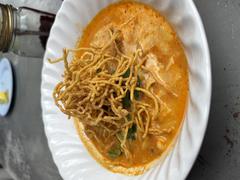
Khao soi layers two textures of the same noodle: soft egg noodles sit in a coconut curry broth, and a handful of the same noodles, fried until crisp, go on top. Braised chicken, pork or beef gives the broth its body, and a plate of pickled mustard greens, shallots, lime and chili comes on the side.
Squeeze the lime in before the crispy noodles go soft. Khao soi is what the north is best known for nationwide, served on menus as far away as Bangkok.
The 4-day Chiang Mai itinerary builds a day around the city's noodle shops; visiting in November, see Chiang Mai's Yi Peng lantern festival for the same city's best-known event.
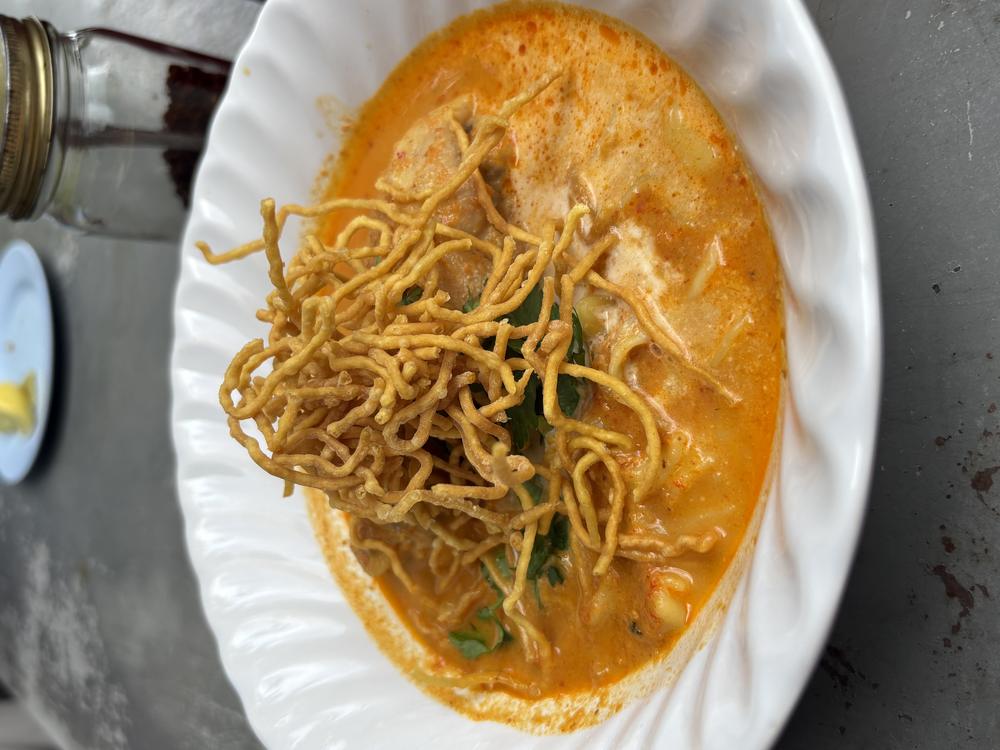 Chainwit. (CC BY 4.0)
Khao soi, egg noodles in coconut curry broth topped with crispy fried noodles, served at Khao Soi Khun Yai in Chiang Mai
Sai Ua
- From: Chiang Mai
- When: snack or shared starter
- Spice: medium
- Price: ฿20 to ฿40 at a local stall, ฿50 to ฿80 in a tourist area
- Contains: meat (pork)
Sai ua packs ground pork into a sausage casing with lemongrass, kaffir lime leaf and turmeric, then grills it over charcoal until the skin blisters. Slice it at the table and eat it with sticky rice; it carries more herb than heat.
Chiang Mai's morning and evening markets are the place to find it, usually beside sai krok Isan's sausage stall.
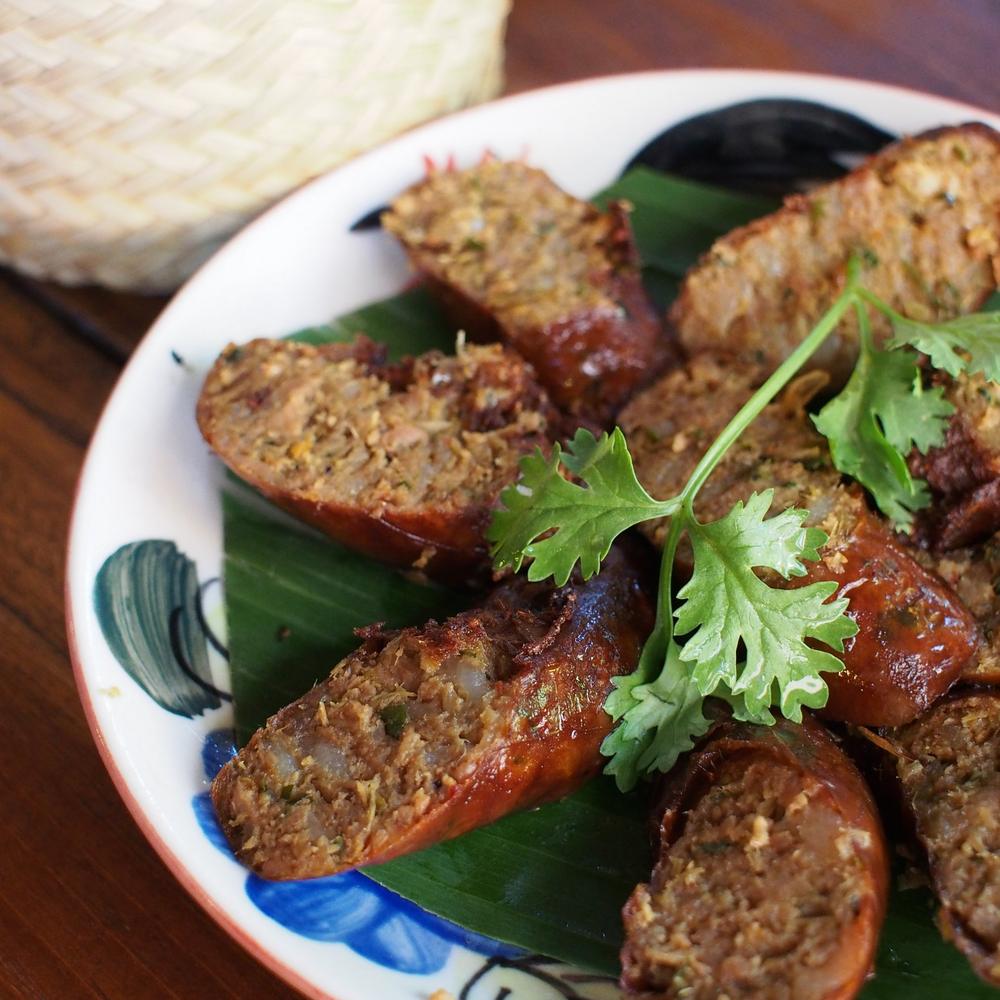 Takeaway (CC BY-SA 3.0)
Sliced sai ua, the grilled pork sausage from Chiang Mai
Gaeng Hang Lay
- From: Chiang Mai
- When: lunch or dinner, with sticky rice
- Spice: mild
- Contains: meat (pork belly)
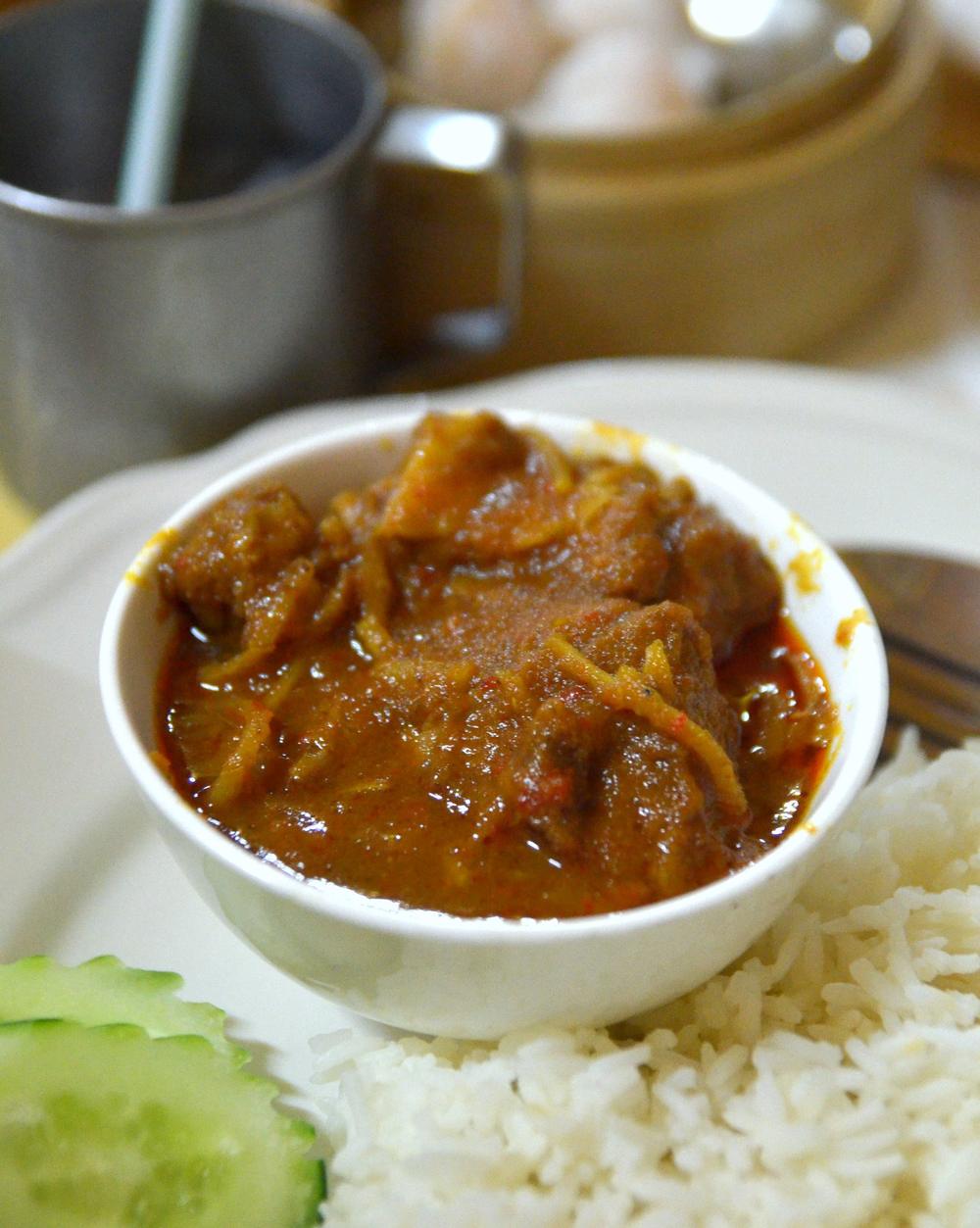
Gaeng hang lay shows the north's Burmese side: pork belly stews for hours with ginger, garlic and tamarind, and the pot carries no coconut milk at all. The result reads closer to a mild, sour-sweet braise than to the chili-forward curries of central Thailand.
The long simmer time needs a restaurant kitchen rather than a street cart.
 Takeaway (CC BY-SA 3.0)
Kaeng hangle, a Burmese-influenced Northern Thai pork curry with no coconut milk
Isan
Som Tam
Iconic dish
- From: Isan
- When: lunch, often with sticky rice and grilled chicken
- Spice: hot (adjustable)
- Price: ฿40 to ฿60
- Contains: dried shrimp common; a vegetarian version swaps the fish sauce
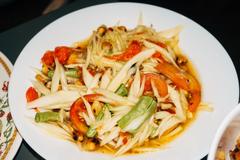
A vendor pounds som tam to order in a clay mortar: shredded green papaya, lime, fish sauce, chili, tomato and dried shrimp, bruised together rather than tossed. Ask for it "phed noi" the first time; the Isan default runs properly hot.
Som tam is the centerpiece of a classic Isan meal that has spread from the northeast to street stalls nationwide.
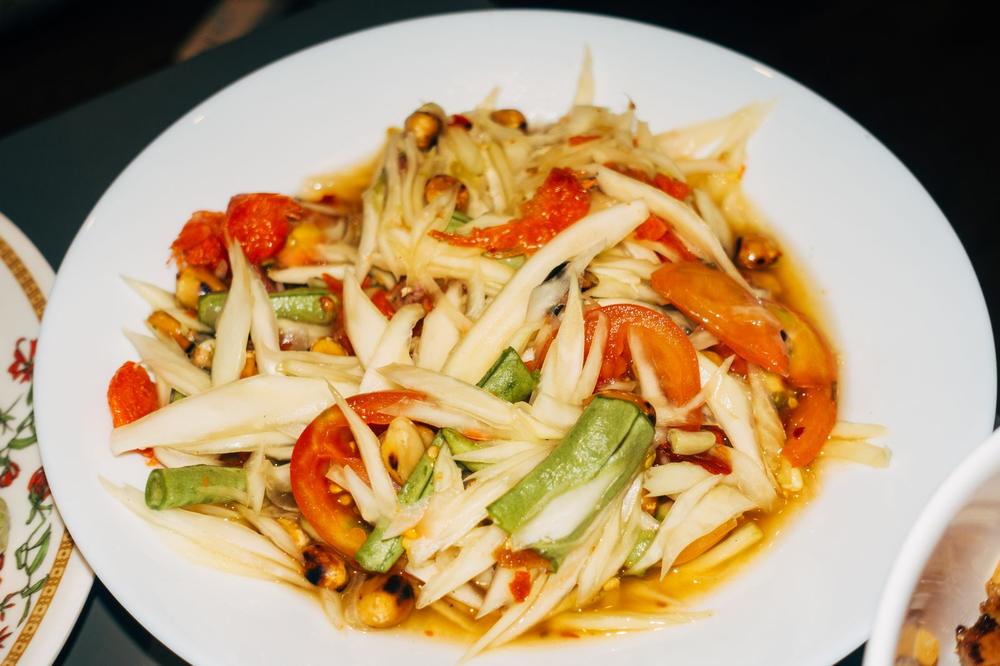 Photo by Markus Winkler on Pexels
Som tam, Thailand's green papaya salad with peanuts, tomato and chili
Larb
Iconic dish
- From: Isan
- When: lunch or dinner, with sticky rice
- Spice: hot
- Price: ฿50 to ฿80
- Contains: meat (pork, chicken, beef or duck)
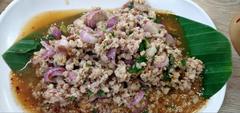
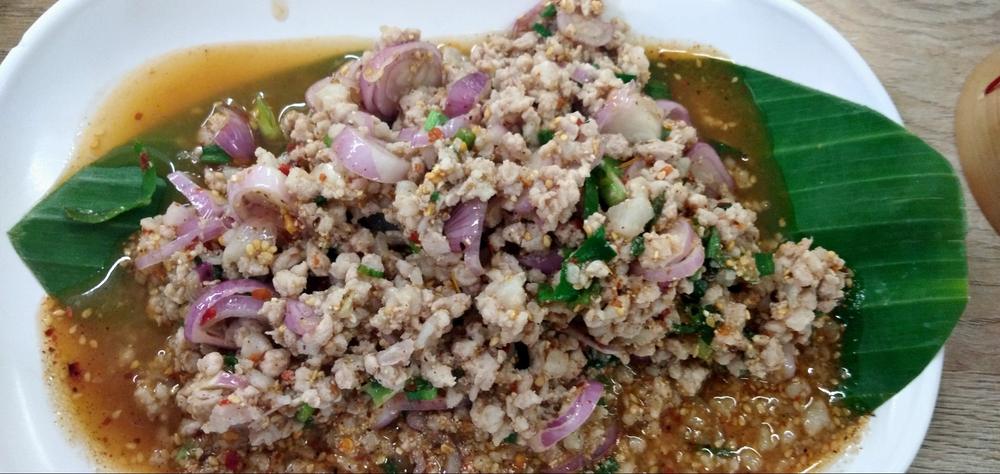
Minced meat, lime juice, fish sauce, chili and toasted rice powder make up larb, served at room temperature rather than hot off the pan. Toasted rice powder sets larb apart from a plain meat salad, a nutty crunch that holds the dressing to the meat.
Pork is the everyday version, though chicken, beef and duck all show up on an Isan menu; order pork first and try the others once you know you like the style. Scoop it up with sticky rice, pinched into small balls by hand.
 Tris_T7 (CC BY-SA 4.0)
Larb, Thailand's minced meat salad with toasted rice powder and herbs
Gai Yang
- From: Isan
- When: lunch or dinner
- Spice: mild (the dipping sauce can be hot)
- Contains: meat (chicken)
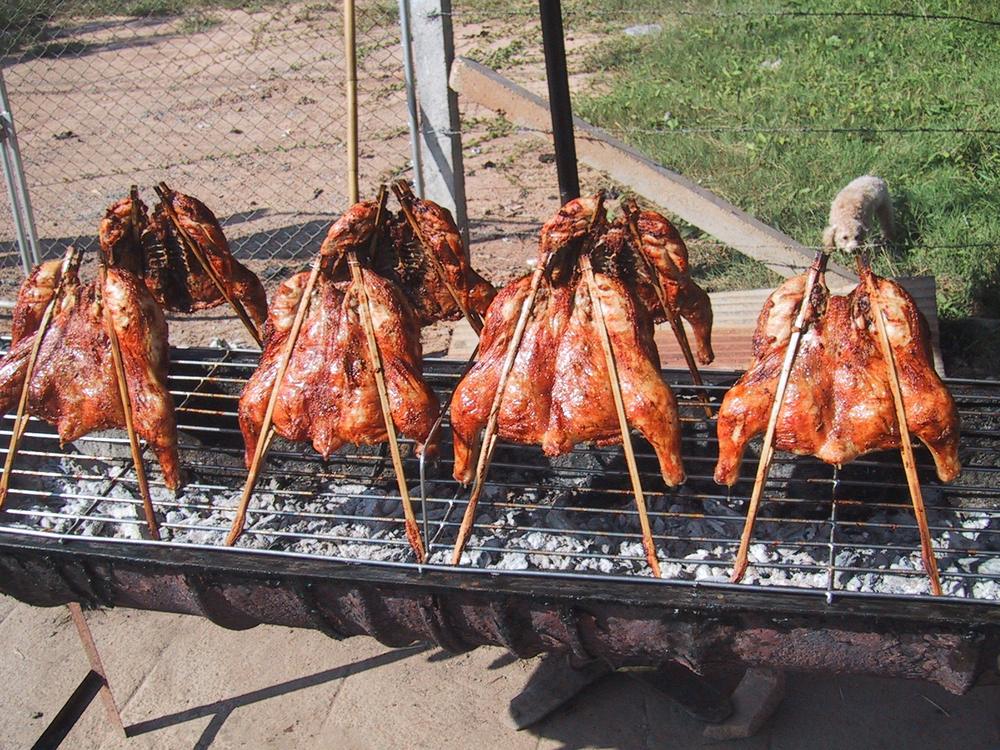
A whole chicken, split and flattened, goes on the grill slowly enough that the skin turns deep golden without burning. The meat itself stays mild; the heat comes from a side of nam jim jaew, a sour-spicy dipping sauce, so ask for less of it if you want a milder plate.
Gai yang completes the classic Isan trio alongside som tam and sticky rice.
 Basile Morin (CC BY-SA 4.0)
Whole chickens grilling over charcoal on the street in Chiang Khong
Sai Krok Isan
- From: Isan
- When: snack, with raw ginger, cabbage and chili
- Spice: mild, tangy rather than hot
- Contains: meat (pork), fermented
Sai krok Isan ferments pork and sticky rice together before stuffing the mixture into a casing, for a sour tang closer to a cured sausage than a fresh one. Grill it until the casing crisps, then slice it.
Look for it at any Isan food stall or night market, and treat it as a snack between stops rather than a sit-down dish.
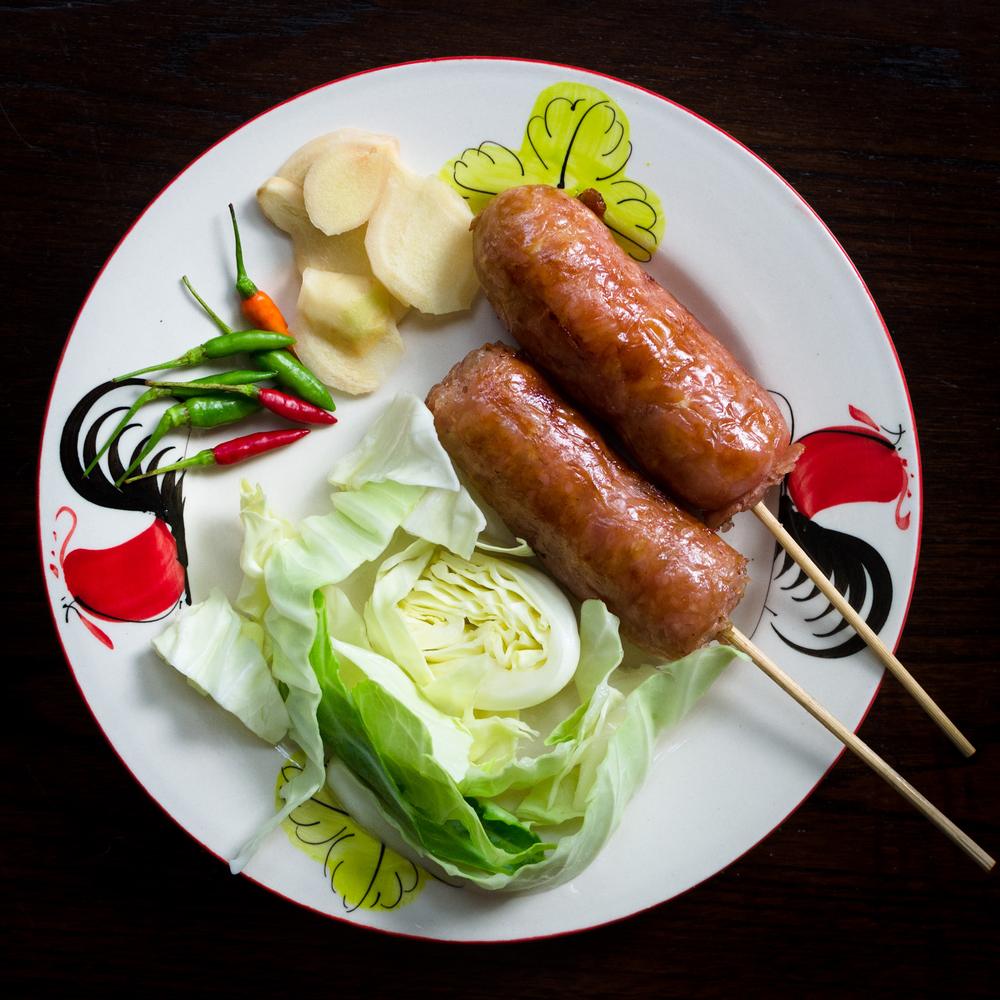 Takeaway (CC BY-SA 3.0)
Sai krok Isan, sliced and served with lettuce, ginger and fresh chili
Central
Pad Thai
Iconic dish
- From: Central Thailand
- When: any meal, especially lunch
- Spice: mild (customizable)
- Price: ฿40 to ฿80 at a street stall, up to ฿160 in a tourist beach town
- Contains: shellfish (shrimp) common; easily ordered vegetarian or tofu-only
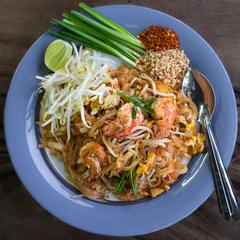
Thin rice noodles go into the wok with egg, bean curd, bean sprouts, dried shrimp and peanuts, pulled together with a tamarind-based sauce. The dish arrives plain by Thai standards: lime, chili flakes, sugar and crushed peanuts wait next to the plate for you to adjust the flavor yourself.
Pad thai is on nearly every menu in the country, from street carts to hotel restaurants.
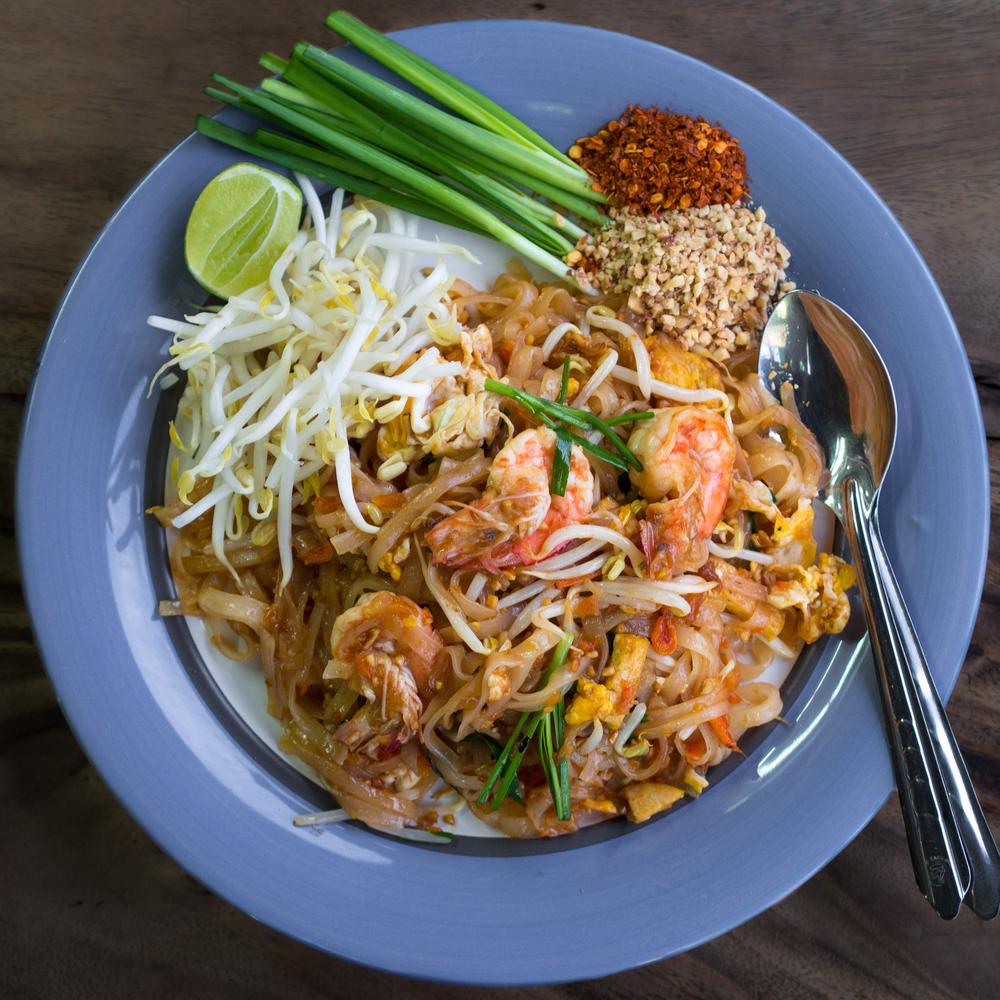 Takeaway (CC BY-SA 3.0)
Pad thai with shrimp from a street stall in the Chang Khien neighborhood of Chiang Mai
Green Curry
Iconic dish
- From: Central Thailand
- When: lunch or dinner, with rice
- Spice: medium to hot
- Contains: meat, seafood or vegetarian variants; coconut milk
Green curry gets its color from fresh green chilies pounded straight into the paste, then simmered in coconut milk with Thai eggplant, basil and your choice of meat. The curry runs hotter than its creamy color suggests.
Spoon the sauce over a side of rice.
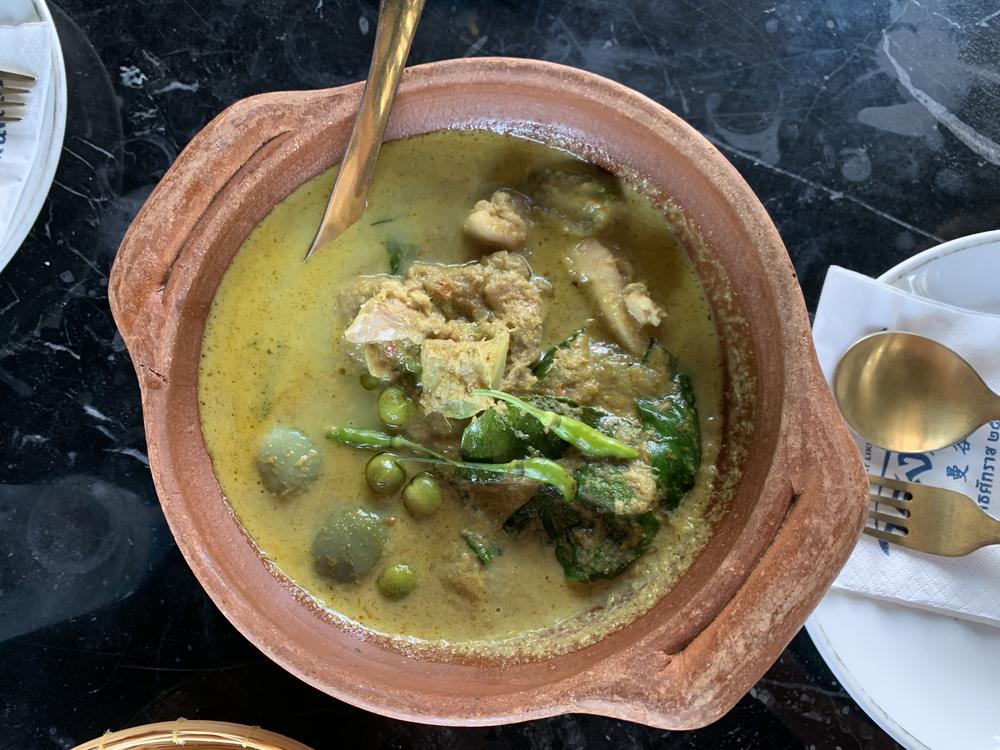 Chainwit. (CC BY-SA 4.0)
Kaeng kheow wan, Thai green curry, served at Rongros
Red Curry
Iconic dish
- From: Central Thailand
- When: lunch or dinner, with rice
- Spice: hot
- Contains: meat; coconut milk
Order the roast duck version for red curry's classic pairing, simmered in the coconut-based curry with Thai eggplant and basil until the meat takes on the sauce. Dried red chilies give the curry its color and a heat that runs past green curry's fresher, grassier burn.
Red curry is one of the five curries most Thai restaurants carry, alongside green, yellow, massaman and panang.
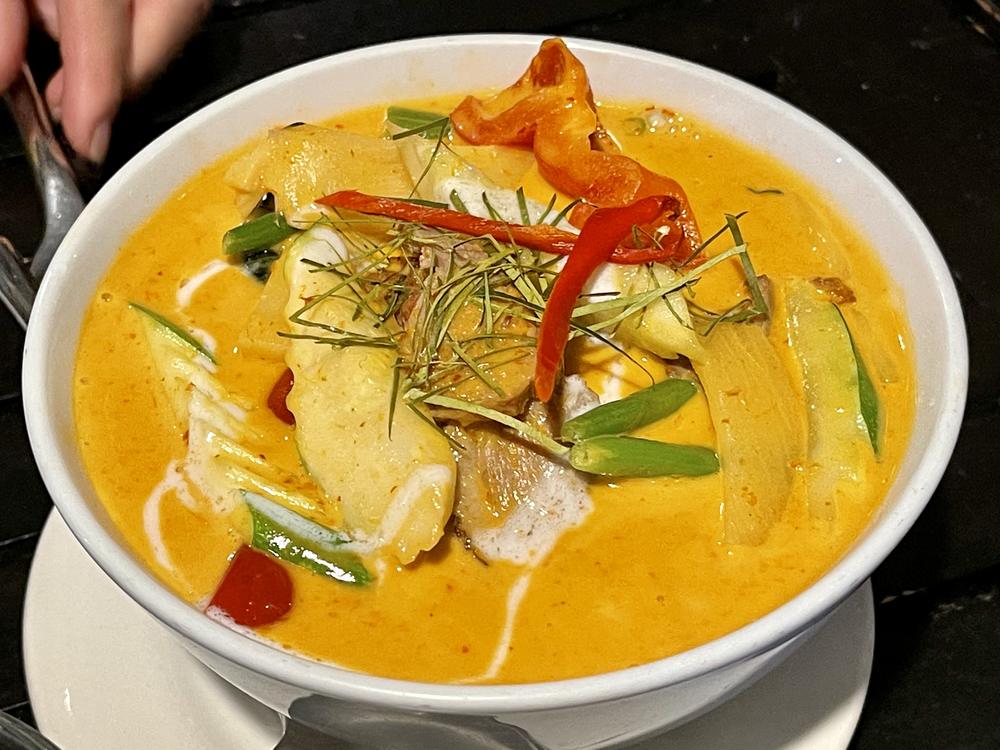 Kgbo (CC BY-SA 4.0)
Duck and lychee in red curry
Tom Yum Goong
- From: Central Thailand
- When: lunch or dinner, shared
- Spice: hot
- Price: ฿60 to ฿100 at a street stall, ฿150 to ฿250 for a seafood version in a tourist beach town
- Contains: shellfish
A clear, sour-and-spicy broth built from lemongrass, galangal and kaffir lime leaf carries prawns, mushrooms and a hit of chili in tom yum goong. The soup arrives in a shared pot rather than individual bowls.
Order it at a street stall rather than a beach-town restaurant if the plain shrimp version is all you want; a seafood upgrade with squid and fish costs substantially more.
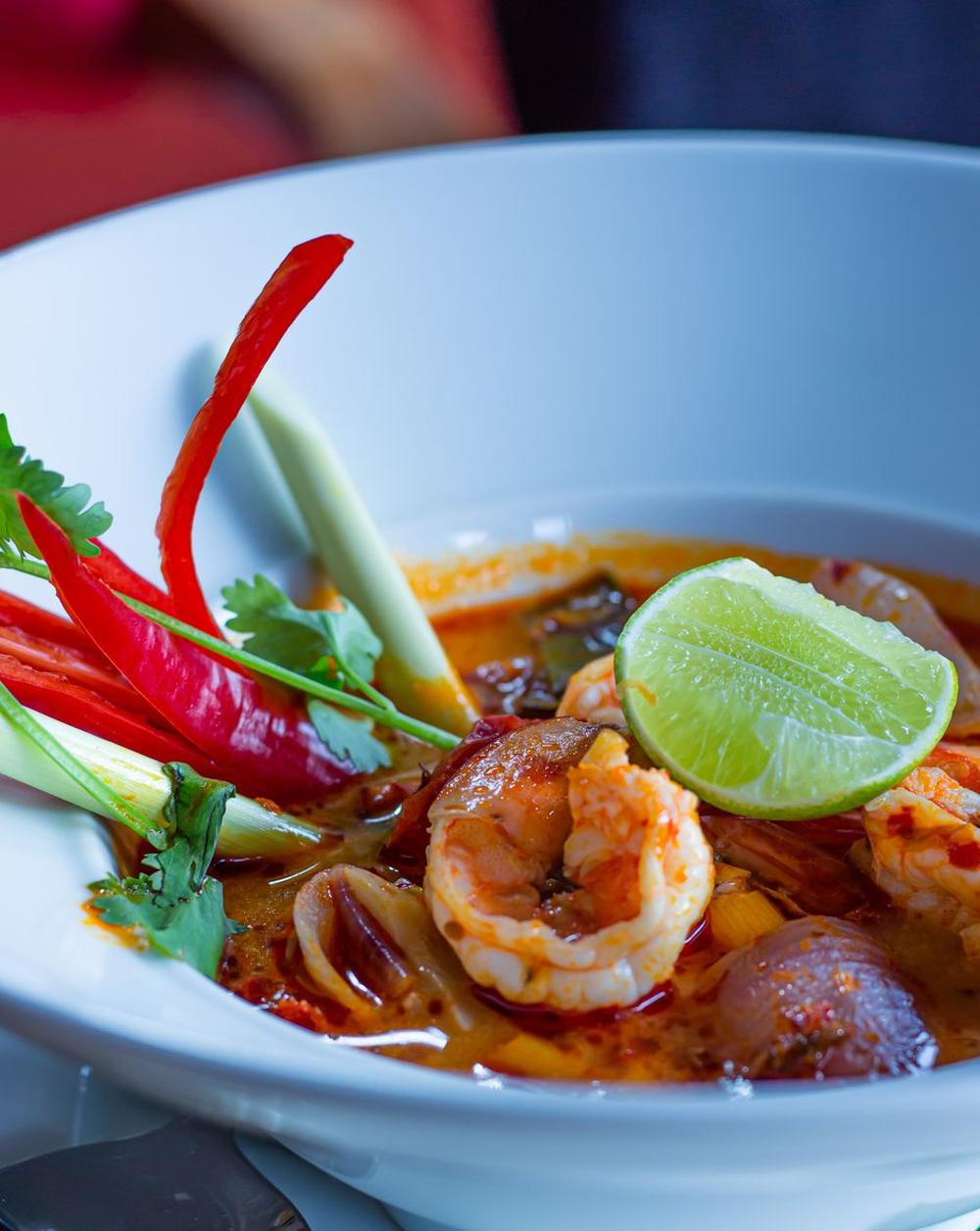 Photo by Augustinus Martinus Noppe on Pexels
Tom yum goong, a clear sour-spicy prawn soup with lemongrass, chili and lime
Tom Kha Gai
- From: Central Thailand
- When: lunch or dinner
- Spice: mild to medium
- Contains: meat (chicken); coconut milk
Tom kha gai is tom yum's gentler cousin: the same galangal and lemongrass base, but coconut milk replaces the clear broth and softens the heat into something closer to a chowder. Mushrooms and chicken make up the bulk of the bowl. Order it if tom yum goong's chili sounds like too much.
Share it the same way as tom yum, with a bowl of rice on the side.
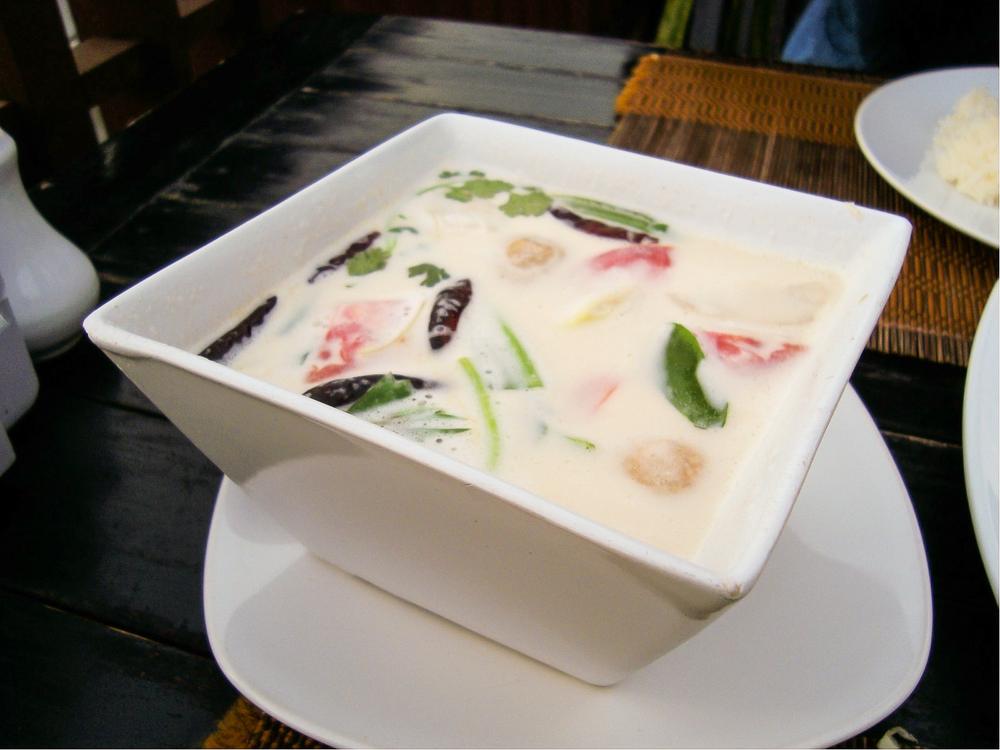 Globe-trotter (CC BY-SA 3.0)
Tom kha kai in Phra Nakhon District, Bangkok, Thailand
South
Massaman Curry
- From: Southern Thailand
- When: lunch or dinner, with rice
- Spice: mild
- Contains: meat (usually beef or chicken); coconut milk, peanuts
Massaman curry is the one to order if chili heat is the part of Thai food you'd rather skip; nothing else on a typical curry menu runs milder. Cinnamon, star anise and cardamom stand in for the usual Thai chili paste, tracing the dish's roots to the Muslim communities of the south. Potatoes and peanuts simmer alongside the meat in a coconut-milk base until the whole pot turns thick and faintly sweet.
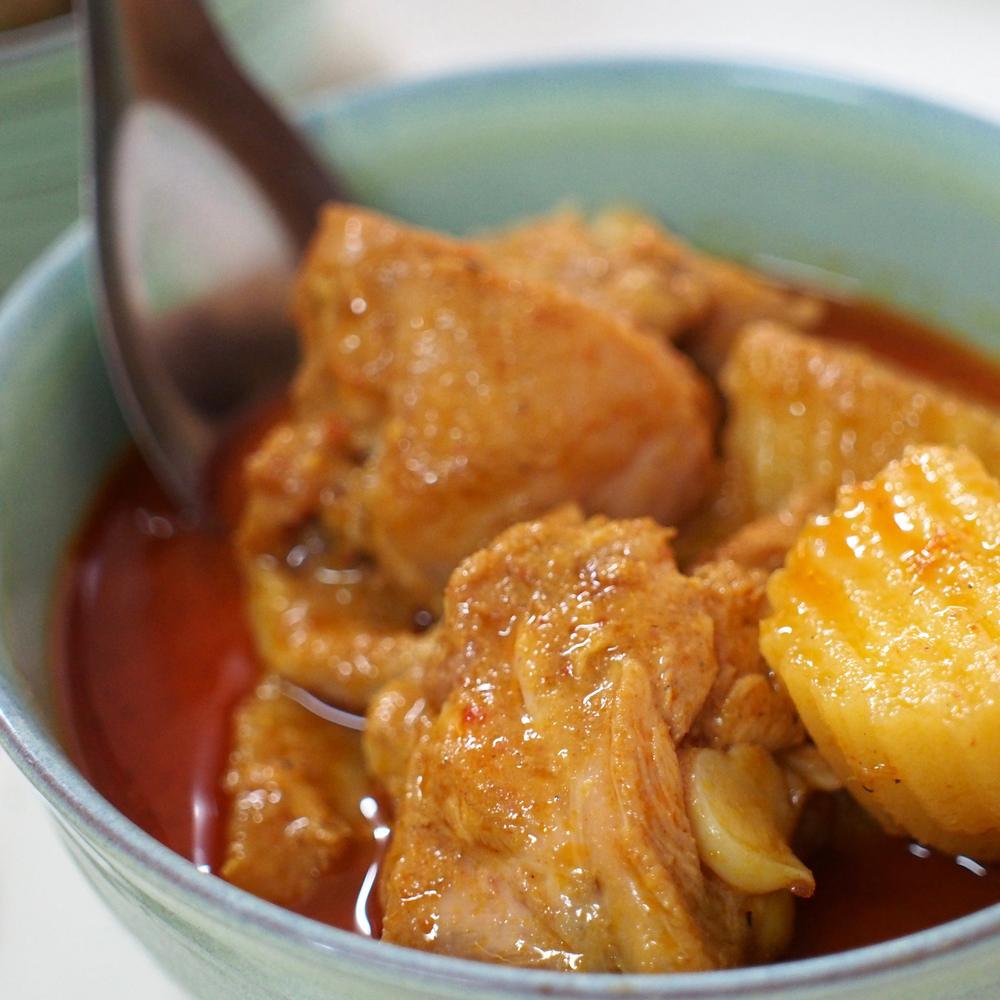 Takeaway (CC BY-SA 3.0)
Kaeng matsaman kai, chicken and potato massaman curry at a southern Thai eatery in Chiang Mai
Roti
- From: Southern Thailand
- When: dessert or late-night snack
- Spice: none (sweet version)
- Contains: vegetarian; dairy, egg
A vendor stretches dough paper-thin on a hot griddle, folds in sliced banana, then chops the finished roti into bite-sized pieces and drizzles it with condensed milk. The savory version, roti kaeng, swaps the banana and milk for a bowl of curry to dip the bread into instead.
Night-market carts sell it nationwide, but the dish itself is a specialty of the south's Muslim community, where the savory roti kaeng is more common than the sweet banana version. Order roti kaeng there if you want it the way it's actually eaten.
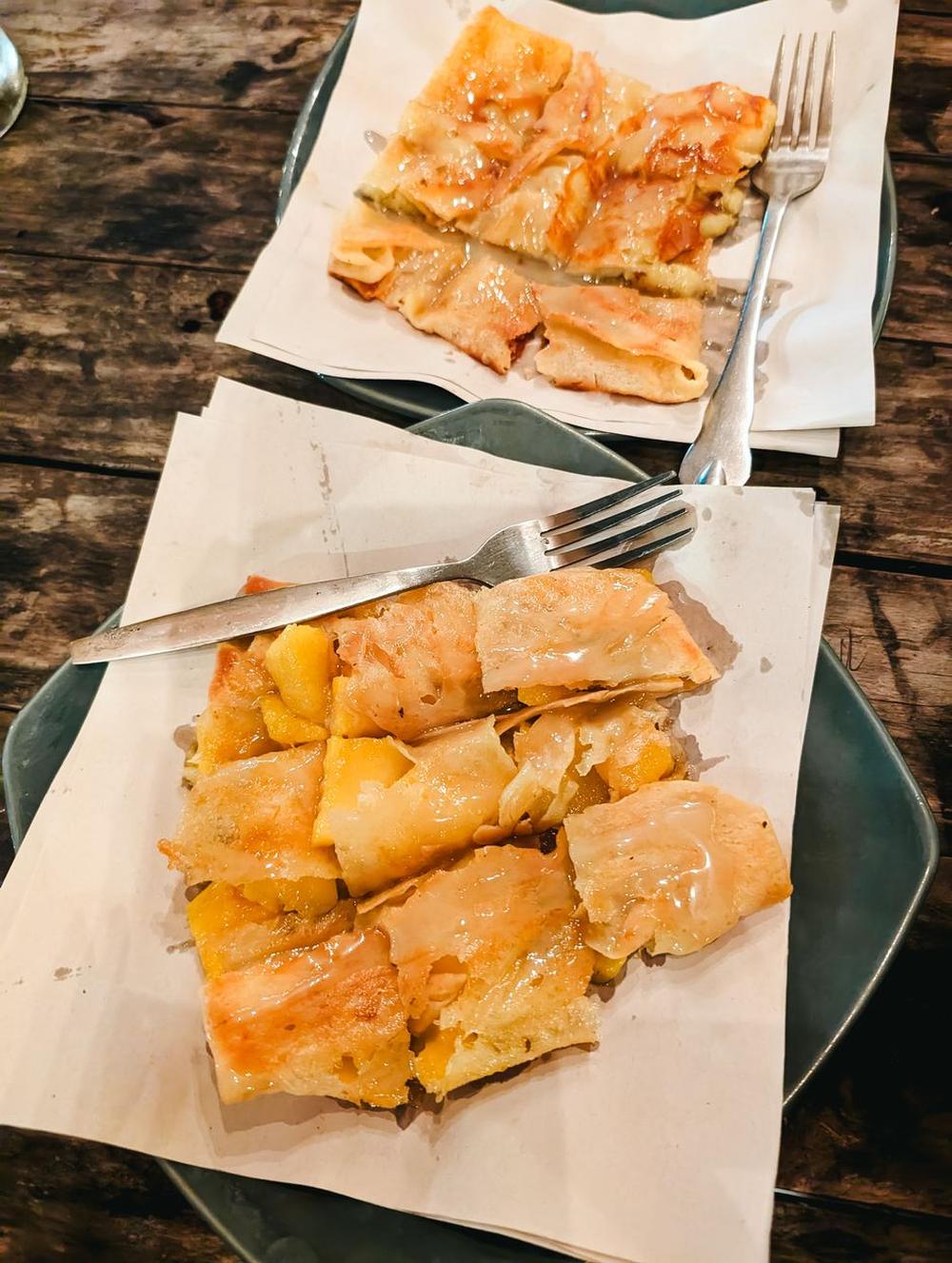 Photo by Markus Winkler on Pexels
Banana roti, chopped and drizzled with condensed milk
Khua Kling
- From: Southern Thailand
- When: lunch or dinner, with rice
- Spice: very hot
- Contains: meat (pork or beef)
Khua kling stir-fries minced meat with a curry paste so concentrated it barely needs liquid, leaving a dry, deep red dish rather than a sauce to spoon. The south's chili-heavy paste drives the heat here, not the milder, coconut-softened base behind most other Thai curries.
Try it only if you've already tested your limits on som tam or a red curry.
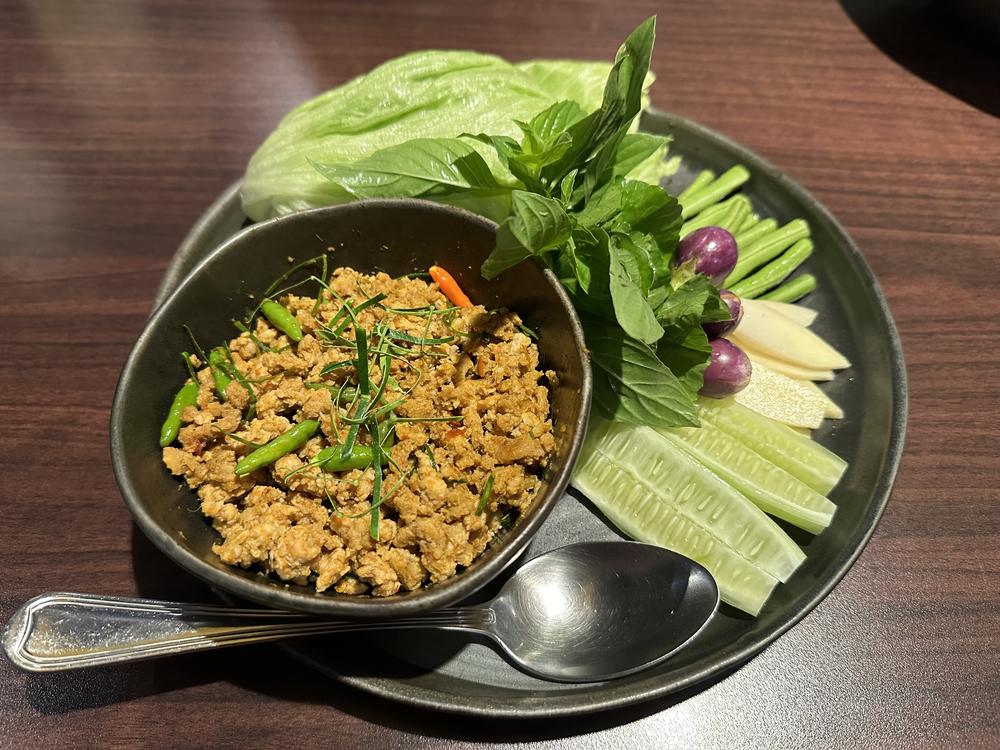 Zheng Zhou (CC BY-SA 4.0)
Khua kling, a dry stir-fried spicy Southern Thai curry with minced pork
Eaten everywhere
Khao Pad
Iconic dish
- From: nationwide
- When: any meal
- Spice: mild
- Price: ฿40 to ฿80
- Contains: meat, seafood or vegetarian variants
Khao pad is one of the few Thai dishes that almost never arrives spicy unless you ask. Day-old rice fries with egg and onion, plus a choice of crab, pork, chicken or shrimp, then comes to the table with lime and cucumber on the side.
Street stalls and restaurants both serve it everywhere in the country, which makes it a safe fallback order on a day when nothing else on the menu looks familiar.
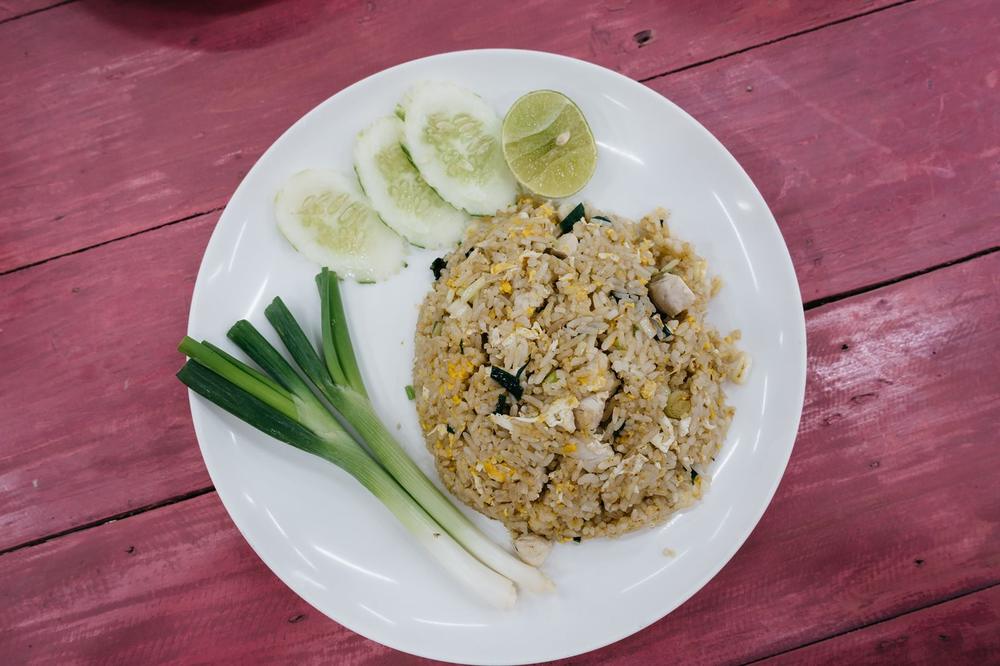 Photo by Markus Winkler on Pexels
Khao pad, Thai fried rice, served with cucumber, lime and spring onion
Mango Sticky Rice
Iconic dish
- From: nationwide
- When: dessert
- Spice: none
- Price: ฿35 to ฿50, up to ฿200 in a tourist area or out of mango season
- Contains: vegetarian; coconut milk
Sweet sticky rice steamed with coconut milk sits beside slices of ripe mango, with a drizzle of extra coconut cream over the top. The rice and the fruit are cooked and served separately, so each spoonful mixes them yourself, warm rice against cold mango.
The best mangoes run from March to June; outside that window, the fruit is flown in.
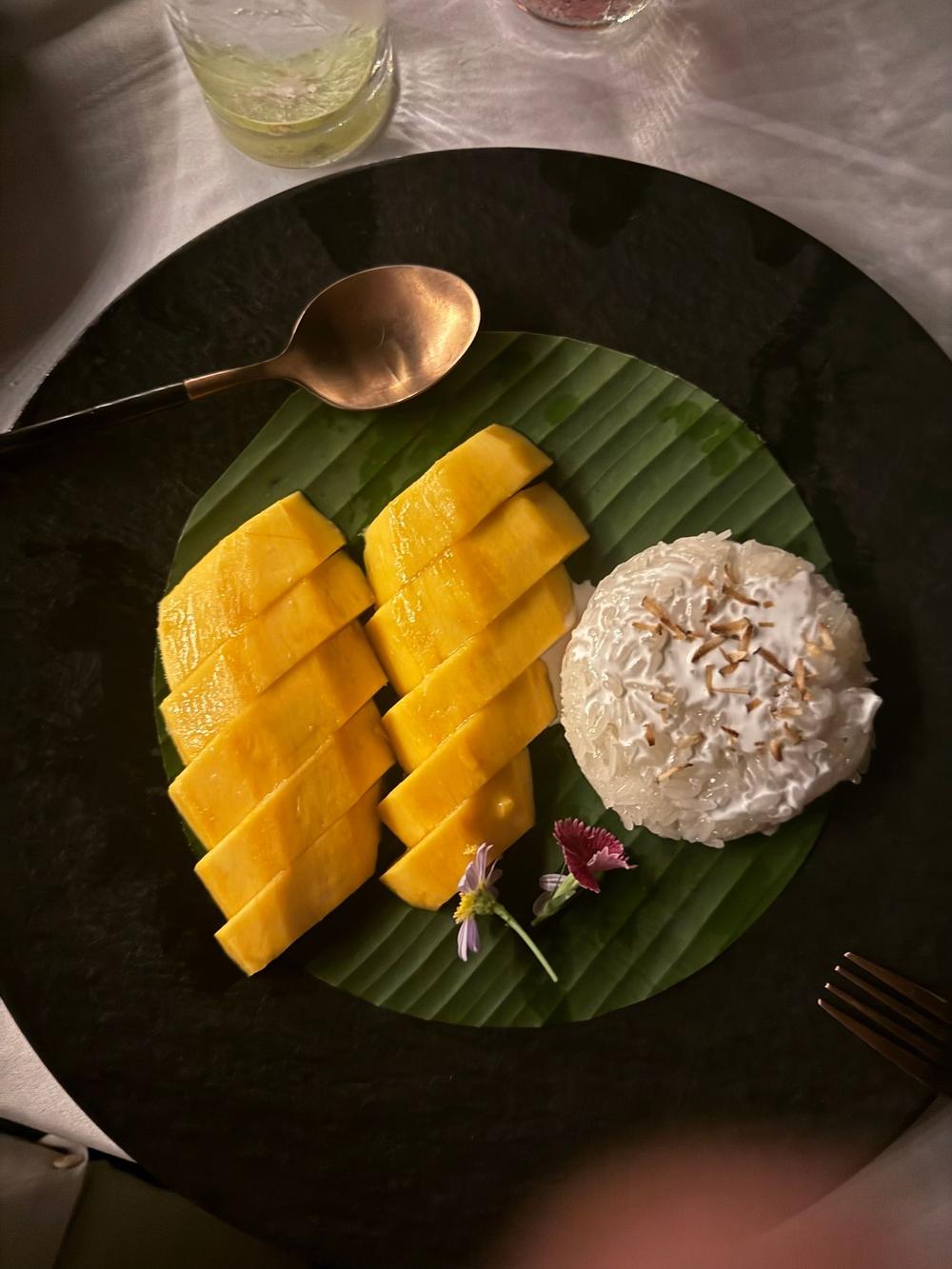 Photo by Mr. Marv on Pexels
Mango sticky rice served on a banana leaf, simply arranged
Satay
- From: nationwide
- When: snack or starter
- Spice: none (the peanut sauce is sweet)
- Contains: meat (pork, chicken or beef)
Thin strips of pork marinated in turmeric and coconut milk go onto a skewer, then over the coals until the edges char. A bowl of peanut sauce and a cucumber relish come alongside, the relish there to cut the sauce's richness between bites. Satay rarely divides a mixed group's order.
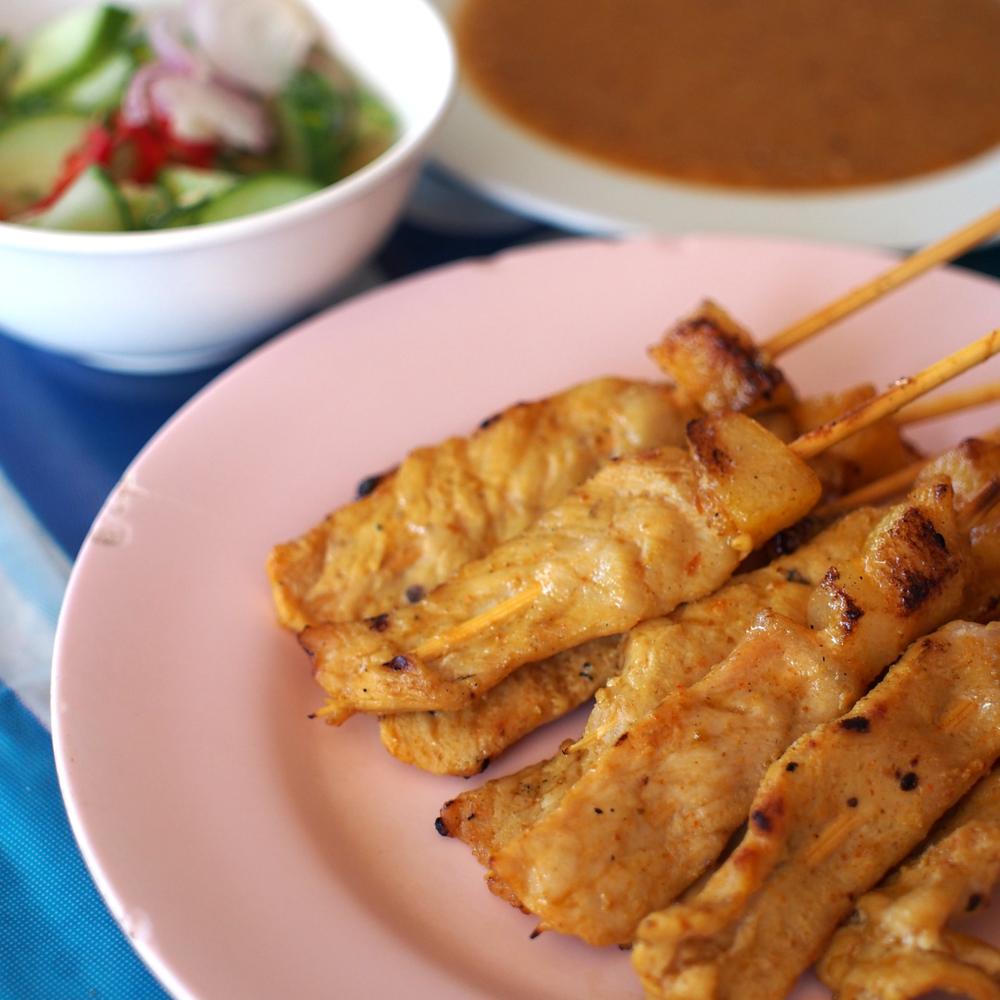 Takeaway (CC BY-SA 3.0)
Mu sate, Thai pork satay, served with peanut sauce and pickled cucumber
Fried Insects
- From: nationwide, especially Bangkok and Chiang Mai
- When: novelty snack with beer
- Spice: none to mild
- Contains: insect protein
At a night-market cart, a vendor deep-fries crickets, grasshoppers, silkworms and bamboo worms and tosses them with soy sauce and pepper before scooping them into a paper cone. The flavor leans toward whatever they're seasoned with rather than anything distinctly buggy; the crunch is the main event. Fried insects are a novelty order more than an everyday one, usually bought alongside a beer rather than as a meal on its own.
Try free
Plan your Thailand trip in about 2 minutes
Tap through 8 quick cards for a complete itinerary with budget, maps, and packing lists. No account required.
Plan your Thailand trip →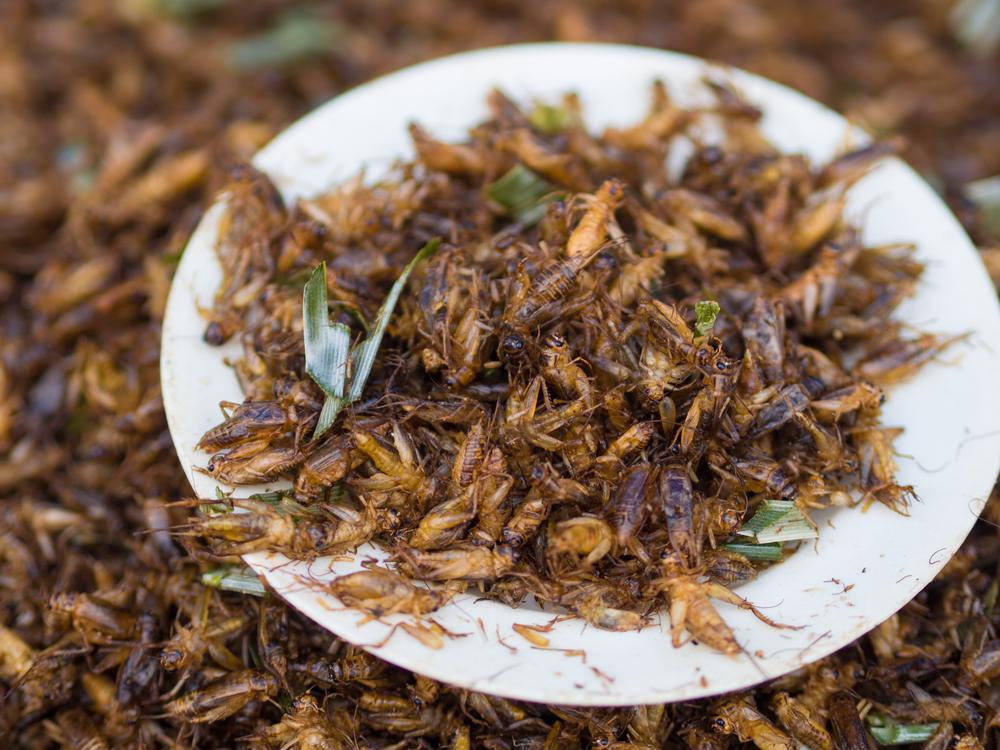 Takeaway (CC BY-SA 3.0)
Chingrit thot, deep-fried crickets
More dishes worth ordering
| Dish | What it is | Region |
|---|---|---|
| Pad See Ew | wide rice noodles stir-fried in dark soy sauce with Chinese broccoli and egg | Central |
| Pad Kra Pao | minced meat stir-fried with holy basil, chili and garlic, served over rice with a fried egg | Central |
| Jok | broken-rice congee with minced pork, topped with ginger, spring onion and a soft egg | Central |
| Khao Man Gai | Hainanese-style poached chicken over rice cooked in chicken fat, with a ginger-chili dipping sauce | Central |
| Pad Phak Boong | morning glory stir-fried fast over high heat with garlic, chili and fermented soybean paste | nationwide |
| Boat Noodles | rice noodle soup in a broth thickened with pork blood, served with offal, in small bowls | Central |
| Khao Kaeng | self-serve curry-and-rice counters where you point to one or two curries ladled over rice | nationwide |
| Moo Ping | grilled marinated pork skewers, slightly sweet and charred | nationwide |
| Nam Prik | pounded chili dip eaten with raw or steamed vegetables and rice; Nam Prik Ong is a Chiang Mai specialty | nationwide |
| Kai Jeow | Thai-style deep-fried omelette, crispy at the edges, often with minced pork mixed in | nationwide |
| Khao Moo Daeng | Cantonese-style barbecued red pork and crispy pork belly over rice with a sweet-savory gravy | Central |
| Nam Tok | grilled meat salad (the name means "waterfall," for the juices released) with lime, chili and roasted rice powder | Isan |
| Gaeng Som | tamarind-soured orange curry, often with fish and vegetables, with no coconut milk | nationwide |
| Hor Mok | steamed curry custard of fish or seafood with coconut milk and egg, set in a banana-leaf cup | Central |
| Hoy Tod | crispy egg-and-starch omelette with oysters or mussels | Central |
| Khanom Jeen | fresh fermented rice noodles with a curry-based sauce ladled over the top | nationwide |
| Khao Kha Moo | pork leg braised in a five-spice broth, served over rice with a boiled egg | Central |
| Miang Kham | bite-sized wraps of wild betel leaf filled with toasted coconut, peanuts, lime and dried shrimp | North |
| Tom Saap | Isan-style hot and sour soup with pork ribs or offal, herbs and roasted rice powder | Isan |
| Yam Mamuang | tart green mango salad with dried shrimp, lime, fish sauce and chili | nationwide |
| Yam Woon Sen | spicy glass-noodle salad with shrimp or pork, lime juice, chili and herbs | Central |
| Kor Moo Yang | charcoal-grilled pork shoulder, sliced and served with a spicy dipping sauce | Isan |
| Moo Kata | all-you-can-grill barbecue hot pot, a domed grill for meat with a moat of broth for vegetables | nationwide |
| Pad Woon Sen | glass noodles stir-fried with egg, vegetables and a choice of meat or seafood | Central |
| Pineapple Fried Rice | fried rice with pineapple, shrimp, cashews and curry powder, served in a carved-out pineapple half | Central |
| Pla Pao | whole fish stuffed with lemongrass, crusted in salt and grilled over charcoal | Isan |
| Suea Rong Hai | grilled marinated beef, sliced and served with a spicy dipping sauce (the name means "crying tiger") | Isan |
| Thai Suki | hot pot or stir-fried glass noodles with egg, seafood and vegetables, with a spicy-sweet dipping sauce | Central |
| Tod Mun Pla | Thai fish cakes made from minced fish, red curry paste and long beans, deep-fried | Central |
| Yen Ta Fo | rice noodle soup in a pink broth from fermented bean curd, with seafood, fish balls and morning glory | Central |
| Rad Na | wide rice noodles topped with a thick gravy of Chinese broccoli and sliced meat | Central |
| Drunken Noodles | wide rice noodles stir-fried with holy basil, chili and a choice of meat or seafood | Central |
Thai curries, side by side
Five curries cover most Thai menus, and the color tells you less than the paste does.
| Curry | Base | Spice |
|---|---|---|
| Green (gaeng keow wan) | fresh green chili paste, coconut milk, Thai eggplant and basil | medium to hot |
| Red (gaeng phet) | dried red chili paste, coconut milk, often roast duck | hot |
| Panang | thick red chili paste, less liquid than red curry, kaffir lime leaf | medium |
| Yellow (gaeng kari) | turmeric-based paste, milder than red or green, often chicken and potato | mild to medium |
| Massaman | cinnamon, star anise and cardamom instead of chili paste, peanuts and potato | mild |
| Khua Kling | dry southern chili paste, almost no liquid | very hot |
| Gaeng Tai Pla | fermented fish innards, vegetables, a lot of chili | very hot |
Desserts beyond mango sticky rice
| Dessert | What it is |
|---|---|
| Khanom Krok | coconut rice-flour pancakes cooked in a cast-iron mold, crispy outside and custardy inside |
| Khanom Buang | crispy thin pancake shells filled with sweet meringue or savory shredded coconut and shrimp |
| Thai Coconut Ice Cream | coconut-milk ice cream served in a coconut shell or bread bun with peanuts, sticky rice and corn |
| Thai Egg-Yolk Sweets | Portuguese-influenced royal sweets of egg yolk and sugar syrup, shaped into golden threads, drops or flowers |
| Khanom Chan | steamed layered dessert of tapioca and rice flour, alternating pandan-green and coconut-white layers |
| Kluay Buat Chi | sliced bananas simmered in sweetened coconut milk |
What to drink in Thailand
| Drink | What it is | Price |
|---|---|---|
| Cha Yen (Thai iced tea) | strongly brewed black tea with spices, sweetened condensed milk and ice | ฿25 to ฿45 |
| Oliang | strong black coffee brewed with roasted grains and sesame, sweetened and served over ice | |
| Chang or Leo beer | Thailand's two widely sold local lagers | ฿50 to ฿70 a bottle |
Eating like a local
Thai meals arrive together rather than in courses. Order several dishes for the middle of the table and share them all at once; a curry, a stir-fry and a salad is a normal spread for two.
Rice or noodles anchor almost every plate, and noodles are the one dish Thais eat with chopsticks and a spoon rather than a fork. Everything else, rice included, is eaten with a fork to push food onto a spoon.
Fish sauce and shrimp paste sweeten or salt most savory cooking, so a dish is rarely automatically vegetarian even when it looks meat-free. Restaurants marked with a yellow "che" sign serve food made without meat, fish sauce or shrimp paste. Say "pom gin jai" if you are a man who doesn't eat meat, or "di chan gin jai" if you are a woman.
Tips aren't typically required or expected when eating out, and no automatic service charge shows up on a street-stall bill.
Plan your Thailand trip around the food
The Thailand travel guide covers how long to stay and how to move between the regions. For a trip built around the food itself, the Chiang Mai itinerary covers 4 days of the north's noodle shops and markets. The 10-day Thailand itinerary crosses several regions in one trip.
A MonkeyEatingMango itinerary names the lunch and dinner for each day, matched to the city on the schedule.
Last updated November 2026.
Common questions
What is Thailand's most popular dish?
In a 2011 poll of 35,000 people worldwide for the world's 50 best foods, Thailand placed more dishes than any other country, including tom yum goong (4th), pad thai (5th) and som tam (6th).
What are the most popular Thai dishes besides pad thai?
Green Curry, Khao Pad (Thai fried rice), Mango Sticky Rice, Red Curry, Som Tam and Larb are the next tier down, each a standard order across the country. Massaman Curry and Tom Yum Goong follow close behind those six.
Is Thai food very spicy? Can I order it mild?
Some Thai dishes are spicy and some aren't: Massaman Curry, Khao Pad and Pad Thai are mild by default, while a southern dish like Khua Kling or Gaeng Tai Pla is built to be very hot. Say "mai phed" (not spicy) or "phed noi" (a little spicy) when you order, and most kitchens will adjust it.
What should I avoid eating in Thailand to not get sick?
The real risk is raw-blood dishes, not street food in general: larb leuat neua (raw beef or pork mixed with blood), koi pla (minced raw fish) and luu moo (raw pig's blood soup) carry a genuine chance of bacterial or parasitic infection. Shellfish or meat left sitting at room temperature is the other thing worth checking before you order.
Is Thai street food safe to eat at night?
Yes, as a rule: a busy stall that cooks to order and serves the food hot is the standard safety check, and it holds after dark the same way it does at lunch. Avoid anything that has been sitting out, and a long local queue is usually a good sign.
How is Thai food in Thailand different from Thai food back home?
Thai food made for American and European palates tends to run sweeter and spicier than what is actually served in Thailand, and it often leans on vegetables like bell pepper and broccoli that rarely appear on a Thai menu. A dish served abroad also tends to carry more sauce, where the same dish in Thailand runs drier and more balanced across sweet, sour, salty and spicy.
Which Thai dishes should I avoid with a peanut allergy?
Peanuts turn up in Som Tam and in the dipping sauce for satay, so ask for either without peanuts if you need to. Most stalls and restaurants will leave them out on request.
What's the difference between Khao Soi and a curry like Panang?
Khao Soi is a noodle soup: egg noodles in a coconut curry broth, topped with crispy fried noodles. Panang Curry is a thicker, drier coconut curry eaten over rice with no noodles at all; order Khao Soi if you want a bowl of soup and Panang if you want a curry over rice.
Is pad thai actually eaten in Thailand, or is it a tourist dish?
Yes, genuinely: a nationalist government campaign under Prime Minister Plaek Phibunsongkhram pushed Pad Thai as a national dish between 1939 and 1942, decades before the dish reached restaurants abroad. Pad thai remains a standard order at street stalls and noodle shops across the country today.
Do you tip when eating out in Thailand?
No. Tips aren't typically required or expected when eating out in Thailand, unlike at a US restaurant. If you leave one for good service, there's no set amount expected.
Is it rude to leave food on your plate in Thailand?
No, leaving a small amount of food on the plate at the end of a meal is considered polite in Thailand rather than rude. Eating your fill without wasting food on purpose is still the general expectation.

Written by Shobhit Shrivastava · Founder
Related reading
Thailand travel guide
5 Days in Bangkok: The Grand Palace to Yaowarat Road
This packed 5-day trip for a couple explores Bangkok's diverse offerings, from the spiritual grandeur of Wat Pho in the historic Rattanakosin area to the neon-lit street food haven of Yaowarat Road. Experience a rejuvenating traditional Thai spa, savor a hands-on cooking class, and enjoy a chic...
Chiang Mai in 4 Days: Temples and Night Markets
4 days in Chiang Mai: 4 nights based in the Old City. Focus on spiritual morning temple visits like Wat Chedi Luang, afternoons exploring local markets for Khao Soi, and evenings at the North Gate Jazz Co-Op. Comfortable pace with 5-6 hours of daily activity, relying on ride-sharing to navigate...
10 Days in Thailand: Bangkok, Chiang Mai and Krabi
10 days through Thailand's diverse landscapes: 4 nights in Bangkok exploring the Grand Palace and bustling Chinatown, then a flight to Chiang Mai for 3 nights among Doi Suthep's mountain temple and lively Night Bazaar. The trip concludes with 3 nights in Krabi, enjoying Railay Beach's dramatic...
A Week in the Thai Islands: Phuket, Krabi and Koh Phi Phi
7 days across Phuket, Koh Phi Phi, and Krabi: Begin with 2 nights in Phuket (Phuket Old Town, Wat Chalong), then a ferry to Koh Phi Phi for 2 nights (Maya Bay, island hopping, snorkeling). Conclude with 3 nights in Krabi (Railay Beach, mangrove forests, Krabi Town Night Market). This packed pace...
Thailand Souvenirs: What to Buy and Bring Home
The 15 Thailand souvenirs worth bringing home, where to buy each one, how to bargain for it, and what actually clears US customs, plus Chatuchak, the night markets and the Buddha-image export rule.
Best Time to Visit Thailand: Month by Month (2027)
When to go to Thailand, month by month: weather for Bangkok, Chiang Mai, Phuket and Ko Samui, the 2027 Songkran and Loy Krathong dates, and why the Andaman and Gulf coasts run different rainy seasons.
Traditional Australian Food: What to Eat in Australia
The Australian dishes to eat first, by category: iconic savory mains, spreads and sweets, seafood, coffee and brunch, then a short bush-food section, sourced throughout.