
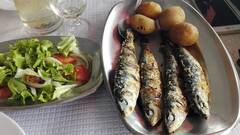
What should you eat in Portugal, and what comes first? Start with a pastel de nata and an espresso, then order bacalhau, Portugal's defining ingredient, at least once. Add caldo verde, grilled sardines if it's summer, and a francesinha if you're in Porto. A Portuguese meal runs three courses with soup first.
- Save a Sunday for cozido à portuguesa or leitão da Bairrada. Both are traditionally weekend dishes, worth building a day around rather than ordering on a weeknight.
- Order bacalhau once, in one of its three main forms. Shredded and scrambled (à Brás), baked in a casserole (à Gomes de Sá), or fried into bolinhos, the fritters.
- Grilled sardines only run June to October. Outside that window, order a different fish.
The Portuguese dishes to eat first
Pastel de Nata
Iconic dish
- From: Belém, Lisbon, invented by monks at the Jerónimos Monastery
- When: breakfast or an afternoon snack, any season
- Price: 1.30 to 1.70 euros for a single tart in Lisbon
- Contains: egg and dairy; vegetarian
Lisbon's pastel de nata, a flaky custard tart with an egg-yolk filling, comes dusted with cinnamon and powdered sugar to taste. Monks first made them at the Jerónimos Monastery; after Portugal's 1820 revolution closed the monasteries, the recipe went commercial just outside its gates.
Eat one warm, with a shot of espresso. Pastelarias across the country sell their own version, and the original patisserie, built next to the monastery, still operates today.
 Kent Wang from London, United Kingdom (CC BY-SA 2.0)
Three pastéis de nata on a paper napkin
Bacalhau
Iconic dish
- From: nationwide; the fish itself is mostly imported from Norway today
- When: lunch or dinner year-round; also a traditional Christmas Eve dish in some parts of Portugal, boiled with potatoes and cabbage
- Contains: fish
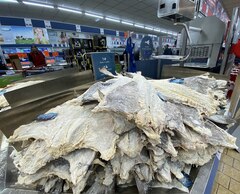
Bacalhau, dried and salt-cured cod, comes with a saying: a recipe for every day of the year. Salting kept the catch edible through long voyages, before refrigeration. Portuguese supermarkets still keep a bacalhau counter of whole salted fillets.
Start with à Brás, shredded and quick at a tasca counter; save à Gomes de Sá, the baked casserole, for a sit-down meal, and order bolinhos, the fritters, as a snack between the two.
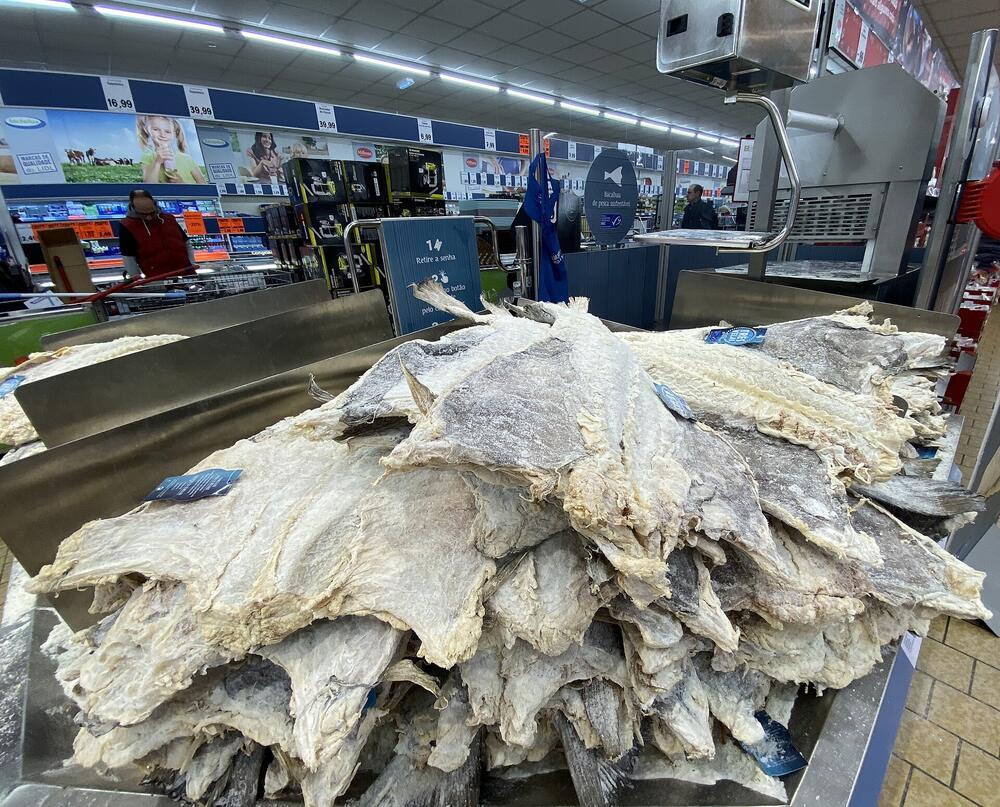 Sharon Hahn Darlin (CC BY 2.0)
A stack of whole dried salt cod on a counter in Braga
Bacalhau à Brás
Iconic dish
- From: Lisbon, nationwide today
- When: lunch or dinner, year-round
- Contains: fish, egg
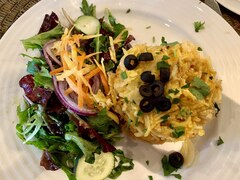
Lisbon's bacalhau à Brás shreds the salt cod fine and scrambles it with matchstick fried potatoes and egg, finishing with black olives and parsley while the egg is still loose.
Order it in Lisbon's Bairro Alto, said to be where it originated, or in the tascas of Mouraria.
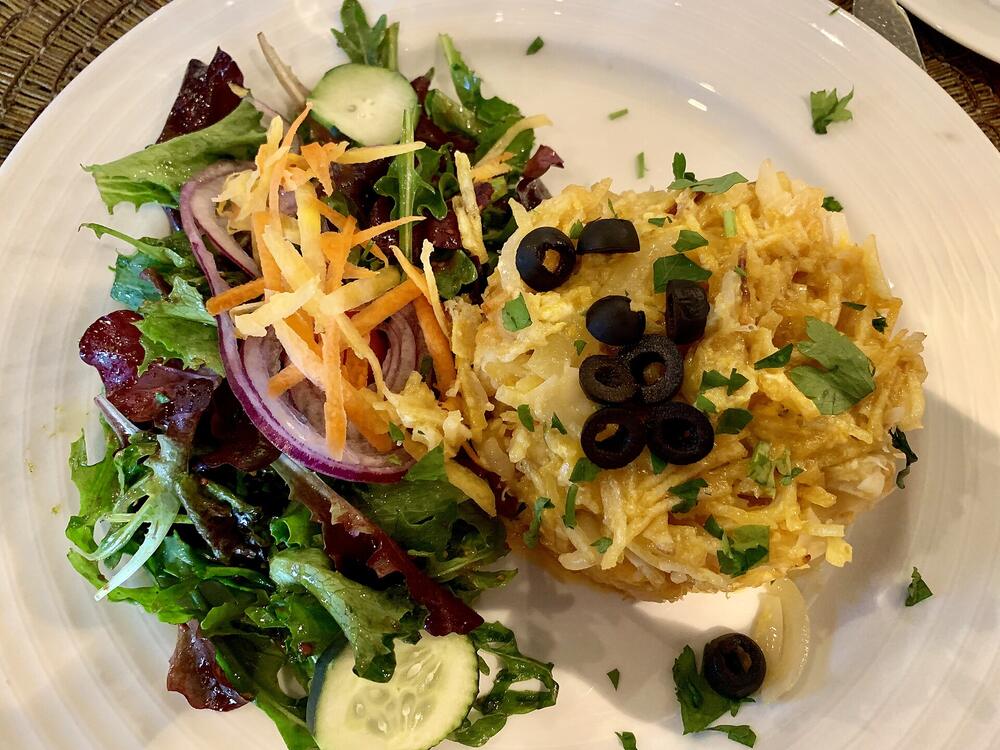 MollySVH (CC BY 2.0)
Bacalhau à Brás with black olives and a side salad, at a Lisbon restaurant
Bolinhos de Bacalhau
Iconic dish
- From: nationwide
- When: any time, as a starter or petisco
- Contains: fish, egg
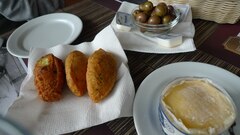
Salt cod, potato, egg, parsley and onion go into bolinhos de bacalhau, deep-fried crunchy on the outside and soft inside. Pastelarias sell them from the counter, and petisco bars serve them as a starter with a squeeze of lemon.
Order two or three to share while the rest of the meal is decided.
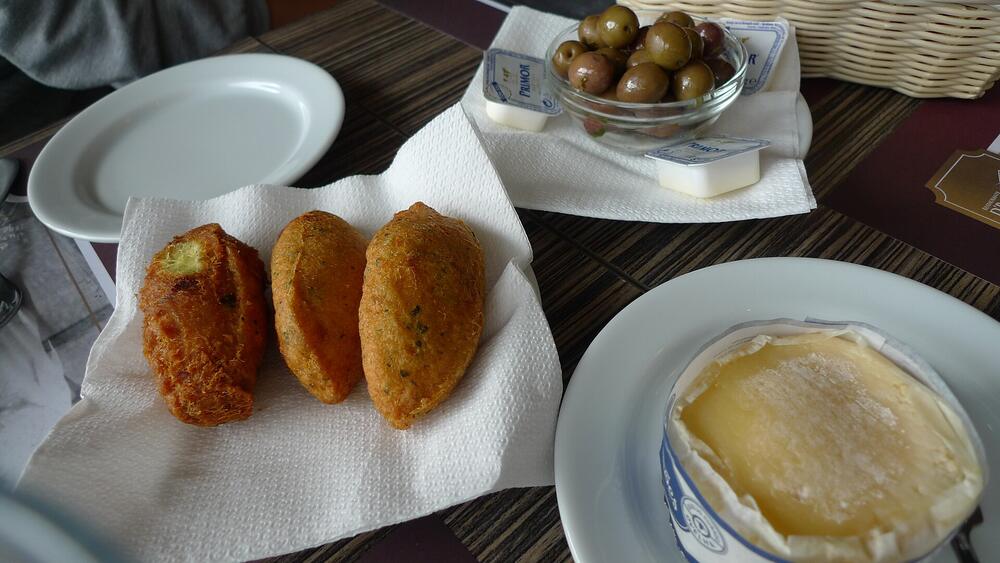 tak.wing (CC BY-SA 2.0)
Three oval cod fritters on paper with olives and cheese on the side, in Lisbon
Caldo Verde
Iconic dish
- From: Minho province, now nationwide
- When: a starter at lunch or dinner, any season
- Contains: pork by default (chouriço); ask whether the broth is vegetable- or chicken-based
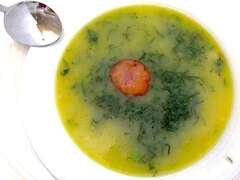
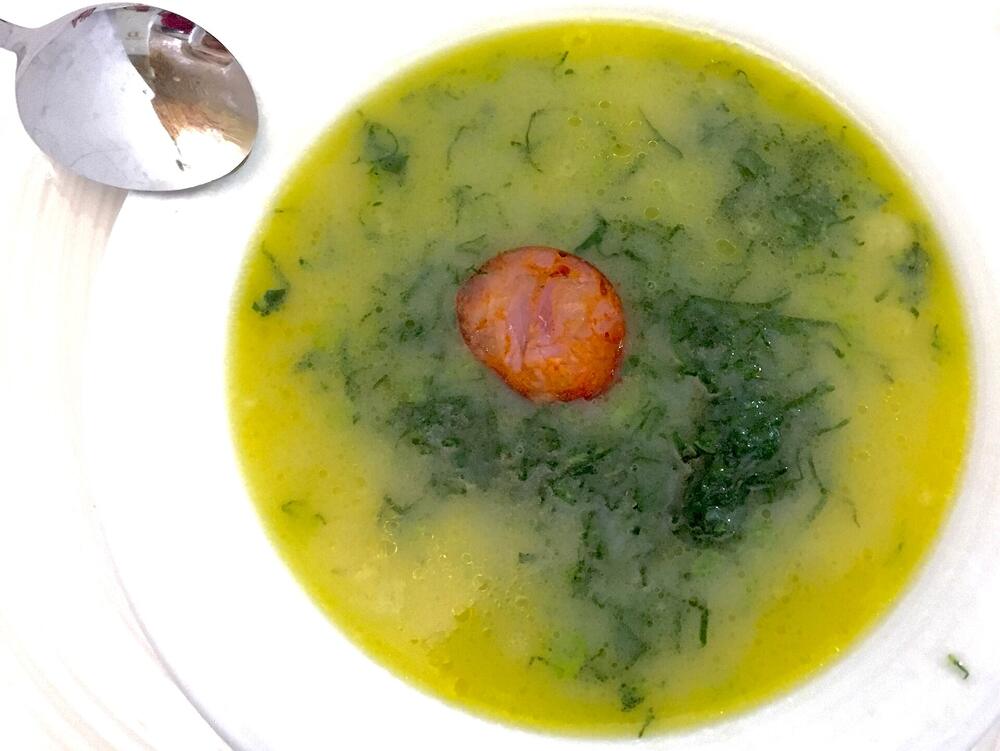
Caldo verde, from the Minho, purees potato and onion into a thin soup, then adds very finely shredded collard greens and a slice of chouriço on top. A drizzle of olive oil and a piece of broa, the dense cornbread, usually come with it.
Ask for it without the chouriço if you don't eat meat, and check whether the broth itself is vegetable- or chicken-based.
 Pasquale Paolo Cardo from Finale Ligure (Savona), Italy (CC BY 2.0)
Caldo verde with shredded kale and a single slice of chouriço, in Lisbon
Sardinhas Assadas
Iconic dish
- From: nationwide, especially coastal towns
- When: summer sardine season, June to October, lunch or dinner
- Contains: fish
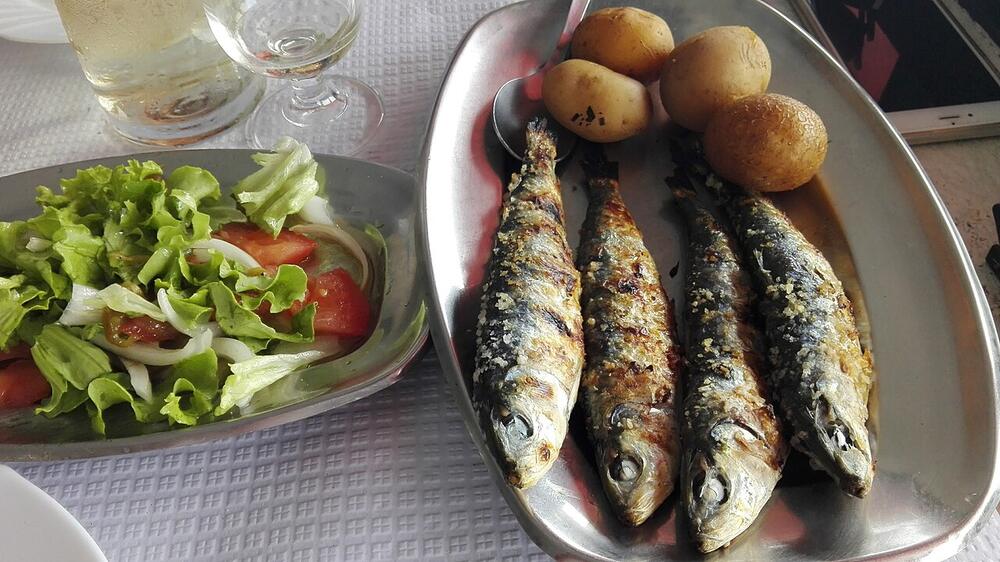
Whole sardines grilled over open coals and seasoned with nothing but salt make sardinhas assadas. They're served whole, head on, over boiled potatoes and salad, often on a slice of bread.
Lisbon's Festas de Santo António fill the city with grilled-sardine smoke every June, the same month as the neighborhood marches.
 Duarte Briz (CC BY-SA 4.0)
A platter of Portuguese-style grilled sardines
Francesinha
Iconic dish
- From: Porto, inspired by the French croque-monsieur
- When: lunch or dinner, any season
- Price: 11 to 16 euros with fries and a beer in Porto; up to 18 euros in tourist areas
- Contains: meat, dairy, sometimes egg
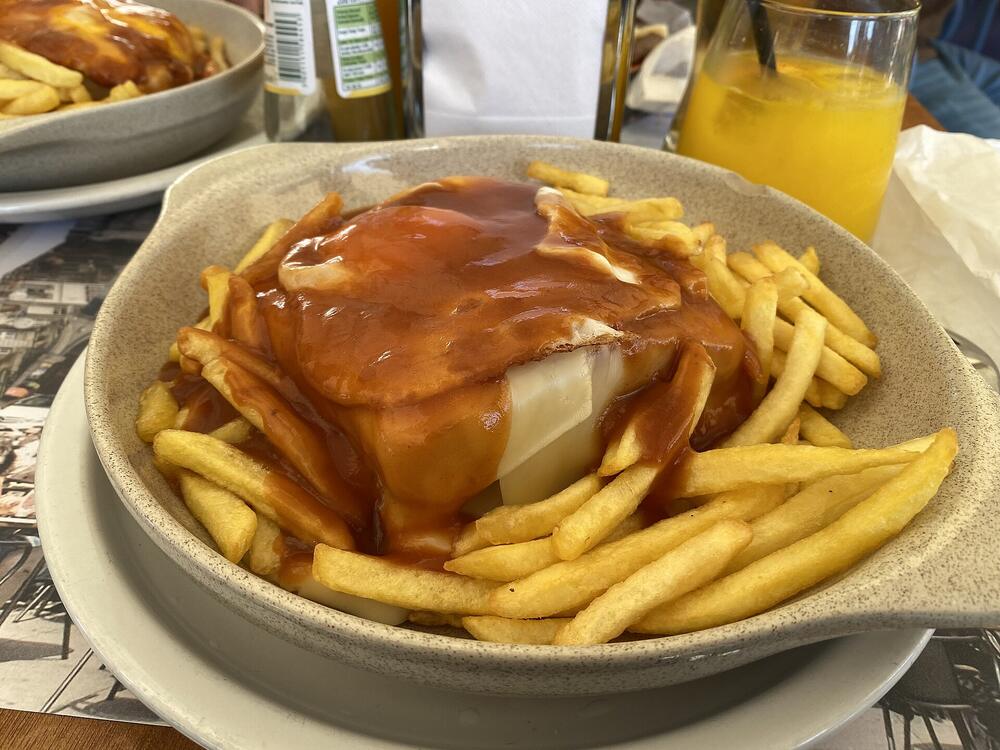
Porto's francesinha stacks ham, linguiça sausage and steak or roast meat on thick bread beneath melted cheese, then drowns it in a spiced tomato-and-beer sauce, sometimes under a fried egg, with fries on the side. Its name translates as "little French woman."
Order a cold beer with it, and don't plan anything strenuous afterward.
The 3-day Porto itinerary schedules a francesinha lunch on the day you land.
 DgOlsen (CC BY-SA 4.0)
A francesinha under melted cheese and sauce, ringed with fries, at a café on Porto's Ribeira
Bifana
- From: nationwide; Vendas Novas holds an annual bifanas festival
- When: lunch or a late-night snack, any season
- Price: 2.50 to 4.50 euros at a tasca counter
- Contains: meat (pork)
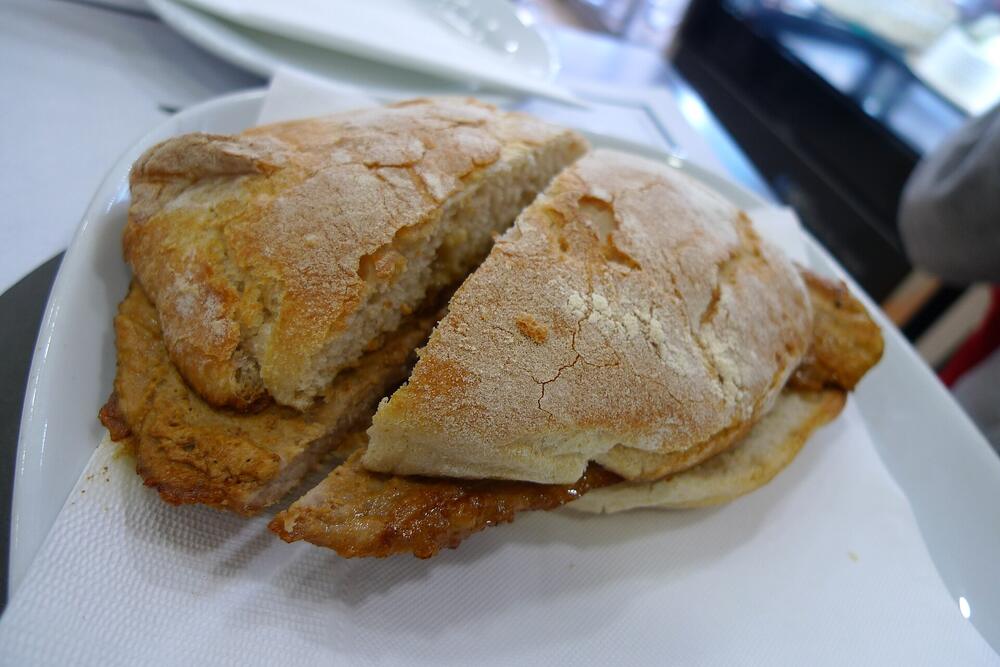
A thin pork cutlet marinated in garlic, white wine and paprika becomes a bifana, served hot in a bread roll, mustard on the side if you want it. You eat it on your feet, gone in a few minutes.
Order one after a night out or at midday from any snack bar with a steaming pan of them behind the counter.
 tak.wing (CC BY-SA 2.0)
A bifana, thin marinated pork in a crusty roll, cut in half
Cozido à Portuguesa
- From: nationwide; a volcano-cooked version is a specialty of Furnas, in the Azores
- When: lunch, especially Sundays and winter
- Contains: meat, pork
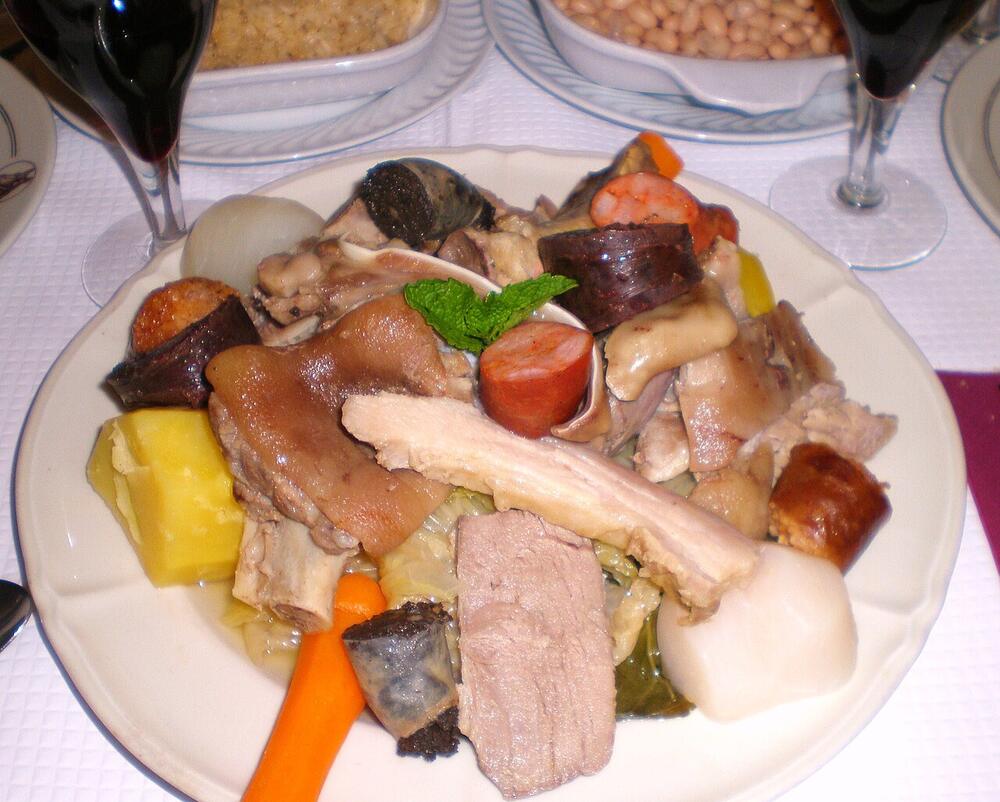
Cozido à portuguesa boils beef, pork, chicken, chouriço and morcela together with cabbage, carrots, potatoes and turnips, and serves the broth first. It's a Sunday family meal, and the meats and vegetables that follow come plated together or on separate dishes, depending on the kitchen.
In Furnas, in the Azores, cozido cooks underground in the heat of volcanic vents.
 Uxbona (CC BY-SA 3.0)
A plate of cozido à portuguesa with boiled meats, sausages, potato, carrot and greens
Leitão da Bairrada
- From: the Mealhada and Bairrada region, near Coimbra
- When: lunch, a festive or Sunday dish
- Contains: meat (pork)
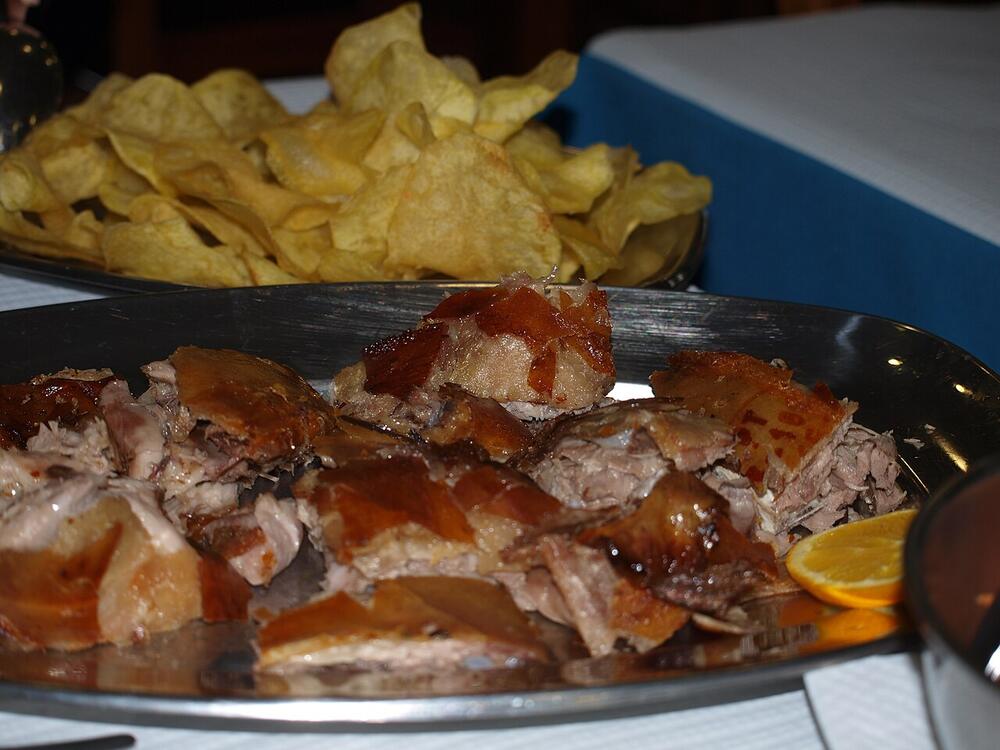
Leitão da Bairrada spit-roasts a suckling pig, four to six weeks old, seasoned with salt and pepper, until the skin crackles. The restaurants of Mealhada chop it into pieces and serve it skin-on, with orange slices, bread and a glass of the region's own sparkling wine.
Book ahead for Sunday lunch in Mealhada.
 Adriao (CC BY 3.0)
Chopped roast suckling pig with crackling skin on a platter, potato crisps behind
Porco Preto
- From: the Alentejo
- When: lunch or dinner, year-round
- Contains: meat (pork)
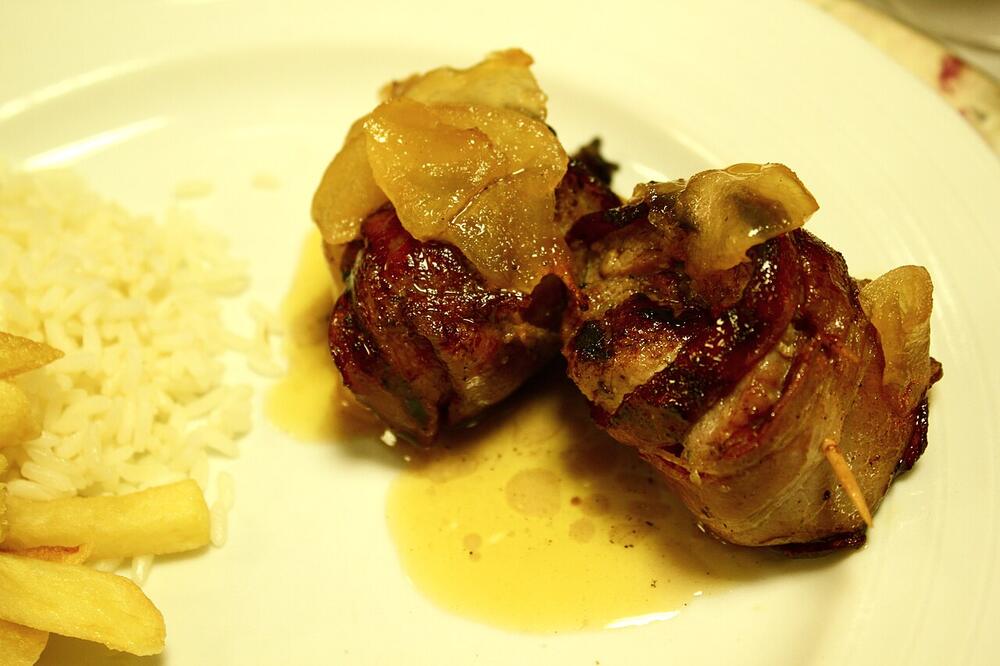
Porco preto is the Iberian black pig, raised partly on acorns in the Alentejo's cork-oak groves, and prized for meat that marbles like a good steak. Alentejo restaurants grill the secretos and plumas cuts simply, or stew the meat with clams.
Order porco preto in the Alentejo, where the pigs are raised.
 André Luís (CC BY 2.0)
Two porco preto loin medallions wrapped in bacon with apple and a Port wine sauce, rice and fries beside
Polvo à Lagareiro
- From: said to have started in central Portugal; nationwide today
- When: lunch or dinner, traditionally also Christmas Eve
- Contains: shellfish/seafood
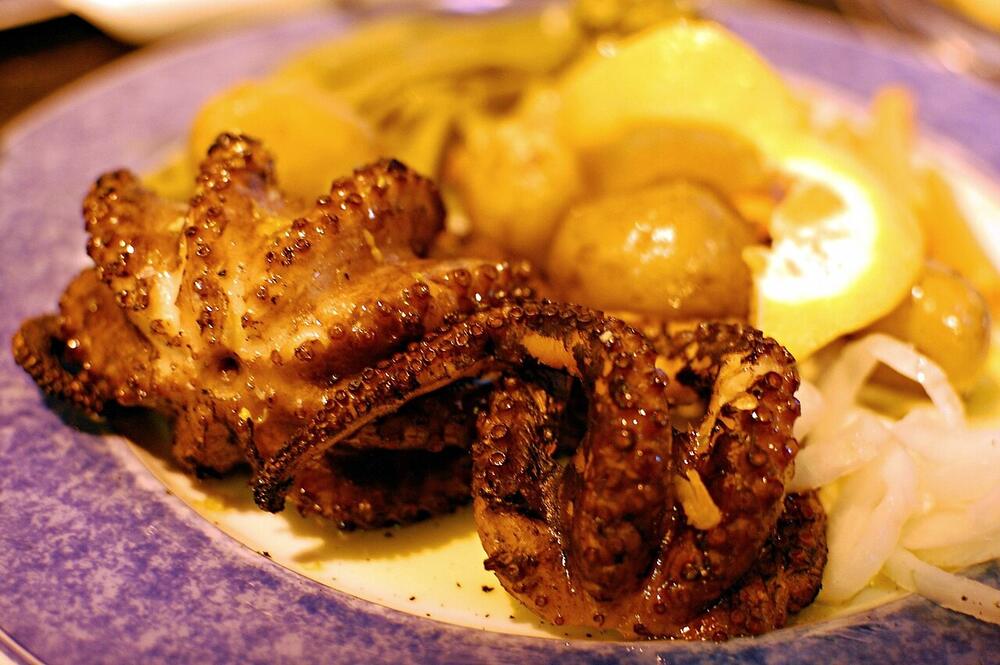
Polvo à lagareiro roasts octopus until it's tender, then douses the whole tentacle in olive oil and serves it over smashed, "punched" potatoes. The potatoes are there to soak up the oil.
Seafood restaurants nationwide serve a version of it.
 silvar.net (CC BY 2.0)
Roasted octopus tentacles glossy with olive oil beside small potatoes
Queijo da Serra da Estrela
Iconic dish
- From: Serra da Estrela, mainland Portugal's highest mountain range
- When: its own course, before or after the meal
- Contains: vegetarian (thistle rennet, no animal rennet)
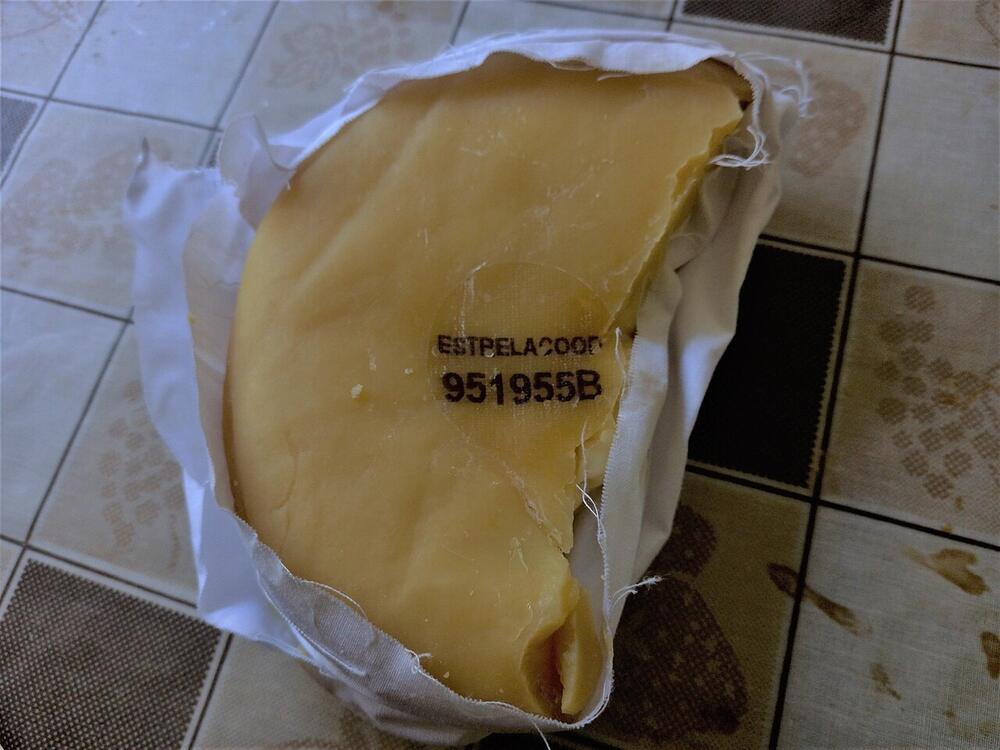
Thistle rennet, not the usual animal kind, curdles the raw sheep's milk behind Queijo da Serra da Estrela, leaving it almost liquid when young and firmer as it ages. Spoon out a young wheel at the table; slice an aged one.
 Hipersyl (CC0)
An opened Serra da Estrela cheese in its paper wrapping, rind broken back to the paste
Vinho Verde
Iconic dish
- From: Minho province, in Portugal's northwest
- When: with lunch or dinner, especially in summer
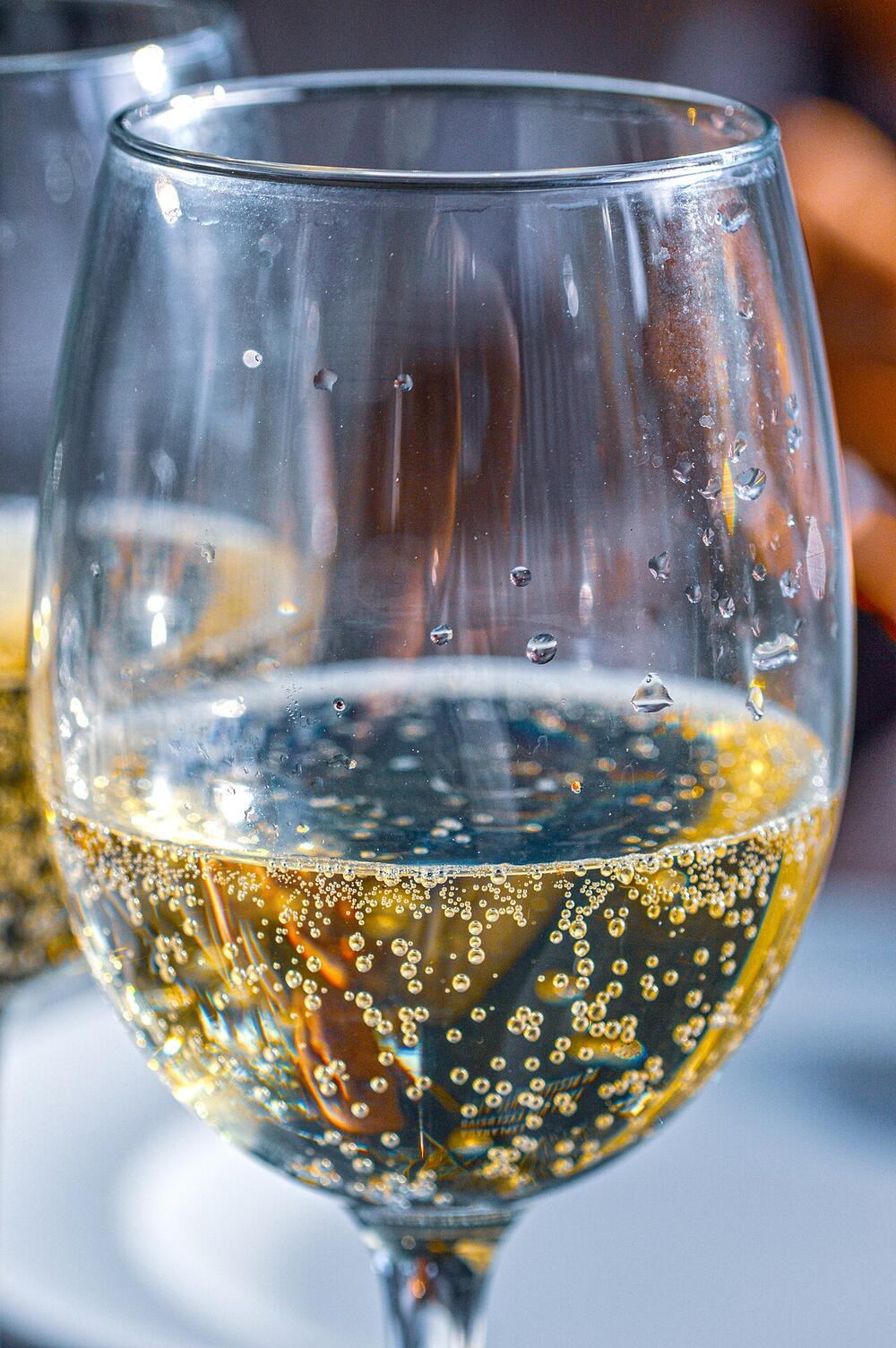
Chill vinho verde and drink it while it's still "green": a young, lightly sparkling wine from the Minho, in red, white or rosé. The style pairs well with Portugal's seafood and fish.
Order the white with grilled fish.
 Michael Gaylard (CC BY 2.0)
A glass of pale vinho verde full of fine bubbles
Port wine
- From: the Douro Valley, aged in Vila Nova de Gaia, across the river from Porto
- When: an aperitif (dry and white styles) or a dessert wine (ruby and tawny), any season
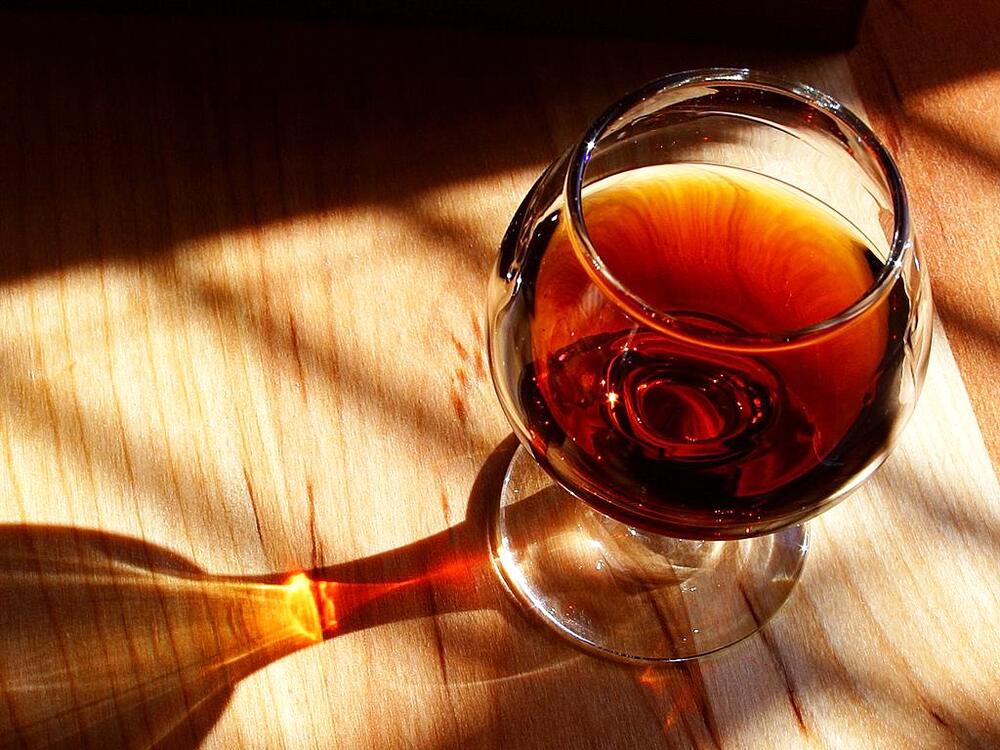
Douro Valley grapes become Port when grape spirit fortifies them partway through fermentation, stopping the sugar from fully converting and leaving the wine sweet, strong and built to age. Styles range from a dry white, good before a meal, to a sweet ruby or tawny for after.
Cross the river from Porto to Vila Nova de Gaia, where the old wine lodges line the waterfront and most offer a tasting of their own cellar.
 Jon Sullivan (public domain)
A glass of red Port on a wooden table in sunlight
Ginjinha
- From: Lisbon; also Óbidos, Alcobaça and the Algarve
- When: an after-dinner digestif, or a shot any time
- Price: about 1.50 euros a shot at the two historic bars by Rossio
Steeping ginja berries, a kind of Morello cherry, in aguardente with sugar makes ginjinha, Lisbon's sour-cherry liqueur. Lisbon drinks it as a shot, often with a cherry left in the glass; in Óbidos, it's served in a small edible chocolate cup instead.
Order one standing outside A Ginjinha, on Largo de São Domingos, or Ginjinha Sem Rival, a few minutes' walk away on Rua das Portas de Santo Antão.
 Michael Coghlan (CC BY-SA 2.0)
Two small chocolate cups filled with dark cherry ginjinha
The Seven Wonders of Portuguese Gastronomy
A 2011 public vote named seven dishes the Seven Wonders of Portuguese Gastronomy: alheira de Mirandela, arroz de marisco, caldo verde, leitão da Bairrada, pastel de Belém, Queijo da Serra da Estrela and sardinha assada. Five have a full entry above; alheira de Mirandela and arroz de marisco are in the tables below.
More petiscos, cheese and charcuterie to try
Petiscos are small plates, like tapas, shared from the middle of the table.
| Petisco | What it is | From |
|---|---|---|
| Alheira de Mirandela | bread-and-meat sausage, traditionally made without pork, grilled or fried and served with egg and fries | Mirandela, Trás-os-Montes |
| Queijo de Azeitão | semi-soft, creamy sheep's-milk cheese curdled with thistle rennet | Azeitão, Setúbal Peninsula |
| Queijo São Jorge | firm, aged cow's-milk cheese, at least three months old | São Jorge Island, the Azores |
| Requeijão | fresh, spreadable, ricotta-like whey cheese | nationwide |
| Presunto | dry-cured ham, Portugal's answer to prosciutto or jamón | Chaves and Barrancos |
| Chouriço | smoked pork sausage seasoned with paprika and garlic | nationwide |
| Farinheira | smoked sausage made from flour and pork fat rather than meat | Borba, Estremoz and Portalegre |
| Pão de Deus | sweet bread roll topped with a coconut crust | nationwide |
| Broa de milho | dense, round cornbread, not sweet, with a thick crust | nationwide, especially the north |
| Conservas | tinned sardines, tuna and mackerel, often in decorative, collectible tins | coastal canneries such as Matosinhos |
| Morcela | blood sausage | nationwide |
| Prego | a thin steak sandwich in a bread roll | nationwide |
| Croquetes de carne | fried croquettes, usually beef, a standard bar snack | nationwide |
| Bolo do caco | sweet-potato flatbread, cooked on a hot stone and split for garlic butter | Madeira |
| Cachorrinho | Porto's own hot dog, with melted cheese and a spicy sauce | Porto |
| Caracóis | stewed snails, a summer bar snack | nationwide, especially Lisbon |
| Chouriço assado | whole chouriço flambéed at the table in a clay dish | nationwide, especially the Algarve |
| Peixinhos da horta | green beans battered and fried, said to have inspired Japanese tempura | nationwide |
| Pica-pau | diced beef or pork cubes in a garlic-mustard sauce | nationwide |
Ask before you order alheira if you don't eat pork: it was invented as a sausage without pork, made from bread and poultry or game instead, but a modern version now often contains pork.
Mains beyond the classics
Order each dish where it comes from: cataplana de marisco in the Algarve, tripas à moda do Porto in Porto, açorda à Alentejana in the Alentejo.
| Dish | What it is | From |
|---|---|---|
| Amêijoas à Bulhão Pato | clams steamed in garlic, white wine and coriander, named for a 19th-century poet | nationwide |
| Frango Piri-Piri | grilled chicken basted in a chili sauce with roots in Portuguese Africa | nationwide |
| Cataplana de marisco | seafood stew cooked in a hinged, clam-shaped copper pan | the Algarve |
| Arroz de marisco | soupy seafood rice with shrimp, clams, crab and mussels in a garlicky tomato broth | coastal, nationwide |
| Arroz de pato | baked duck rice, traditionally linked to the north | nationwide today |
| Açorda à Alentejana | bread soup thickened with day-old bread, garlic and coriander, often with shrimp or egg | the Alentejo |
| Tripas à Moda do Porto | tripe stew with white beans, chicken and sausage | Porto |
| Carne de Porco à Alentejana | pork and clams, cooked together with garlic and paprika | the Alentejo |
| Bitoque | steak topped with a fried egg, served with rice and fries | nationwide |
| Caldeirada | a fisherman's stew of mixed fish and shellfish | coastal towns such as Nazaré and Peniche |
| Arroz de cabidela | rice cooked with chicken or duck and its own blood | northern Portugal |
| Arroz de tamboril | monkfish rice | coastal, nationwide |
| Bacalhau à Gomes de Sá | flaked cod layered with potato, onion, olives and egg, then baked | Porto |
| Chanfana | goat stewed for hours in red wine | Miranda do Corvo and Vila Nova de Poiares |
| Lapas grelhadas | grilled limpets | the Azores and Madeira |
| Alcatra | beef pot-roasted for hours with wine and spices | Terceira Island, the Azores |
| Iscas com elas | fried liver with potatoes, an old Lisbon tavern dish | Lisbon |
| Rojões | pork cubes fried after marinating, part of the Carnival-season cozido spread | the Minho |
| Sapateira recheada | spider crab, cooked and served stuffed back into its own shell | coastal, nationwide |
| Feijoada à transmontana | bean stew with pork and sausage | Trás-os-Montes |
Desserts beyond pastel de nata
On a day trip to Sintra, buy travesseiros there, the town they come from.
Try free
Plan your Portugal trip in about 2 minutes
Tap through 8 quick cards for a complete itinerary with budget, maps, and packing lists. No account required.
Plan your Portugal trip →| Dessert | What it is | From |
|---|---|---|
| Arroz doce | rice pudding with egg yolks, milk and cinnamon, a holiday staple | nationwide |
| Travesseiros de Sintra | pillow-shaped puff pastry filled with egg-and-almond cream | Sintra |
What else to drink
With a francesinha, order a Super Bock or Sagres, the two national lagers.
| Drink | What it is | From |
|---|---|---|
| Aguardente vínica | strong, clear grape-spirit brandy, also used to fortify Port and Madeira wine | nationwide, especially the Douro |
| Portuguese beer | light lager; Super Bock and Sagres are the two national brands | nationwide |
| Madeira wine | fortified wine ranging from a dry Sercial to a sweet Malmsey | Madeira |
| Licor Beirão | herbal liqueur | Lousã, in the Beira region |
| Moscatel de Setúbal | fortified muscat wine | the Setúbal Peninsula |
Portuguese coffee orders
| Coffee | What it is | Price |
|---|---|---|
| Bica | a small, strong shot of espresso; Lisbon's name for it, called a cimbalino in Porto | 0.50 to 1 euro a cup |
| Galão | coffee and milk in a tall glass, roughly a quarter to half coffee | varies by café |
Ask for a meia de leite for a smaller, cup-sized version of a galão, or a descafeinado for decaf.
Portuguese food by region
A MonkeyEatingMango itinerary schedules each region's dishes as you move from city to city.
| Region | Known for |
|---|---|
| Lisbon | pastel de nata, bacalhau à Brás, ginjinha |
| Porto | francesinha, tripas à moda do Porto, Port wine |
| Minho | vinho verde, the origin of caldo verde |
| Alentejo | açorda, carne de porco à alentejana, porco preto |
| Trás-os-Montes | alheira de Mirandela, feijoada à transmontana |
| Bairrada, near Coimbra | leitão da Bairrada |
| Setúbal Peninsula | Queijo de Azeitão, Moscatel de Setúbal |
| Sintra | travesseiros |
| The Algarve | cataplana de marisco |
| The Azores | the underground-cooked cozido of Furnas, Queijo São Jorge |
| Madeira | bolo do caco, Madeira wine |
When and how do the Portuguese eat?
Lunch starts around 1pm and often lasts over an hour; dinner is generally around 8pm. Both meals usually open with a soup, most often caldo verde.
A Portuguese breakfast is lighter: fresh bread with butter, ham, cheese or jam, and coffee, often with a pastel de nata on the side.
Eating out in Portugal: tipping, the bill and water
Tipping in Portugal is not expected, since service is usually built into the price. Round up the bill, or leave 5 to 10 percent when the service earns it.
Ask for a conta, se faz favor (the bill, please) when you're ready to go.
You'll find vegetarian and vegan restaurants in Lisbon and Porto. In smaller towns, order bread, cheese, soup and vegetable sides. Não como carne means "I don't eat meat."
Tap water in Portugal is safe to drink, but restaurants don't serve it free, so bring a reusable bottle to refill during the day.
EU rules require a restaurant to disclose 14 named allergens, from gluten and milk to eggs and shellfish, so ask before you order if one applies to you.
Plan your Portugal trip around the food
The Portugal travel guide covers how long to stay and how to move between the mainland, the Algarve and the islands. The 7-day Portugal itinerary splits a week between Lisbon and the beaches of Lagos, and the 10-day Portugal road trip adds Évora, in the Alentejo, along the way.
Your MonkeyEatingMango trip plan names a dish to order at each lunch and dinner.
Last updated November 2026.
Common questions
What is the national dish of Portugal?
Bacalhau, salt cod, is Portugal's closest thing to a national dish: it has been a staple for centuries, and Portuguese cooks joke that there is a recipe for every day of the year.
What are the most famous Portuguese dishes?
Pastel de nata and grilled sardines are Portugal's best-known dishes. Bacalhau à Brás, caldo verde and Queijo da Serra da Estrela follow close behind, and francesinha is Porto's best-known dish.
What food is Lisbon famous for?
Lisbon is famous for pastel de nata, invented by monks at the Jerónimos Monastery in Belém and first sold commercially just outside its gates, and for bacalhau à Brás, a Lisbon dish of shredded cod with fried potatoes and egg. Ginjinha, the city's sour-cherry liqueur, is sold as a shot from small bars near Rossio.
What food is Porto famous for?
Porto is famous for francesinha, a ham, sausage and steak sandwich drowned in a beer-and-tomato sauce, and for tripas à moda do Porto, a tripe stew that gave the city's residents the nickname tripeiros. Port wine itself ages across the river, in Vila Nova de Gaia.
What do Portuguese people eat for breakfast?
A Portuguese breakfast is simple: fresh bread with butter, ham, cheese or jam, alongside coffee. A pastel de nata with an espresso is also a common breakfast.
Is Brazilian food the same as Portuguese food?
No. Portuguese cooking leans Mediterranean, built on seafood, olive oil and garlic, while Brazilian cuisine draws on Indigenous, African and immigrant influences and runs bolder and more varied by region. Feijoada is one name for two different dishes: Portugal's is a bean stew eaten nationwide, with Trás-os-Montes' version among the best known, and Brazil's grew into a separate dish of its own.
Do you need to tip at restaurants in Portugal?
Tipping in Portugal is not expected, since service is usually built into the price. Rounding up the bill, or leaving 5 to 10 percent for especially good service, is the norm.
Is food expensive in Portugal?
Portuguese food is inexpensive by Western European standards, especially away from restaurants aimed at tourists. A pastel de nata runs 1.30 to 1.70 euros, and a bifana at a tasca counter costs 2.50 to 4.50 euros.
Is Portuguese food good for vegetarians?
Eating vegetarian in Portugal is getting easier, especially in Lisbon and Porto, where vegetarian and vegan restaurants are now common. Smaller towns are trickier, but bread, cheese, soups and vegetable sides are reliable fallbacks everywhere; caldo verde can be ordered without its chouriço, though it's worth asking whether the broth itself is vegetable- or chicken-based.
What are the Seven Wonders of Portuguese Gastronomy?
The Seven Wonders of Portuguese Gastronomy are the winners of a 2011 public vote: alheira de Mirandela, arroz de marisco, caldo verde, leitão da Bairrada, pastel de Belém, Queijo da Serra da Estrela and sardinha assada.
What's the difference between bacalhau à Brás and bacalhau à Gomes de Sá?
Bacalhau à Brás shreds the cod fine and scrambles it with matchstick fried potatoes and egg. Bacalhau à Gomes de Sá, named for a Porto cod merchant's son, layers flaked cod with sliced potatoes, onions, olives and hard-boiled egg and bakes it. Brás is the faster tasca dish; Gomes de Sá is the slower casserole.

Written by Shobhit Shrivastava · Founder
Related reading
Traditional Australian Food: What to Eat in Australia
The Australian dishes to eat first, by category: iconic savory mains, spreads and sweets, seafood, coffee and brunch, then a short bush-food section, sourced throughout.
Traditional Thai Food: What to Eat in Thailand
The Thai dishes to eat first, organized by region, what each one is, its spice level and when to order it, then more dishes, curries, desserts, drinks and how Thailand eats.
Best Time to Visit Portugal: Month by Month (2027)
When to go to Portugal, month by month: weather across Lisbon, Porto, the Algarve and the Azores, the 2027 Easter dates, and when hotel prices peak.