
What should you buy in Spain, and what can you actually bring home to the US? Buy what Spain makes and labels, such as a hand-painted plate from the town that fired it or a pair of workshop espadrilles. For the kitchen, take a tin of La Mancha saffron, smoked pimentón from La Vera, a bar of Jijona turrón and a bottle of olive oil with a DOP seal. All of them fly home to the US. Jamón ibérico does not, however it is packed.
- Buy the label. A DOP or PGI name on the pack (Azafrán de La Mancha, Pimentón de la Vera, Turrón de Jijona) is how you know it comes from where it says.
- Pack liquids in the hold. Olive oil, wine, honey and jarred olives over 3.4 ounces go in your checked bag.
- Declare all food. Customs may take it, but a declared item carries no penalty.
These 15 souvenirs are the ones worth bringing home from Spain, and jamón gets a warning of its own.
The 15 Spain souvenirs worth bringing home
Hand-painted ceramics and tiles
Must-buy
- From: Talavera de la Reina, Seville's Triana quarter, Manises in Valencia, Sargadelos in Galicia, Úbeda in Jaén
- Buy it at: the workshops in Talavera and Triana, Granada's Alcaicería market, and Gritos de Madrid on Plaza Mayor for Madrid's tiled street signs
- Look for: each town's own style: blue and yellow plant motifs in Talavera, blue geometric shapes at Sargadelos, the green of Úbeda
- Can it fly home to the US? Yes. Wrap it well.
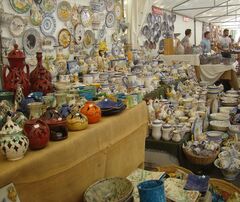
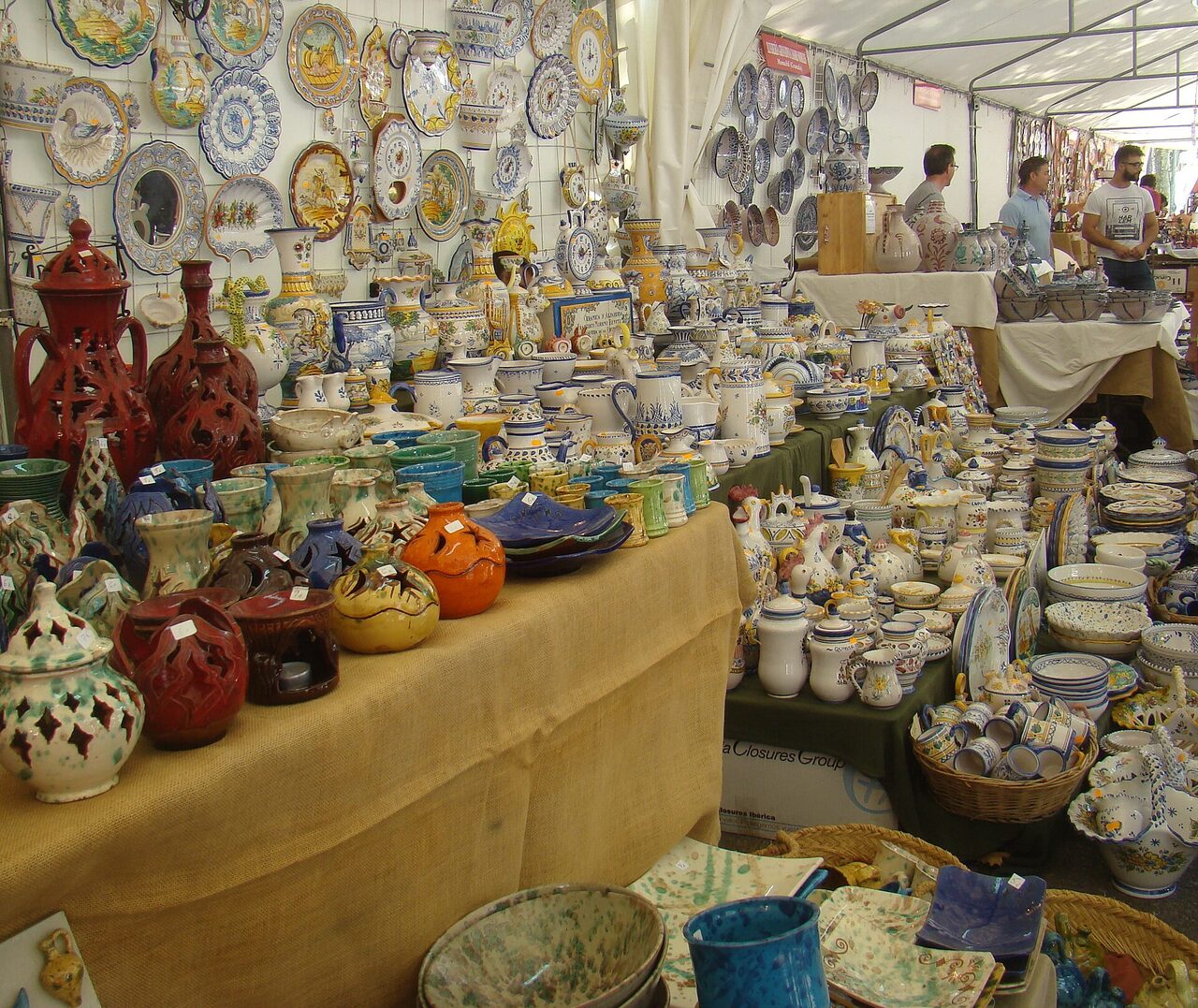
Buy Spanish ceramics in the town that fired them, because every pottery town paints in its own colors. Ceramics are Spain's classic souvenir, and Talavera de la Reina pottery is on UNESCO's list of Intangible Cultural Heritage.
In Seville, cross the river to Triana, the quarter of craft workshops. In Granada, the Alcaicería is a bazaar of silks, ceramics and lamps. Hand-painted tiles (azulejos) are the flat option for a suitcase.
 Lourdes Cardenal (CC BY-SA 4.0)
Talavera ceramics on sale at a ceramics fair
Extra virgin olive oil
Must-buy
- From: Andalusia (Jaén and Córdoba provinces) and Catalonia
- Buy it at: olive-oil cooperatives in Andalusia, La Chinata shops, the gourmet food hall of El Corte Inglés
- Look for: "aceite de oliva virgen extra" and a DOP name such as Baena or Sierra Mágina, plus the harvest date
- Can it fly home to the US? Yes: oils are admissible. Bottles over 3.4 ounces go in a checked bag.
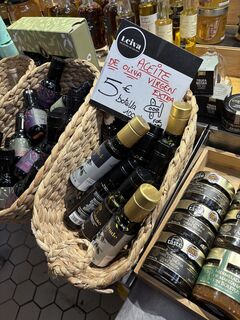
In olive-growing country, even gas stations sell local olive oils that are not always sold outside their region. Spain is the world's largest producer of olive oil.
Buy a new-season extra virgin oil with a DOP name, since a recent harvest date means a fresher oil. Shops and cooperatives run tastings, so taste first. For your luggage, pick a tin or a plastic bottle.
 19Tarrestnom65 (CC BY-SA 4.0)
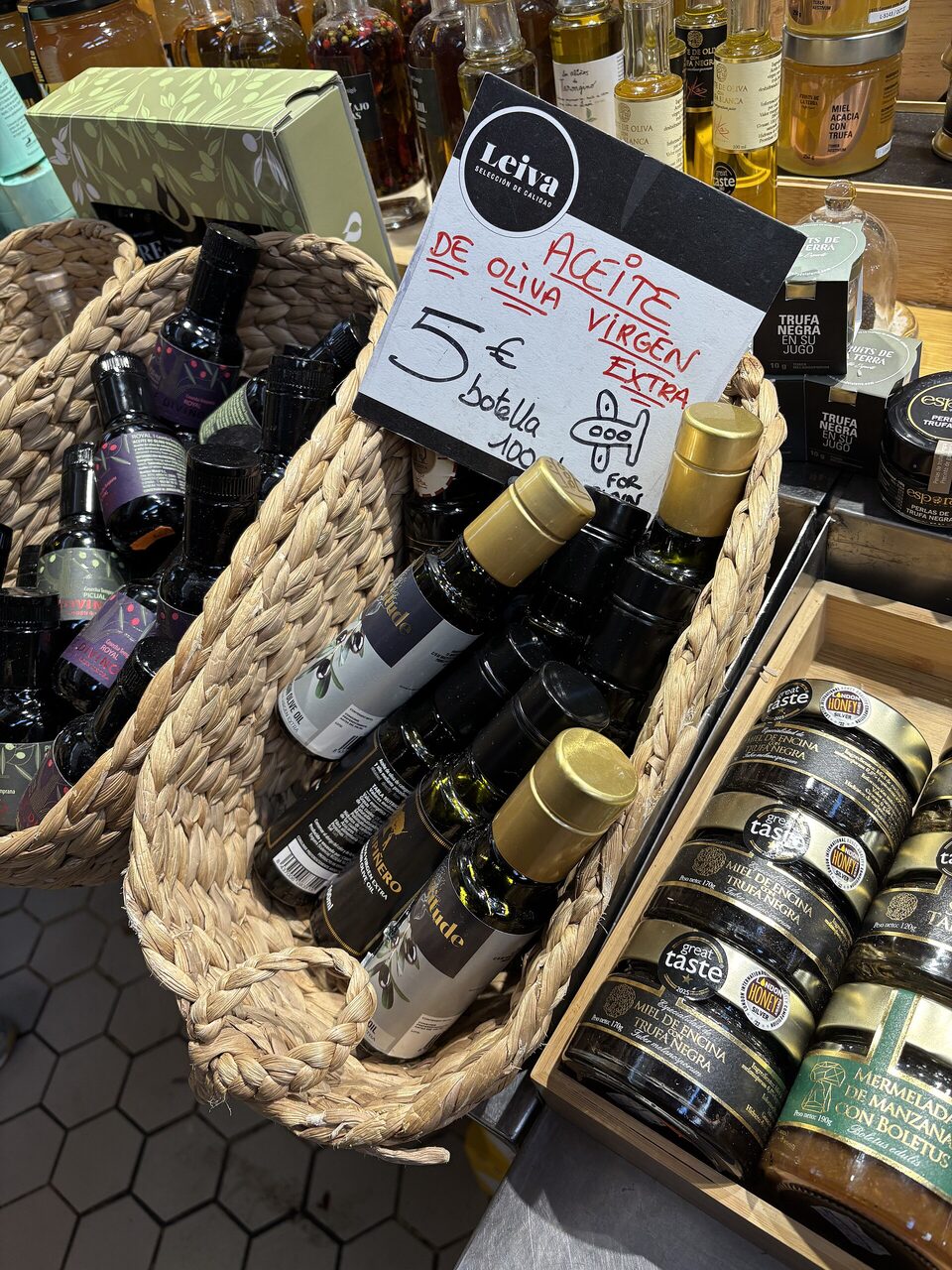
Olive oils on a stall in the Mercado Central de Valencia
Wine, cava and sherry
Must-buy
- From: La Rioja, Ribera del Duero, Rías Baixas in Galicia (Albariño), the Penedès near Barcelona (cava), Jerez de la Frontera (sherry)
- Buy it at: the bodega after a tasting, Mariano Madrueño in Madrid, El Corte Inglés food halls, any supermarket
- Look for: the D.O. of the region you are in, one of more than a hundred
- Can it fly home to the US? Yes, in a checked bag. The state you first land in sets how much alcohol you may bring.
Choose a Spanish wine you cannot easily buy at home, such as txakoli, the Basque white. Sherry is made only from grapes grown around Jerez de la Frontera, and the cask-filled bodegas there sell bottles after the tour.
Cava comes almost entirely from the country around Barcelona. You can visit the cava houses of Sant Sadurní d'Anoia on a trip out from the city.
 El Pantera (CC BY-SA 3.0)
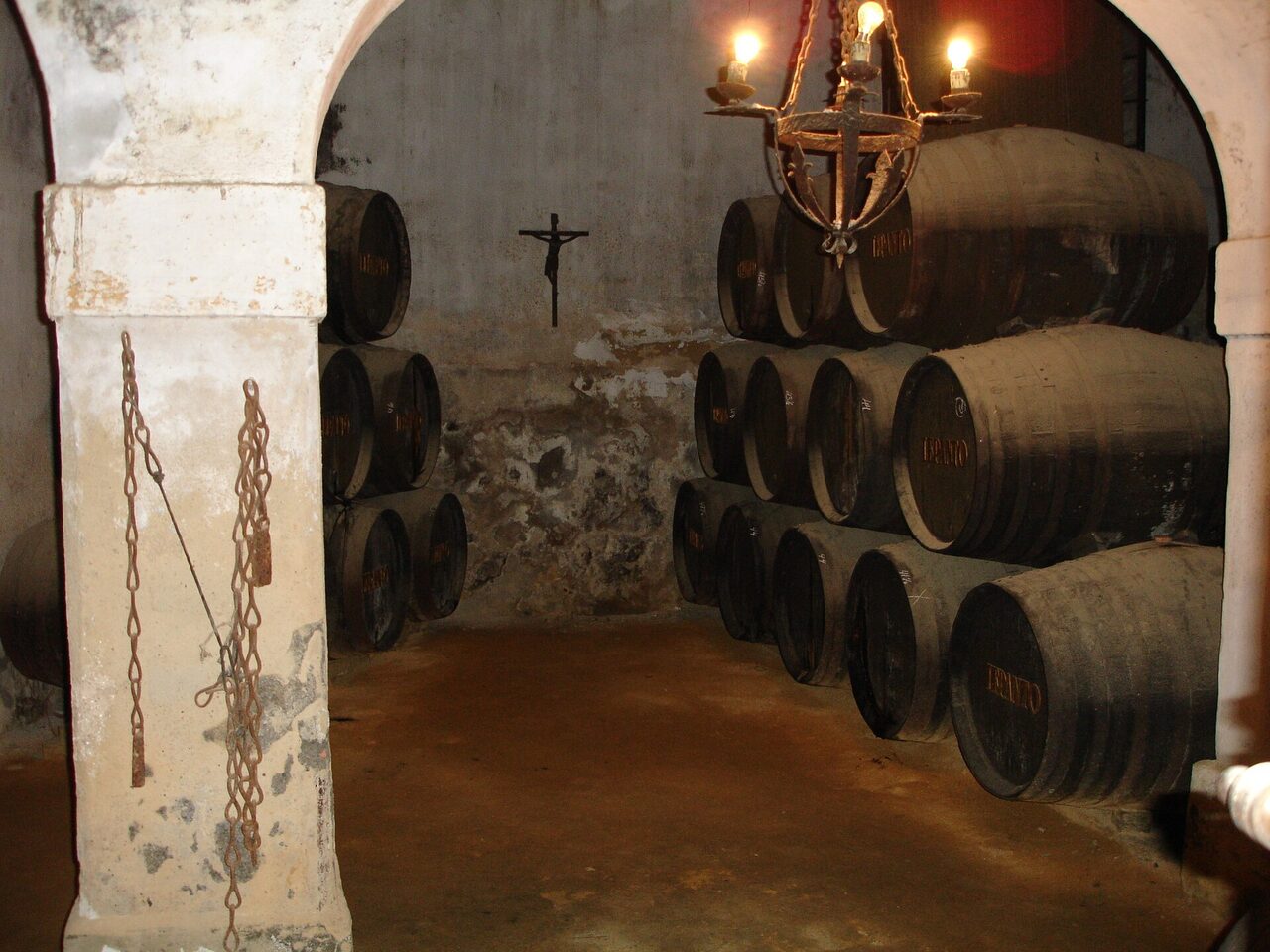
Sherry casks in the Tío Pepe bodega, Jerez de la Frontera
Leather goods
Must-buy
- From: Ubrique in Cádiz province, Córdoba, Igualada near Barcelona, Madrid
- Buy it at: the workshops of Ubrique, the leather workshops of Córdoba, Taller Puntera near Mercado de San Miguel in Madrid
- Look for: Córdoba's embossed leather, made with the cordobán technique
- Can it fly home to the US? Yes, unless it is an exotic skin: products from endangered species generally may not be imported.
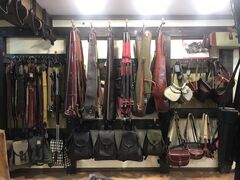
Buy a leather wallet or belt in Ubrique, where the workshops make leather for Louis Vuitton, Loewe, Dior and Givenchy. Córdoba has worked leather for centuries and has its own embossing technique.
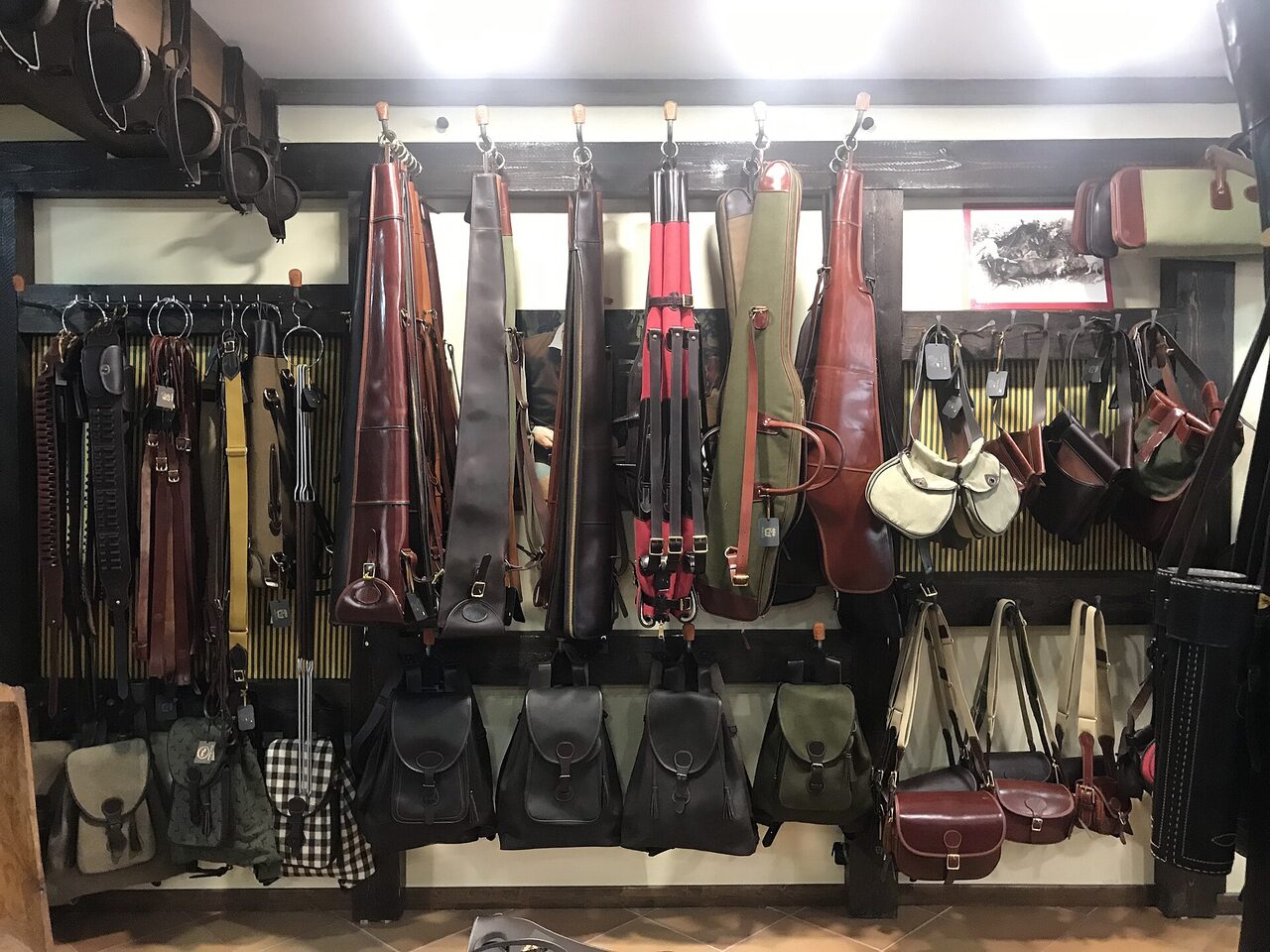 ElArtesano1891 (CC0)
A leather shop in Consuegra, Toledo
Spanish cheese
Must-buy
- From: La Mancha (Manchego), the Basque Country (Idiazabal), Menorca (Mahón), Galicia (Tetilla), Asturias (Cabrales), Extremadura (Torta del Casar)
- Buy it at: market stalls and cheese shops (queserías)
- Look for: the PDO on the label: Queso Manchego is pressed cheese from the milk of Manchega sheep
- Can it fly home to the US? Yes, if it is solid: solid hard or soft cheeses with no meat are allowed. Declare it.
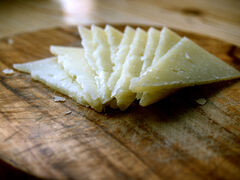
Start with Manchego, the hard sheep's cheese of La Mancha, and a block of membrillo, quince paste, to eat with it. Almost every region of Spain makes its own cheese.
Ask for your cheese vacuum-packed (al vacío), so it travels and keeps. US customs lets in solid cheese, hard or soft, so skip one soft enough to pour.
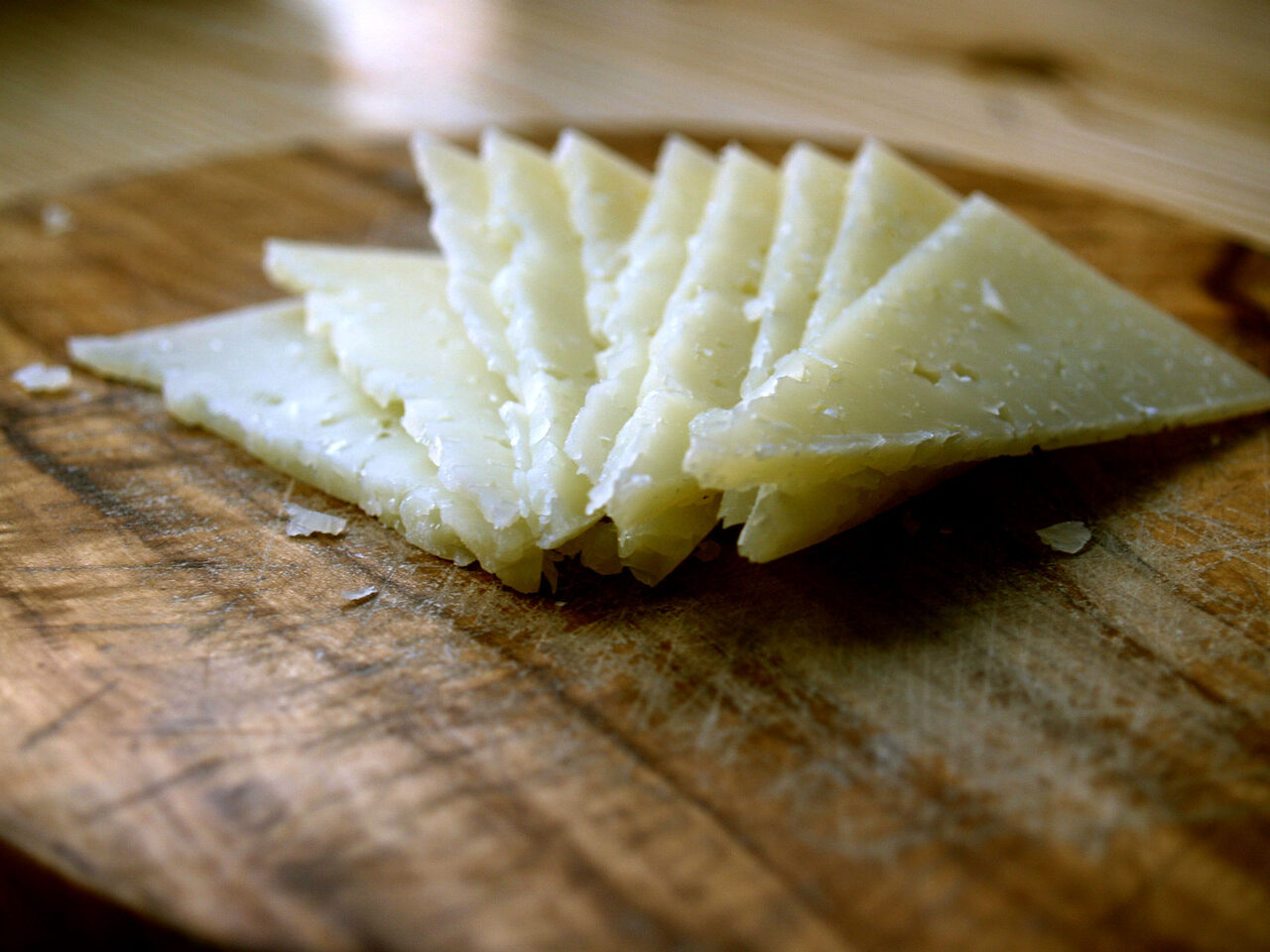 cyclonebill (CC BY-SA 2.0)
Wedges of Manchego cheese
Abanico, the Spanish hand fan
Must-buy
- From: all of Spain, above all Andalusia and Madrid
- Buy it at: Casa de Diego on Puerta del Sol in Madrid, fan and flamenco shops in Seville and Granada
- Look for: wood or fabric, not shiny plastic, and a sturdy rivet
- Can it fly home to the US? Yes, in your carry-on.
A cheap abanico from a souvenir stall can snap the first time you open it, so pay for a hand-painted fan from a fan shop. Hand fans came to Spain from Asia and have been part of Spanish life since the 16th century.
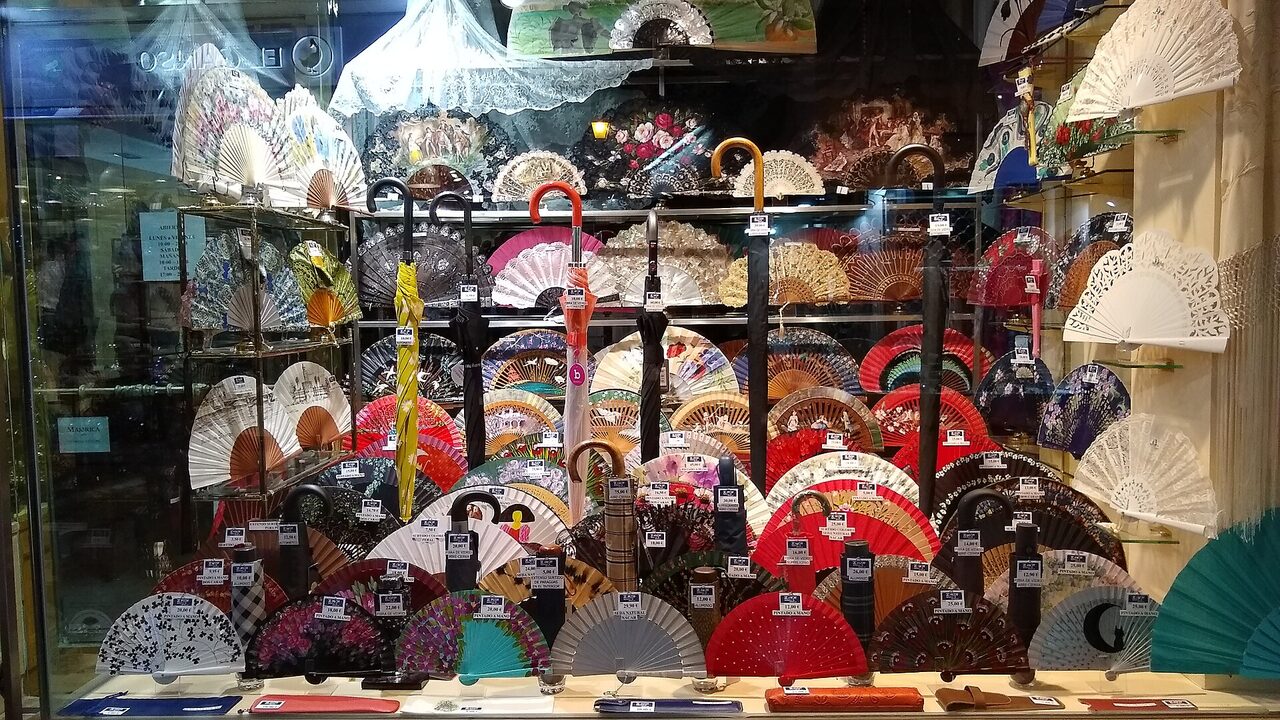 CarlosVdeHabsburgo (CC BY-SA 4.0)
Hand fans in a shop on Calle Sierpes, Seville
Saffron from La Mancha
Must-buy
- From: Castilla-La Mancha, around Consuegra
- Buy it at: market spice stalls, La Melguiza in Madrid, El Corte Inglés
- Look for: Azafrán de La Mancha on the label, and whole deep-red threads with very little yellow
- Can it fly home to the US? Yes: most dried spices can be imported.
Consuegra, in La Mancha, celebrates the saffron harvest with a Saffron Rose Festival each October. La Mancha saffron is the only saffron in Spain with a Protected Designation of Origin, and saffron costs less in Spain than in most of the world.
Never buy ground saffron, which is often cut with turmeric or food coloring. A 1-gram container of threads fits in a carry-on.
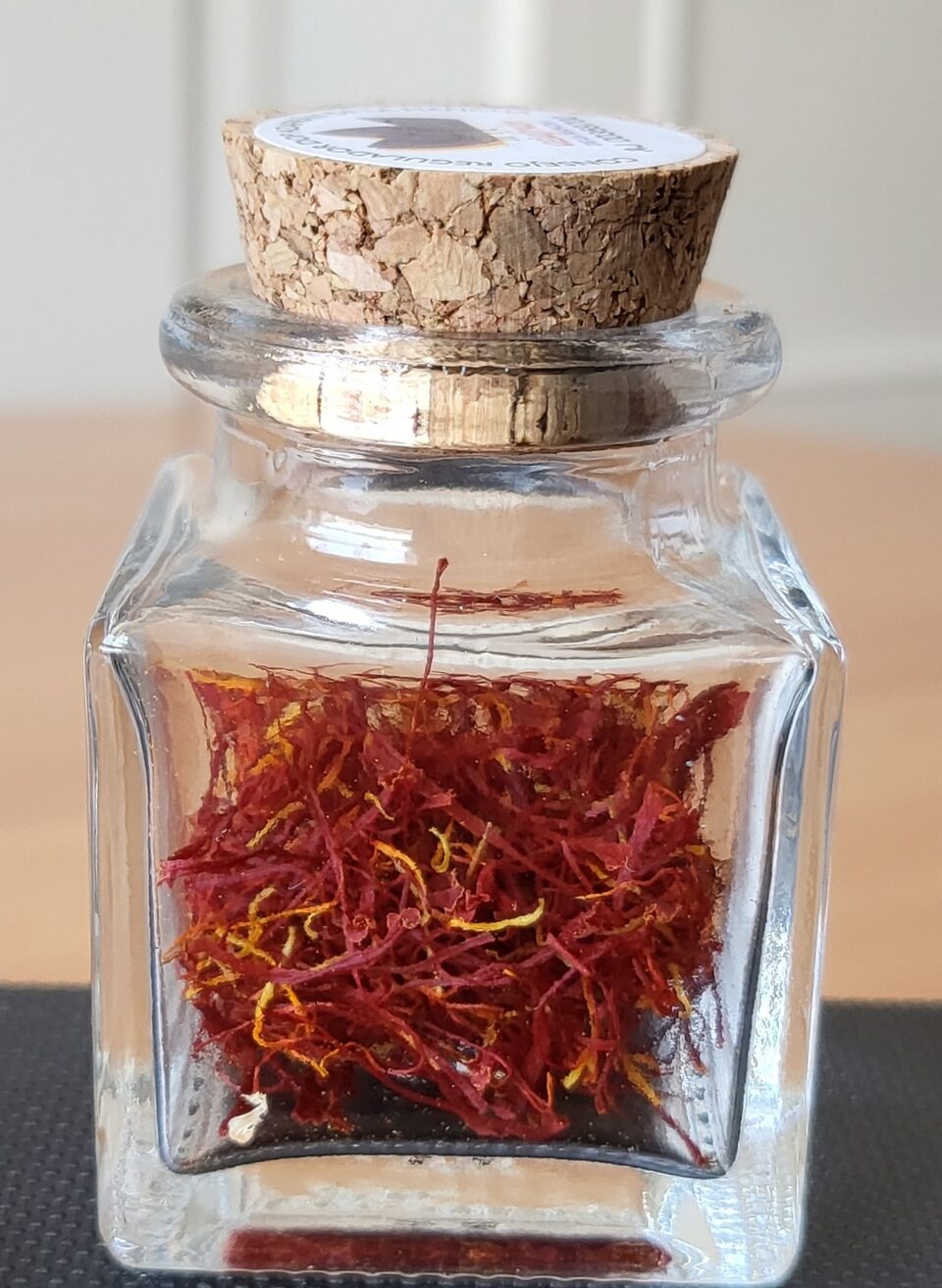 Xemenendura (CC BY-SA 4.0)
A jar of La Mancha saffron threads
Espadrilles
Must-buy
- From: Catalonia, La Rioja, the Basque Country
- Buy it at: Casa Hernanz in Madrid, La Manual Alpargatera in Barcelona's Barri Gòtic, Alpargatería La Concepción in Palma
- Look for: a sole of esparto or jute rope, sewn to the canvas
- Can it fly home to the US? Yes.
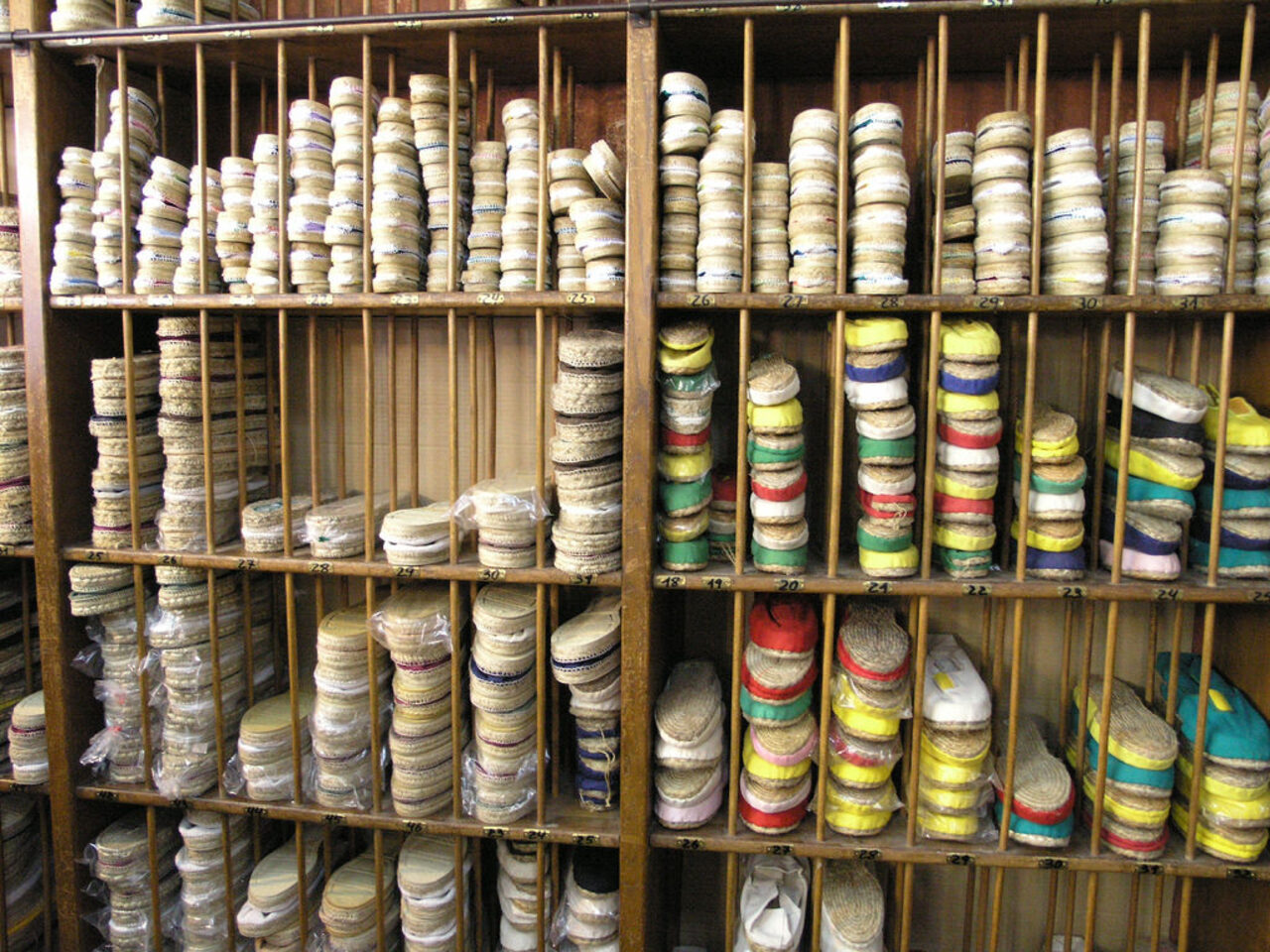
Casa Hernanz has sold espadrilles (alpargatas), canvas shoes with rope soles, in Madrid since 1845. La Manual Alpargatera in Barcelona makes the Catalan espardenyes by hand. Buy your pair from a maker like these.
 Anetode (CC BY 2.0)
Catalan espadrilles on a shop shelf in Barcelona
Pimentón de la Vera
Must-buy
- From: the La Vera valley in Extremadura
- Buy it at: any supermarket or market spice stall, and gift tins in gourmet shops
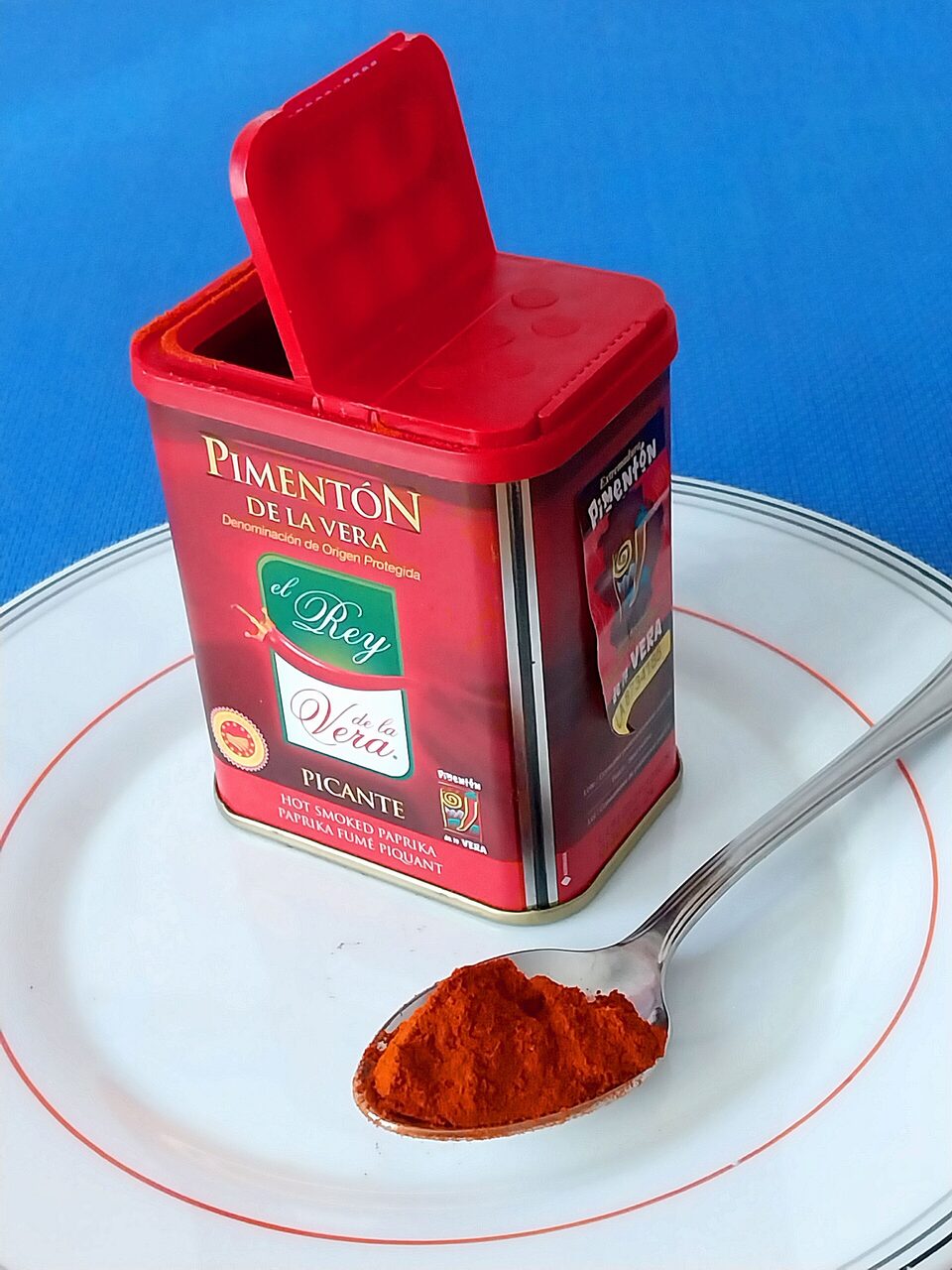
- Look for: Pimentón de la Vera on the tin, in dulce (sweet), agridulce (bittersweet) or picante (hot)
- Can it fly home to the US? Yes: most dried spices can be imported.
Pimentón de la Vera tastes of smoke because its peppers are dried over smoke before they are ground, unlike the paprika sold in the US. The small square tins weigh almost nothing in a suitcase.
 Zarateman (CC0)
A tin of Pimentón de la Vera
Turrón from Jijona and Alicante
Must-buy
- From: Jijona (Xixona) and Alicante, in Alicante province
- Buy it at: Casa Mira in Madrid, open since 1842, supermarkets such as Mercadona and El Corte Inglés, or Jijona itself
- Look for: Turrón de Jijona (soft) or Turrón de Alicante (hard), both protected names
- Can it fly home to the US? Yes, in its unopened package. Turrón can hold egg white, and the USDA allows commercially packaged, labeled, cooked, shelf-stable egg foods that are fully finished. Declare it.
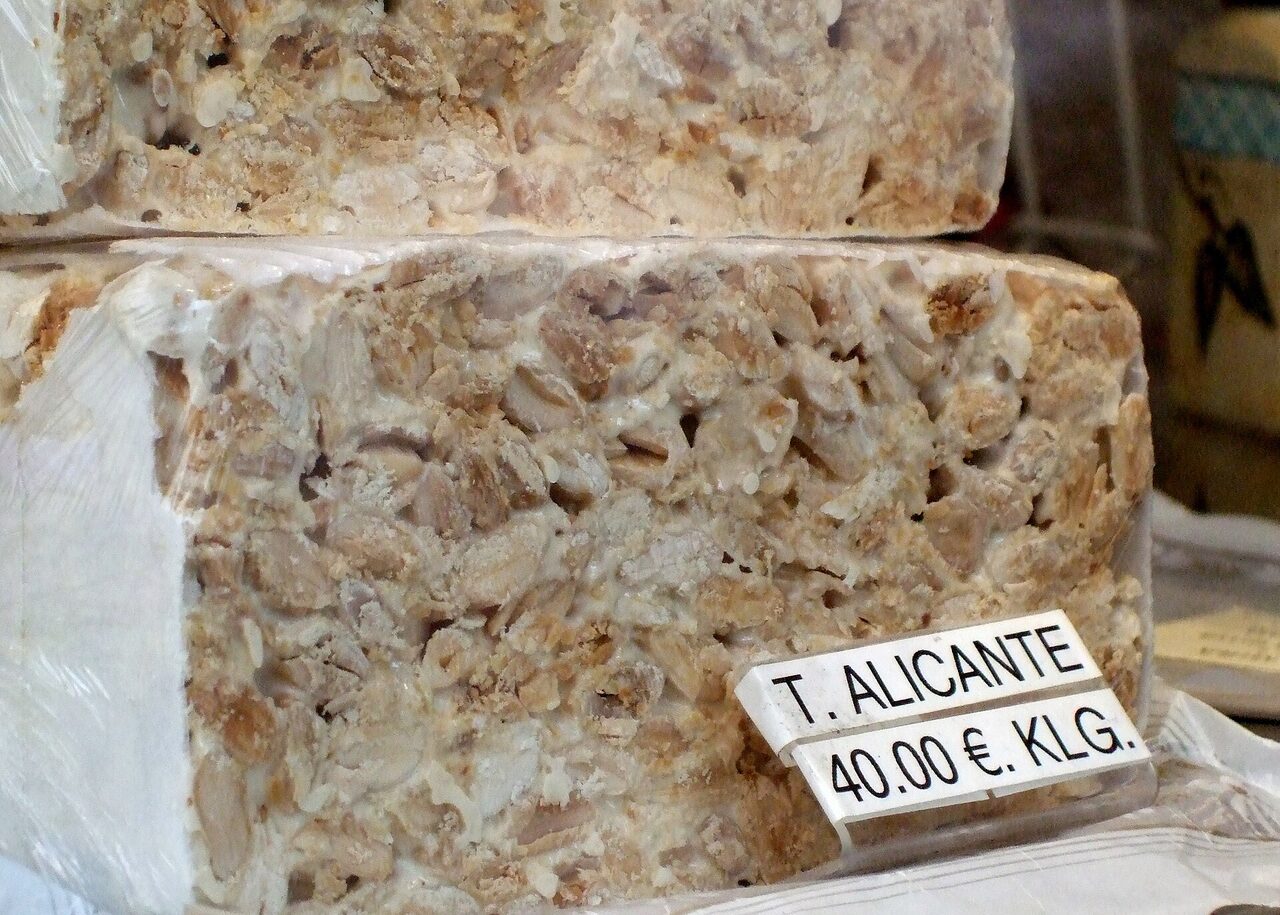
Take home a bar of each kind of turrón, the soft and the hard. Jijona turrón is soft and chewy, made by cooking sugar and honey and kneading in almonds. Alicante turrón is hard, with roasted almonds set in honey, sugar and egg white.
Turrón is Spain's Christmas sweet, but supermarkets and sweet shops sell it all year.
 Alex Castella (CC BY 2.0)
Turrón de Alicante at Casa Mira, Madrid
Conservas, Spanish tinned fish
- From: Cantabria (Santoña anchovies), Galicia, the Basque Country
- Buy it at: gourmet shops and delis, market stalls, supermarkets
- Look for: Anchovies from Santoña, and the "Flavours of the North" seal on Cantabrian tins
- Can it fly home to the US? Yes: the USDA does not regulate most seafood. Leave tins made with meat stock.
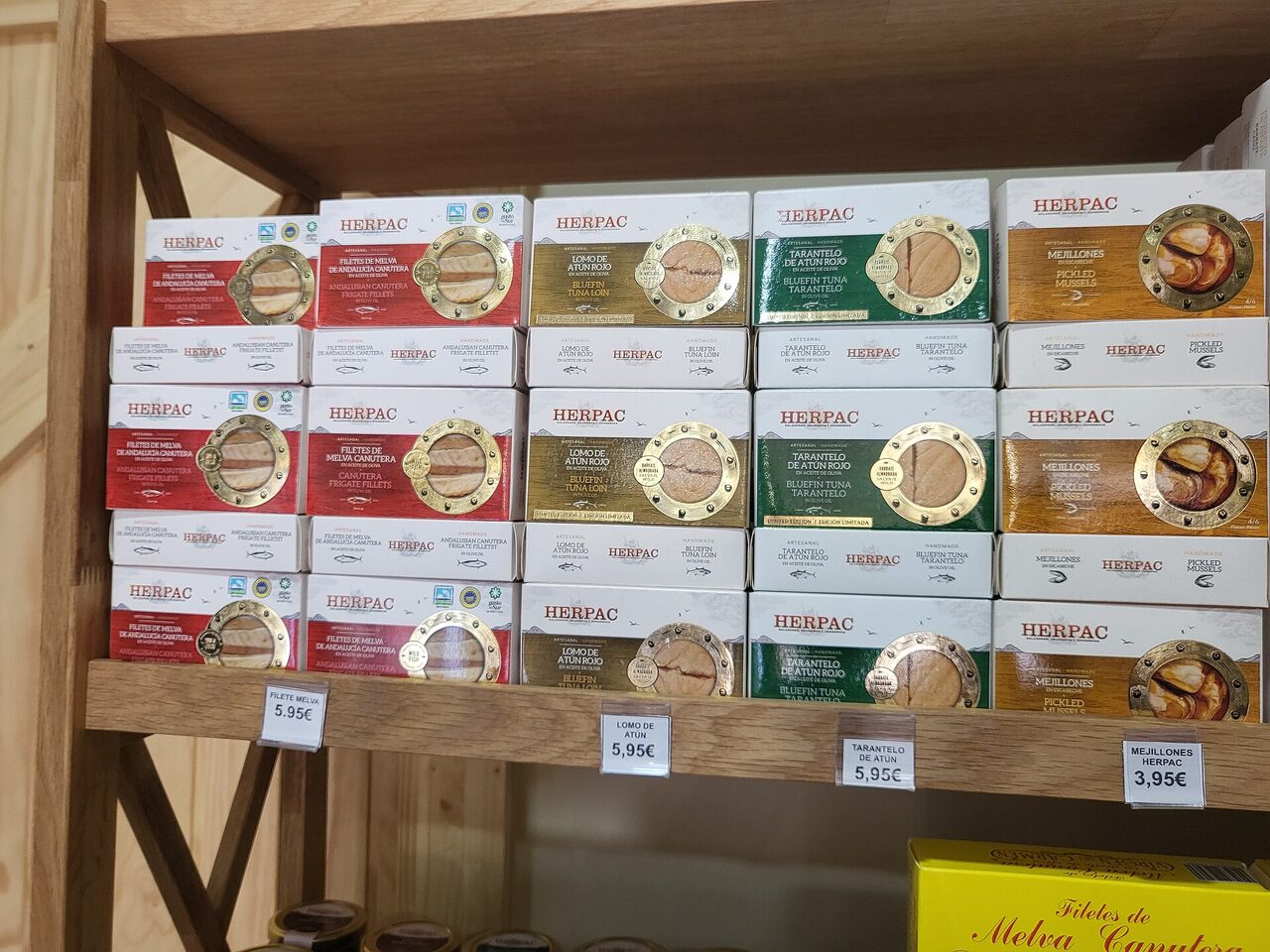
Spaniards treat conservas as a delicacy, and the best tins cost as much as a restaurant meal. Cockles, razor clams and tuna belly come in tins handsome enough to give as they are.
 Xemenendura (CC BY-SA 4.0)
Tins of preserved fish on a shop shelf in Chiclana, Cádiz
Mantón de Manila, the embroidered silk shawl
- From: Seville and Andalusia
- Buy it at: flamenco shops in Seville such as Blasfor, and the Silk Museum store in Valencia for hand-painted silk
- Look for: hand embroidery of flowers or birds and a handmade fringe
- Can it fly home to the US? Yes: there is no limit on clothing for personal use or gifts.
Buy a mantón de Manila in Seville, where the embroidered silk shawl belongs to flamenco. The shawl takes its name from Manila because the silk came from China by way of the Philippines, and Spaniards also wear it to formal events.
A hand-embroidered shawl is an heirloom piece, so check that the embroidery and the fringe are done by hand.
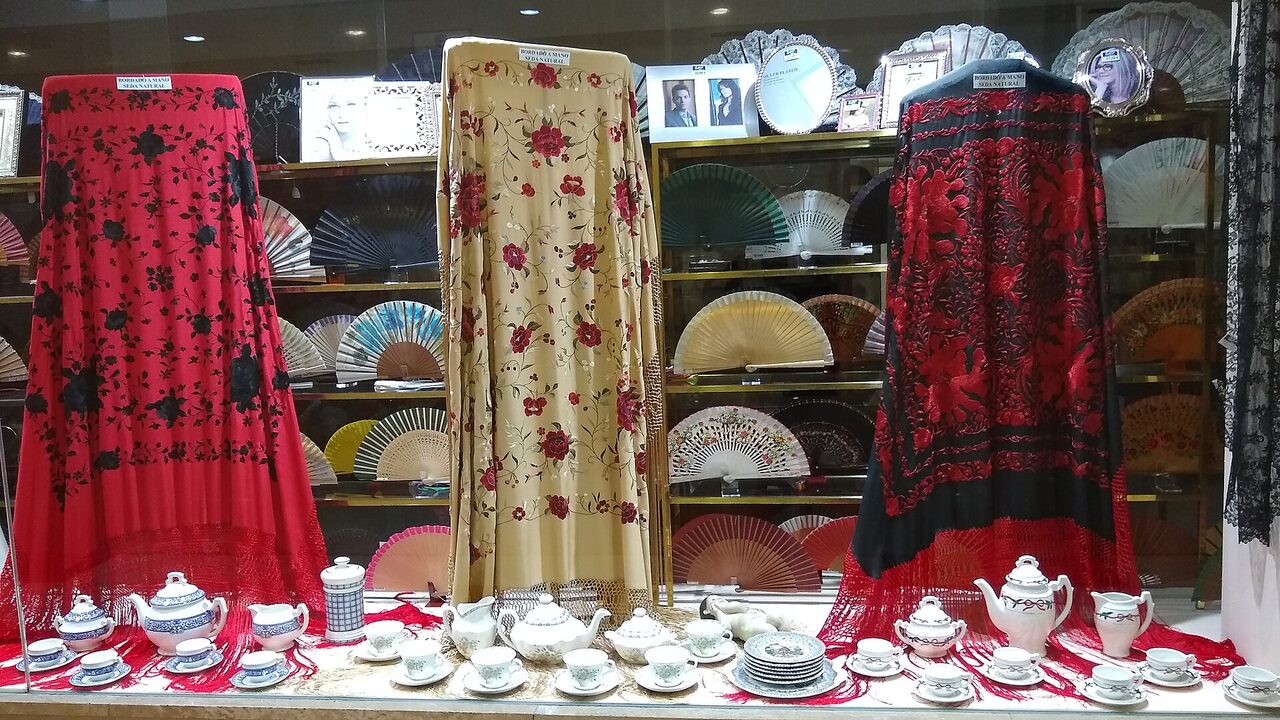 CarlosVdeHabsburgo (CC BY-SA 4.0)
Embroidered silk shawls in a shop on Calle Sierpes, Seville
Toledo damascene
- From: Toledo
- Buy it at: Toledo's artisan workshops
- Look for: gold or silver thread inlaid into blackened steel
- Can it fly home to the US? Yes.
In Toledo's artisan workshops, you can watch an artisan inlay gold or silver thread into blackened steel. Toledo's craftspeople are the only damascene artisans in Spain, and they work it into boxes, earrings, plates and bracelets.
A pair of earrings or a small box is the size to carry.
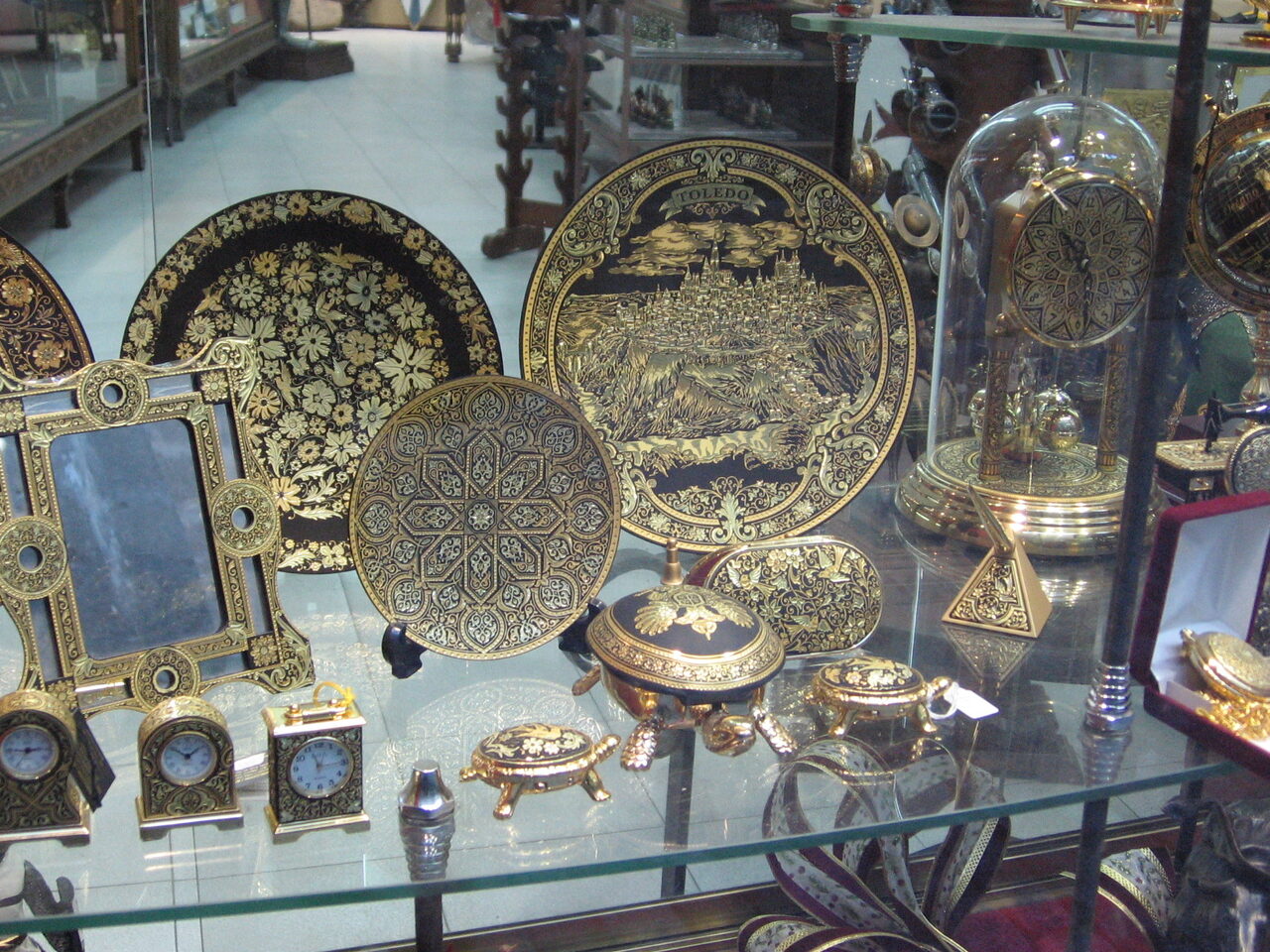 José Luis Gálvez (CC BY-SA 2.5)
Damascene plates and objects in Toledo
Majorica pearls
- From: Manacor, on Mallorca
- Buy it at: the Majorica factory shop in Manacor, a 45-minute drive from Palma, and Majorica stores
Majorica pearls are imitation pearls, not grown in an oyster. The company that makes them was founded in Barcelona in 1890 and is now based on Mallorca. Spain's tourism board describes them as a longer-lasting and more accessible alternative to natural pearls. Treat them as well-made costume jewelry.
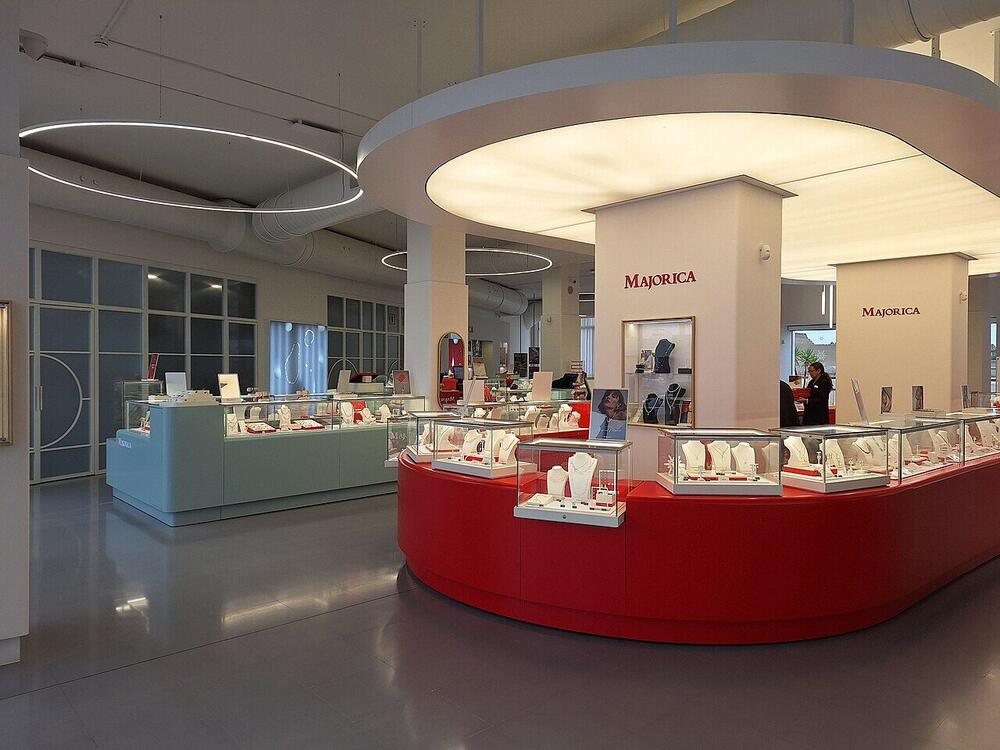 Steffen Mokosch (CC BY-SA 4.0)
Pearl jewelry in the cases of the Majorica factory shop in Manacor, Mallorca
Paella pan
- From: Valencia
- Buy it at: a ferretería (hardware store) or kitchenware shop in Valencia, not a souvenir shop
- Look for: polished steel or enameled cast iron
- Can it fly home to the US? The pan, yes. The rice, no: the CBP advises against bringing rice, which can carry insects.
The thin paella pans sold beside postcards in souvenir shops can warp the first time they meet heat. Buy yours where Valencians buy theirs, in a hardware store.
Leave the cloth bags of Valencian bomba rice in Spain. Valencia, where paella comes from, is one of the places to go in March.
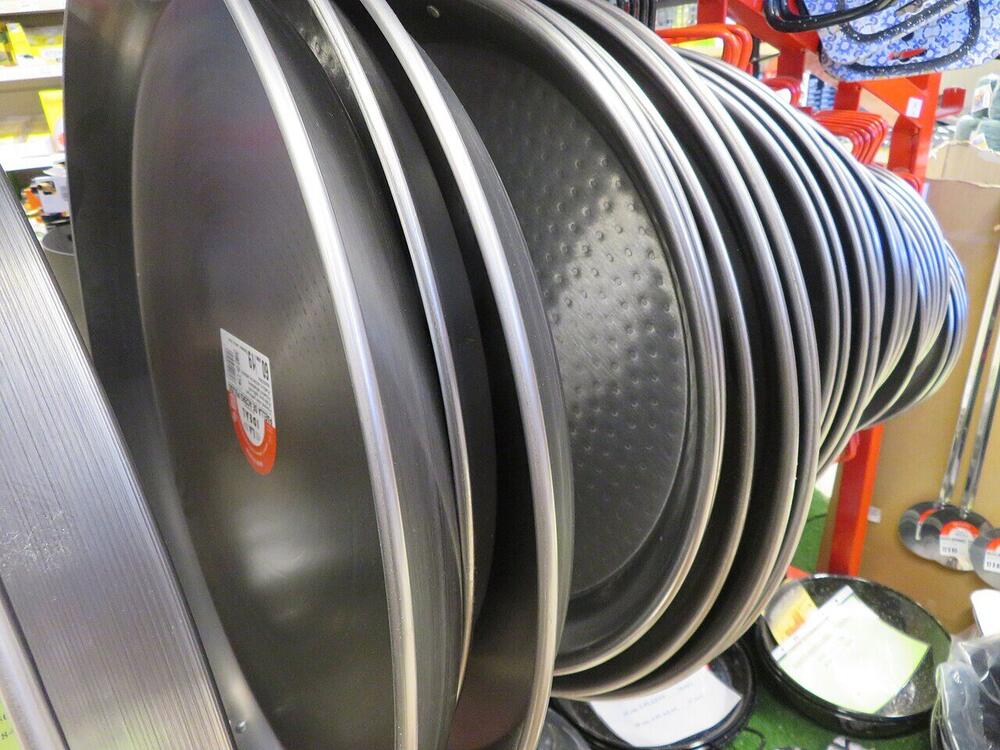 Juan Emilio Prades Bel (CC BY 4.0)
Steel paella pans stacked for sale in a Valencian shop
Can you bring jamón ibérico home to the US?
No. US travelers may not bring Spanish cured ham home, whether it is jamón ibérico, jamón serrano or a vacuum-packed pack of slices. In the USDA's words, "Cured hams (prosciutto, Serrano ham, Iberian ham) and salami from areas within France, Germany, Italy and Spain may not be brought into the United States by travelers." Spanish ham reaches US shops only in commercial shipments with extra paperwork.
The same holds for chorizo, fuet, salchichón, sobrasada and cecina: the CBP does not allow fresh, dried or canned meat products from most foreign countries. The USDA also bars most pork from countries with African swine fever, which was found in wild boar in Catalonia in November 2025. Ignore the souvenir lists that still say packaged ham is fine.
Eat it in Spain instead: the Spanish food guide says how to order it. If meat does end up in your bag, declare it. Declared items carry no penalty, even when the inspector takes them.
What to buy at a Spanish supermarket
Buy the edible souvenirs on this page at a supermarket, from turrón and pimentón to tinned fish and vacuum-packed cheese. Olive oil there costs much less than in the US. The basement supermarket of El Corte Inglés, the department store found in nearly every city, has a wide choice of oils, wines and cheeses. Some branches add a Gourmet Experience hall of upscale foods.
| Buy | What it is | Pack it |
|---|---|---|
| Turrón | almond nougat, soft (Jijona) or hard (Alicante) | flat, in a carry-on |
| Pimentón de la Vera | smoked paprika in small tins | carry-on |
| Saffron | La Mancha threads, in tins or vials | carry-on |
| Valor chocolate | Spanish chocolate brand sold in nearly every supermarket | carry-on |
| Chocolate a la taza | thick drinking chocolate, for chocolate con churros at home | carry-on |
| Paella seasoning | boxed spice mix for paella | carry-on |
| Conservas | tinned fish and shellfish | checked bag if packed in oil |
| Manchego | vacuum-packed wedges | carry-on or checked |
| Olive oil | supermarket brands from the oil regions | checked bag |
| Wine and cava | everyday bottles, often local | checked bag |
| Olives | manzanilla, gordal and aloreña, in jars | checked bag (brine is a liquid) |
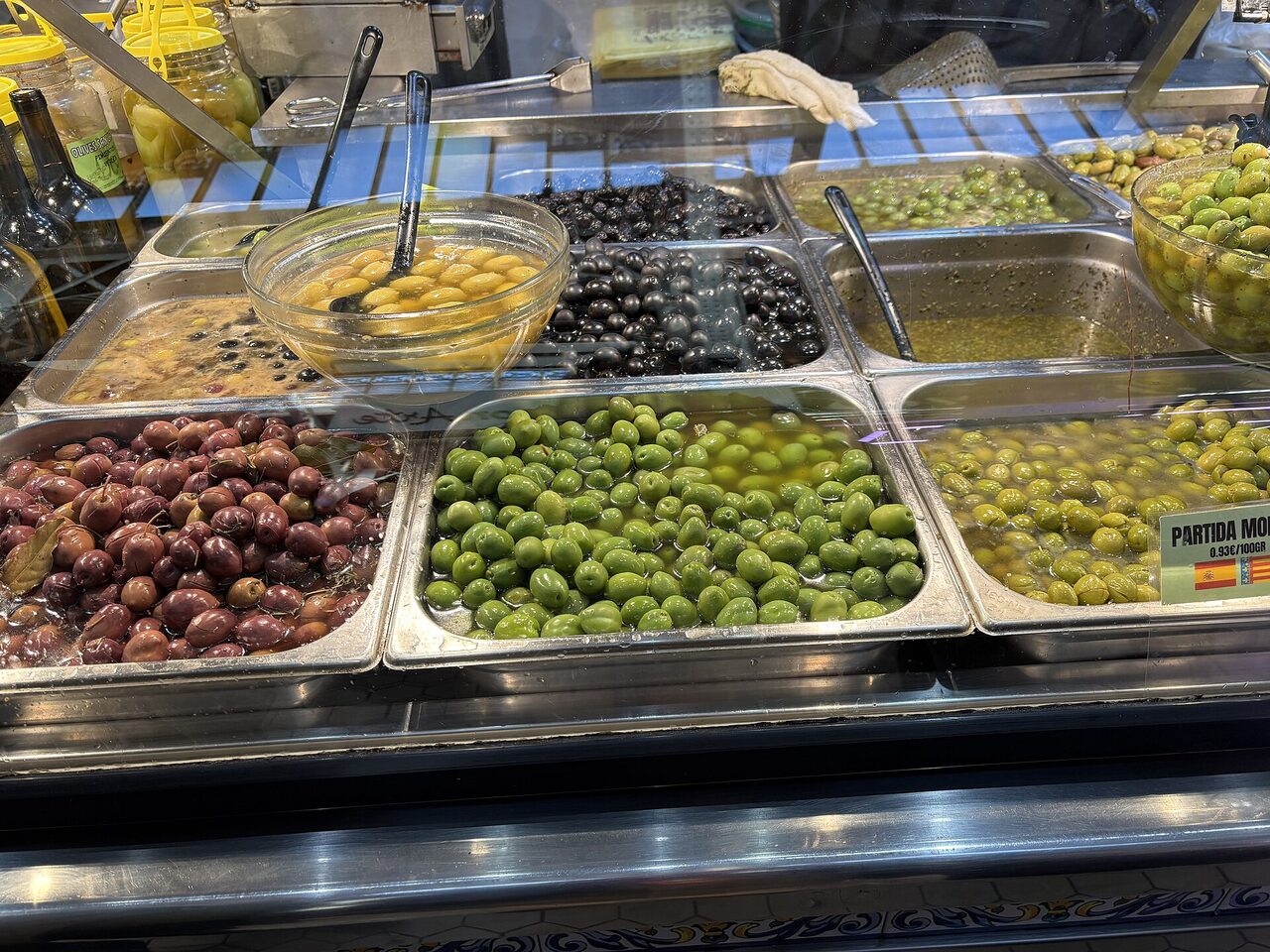 19Tarrestnom65 (CC BY-SA 4.0)
Olives on the stalls of the Mercado Central de Valencia
What to buy at a Spanish pharmacy
Look for ISDIN, a Spanish company that makes sunscreens, moisturizers and serums, at most pharmacies, marked by a green cross. Spanish pharmacies sell skincare and perfume as well as medicine, including the Mediterranean colognes of Álvarez Gómez.
For more choice, try El Corte Inglés or the perfume chains Primor, Druni and Douglas. Many products there have an open tester. In Andalusia, look for olive-oil soaps and creams, and for orange-blossom scents at the perfumeries of Granada and Córdoba.
Try free
Plan your Spain trip in about 2 minutes
Tap through 8 quick cards for a complete itinerary with budget, maps, and packing lists. No account required.
Plan your Spain trip →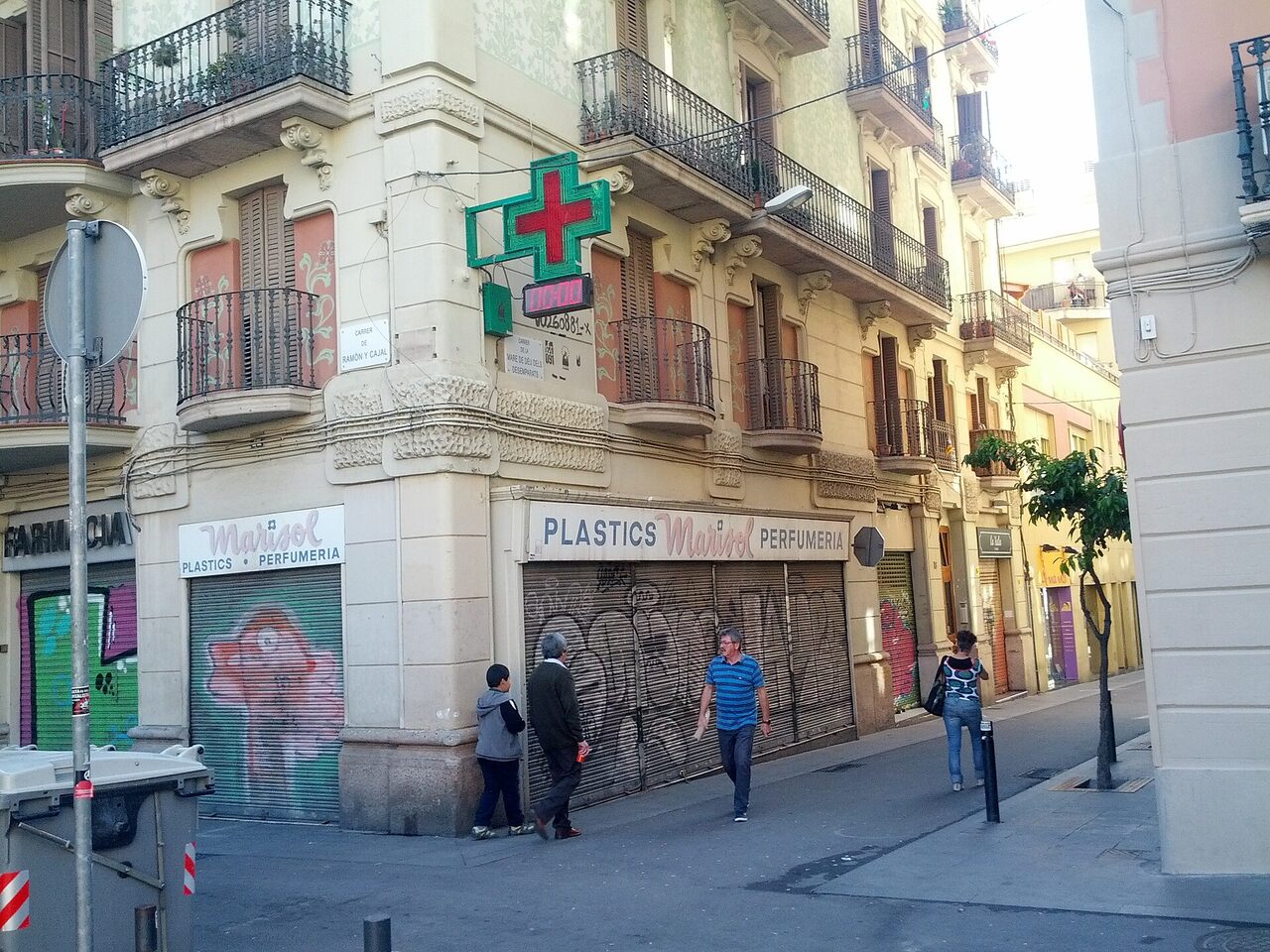 Eric Fischer (CC BY 2.0)
The green cross of a pharmacy in Barcelona
Spanish fashion and shoes
Look for the Spanish designer labels that are harder to find abroad, such as Custo Barcelona. Zara, Mango, Bershka, Camper and Desigual are Spanish too, but they are known around the world. For luxury, walk the Salamanca district in Madrid or Passeig de Gràcia in Barcelona. For young local designers, try Malasaña in Madrid, the Raval and Gràcia in Barcelona, Russafa in Valencia or Soho in Málaga.
For shoes, look for labels from Mallorca and Alicante, Spain's main shoe-making regions. In Andalusia, frilled flamenco dresses hang in the flamenco shops of Seville, Jerez and Granada. Ibiza's white Adlib style, from the island's hippie years of the 1970s, has spread along the south and east coasts.
Buy a football shirt only from an official Real Madrid or FC Barcelona store. Counterfeit trademarked goods can be seized at US customs, beyond one article of each type for personal use.
More to buy, region by region
| Region | Buy | What it is |
|---|---|---|
| Madrid | violet candies from La Violeta, open since 1915 | violet-flavored sweets |
| Madrid | convent sweets near Mercado de San Miguel | cookies made by cloistered nuns |
| Madrid | madroño liqueur | sweet liqueur from the strawberry-tree fruit |
| Catalonia | porrón | glass wine pitcher you drink from without touching your lips |
| Catalonia | caganer | squatting figure for the Christmas nativity scene |
| Valencia | Lladró porcelain | hand-made figurines; see them made at the Lladró Arts Center |
| Andalusia | sherry vinegar (Vinagre de Jerez) | vinegar from Jerez wine, a protected name |
| Andalusia | castanets | flamenco percussion; buy wood, not plastic |
| Granada | taracea | boxes and furniture in fine wooden inlay |
| Toledo | Mazapán de Toledo | the city's protected marzipan |
| Galicia | Sargadelos porcelain | blue geometric porcelain |
| Galicia | licor café | coffee liqueur, served as a digestif |
| Asturias | ice cider | dessert cider from the Cider Route |
| Navarre | piquillo peppers from Lodosa | canned red peppers, a protected name |
| La Rioja | Ezcaray blankets | mohair woven on traditional looms |
| Mallorca | flor de sal from Es Trenc | sea-salt flakes |
| Menorca | avarcas | leather sandals, first made as work shoes |
| Canary Islands | volcanic jewelry | set with minerals from places such as Teide National Park |
Shop hours, tax refunds and getting it home
Most Spanish shops open Monday to Saturday from 9:30 am to 1:30 pm and again from 4:30 to 8 pm. Most close on Sundays, though many cities let shops set their own hours. Department stores and shopping centers stay open all day, and many open on Sundays. Prices are fixed, and haggling is not expected.
If you live outside the European Union, you can claim back the VAT on what you buy. At El Corte Inglés the refund goes back to a card only, even if you paid in cash.
Liquids over 3.4 ounces go in your checked bag. The TSA recommends that even for duty-free liquids sealed in a tamper-evident bag. Keep the receipts and original packaging as proof of where it came from. Don't count on posting food home: many vendors will not ship food to US residents.
What not to buy in Spain
- Bottled sangria. Spaniards make sangria fresh, and the bottled kind tastes of sugary syrup. Bring home a Rioja instead.
- Plastic bulls, flamenco dolls and factory-made fans. Few of them are made in Spain.
- Cheap espadrilles and paella pans from souvenir shops. The pans can warp on first heat.
- Anything from a shop right beside a monument. Walk a few streets away for the workshops.
- Jamón, chorizo and every other cured meat, if you are flying home to the US.
Plan your Spain trip
For trip length and which cities to see, read the Spain travel guide. The 10-day Spain itinerary spends its days in Madrid and Seville, and the 7-day Southern Spain itinerary uses Seville as its base.
A trip you plan on MonkeyEatingMango comes with a shopping guide that lists what to buy in every city you stop in, and where. The packing list generator, free for now, builds the list for your destination and month.
Common questions
What is the best thing to buy in Spain?
Hand-painted ceramics are Spain's classic souvenir, with olive oil and wine close behind. For a US traveler, saffron, pimentón and turrón are the easiest buys to carry, since all three are small and clear US customs.
What food can I bring back from Spain to the US?
You can bring olive oil, packaged spices such as saffron and pimentón, honey, solid cheese, turrón in its unopened package and most tinned fish. You cannot bring jamón, chorizo or any other Spanish cured meat. Declare all food on arrival.
Can I bring jamón ibérico back to the US?
No. The USDA does not let travelers bring Spanish cured ham, including Iberian and Serrano ham, into the United States, vacuum-packed or not. Jamón reaches US shops only in commercial shipments with extra certification.
Can I bring olive oil or wine in my carry-on?
Only in containers of 3.4 ounces (100 ml) or less. Larger bottles of olive oil, wine or sherry go in your checked bag; the TSA recommends that even for duty-free liquids sealed in a tamper-evident bag.
Can I bring Spanish cheese to the US?
Yes, if it is solid. The USDA allows solid hard or soft cheeses that contain no meat and do not pour like a liquid, so a wedge of Manchego is fine. Ask the shop to vacuum-pack it and declare it at customs.
What should I buy at a Spanish pharmacy?
Spanish pharmacies sell skincare as well as medicine. Look for ISDIN, a Spanish company that makes sunscreens and moisturizers, and Álvarez Gómez colognes, a brand founded in 1912.
What should I buy at a Spanish supermarket?
A Spanish supermarket sells many of the best edible souvenirs: turrón, pimentón de la Vera, saffron, tinned fish, olive oil, vacuum-packed cheese and Valor chocolate. The basement supermarket at El Corte Inglés has a wide choice of oils and wines.
Are Majorica pearls real pearls?
No. Majorica pearls are imitation pearls made by a company on Mallorca, not pearls grown in an oyster. Spain's tourism board describes them as a longer-lasting and more accessible alternative to natural pearls.
Can I get a tax refund on shopping in Spain?
Yes, if you live outside the European Union you can claim back the VAT on your purchases. At El Corte Inglés the refund goes back to a card only, even if you paid in cash.
What time do shops open in Spain?
Most Spanish shops open Monday to Saturday from 9:30 am to 1:30 pm and again from 4:30 to 8 pm, and most close on Sundays. Shopping centers and department stores stay open all day, often until 9 or 10 pm.

Written by Shobhit Shrivastava · Founder
Related reading
Spain travel guide
Barcelona in 4 Days: Sagrada Familia, the Gothic Quarter and Flamenco
This packed 4-day trip for a couple dives into Barcelona's unique blend of Modernisme and Gothic history, hitting iconic sights like Sagrada Família, Park Güell, and the winding streets of the Barri Gòtic. Explore the La Boqueria Market for local flavors and enjoy evening live entertainment, all...
Walking the Camino in 7 Days: Sarria to Santiago de Compostela
7 days walking the final stretch of the Camino Frances through Sarria, Portomarin, Arzua, and Santiago de Compostela. Highlights include the gothic Convento da Magdalena, reservoir views in Portomarin, local Arzua-Ulloa cheese tastings, and the arrival at the Santiago de Compostela Cathedral....
Madrid in 3 Days: The Prado, the Royal Palace and Flamenco
3 days in Madrid, focused on historic landmarks and cultural immersion. Base yourself near Barrio de las Letras to walk to the Prado, Reina Sofia, and Plaza Mayor. Experience a live flamenco show in a traditional tablao, taste local tapas like patatas bravas in La Latina, and enjoy the gardens...
A Week in Southern Spain: Seville and Flamenco
7 days in Seville: explore the Real Alcazar and Gothic Cathedral, wander the narrow streets of Barrio Santa Cruz, and spend evenings watching authentic flamenco in Triana. Balanced pace with 5-7 hours of daily activities, focusing on tapas crawls in local neighborhoods and hands-on ceramic...
Thailand Souvenirs: What to Buy and Bring Home
The 15 Thailand souvenirs worth bringing home, where to buy each one, how to bargain for it, and what actually clears US customs, plus Chatuchak, the night markets and the Buddha-image export rule.
Japan Souvenirs: What to Buy in Japan and Bring Home
The 12 Japan souvenirs worth bringing home, Japan's tax-free shopping change on November 1, 2026, where to buy each item, and whether it clears US customs.
Italy Souvenirs: What to Buy in Italy and Bring Home
The 12 Italy souvenirs worth bringing home, where to buy each one, the label that proves it's real, and whether it clears US customs. Plus supermarket buys and Italy's ceramic towns.