Spain rewards travelers who lean into its rhythms. Barcelona is Gaudí's hallucinated playground: eight UNESCO sites woven into a walkable Mediterranean city of 1.6 million. Madrid is an underrated capital, with three art museums in a 10-minute walking triangle plus a famously dense concentration of tapas bars. Two hours south by AVE train you're in Andalusia, where 800 years of Moorish architecture (the Alhambra, the Mezquita, the Real Alcázar) sits beside flamenco quarters where the music started. Most first-timers underestimate this variance. They assume "Spain" is one trip and try to squeeze in Mallorca, the Costa del Sol and Bilbao on a single 10-day trip, ending up exhausted on trains. The other thing first-timers underestimate is the friction. Spain is one of the easiest countries to travel inside ( AVE high-speed rail, contactless payments everywhere, near-zero violent crime, brilliant food at every price tier) and surprisingly fiddly to prepare for. Alhambra tickets sell out 2-3 months ahead in peak season. Most restaurants don't serve dinner before 8:30-9 PM and locals don't eat until 10 PM. Many small shops, family restaurants and Michelin places close for 2-4 weeks in August. Visit Madrid mid-August and half the city is shuttered. Park Güell's Gaudí mosaics now require a paid timed-entry ticket. ETIAS pre-authorization kicks in late 2026 for non-EU passports. This guide is the planning layer that sits above the day-by-day itineraries. Pick your golden-triangle base (Barcelona plus Madrid plus an Andalusian city like Seville or Granada; three days each, two travel days, you're at 11), pad with a Valencia or San Sebastián foodie add-on and book Alhambra and Sagrada Família tickets months ahead. Get the friction sorted before you land and Spain delivers a food-and-architecture trip well worth taking.
Spain Trip Planner: Barcelona, Madrid, Seville, and Beyond
A first-timer's guide to Spain's gateway cities: the AVE train booking, late-dinner timing, and August closure details everyone gets wrong.
Free, for now. Tap through 8 quick cards, then get a day-by-day plan with a cost estimate.
Namrata · Editor
Updated October 14, 2026
Choose your trip length
5 days
Just Barcelona
Sagrada Família, Park Güell, Gothic Quarter walks, La Boqueria market, Barceloneta beach, day trip to Montserrat. Tightest first-timer trip that still feels complete.
See the sample itinerary →
7 days
Madrid + Barcelona
Three days in each city, AVE train between them in 2.5 hr. Add a day trip to Toledo from Madrid. Classic golden-route foundation.
See the sample itinerary →
10 days
+ Seville & Granada (Andalusia)
Add the Andalusian south: Seville's flamenco quarters, Granada's Alhambra, Córdoba's Mezquita. AVE trains link all four. Sweet spot for first-timers.
See the sample itinerary →
The flagship itinerary
Like this plan? Make it yours
Same destination, your dates, group, and pace. Generated free in about 2 minutes.
Customize this tripFreeHow much does Spain cost per day?
Backpacker
$50-90/day
Hostels (€20-40 dorm), tapas + bocadillos, metro day passes, free museum hours. Spain is cheaper than Italy or France; Barcelona is the priciest spot. Prices as of 2026; verify current rates.
Mid-range
$130-220/day
3★ boutique hotels (€100-180), tapas crawls + the occasional Michelin Bib, AVE second class. The sweet spot for first-timers. Prices as of 2026; verify current rates.
Luxury
$380+/day
Paradores (historic restored buildings) or international 5★, fine dining at Disfrutar or DiverXO, AVE Preferente, private flamenco shows. Sky-high in Marbella + Ibiza. Prices as of 2026; verify current rates.
Major cities at a glance
 Wikipedia Commons
Barcelona
3-4 daysBest for Gaudí + Mediterranean + tapas
Sagrada Família, Park Güell, Casa Batlló, Gothic Quarter, La Boqueria market, Barceloneta beach, day trip to Montserrat monastery. The mandatory first-stop.
 Wikipedia Commons
Madrid
3 daysBest for art museums + late-night culture
Prado, Reina Sofía, Thyssen-Bornemisza (the art triangle), Retiro Park, Mercado de San Miguel, day trip to Toledo or Segovia. The culinary + nightlife capital.
 Wikipedia Commons
Seville
2-3 daysBest for flamenco + Mudéjar architecture
Real Alcázar palace, Cathedral + Giralda tower, Plaza de España, authentic flamenco at Casa de la Memoria, evening tapas crawls in Santa Cruz quarter.
 Wikipedia Commons
Granada
2 daysBest for Alhambra + Moorish heritage
The Alhambra (book tickets 2-3 months ahead), Albaicín quarter sunsets from Mirador San Nicolás, free-tapa-with-drink tradition still alive here, Sierra Nevada day skiing in winter.
 Wikipedia Commons
Valencia
2 daysBest for paella's birthplace + futuristic architecture
Real paella valenciana (lunch only, never dinner), City of Arts and Sciences, La Albufera lagoon, March's Las Fallas fire festival, Malvarrosa Beach.
 Wikipedia Commons
San Sebastián
2 daysBest for Basque pintxos + foodie heaven
Pintxos bar crawls in Parte Vieja (Old Town), Concha Bay's perfect crescent beach, Michelin-stars-per-capita capital, Monte Igueldo sunset. The summer escape.
What are the top things to do in Spain?
 Wikipedia Commons (CC BY-SA)
Sagrada Família & Modernisme
Sagrada Família (Barcelona)
 Wikipedia Commons (CC BY-SA)
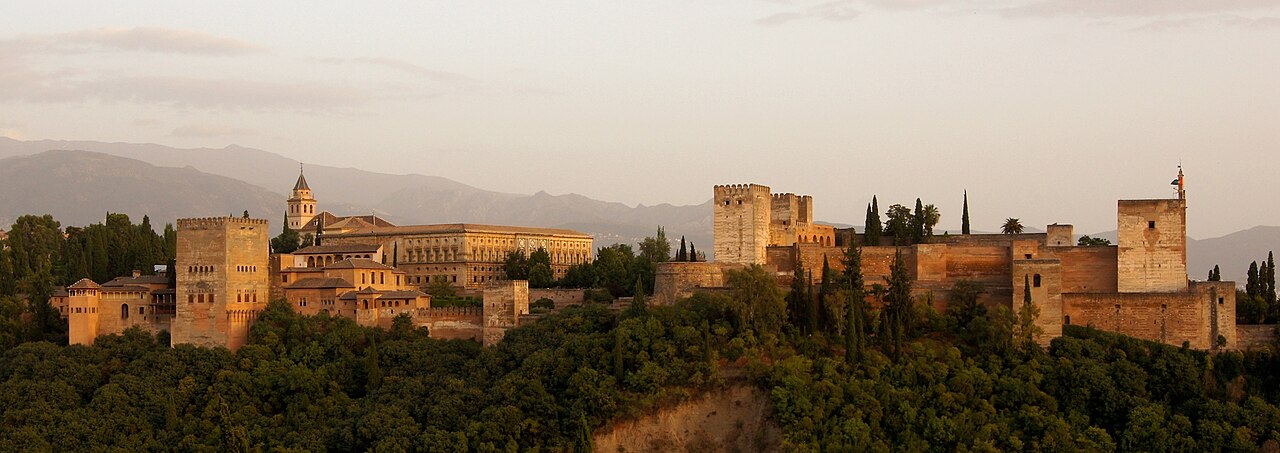
Alhambra & Moorish Heritage
Alhambra (Granada)
 Wikipedia Commons (CC BY-SA)
Gaudí Mosaics at Park Güell
Park Güell (Barcelona)
 Wikipedia Commons (CC BY-SA)
Plaza de España & Mudéjar Architecture
Plaza de España (Seville)
 Wikipedia Commons (CC BY-SA)
Mezquita-Catedral of Córdoba
Mosque-Cathedral of Córdoba
 Emilio J. Rodríguez Posada (CC BY-SA 2.0)
World-Class Art Museums
Prado Museum
 Juan Antonio Flores Segal from Madrid (Spain) (CC BY 2.0)
Vibrant Food Markets and Tapas Culture
Mercado de San Miguel
 Canaan (CC BY-SA 4.0)
Flamenco Shows and Andalusian Culture
Casa de la Memoria
 Fernando (CC BY-SA 4.0)
An Ancient Roman Archaeological Site
Roman Theatre of Merida
 Pelayo2 (CC BY-SA 3.0)
A UNESCO-listed Medieval Walled City
Walls of Avila
 Daderot (Public domain)
A Traditional Spanish Craft Workshop
Toledo Damascene Workshop
Ingo Mehling (CC BY-SA 4.0)A Grand Gothic or Renaissance Cathedral
Seville Cathedral
 CC BY-SA 3.0
A Historic University Town Exploration
University of Salamanca
Food guide
 Jonathan Pincas from Leon, Spain (CC BY 2.0)
Croqueta
Small, breaded, and fried rolls typically filled with a creamy bechamel sauce and various ingredients like ham, cod, or mushrooms, a beloved tapa found across the country.
USD 1-2
 Krista (CC BY 2.0)
Churro con Chocolate
Fried dough pastry, typically ridged and star-shaped, served hot with a thick, rich dipping chocolate, a popular breakfast or late-night snack.
Any traditional churreria · USD 4-7
 David Boté Estrada (CC BY-SA 2.0)
Tortilla Espanola
This classic Spanish omelette features thinly sliced potatoes and onions, slowly cooked in olive oil and bound with egg, served warm or at room temperature.
USD 3-8
 Bocadorada (CC BY-SA 2.0)
Gazpacho
This refreshing cold soup from Andalusia is made from ripe tomatoes, cucumbers, bell peppers, garlic, olive oil, and vinegar, a perfect antidote to hot weather.
USD 5-10
 Francesc Fort (CC BY-SA 4.0)
Patatas Bravas
Crispy fried potato cubes served with a piquant, reddish tomato sauce and often a dollop of garlicky aioli, a ubiquitous tapa.
USD 5-9
 Tamorlan (CC BY-SA 3.0)
Bocadillo de Jamon
A simple yet satisfying sandwich made with crusty bread and thin slices of cured Iberian ham, a staple for quick meals, picnics, or an afternoon snack.
USD 6-10
Shopping guide
 Jacek Halicki (CC BY-SA 4.0)
Extra Virgin Olive Oil
As the world's largest producer, Spain offers exceptional quality, single-origin olive oils with diverse flavor profiles, often at a fraction of international prices.
Specialty food shops like La Chinata; local cooperatives in Andalucia; gourmet sections of El Corte Ingles. · USD 10-50
 Cantabrucu (CC0)
Handmade Espadrilles (Alpargatas)
These traditional rope-soled shoes are comfortable, stylish, and durable, handcrafted with regional variations from Catalonia and the Basque Country.
La Manual Alpargatera in Barcelona; specialized shoe boutiques in Madrid's shopping districts. · USD 30-70
Hand-Painted Talavera Ceramics
Distinctive pottery from Talavera de la Reina, known for its colors and intricate designs, perfect for adding a touch of Spanish artistry to your home.
Artisan workshops in Toledo's old town; specialty ceramic stores in Talavera de la Reina. · USD 30-150
 Xemenendura (CC BY-SA 3.0)
Jamon Iberico de Bellota
This acorn-fed cured ham is a culinary masterpiece, offering complex flavors and a melt-in-your-mouth texture unrivaled by other hams.
Mercado de San Miguel; reputable charcuterias in Salamanca; shops like Enrique Tomas for vacuum-packed options. · USD 40-1,000
 Badagnani (CC BY 3.0)
Pimenton de la Vera (Smoked Paprika)
This unique smoked paprika from the La Vera region offers an intense, smoky flavor essential to authentic Spanish cuisine and is hard to find abroad.
Specialty food stores; local markets like Mercado de la Cebada or Mercado de la Paz. · USD 5-15
 Tamorlan (CC BY 3.0)
Turron (Nougat)
A traditional Spanish confection, especially popular during Christmas, with varieties like Alicante (hard) and Jijona (soft), offering rich almond and honey flavors.
Turron shops like Casa Mira in Madrid; Vicens stores nationwide; local markets during holiday seasons. · USD 10-30
Festivals & timing
February
Carnaval (Cádiz, Tenerife)
Spain's biggest carnival is in Cádiz: costume parades, satirical street songs (chirigotas), packed bars. Tenerife's Santa Cruz festival rivals Rio in scale. Hotels book months ahead.
Worth planning around
March
Las Fallas (Valencia)
Five days of giant satirical sculptures (fallas), parades and the final-night burning of every sculpture (la cremà). Valencia is overrun but. Mar 15-19 every year.
Worth planning around
April
Semana Santa (Holy Week) + Feria de Abril (Seville)
Solemn nightly processions of pasos (sculptural floats) through every Andalusian city, especially Seville and Málaga. Two weeks later, Seville's Feria de Abril fairground week: flamenco, manzanilla sherry, horse-drawn carriages.
Worth planning around
August
Summer holidays
Most family businesses and many Michelin restaurants close 2-4 weeks. Madrid empties; coasts and islands overflow. Heat across the interior hits 40°C+. Avoid for a first trip.
Better to avoid
Last Wednesday of August
La Tomatina (Buñol)
World's largest food fight: 20,000 people throwing 150 tons of tomatoes for an hour. Tiny village, ticket-only (€15), books out months ahead. Day trip from Valencia; bring ski goggles.
Worth planning around
December 22 - January 6
Christmas + Three Kings (Reyes)
Spanish Christmas peaks at Three Kings Day (Jan 6): cabalgatas (gift-throwing parades) in every city Jan 5, gift exchanges Jan 6. Most museums close Dec 25 and Jan 1. Festive but bookings essential.
Live events & modern attractions
Beyond classic sightseeing — the show to book, the match to watch, the place that shows you the country's present.
 Wikipedia Commons
🎭 Live performance · Madrid / Seville
Casa Patas Madrid / Los Gallos Seville
Intimate 100-seat venues with serious flamenco — singers, guitarists, dancers in 90-minute sets. Skip the giant tourist shows in Plaza Mayor; pay ~€38 for the real thing.
When: Most nights · 8 PM & 10:30 PM
 Wikipedia Commons
🏟️ Sport · Barcelona / Madrid
Camp Nou (FC Barcelona) / Bernabéu (Real Madrid)
Two of football's temples. Match days sell out weeks ahead — buy via the official La Liga app, not reseller sites. Off-season: both offer excellent stadium tours.
When: La Liga season · Aug–May
 Wikipedia Commons
🔬 Modern attraction · Valencia
City of Arts and Sciences, Valencia
Santiago Calatrava's futuristic complex — opera house, science museum, IMAX, oceanographic park (Europe's largest aquarium). One of Europe's most photogenic modern campuses.
When: Year-round · ticketed
 Wikipedia Commons
🔬 Modern attraction · Madrid
Santiago Bernabéu Stadium Tour
Tour Real Madrid's legendary home — the trophy room with all 15 Champions League titles, the pitch tunnel, the dressing room, panoramic stadium view. €26, runs daily, no match-day ticket needed.
When: Daily · 10 AM–7 PM (non-match days)
Travel essentials
Connectivity & SIM
- Vodafone Spain — $20 for 30 days / 50GBWhere: Any Vodafone retail store or major international airport arrivals hall
- Orange Spain — $15 for 15 days / 20GBWhere: Any official Orange shop or El Corte Ingles electronics department
- Airalo eSIM — $10 for 10 days / 5GBWhere: Online via the Airalo app
Cultural notes
Lunch is a substantial meal served between 13:30 and 15:30; dinner rarely starts before 21:00. Tipping is not mandatory, and leaving a few small coins for a coffee or a modest amount at a restaurant is sufficient. When visiting churches, keep shoulders and knees covered, even in summer.
Safety
Pickpocketing is the main risk, especially on the Barcelona Metro and at tourist spots like the Sagrada Familia or Las Ramblas. Keep bags zipped and in front of you. At night in large cities, stick to well-lit main streets rather than deserted side alleys. If you are a victim of theft, report it to the local police (Policia) immediately to get a crime report for your travel insurance.
Electric Socket Guide(230V · 50Hz)
Socket types
Two round pins (most of Europe, South America)
Two round pins + side earth clips (Germany, Europe)
Planning checklist
Book Alhambra + Sagrada Família tickets 2-3 months ahead.
Both sell out in peak season. Alhambra: alhambra-patronato.es direct (not third-party resellers who mark up 3×). Sagrada Família: sagradafamilia.org direct. Choose the early-morning slot to avoid afternoon tour-group waves.
Pre-book AVE train tickets 60+ days out.
Renfe AVE dynamic-prices like airlines: Madrid↔Barcelona is €30 booked 60 days ahead, €120 same-day (as of mid-2026; AVE fares are dynamic, check current on Renfe). Iryo and Ouigo are AVE competitors with slightly cheaper fares. "Standard" class on any is fine for the 2.5-hour rides.
Get your ETIAS in order if you're a non-EU traveler.
Starting late 2026, US/UK/Canadian/Australian passports need an ETIAS online pre-authorization (€20, valid 3 years, like the US ESTA). Apply on the official EU ETIAS site (travel-europe.europa.eu) a few weeks before; don't fall for "expedited" scam sites.
Lock dinner reservations the same day you book hotels.
Top tapas spots in Seville (Bar Las Teresas, El Rinconcillo), Madrid (Casa Botín, Sobrino de Botín, Guinness-listed as one of the world's oldest restaurants) and San Sebastián's pintxos quarter need same-day or week-ahead bookings. TheFork and direct phone are the move.
Shift trips out of August.
Mid-July through August is when family-run restaurants close, Madrid empties, coasts overflow and the interior hits 40°C+. Aim for early September or May/June: better weather, lower prices.
Skip the rental car for the city triangle.
Madrid, Barcelona, Seville and Granada are connected by AVE. Spanish city centers have ZTL (limited traffic zones): driving inside one triggers €100+ automatic camera fines. Rent only for the rural south (Costa de la Luz, Cabo de Gata), Mallorca or the Camino de Santiago.
Carry a power adapter (Type C / F).
Spain uses European two-round-pin plugs at 230V. US/UK/Australian devices need an adapter; pack one or buy at any Bazar Chino (€2-3). USB-C laptops with 100W chargers work fine.
What mistakes do first-timers make in Spain?
Not booking Alhambra tickets months ahead
The Alhambra caps at 6,600 visitors/day and sells out 2-3 months ahead in peak season. Book Nasrid Palaces timed-entry directly at alhambra-patronato.es (NOT third-party resellers who mark up 3×). No tickets = no Alhambra; same-day is almost impossible.
Eating dinner at 6 PM
Spanish restaurants open for dinner at 8:30-9 PM and locals don't sit down till 10 PM. Before then you'll only find tourist trap menús-del-día with picture menus. Lock 9:30 PM for an authentic dinner; merienda (5 PM snack) and tapas (7-9 PM) bridge the gap.
Visiting in August
Most family-run restaurants and small shops close for 2-4 weeks of summer vacation. Madrid empties out, Barcelona's coastal areas pack to bursting, prices spike 30-60%. Even Michelin restaurants close. May-June and September-October are dramatically better.
Trying to siesta (and missing the action)
Shops, museums, and even some restaurants close 2-5 PM in most cities (less so in Barcelona and Madrid). Plan museums + meals around this, not against it; the 9 PM dinner + 11 PM walk culture is when Spain actually lives.
Pickpocketing on Barcelona's Las Ramblas + Metro L3
Barcelona's Las Ramblas and metro line L3 (Plaça Catalunya ↔ Sagrada Família) are pickpocket hotspots. Keep wallet/phone in front pocket or zipped bag, avoid back pockets. Madrid's Sol and Atocha metro stations are similar.
Tipping like an American
Spanish service is included; tipping is genuinely optional and over-tipping makes locals uncomfortable. Round up the coffee bill, leave €1-2 for a tapas dinner, 5-10% only at high-end. Don't leave 20%.
Going to Park Güell without a ticket
The colorful 'Monumental Zone' (Gaudí mosaics) requires a timed-entry ticket booked 1-2 weeks ahead in peak season. Some people show up expecting a free park (the broader park is free, but the photos are inside the paid zone).
Frequently asked questions
Five days fits Barcelona alone, seven covers Madrid and Barcelona, and ten adds Seville and Granada in Andalusia. Book AVE trains and Alhambra tickets ahead. Budget about $50-90 a day as a backpacker, $130-220 mid-range, or $380+ for luxury.
Ten to fourteen days is the sweet spot: three days in Barcelona, three in Madrid, two-three in Seville, two in Granada, plus travel days. Seven days works for just Madrid + Barcelona (the AVE train makes this easy). Adding Valencia, San Sebastián, or Ibiza to a first trip pushes most days into travel; pick one regional add-on.
May-June and September-October are the sweet spots: perfect weather everywhere, lower prices than peak summer, gardens in bloom. Avoid August (40°C+ in Madrid/Seville, family businesses close, coasts overcrowded). Winter (Nov-March) is fine for cities, cold/wet in the north, but uncrowded and cheap. Andalusia is best March-May and October.
Most Western passport holders (US, UK, Canada, Australia) get 90-day visa-free entry under Schengen Area rules; just a passport stamp. Starting late 2026, ETIAS (€20 online pre-authorization, valid 3 years) is required for non-EU citizens, similar to the US ESTA. Apply on the official EU ETIAS site (travel-europe.europa.eu) a few weeks before; don't fall for 'expedited' scam sites.
AVE high-speed trains are the canonical answer: Madrid↔Barcelona in 2.5 hr, Madrid↔Seville in 2.5 hr, Madrid↔Valencia in 1.5 hr. Book on Renfe.com 60+ days ahead for the cheapest fares (€30-50 vs €120 last-minute; as of mid-2026; AVE fares are dynamic, check current on Renfe). Iryo and Ouigo are budget AVE competitors. Buses (ALSA, Avanza) are cheaper for short routes. Skip cars in cities; ZTL fines, expensive parking.
Cards work nearly everywhere; even small tapas bars take contactless. Apple Pay and Google Pay are universal. Cash is occasionally needed for very small markets, public toilets (€0.50 coin), and rural taxis. Withdraw at major bank ATMs (BBVA, Santander, CaixaBank) to avoid the €5+ Euronet 'tourist' ATM fees.
Very safe by global standards: violent crime against tourists is rare, women routinely travel solo, English is widely spoken in tourist areas. The real risks are pickpocketing in Barcelona (Las Ramblas, metro L3) and Madrid (Sol, Atocha). Keep wallet in front pocket. Late-night safety is good; Spanish nightlife runs till 4 AM and streets stay populated.
Eat regionally. Madrid: cocido madrileño (hearty stew), bocadillo de calamares, churros con chocolate. Barcelona: pa amb tomàquet, fideuà, esqueixada (Catalan tomato bread, noodle paella, salt-cod salad). Andalusia (Seville/Granada): jamón ibérico, gazpacho, salmorejo, pescaíto frito. Valencia: real paella (lunch only). Basque (San Sebastián): pintxos crawls + sidrerías. Avoid Las Ramblas tourist restaurants.
Seville for authentic: Casa de la Memoria, La Casa del Flamenco, Los Gallos are intimate tablaos with real performers, not tourist shows. Granada has cave flamenco in Sacromonte (different style: zambra). Madrid's flamenco is good (Corral de la Morería, Tablao Cardamomo) but commercial. Avoid the cheap €15 'flamenco + drink' street touts; they're entirely tourist-focused.