What should you eat in Spain, what is each dish, and when do Spaniards eat it? Start with paella valenciana at a long lunch in Valencia and a slice of tortilla de patatas at any bar. Add octopus in Galicia, a plate of hand-carved jamón ibérico, and gazpacho or salmorejo in an Andalusian summer. Most of Spain's best food belongs to one place, so eat each dish in the region it comes from. Eat on Spanish time, with lunch after 1 pm and dinner after 8.
- Eat late. Restaurants serve lunch, the main meal, from 1 to 4 pm and dinner from 8 to 11:30 pm.
- Take the menú del día. A weekday set lunch costs €10 to €15 in Barcelona.
- Tapas still come free with drinks in Granada, Almería and some Madrid bars.
The 12 Spanish dishes to eat first
Paella valenciana
Iconic dish
- From: Valencia, where rice grows in the Albufera wetlands
- When: lunch, never dinner
- Price: €15 to €25 a person at a serious restaurant, usually for two or more
- Contains: chicken and rabbit; seafood versions have shellfish
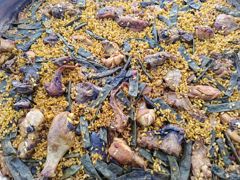
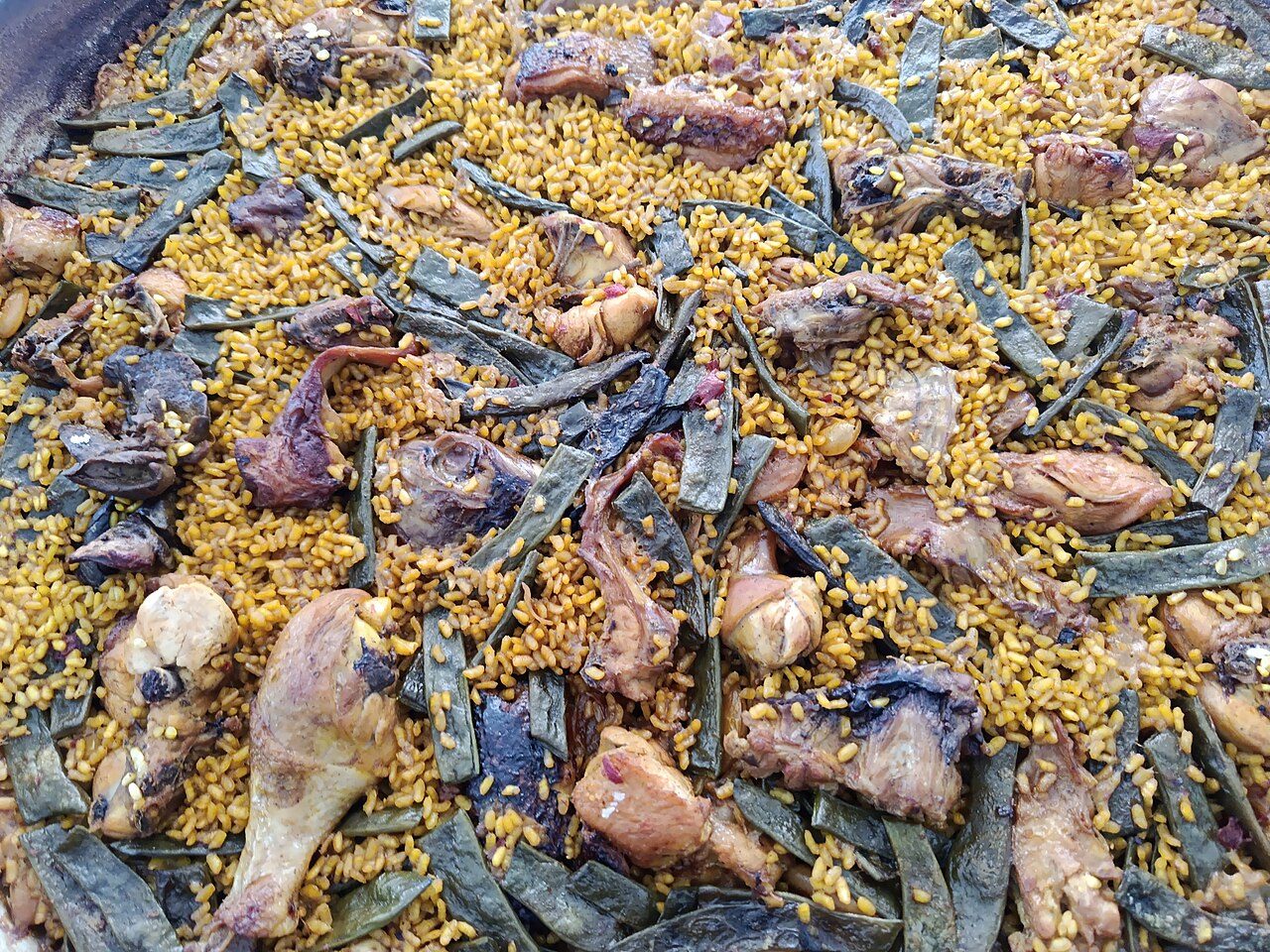
Paella valenciana is a lunch dish, and a good restaurant in Valencia cooks it to order. The original is short-grain rice cooked flat in a wide pan with chicken and rabbit, flat green beans, butter beans and saffron. Paella valenciana has no shellfish at all. A seafood paella is a different dish.
Plan a day in Valencia around a paella lunch. Valencia is a March pick for the Las Fallas bonfires.
 Francesc Fort (CC BY-SA 4.0)
Paella valenciana in its wide pan, with chicken, rabbit and green beans
Tortilla de patatas
Iconic dish
- From: all of Spain
- When: any time, from breakfast to a late snack
- Price: €2 to €3 a portion at a bar
- Contains: egg and potato; vegetarian
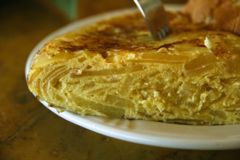
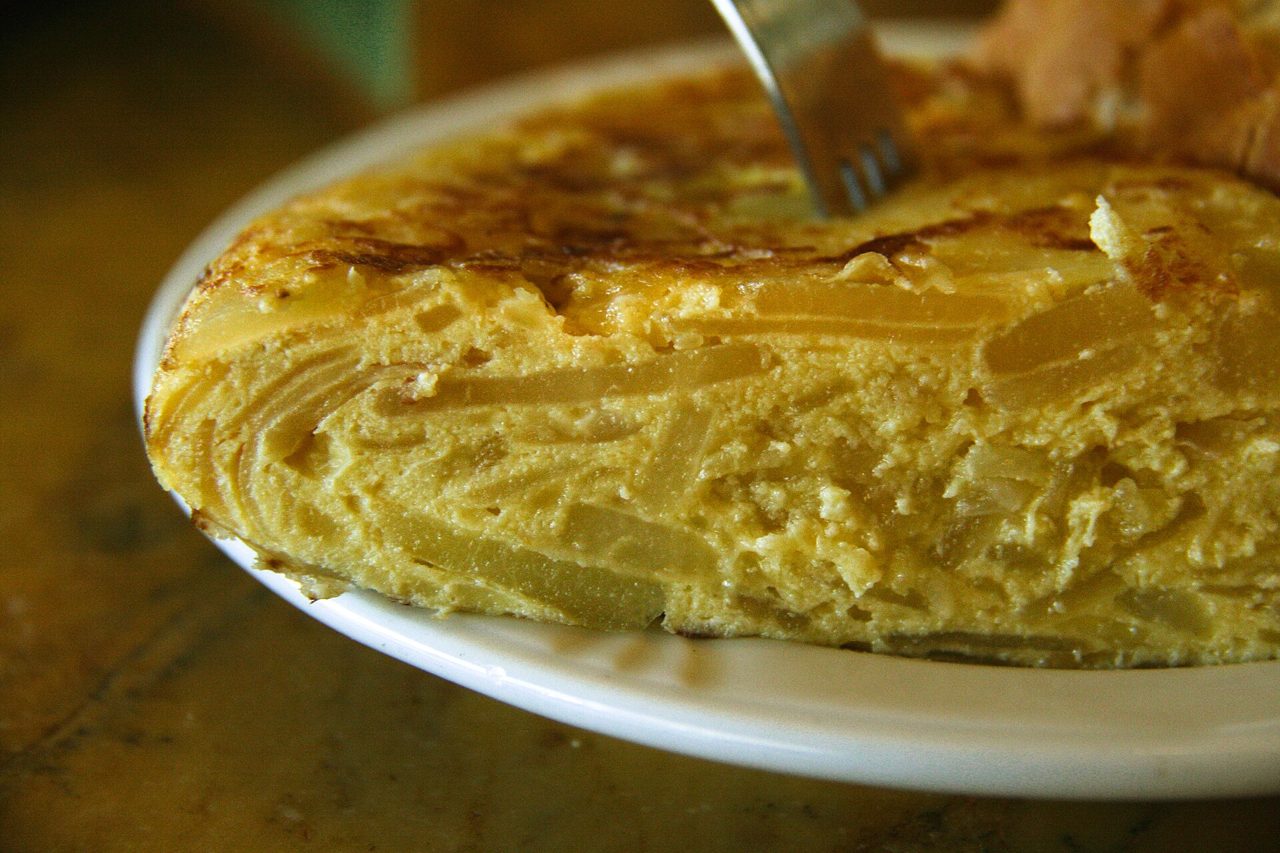
Spain's official tourism site calls the Spanish omelet, tortilla de patatas, "the typical Spanish dish par excellence". The thick omelet of potatoes and eggs is slow-cooked in olive oil, and Spaniards argue over whether it should have onion.
At €2 to €3 a slice, tortilla is one of the cheapest good meals in Spain.
Order a slice (un pincho de tortilla) with a coffee mid-morning, or a ración to share in the evening. A good tortilla is still soft in the middle.
 Tamorlan (CC BY-SA 3.0)
A tortilla de patatas cut open to show the layers of potato
Pulpo a la gallega
Iconic dish
- From: Galicia
- When: lunch or as a tapa
- Price: a ración ran from €9 in Ourense to €18 in Burela in 2021
- Contains: octopus; gluten-free
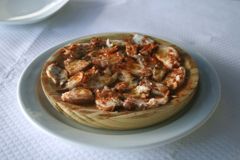
At a Galician pulpería, an octopus bar, pulpo á feira (fairground octopus) usually comes on a wooden plate. The octopus is boiled, cut with scissors and dressed with coarse salt, paprika (pimentón) and olive oil. On boiled potatoes it becomes pulpo a la gallega.
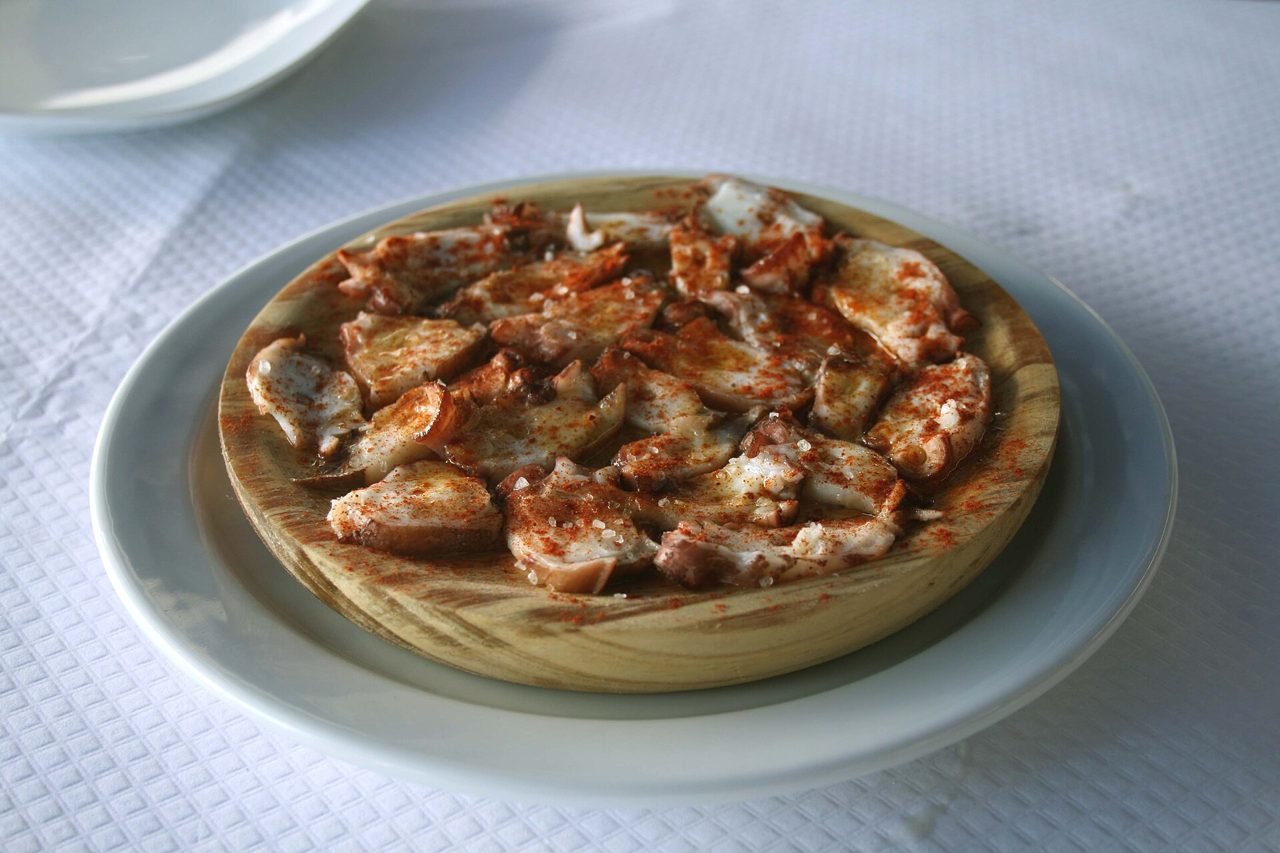 Tamorlan (CC BY-SA 3.0)
A ración of octopus dressed with paprika and olive oil
Jamón ibérico
Iconic dish
- From: the southwest: Extremadura, Jabugo in Huelva, Guijuelo in Salamanca
- When: any time: on breakfast toast, as a tapa, in a sandwich
- Price: a ración of top acorn-fed jamón de bellota can be €30
- Contains: pork
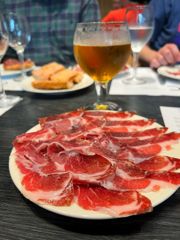
Order jamón ibérico by the plate, cut by hand at the bar and served at room temperature. The ham comes from Spain's black Ibérico pigs, and the de bellota grades from pigs fed on acorns in the oak pastures (dehesa). Jamón serrano from white pigs is the cheaper everyday ham, so eat it in a bocadillo and spend on one plate of ibérico de bellota.
Eat it in Spain. US Customs does not allow meat products from most foreign countries, and cured ham counts.
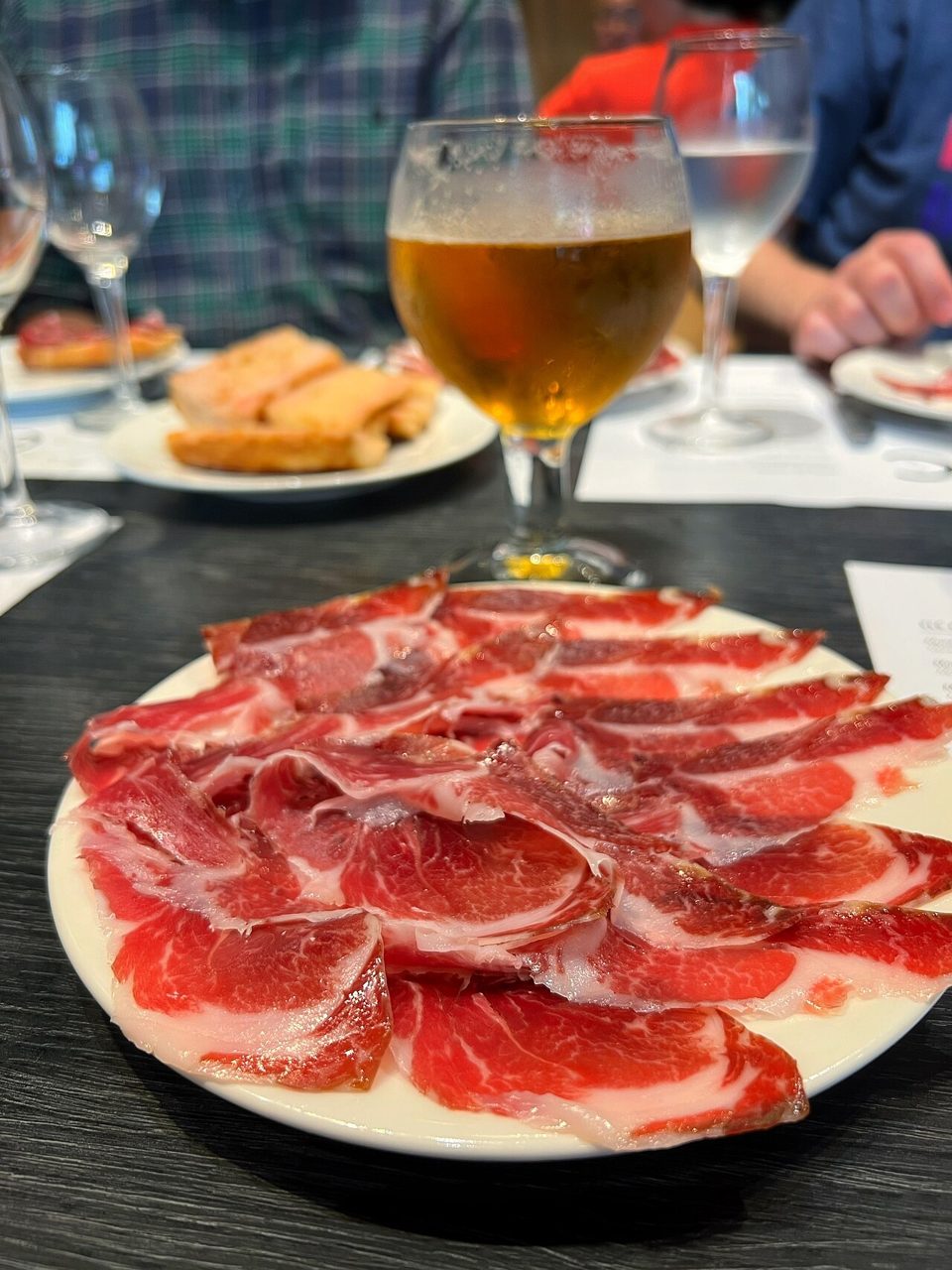 Elena.laps (CC BY-SA 4.0)
Thin slices of jamón ibérico served as a tapa
Gazpacho and salmorejo
Iconic dish
- From: Andalusia; salmorejo from Córdoba
- When: summer, as a starter or a light lunch
- Contains: gazpacho is vegan without a garnish; salmorejo is topped with egg and ham
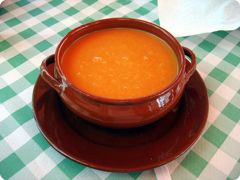
Gazpacho and salmorejo, Andalusia's cold soups, are common starters on its summer menú del día. Gazpacho is a raw blend of tomato, pepper and cucumber with garlic, olive oil and vinegar. Some bars serve it in a glass.
Córdoba's salmorejo is thicker, made with bread and topped with chopped egg and jamón. If you don't eat pork, order gazpacho or ask for salmorejo without the ham. Córdoba is a May pick for its patio festival.
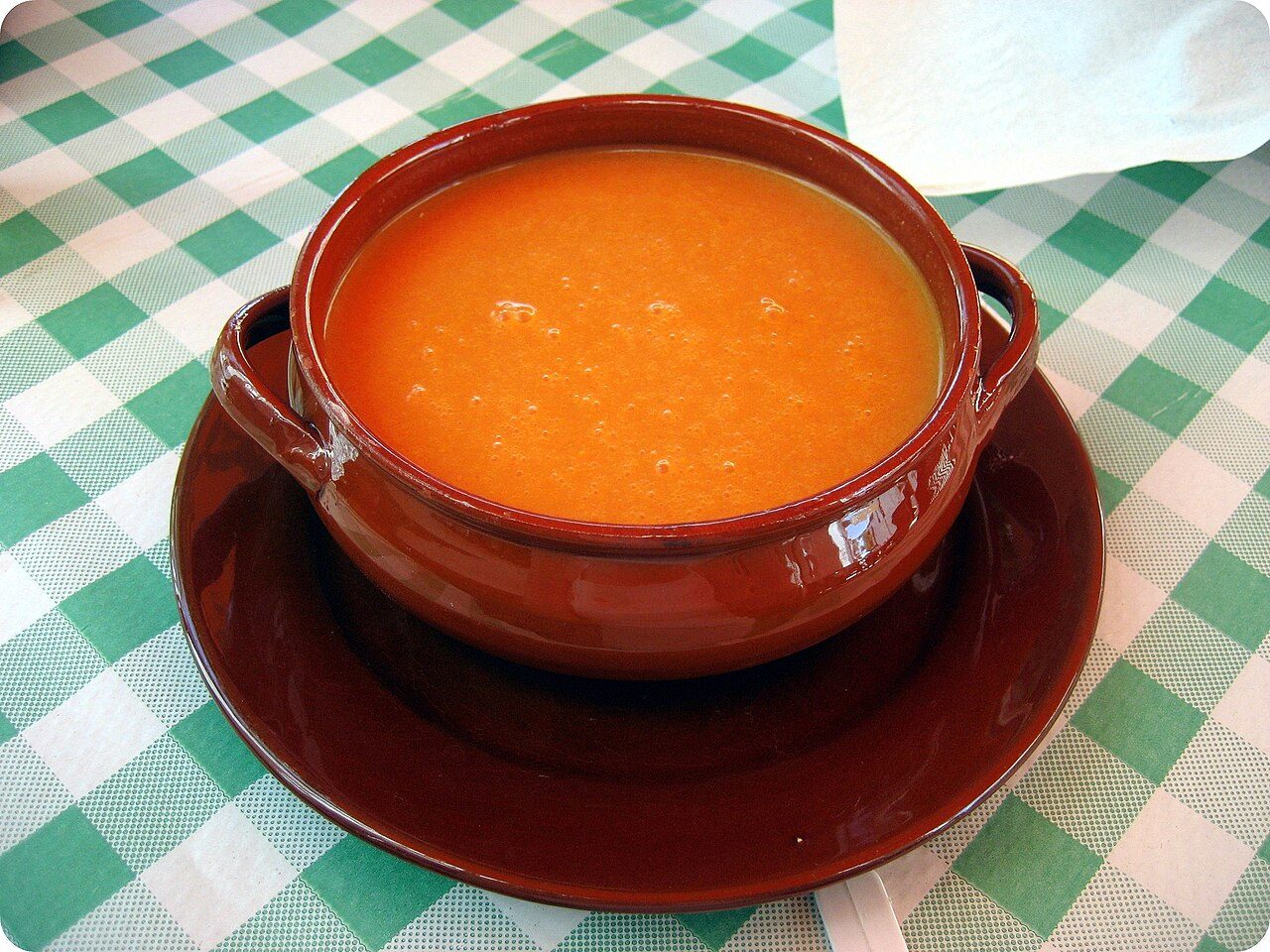 Bocadorada (CC BY-SA 2.0)
Gazpacho in a clay bowl
Pintxos
Iconic dish
- From: the Basque Country
- When: an evening or pre-lunch bar crawl
- Price: about €2.50 each in San Sebastián
- Contains: varies; most are on bread, many are seafood or pork
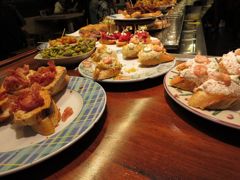
In San Sebastián's old town, eat pintxos the local way: one or two in each bar with a small drink, then on to the next. Pintxos are the Basque Country's bar bites, usually laid on bread and held with a toothpick, cold on the counter or hot from the kitchen.
Start with the Gilda, San Sebastián's classic skewer of olive, anchovy and guindilla pepper in vinegar. Then ask for the hot pintxo of the day.
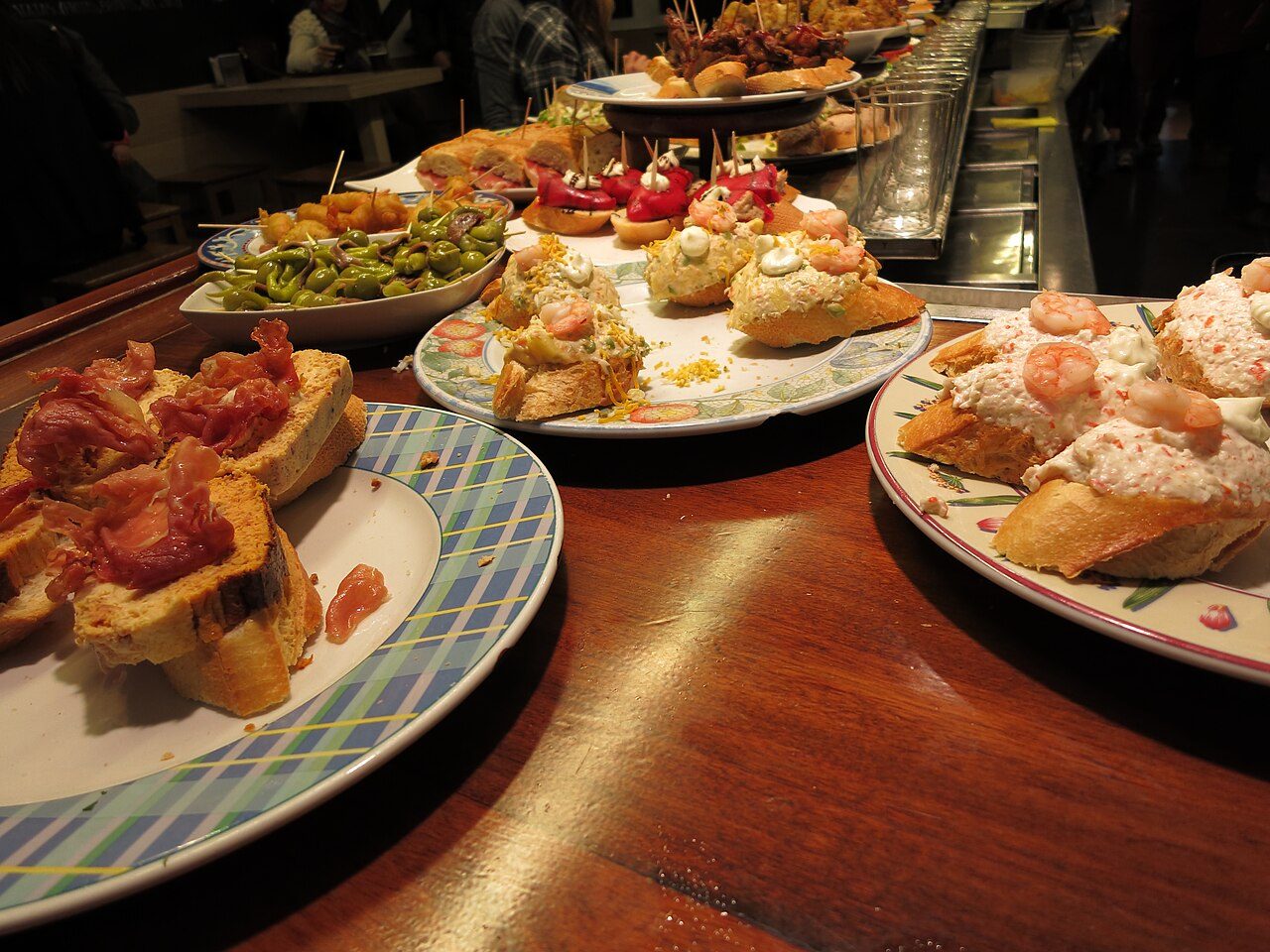 Basotxerri (CC BY-SA 4.0)
A bar counter covered with pintxos in Donostia–San Sebastián
Cochinillo asado
Iconic dish
- From: Segovia, in Castile and León
- When: a long weekend lunch
- Price: about €28 a portion at Mesón de Cándido in Segovia
- Contains: pork
In Segovia, cochinillo asado is carved with the edge of a plate. The whole milk-fed piglet is roasted in a wood oven until the skin crackles. Castile and León roasts milk-fed lamb, lechazo, the same way.
Segovia is a day trip from Madrid. Book the cochinillo lunch ahead, especially for a weekend or a public holiday.
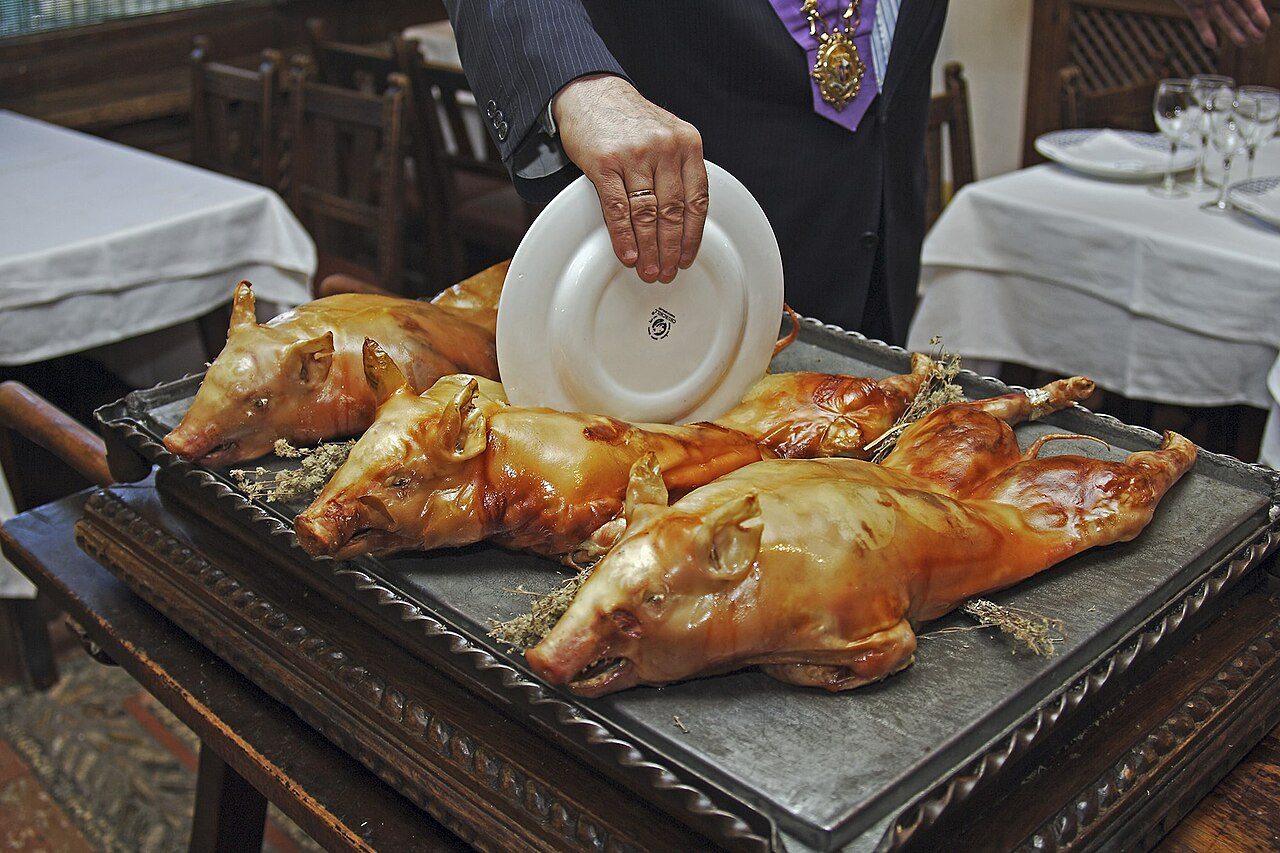 Diegoml1933 (CC0)
Cochinillo asado, Segovian roast suckling pig, on a plate
Croquetas
Iconic dish
- From: all of Spain
- When: tapa hour
- Contains: gluten and dairy; jamón croquetas have pork
Every tapas bar in Spain makes croquetas, fried rolls of breadcrumbed béchamel. The filling is jamón, chicken, salt cod or mushroom. Good croquetas are nearly liquid inside. Start with the croquetas de jamón.
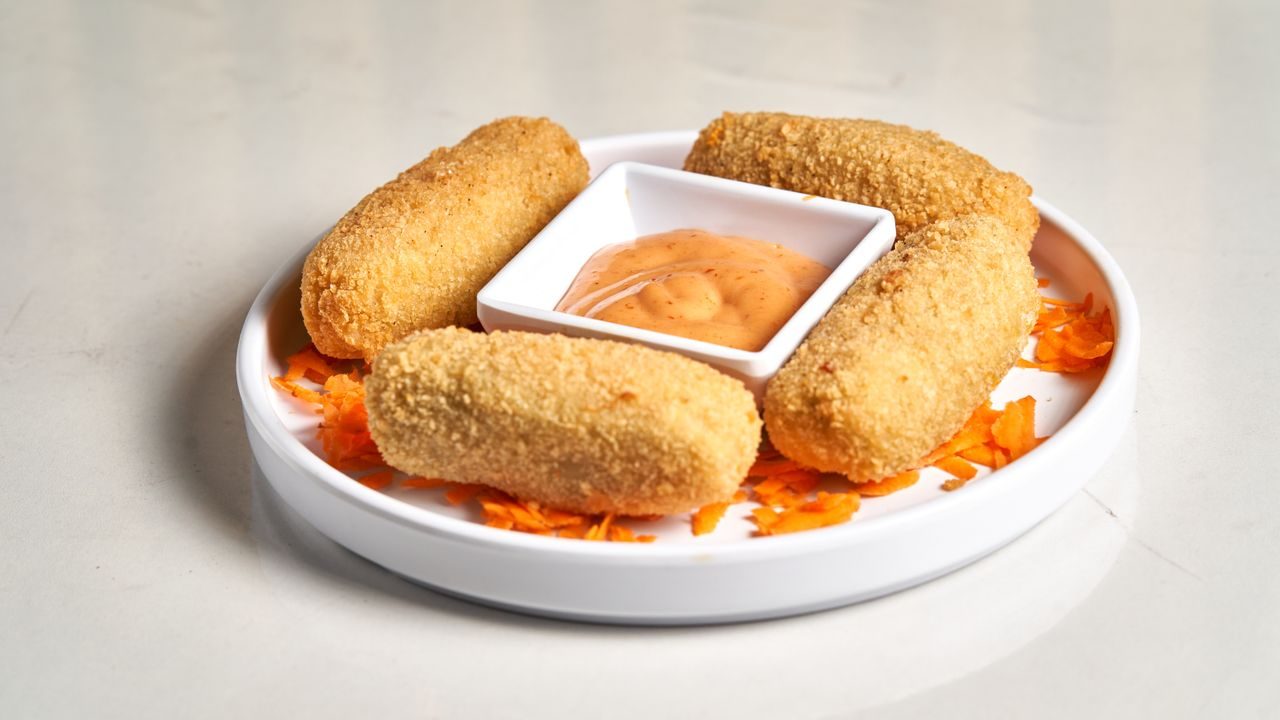 Photo by Willians Huerta on Pexels
A plate of golden croquetas
Fabada asturiana
- From: Asturias
- When: lunch, in the cold months
- Contains: pork
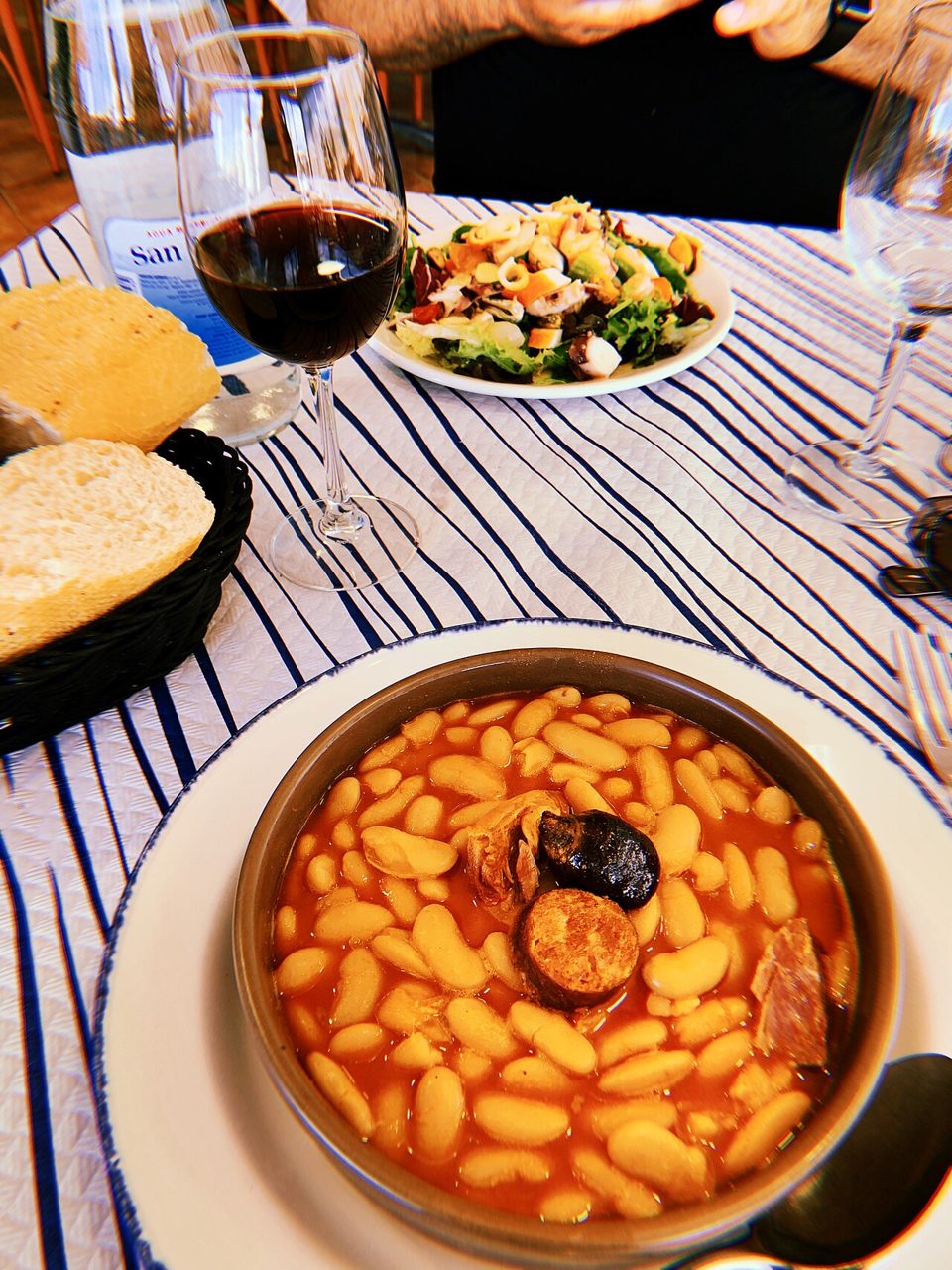
Fabada asturiana, the white-bean stew of Asturias, is a cold-month lunch to order in Oviedo or Gijón. Large fabes beans go into the pot with chorizo and blood sausage (morcilla), cured pork shoulder and pork belly. Drink cider with it, as Asturians do.
 Amanda Coutinho (CC BY 2.0)
Fabada asturiana with beans, chorizo and morcilla
Gambas al ajillo
Iconic dish
- From: Andalusia and Madrid
- When: tapa hour
- Contains: shellfish; gluten-free
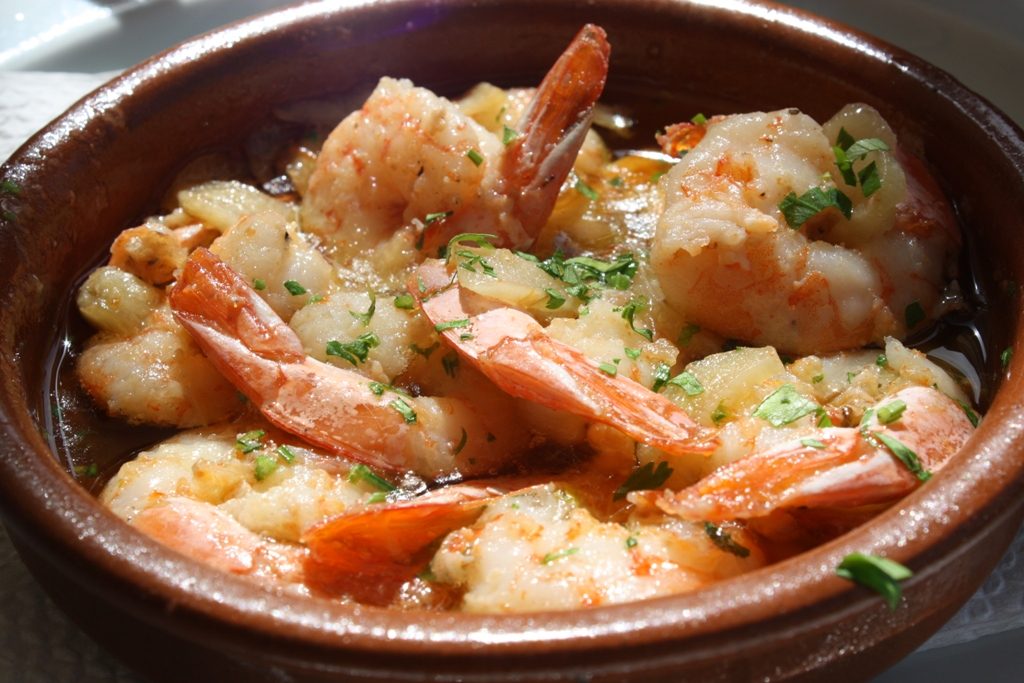
Gambas al ajillo, prawns sizzled in olive oil with sliced garlic and chili, come to the table still bubbling in a small clay dish. The garlic oil is half the dish. Order bread for it.
 Javier Lastras (CC BY 2.0)
Gambas al ajillo in a clay dish
Churros con chocolate
Iconic dish
- From: Madrid and all of Spain
- When: breakfast, an afternoon snack, or the end of a late night
- Price: €5.90 for chocolate with six churros or two porras at Chocolatería San Ginés in Madrid
- Contains: gluten; the chocolate usually has milk
After a late night out in Madrid, order churros con chocolate at Chocolatería San Ginés, near the Puerta del Sol. The fried dough comes thin (churros) or thick (porras), and the hot chocolate is thick enough to coat it.
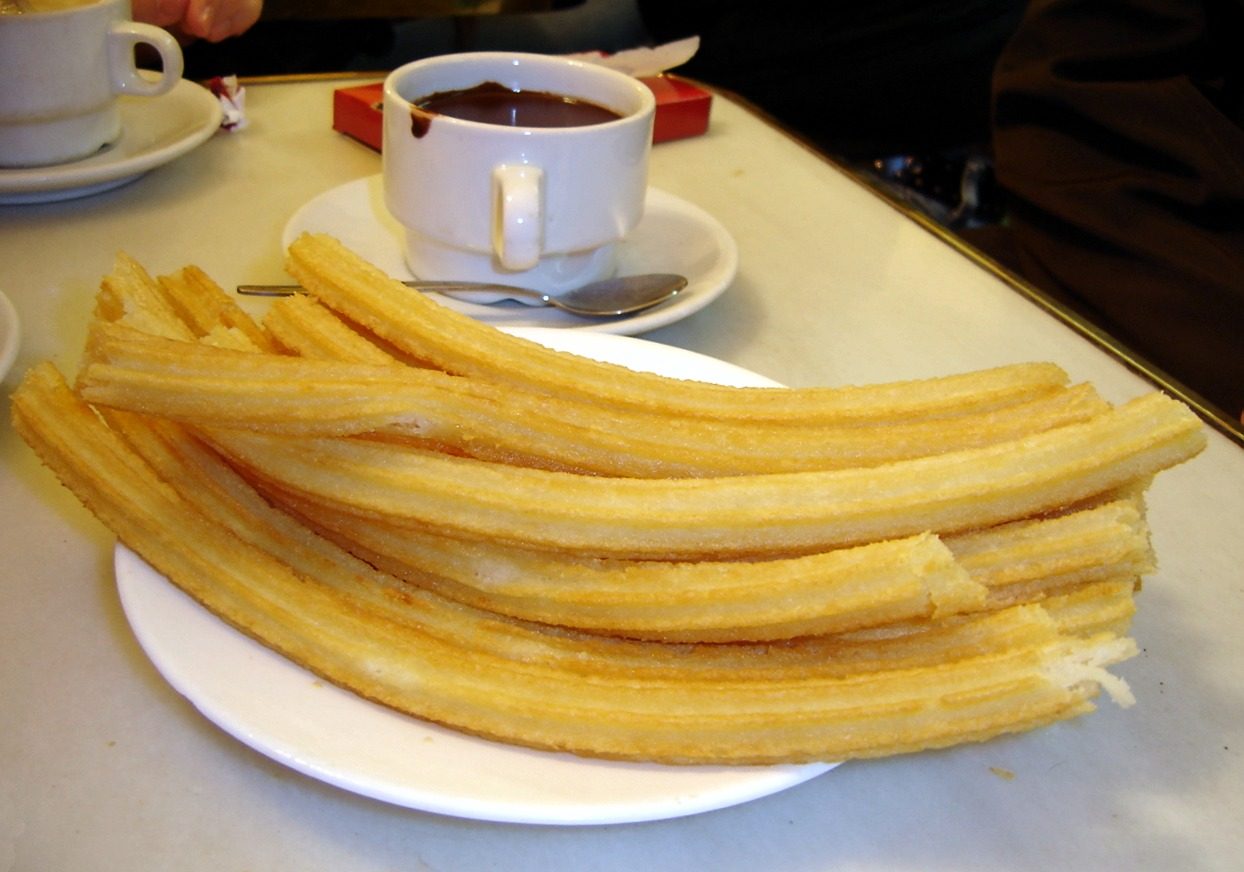 Barcex (CC BY-SA 2.5)
Chocolate con churros at San Ginés, Madrid
Patatas bravas
Iconic dish
- From: Madrid
- When: tapa hour
- Contains: fried potato; the aioli has egg
Order patatas bravas, Madrid's fried potatoes under a spicy brava sauce, as a side to the dish of the region you are in. The sauce often comes with aioli.
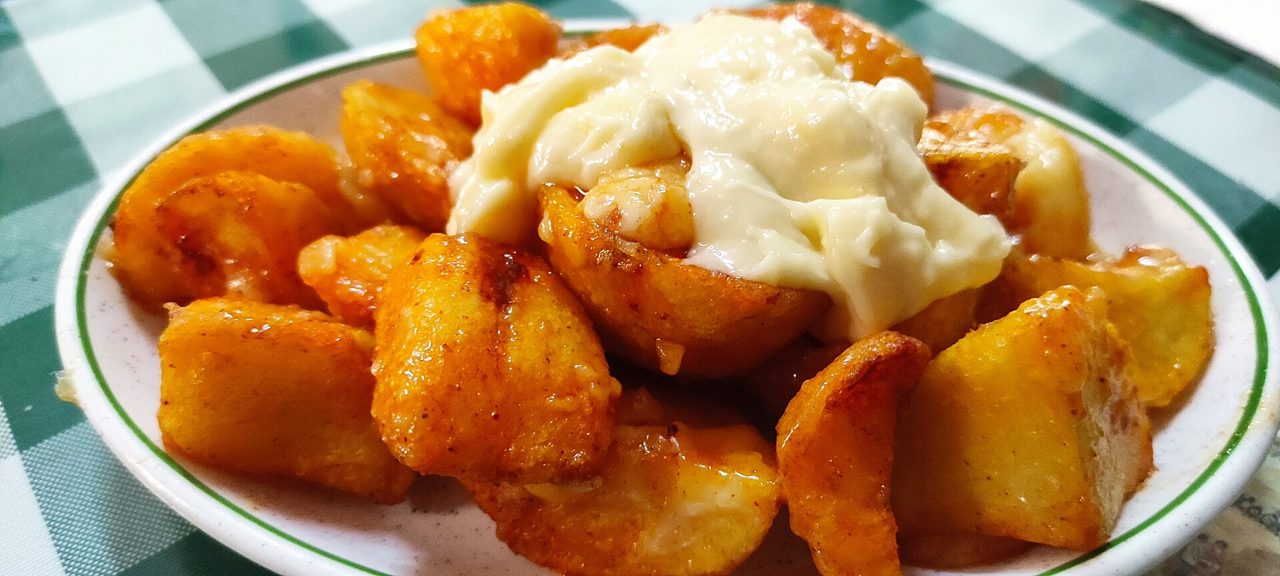 Francesc Fort (CC BY-SA 4.0)
Patatas bravas with brava sauce and aioli
What else to order at a tapas bar
Spanish tapas bars also serve boquerones en vinagre, pimientos de Padrón and albóndigas. A simple tapa costs about €4 to €6 in Barcelona.
| Tapa | What it is | Most at home in |
|---|---|---|
| Boquerones en vinagre | fresh anchovies marinated in vinegar, garlic and parsley | Málaga |
| Pimientos de Padrón | small green peppers blistered in oil with coarse salt, the odd one hot | Galicia |
| Albóndigas | meatballs in tomato or almond sauce | everywhere |
| Ensaladilla rusa | potato salad with mayonnaise, tuna, egg and peas | everywhere |
| Calamares a la romana | battered fried squid rings | everywhere; in a sandwich in Madrid |
| Berenjenas con miel | fried eggplant with sugar-cane honey | Córdoba and Málaga |
| Mejillones | mussels, steamed or in escabeche | Galicia |
| Morcilla | blood sausage, in Burgos with rice and onion | Burgos |
| Queso manchego | pressed sheep's-milk cheese | La Mancha |
| Aceitunas | marinated olives, often free with a drink | Andalusia |
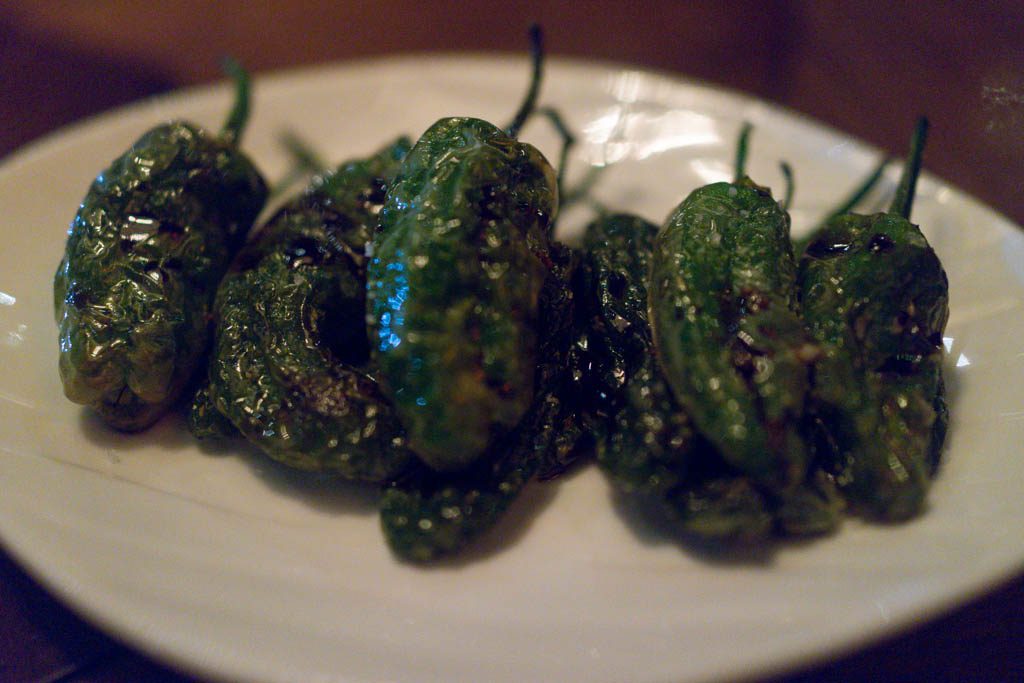 Charles Haynes (CC BY-SA 2.0)
A plate of blistered Padrón peppers
What to eat in each region of Spain
Each region of Spain cooks its own dishes, from octopus with Albariño in Galicia to paella and horchata in Valencia. When you build a trip with MonkeyEatingMango, the food guide lists the dishes of each city on your route.
| Region | Eat | Drink |
|---|---|---|
| Galicia | pulpo á feira, pimientos de Padrón, empanada gallega, goose barnacles (percebes), tarta de Santiago | Albariño |
| Basque Country | pintxos, the Gilda, bacalao al pil-pil, hake in green sauce, chuletón, burnt cheesecake (tarta de queso) | txakoli, cider |
| Asturias | fabada, cachopo, Cabrales blue cheese | cider (sidra) |
| Castile and León | cochinillo asado, lechazo, morcilla de Burgos | Ribera del Duero |
| Madrid | cocido madrileño, callos, bocadillo de calamares, churros | vermouth |
| Catalonia | pan con tomate, calçots (sweet onions charred over a fire and dipped in romesco, November to April), escalivada, crema catalana, fuet | cava, vermouth |
| Valencia | paella valenciana, arroz a banda, arroz negro, fideuà | horchata |
| Andalusia | gazpacho, salmorejo, ajoblanco, fried fish (pescaíto frito), sardine skewers (espetos), rabo de toro | sherry, tinto de verano |
| Castilla-La Mancha | queso manchego, pisto, Toledo marzipan | |
| Balearic Islands | sobrasada, ensaïmada | |
| Canary Islands | papas arrugadas with mojo |
Breakfast and desserts
A Spanish breakfast is small: toast rubbed with tomato and olive oil (pan con tomate, from Catalonia) and a café con leche. Churros are the weekend and late-night version. Coffee costs €1.50 to €2.50 at a café in Barcelona.
Try free
Plan your Spain trip in about 2 minutes
Tap through 8 quick cards for a complete itinerary with budget, maps, and packing lists. No account required.
Plan your Spain trip →| Sweet | What it is | Where or when |
|---|---|---|
| Crema catalana | lemon and cinnamon custard under burnt sugar | Barcelona |
| Tarta de Santiago | flourless almond cake | Santiago de Compostela |
| Burnt cheesecake (tarta de queso) | cheesecake with a scorched top | began at La Viña in San Sebastián |
| Flan | caramel custard | a common menú del día dessert |
| Torrijas | bread soaked in milk and fried | Easter |
| Turrón | almond nougat from Jijona and Alicante | Christmas |
What to drink in Spain
Spaniards drink wine with food. Ask for un tinto and you get a red, often from Rioja or Ribera del Duero. A glass costs €4 to €10 in a Madrid wine bar. Order Albariño with seafood in Galicia and a cold fino with ham or fried fish in Andalusia. Sangría is mostly a drink for visitors and fiestas. Spaniards order tinto de verano, red wine with lemon soda, instead. A caña, a small draft beer, costs €1.50 to €2.20.
| Drink | What it is | Where |
|---|---|---|
| Albariño | white wine for seafood | Galicia |
| Txakoli | light, slightly sparkling white, poured from a height | Basque bars |
| Fino and manzanilla | dry and salty sherry from Jerez and Sanlúcar, served cold with ham or fried fish | Andalusia |
| Cava | Catalan sparkling wine, the aperitif | Barcelona |
| Vermouth (vermut) | red and sweet, over ice, at weekend midday | Madrid and Barcelona |
| Cider (sidra) | poured from above the head into the glass, a short pour you drink at once | Asturias |
| Horchata | a cold milk made from tiger nuts, on a summer afternoon | Valencia |
Spaniards drink coffee slowly and sitting down, often over a long chat after a meal.
| Coffee | What it is | When |
|---|---|---|
| Café con leche | espresso with plenty of hot milk, close to a latte | breakfast |
| Café solo | a plain espresso | after a meal |
| Cortado | espresso with a dash of milk | any time of day |
| Carajillo | hot coffee with a shot of spirit, such as brandy, rum or anís | after a meal |
For herbal tea, ask for an infusión. In a café, manzanilla is chamomile tea, and on a wine list it is the sherry from Sanlúcar. Poleo menta, a mint infusion, is a common digestive after a meal.
When and how do Spaniards eat?
Restaurants in Spain serve lunch, the main meal of the day, from 1 to 4 pm and dinner from 8 to 11:30 pm. Most restaurants close between lunch and dinner. If you are hungry at 7, go to a tapas bar.
Spaniards count five meals a day: breakfast, lunch and dinner, plus a mid-morning snack and an afternoon merienda at about 6 pm. The merienda is coffee and something sweet, a sandwich or a piece of fruit.
On weekdays, look for the menú del día at lunch: a set starter and main, then dessert or coffee with bread and a drink. In Barcelona it costs €10 to €15.
In Granada, Almería and some Madrid bars, drinks still come with free tapas.
Eating out in Spain: tipping, the bill and water
Tipping in Spain is optional, because the bill already includes service. A tip of usually 5 to 10% is common in bars and restaurants. Nobody hurries you away from the table after a meal, so ask for the bill (la cuenta) when you are ready to go.
Bread, olives or a small appetizer may arrive without your ordering them. In Andalusia, a restaurant may charge for bread only if the price is on the menu, and a separate cover charge is not allowed. Send back what you don't want.
Tap water in Spain is safe to drink, with 99.3% of test reports rating it fit for consumption in 2024. Bars and restaurants must offer free tap water, so ask for agua del grifo.
Restaurants must tell you which of the 14 listed allergens a dish contains, from gluten and milk to nuts and shellfish. Ask about alérgenos before you order. Ham often goes on as a garnish, as on salmorejo, so say soy vegetariano if you don't eat meat.
Street food in Spain is mostly churros stalls and market counters, and EU hygiene rules also cover market stalls.
Plan your Spain trip around the food
The Spain travel guide covers how long to stay, which cities to pick and how to get between them. For a week of Andalusian food, the 7-day Southern Spain itinerary is based in Seville. The 10-day Spain itinerary splits the trip between Madrid and Seville.
Your MonkeyEatingMango trip plan names a dish to order at each lunch and dinner.
Last updated October 2026.
Common questions
What is Spain's national dish?
Spain has no official national dish. Paella and tortilla de patatas come closest. Paella is a lunch dish from Valencia, while tortilla is eaten all over Spain at any hour.
What is the most famous food in Spain?
Paella valenciana and tortilla de patatas are the most famous Spanish dishes. Galician octopus (pulpo á feira), jamón ibérico and chorizo come next, then gazpacho, Basque pintxos, boquerones and roast suckling pig.
What are the five meals in Spain?
Spaniards count five meals a day: breakfast, lunch and dinner, plus a mid-morning snack and an afternoon merienda at about 6 pm. Lunch, from about 2 pm, is the main meal. The merienda is coffee with something sweet, a sandwich or a piece of fruit.
What time do Spaniards eat lunch and dinner?
Restaurants in Spain serve lunch, the main meal, from 1 to 4 pm and dinner from 8 to 11:30 pm. Before 8 pm, eat at a tapas bar.
What is a menú del día?
A menú del día is a set weekday lunch: usually a starter and a main, then dessert or coffee with bread and a drink. In Barcelona it costs about €10 to €15.
What is the difference between tapas and pintxos?
A tapa is a small plate served with a drink anywhere in Spain. A pintxo is the Basque version, usually a bite on bread held with a toothpick, laid out on the bar or cooked to order. A ración is a larger plate of the same food for sharing.
Where in Spain are tapas free?
In Granada and Almería, and in some bars in Madrid, drinks still come with free tapas. Elsewhere you pay for tapas: about €4 to €6 each in Barcelona.
Do Spaniards eat paella for dinner?
No. Paella is a lunch dish in Spain. Good restaurants cook it to order, usually for two or more.
What do Spaniards eat for breakfast?
A Spanish breakfast is light: toast rubbed with tomato and olive oil (pan con tomate) and a café con leche, or churros dipped in thick hot chocolate. A slice of tortilla mid-morning is common too.
What should I drink in Spain instead of sangria?
Spaniards drink tinto de verano, red wine with lemon soda over ice, in place of sangria. With food, try a glass of Rioja or Ribera del Duero, or Albariño with Galician seafood. Order a vermouth at midday, or a dry sherry in Andalusia.
Can I bring jamón ibérico home to the US?
No. US Customs and Border Protection does not allow fresh, dried or canned meat products from most foreign countries, and cured ham counts. Eat your jamón ibérico in Spain.

Written by Shobhit Shrivastava · Founder
Related reading
Spain travel guide
Barcelona in 4 Days: Sagrada Familia, the Gothic Quarter and Flamenco
This packed 4-day trip for a couple dives into Barcelona's unique blend of Modernisme and Gothic history, hitting iconic sights like Sagrada Família, Park Güell, and the winding streets of the Barri Gòtic. Explore the La Boqueria Market for local flavors and enjoy evening live entertainment, all...
Walking the Camino in 7 Days: Sarria to Santiago de Compostela
7 days walking the final stretch of the Camino Frances through Sarria, Portomarin, Arzua, and Santiago de Compostela. Highlights include the gothic Convento da Magdalena, reservoir views in Portomarin, local Arzua-Ulloa cheese tastings, and the arrival at the Santiago de Compostela Cathedral....
Madrid in 3 Days: The Prado, the Royal Palace and Flamenco
3 days in Madrid, focused on historic landmarks and cultural immersion. Base yourself near Barrio de las Letras to walk to the Prado, Reina Sofia, and Plaza Mayor. Experience a live flamenco show in a traditional tablao, taste local tapas like patatas bravas in La Latina, and enjoy the gardens...
A Week in Southern Spain: Seville and Flamenco
7 days in Seville: explore the Real Alcazar and Gothic Cathedral, wander the narrow streets of Barrio Santa Cruz, and spend evenings watching authentic flamenco in Triana. Balanced pace with 5-7 hours of daily activities, focusing on tapas crawls in local neighborhoods and hands-on ceramic...
Traditional Australian Food: What to Eat in Australia
The Australian dishes to eat first, by category: iconic savory mains, spreads and sweets, seafood, coffee and brunch, then a short bush-food section, sourced throughout.
Traditional Thai Food: What to Eat in Thailand
The Thai dishes to eat first, organized by region, what each one is, its spice level and when to order it, then more dishes, curries, desserts, drinks and how Thailand eats.
Traditional Portuguese Food: What to Eat in Portugal
The 16 Portuguese dishes to eat first, what each one is, where it comes from and when to order it, then more petiscos, coffee, what to drink, and how a Portuguese day of eating runs.