Where should you go in Greece, and which sights are worth booking ahead? Start with Athens for the Acropolis, then add Santorini or Mykonos for the islands; Crete and Rhodes are each big enough for a trip of their own. The Acropolis, Knossos, Delphi, Mycenae, Epidaurus and Olympia all charge government-set entry of EUR 20 to EUR 30. Meteora's monasteries take cash only, EUR 5 each.
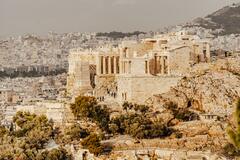
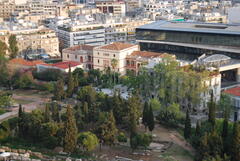
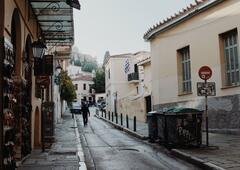
Athens
Must-visitUNESCOGo for the Acropolis, the Acropolis Museum, Plaka
Top sights
- Acropolis of AthensUNESCO2 to 3 hours; EUR 30 full, EUR 15 reduced for EU citizens 65+ from October to May; daily cap of 20,000 visitors, timed entry mandatory, book ahead for summer
- Ancient Agora of Athens1 to 1.5 hours; combine with the Acropolis walk-down
- Acropolis Museum1.5 to 2 hours; EUR 20 adult, a separate ticket from the hill; less crowded in the late afternoon
- Plakaan evening stroll and dinner in the old quarter below the Acropolis, free
Book ahead: Acropolis
Read the full sectionShowing Athens
Most trips pair a few mainland days around Athens with two or three islands. A rental car covers the mainland entries below, ferries connect the islands, and an internal flight saves a day to Crete, Rhodes or the far islands.
- Book the Acropolis before you fly; book Knossos ahead in summer. The Acropolis sells only timed entry, and summer slots run out days ahead; Knossos recommends the same.
- Landing on Navagio (Shipwreck Beach) has been restricted every season since at least 2024. The order that kept it closed through October 31, 2026 has lapsed with no replacement published yet; check the current status before you go.
- Mount Athos admits permit-holding men only. Everyone else sees its 20 monasteries by boat, from the water.
Where to go in Greece
These 18 islands and cities run from the must-sees down. A MonkeyEatingMango itinerary marks each sight Must-do, Maybe or Skip if tired.
Athens
Must-visit
- Acropolis of Athens: 2 to 3 hours; EUR 30 full, EUR 15 reduced for EU citizens 65+ from October to May; daily cap of 20,000 visitors, timed entry mandatory, book ahead for summer; UNESCO (1987)
- Ancient Agora of Athens: 1 to 1.5 hours; combine with the Acropolis walk-down
- Acropolis Museum: 1.5 to 2 hours; EUR 20 adult, a separate ticket from the hill; less crowded in the late afternoon
- Plaka: an evening stroll and dinner in the old quarter below the Acropolis, free
- Plan it: 4-day Athens itinerary, 7-day Greece itinerary
Nearly every Greek trip starts in Athens for the Acropolis, where the Parthenon, the Erechtheion and the Temple of Athena Nike crown a hill that has defined the skyline since the 5th century BC. Go right at the 8 am opening or in the last hour before closing, before the bare marble traps the midday heat.
The Acropolis Museum, at the foot of the hill, holds the original Caryatids and the Parthenon's surviving frieze fragments, a second stop the hill ticket doesn't cover. Below both, Plaka's pedestrian lanes hold tavernas and shops within walking distance of every ancient site in the city. Delphi and the Temple of Poseidon at Cape Sounion are Athens's two classic day trips.
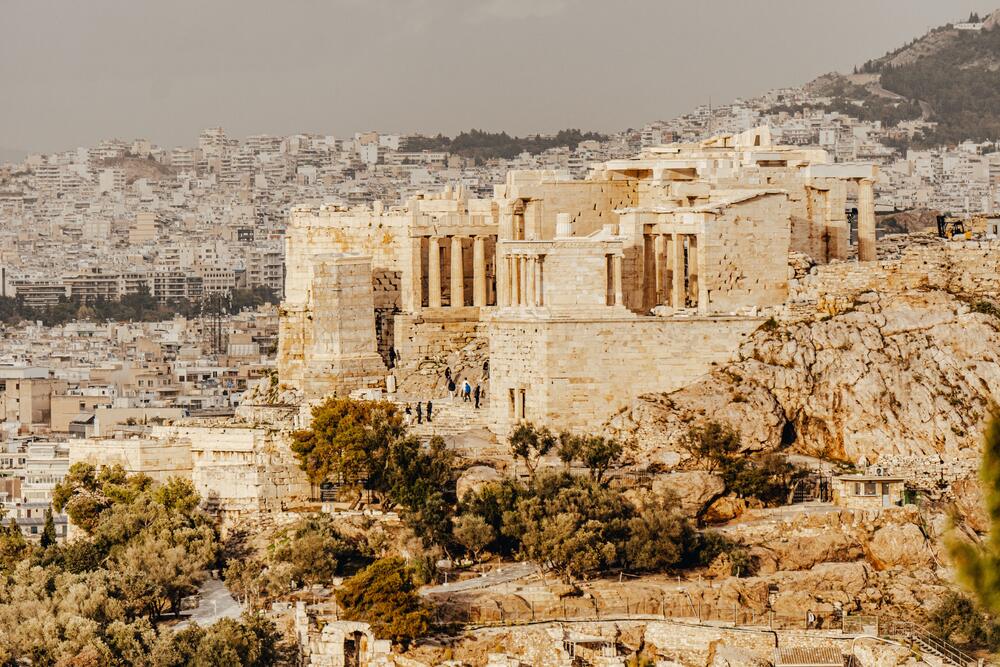 credit
The Acropolis and the Parthenon above Athens
Santorini
Must-visit
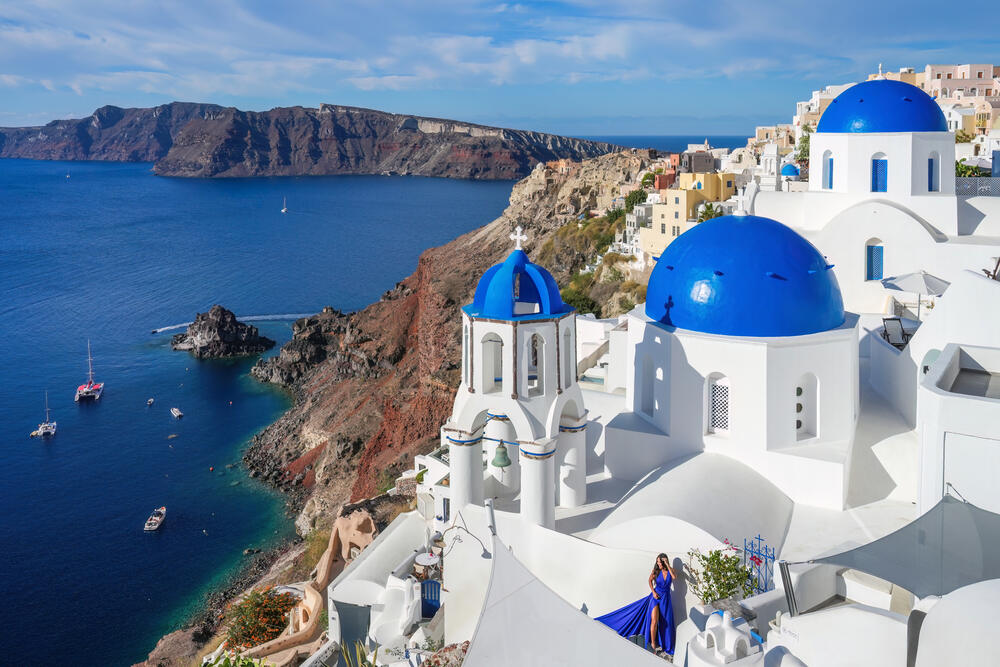
- Oia: free; half a day, or a 2 to 3 hour sunset visit; arrive 1 to 2 hours early for a viewpoint in summer; best April to June or September to October
- Plan it: 7-day Greece itinerary, 10-day Greek Islands itinerary
Santorini's draw is its caldera, the flooded crater left by a Bronze Age volcanic eruption, ringed by whitewashed villages on the rim. Oia, on the island's northern tip, lines the cliff edge with blue-domed churches above the water, lit orange at sunset.
The Fira-to-Oia path follows the caldera rim on foot, a quieter way to see the cliffs without Oia's sunset crowd. Akrotiri, the island's Bronze Age town buried by the eruption, is Santorini's other major stop. September keeps the warm sea with fewer crowds than August, though the island still runs at its busiest that month.
 credit
Oia's blue-domed churches above the caldera
Mykonos
Must-visit
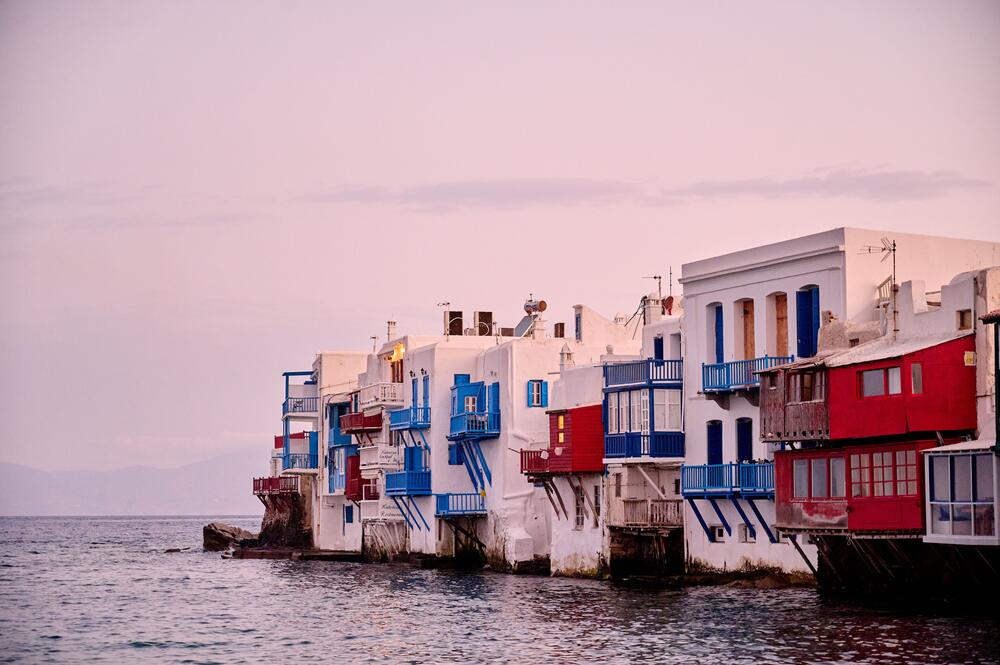
- Little Venice: 1 to 2 hours; sunset; free, bar prices extra
- Mykonos windmills: 30 to 45 minutes; sunset; free
- Boat trip to Delos: EUR 20 full, EUR 10 reduced for the site, plus the ferry fare; UNESCO (1990)
- Plan it: 10-day Greek Islands itinerary
Little Venice, a row of 18th-century fishermen's houses at the water's edge in Mykonos's Hora, is where you go for a sunset drink on balconies that hang directly over the waves. A few steps uphill, a row of stone windmills overlooks the same harbor.
Boats from the harbor also reach Delos, the uninhabited island where, by myth, Apollo was born. The whole island is an open-air archaeological site, and the ticket price above doesn't include the ferry crossing from Mykonos or Naxos.
 credit
Little Venice's houses over the water, Mykonos
Crete
Must-visit
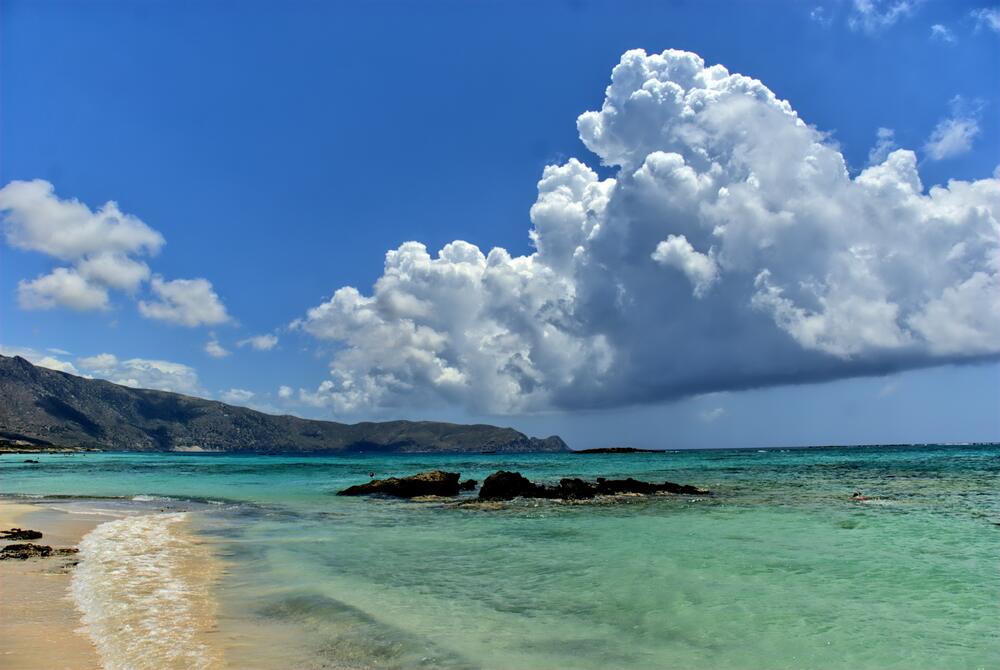
- Elafonissi Beach: a lagoon beach on the island's southwest tip, free entry
Crete is Greece's largest island, big enough to be its own island-hopping trip without ever touching a ferry. Base in Chania or Heraklion rather than treating the island as one stop; Elafonissi, on the southwest coast, is the beach most trips add from either base.
A stretch of pink-tinged sand connects Elafonissi's shore to a small islet just offshore, shallow enough to wade across in good weather. Crete also pours its own spirit, tsikoudia, a pomace brandy the food guide covers alongside Cretan dishes like dakos and staka.
 credit
Elafonissi Beach, on Crete's southwest tip
Rhodes
Must-visit
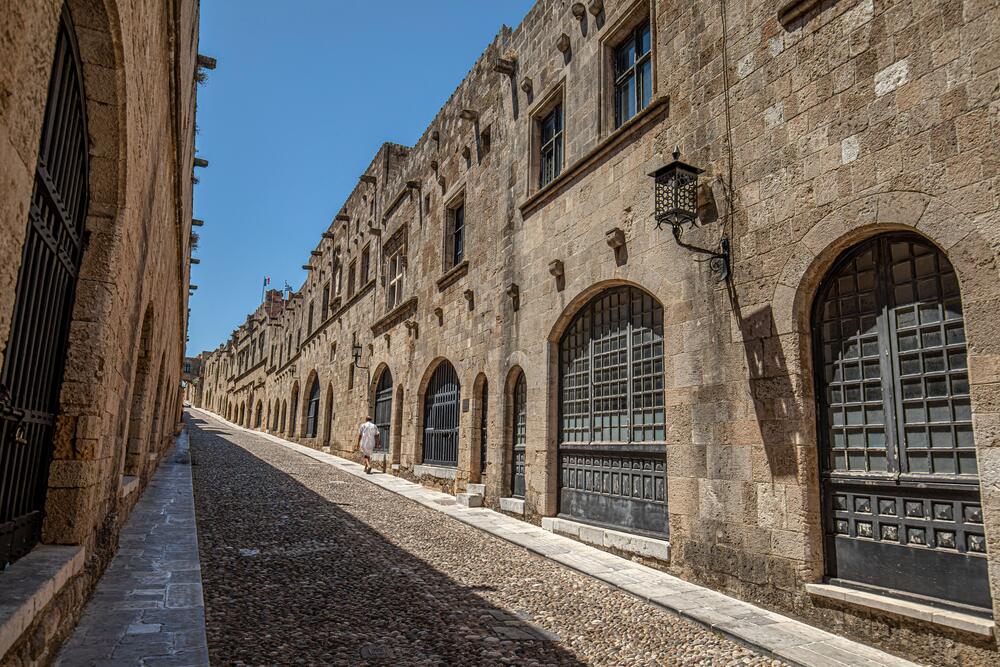
- Medieval Town of Rhodes: half a day; free to walk the old town; the Palace of the Grand Master has its own separate entrance fee; UNESCO (1988); best April to June or September to November
- Lindos acropolis and village: half a day; morning, before the day-trip buses arrive; the acropolis site has its own entry fee
A walled Old Town built by the Knights Hospitaller has been continuously inhabited since their rule, with the Street of the Knights running straight through the middle.
Lindos, an hour south, stacks a second acropolis above the village: a Temple of Athena and a Knights' castle. Boats from Rhodes Town also reach Symi, a smaller Dodecanese island with its own pastel harbor, for travelers with a free day to spare.
 credit
The Street of the Knights, Rhodes Old Town
Chania
Must-visit
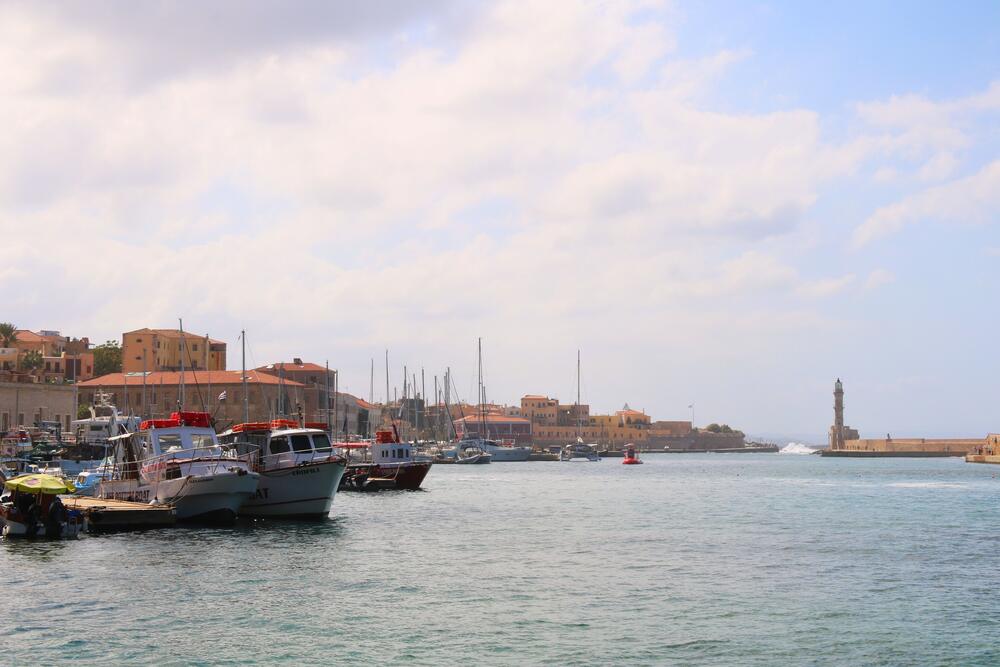
- Venetian Harbor: 2 to 3 hours, evening drinks; free; best at sunset
- Samaria Gorge hike: a full day, 5 to 7 hours of walking; no ticket to book ahead, but plan the return bus or ferry from Agia Roumeli; open May to mid-October only
- Balos Beach: half a day by boat or 4x4 track; morning, before the tour boats arrive
Chania's 16th-century Venetian Harbor, a lighthouse and a former mosque facing a curve of waterfront tavernas, is the obvious evening stop. The gorge and the lagoon that draw most visitors here sit well outside town.
Samaria Gorge, one of Europe's longest canyons, runs 18 kilometers from the Xyloskalo trailhead down to the Libyan Sea, open only from May to mid-October. Balos, a lagoon on Crete's northwest tip, has pink-tinged sand and the Cape Tigani outcrop behind it.
 credit
Chania's Venetian Harbor
Corfu
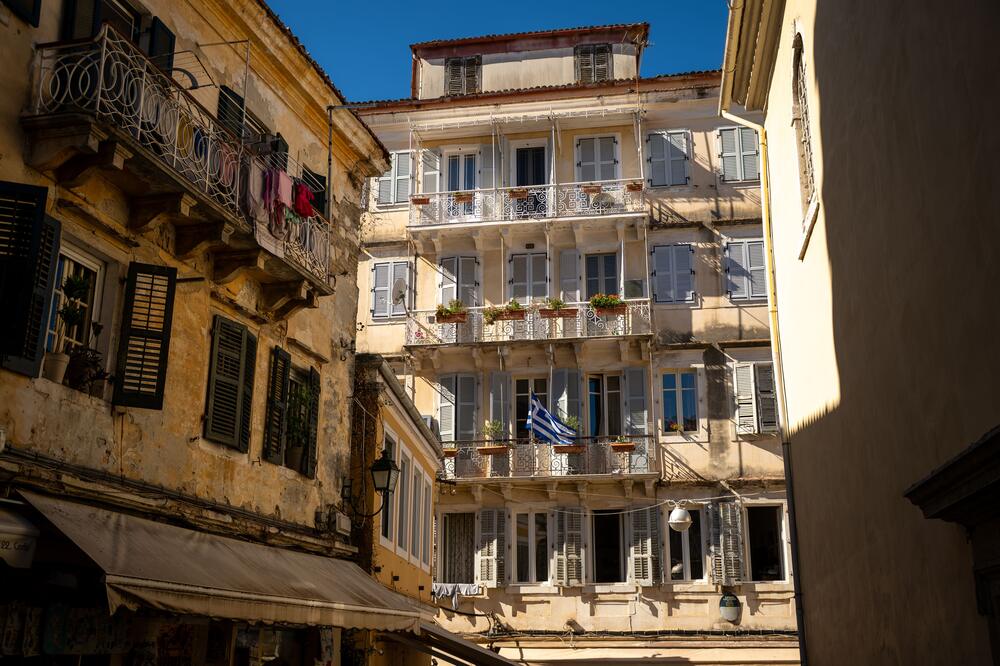
- Corfu Old Town: half a day; free to walk; the two fortresses charge their own entry; UNESCO (2007); evening for tavernas
Corfu's Old Town carries Venetian, French and British layers in one place, a mix unusual for Greece. Two fortresses guard the old quarter's edges; spend the evening here for the tavernas, then give a separate half day to what's outside town.
Paleokastritsa, a scatter of coves backed by cliffs on the west coast, and the Achilleion Palace, an empress's 19th-century retreat built on a Greek-mythology theme, round out Corfu beyond the Old Town's lanes.
 credit
Corfu Old Town's layered architecture
Naxos
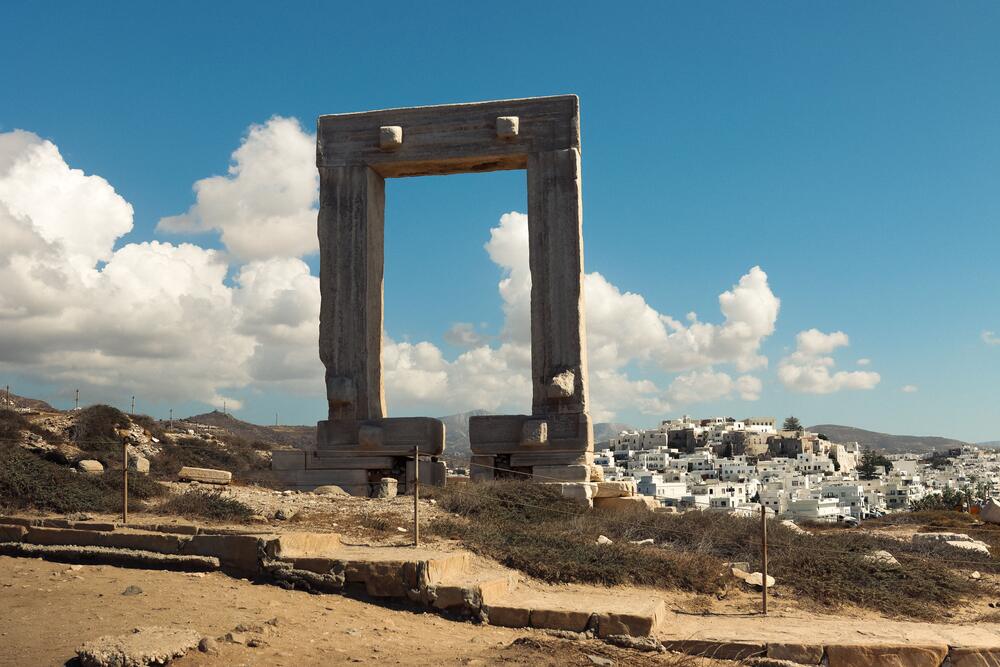
- Portara: free; Naxos Town's harbor entrance; the marble doorway of an unfinished Temple of Apollo, begun around 530 BC
- Plan it: 10-day Greek Islands itinerary, 10-day Greece honeymoon itinerary
A short ferry from Santorini or Mykonos, Naxos trades their crowds for long beaches and the largest landmass in the Cyclades. The Portara, massive marble blocks framing open sky at the harbor mouth, is what's left of a temple abandoned when the tyrant who commissioned it was deposed.
Inland, Kastro, the old walled town built by the island's Venetian rulers, and Apeiranthos, a marble village in the island's mountainous center, cover the Naxos most ferry-day visitors never see. Choose Naxos over Santorini or Mykonos for fewer people on longer beaches, and the same Delos boat trip that runs from Mykonos also departs from here.
 credit
The Portara at Naxos Town's harbor
Nafplio
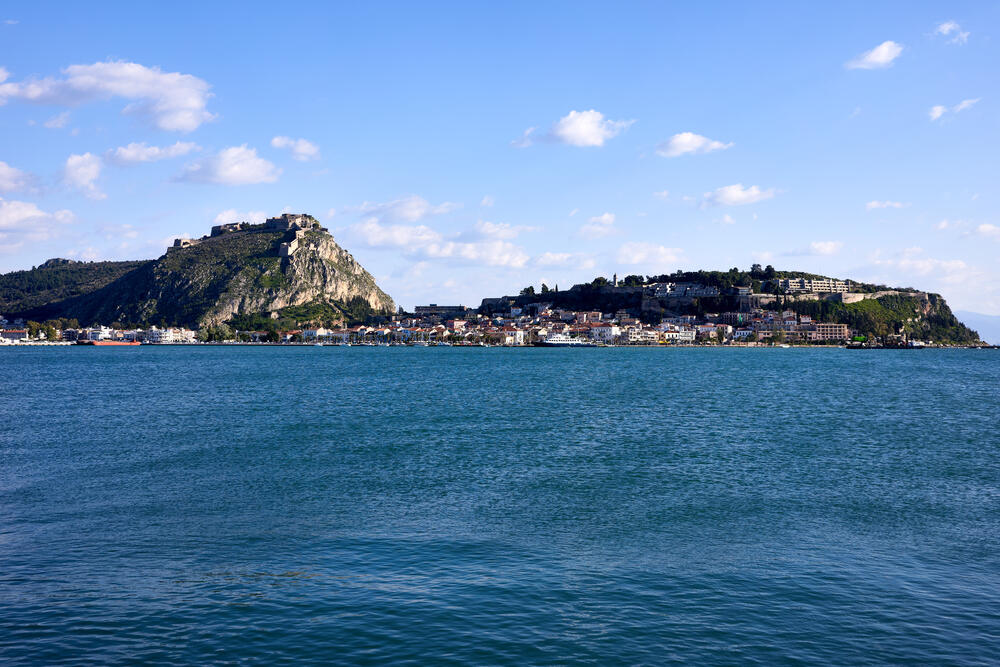
- Palamidi Fortress: half a day; a Venetian hilltop fortress above the town, reached by a long staircase or a short drive
- Mycenae and Epidaurus: both a short drive away
Mycenae, Agamemnon's mythical citadel, and Epidaurus, home to the best-preserved theater from ancient Greece, are both a short drive from Nafplio, the base for a day or two of ancient-site trips.
Nafplio was the first capital of modern Greece, and its old town still carries the neoclassical look that came with it: a harbor backed by Venetian and Ottoman buildings under the Palamidi Fortress.
 credit
Nafplio's old town below the Palamidi Fortress
Heraklion
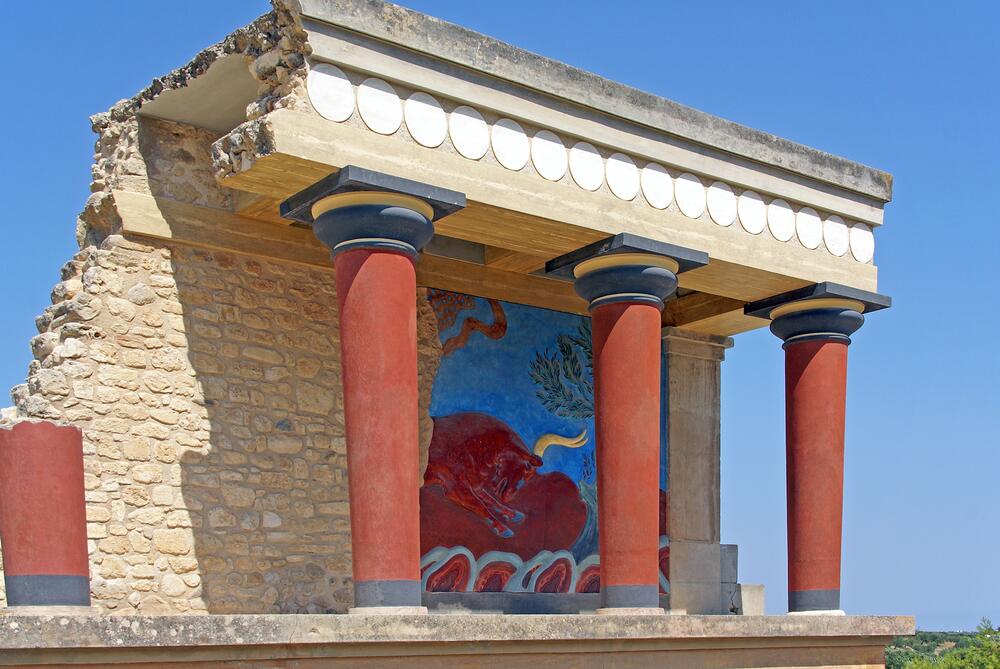
- Knossos Palace: 1.5 to 2 hours; EUR 20 full, EUR 10 reduced, EU under-25 and non-EU under-18 free; timed entry recommended in summer; early morning; UNESCO (2025, as part of the Minoan Palatial Centres)
- Heraklion Archaeological Museum: the Minoan frescoes and figurines Knossos itself doesn't show
- Plan it: 10-day Greek Islands itinerary
Go to Knossos at opening time. The largest Minoan complex on Crete is a restored Bronze Age palace just outside Heraklion, the island's capital, and the source of the Minotaur myth. Its labyrinth of storerooms and reception halls still reads as a maze on the ground.
The Archaeological Museum downtown holds what the site itself doesn't display outdoors: the painted frescoes, gold jewelry and clay tablets that fill in the civilization Knossos's ruins only outline.
 credit
Knossos Palace, near Heraklion
Zakynthos
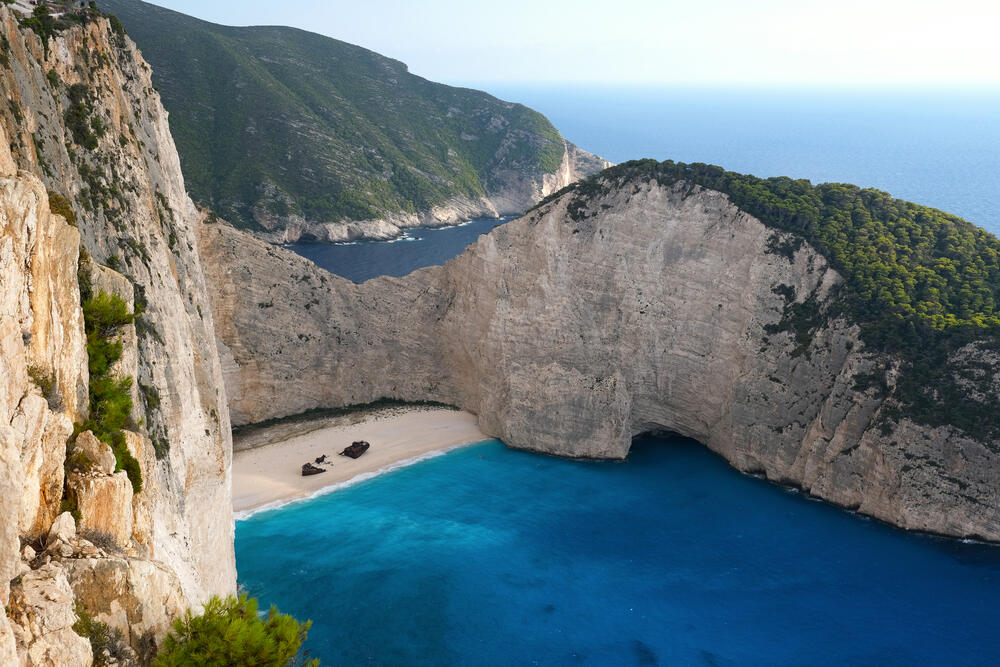
- Navagio (Shipwreck Beach): landing restricted every season since at least 2024; the order that ran through October 31, 2026 has lapsed with no replacement published yet; check before you go; the clifftop viewing platform stays open, and boat tours still pass the cove at a distance
Zakynthos's rusted shipwreck sits on a white-sand cove ringed by limestone cliffs, and landing on the beach itself has been restricted every season since at least 2024. A government risk assessment found the slope above the beach prone to landslides. The order that kept the cove closed through October 31, 2026 has since expired, and the next annual decision isn't due until May 2027. A project to extend the beach 30 meters seaward was in its tender process as of July 2026.
Check the current status before you go: the clifftop platform above the bay stays open for the same aerial view regardless, and boats from Porto Vromi or Agios Nikolaos hold offshore without landing. Zakynthos fills up fast in August.
 credit
Navagio, Zakynthos's Shipwreck Beach, from the clifftop viewpoint
Paros
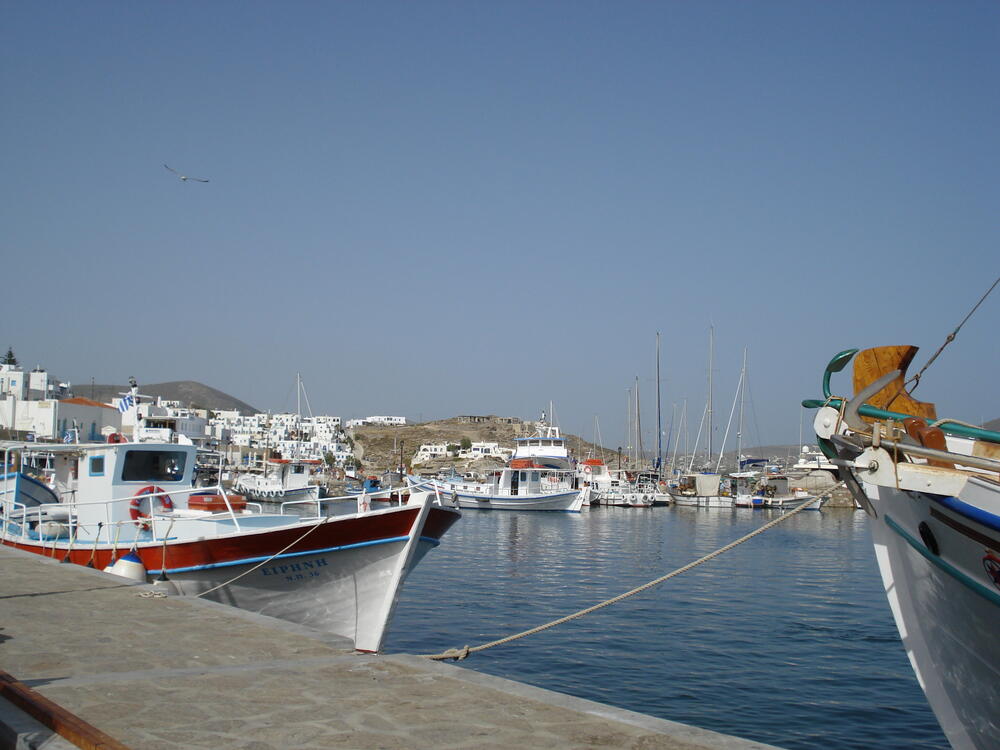
- Naoussa: a fishing harbor turned evening spot, free to walk
- Parikia: the island's main port, with the Panagia Ekatontapyliani church at its center
- Lefkes: a hill village in the island's marble-quarrying interior
Naoussa's harbor, lined with fish tavernas rather than beach clubs, fills at dusk when the day-trip boats have gone. Paros is a short ferry ride from Mykonos and Naxos.
Parikia, the main port, centers on the Panagia Ekatontapyliani, a Byzantine church whose name means "the one of a hundred doors." Lefkes, inland, was built up the hillside and away from the pirate raids that once threatened the coast.
 credit
Naoussa's harbor on Paros
Kos
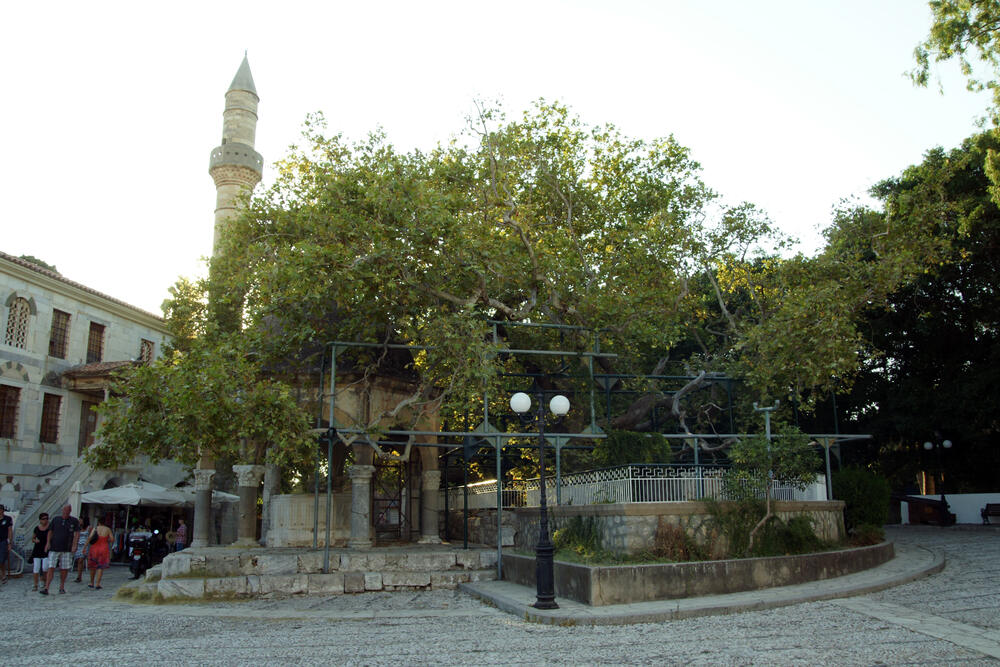
- Hippocrates' Plane Tree: Platanou Square, Kos Town; free
Kos Town layers Hippocratic, Ottoman and Italian history over a small island otherwise known for its beaches. Local tradition holds that Hippocrates, the physician Western medicine still names its oath for, taught his students in the shade of a plane tree in what is now Platanou Square.
The tree still stands there today, propped on metal supports, beside the Castle of the Knights and an Ottoman-era mosque on the same square, so one stop covers all three. Come to Kos itself for the beaches, which run the length of the island's north and south coasts.
 credit
Hippocrates' Plane Tree, Platanou Square, Kos Town
Thessaloniki
- Vergina Royal Tombs: 1.5 hours; an entrance fee applies at the gate; UNESCO (1996); about 70 km southwest of the city
Thessaloniki is Greece's second city, a working port with Byzantine churches and its own breakfast dish, bougatsa, covered in the food guide. Make the day trip southwest to Vergina for Philip II's unlooted tomb, one of Greece's richest archaeological finds.
The Vergina Royal Tombs sit beneath an earthen mound raised over the unlooted burial of Philip II of Macedon, Alexander the Great's father. The museum built around them displays his gold wreath and armor exactly where they were found.
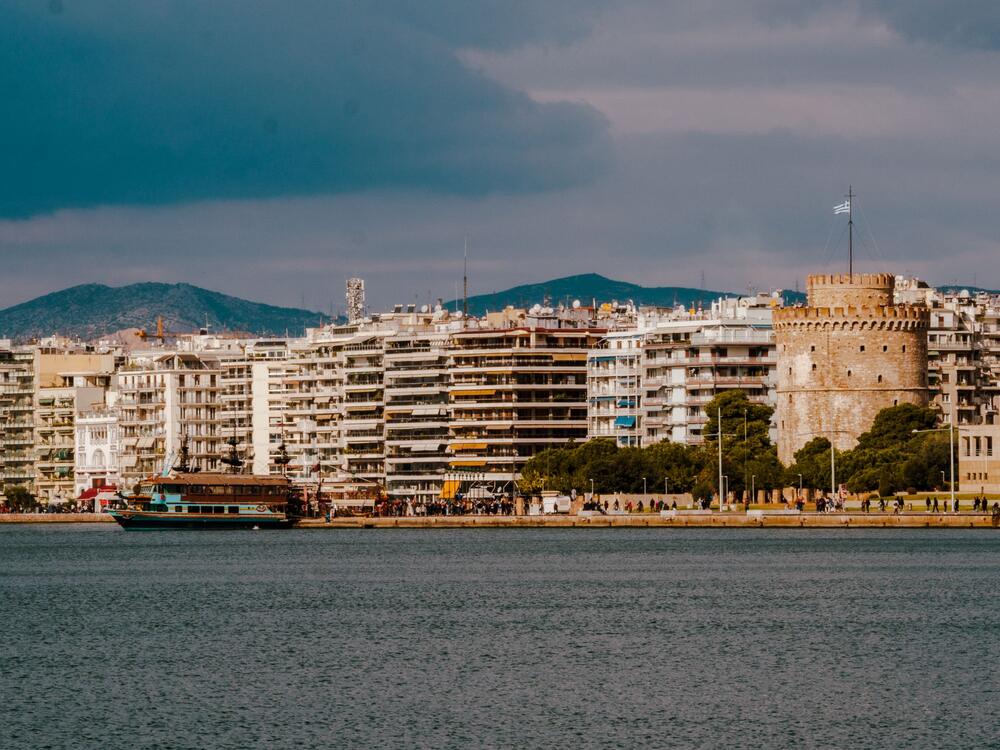 credit
Thessaloniki's waterfront
Kefalonia
- Melissani Cave: 45 minutes to 1 hour; an entrance fee applies at the gate; midday, 11 am to 1 pm, for the light
- Myrtos Beach: half a day; morning, for calm water; free
Melissani, a collapsed-roof cave discovered in 1951, holds an underground lake that turns turquoise when the midday sun drops straight through the opening above it.
Myrtos, a steep cove of white pebbles on the island's northwest coast, was a filming location for Captain Corelli's Mandolin. The road down to it switches back along the cliff face before the water comes into view.
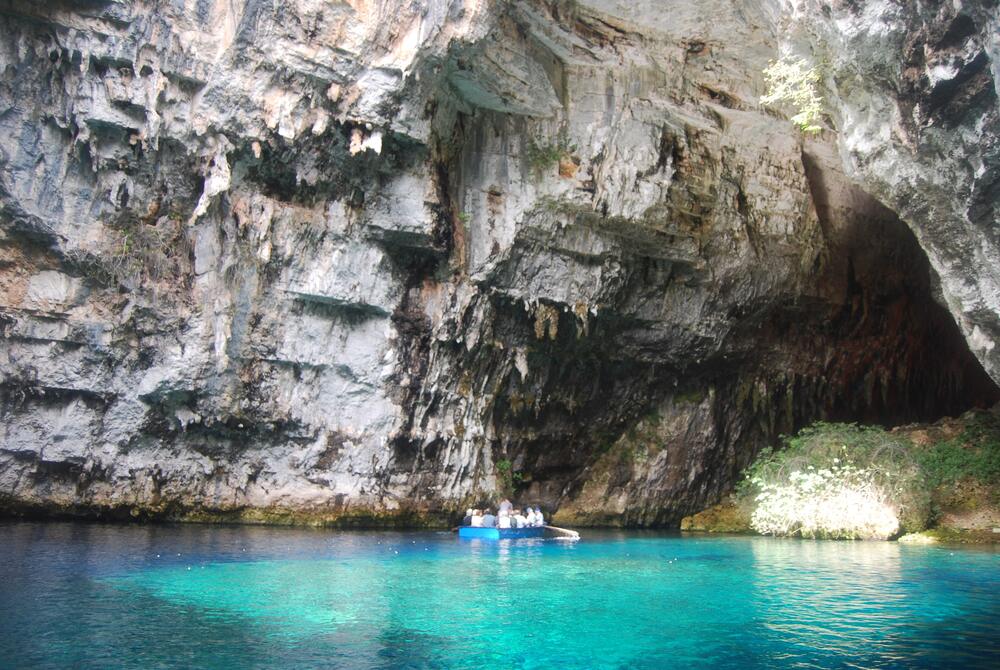 credit
Melissani Cave's underground lake, Kefalonia
Milos
- Sarakiniko: free; white volcanic rock eroded into a lunar landscape
- Kleftiko: a boat trip to sea caves and rock arches once used by pirates
- Plaka: Milos's hilltop capital, best at sunset
Milos's volcanic coastline holds more than 70 beaches, and Sarakiniko is the one that looks like nowhere else in Greece: bleached white rock, carved smooth by the sea, with no sand in sight.
Plaka, the hilltop capital, looks down on the port and draws the sunset crowd. Only a boat reaches Kleftiko, a cluster of sea caves and arches that pirates once used to hide their ships, now a swimming stop on most island boat tours.
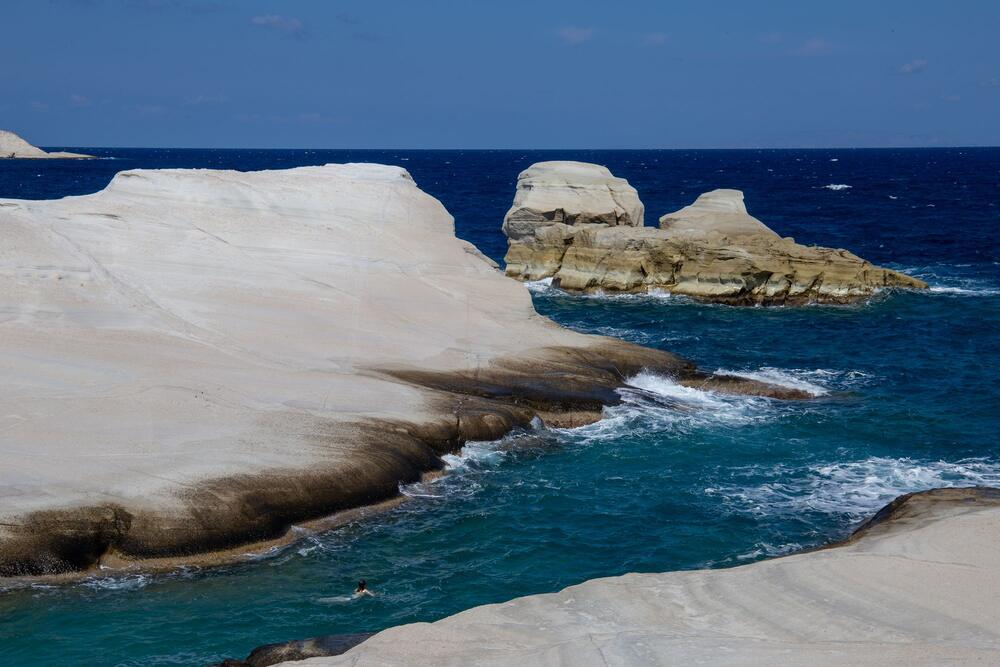 credit
Sarakiniko's white volcanic rock, Milos
Hydra
- The old town: free to walk; no cars or motorbikes anywhere on the island
Hydra bans motor vehicles outright, so the stone harbor town climbs the hillside in footpaths and mule tracks instead of streets, a national monument in its own right. Donkeys still carry the island's cargo up from the port.
Jump off the harbor's rocks to cool off between ferries. Hydra is close enough to Athens for a day trip, but stay the night to see the town empty out after the last tour boat leaves.
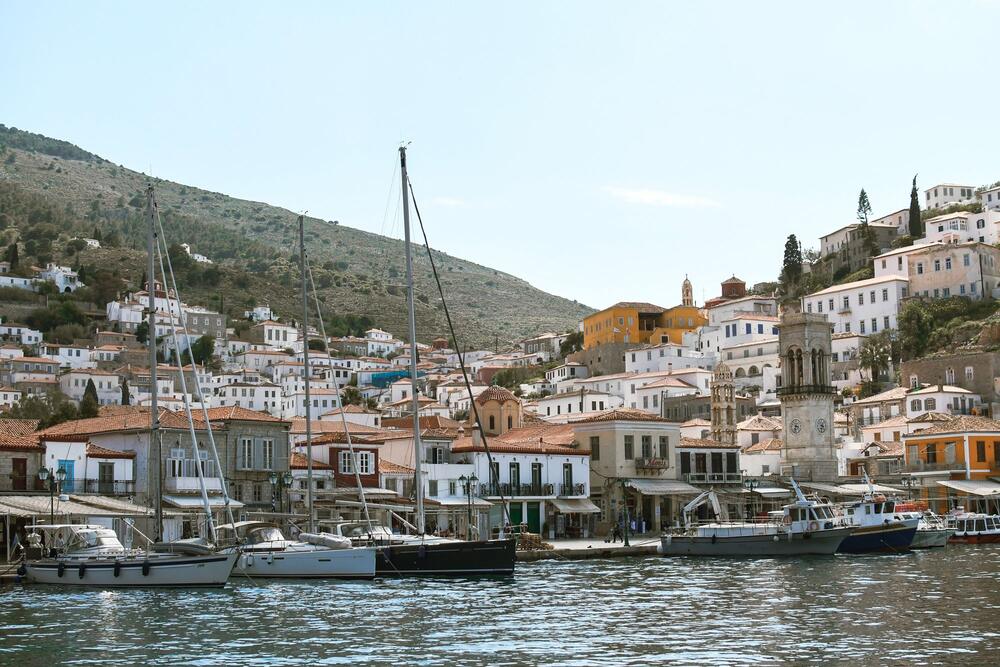 credit
Hydra's car-free harbor town
Corinth
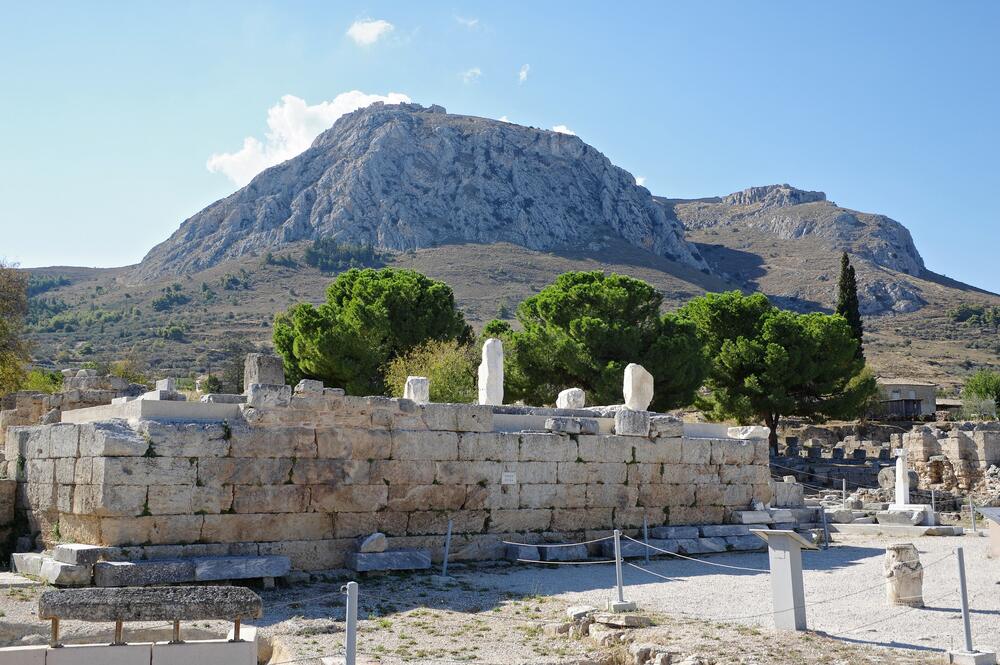
- Ancient Corinth: the ruined Roman and Greek city, below the Acrocorinth hill
- Corinth Canal: a 6.4 km cut through solid rock, crossed by a road bridge
Corinth is a day trip from Athens: Ancient Corinth's ruins, including the Temple of Apollo and the marketplace where St Paul once preached, sit a short drive from the modern city.
The Corinth Canal, finished in 1893, slices the Isthmus of Corinth clean through, narrow enough that larger ships still need a tug to pass. Most drivers stop on the bridge above it for a look straight down.
 credit
Ancient Corinth's ruins below Acrocorinth
Things to do across Greece
Delphi archaeological site
- The site and museum: 2 to 3 hours; EUR 20 full, EUR 10 reduced; no booking required outside peak summer midday; UNESCO (1987)
- Best months: spring, for wildflowers on the mountainside
- Best time: early evening in summer, when the site stays open until 8 pm; winter closes at 3:30 pm
At Delphi, a marble stone called the omphalos, the navel, marked what the ancient Greeks believed was the center of the earth. Rulers and military leaders sought guidance from its Oracle before major decisions.
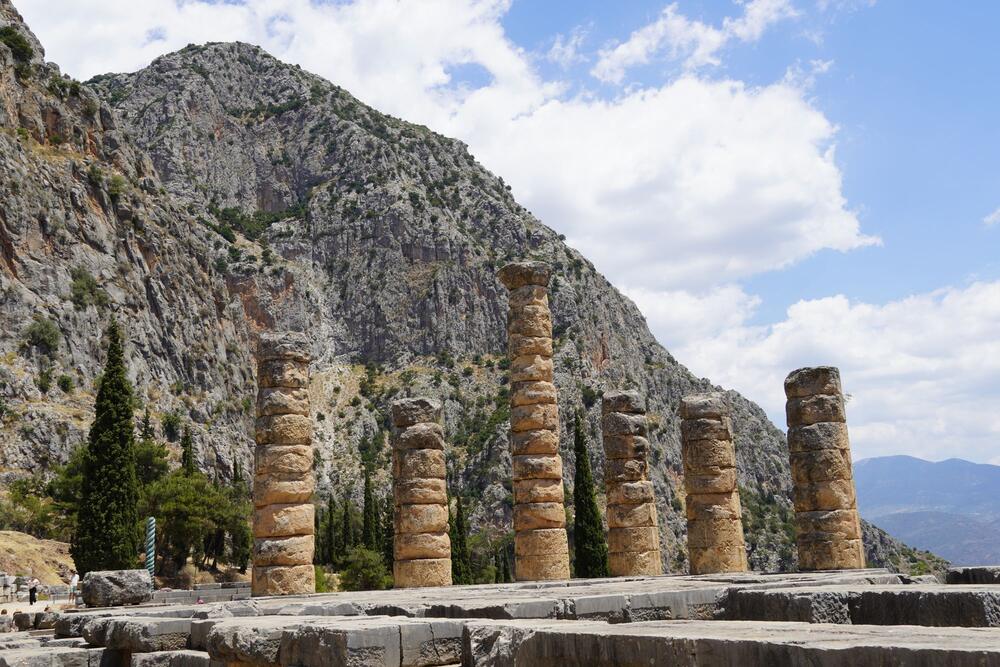
The sanctuary climbs a mountainside above the Pleistos valley, with the Temple of Apollo at its center and a stadium at the summit. The museum below holds the Charioteer, a life-size bronze that survived a landslide the temple above it didn't. Delphi is a day trip from Athens, about two and a half hours each way.
 credit
The Temple of Apollo at Delphi
Meteora monasteries
- Visiting: half a day for 2 to 3 monasteries; EUR 5 cash per monastery, charged separately, not a combined ticket; children under 12 free
- Best months: April to June or September to October; go early to beat the tour buses
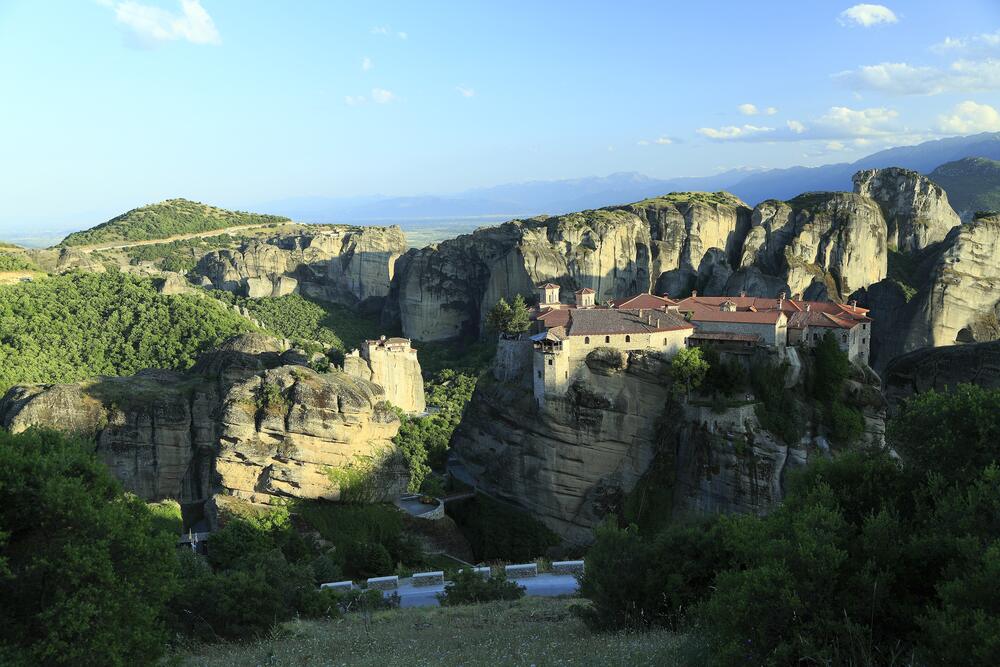
Six active Orthodox monasteries balance on sandstone pillars above the Thessalian plain, built by monks who hauled their own building materials up sheer rock faces to live beyond reach of raiders. Each one still closes one day a week, and the dress code at the door is strict: covered shoulders and knees, a wraparound skirt for women who arrive without one.
The monasteries' frescoed interiors are small and dim after the drive up. The drive itself passes other pillars with abandoned hermit cells cut into the rock.
 credit
The monasteries of Meteora on their sandstone pillars
Mycenae archaeological site
- The site, museum and Treasury of Atreus: 1.5 to 2 hours; EUR 20 full, EUR 10 reduced, reduced rate only outside June to September; UNESCO (1999)
- Best time: morning, combined with Nafplio and Epidaurus as a day trip
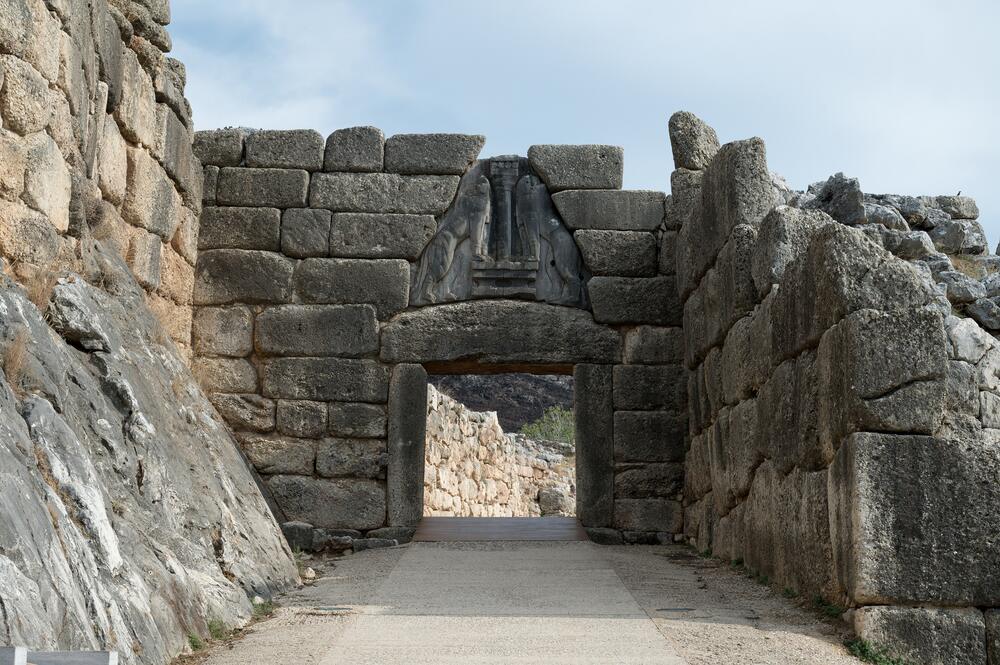
The Lion Gate at Mycenae, a thousand years older than the Acropolis, still stands over the entrance to Agamemnon's mythical citadel, the seat of the Mycenaean civilization Homer wrote about centuries after it fell.
Grave Circle A, just inside the gate, is where a 19th-century excavation turned up the gold burial masks now in Athens's National Archaeological Museum. The Treasury of Atreus, a beehive tomb outside the walls, is a short walk from the main site.
 credit
The Lion Gate at Mycenae
Epidaurus theater and sanctuary
- The theater, site and museum: 1.5 hours; EUR 20 full, EUR 10 reduced; no booking needed for the site; UNESCO (1988)
- Best months: June to August, book ahead for a festival performance in the theater
- Best time: morning for the site
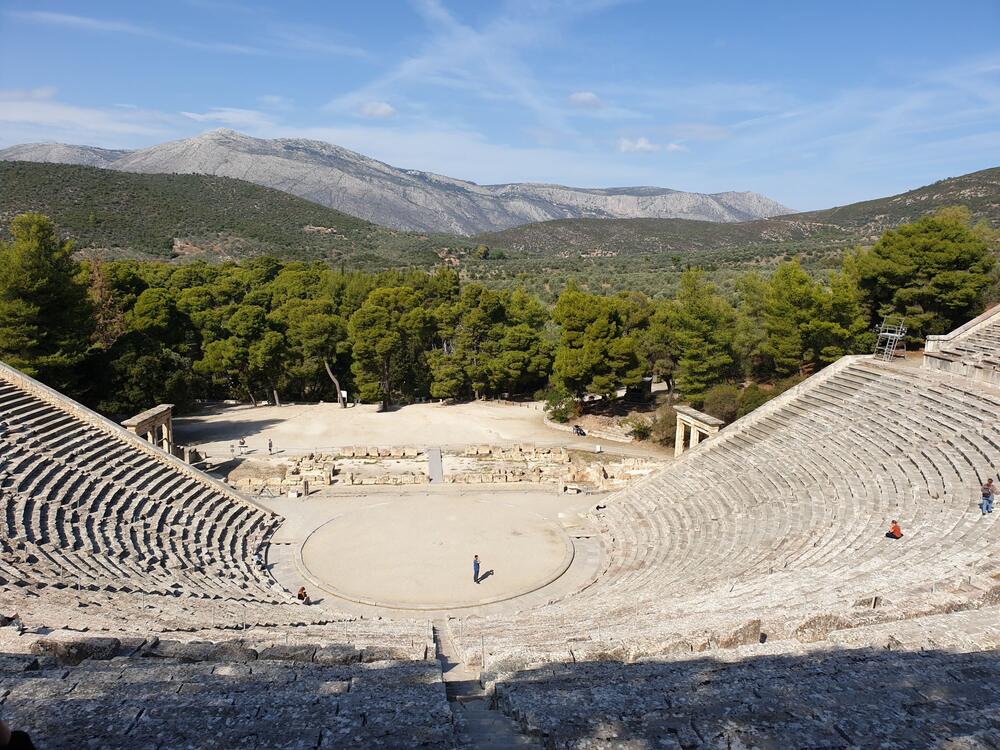
Epidaurus was a healing sanctuary dedicated to Asklepios, the god of medicine. The theater next door draws most visitors now, a 4th-century-BC amphitheater whose acoustics still carry a dropped pin from the stage to the back row, unamplified.
The sanctuary itself, now mostly foundations, once held dormitories where the sick slept in hope of a dream cure. The theater still hosts performances most summers, under the Athens and Epidaurus Festival, in the same seats built for audiences 2,400 years ago.
 credit
The ancient theater of Epidaurus
Ancient Olympia
- The site and 3 museums: 2 to 2.5 hours; EUR 20 full, EUR 10 reduced, one combined ticket, no single-site option; UNESCO (1989)
- Best time: morning
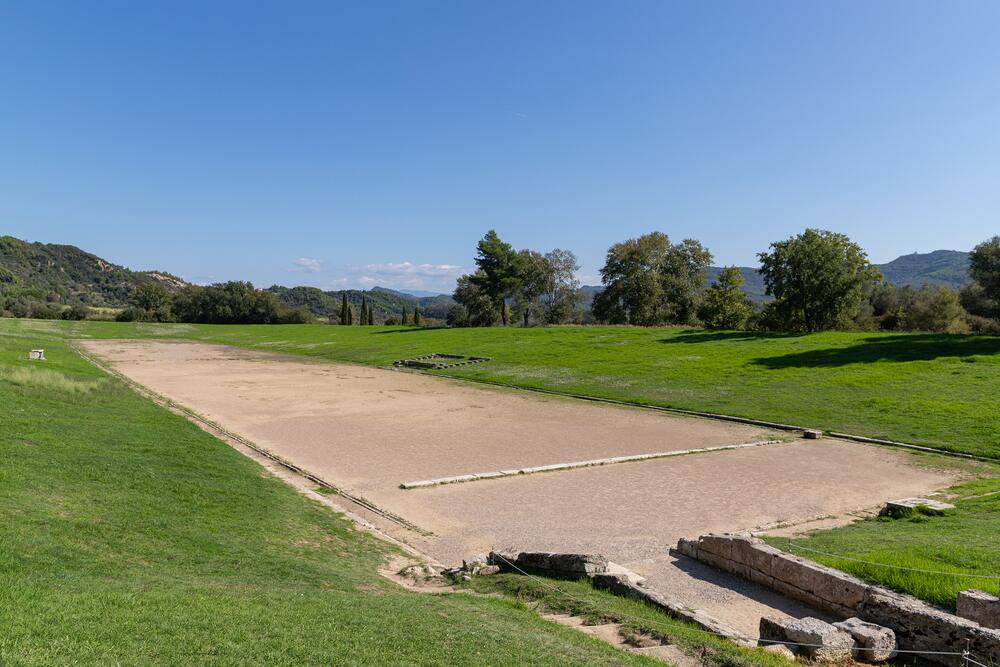
Olympia is where the Olympic Games began in 776 BC, and the stadium's original starting blocks, worn stone grooves for the runners' toes, still sit at one end of the track. The modern Olympic flame is lit here before every Games, in front of the ruined Temple of Hera.
The Temple of Zeus once held a 12-meter gold-and-ivory statue of the god, one of the ancient world's seven wonders, long since lost. Its fallen column drums still lie scattered where the temple collapsed, left as they fell.
 credit
The stadium at Ancient Olympia
Mystras
- The upper and lower city: 2 to 3 hours; check current admission at the gate; UNESCO (1989)
- Best time: morning, to avoid the midday climb in full sun
Much of Mystras's upper town is foundations and broken walls, the remains of the fortress a Crusader prince built in 1249 before the Byzantines took it back. UNESCO's own listing calls the whole site "an exceptional example of a well-preserved fortified late-Byzantine city". Three of its lower-town churches, the Metropolis, the Hodegetria and the Pantanassa, still see occasional religious use today.
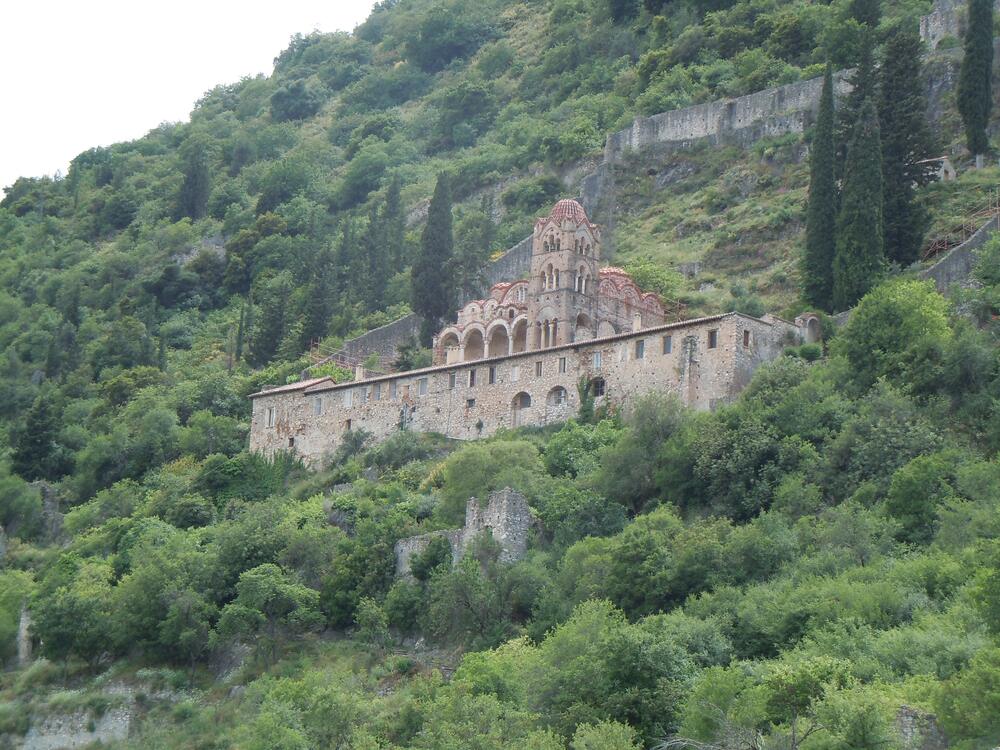
The Pantanassa, the best-kept of the three, still has nuns in residence. Its frescoes date from the Palaeologan Renaissance, the period UNESCO's listing credits with influencing Late Byzantine painting across the region.
 credit
The Pantanassa convent, Mystras
Mount Athos monasteries
- Boat cruise along the coast: 2 to 3 hours; no permit needed for a view from the water
- An overnight stay: requires a visitor's permit, called a diamonitirion, for men only; UNESCO (1988, mixed)
- Best months: spring or autumn
Mount Athos is a self-governing monastic republic of 20 Orthodox monasteries on its own peninsula, under a nearly 1,000-year-old rule that bars women and female animals from setting foot on it. Men need a permit arranged well ahead to stay overnight; everyone else boards a summer sightseeing cruise from Ouranoupoli, which stays at least 500 meters off the coastline.
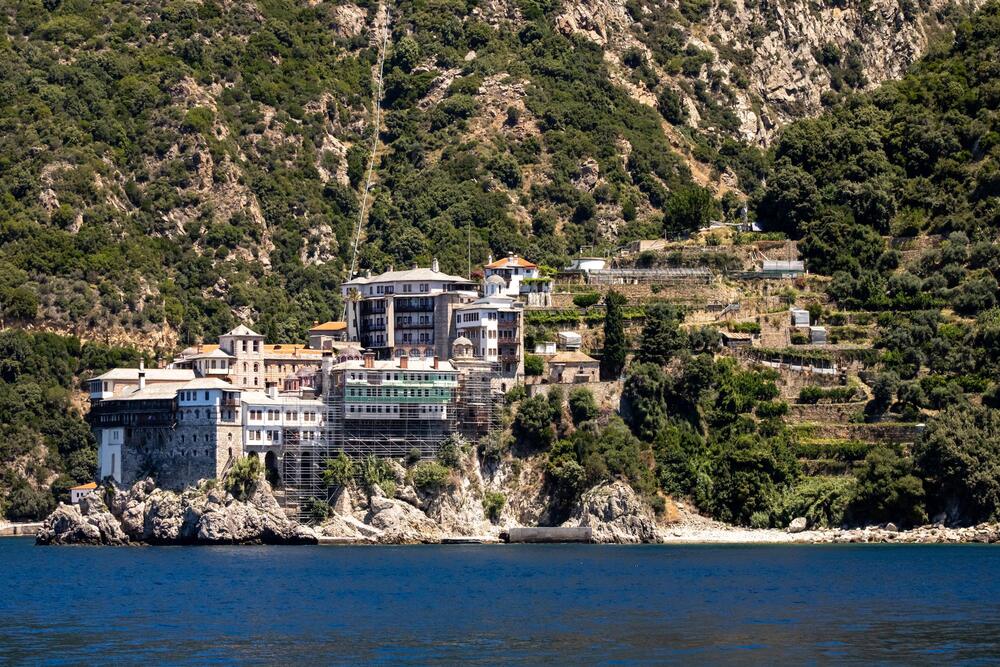
From the water, you see the monasteries as fortified complexes stacked on cliffs above the sea, some founded in the 10th century and still in continuous use since. The whole peninsula counts as a single UNESCO site, inscribed for both its culture and its landscape.
 credit
A monastery on the Mount Athos peninsula, from the water
Temple of Poseidon, Cape Sounion
- The site: 2 hours plus travel; EUR 20 full, EUR 10 reduced; open 9:30 am until sunset, last entry 20 minutes before
- Best time: sunset, any time of year
A Doric temple to Poseidon stands directly on a cliff at Attica's southern tip, about an hour from Athens by road, with nothing but open sea on three sides. The name carved into one of its columns, still visible today, is traditionally attributed to Lord Byron, who visited in 1810.
Time the drive for sunset, when the temple's remaining columns turn gold against the water below.
Try free
Plan your Greece trip in about 2 minutes
Tap through 8 quick cards for a complete itinerary with budget, maps, and packing lists. No account required.
Plan your Greece trip →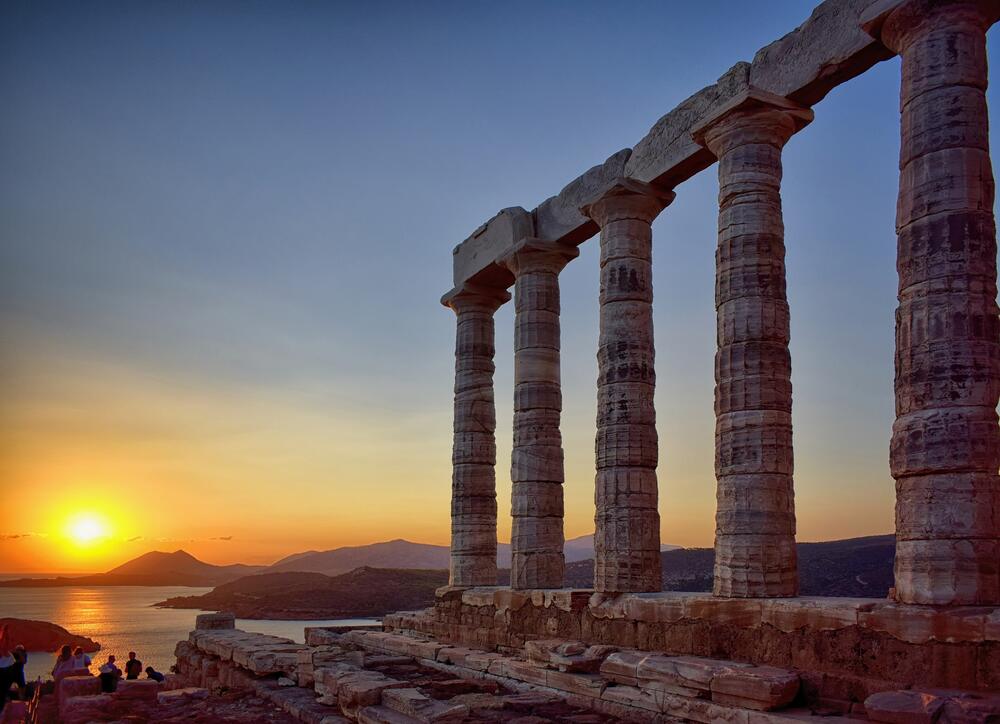 credit
The Temple of Poseidon at sunset, Cape Sounion
More places to add to a trip
| Place | Go for | Region |
|---|---|---|
| Samos | Pythagoreion and the Heraion, a UNESCO site; vineyards close to the Turkish coast | North Aegean |
| Patmos | the Cave of the Apocalypse and the Monastery of St John, a UNESCO site | Dodecanese |
| Sparta | the modern town at the foot of Mystras | Peloponnese |
| Lefkada | connected to the mainland by a causeway, with beaches along its west coast | Ionian Islands |
| Kalamata | olives and olive oil; a gateway to the Mani Peninsula | Peloponnese |
| Patras | Greece's third city; wine production and a well-known Carnival | Peloponnese |
| Skiathos | Koukounaries Beach on a pine-forested Sporades island | Sporades |
| Monemvasia | a Crusader-era stone town built into a rock, connected to the mainland by a causeway | Peloponnese |
| Parga | a pastel-colored Ionian coast resort town facing the island of Paxi | Epirus |
| Pelion | a forested mountain peninsula of stone-built villages, a cooler alternative to the islands | Thessaly |
| Delos | the boat trip from Mykonos or Naxos; see those entries above | Cyclades |
| Serifos | a quieter Cycladic island with a hilltop Chora | Cyclades |
The best places to visit in Greece at a glance
| Place | Go for | Book ahead |
|---|---|---|
| Athens | the Acropolis, the Acropolis Museum, Plaka | Acropolis |
| Santorini | Oia's sunset, the caldera rim walk | no |
| Mykonos | Little Venice, the windmills, Delos | no |
| Crete | Elafonissi Beach | no |
| Rhodes | the Medieval Town, Lindos | no |
| Chania | the Venetian Harbor, Samaria Gorge, Balos | no |
| Corfu | Corfu Old Town, Paleokastritsa | no |
| Naxos | the Portara, Kastro, Apeiranthos | no |
| Nafplio | the Palamidi Fortress, Mycenae and Epidaurus day trips | no |
| Heraklion | Knossos Palace | Knossos |
| Zakynthos | Navagio from the clifftop or by boat | no |
| Paros | Naoussa, Parikia, Lefkes | no |
| Kos | Hippocrates' Plane Tree | no |
| Thessaloniki | the Vergina Royal Tombs day trip | no |
| Kefalonia | Melissani Cave, Myrtos Beach | no |
| Milos | Sarakiniko, Kleftiko, Plaka | no |
| Hydra | the car-free old town | no |
| Corinth | Ancient Corinth, the Corinth Canal | no |
Plan your Greece trip
For trip length, getting around and costs, start with the Greece guide. The Greece food guide covers what to eat at each stop. When you build a trip with MonkeyEatingMango, the booking checklist lists what to book and how many weeks ahead.
Last updated November 2026.
Common questions
What is the best place to visit in Greece for a first trip?
Athens, Santorini and Mykonos cover most first-timers' lists. Start with Athens for the Acropolis and the Ancient Agora, then add Santorini for Oia's sunset over the caldera or Mykonos for Little Venice and the windmills. Crete, Rhodes and Chania are the next tier, each large enough to anchor several days on its own.
Is 7 days enough for Greece?
Seven days covers Athens and one island well, such as Santorini or Mykonos. Ten to fourteen days allows a mainland stop like Delphi or Nafplio plus two or three islands, since inter-island ferries and flights each eat the better part of a day.
Is it better to visit the Greek islands or the mainland?
Most trips do both: a few mainland days around Athens for the Acropolis, Delphi or the Peloponnese, then island time for the coast. The islands add the beaches, the caldera views at Santorini and most of the nightlife.
Do you need to book the Acropolis and Knossos in advance?
Yes for the Acropolis, which sells only timed entry and caps visitors at 20,000 a day, full price year-round at EUR 30; its summer slots run out days ahead. Knossos recommends booking timed entry online in summer, though it isn't mandatory.
Is Navagio (Shipwreck Beach) open to visitors?
Not to land on. Access to the beach itself has been restricted every season since at least 2024 over landslide risk, and the order that ran through October 31, 2026 has since lapsed with no replacement published yet, so check the current status before you go. The clifftop viewing platform above the bay stays open, and boat tours still pass the cove without landing.
Is Mount Athos open to visitors?
Only to men holding a visitor's permit, called a diamonitirion, under a rule that has stood for nearly 1,000 years. Everyone else sees its 20 monasteries from a boat cruise along the coast.
Is Mystras worth visiting?
Much of the upper town is bare foundations. UNESCO's own listing calls the whole site an exceptional example of a well-preserved fortified late-Byzantine city, and three of its lower-town churches, including the Pantanassa convent, still see occasional religious use.
How many Greek islands are there?
Greece counts 6,000 islands and islets, of which only 227 are inhabited. Most visitors choose among the Cyclades, the Dodecanese, the Ionian Islands and Crete.
How many UNESCO World Heritage Sites does Greece have?
Greece has 21 UNESCO World Heritage Sites: 18 cultural and 3 mixed. Among them are the Acropolis, Delphi, Meteora, Olympia, Mycenae and Epidaurus, Mystras, Mount Athos, the Medieval Town of Rhodes and Knossos, added in 2025 as part of the Minoan Palatial Centres.
Is the Temple of Poseidon at Cape Sounion worth the day trip from Athens?
Yes, if sunset fits your schedule. The Doric temple sits directly on a cliff over the Aegean, about an hour from Athens, and stays open until sunset, with last entry 20 minutes before.

Written by Shobhit Shrivastava · Founder
Related reading
Greece travel guide
Athens in 4 Days: The Parthenon and the Old Town
This packed 4-day trip for two plunges into Athens' ancient heart, exploring the Acropolis with the Parthenon and the sprawling Ancient Agora. Based in the historic Plaka district, you'll also savor authentic Greek cuisine at local tavernas and delve into history at the National Archaeological...
A Week in Greece: Athens and Santorini
This packed 7-day trip explores Greece's ancient past in Athens and its iconic island beauty in Santorini. Start with 3 days in Athens, discovering the Acropolis, Parthenon, and the historic Plaka district, then fly to Santorini for 4 days. In Santorini, hike the Fira-Oia trail, explore Akrotiri...
A 10-Day Greek Honeymoon: Santorini and Naxos
10 days across Santorini and Naxos: 4 nights in Santorini (Oia sunset views, caldera hiking, Akrotiri archaeological site) and 5 nights in Naxos (Agios Prokopios beach, Portara, inland mountain villages). Comfortable pace with a focus on island nature, scenic coastal walks, and intimate sunset...
10 Days in the Greek Islands: Santorini, Mykonos, Naxos and Crete
This 10-day trip spans four Greek islands, starting in Mykonos for its Little Venice and Windmills, then heading to Naxos's Plaka Beach and the Portara. Next is Santorini for the Fira-Oia cliff walk and Oia sunsets, concluding in Heraklion, Crete, to explore the Palace of Knossos. A balanced...
Things to Do in Scotland and the Best Places to Visit
Where to go in Scotland: Edinburgh and the Lothians, Glasgow and the central belt, the Highlands, the islands, and the whisky-region choice no single answer settles. Every stop carries its top sights, the official price where one exists, and what to book ahead.
Things to Do in Ireland and the Best Places to Visit
Where to go in Ireland by region, from Dublin to Northern Ireland. Every stop carries its top sights, the official price where one exists, and what to book ahead.
Things to Do in Croatia and the Best Places to Visit
Where to go in Croatia by region: Split, Dubrovnik and the Dalmatian islands, Istria and the Kvarner coast, Zagreb and the national parks. Every stop carries its top sights, the official price where one exists, and what to book ahead.