Where should you go in Croatia: the Dalmatian coast, an island or two, or the inland capital, and what's worth booking ahead at each stop? Start in Split and Dubrovnik for the Roman ruins and the medieval walls, add an island by ferry (Hvar for nightlife, Korčula for its old-town streets), and fit in the Plitvice Lakes for the waterfalls. Book the Plitvice ticket and a summer island ferry ahead of time.
Split
Must-visitUNESCOGo for Diocletian's Palace, the ferry hub to the islands
Top sights
- Diocletian's PalaceUNESCOfree to walk the grounds and streets
- Marjan Hillfree; sunset viewpoint over the Old Town
No advance booking needed
Read the full sectionShowing Split
A week covers Split, Dubrovnik and one island well; eight days adds the Plitvice Lakes, and ten or more adds Istria.
- Book Plitvice Lakes National Park tickets online ahead. They're sold by entry time slot and can sell out, above all in summer.
- Take the ferry between islands instead of driving. Jadrolinija ferries and catamarans connect Split to Hvar, Korčula, Brač and Vis; book ahead for July and August, when the most popular routes sell out.
- Croatia uses the euro, not the kuna. The currency switched over on January 1, 2023; a few older guides still price things in kuna.
A MonkeyEatingMango itinerary marks each sight Must-do, Maybe or Skip if short on time.
Dalmatia: Split, Dubrovnik and the islands
Split
Must-visit
- Diocletian's Palace: free to walk the grounds and streets; UNESCO (1979)
- Marjan Hill: free; sunset viewpoint over the Old Town
- Plan it: 10-day Croatia itinerary
Split grew up inside the walls of a Roman emperor's palace, built on the Dalmatian coast around the turn of the 4th century. The palace's basement halls, courtyards and cellars now hold the shops, cafes and apartments of a living Old Town, free to wander at any hour.
Marjan, a forested hillside at the Old Town's western edge, is a short walk from the palace and gives the city's best skyline view from its lookout trail. August is Split's busiest month. Split also doubles as the main ferry port for the Dalmatian islands, the last stop before Brač, Hvar, Vis or Korčula.
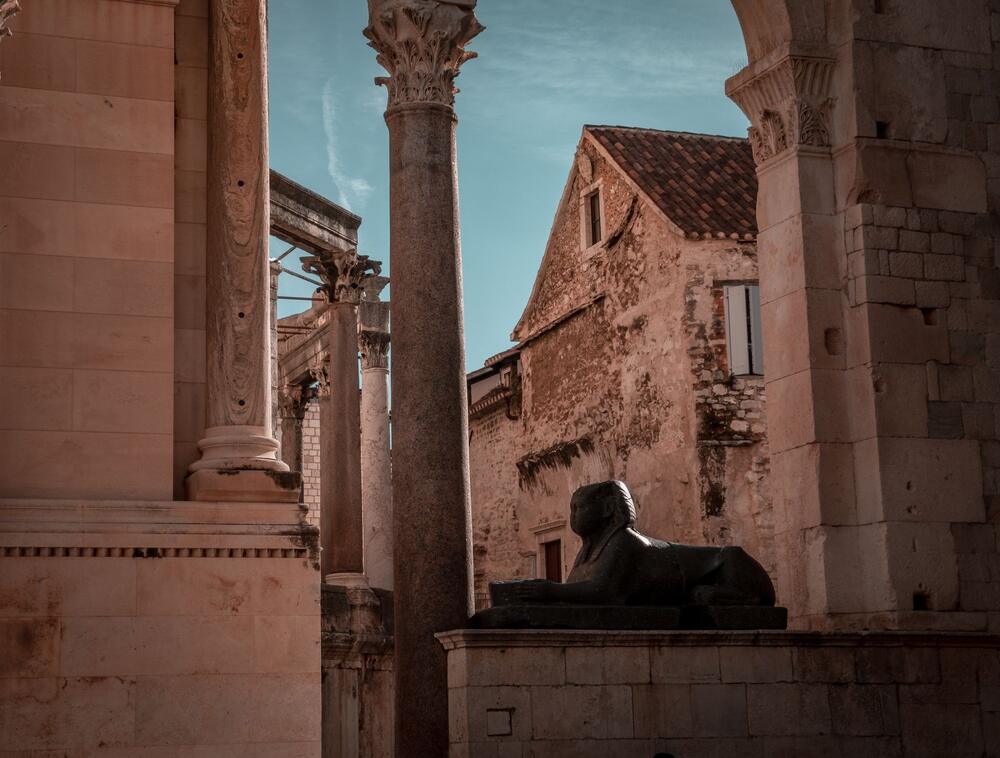 Photo by Zekai Zhu on Pexels
Stone arches and columns of Diocletian's Palace
Dubrovnik
Must-visit
- Dubrovnik City Walls: adult €40.00, child (7-18) €15.00, free age 6 and under; includes Lovrijenac Fortress and the Western Outer Wall (closed Dec-Feb); UNESCO (1979, 1994)
- Mount Srđ + cable car: the hiking trail is free; the cable car is a separate paid ticket
- Rector's Palace: a Renaissance-Gothic former seat of government, mid-15th century
- Lokrum Island: ferry only, bought on the boat; a 20-minute ride from the Old Town
- Banje Beach: free beach, a five-minute walk from the Old Town; loungers and umbrellas cost extra
- Plan it: 10-day Croatia itinerary
Dubrovnik's walls have enclosed its Old Town since the 13th century, built up over four centuries into the fortification that stands today. The official heritage operator describes the result plainly: "at some points up to 25 m high, the main wall is 4-6 m thick on the land side and 1.5 to 3 m on the seaside". The full circuit takes 1.5 to 2 hours on foot, best started early to beat the heat and the crowds.
Mount Srđ rises directly behind the Old Town, reached by a free hiking trail or a paid cable car, with the whole city and the Adriatic laid out below. A short ferry ride the other direction reaches Lokrum, a wooded island with a Benedictine monastery and a quiet rocky swimming cove, far removed from the Old Town's crowds.
Banje Beach sits just outside the walls through Ploče Gate, the closest stretch of sand with a direct view back at the fortifications. The Rector's Palace, the city's grandest civic building, dates to the mid-15th century and now holds a museum behind its stone archways and colonnades. September brings warm water with fewer cruise-ship crowds than peak summer.
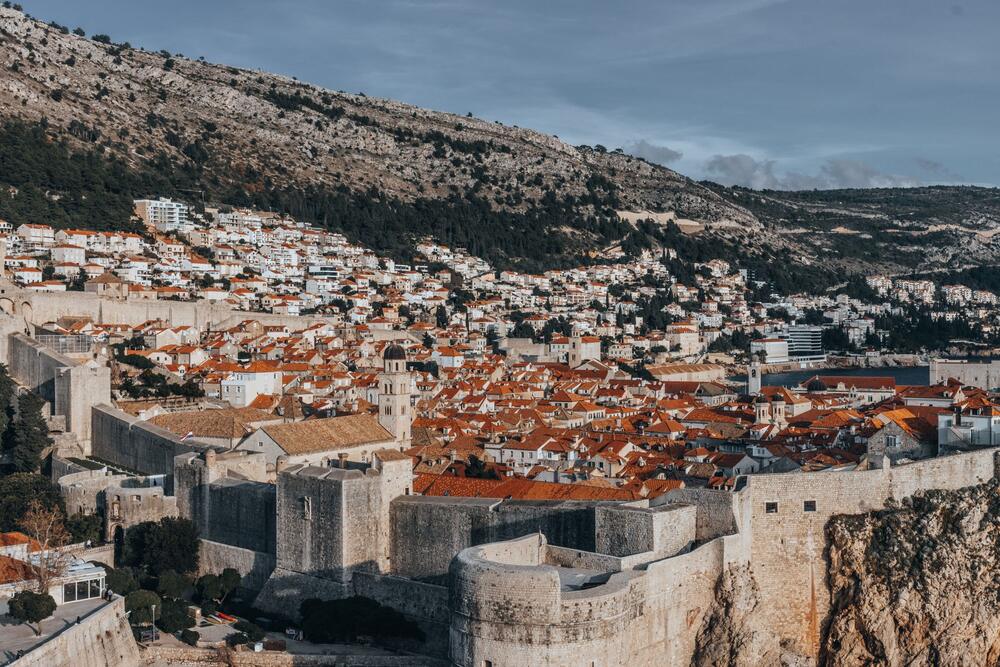 Photo by Zekai Zhu on Pexels
Dubrovnik's Old Town rooftops and fortifications
Hvar
Must-visit
- Fortica (Spanish Fortress): medieval castle on the hill above Hvar Town
- Stari Grad Plain: UNESCO (2008); an ancient Greek field system near the town of Stari Grad, a short drive from Hvar Town
- Best months: May to June and September to October, to avoid the priciest, busiest weeks
Pick Hvar for nightlife alongside the history: a holiday hotspot for about fifty years, with yachts crowding its harbor and Hvar Town's waterfront bars busy long after sunset each summer. Above the harbor, the hilltop Fortica fortress gives the island's best view over the town and the offshore Pakleni Islands.
Inland, lavender fields color the island purple in early summer, and a short drive from Hvar Town reaches Stari Grad, where an ancient Greek field system is still farmed today. It's one of Croatia's 10 UNESCO World Heritage sites.
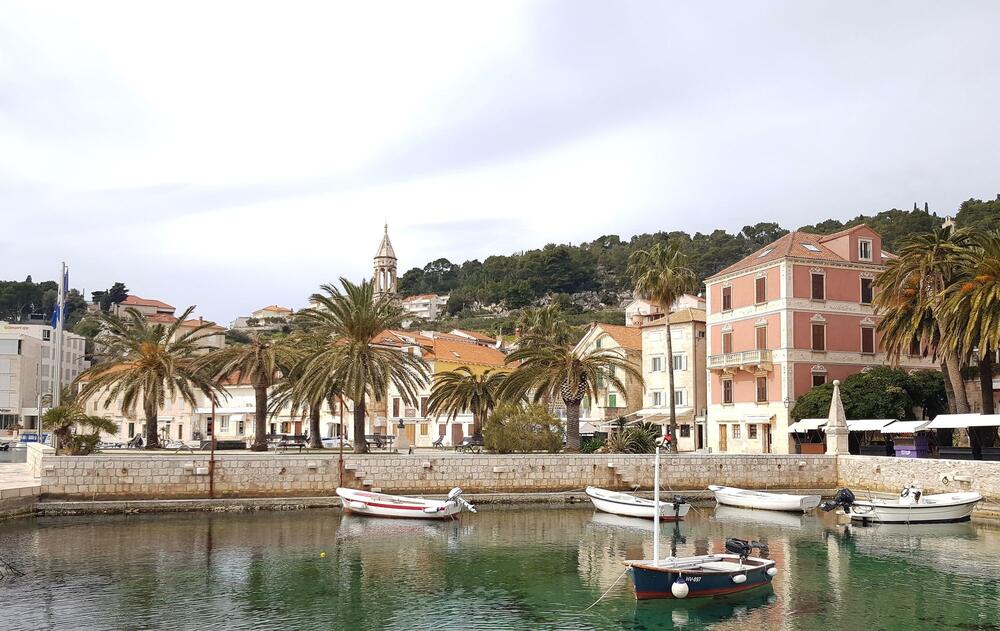 Photo by Ivan Dražić on Pexels
Boats and palm trees in Hvar harbour
Zadar
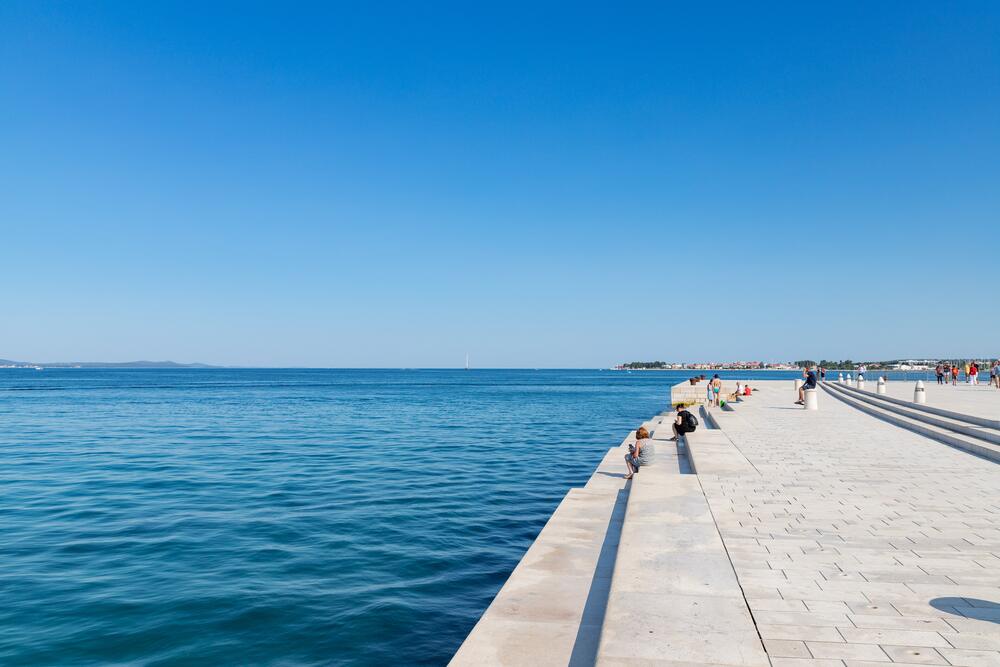
- Sea Organ: free; stone steps built into the waterfront, with pipes underneath that turn wave motion into ambient music
- Sun Salutation: free; 300 multi-layered glass solar plates next to the Sea Organ that light up after dark
Zadar's old town sits on a peninsula lined with Roman ruins and medieval churches, built up over a history that runs back 3,000 years. Its defensive walls are part of a UNESCO listing inscribed in 2017, the Venetian Works of Defence, which spans several countries and also takes in Šibenik's fortress.
The waterfront's two modern installations are best seen together at sunset. The Sea Organ turns wave motion into music through pipes hidden under the promenade steps, and the Sun Salutation, a circle of solar plates a few steps away, absorbs the daylight and turns it into a light show after dark.
 dronepicr (CC BY 2.0)
The stone steps of the Sea Organ
Krka National Park
- Entry ticket: adult €7 (Jan-Mar, Nov-Dec) / €20 (Apr-May, Oct) / €40 before 3pm or €30 after 3pm (Jun-Sep)
- Skradinski Buk: the park's largest and most famous waterfall, reached by the boat from Skradin included in the ticket (April to October), then a boardwalk loop
Krka runs quieter than Plitvice and costs a little less outside summer, while covering the same travertine-waterfall landscape, reached from Split, Zadar or Šibenik as a half-day trip. Skradinski Buk, the string of cascades at the end of the main boardwalk loop, is the park's best-known stop and used to be a swimming spot until the park banned it a few years back.
A separate boat trip from Skradinski Buk visits Visovac Monastery, on a small island upriver (€15 adult, April to October). Buy the entry ticket online ahead in summer; it costs less after 3pm.
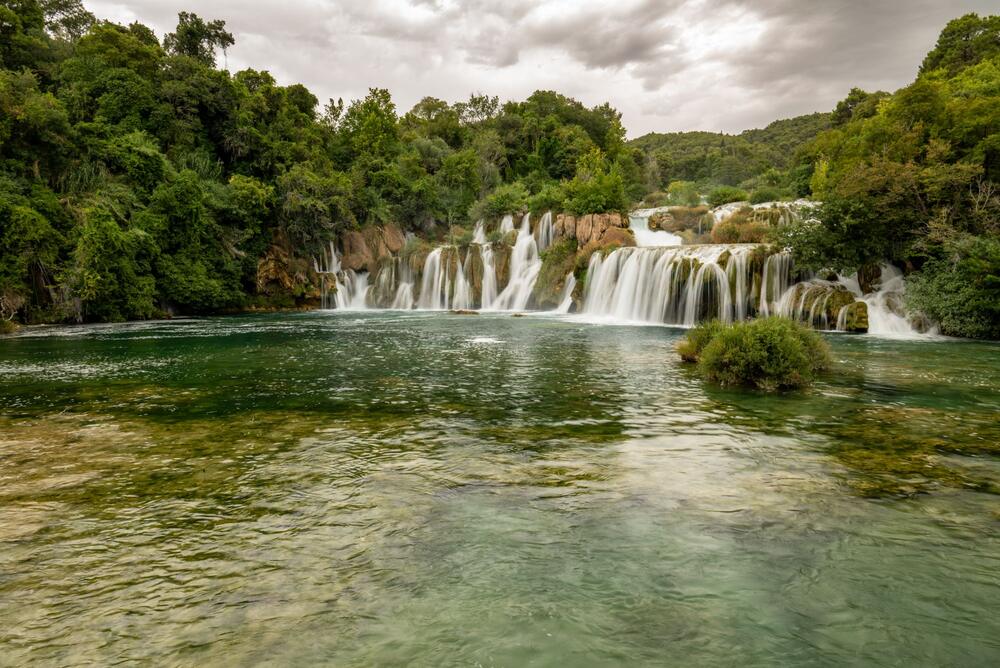 Photo by Vladimir Srajber on Pexels
The Skradinski Buk falls
Korčula
- Korčula Old Town: free to walk; climb St Mark's Cathedral's bell tower for the view
A fish-bone street plan runs through Korčula's walled old town, laid out centuries ago to keep out the wind. It's a piece of town planning you can walk in full in under an hour. Korčula is also often named as Marco Polo's birthplace, a claim the town leans into without ever fully settling it.
Beyond the old town, Korčula's vineyards and quieter beaches reward a slower visit, best timed to the shoulder months, when the streets empty out.
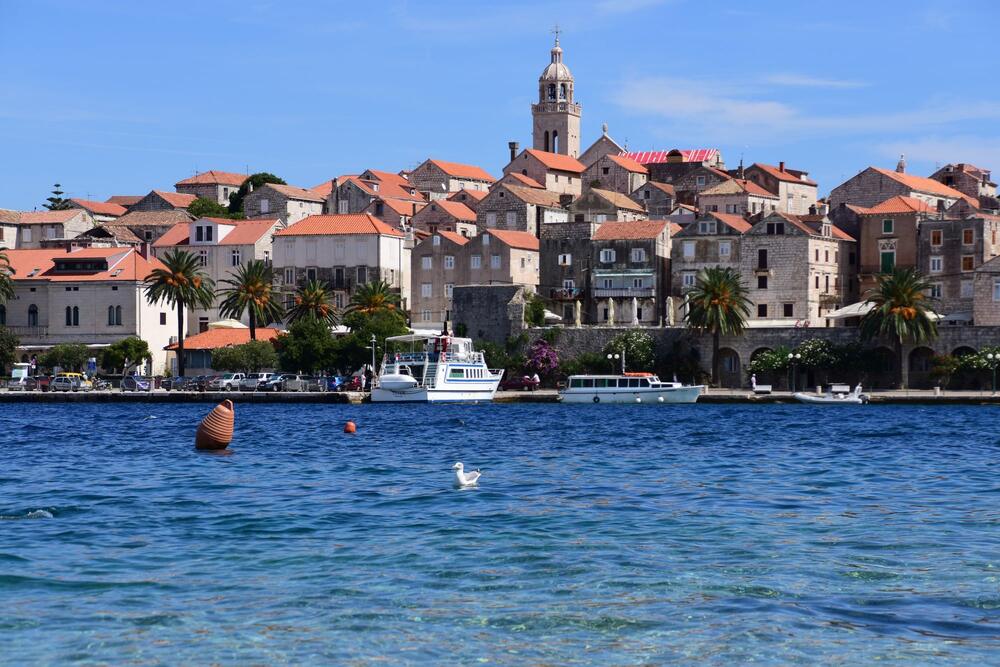 Photo by Alfonso on Pexels
Korčula's old town by the water, with boats
Brač
- Zlatni Rat (Golden Horn): free; tail-shaped pebble beach near Bol whose tip shifts with the currents
Brač supplied the pale stone for Diocletian's Palace in Split, quarried from the island's interior and shipped across the narrow channel that separates the two. Its own best-known feature is on the coast instead: Zlatni Rat, a spit of pebble beach near Bol that curls and straightens with the current, Croatia's most-photographed beach.
Morning tends to bring calm water for swimming, while an afternoon breeze turns the same beach over to windsurfers and kitesurfers. Ferries from Split reach either Supetar or Bol, depending on which end of the island you're headed to.
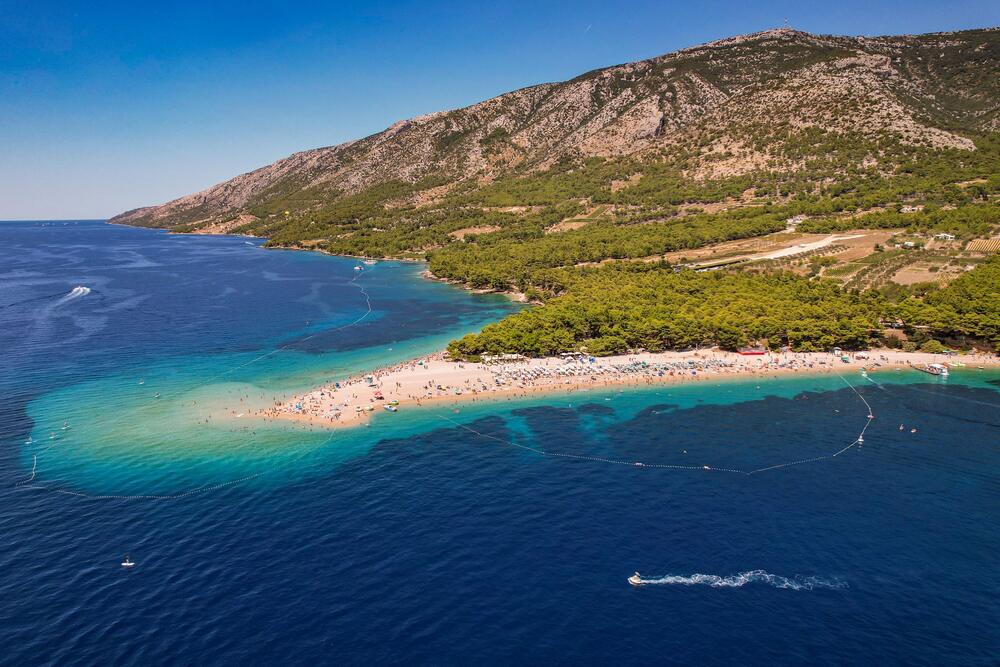 Photo by Vladimir Srajber on Pexels
Zlatni Rat beach from above
Trogir
- Trogir: UNESCO (1997)
Trogir sits 30 minutes from Split by car, its small island old town reached by a bridge from the mainland and an easy add to a Split-based stay. Romanesque churches and a 13th-century cathedral fill its compact streets, all of it inscribed as a UNESCO site in 1997.
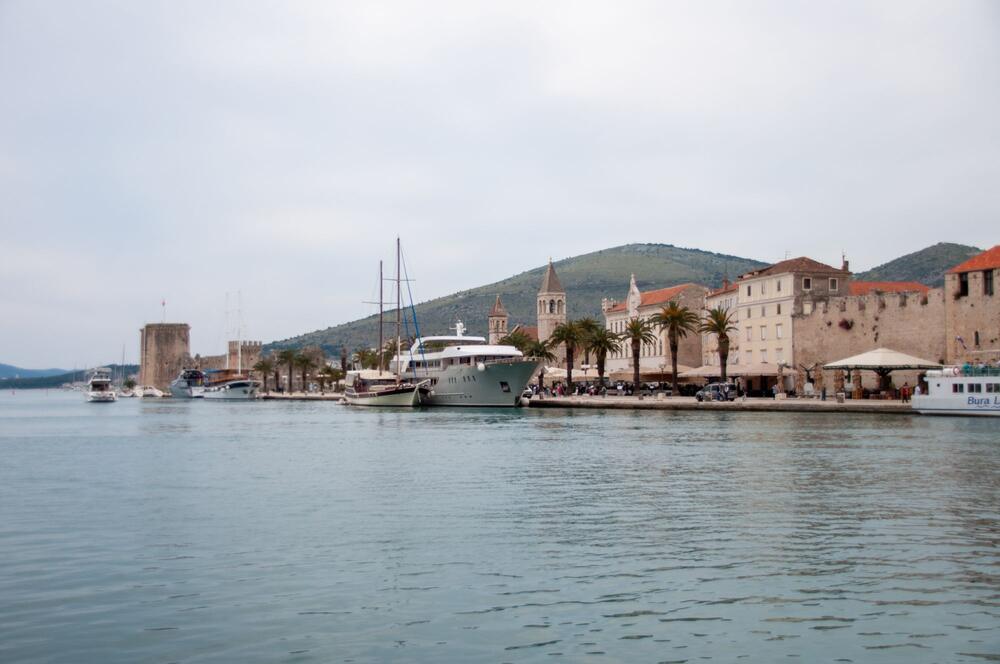 Photo by Hert Niks on Pexels
Boats along Trogir's waterfront
Šibenik
- Cathedral of St James: UNESCO (2000); built entirely of stone slabs with no binding material
- Best months: year-round; quieter than Split or Dubrovnik even in summer
Šibenik sits where the Krka River meets the sea, between Zadar and Split but with a fraction of either city's cruise-ship traffic. Its 15th-century Cathedral of St James, built without a single piece of binding mortar, is the world's largest church built this way and carries 71 sculpted stone faces around its exterior.
The cathedral doubled as the Iron Bank of Braavos in Game of Thrones, and pairing a night here with a Krka National Park day trip covers both without ever dealing with Split's or Dubrovnik's crowds.
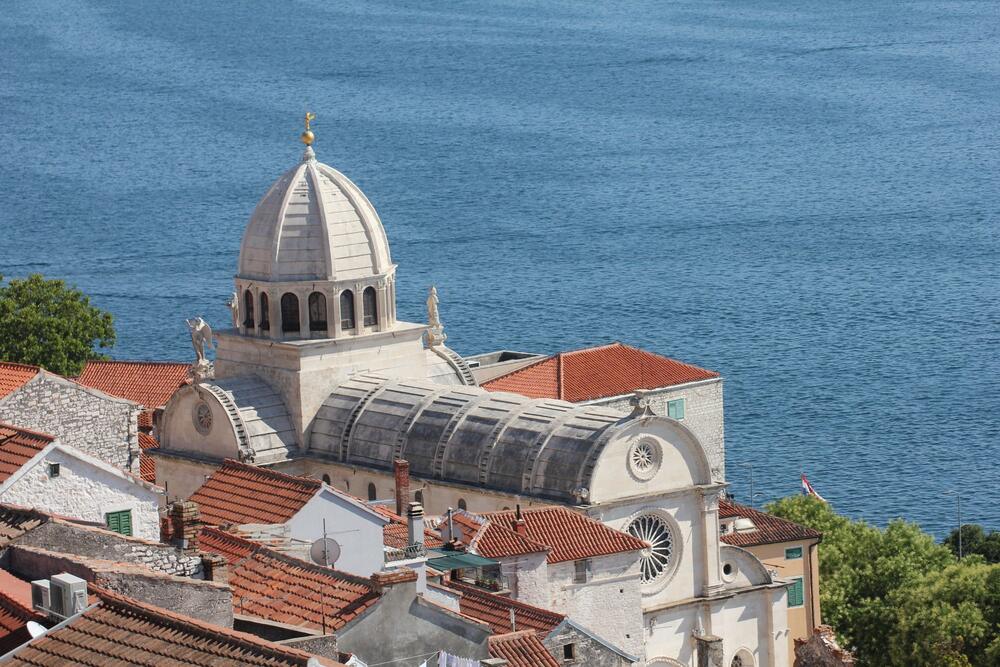 Photo by Peter Safranka on Pexels
The Cathedral of St James above the sea
Mljet
- Mljet National Park: the park is car-free; an e-bike or rented bicycle covers it
Choose Mljet to disappear for a day: its western half is entirely national park, built around two saltwater lakes ringed by pine forest. Legend places Odysseus here for seven years, marooned on his way home from Troy.
A rented bicycle or e-bike is the way to cover the lakes and the small island monastery at their center, since the park bans cars. Visit as a day trip from Dubrovnik, or stay overnight to reach the quieter bays on the island's eastern half.
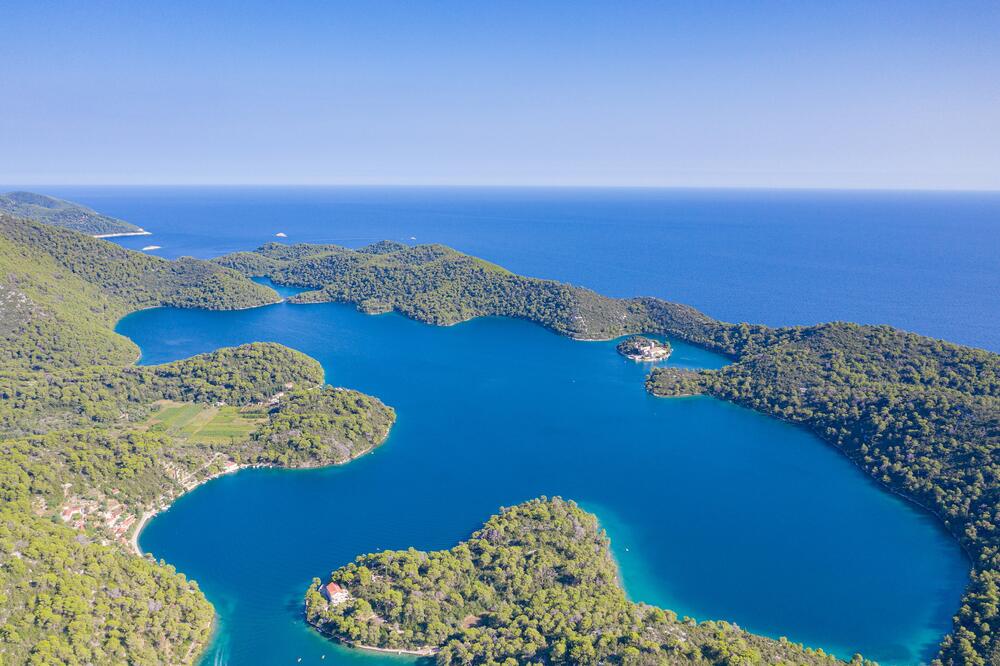 dronepicr (CC BY 2.0)
Veliko Jezero, Mljet's saltwater lake
Vis
- Blue Cave (Modra Špilja): boat tour from Vis, Split or Hvar; book ahead in season
- Best months: May to June and September to October, for the quietest fishing-village atmosphere
Pick Vis for the least-developed of the major Dalmatian islands: the one farthest from the coast, and a military base for years, which together kept it this way while Hvar and Korčula grew busier. Its coves, Stiniva Bay among them, reward the extra effort to get there.
Boats to the Blue Cave on the nearby islet of Biševo also leave from Vis, where sunlight through an underwater opening turns the water a glowing blue. Tours fill up fast in season, so book ahead.
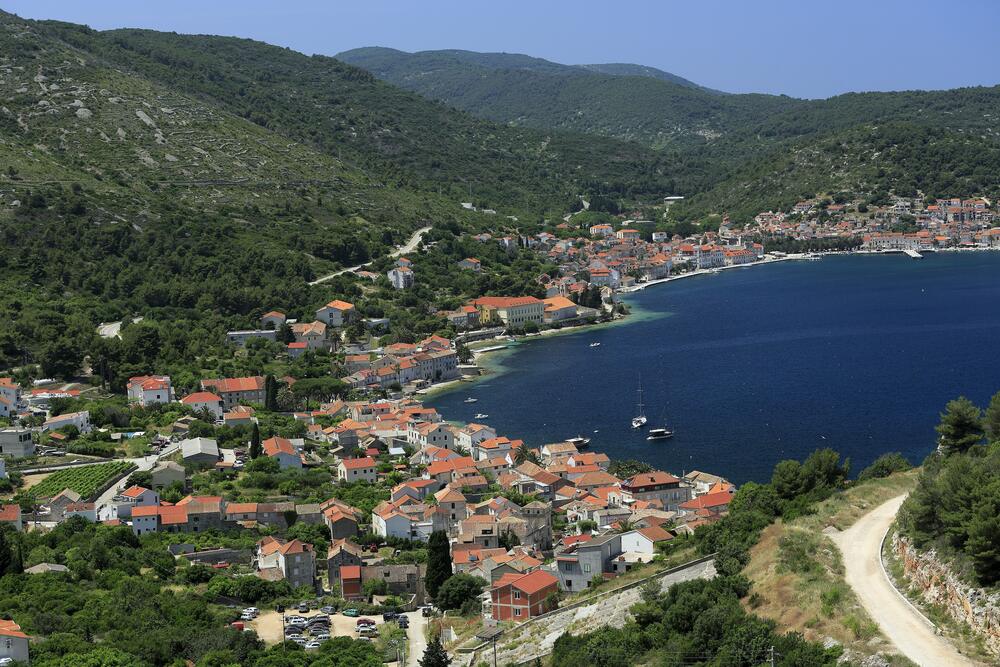 Falk2 (CC BY-SA 4.0)
Vis town across the bay
Paklenica National Park
- Best months: spring or autumn, to avoid summer heat on exposed rock
Paklenica's mountains rise to 5,700 feet above the coastal town of Starigrad, about an hour's drive from Zadar, and its limestone walls carry many climbing routes. The park is best known to climbers, and its trails suit a full-day hike; a local guide helps on the longer routes.
Spring and autumn keep the exposed rock cooler than a summer visit, when the climbing routes bake in direct sun most of the day.
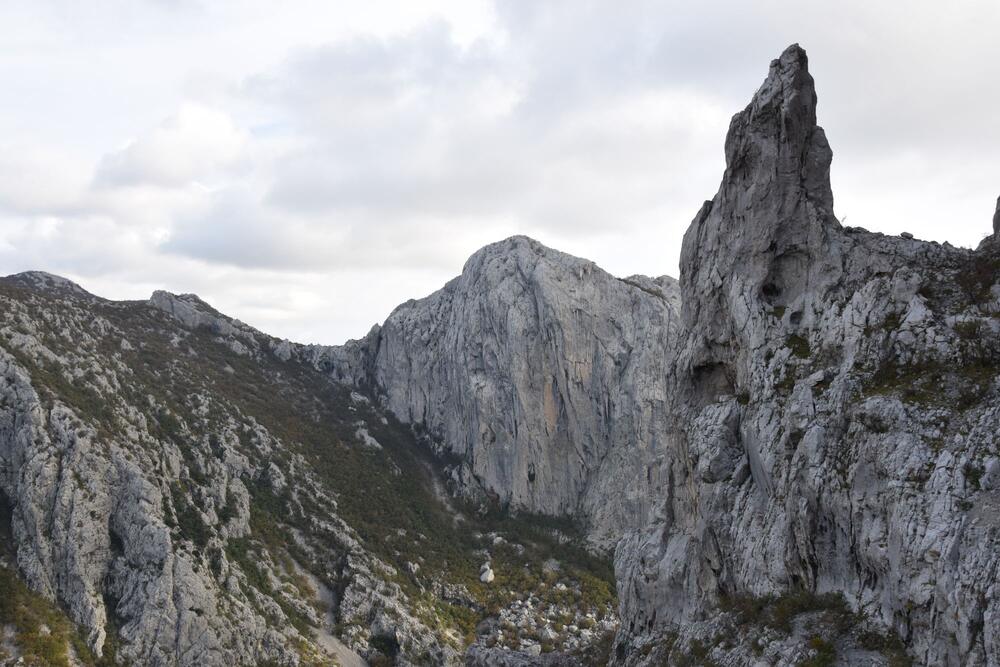 Photo by Arjanne Holsappel on Pexels
The limestone cliffs of Velika Paklenica Canyon
Istria and the Kvarner coast
Pula
- Pula Arena: 1 hour
- Best months: year-round; summer for the beaches
Pula's 1st-century Roman amphitheater was built for more than 20,000 spectators and still stands almost fully intact two thousand years after it staged gladiator fights. It ranks among the best-preserved Roman arenas anywhere.
Pula's own beaches sit a short walk from the old town, and the Brijuni islands are reachable by boat from nearby Fažana.
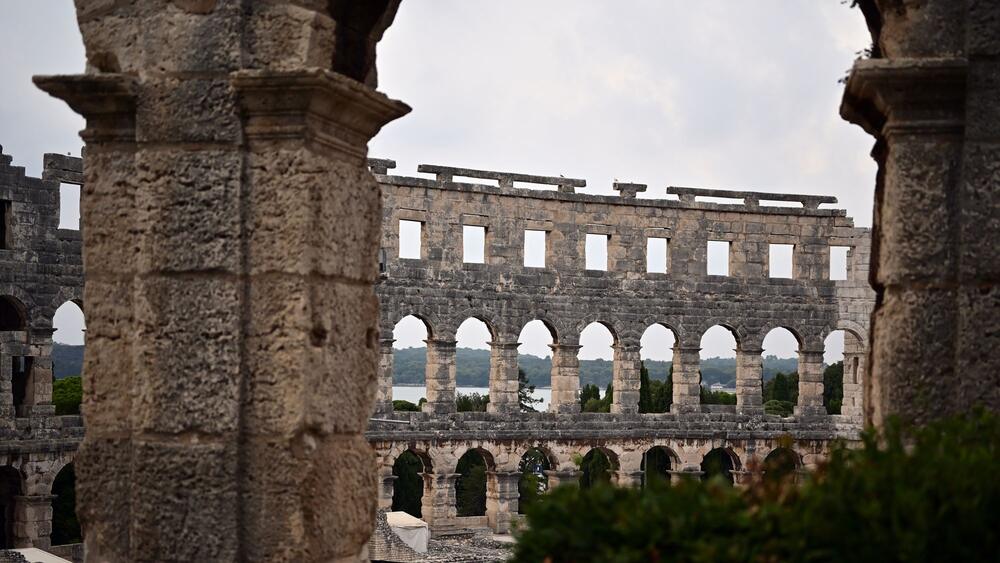 Photo by Gutjahr Aleksandr on Pexels
The outer wall of the Pula Arena, the Roman amphitheatre
Rovinj
- Church of St Euphemia: hilltop church with a climbable bell tower
Climb the Church of St Euphemia's bell tower at golden hour for the view back across Rovinj's red roofs to the Adriatic. The hilltop church crowns a tangle of pastel fishing houses on Rovinj's small peninsula. Strong Italian influence shows in the architecture and colors, and the town has been called Croatia's Portofino.
Spend the rest of the evening in the harbor-front restaurants below the old town.
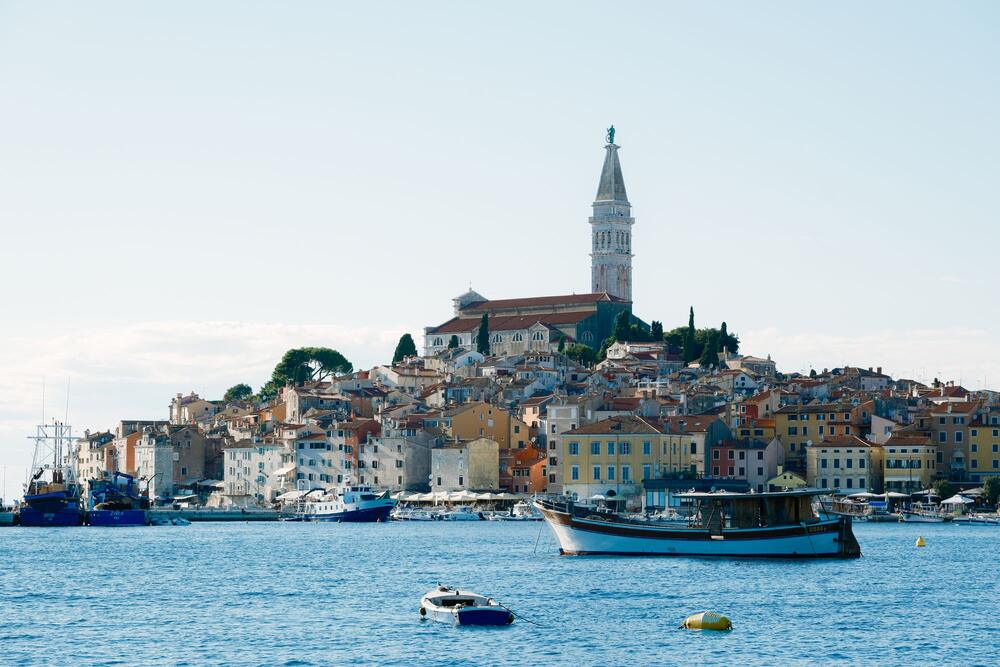 Photo by Ramon Karolan on Pexels
Rovinj and the Church of St Euphemia above the harbor
Istria
- Best months: autumn, for truffle season
Istria's hill towns feel distinctly Italian, a different side of Croatia from the Dalmatian coast's stone fishing ports. Motovun, the peninsula's best-known hill town, rises from a forested valley in Istria's truffle country; autumn is truffle season.
Pula and Rovinj hold down the coast, but a few days inland cover the truffle country and the region's vineyards too.
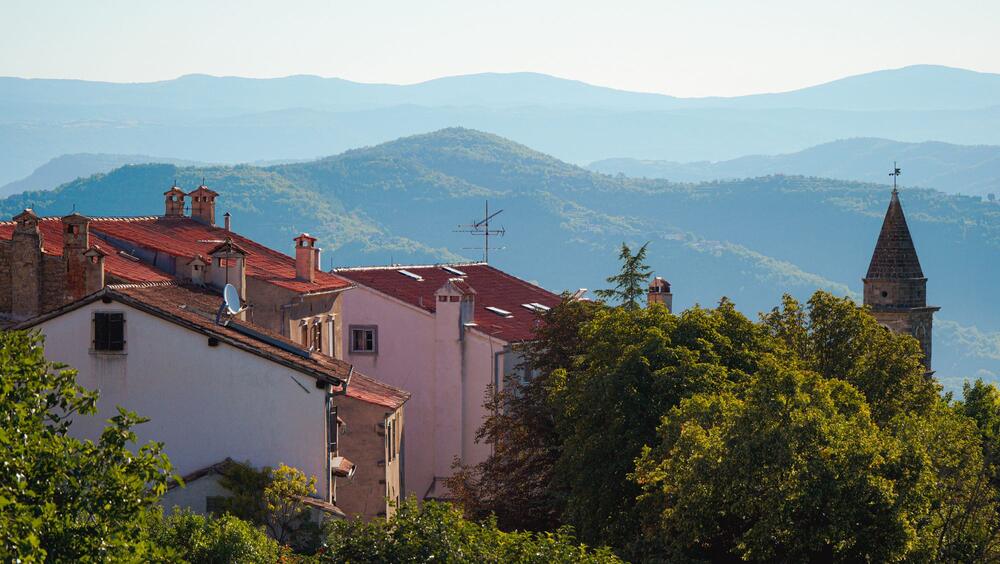 Photo by Damir K on Pexels
Motovun on its hill in Istria
Krk
- Best months: summer, for beaches
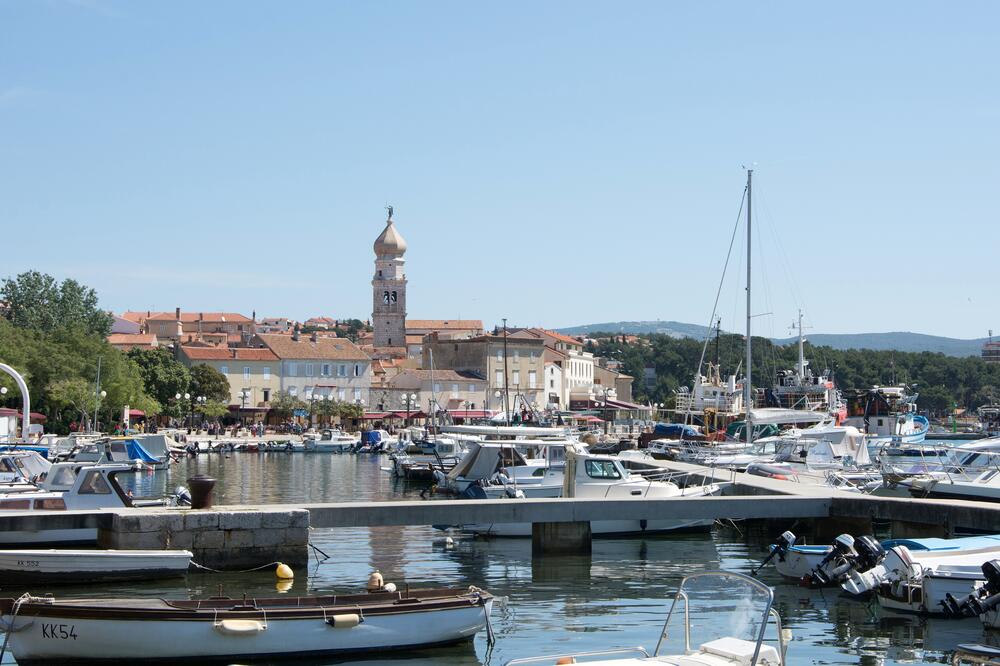
Krk is one of Croatia's two largest islands, with a varied coastline and small villages spread across it. It's connected to the mainland by a bridge, so there's no summer ferry queue to plan around, unlike Brač, Hvar or Korčula.
 Isiwal (CC BY-SA 3.0)
The harbour of Krk town
Opatija
- Best months: May to June and September to October, for the mild climate
Opatija suits a traveler chasing a mild climate more than a summer beach scene. Habsburg aristocracy adopted the town for exactly that reason, building the grand villas that still line its seafront below Mount Učka.
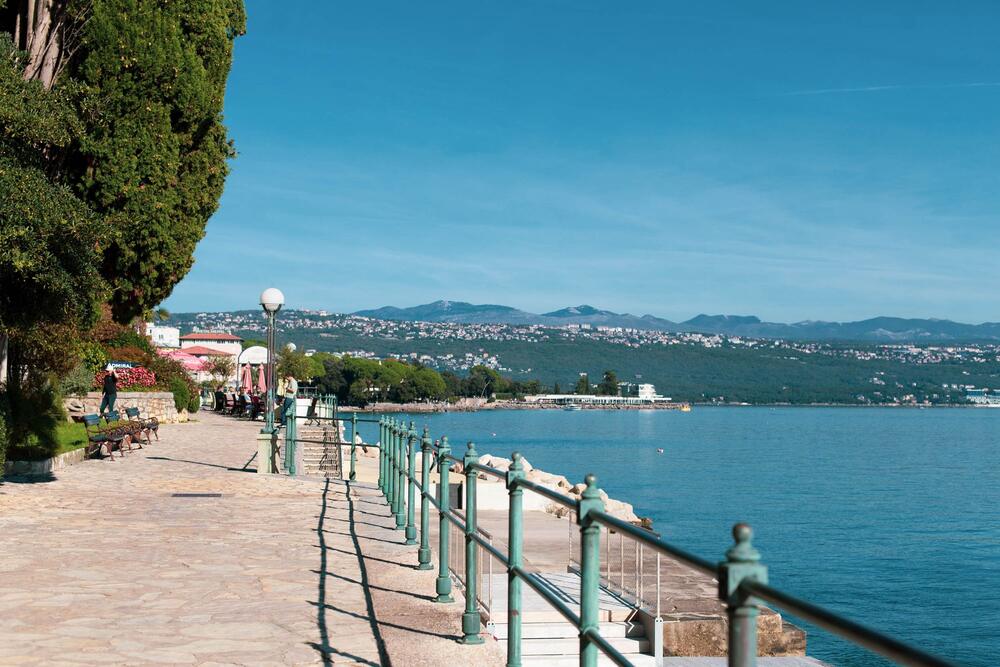 Photo by Eugenia Sol on Pexels
The Adriatic from the seafront promenade in Opatija
Brijuni National Park
- Best months: summer, when boat excursions run most frequently
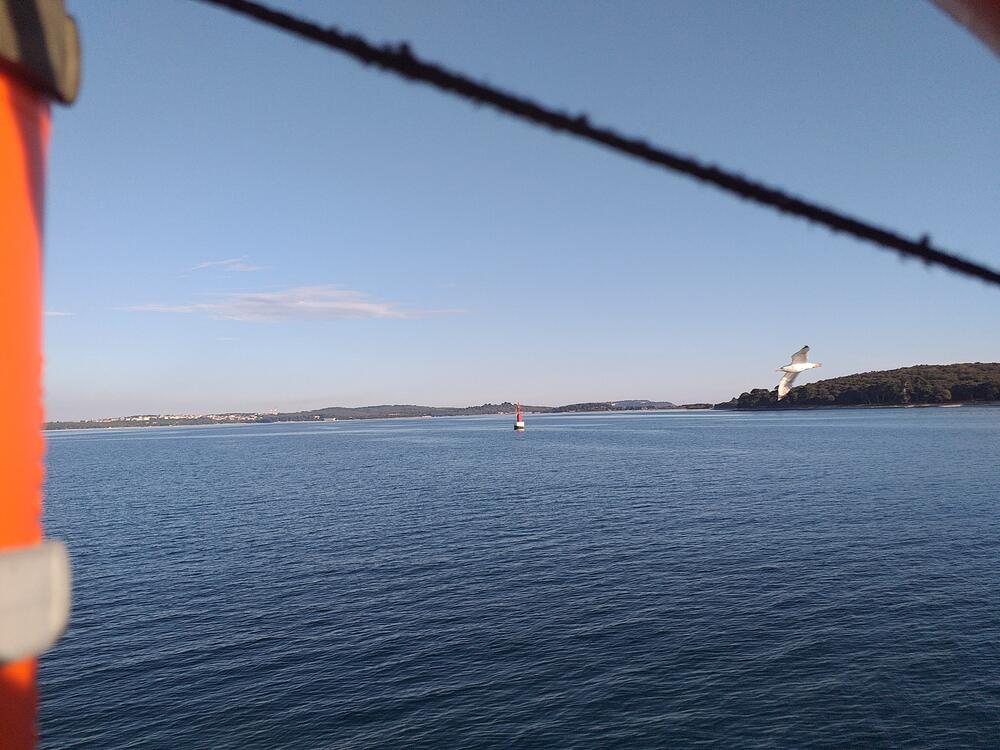
Brijuni is an archipelago of small islands off the Istrian coast, reached by boat from Fažana, once Yugoslav leader Tito's private island retreat. A mix of history and wildlife no other Croatian island has makes it worth the boat ride over.
 Nebul(oz)a (CC BY-SA 4.0)
Brijuni seen from a boat
Zagreb and the interior
Zagreb
- Museum of Broken Relationships: a museum of donated objects and the breakup stories behind them
- St Mark's Church: free to view from outside; tiled roof bearing the coats of arms of Croatia, Dalmatia, Slavonia and Zagreb
- Dolac Market: free to browse; daily open-air market since 1930, just behind the main square
- Best months: year-round; quieter in summer, when locals head to the coast
The Museum of Broken Relationships turns donated breakup objects and their stories into Zagreb's quirkiest, most internationally known stop, a short walk from St Mark's Church in the medieval Upper Town. St Mark's tiled roof bears the coats of arms of Croatia, Dalmatia, Slavonia and Zagreb side by side, in a capital whose Austro-Hungarian architecture gives it a different feel from the coast.
Café tables spill across Flower Square (Cvjetni trg) below the Upper Town, and Dolac Market, running daily since 1930 just behind the main square, is the everyday, working version of the same neighborhood. Zagreb empties out each summer as locals head to the coast, leaving the cafes and museums to whoever stays inland.
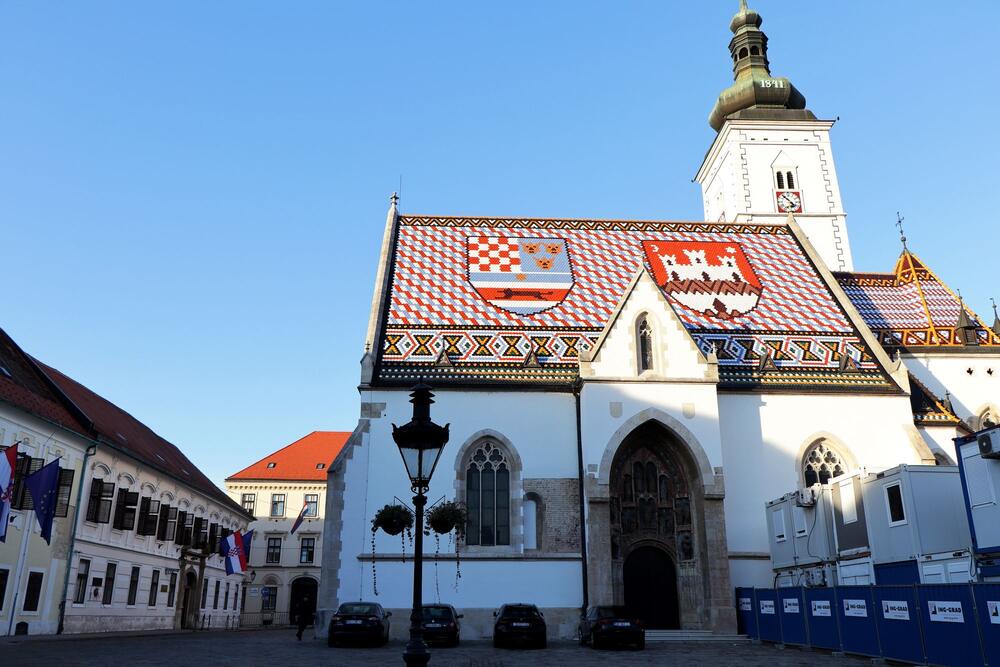 Photo by Alan Wang on Pexels
The tiled roof of St Mark's Church with its coats of arms, Zagreb
Plitvice Lakes National Park
Must-visit
- Entry ticket: adult €10 (Jan-Mar, Nov-Dec) / €23 (Apr-May, Oct) / €40 before 4pm or €25 after 4pm (Jun-Aug; the cutoff is 3pm in Sep)
- UNESCO: Plitvice Lakes National Park (1979, 2000)
- Best months: October, for the autumn color
Sixteen lakes terrace down through Plitvice in a chain of turquoise pools and waterfalls, linked by wooden boardwalks over the water. It was Croatia's first UNESCO natural site and remains the country's best-known natural sight, a half-day minimum to see and a full day to hike both the Upper and Lower Lakes.
Entry tickets are capacity-limited and sold by time slot, not as an open-ended day pass, so book online before you arrive, particularly from June through September. Arriving at opening time beats the tour buses in; visiting in October costs a little summer warmth but gains the park's best autumn color.
Try free
Plan your Croatia trip in about 2 minutes
Tap through 8 quick cards for a complete itinerary with budget, maps, and packing lists. No account required.
Plan your Croatia trip →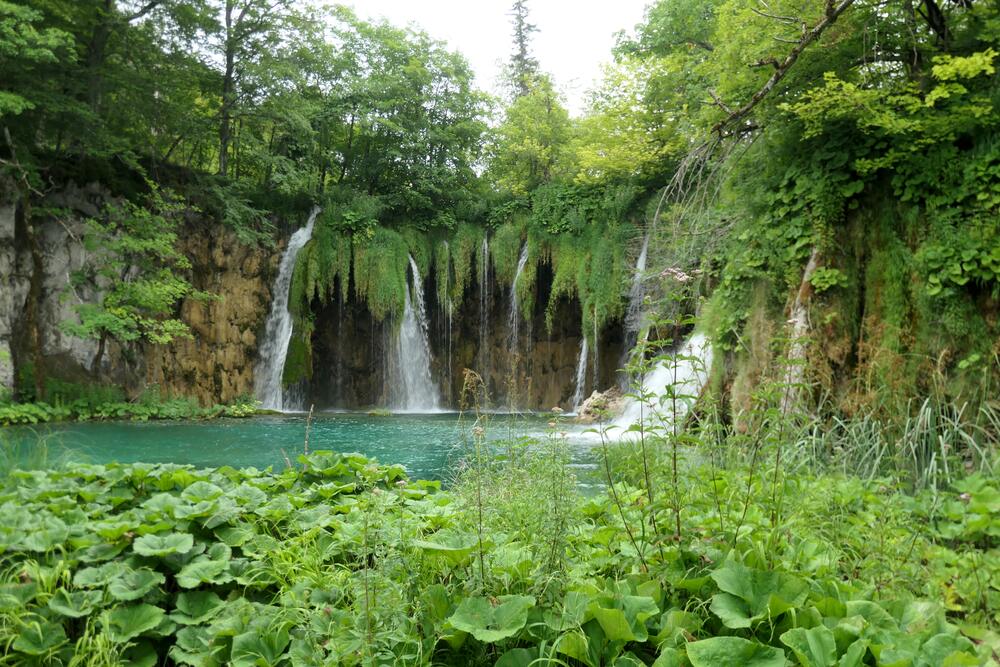 Photo by Lukas Lussi on Pexels
Waterfalls pouring into a turquoise lake at Plitvice
Things to do across Croatia
Trakošćan & Veliki Tabor Castles
- Best months: year-round
Trakošćan and Veliki Tabor are two medieval castles in the Zagorje hills north of Zagreb, the one inland, castle-country pairing in a country best known for its coast. Trakošćan wraps a neo-Gothic 19th-century exterior around a much older core, while Veliki Tabor is a 16th-century hilltop castle with pentagonal towers and turrets.
A half-day drive from Zagreb reaches one castle; seeing both takes a full day.
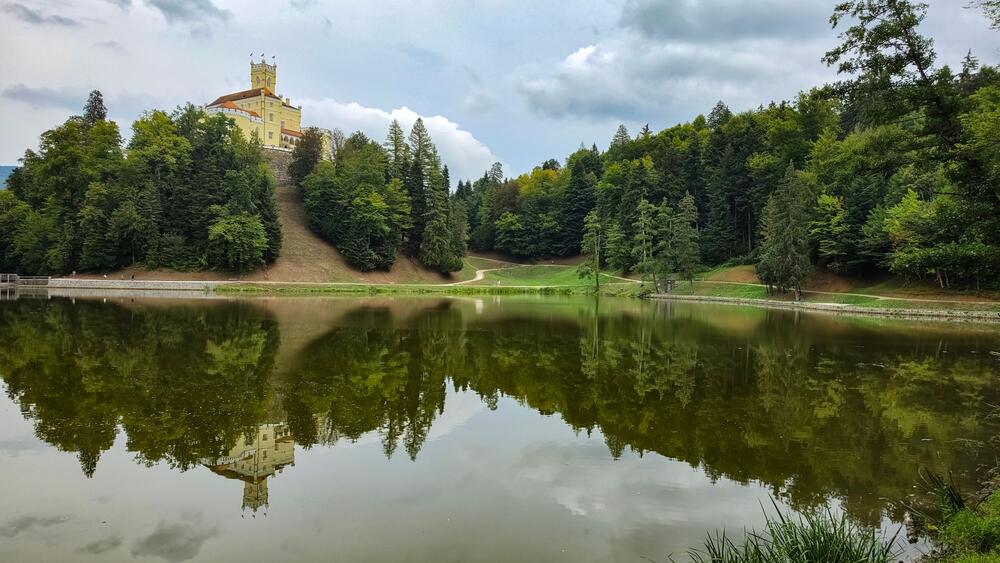 Photo by Daciana Cristina Visan on Pexels
Trakošćan Castle reflected in its lake
Biokovo Skywalk
- Biokovo Skywalk: 1-2 hours including the drive up Mount Biokovo
A glass-floored viewing platform sits on a ridge of Mount Biokovo, above Tučepi on the Makarska Riviera, with views over the Adriatic to the islands on a clear day.
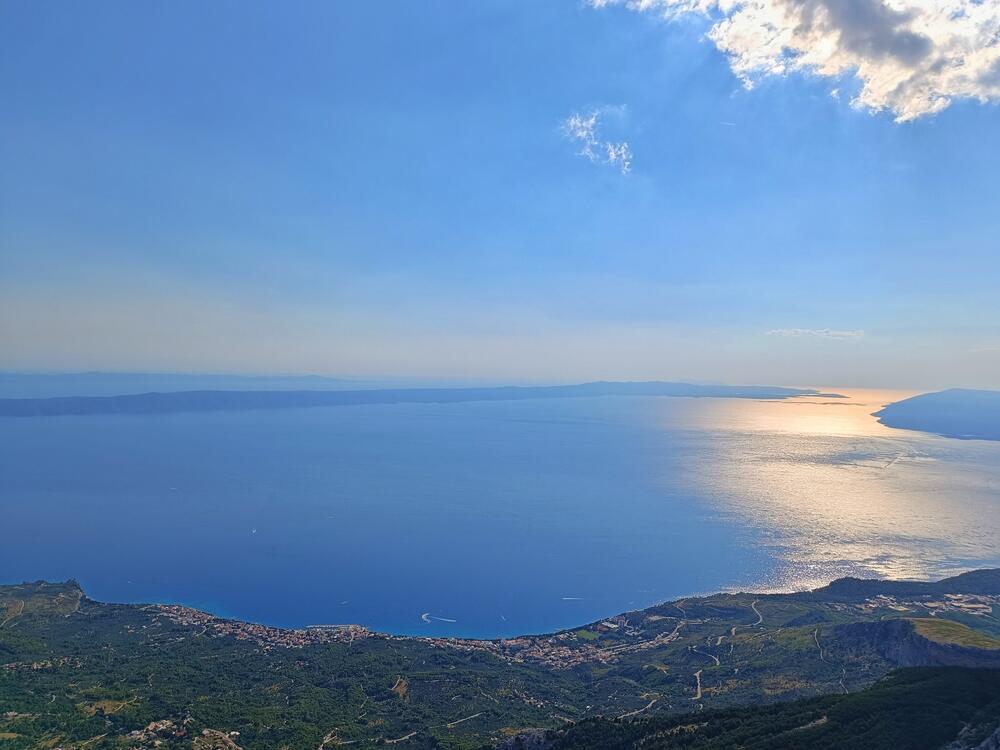 Bičva (CC BY-SA 4.0)
The Biokovo Skywalk
The best places to visit in Croatia at a glance
| Place | Go for | Book ahead |
|---|---|---|
| Split | Diocletian's Palace, the ferry hub to the islands | no |
| Dubrovnik | the City Walls, Mount Srđ, Lokrum Island | no |
| Hvar | Fortica, lavender fields, Stari Grad Plain | yes |
| Zadar | the Sea Organ and Sun Salutation at sunset | no |
| Krka National Park | Skradinski Buk waterfall | yes |
| Korčula | the fish-bone old town, Marco Polo's claimed birthplace | no |
| Brač | Zlatni Rat beach | no |
| Trogir | a UNESCO old town near Split | no |
| Šibenik | the Cathedral of St James | no |
| Mljet | the saltwater-lake national park | no |
| Vis | the Blue Cave, Stiniva Bay | yes |
| Paklenica National Park | hiking and rock climbing | no |
| Pula | the Roman amphitheater | no |
| Rovinj | the Church of St Euphemia | no |
| Istria | truffle hunting, hill towns | no |
| Krk | one of Croatia's largest islands, reachable by bridge | no |
| Opatija | Habsburg-era villas | no |
| Brijuni National Park | Tito's former island retreat | no |
| Zagreb | the Upper Town, the Museum of Broken Relationships | no |
| Plitvice Lakes National Park | the terraced lakes and waterfalls | yes |
Plan your Croatia trip
For trip length, getting around and costs, start with the Croatia guide. When you build a trip with MonkeyEatingMango, the booking checklist lists what to book and how many weeks ahead.
Last updated November 2026.
Common questions
What is Croatia best known for?
Croatia is best known for Dubrovnik's walled Old Town, a Game of Thrones filming location, and Split's Old Town, built inside and around a 4th-century Roman emperor's palace. The Plitvice Lakes' 16 terraced, waterfall-linked lakes and the Dalmatian islands reached by ferry from Split, Hvar and Korčula among them, round out the country's best-known sights.
Which is prettier, Split or Dubrovnik?
Split and Dubrovnik are both UNESCO-listed Dalmatian cities, but different ones. Split's Old Town grew up inside a 4th-century Roman palace, its ruins now full of shops and cafes, and it doubles as the main ferry hub for the islands. Dubrovnik is a walled medieval port city with a 1.5 to 2-hour fortification circuit and the cable car up Mount Srđ; many trips visit both.
How many days should I spend in Croatia?
Three days covers Dubrovnik. Five adds Split, and a week adds an island such as Hvar or Korčula. Eight days fits in the Plitvice Lakes, and ten or more leaves time for Istria.
What is the best time to visit Croatia?
Late May through June and September through early October give a warm, swimmable Adriatic with far smaller crowds than peak summer. July and August are hottest and busiest, with the highest prices and ferries that can sell out. Winter is quiet and cheap, though cool and rainy, and many island ferries, hotels and restaurants close for the season.
How much does the Dubrovnik City Walls ticket cost?
An adult ticket is €40.00 and a child ticket (ages 7 to 18) is €15.00, with free entry for children 6 and under. One ticket also covers Lovrijenac Fortress, the Western Outer Wall (closed Dec-Feb) and the Collection of Coins of the Republic of Ragusa, bought online or at the gate.
Do you need a car, or is the ferry enough to get around Croatia?
Buses connect the mainland cities (Dubrovnik, Split, Zadar, Zagreb) well, and car ferries and fast catamarans from Jadrolinija reach the islands from Split and other ports. A rental car is the practical choice for Istria, the Plitvice and Krka national parks, and the inland wine country, but it is more hassle than help on a small island, where parking near the old towns is scarce in summer.
How long do you need at Plitvice Lakes National Park?
Half a day is the minimum to walk the lower boardwalks and see the main waterfalls. A full day lets you hike both the Upper and Lower Lakes and catch the boat and panorama-train transport included in the ticket. Entry tickets are capacity-limited and sold by time slot, so book online before you go, especially in summer.
Does Croatia use the euro or the kuna?
The euro, since January 1, 2023, when it replaced the kuna. The kuna is no longer legal tender anywhere in the country, so a kuna price in an older travel article is out of date.
How many UNESCO World Heritage Sites does Croatia have?
Croatia has 10 UNESCO World Heritage Sites: 8 cultural and 2 natural. They include Dubrovnik's Old City (1979, 1994), Split's Historical Complex with the Palace of Diocletian (1979) and Plitvice Lakes National Park (1979, 2000), along with Stari Grad Plain on Hvar (2008), an ancient Greek field system.
Is the Blue Cave boat trip worth booking ahead?
Most visitors book ahead, since boat tours to the Blue Cave on Biševo run from Vis, Split and Hvar and can fill up in season. The glow comes from sunlight passing through an underwater opening, so the cave is worth timing around a clear day.
What is Croatia's most photographed beach?
Zlatni Rat, also called the Golden Horn, near the town of Bol on the island of Brač. The tail-shaped pebble beach shifts with the currents, and its two-toned blue-green water draws windsurfers and kitesurfers to the steady afternoon breeze.

Written by Shobhit Shrivastava · Founder
Related reading
Things to Do in Scotland and the Best Places to Visit
Where to go in Scotland: Edinburgh and the Lothians, Glasgow and the central belt, the Highlands, the islands, and the whisky-region choice no single answer settles. Every stop carries its top sights, the official price where one exists, and what to book ahead.
Things to Do in Ireland and the Best Places to Visit
Where to go in Ireland by region, from Dublin to Northern Ireland. Every stop carries its top sights, the official price where one exists, and what to book ahead.
Things to Do in Australia and the Best Places to Visit
Where to go in Australia by region: the big cities, the Reef and the Red Centre, road trips and islands, Tasmania and the West. Every stop carries its top sights, the official price where one exists, and what to book ahead.