Thailand rewards travelers who lean into its contradictions. Bangkok is dense, hot and relentlessly overstimulating and 30 minutes by river boat you're walking through a 200-year-old royal temple complex where monks chant at dawn. Chiang Mai's moated old city has 30+ Buddhist temples woven into ordinary neighborhoods. An one-hour flight south drops you onto limestone-cliff islands that look pulled from a James Bond movie set (because they were). Most first-timers underestimate the variance. They assume "Thailand" is one trip and try to do Bangkok + Chiang Mai + Phuket + Phi Phi in seven days, ending up exhausted on airport runs. The other thing first-timers underestimate is the friction and the lack of it. Thailand is one of the easiest countries to travel inside (English widely spoken in tourist areas, cheap and reliable Grab everywhere, ฿7 street pad thai, hostels, near-zero violent crime) and surprisingly fiddly in a few specific spots. The "Grand Palace is closed" tuk-tuk scam catches every first-timer who hasn't read about it. Scooter rentals routinely scam returning customers with "pre-existing damage" claims. Lèse-majesté laws make even social-media jokes about the royal family a real arrestable offense. The northern burning season (Feb-April) makes Chiang Mai unwalkable; the southern monsoon (Jun-Oct) makes Phi Phi miserable; Songkran (April 13-15) means three days of water-fight chaos. This guide is the planning layer that sits above the day-by-day itineraries. Pick your gateway pair (Bangkok is the mandatory anchor; add Chiang Mai for the north or an island like Phi Phi, Krabi or Koh Samui for beach) and pad with realistic transit days. Get the friction sorted before you land and Thailand delivers exceptional value per dollar.
Thailand Trip Planner: Bangkok, Chiang Mai, Phi Phi, and Beyond
A first-timer's guide to Thailand's gateway cities: the visa-on-arrival, scooter rental, and Songkran timing details everyone gets wrong.
Free, for now. A few quick questions, then a day-by-day plan with a cost estimate.
Namrata · Editor
Updated October 13, 2026
Choose your trip length
5 days
Just Bangkok
Grand Palace + Wat Pho + Wat Arun, Chao Phraya river boat, Chatuchak weekend market, day trip to Ayutthaya or Damnoen Saduak floating market. Tightest first-timer trip.
See the sample itinerary →
7 days
Bangkok + Phi Phi/Krabi
Three days in Bangkok, fly down to Krabi or Phuket, three days island-hopping (Phi Phi, Railay, Hong). Beaches + bustle in one trip.
See the sample itinerary →
10-14 days
+ Chiang Mai (north + south)
Add Chiang Mai for temples, elephants, and Pai mountain villages. Plus extra island days. The classic full Thailand loop.
See the sample itinerary →
The flagship itinerary
Like this plan? Make it yours
Same destination, your dates, group, and pace. Generated free in about a minute.
Customize this tripFreeEstimated daily cost
Backpacker
$30-50/day
Hostel dorms (฿250-500), street food + somtam stalls, public buses + scooter rentals, free temples. Thailand is the original backpacker country; cheap is the default. Prices as of 2026; verify current rates.
Mid-range
$70-130/day
3★ hotels or boutique guesthouses (฿1500-3500), rooftop bars + nicer Thai dinners, Grab everywhere, occasional domestic flights. The sweet spot for first-timers. Prices as of 2026; verify current rates.
Luxury
$300+/day
5★ resorts (Aman, Four Seasons, Mandarin), spa days, private long-tail boat charters, fine dining at Le Du or Gaa. Sky-high in Phuket and Koh Samui in high season. Prices as of 2026; verify current rates.
Major cities at a glance

Bangkok
3-4 daysBest for temples + street food + nightlife
Grand Palace + Wat Pho + Wat Arun (the temple triangle), Chao Phraya river boats, Chatuchak weekend market, Khao San Road, rooftop bars at Lebua and Banyan Tree.

Chiang Mai
3-4 daysBest for temples + slow north + elephants
Doi Suthep mountaintop temple, the moated Old City with 30+ wats, Sunday Walking Street market, ethical elephant sanctuaries, cooking classes. Cooler weather than the south.

Phuket
3 daysBest for beach base + island hopping
Patong nightlife, Kata + Karon family beaches, Promthep Cape sunsets, Big Buddha viewpoint. Best launchpad for Phi Phi, Similan, and Phang Nga Bay day boats.
Krabi & Phi Phi
3-4 daysBest for limestone cliffs + beaches
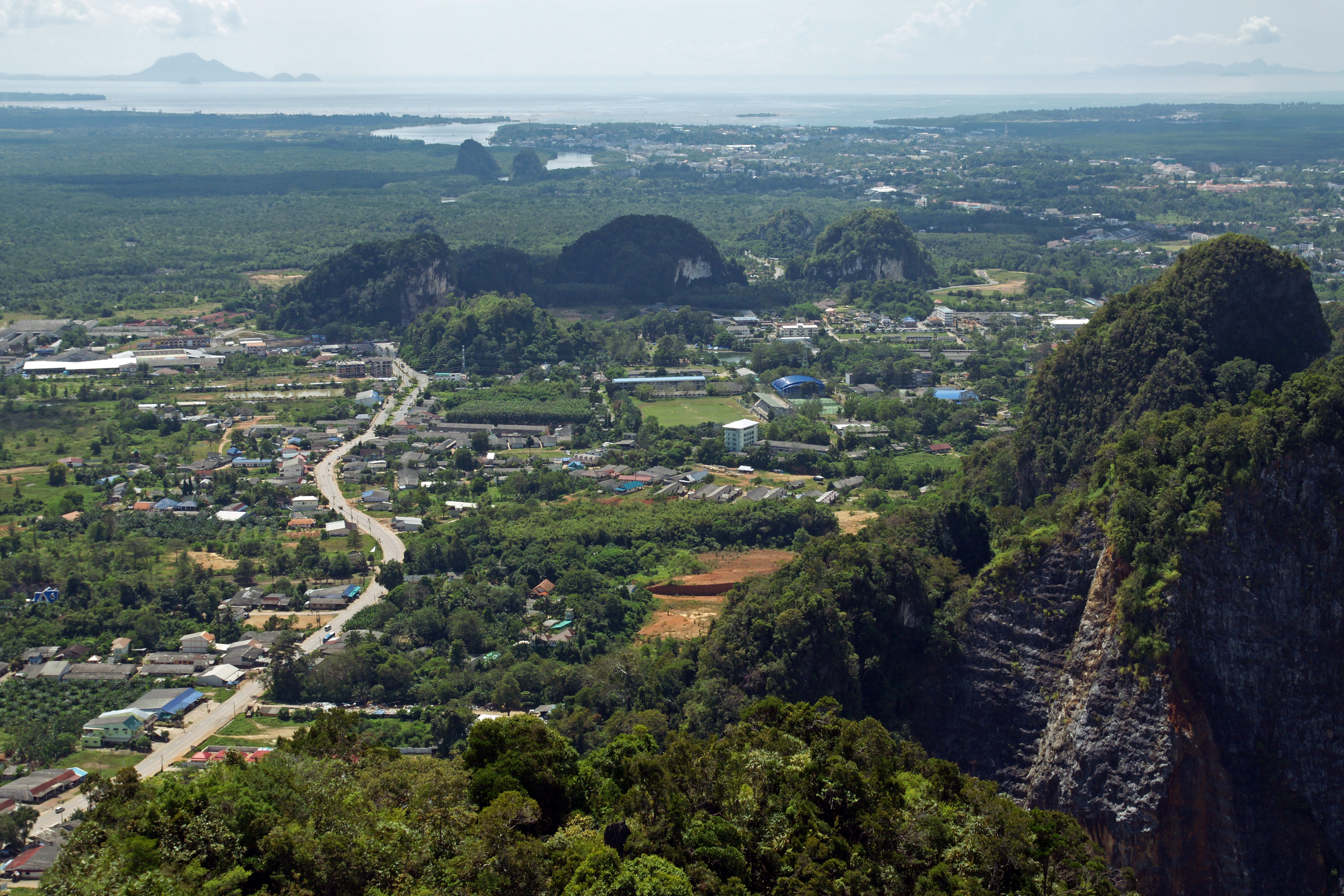
Railay Beach (rock climbing), Phi Phi Don longtail tours to Maya Bay, Hong Islands, Tiger Cave Temple stairs. Quieter alternative to Phuket with the same karst landscapes.

Ayutthaya
1 dayBest for ancient capital ruins
Former Siamese capital: Wat Mahathat (Buddha head in tree roots), Wat Chaiwatthanaram, Wat Phra Si Sanphet. Easy day trip from Bangkok by train or van; cycle between temples.

Pai
2-3 nightsBest for mountain villages + hot springs
Bohemian Pai Canyon, hot springs, waterfalls, walking-street night market. 3-hour van ride from Chiang Mai through 762 hairpin turns; bring motion sickness pills.
Top things to do in Thailand

Bangkok Royal Temples
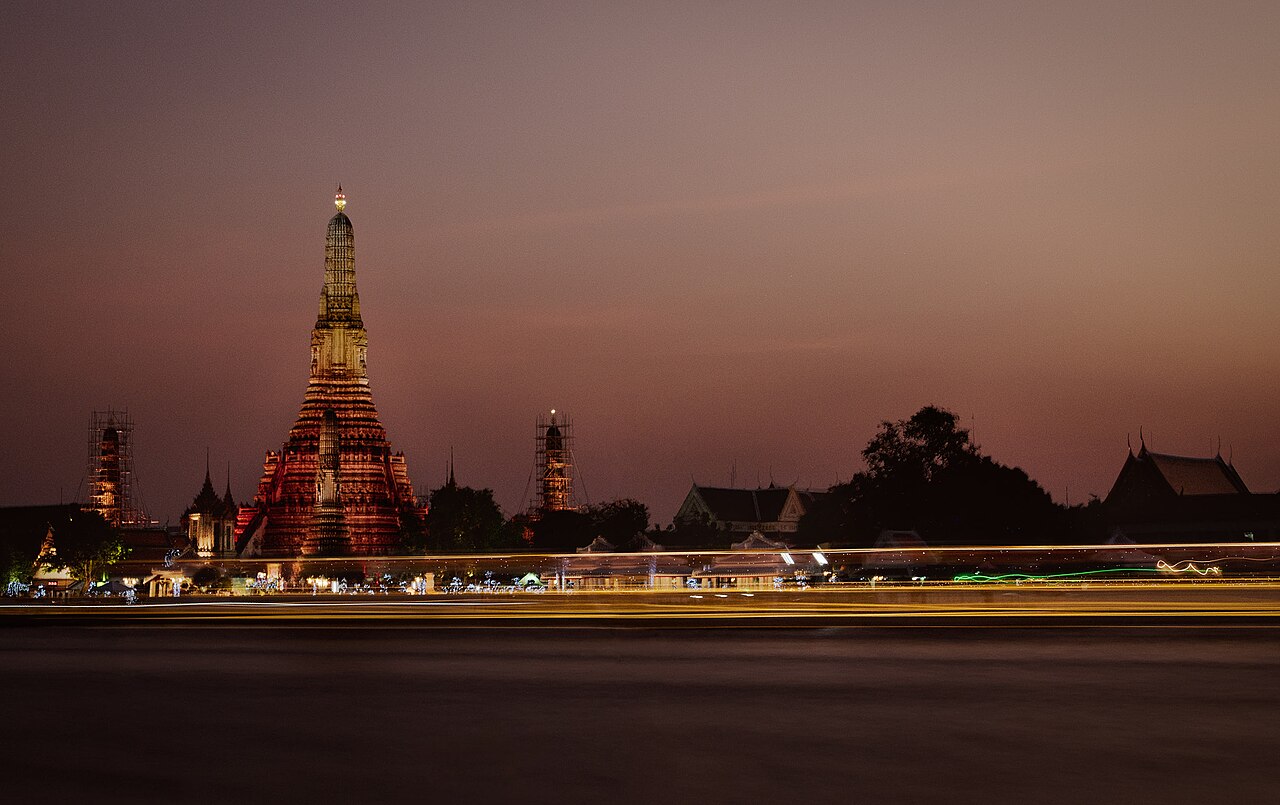
Wat Arun (Temple of Dawn)
Wikipedia Commons (CC BY-SA)
Phi Phi Islands & Limestone Karsts
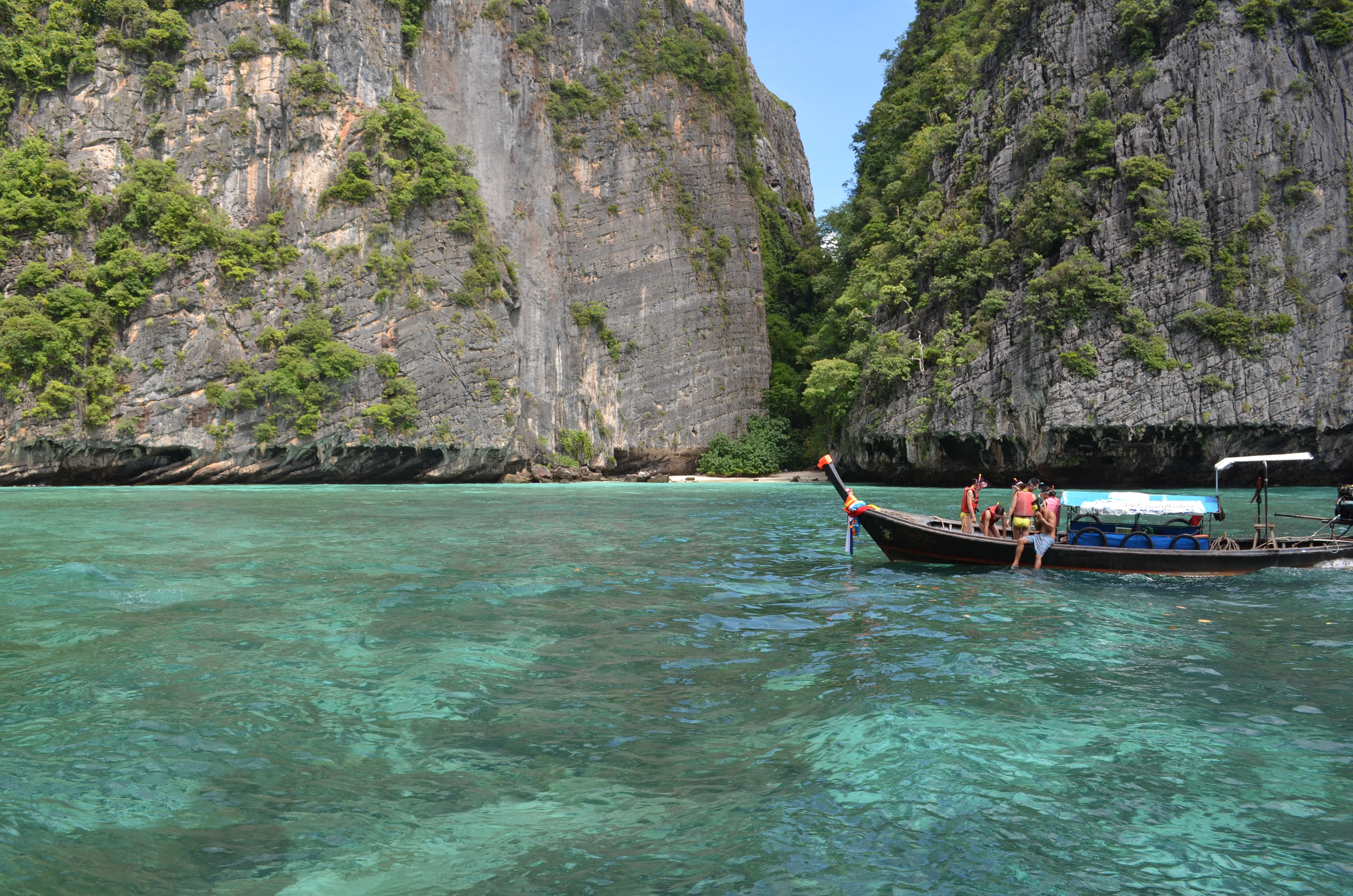
Phi Phi Islands
Wikipedia Commons (CC BY-SA)
Chiang Mai Mountain Temples
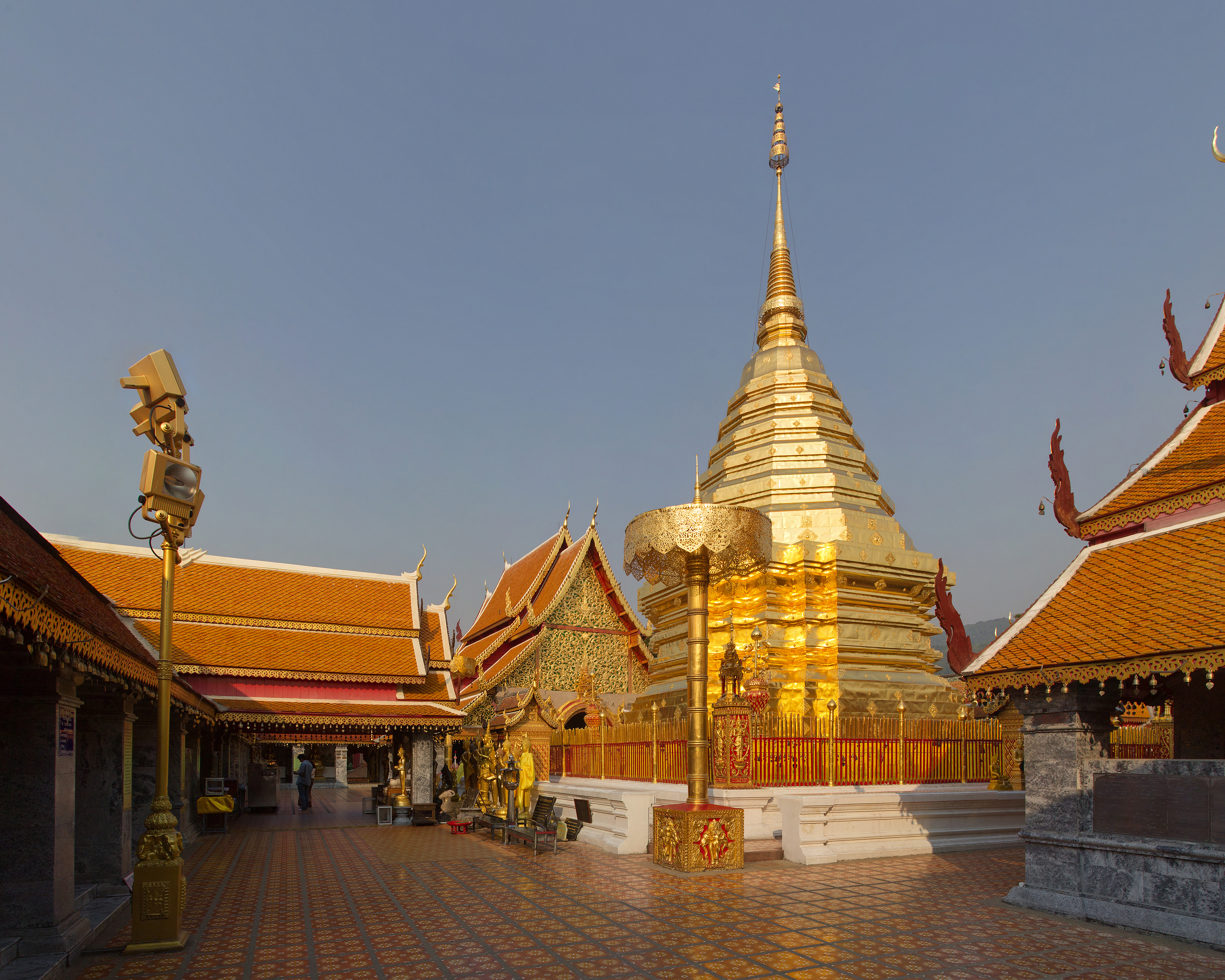
Doi Suthep
Wikipedia Commons (CC BY-SA)

Reclining Buddha & Sacred Statues
Wat Pho
Wikipedia Commons (CC BY-SA)

Floating Markets & Canal Life
Damnoen Saduak Floating Market
Wikipedia Commons (CC BY-SA)

Ethical Elephant Sanctuaries
Elephant Nature Park (Chiang Mai)
Wikipedia Commons (CC BY-SA)

Rainforest & Karst Lakes
Khao Sok National Park (Cheow Lan Lake)
Wikipedia Commons (CC BY-SA)
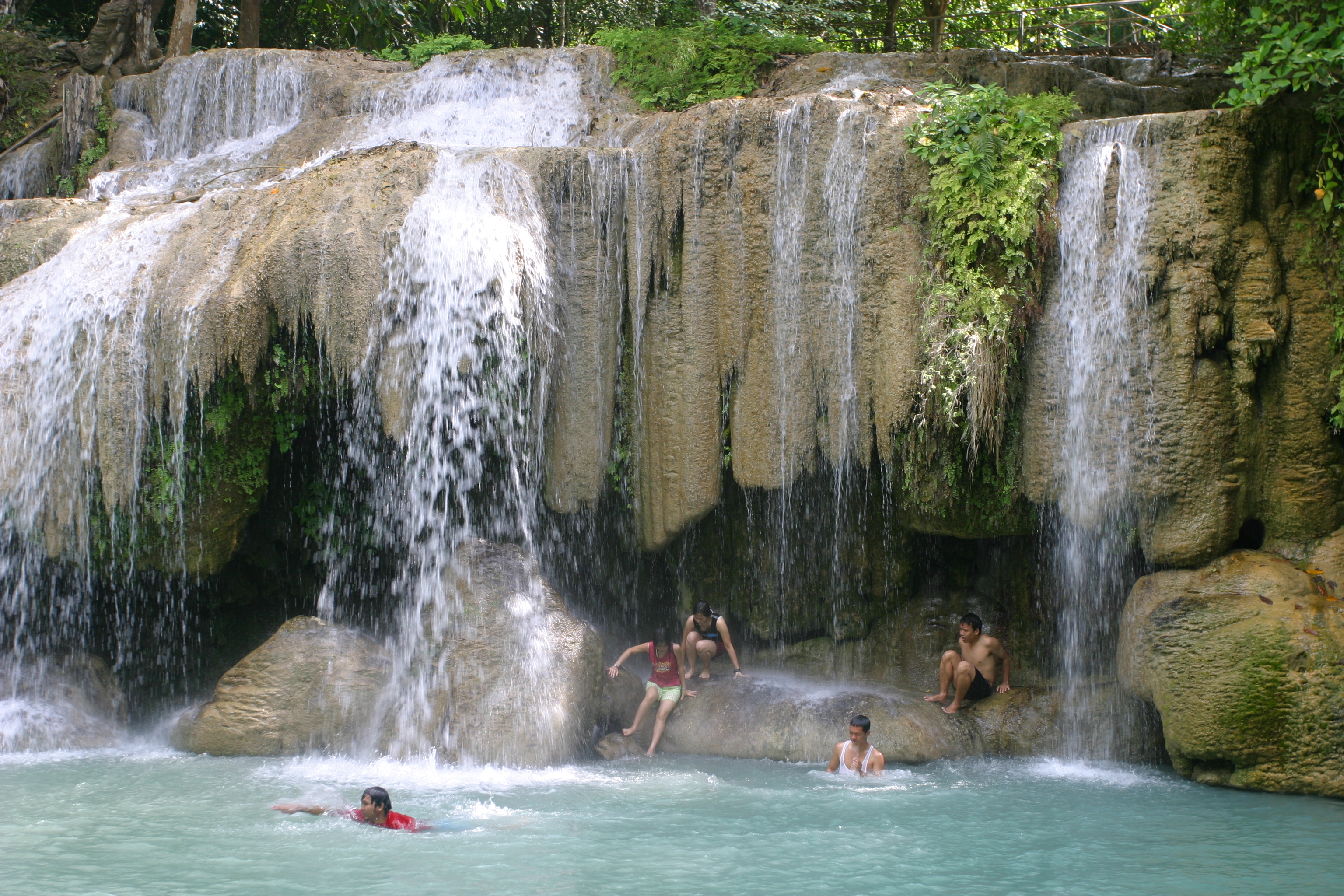
Turquoise Waterfalls & Jungle Pools
Erawan Falls (7-tier waterfall)
Wikipedia Commons (CC BY-SA)
Food guide

Som Tum
A fiery and refreshing green papaya salad, pounded in a mortar with chilies, fish sauce, lime juice, peanuts, and dried shrimp, offering an intense interplay of sweet, sour, salty, and spicy.
USD 1-3
Vyacheslav Argenberg (CC BY 4.0)
Khao Niao Mamuang
A beloved seasonal dessert featuring sweet glutinous rice infused with coconut milk, served with slices of ripe fresh mango and often drizzled with extra coconut cream and toasted sesame seeds.
USD 2-5
Dennis Wong from Hong Kong, Hong Kong (CC BY 2.0)
Pad Thai
This classic stir-fried rice noodle dish balances sweet tamarind, sour lime, savory fish sauce and crunchy peanuts, typically cooked to order from street carts.
USD 2-4
Takeaway (CC BY-SA 3.0)
Tom Yum Goong
This hot and sour clear soup is brilliantly flavored with fragrant lemongrass, galangal, kaffir lime leaves, chilies and generous fresh prawns.
USD 3-7
Takeaway (CC BY-SA 3.0)
Khao Soi
A rich, creamy Northern Thai curry noodle soup featuring both soft egg noodles immersed in a coconut-chili broth and a topping of crispy fried egg noodles, usually with chicken or beef.
Nimmanhaemin / Old City · USD 2-5
Takeaway (CC BY-SA 3.0)Shopping guide

Gourmet Dried Mango & Exotic Fruit Snacks
Locally sourced, high-quality dried fruits like mango, durian, and jackfruit offer a delicious and easily transportable taste of Thailand.
Foodland Supermarket, Tops Market, Or Tor Kor Market · USD 3-25
Asabengurtza (CC BY-SA 3.0)
Premium Thai Spa Products
High-quality essential oils, massage balms, and natural skincare products using local ingredients offer a luxurious spa experience at home.
Harnn & Thann stores (found in major malls like CentralWorld), local apothecaries · USD 10-80
Sarah Stierch (CC BY 4.0)
Thai Silk Fabric & Products
For its unique texture and colors, best purchased from direct weavers or established brands to ensure authenticity.
Jim Thompson House Shop, Queen Sirikit Department Store, fabric shops in Yaowarat · USD 20-300
JJ Harrison (https://www.jjharrison.com.au/) (CC BY-SA 3.0)
Bespoke Tailored Clothing
Get custom suits, shirts, or dresses made with quality fabrics at a fraction of Western prices, but allow for at least two fittings over a few days.
Rajawongse Clothier (Sukhumvit Soi 4), Prince Fashion (Sukhumvit Soi 8) · USD 250-1,500
Dennis, Raymond S (Public domain)
Northern Thai Coffee Beans
High-quality Arabica coffee grown in the mountainous regions of Northern Thailand, offering distinct flavors not readily available abroad.
Ristr8to Coffee (Nimmanhaemin), The Baristro, local markets in Doi Suthep foothills · USD 8-30
MarkSweep (Public domain)
Hill Tribe Silver Jewelry
Intricate handcrafted silver pieces from Northern Thailand's hill tribes, often featuring unique designs and high silver content.
Chiang Mai Night Bazaar, Wualai Walking Street (Saturday evenings) · USD 15-150
anonymous (CC0)Festivals & timing
April 13-15
Songkran (Thai New Year)
The world's biggest water fight: entire cities turn into block parties with super-soakers, ice buckets, and powder. Joyful chaos, but transport snarls and hotel prices spike. Khao San Road and Chiang Mai's moat are ground zero.
Worth planning around
November (full moon)
Loy Krathong
Lantern festival: locals float candle-lit krathong baskets on rivers and release sky lanterns. Chiang Mai's Yi Peng (Northern Loy Krathong) is the most, with thousands of paper lanterns released simultaneously. Worth structuring a trip around.
Worth planning around
December - February
Cool / Dry Season
The high season for Thailand tourism: perfect beach weather, manageable humidity in Bangkok, cool nights in Chiang Mai. Book hotels 2-3 months ahead. Prices peak Dec 20 - Jan 5.
Worth planning around
March - October
Burning Season (North) + Monsoon (South)
Chiang Mai air quality drops to hazardous Feb-April from agricultural burning. Southern islands get monsoon rain Jun-Oct. The Gulf side (Koh Samui, Koh Phangan) is opposite; dry May-Sep. Plan island timing carefully.
Better to avoid
October-November
Vegetarian Festival (Phuket)
Nine days of Taoist-Chinese street processions in Phuket: fire walking, body piercing, street vegetarian food stalls. Intense and not for the squeamish. Concurrent festivals in Bangkok's Chinatown.
Worth planning around
Late December - Early January
Western New Year + Long Weekend
Beach resorts (Phuket, Koh Samui) hit peak occupancy and prices. Bangkok stays relatively normal. If you want islands during this window, book 4-6 months ahead; last-minute means villa-only pricing.
Live events & modern attractions
Beyond classic sightseeing — the show to book, the match to watch, the place that shows you the country's present.

Wikipedia Commons
🎭 Live performance · Pattaya / Bangkok
Alcazar Cabaret, Pattaya / Calypso, Bangkok
Thailand's famous ladyboy cabaret tradition — 90 minutes of choreographed Vegas-style numbers in 2,000-seat theatres. Alcazar in Pattaya is the longest-running; Calypso at Asiatique is the Bangkok pick.
When: Nightly · multiple shows
Wikipedia Commons
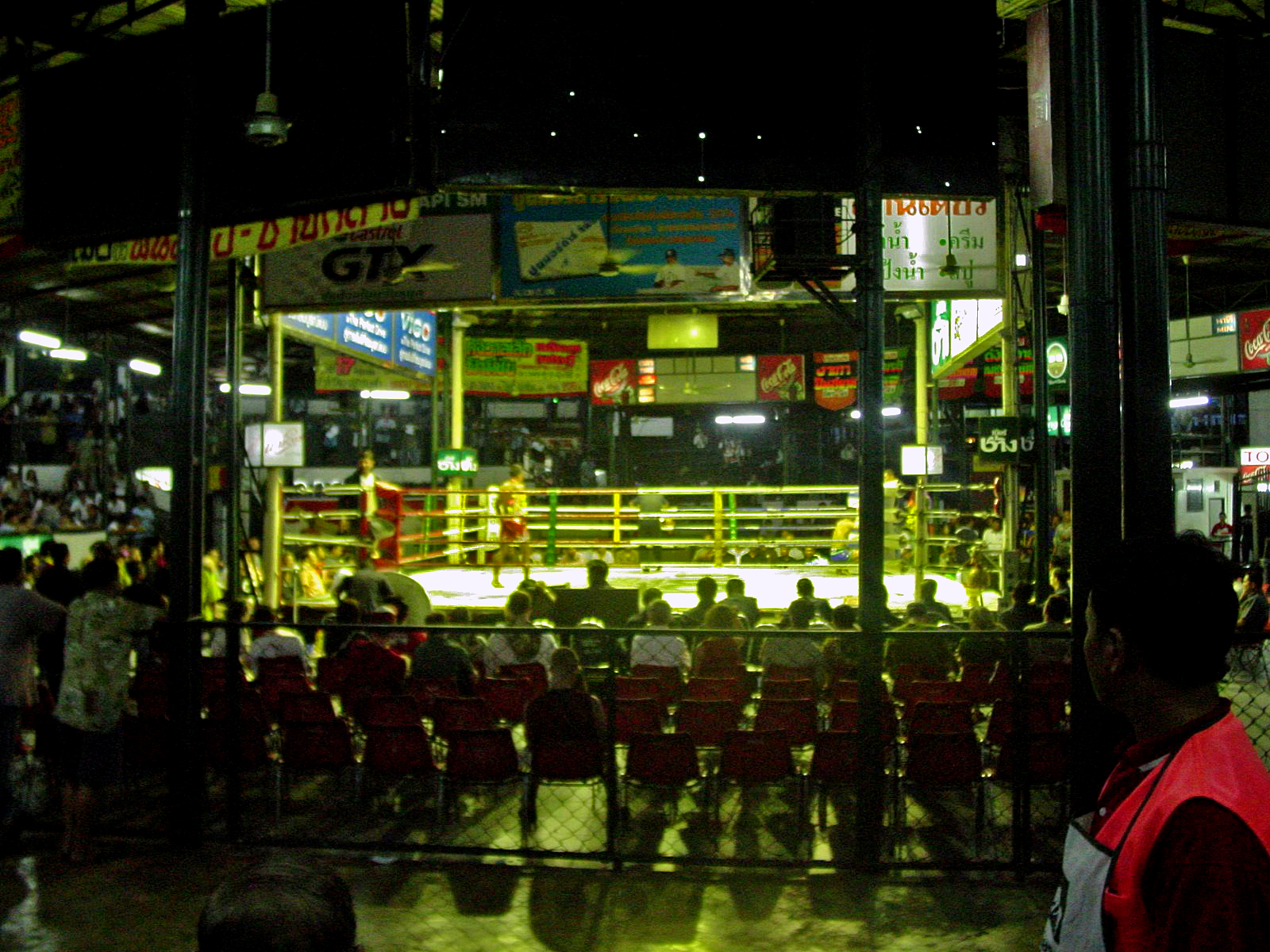
🏟️ Sport · Bangkok
Lumpinee Boxing Stadium / Rajadamnern Stadium
Muay Thai at the sport's two cathedrals — Lumpinee (modern, north Bangkok) and Rajadamnern (historic, old town). Tuesday and Friday nights at Rajadamnern, Tuesday and Friday at Lumpinee.
When: Tue + Fri evenings

Wikipedia Commons
🔬 Modern attraction · Samut Prakan (Bangkok)
Erawan Museum, Samut Prakan
A 43-metre bronze three-headed elephant standing over a museum of Thai cosmology — interior staircase that spirals up inside the elephant's body, plus a remarkable contemporary garden. Easy half-day from central Bangkok.
When: Daily · 9 AM–7 PM
Travel essentials
Connectivity & SIM
- 1-2-Call from AIS — 50 baht (SIM card only)Where: Any 7-Eleven shop
- Various Thai operators — Free (SIM card only)Where: Phuket International Airport (if arriving at a decent hour)
- Google Maps — Essential for navigation, public transport directions, and finding points of interest throughout Thailand.
- Grab — Dominant ride-hailing app for taxis, motorbikes, and food delivery in major cities like Bangkok and Chiang Mai.
Cultural notes
In Thailand, pointing with your feet or stepping over people is considered highly disrespectful; always use your hand to gesture, ideally with an open palm. When visiting temples (wats), ensure shoulders and knees are covered, and always remove your shoes before entering any prayer hall or designated sacred space. The head is considered the most sacred part of the body, so avoid touching people's heads. Do not touch or move images of Buddha, and show reverence by avoiding turning your back to them.
Safety
The number one cause of death for visitors to Thailand is motorcycle accidents, particularly on the often narrow, mountainous, and twisty roads of Phuket and Samui; always wear a helmet and avoid night travel. Strong currents are common on many Phuket beaches during the summer monsoon season (June-Oct), so heed warning flags to avoid drownings. Bangkok is surprisingly safe from violent crime, but be wary of individuals approaching you for unsolicited services, which are often scams, such as the 60,000 THB scam reported in Phuket. Solo female travelers should consider avoiding Pattaya as a general safety precaution.
What to pack
- DEET 30%+ mosquito repellent
- Lightweight long pants (sun, mosquitoes, temple modesty)
- Lightweight long-sleeved shirts (sun, mosquitoes, temple modesty)
- Wide-brimmed hat (intense tropical sun protection)
- Reef-safe sunscreen (protect marine parks)
- Small quick-dry towel (humidity, beach, temple visits)
- Rain poncho or lightweight jacket (monsoon season, sudden showers)
- B5,000-B10,000 cash (street food, markets, small vendors)
- Slip-on shoes (easy removal for temples and homes)
- Sarong or shawl (modesty for temples, beach cover-up)
- Waterproof phone pouch (beach, island trips, rainy season)
- Small dry bag (protect electronics on boat trips)
Electric Socket Guide(220V · 50Hz)
Socket Types
Two flat parallel pins (North America, Japan)
Two flat pins + round ground (North America)
Two round pins (most of Europe, South America)
Three round pins (Thailand)
Planning checklist
Lock the islands first.
December-February is high season: Koh Samui beach villas sell out 3 months ahead, Phi Phi's better hotels 6 weeks. Choose Andaman side (Phuket, Krabi, Phi Phi) Nov-Apr OR Gulf side (Koh Samui, Koh Phangan) May-Sep; they have opposite weather patterns.
Confirm your visa-exempt eligibility.
Most Western passports get 60 days visa-free (upgraded from 30 in 2024). Note: this is current as of mid-2026, but a reduction back to 30 days was approved in May 2026 and may take effect once gazetted, so verify before you travel via Thailand's official arrival portal tdac.immigration.go.th. Bring proof of onward travel; airlines have been refusing boarding without it. If you need longer, apply for a Tourist Visa (TR) before flying or extend at any Thai Immigration office for ฿1,900.
Install Grab and Bolt before you land.
Both work like Uber across Bangkok, Chiang Mai, Phuket, and Krabi. Metered taxis in tourist areas routinely refuse the meter; ride-hailing apps eliminate the haggling. Top up via international card before arrival.
Pre-book Bangkok hotels in Sukhumvit or near a BTS station.
Bangkok traffic is brutal; staying within walking distance of Sky Train (BTS) saves hours per day. Sukhumvit (Asok, Phrom Phong, Thong Lor) is the safe first-timer choice. Avoid Khao San Road unless you specifically want backpacker chaos.
Get an International Driving Permit before you scooter.
Thai law requires it. Police roadblocks in Phuket, Krabi, and Chiang Mai run all year: fine is ฿500-1000, but it also voids your travel insurance if you crash without one. Skip the scooter entirely if you've never ridden one; songtaews (shared trucks) are cheap and safe.
Pack a sarong or long pants for temples.
Shoulders and knees must be covered at all major temples. Phra Borom Maha Ratchawang (Grand Palace), Wat Pho, Wat Arun, Doi Suthep; all enforce. Rentals run out by mid-morning; bring your own.
Avoid Chiang Mai February-April unless you're committed.
Agricultural burning blankets the north in hazardous air (AQI 300+) for 8-10 weeks. Eyes water, lungs ache, the famous mountain views vanish. Shift north-Thailand trips to November-January or June-October instead.
Avoid these first-timer mistakes
Falling for the 'Grand Palace is closed' tuk-tuk scam
Tuk-tuk drivers near the Grand Palace tell you it's closed (it's not) and offer a 'special tour' that ends at gem shops where you're pressured to buy. The Palace is open daily 8:30 AM-3:30 PM. Walk in via the main gate or take a metered taxi.
Taking unmetered taxis
Always insist on the meter ('meter, please'); flat fares are 2-3× more. Better still, use Grab or Bolt apps (both work like Uber). Bangkok taxis that refuse the meter at Suvarnabhumi airport are routine scammers; walk to the official taxi queue downstairs.
Renting a scooter without a license
You technically need an International Driving Permit to ride legally. Cops in Phuket, Krabi, and Chiang Mai run road blocks targeting tourists; fine is ฿500. More importantly: rental shops scam returning customers with 'pre-existing damage' to take your passport-as-deposit. Pay ฿5000 cash deposit instead, photograph the scooter on rental, and never hand over your passport.
Visiting during Songkran without prep
April 13-15 is the Thai New Year water festival: fun if you want to be drenched constantly, miserable if you have plans. Hotel prices spike, transport gets messy, electronics in pockets die. Either plan around (April 1-10 or after 16) or lean in (bring waterproof phone case + water gun).
Disrespecting the monarchy
Lèse-majesté laws (insulting the royal family) carry up to 15 years in prison. This includes social media posts, even from outside Thailand. Don't make jokes, don't comment on politics, don't step on baht notes (the King's face is on them; kicking one is a real arrestable offense).
Drinking tap water
Not potable; bottled is everywhere (฿10-15). Use bottled for brushing teeth too in cheaper accommodations. Most mid-range hotels include filtered water dispensers or sealed bottles in the room. Ice in restaurants is fine (commercial ice, not homemade).
Wearing shorts to temples
Shoulders and knees must be covered at all major temples (Grand Palace, Wat Pho, Wat Arun, Doi Suthep). Wraps are sometimes rented for ฿200 at entrances but they run out. Pack a sarong or light long pants. Remove shoes before entering temple buildings.
Frequently Asked Questions
Five days fits Bangkok alone, seven adds Phi Phi or Krabi, and ten to fourteen adds Chiang Mai in the north. Check the visa rules and Songkran dates before you book. Budget about $30-50 a day as a backpacker, $70-130 mid-range, or $300+ for luxury.
Seven to ten days is the sweet spot: three days in Bangkok, three-four on an island (Phi Phi or Krabi), plus travel days. Add Chiang Mai for 14 days. Five days works for Bangkok alone or one island. Trying to do Bangkok + Chiang Mai + Phuket + Phi Phi in seven days means most days are airport days; pick two regions max for shorter trips.
November-February (cool, dry) is universally the best season: comfortable temperatures everywhere, low rainfall, but also the highest prices and book-ahead crowds. March-May is brutally hot (35°C+), and Feb-April has hazardous air quality in Chiang Mai from agricultural burning. June-October is rainy in the south but the Gulf islands (Koh Samui, Koh Phangan) are actually drier. Avoid Songkran (April 13-15) unless you want to be drenched.
Most Western passport holders (US, UK, EU, Canada, Australia) get 30-60 days visa-free on arrival: no application, just a passport stamp. As of 2024, the visa-exempt period was extended to 60 days for 93 nationalities (as of mid-2026; a reduction to 30 days was approved in May 2026 and may take effect once gazetted, so verify before you travel via Thailand's official arrival portal tdac.immigration.go.th). Need longer? Apply for a 60-day Tourist Visa (TR) before you fly, or extend on-the-ground at any Immigration office for ฿1900. Always have onward proof-of-exit booked.
For long distances, fly. Domestic carriers (AirAsia, Nok Air, Bangkok Airways, Thai Lion) connect Bangkok to Chiang Mai (1.5 hr, ฿800-2500) and Phuket/Krabi/Surat Thani (1.5 hr, ฿1500-3500). Trains are slow but scenic (Bangkok-Chiang Mai overnight sleeper, 12-15 hr). Buses are cheap for short hops; VIP class is comfortable. Inside cities use Grab/Bolt apps over metered taxis.
Cards are accepted at major hotels, malls, and 7-Eleven; cash is king everywhere else: markets, street food, small restaurants, longtail boats. Withdraw ฿5,000-10,000 at a time (around ฿220 foreign-card ATM fee per transaction, though it varies by ATM operator; don't make small withdrawals). Apple Pay and Google Pay work where cards do. Most hostels and guesthouses are cash-only on check-in.
Very safe by global standards: violent crime against tourists is rare, women routinely travel solo, English is spoken in tourist areas. The real risks are scooter accidents (the #1 cause of tourist deaths; wear a helmet, get an IDP), scams (Grand Palace tuk-tuks, gem shops, jet-ski 'damage'), and sketchy bucket cocktails at full moon parties. Don't carry valuables on display; use ATMs inside banks/malls, not on the street.
Eat regionally and from street stalls. Bangkok: pad thai (street version, not tourist restaurants), boat noodles, somtam, mango sticky rice, jok rice porridge for breakfast. Chiang Mai: khao soi (curry noodles), sai oua (northern sausage), nam prik ong dip. Southern: massaman curry, tom kha gai, fresh seafood at island night markets. Bangkok's Michelin Bib Gourmand stalls (like Jay Fai) are worth the queue.
Yes. Thailand has one of the most developed cooking-class scenes anywhere. Half-day classes (฿1,500-2,500) usually include a market visit, hands-on prep of 4-5 dishes (curry paste from scratch, pad thai, tom yum, mango sticky rice), and a recipe book to take home. Chiang Mai (Thai Farm Cooking, Asia Scenic) and Bangkok (Silom Cooking School, Blue Elephant) have the most polished operators. Book a day ahead.