Azores travel guide cover photo

Azores Travel Guide: São Miguel, the Crater Lakes, and Beyond

A first-timer's guide to the Azores: how to split your time across the islands, when the weather and the hydrangeas cooperate, why you fly between island groups and drive within them, and the entry rules everyone gets wrong.

Last updated June 20, 2026 · By Namrata

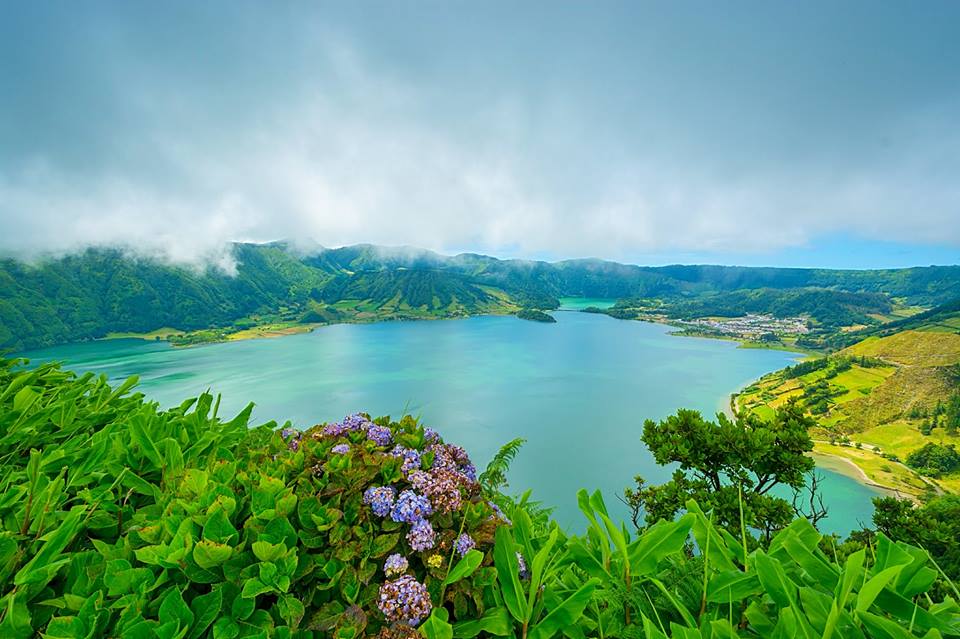
The Azores pack an outsized range into nine small islands marooned in the mid-Atlantic, a thousand miles from Lisbon. São Miguel, the biggest, holds the images that pull people here: the green-and-blue twin lakes filling the Sete Cidades crater, the steaming caldera at Furnas where stew cooks in the ground, and the high crater lake of Lagoa do Fogo. Sail or fly on and the mood shifts. Terceira has the pastel UNESCO streets of Angra do Heroísmo, Faial has the painted transatlantic marina at Horta, and Pico has the highest mountain in Portugal rising straight from lava-walled vineyards. Most first-timers picture one green island and miss how distinct each one is.

The thing first-timers underestimate most is the logistics that come with an archipelago. You fly between the island groups on the single regional carrier and rent a fresh car on each island, since the crater lakes, hot springs, and trailheads sit far from the sparse buses. Ferries help only across the central islands and a couple of close pairs, never to São Miguel. The weather runs the show: cloud swallows the crater rims by late morning, rain arrives in any month, and boat trips cancel in swell. The hydrangeas peak in July, the migrating whales pass from March to June, and the summer festivals fill the towns. None of it is hard; it just rewards not trying to see everything.

This guide is the layer that sits above the day-by-day itineraries. Decide how many islands you can realistically fit (one island deep beats four in a rush), match the season to what you want most (June for the balance of weather, whales, and early hydrangeas), and book the inter-island flights, the whale-watching trips, and the Furnas cozido before you arrive. Do that and you'll spend your days at the crater lakes, in the hot springs, and on the water you came for, not stuck at an airport between islands.

Choose your trip length

5 days

São Miguel core

São Miguel as a single base for the twin crater lakes at Sete Cidades, the green caldera and hot springs at Furnas, the Lagoa do Fogo crater lake, and a whale-watching trip from Ponta Delgada. The tightest first trip, one island, no inter-island flights.

7 days

São Miguel + a second island

Three full days on São Miguel, then a short SATA flight to Terceira for the painted streets of Angra do Heroísmo, or to Faial and Pico for the marina at Horta and the volcano climb. The classic one-week shape that adds a second island without rushing.

See the sample itinerary →

10 days

Three islands, eastern and central

São Miguel, then the central triangle of Faial, Pico, and São Jorge linked by the year-round and summer ferries, with slack days for the weather to turn. The fuller archipelago, mixing the big crater lakes with the wine terraces and the highest peak in Portugal.

The flagship itinerary

Best time to visit
Spring (April to June) and early autumn (September to October) are ideal. Temperatures range from 18-25 degrees Celsius. Crowds are manageable, and the weather is pleasant for walking the hilly streets. Summers (July-August) are very warm, often exceeding 30 degrees Celsius, with large crowds. Winters (November-March) are mild, around 10-15 degrees Celsius, but bring more wind and rain, particularly from December to February.
Currency
Euro (EUR)
Visa
US, UK, EU, Australian, Canadian citizens can enter Portugal visa-free for up to 90 days within any 180-day period. Indian citizens typically need a Schengen visa. Your passport must be valid for at least three months beyond your intended departure date from the Schengen Area. Other nationalities should check the official Portuguese embassy or consulate website for specific requirements.
Tipping
Tipping is not mandatory in Portugal, but it is appreciated for good service. For restaurants, rounding up the bill or leaving 5-10% is common. For taxis, round up to the nearest Euro. Hotel staff, like bellhops, might receive a small tip of 1-2 EUR.
Emergency
112 (police, fire, ambulance)

Estimated daily cost

Backpacker

€55-95/day

Guesthouse rooms or a hostel bed, supermarket and bakery meals, a shared rental car, free thermal pools and trailheads. Doable, though the inter-island SATA flights and a solo car rental push a multi-island trip higher. Prices as of 2026; verify current rates.

Mid-range

€110-190/day

A guesthouse or 3★ hotel, a small rental car on each island, a whale-watching trip, a mix of self-catering and grilled-fish or cozido dinners. The sweet spot. Inter-island flights and the Furnas thermal-park fees add up. Prices as of 2026; verify current rates.

Luxury

€350+/day

The design hotels and converted manor houses, a private guide, a 4x4, helicopter or private boat outings, and tasting menus built on local beef, tea, and pineapple. The high end here buys access and food, not glamour. Prices as of 2026; verify current rates.

Jan
O
Feb
O
Mar
S
Apr
S
May
S
Jun
P
Jul
P
Aug
P
Sep
S
Oct
S
Nov
O
Dec
O
Off-peak (cheaper) Shoulder Peak (priciest)Baseline: January

Festivals & timing

May 8-14

Festas do Senhor Santo Cristo dos Milagres (Ponta Delgada)

The largest religious festival in the Azores, centered on the Sanctuary of Nossa Senhora da Esperança in Ponta Delgada, with the streets carpeted in flowers for the main procession. In 2026 it runs May 8-14, with the great procession on Sunday May 10. Ponta Delgada fills and rooms sell out; verify the exact dates before booking.

Worth planning around

First week of August

Semana do Mar / Sea Week (Horta, Faial)

One of Portugal's biggest nautical festivals, built around Horta's harbor: yacht racing, regattas, watersports, crafts, and nightly concerts, with the channel between Faial and Pico full of boats. It usually begins on the first Sunday of August. Book Faial accommodation early and verify the dates.

Worth planning around

June

Festas de São João (Vila do Porto and island-wide)

The June saint's festivals bring street parties, bonfires, marching bands, and grilled food to towns across the islands around St. John's day (Jun 24). Santa Maria's Vila do Porto is especially lively. A good evening if you're in the islands in late June.

June-July

Espírito Santo (Holy Spirit) festivals

The Azores' most distinctive tradition: village empires (impérios) hand out free soup and bread in the weeks after Pentecost, with processions, brass bands, and crowned children. They roll across the islands through early summer rather than on one fixed date. Look for the small painted império chapels in every village.

Late June

Sanjoaninas (Angra do Heroísmo, Terceira)

Terceira's biggest street festival, a week of parades, concerts, bullfights, and the island's famous tourada à corda (bull-on-a-rope running through the streets). Angra is packed and loud. Verify the exact dates before booking, and decide whether the bull-running is for you.

Worth planning around

September

Festas de São Miguel (Vila Franca do Campo)

The patron-saint celebrations of the island of São Miguel, in the old capital of Vila Franca do Campo, with religious processions, folk music, and a fair. A quieter, more local-feeling event after the summer peak. Check the current program for dates.

Major cities at a glance

Ponta Delgada
Diego Delso, Wikimedia Commons (CC BY-SA 4.0)

Ponta Delgada

2 days

Best for the main gateway + São Miguel base

The largest city in the Azores and the arrival point for almost every trip, on the south coast of São Miguel. Black-and-white cobbled streets, the triple-arched Portas da Cidade, the marina, and the convent church of the Senhor Santo Cristo. The base for whale-watching boats and day drives to the crater lakes.

Sete Cidades
Wikipedia Commons (CC BY-SA)

Sete Cidades

1 day

Best for the twin crater lakes

The green-and-blue twin lakes that fill a vast volcanic crater on São Miguel's western end, seen from the Vista do Rei and Boca do Inferno overlooks. A sleepy village sits at the water's edge, with kayak rentals and a lakeshore trail. Go early, before the cloud rolls over the rim by mid-morning.

Furnas
Wikipedia Commons (CC BY-SA)

Furnas

1 day

Best for hot springs + volcanic cooking

A spa village in a green caldera on São Miguel's east, ringed by steaming fumaroles and bubbling mud pots. The cozido stew cooked underground in the lakeside vents, the iron-rich hot pool at Terra Nostra Park, and the botanical gardens. The slowest, most restorative day of a São Miguel trip.

Angra do Heroísmo
Diego Delso, Wikimedia Commons (CC BY-SA 4.0)

Angra do Heroísmo

1-2 days

Best for Terceira + a UNESCO old town

The historic capital of Terceira and a UNESCO World Heritage town, with a grid of pastel houses, the Monte Brasil headland, and a harbor that was a key Atlantic stop for centuries. The base for Terceira's lava-tube caves, the Algar do Carvão volcanic chimney, and the island's bull-running street festivals.

Horta
Bybbisch94, Wikimedia Commons (CC BY-SA 4.0)

Horta

1-2 days

Best for Faial + the transatlantic marina

The harbor town of Faial and a legendary stop for sailors crossing the Atlantic, its marina walls painted with the crests of passing crews. Peter Café Sport for a gin, the blue hydrangea-lined roads, and the moonscape of the Capelinhos volcano on the western tip. The springboard for the ferry to Pico.

Lagoa
Wikipedia Commons (CC BY-SA)

Lagoa

Half day

Best for São Miguel's south-coast pools

A small south-coast town on São Miguel between Ponta Delgada and the airport, known for its natural sea pools and the lava-rock bathing area at the harbor. A working ceramics tradition, a calmer waterfront than the capital, and an easy stop on the drive between the crater lakes and Furnas.

Top things to do in Azores

Explore Iconic Volcanic Crater Lakes

Explore Iconic Volcanic Crater Lakes

Lagoa das Sete Cidades · Lagoa do Fogo · Lagoa das Furnas

Lacobrigo (CC BY-SA 4.0

Discover Geothermal Hot Springs and Thermal Parks

Discover Geothermal Hot Springs and Thermal Parks

Parque Terra Nostra · Caldeira Velha · Poca da Dona Beija

Rolfcosar (CC BY-SA 4.0

Hike and Summit Mount Pico

Hike and Summit Mount Pico

Mount Pico Trail · Pico Wine Region

Kogo (GFDL

Explore Historic Angra do Heroismo and Ponta Delgada

Explore Historic Angra do Heroismo and Ponta Delgada

Historic Centre of Angra do Heroismo · Portas da Cidade · Forte de Sao Braz

Diego Delso (CC BY-SA 4.0

A Whaling Museum and Maritime Heritage Site

A Whaling Museum and Maritime Heritage Site

Museu da Industria Baleeira · Museu dos Botes Baleeiros · Museu Maritimo da Horta

No machine-readable author provided. Barao78 assumed (based on copyright claims). (CC BY 2.5

A Museum of Azorean Ethnography and Local Crafts

A Museum of Azorean Ethnography and Local Crafts

Museu Carlos Machado · Centro de Interpretacao da Cultura do Ananas · Museu de Angra do Heroismo

Dr. Thomas Liptak (CC BY-SA 4.0

A Historic Village Walk and Traditional Architecture Exploration

A Historic Village Walk and Traditional Architecture Exploration

Vila Franca do Campo · Nordeste · Ribeira Grande

Navin75 (CC BY-SA 2.0

A Whale and Dolphin Watching Expedition

A Whale and Dolphin Watching Expedition

Futurismo Azores Whale Watching · Pico Sport · Terra Azul

European Space Agency (CC BY-SA 3.0 igo

Discover Unique Coastal Geological Formations

Discover Unique Coastal Geological Formations

Miradouro da Lua · Rocha dos Bordoes · Faja Grande

Iamdelcioborges (CC BY 4.0

Food guide

Azores cuisine leans into its volcanic and coastal identity with hearty stews cooked underground and abundant fresh seafood. Ponta Delgada, especially around the historic center, offers the most dining options from tascas to markets. Look for local cheese and fruit preserves as hyper-local souvenirs at small shops.

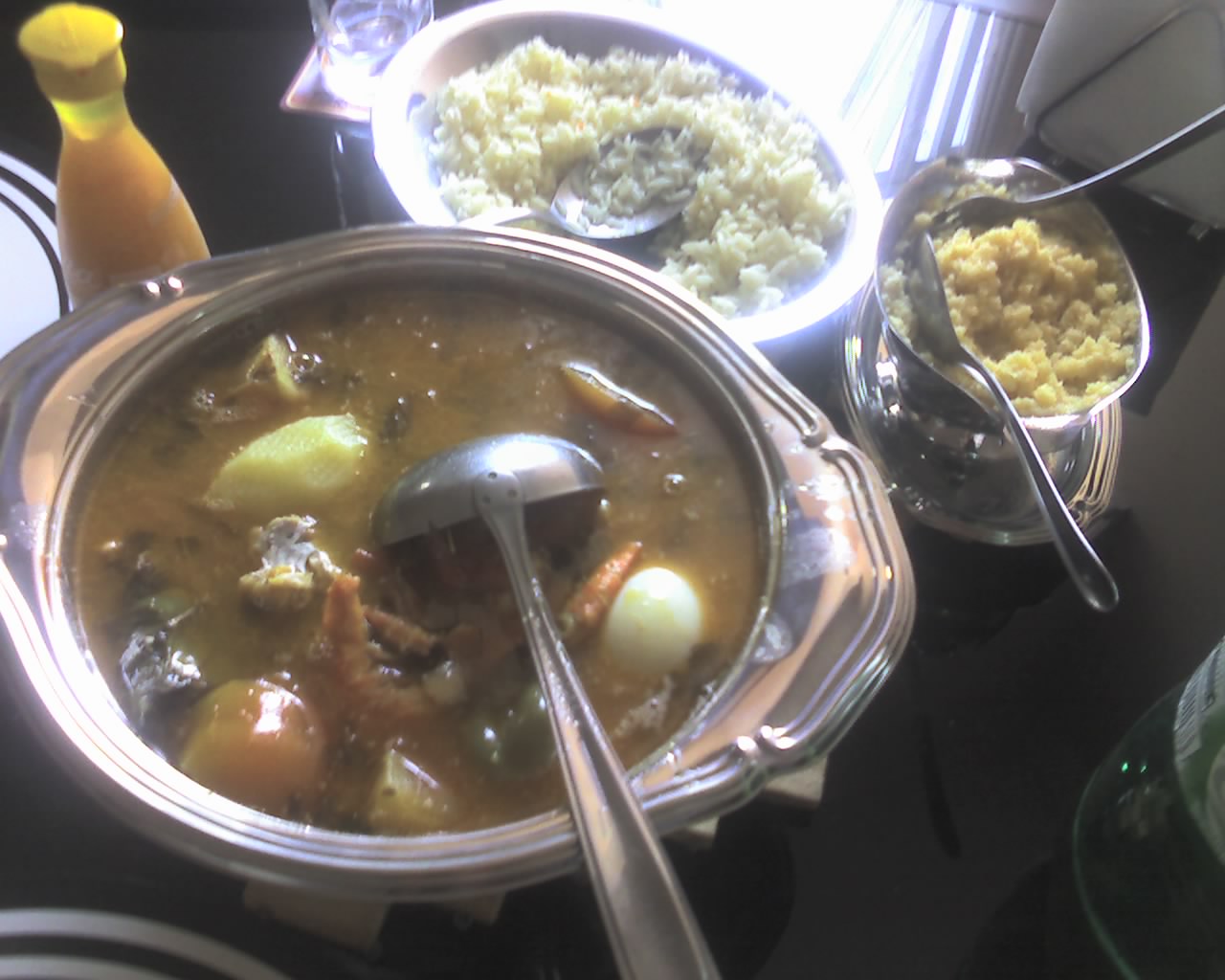
Caldeirada de Peixe

Caldeirada de Peixe

A flavorful Portuguese fish stew, a staple along the coast, featuring a variety of local fish and shellfish simmered with vegetables and herbs.

17 undefined

Bolo Levedo

Bolo Levedo

A slightly sweet, fluffy, and dense griddle-baked bread, perfect for breakfast with butter or as a sandwich bread, found across the islands.

1 undefined

Ananas dos Acores

Ananas dos Acores

The Azorean pineapple is a small, intensely sweet, and aromatic fruit, grown in greenhouses on Sao Miguel island, far surpassing mainland varieties.

4 undefined

Queijo da Ilha

Queijo da Ilha

A semi-hard, mature cheese from Sao Jorge island, known for its piquant, slightly spicy flavor, often enjoyed as a snack or appetizer.

Sao Jorge · 6 undefined

Cozido das Furnas

Cozido das Furnas

A unique Azorean stew slow-cooked for hours by volcanic steam underground in Furnas Valley, resulting in incredibly tender meats and vegetables.

Furnas Valley · 20 undefined

Shopping guide

Shopping in the Azores focuses on distinct local products and traditional crafts, often tied to the islands' volcanic nature and agricultural heritage. You'll find the best quality and value in specialized local shops and direct from producers, especially for food items and ceramics. Avoid generic souvenir shops found in main tourist areas; seek out artisan workshops and markets for authentic finds.

Azorean Tea (Cha Gorreana or Porto Formoso)

These are the only commercial tea plantations in Europe, producing distinctively mild and aromatic green and black teas.

Gorreana Tea Plantation or Porto Formoso Tea Plantation; local supermarkets also carry it. · 10 undefined

Ananas dos Acores Liqueur

Made from the famously sweet and distinct Azorean pineapple, this liqueur offers a unique taste of the islands.

Ananas de Santo Antonio plantation shop; larger supermarkets and liquor stores. · 18 undefined

Queijo de Sao Jorge (Sao Jorge Cheese)

A firm, aged cow's milk cheese with a piquant flavor, unique to Sao Jorge island, often aged for several months.

Cooperativa Agricola de Laticinios de Sao Jorge (CALF); specialized cheese shops across the islands. · 25 undefined

Figueira da Foz Wickerwork (Vimeiro)

Beautifully woven baskets, hats, and decorative items made from willow or wicker, showcasing a traditional island craft.

Artesanato Sao Jose in Ponta Delgada; smaller craft shops in rural towns. · 30 undefined

Ceramica de Lagoa

Hand-painted pottery from Lagoa on Sao Miguel features distinctive blue and white patterns, often depicting local flora and fauna.

Ceramica Vieira in Lagoa; artisan shops in Ponta Delgada. · 35 undefined

Azorean Embroidery (Bordado)

Delicate, hand-stitched linens, often featuring floral motifs or traditional patterns, represent a cherished Azorean craft.

Artesanato Sao Jose in Ponta Delgada; local craft fairs. · 50 undefined

Travel essentials

Connectivity & SIM

Wi-Fi: Free Wi-Fi is available at Lisbon Airport ('_VINCI Airports WiFi'). Most hotels, cafes, and restaurants offer free Wi-Fi for customers. Public Wi-Fi spots can be found in some city squares and shopping centers.
SIM options
  • MEO, NOS, or Vodafone physical SIMAround 15-25 EUR for 10-15GB over 15-30 days
    Where: Lisbon Airport arrivals, carrier stores in shopping malls (e.g., Colombo, Vasco da Gama)
  • Airalo eSIMFrom $5 for 1GB / 7 days to $25 for 10GB / 30 days
    Where: Online purchase and activation before arrival
Apps to install
  • Google MapsEssential for walking, public transport directions, and finding specific addresses on Lisbon's hilly streets.
  • MoovitProvides real-time public transit information for buses, trams, metro, and trains across Lisbon.
  • BoltA common ride-hailing app in Lisbon, often cheaper than taxis, for convenient travel.
  • MyTaxi (Free Now)Another popular ride-hailing app, helpful for booking traditional taxis via your phone.
Tip: While 4G and 5G coverage is widespread in Lisbon, older buildings and underground areas (like some metro stations) can have spotty signal. If relying on your phone for navigation, download offline maps.

Cultural notes

When entering a small shop, cafe, or elevator, it's polite to say 'Bom dia' (good morning) or 'Boa tarde' (good afternoon). When ordering coffee in a cafe, simply ask for 'um cafe' for an espresso; 'bica' is also common. Always try to speak a few words of Portuguese, even 'Obrigado/a' (thank you), as locals appreciate the effort. Meal times are typically later than in many other countries, with dinner often starting after 8pm.

Safety

Lisbon is generally safe, but pickpocketing is common on crowded public transport like Tram 28 and at train stations like Cais do Sodre. Be cautious in the alleys of Bairro Alto and Cais do Sodre late at night due to risk of mugging; stick to well-lit, busy streets. Always keep your drink in sight at nightclubs to prevent drink spiking. For emergencies, dial 112 for police, fire, or medical assistance.

What to pack

  • Comfortable walking shoes (good grip)
  • Layered clothing (temperatures can shift)
  • Lightweight rain jacket or compact umbrella
  • Small cross-body bag (keep valuables secure)
  • Portable power bank (for phone navigation)
  • Sunscreen (strong sun, even in spring/fall)
  • Refillable water bottle (stay hydrated on hills)
  • Swimsuit (if visiting beaches or hotel pools)
  • Light scarf or pashmina (for cool evenings)
  • Travel adapter (Type F - two round pins)

Travel tips

  • Purchase a Viva Viagem card at any metro station vending machine for 0.50 EUR — load it with 'zapping' credit for cheapest metro, bus, and tram fares.
  • Ride Tram 28 early in the morning (before 9am) or late evening (after 7pm) from its starting point at Campo Ourique to avoid peak crowds and pickpockets.
  • Always validate your Viva Viagem card by tapping it on the sensor when entering public transport, even if gates are open on buses or trams.
  • Book tickets for popular attractions like Jeronimos Monastery or Belem Tower online at least 24 hours in advance to skip long lines.
  • Wear sturdy, comfortable shoes with good grip — Lisbon is built on seven hills, and many streets are cobbled and steep.
  • Use Bolt or MyTaxi (Free Now) apps for rides; street taxis are generally safe but may charge higher 'foreigner' rates without the app.
  • Visit Pasteis de Belem first thing in the morning (9am) to experience the original custard tarts hot from the oven with shorter queues.
  • Check daily for road closures or public transport strikes if driving or using specific routes; traffic can change quickly.

Electric Socket Guide

Socket Types

Type C - Europlug

Two round pins (most of Europe, South America)

Type F - Schuko

Two round pins + side earth clips (Germany, Europe)

Voltage

230V

Frequency

50Hz

Planning checklist

  1. Decide how many islands you can really fit.

    A first trip is better spent five days deep on São Miguel than spread across four islands. Add a second island only with seven days, a third only with ten or more, since every hop costs the better part of a day in flights and car swaps.

  2. Book inter-island flights early and plan around the flight map.

    SATA Air Açores is the only carrier between the islands, and seats and fares move with demand. Ferries link Faial-Pico and Flores-Corvo year-round and the central group in summer, but never reach São Miguel, so route island links around the flights.

  3. Rent a car on every island and reserve for summer.

    The crater lakes, hot springs, viewpoints, and hiking trailheads are scattered and the buses are slow, so a small rental car is close to essential on each island. Return it before each flight, re-rent on arrival, and book ahead for July and August, when fleets sell out.

  4. Go to the high viewpoints first thing.

    The Sete Cidades and Lagoa do Fogo crater rims cloud over by late morning on many days, even in summer. Drive up early for the clear views, keep plans flexible, and carry a rain shell whatever the forecast says, because the weather flips by the hour.

  5. Book the whale-watching trip and the Furnas cozido ahead.

    A boat from Ponta Delgada or Lajes do Pico is a half-day highlight, but it fills in summer and cancels in rough seas, so reserve early and keep a backup day. The underground cozido in Furnas must be ordered a day in advance, so book it when you set your Furnas day.

  6. Travel in June if you can, and carry some cash.

    June balances stable weather, good whale chances, early hydrangeas, and smaller crowds than July and August. Pack for rain in any month, bring a dark swimsuit for the iron-rich thermal pools, and keep some euro cash for the village cafés, markets, and pool kiosks that prefer it.

Avoid these first-timer mistakes

  • Trying to see too many islands in one trip

    There are nine islands, and the urge is to island-hop hard. Each hop means a SATA flight or a ferry, a car return and a new rental, and a check-in, which eats half a day. A first trip is better spent deep on São Miguel plus one other island than spread thin across four. Add islands on a return trip, not by rushing.

  • Assuming you can ferry between any two islands

    Ferries are reliable only between Faial and Pico and between Flores and Corvo year-round, with seasonal summer links across the central group (Terceira, Graciosa, São Jorge, Faial, Pico). There is no ferry to or from São Miguel and Santa Maria in the eastern group, so reaching them means a SATA flight. Plan island links around the flight map, not the sea.

  • Not renting a car on each island

    The crater lakes, hot springs, viewpoints, and trailheads are scattered and the buses are sparse and slow. A small rental car is close to essential on every island you visit, returned before each flight and re-rented on arrival. Book ahead for July and August, when island fleets sell out.

  • Underestimating the weather and the cloud

    The Azores sit in the mid-Atlantic, and the weather changes by the hour and by the altitude. The Sete Cidades and Lagoa do Fogo crater rims cloud over by late morning on many days, even in summer. Go to the high viewpoints first thing, keep plans flexible, and pack a rain shell whatever the forecast says.

  • Skipping the whale-watching trip

    The waters off the Azores are among the best in the world for whales and dolphins, with resident sperm whales and dolphins year-round and the big migrating baleen whales passing March to June. A boat trip from Ponta Delgada or Lajes do Pico is a highlight worth a half-day. Book ahead in summer and keep a backup day, as trips cancel in rough seas.

  • Booking the underground cozido too late

    Furnas's signature dish is a meat-and-vegetable stew buried and slow-cooked for hours in the volcanic ground by the lake. Restaurants that serve it need the pot ordered a day ahead, and the best tables fill in summer. Reserve the cozido when you set your Furnas day, not on arrival.

  • Carrying only cards in the small villages

    Ponta Delgada, Angra, and the towns take cards everywhere, but small village cafés, market stalls, some thermal-pool kiosks, and a few rural guesthouses can be cash-preferring. Carry some euro cash, especially off São Miguel and on day trips into the interior.

Frequently Asked Questions

The Azores are an autonomous region of Portugal and part of the EU's Schengen Area, so US, UK, Canadian, and Australian travelers can visit visa-free for up to 90 days in any 180-day period. The EU's ETIAS travel authorization (a quick online form, not a visa) is expected to become required in the last quarter of 2026 for visa-exempt travelers, with a transitional grace period after launch; it covers all Portuguese territory, the Azores included. Check the official EU ETIAS site for the current start date before you book. The 90-day clock is shared across all Schengen countries combined.

Yes. The Azores are among the safest destinations in Europe, with very low crime and a relaxed, welcoming feel for solo, family, and older travelers. The real risks are environmental: the Atlantic surf and currents on exposed coasts, slippery trails in frequent rain, and fast-changing mountain weather on the crater rims. Swim where it's safe, wear proper shoes on the volcanic trails, check the forecast and the boat-trip status daily, and drive carefully on the narrow, often foggy interior roads. Tap water is safe to drink across the islands.

June through September is the prime window, with the most stable weather, the warmest sea, and all the boat trips and ferries running. July brings peak hydrangea season, when the roadsides turn blue and purple, but also the most visitors. Whale-watching is strong year-round and peaks for the big migrating whales from about March to June. June is the sweet spot for first-timers: long days, early hydrangeas, good whale chances, and smaller crowds than July and August. Expect rain in any month, and pack for it.

Five days is enough to do São Miguel properly: the twin lakes at Sete Cidades, the hot springs and underground cozido at Furnas, the Lagoa do Fogo crater lake, and a whale-watching trip from Ponta Delgada. Seven days lets you add a second island, flying to Terceira for Angra's old town or to Faial and Pico for the marina at Horta and the volcano. Ten days is enough for São Miguel plus the central triangle of Faial, Pico, and São Jorge by ferry, with slack days for the weather. Build in buffer time, as cloud and swell will reshape a plan.

You fly between the island groups and rent a car on each island you visit. SATA Air Açores is the only carrier flying the inter-island routes, hopping between the nine islands in roughly 20 to 60 minutes; book ahead, as fares are not cheap. Ferries (run by Atlânticoline) connect Faial and Pico and Flores and Corvo year-round, with seasonal summer links across the central group, but there is no ferry to São Miguel or Santa Maria. On each island, a small rental car is the practical way to reach the crater lakes, hot springs, viewpoints, and trailheads that buses don't serve.

Most travelers fly into João Paulo II Airport (PDL) in Ponta Delgada on São Miguel, the region's main hub, with direct flights from Lisbon, Porto, several European cities, and seasonal routes from North America (Boston and others). Terceira (TER) also takes some direct mainland and US flights. From PDL, the airport sits about 10 minutes from central Ponta Delgada by taxi, Uber, or rental car. To reach other islands, connect onward on a SATA Air Açores inter-island flight, which is easiest to book on the same itinerary.

One island is plenty for a first trip, and São Miguel, the largest, packs in the crater lakes, hot springs, tea plantations, and whale-watching that define the Azores. Island-hopping adds variety (Terceira's old town, Pico's volcano and vineyards, Faial's marina) but each hop costs the better part of a day in flights, car returns, and check-ins. A good rule: base deep on São Miguel for five days, add one more island if you have seven, and a third only if you have ten or more.

São Miguel is the hot-spring island. Furnas has the iron-rich Terra Nostra Park pool (a large warm, orange-brown bathing pool in a botanical garden), the smaller Poça da Dona Beija pools, and fumaroles where the underground cozido is cooked. Caldeira Velha, on the road to Lagoa do Fogo, is a warm waterfall-fed forest pool. Bring an old or dark swimsuit, as the iron-rich water stains light fabric, and expect a small entry fee at the managed pools. Most are busiest midday, so go early or late.

Less than Western Europe overall on the ground, but the inter-island flights and per-island car rentals add up on a multi-island trip. On a single island, mid-range travelers do well on roughly €110-190 a day with a guesthouse, a small rental car, a whale-watching trip, and a mix of self-catering and a few restaurant meals. Food and rooms are reasonable by European standards; the cost driver is the SATA hops and renting a fresh car on each island. Self-catering and staying put on one island keep costs down.

Azorean cooking leans on beef, seafood, dairy, and volcanic cooking. Try cozido das Furnas (a meat-and-vegetable stew slow-cooked underground in the hot earth), fresh grilled fish and limpets (lapas), and the islands' renowned beef, raised on green pastures. São Miguel grows Europe's only tea and its own pineapples, so look for local tea and pineapple. Finish with queijadas (small custard pastries) and the São Jorge cheese, and try a glass of the volcanic Pico wine grown on lava-walled terraces.

Plan less, do more.

Plan a trip