Where should you go in California, and what needs booking before you land? Split a trip in two: the coast and its cities (San Francisco to San Diego) or the national parks (Yosemite to Death Valley). A week covers one half well. Two weeks lets you drive the coast south and loop back through the Sierra Nevada; a MonkeyEatingMango itinerary can lay out either route by the day once you pick one.
San Francisco
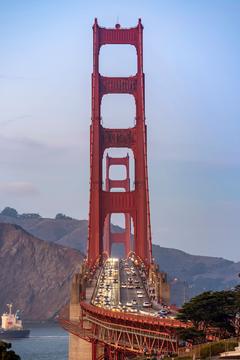
Must-visitGo for the Golden Gate Bridge, Alcatraz, cable cars
Top sights
- Golden Gate Bridge1 to 2 hours to walk or bike across; toll $10.25 to $11.25, southbound into the city only; walking and biking are free
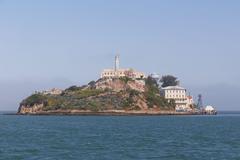
- Alcatraz Island3 to 4 hours including the ferry; $47.95 adult day tour; book weeks ahead, the only operator is Alcatraz City Cruises
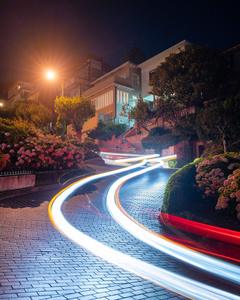
- Lombard Street and the Painted Ladies30 minutes each; free
Book ahead: Alcatraz
Read the full sectionShowing San Francisco
- Book Alcatraz first. Its ferry tickets sell out weeks ahead in high season, and there's no NPS entrance fee beyond the boat.
- Skip Yosemite's old reservation system. The National Park Service ended the timed vehicle permit for 2026; you only need the standard entrance pass at the gate.
- Pair a city with one park, not three. Los Angeles sits close to both Joshua Tree and Palm Springs.
Iconic landmarks and cities
California's two biggest cities read as opposites: San Francisco is compact and walkable, Los Angeles spreads for miles by car. San Diego, Monterey, Santa Barbara, Sacramento and San Jose round out the state's city-based trips.
San Francisco
Must-visit
- Golden Gate Bridge: 1 to 2 hours to walk or bike across; toll $10.25 to $11.25, southbound into the city only; walking and biking are free
- Alcatraz Island: 3 to 4 hours including the ferry; $47.95 adult day tour; book weeks ahead, the only operator is Alcatraz City Cruises
- Lombard Street and the Painted Ladies: 30 minutes each; free
- Best months: September to October, warmest and sunniest
- Plan it: 7-day California coast road trip
Fog usually clears off San Francisco's hills by midmorning, late enough that an early start at the Golden Gate Bridge often means shooting it through mist. Walk or bike across for the bay views, then ride a cable car up and over Nob Hill.
Alcatraz's cellhouse audio tour runs on the ferry schedule, so a sold-out sailing means no visit at all. Photograph Lombard Street's switchbacks and the Victorian row houses of the Painted Ladies on the same morning, and save Fisherman's Wharf for lunch.
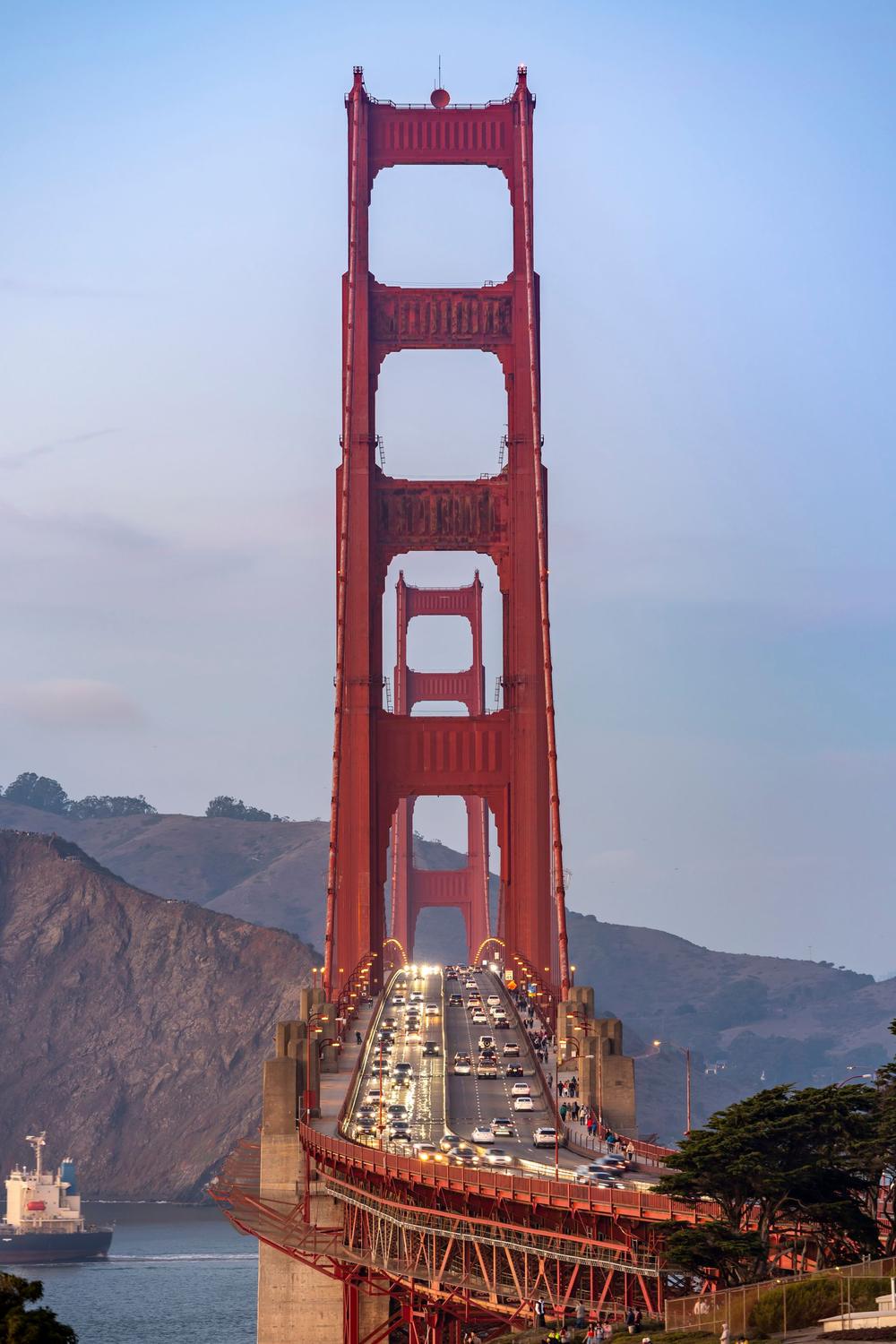 Photo by Stephen Leonardi on Pexels
The Golden Gate Bridge, San Francisco
Los Angeles
Must-visit
- Hollywood Sign: 2 to 3 hours round trip on a Griffith Park hiking trail; free, but you can't approach the sign itself
- Griffith Observatory: 2 to 3 hours; free building admission, planetarium shows ticketed
- The Getty Center: 3 to 4 hours; free admission, parking charged separately
- Hollywood Walk of Fame and LACMA: 1 to 3 hours each; the Walk of Fame is a free public sidewalk
- Best months: spring or fall, for the mildest weather
- Plan it: 4-day Los Angeles itinerary
Start at Griffith Park, which holds both the Hollywood Sign hike and the Observatory. Los Angeles has no single center otherwise, so pick a neighborhood and build each day around it.
The Getty Center sits on a hilltop reached by its own tram, with free art and gardens. Olvera Street, the marketplace often called the birthplace of Los Angeles, makes an easy half-day downtown between the bigger stops.
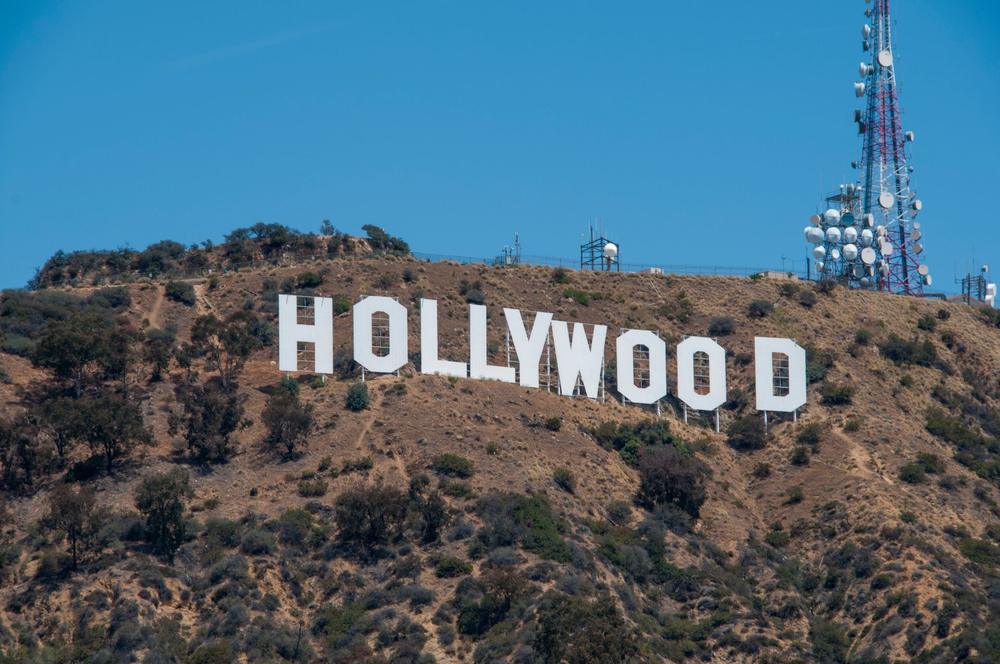 Photo by dumitru bumbu on Pexels
The Hollywood Sign above Los Angeles
San Diego
Must-visit
- Balboa Park: half a day to a full day; the park and its gardens are free, the Zoo and most museums charge separately
- La Jolla: half a day; sea caves and wild sea lions along the coastal bluffs
- Coronado Beach: half a day; free, public beach facing the Hotel del Coronado
- Best months: year-round, the mildest Southern California climate
- Plan it: San Diego in August
San Diego barely notices the seasons, which makes it an easy pick for a winter trip: it has the mildest climate of any Southern California city here, sitting right on the California-Mexico border. Balboa Park alone holds multiple museums and gardens around the San Diego Zoo.
La Jolla's sea caves and bluffs sit north of downtown, with wild sea lions hauled out on the rocks below the cliffside path. Across the bay, Coronado's wide sand beach fronts the Hotel del Coronado, the Victorian-era resort that gives the beach its postcard shot.
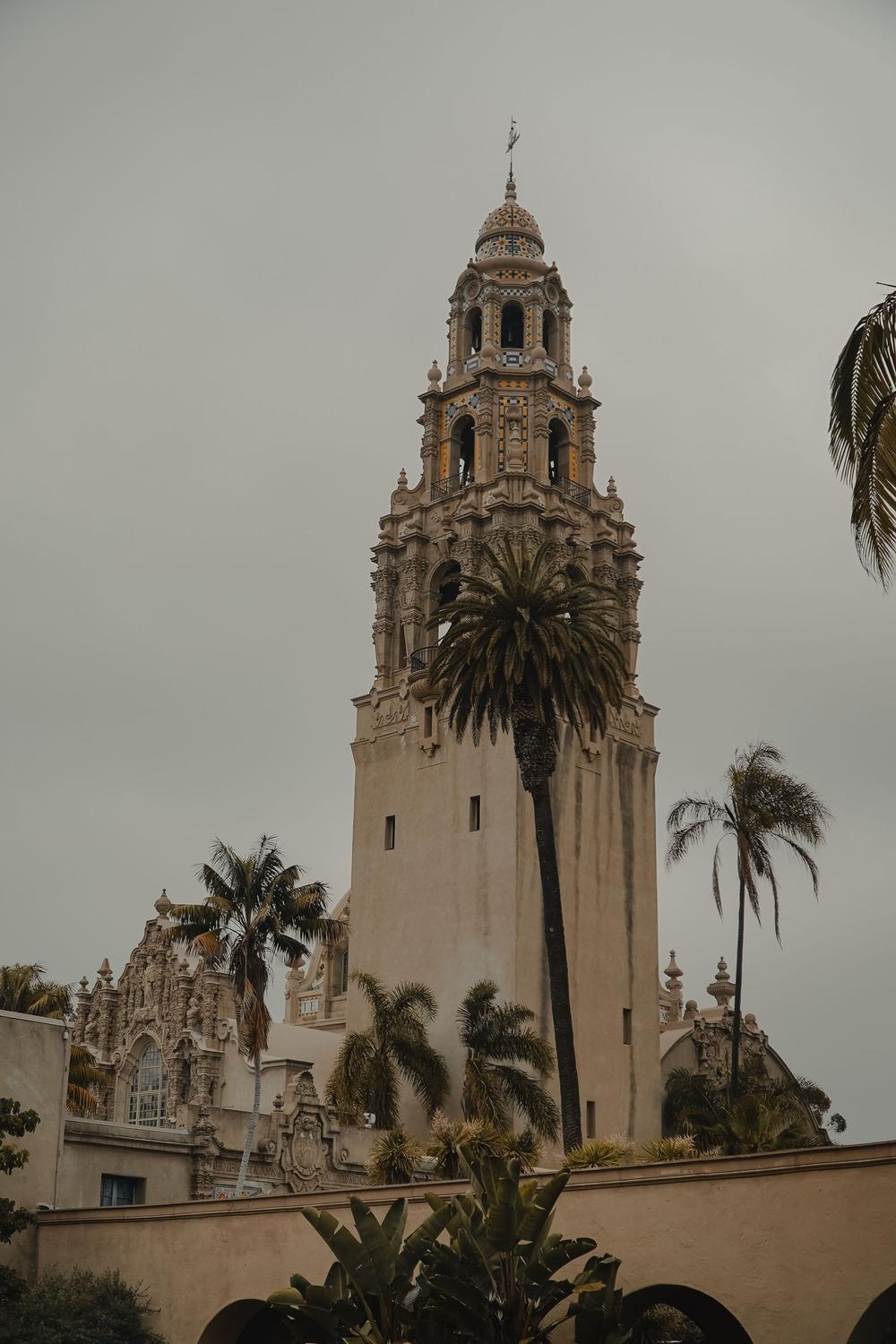 Photo by Jon Mangold on Pexels
Balboa Park, San Diego
Monterey
Must-visit
- Monterey Bay Aquarium: 3 to 4 hours; book timed entry ahead
- Cannery Row: 1 to 2 hours; free to walk
- Carmel-by-the-Sea: half a day nearby; free to walk the town
- Best months: year-round
- Plan it: 7-day California coast road trip
Monterey's waterfront was once a sardine-canning district. John Steinbeck's novel gave the row of former canneries its name and its second life as a tourist strip. The aquarium that replaced one cannery draws on the marine life of Monterey Bay itself.
Book an aquarium time slot before you arrive, since weekday mornings run quieter than weekends. Carmel-by-the-Sea, just south on the Monterey Peninsula, trades the aquarium crowds for fairy-tale cottages and a beach at the end of its main street.
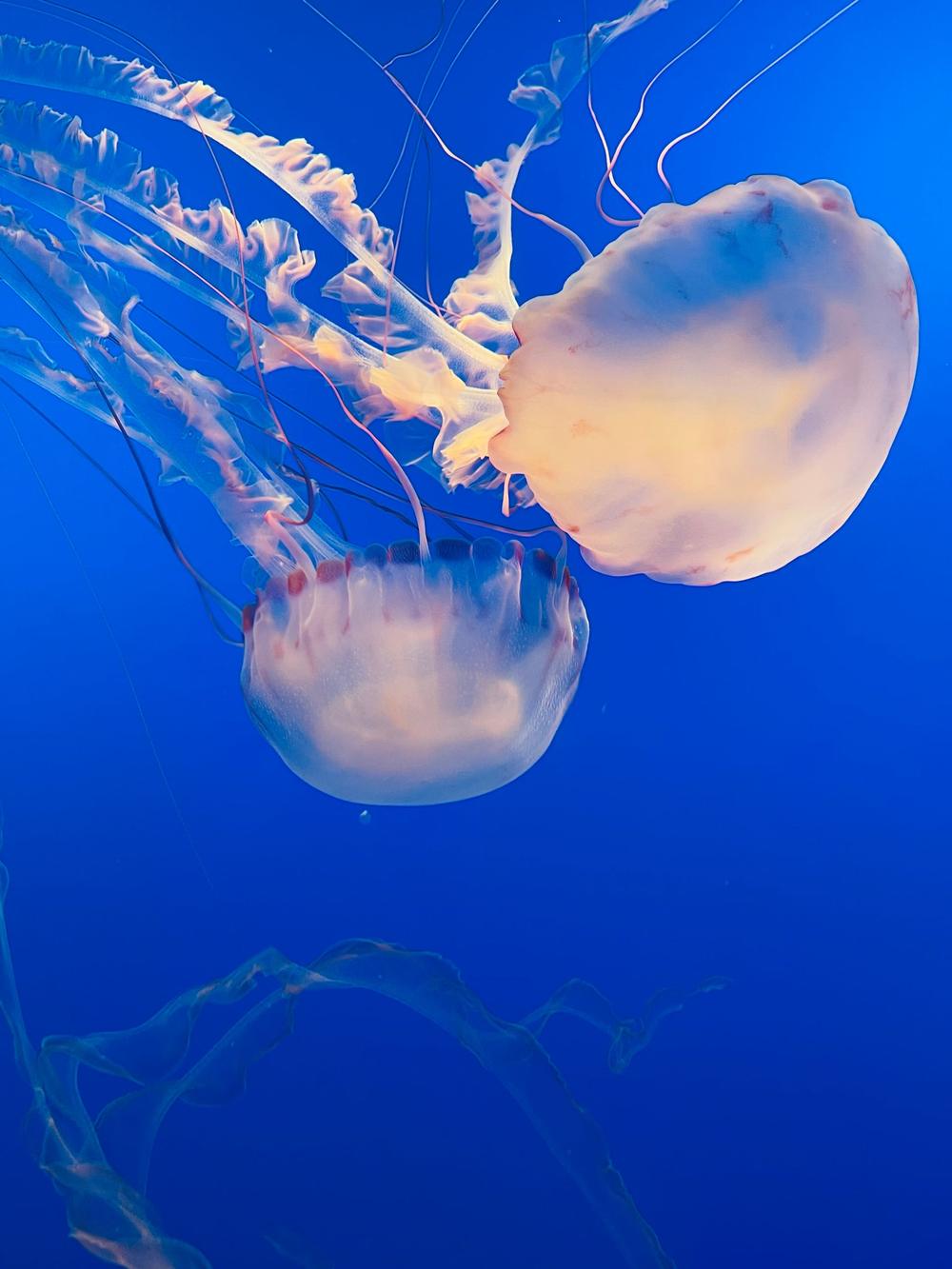 Photo by Sam Rangwala on Pexels
Monterey Bay Aquarium
Santa Barbara
Must-visit
- Old Mission Santa Barbara: 1 to 2 hours
- Stearns Wharf and State Street: half a day; free to walk
- Best months: spring or fall
- Plan it: California travel guide
Red-tile roofs and whitewashed Spanish colonial buildings give Santa Barbara a smaller scale than Los Angeles. Old Mission Santa Barbara, often called the queen of the 21 California missions for its twin bell towers, anchors the hillside above downtown.
Stearns Wharf runs out into the harbor at the foot of State Street, where boutiques and the city's wine-tasting rooms sit near the sand. The mission and the wharf are both free, half-day stops, so Santa Barbara rewards a relaxed day rather than a packed one; wine country around Santa Ynez and Solvang sits inland.
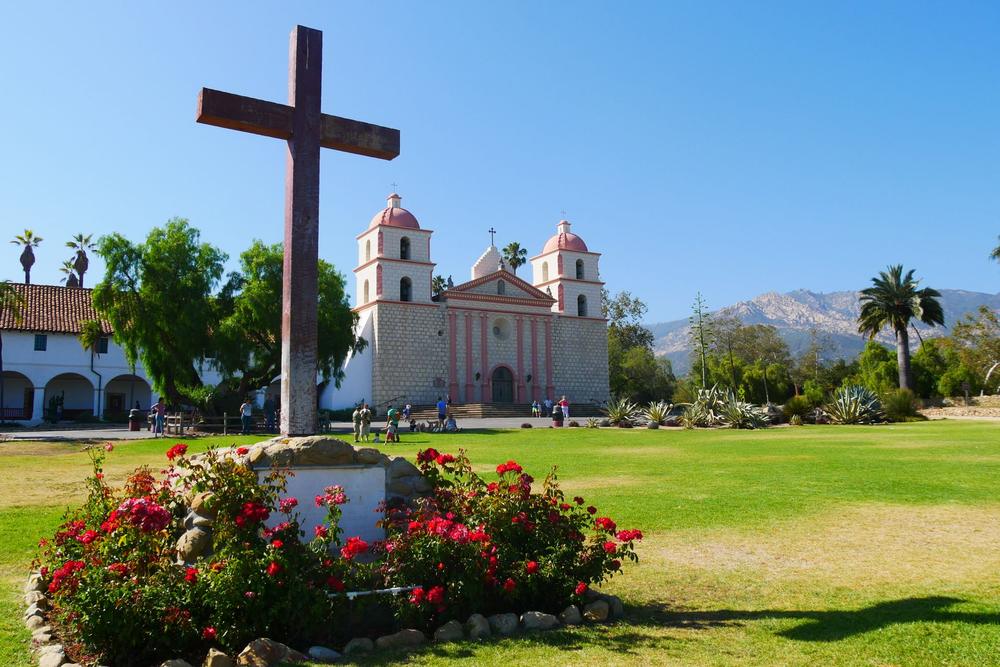 Photo by Rino Adamo on Pexels
Old Mission Santa Barbara
Sacramento
Must-visit
- California State Capitol: 1 to 2 hours; free tours
- Old Sacramento and the California State Railroad Museum: half a day; the historic district is free to walk
- Best months: year-round
- Plan it: California travel guide
Sacramento is California's state capital, with a Gold Rush-era quarter of its own in Old Sacramento. The Capitol building, modeled on the one in Washington, still runs free tours of its legislative chambers.
Old Sacramento keeps the Gold Rush-era waterfront intact: wooden boardwalks, brick storefronts and the Railroad Museum. Free Capitol tours and a free walk through Old Sacramento make this a cheap stop worth a detour off the main coast-to-mountains route. Coloma, where gold turned up in 1848 and set off the Gold Rush, sits inland to the east.
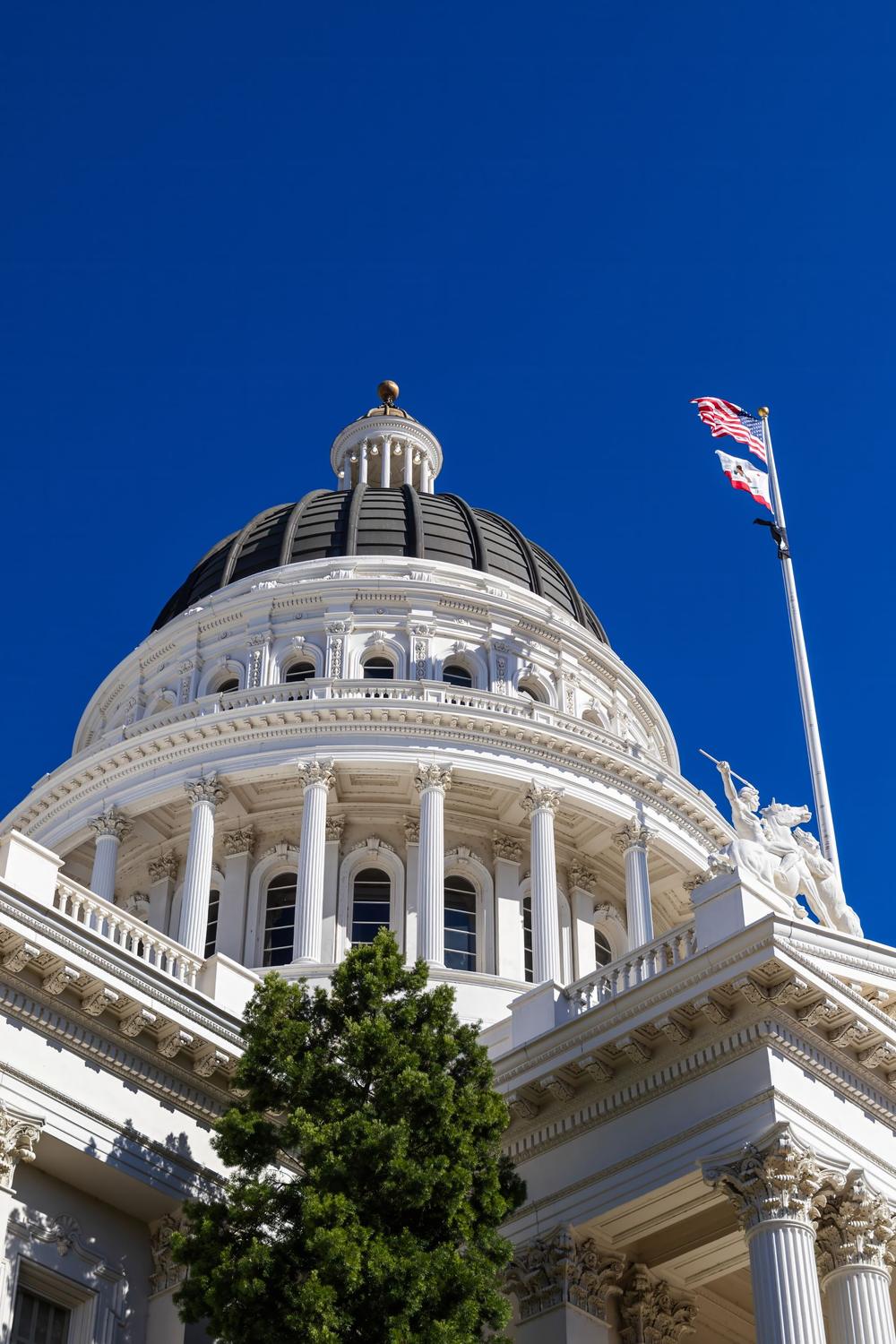 Photo by Robert So on Pexels
The California State Capitol, Sacramento
San Jose
- Winchester Mystery House: 2 to 3 hours; booking recommended
- Best months: year-round
- Plan it: California travel guide
San Jose runs as Silicon Valley's center city more than a tourist stop, but the Winchester Mystery House gives it one genuine oddity. Sarah Winchester kept builders adding to the deliberately labyrinthine mansion from 1884 until her death in 1922.
Book the tour ahead on a weekend.
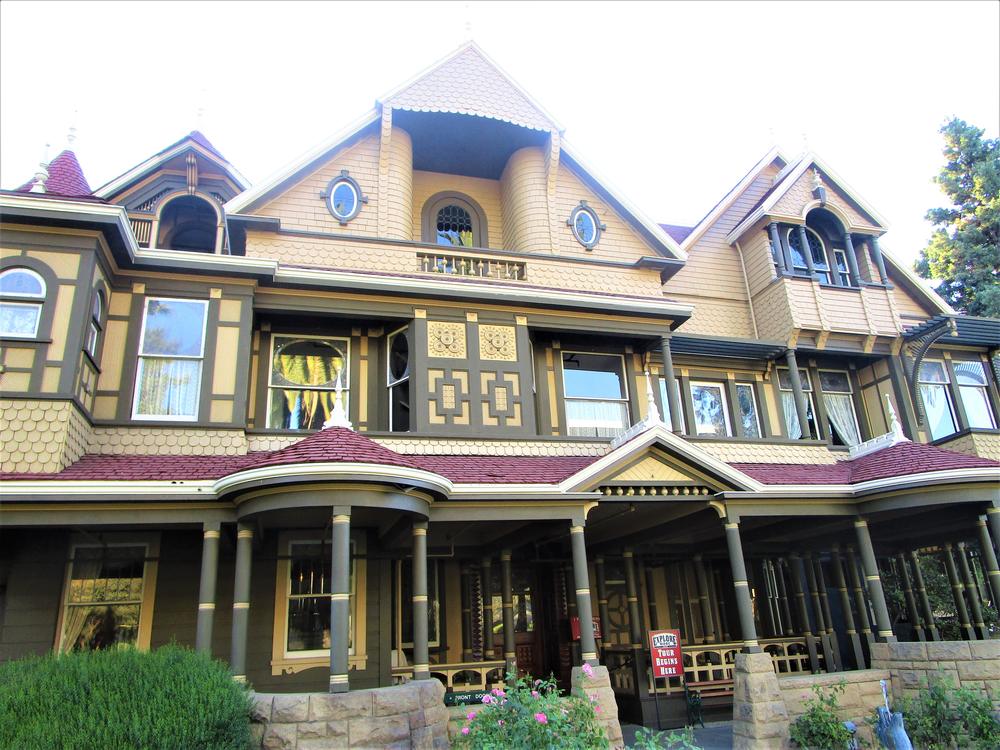 Lyla0724 (CC BY-SA 4.0)
The Winchester Mystery House, San Jose
National parks and nature
California's national parks run from Yosemite's granite valley to Death Valley's salt flats: Yosemite, Sequoia and Kings Canyon, Joshua Tree and Death Valley. Only two carry UNESCO World Heritage status, Yosemite and the redwoods.
Yosemite National Park
Must-visit
- Half Dome, El Capitan, Glacier Point and Yosemite Falls: a full day or more to see several; free once inside the park
- Entrance: $35 per vehicle, a 7-day pass
- Reservation: none required for 2026
- Best months: late spring, for waterfalls at peak flow, or fall, for fewer crowds
- UNESCO: World Heritage Site, inscribed 1984
- Plan it: 7-day California coast road trip
"Yosemite National Park today announced it will no longer use a timed reservation system in 2026," the National Park Service stated. The park itself hasn't changed: El Capitan and Half Dome still rise straight out of Yosemite Valley, and Yosemite Falls still runs loudest in late spring.
Plan at least two days to see the valley floor and one viewpoint above it; Glacier Point gives the clearest look down at Half Dome without a permit. Come in late spring for the waterfalls at their fullest, or wait for fall when the crowds thin and the light turns gold on the granite.
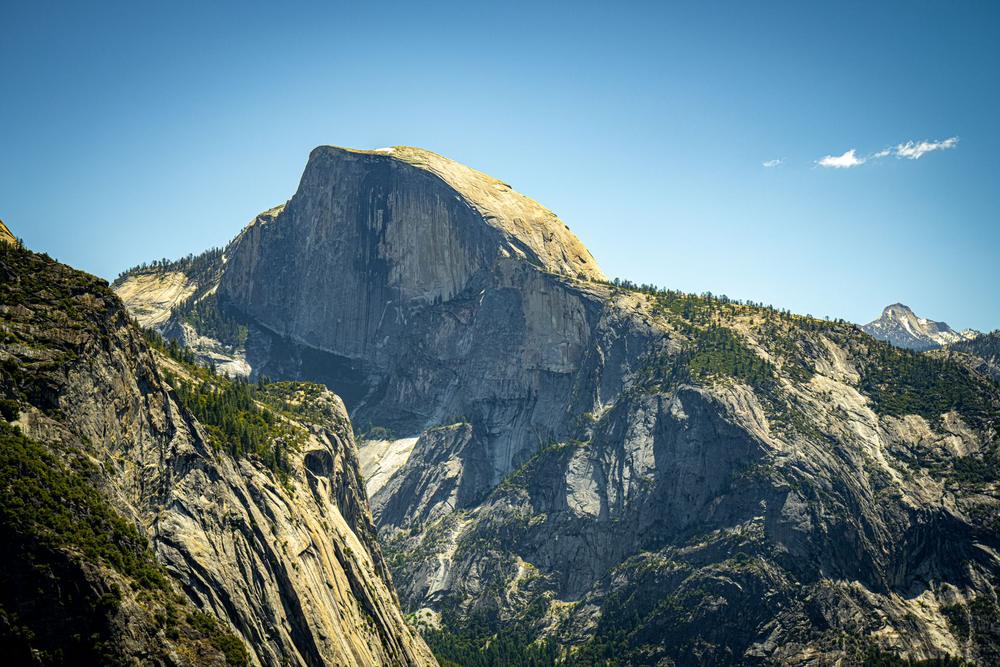 Photo by Elijah Cobb on Pexels
Half Dome, Yosemite National Park
Sequoia and Kings Canyon National Parks
- General Sherman Tree: 1 to 2 hours round trip from the main trailhead; free once inside the park
- Entrance: $35 vehicle entrance fee
- Best months: summer for the high country, year-round for the Giant Forest
- Plan it: California travel guide
General Sherman is the largest living tree on Earth by volume, a giant sequoia that has stood in the park's Giant Forest for thousands of years. The two adjoining parks share one entrance fee and one road system, so a single-day visit can cover both.
Kings Canyon's deeper, less-visited gorge sits past Sequoia's groves, open fully only once summer melts the high passes. Plan around the Giant Forest first; it stays accessible nearly all year, while the park's alpine lakes need the warmer months.
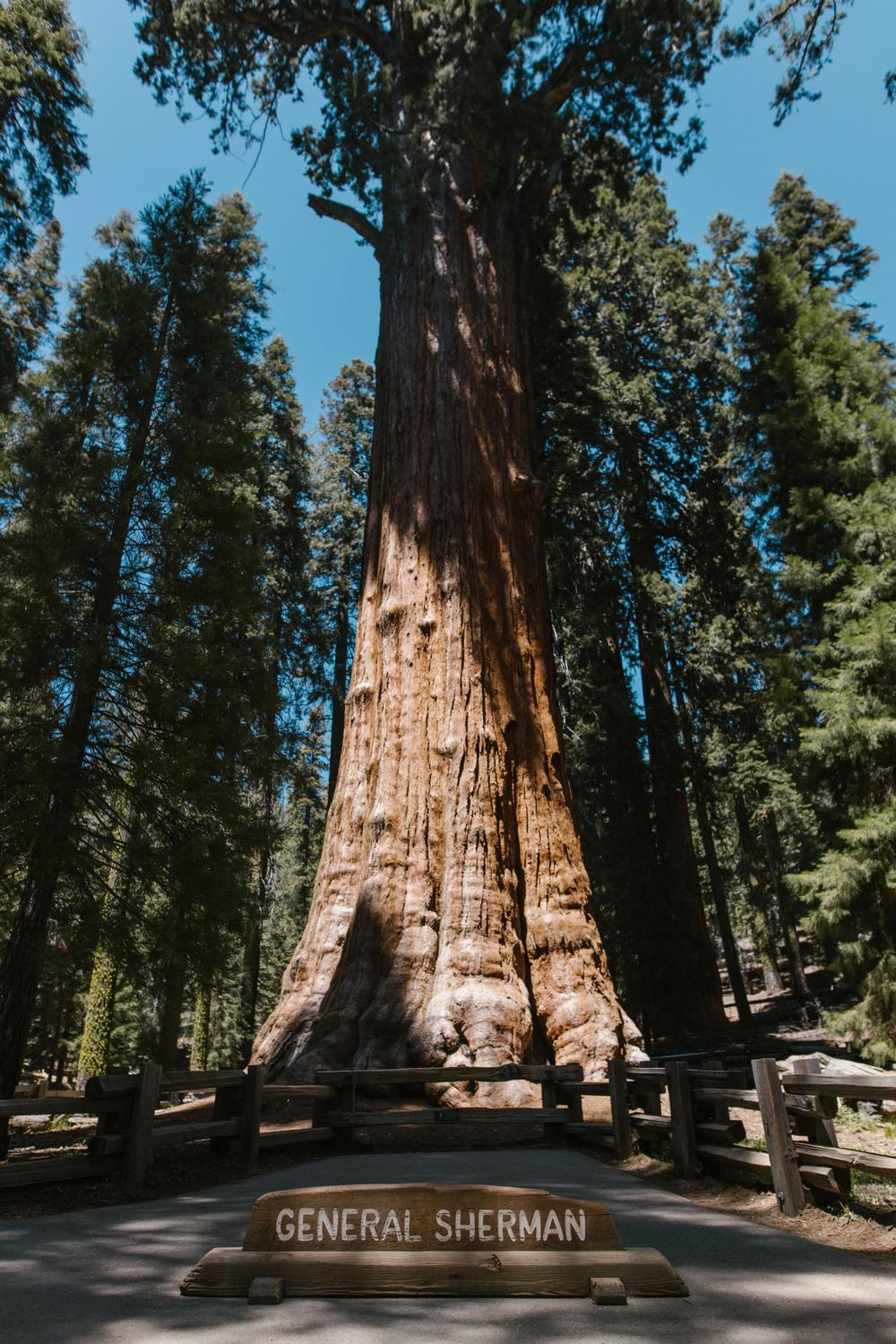 Photo by RDNE Stock project on Pexels
General Sherman Tree, Sequoia National Park
Death Valley National Park
- Badwater Basin: 1 hour; covered by the park entrance fee, the lowest point in North America
- Entrance: $15 to $30 standard entrance pass
- Best months: November to March, since summer turns dangerously hot
- Plan it: 2-day Death Valley itinerary
Summer afternoons in Death Valley turn dangerously hot, hot enough that winter is the better season for a visit here. The park holds the record for the hottest air temperature ever reliably recorded on Earth, and winter flips that entirely, with mild days that make the salt flats and canyons comfortable to walk.
Badwater Basin sits 282 feet below sea level, a white salt crust you can walk straight out onto. Furnace Creek holds the only gas and services for miles, so fill up and carry extra water before heading to Zabriskie Point or Dante's View.
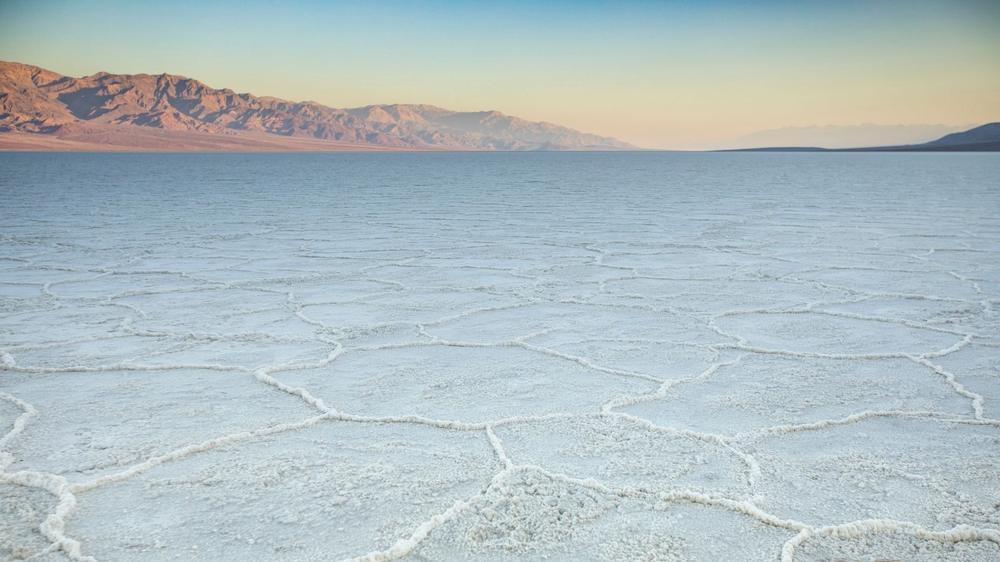 Photo by Stephen Leonardi on Pexels
Badwater Basin salt flats, Death Valley
Joshua Tree National Park
- Entrance: $15 to $30 standard entrance pass
- Best months: October to April, since summer is extremely hot
- Plan it: 2-day Joshua Tree itinerary
Joshua Tree sits where the Mojave and Colorado deserts meet, and the boundary shows: the park's namesake yucca trees grow only on the higher, cooler Mojave side. Rock climbers favor the boulder fields near the park's west entrance, while hikers spread out across trails that rarely feel crowded even in peak season.
Stargazing is the other reason to stay past sunset; the park sits far enough from any large city that light pollution barely reaches it. Twentynine Palms, the town at the park's north entrance, has the closest gas, food and lodging.
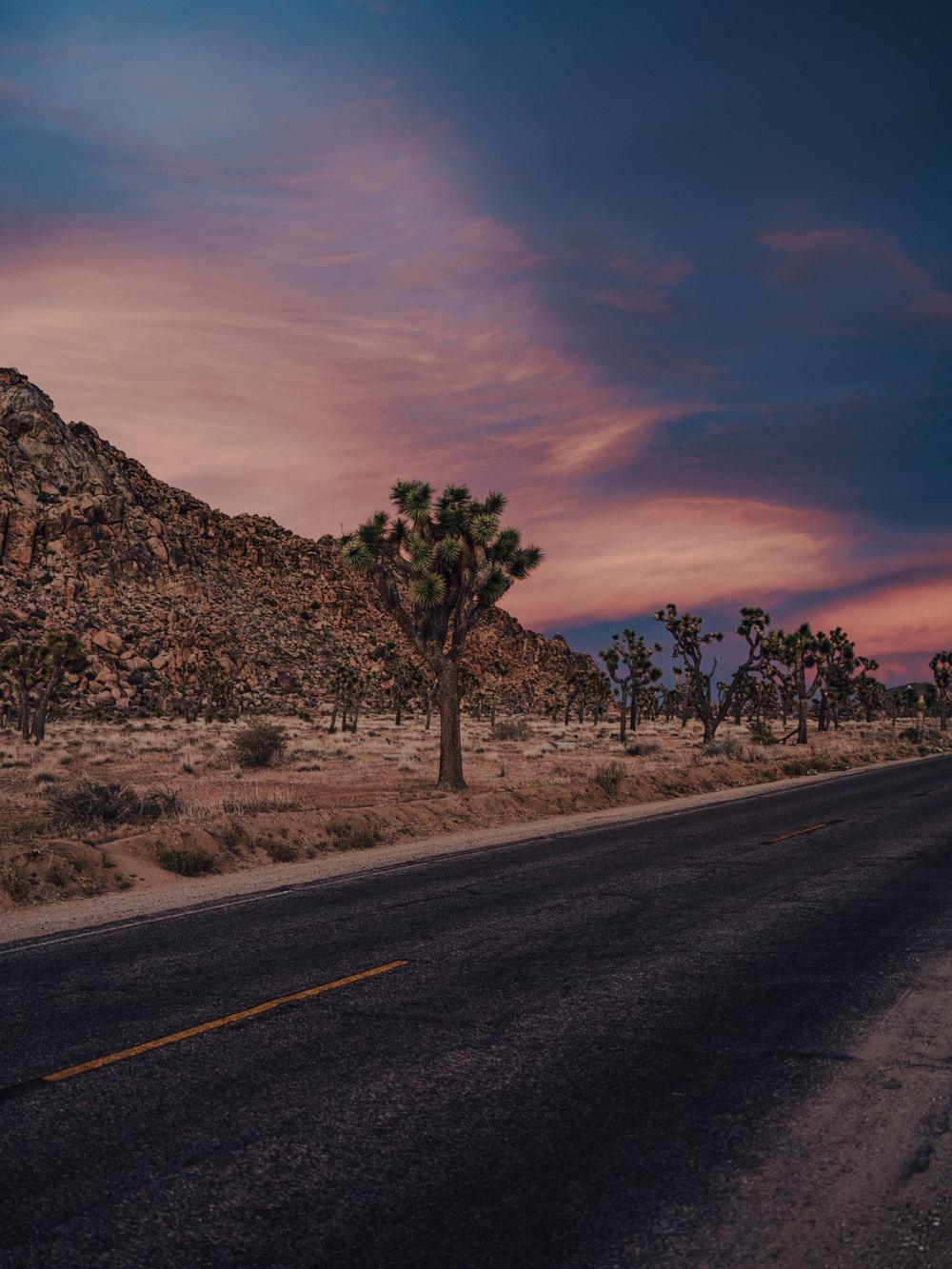 Photo by Isaac Garcia on Pexels
Joshua trees against a desert sunset
Lake Tahoe
- Emerald Bay: half a day; kayak to Fannette Island
- Best months: summer for the water, winter for skiing
- Plan it: 4-day Lake Tahoe itinerary
Lake Tahoe earns a visit in either season, and its two seasons barely resemble each other. Summer brings kayaking, paddleboarding and swims in water that stays cold even in August; winter turns the surrounding peaks into ski terrain. The lake itself straddles the California-Nevada border high in the Sierra Nevada.
Emerald Bay, on the lake's southwest shore, is the view every Tahoe postcard uses: a glacially carved inlet with a single pine-covered island at its mouth. South Lake Tahoe holds most of the restaurants and lodging on the California side.
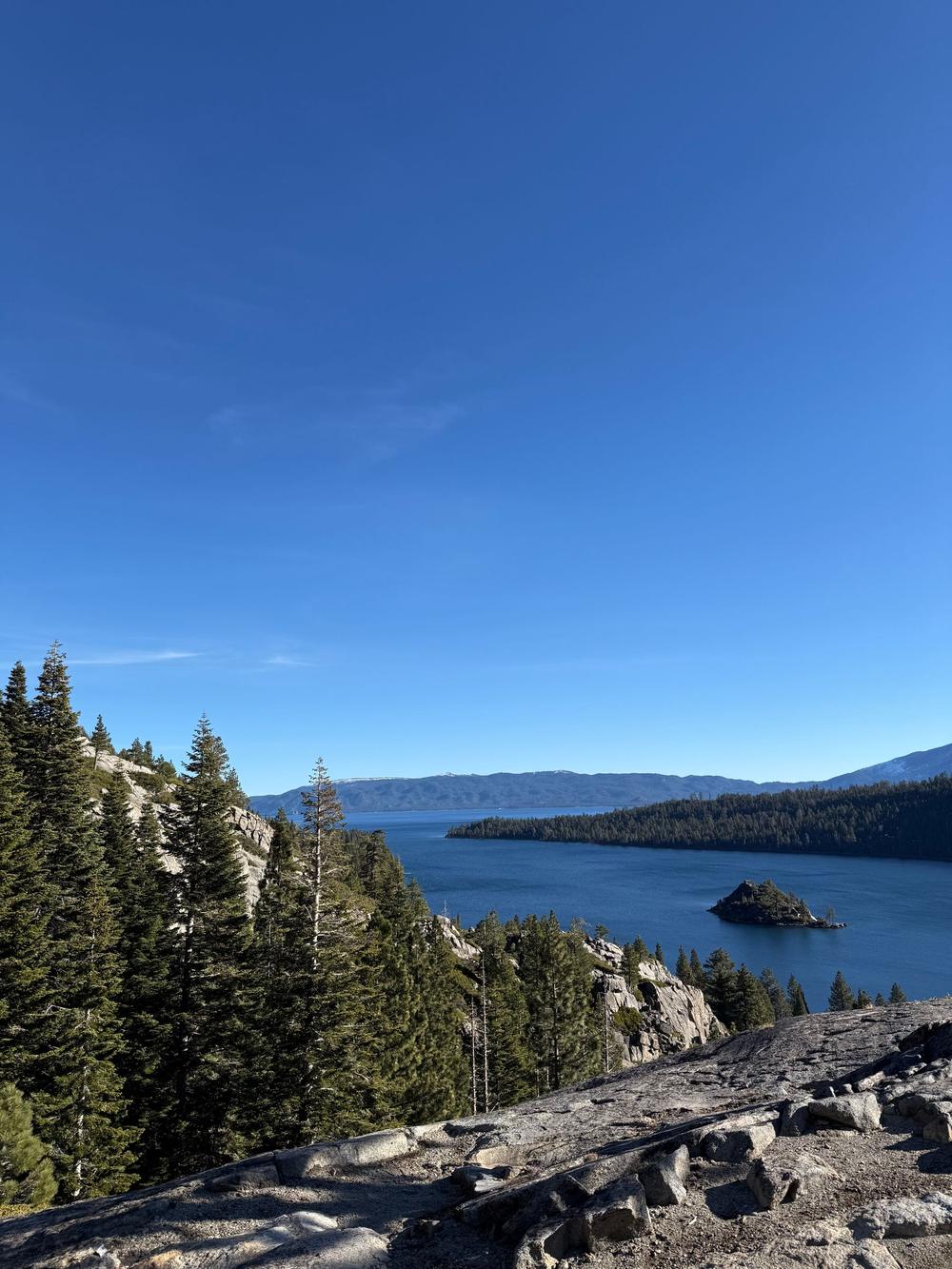 Photo by Lea Müller on Pexels
Emerald Bay, Lake Tahoe
Big Sur
- Best months: spring or fall, for clearer skies
- Plan it: 3-day Big Sur road trip
McWay Falls drops directly onto a beach most visitors can only view from above, the one stop worth planning the drive around. Big Sur itself is the 90-mile stretch of Highway 1 where the Santa Lucia Mountains drop straight into the Pacific.
Storms close sections of the highway after heavy rain most winters, so check conditions before a trip outside summer. Pullouts are frequent and mostly free, though a few state park lots inside Big Sur charge for day parking.
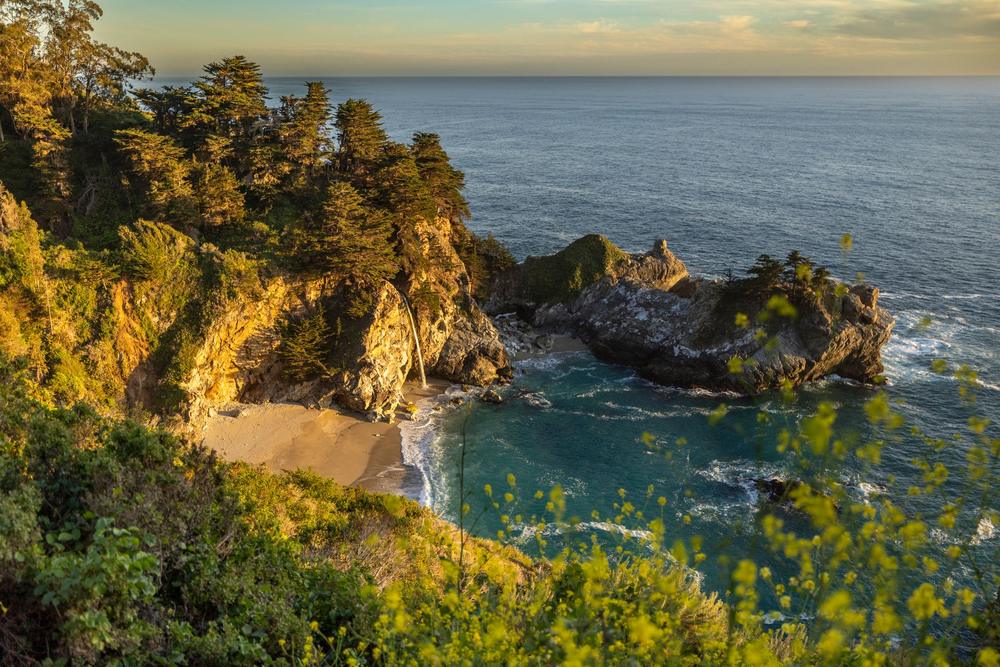 Photo by Stephen Leonardi on Pexels
McWay Falls, Big Sur
Redwood National and State Parks
- Entrance: free, no entrance stations; three adjoining California state parks charge separate day-use fees
- Best months: year-round, a temperate climate
- UNESCO: World Heritage Site, inscribed 1980
- Plan it: California travel guide
Redwood National and State Parks is one of only two UNESCO World Heritage Sites in California. The park protects old-growth coast redwoods, the tallest trees on Earth, in a joint arrangement between the National Park Service and three California state parks.
Nearby, the Avenue of the Giants runs 31 miles through Humboldt Redwoods State Park's own old-growth groves. Crescent City, at the parks' northern edge, has the closest lodging and supplies.
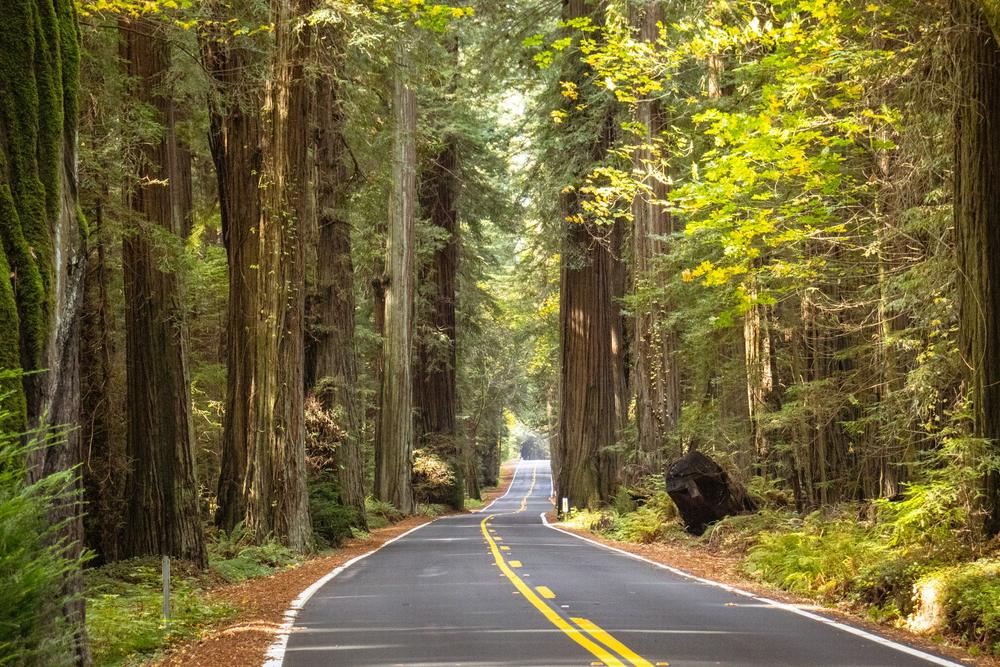 Photo by Brig Dunsmore on Pexels
Old-growth redwoods, Redwood National and State Parks
Mammoth Lakes and the Eastern Sierra
- Devils Postpile National Monument: half a day; a shuttle runs in summer
- Mono Lake: 2 to 3 hours; best at sunrise or sunset for the tufa towers
- Best months: winter for skiing, summer for hiking
- Plan it: California travel guide
Mammoth Lakes grew up around Mammoth Mountain's ski resort, and winter still fills its slopes with deep Sierra Nevada snowpack. Summer swaps skis for hiking boots on trails that circle a string of alpine lakes just outside town.
Devils Postpile, a field of hexagonal basalt columns formed by an ancient lava flow, sits a short shuttle ride away. North toward Lee Vining, Mono Lake's calcium-carbonate tufa towers rise straight out of the ancient saline lake.
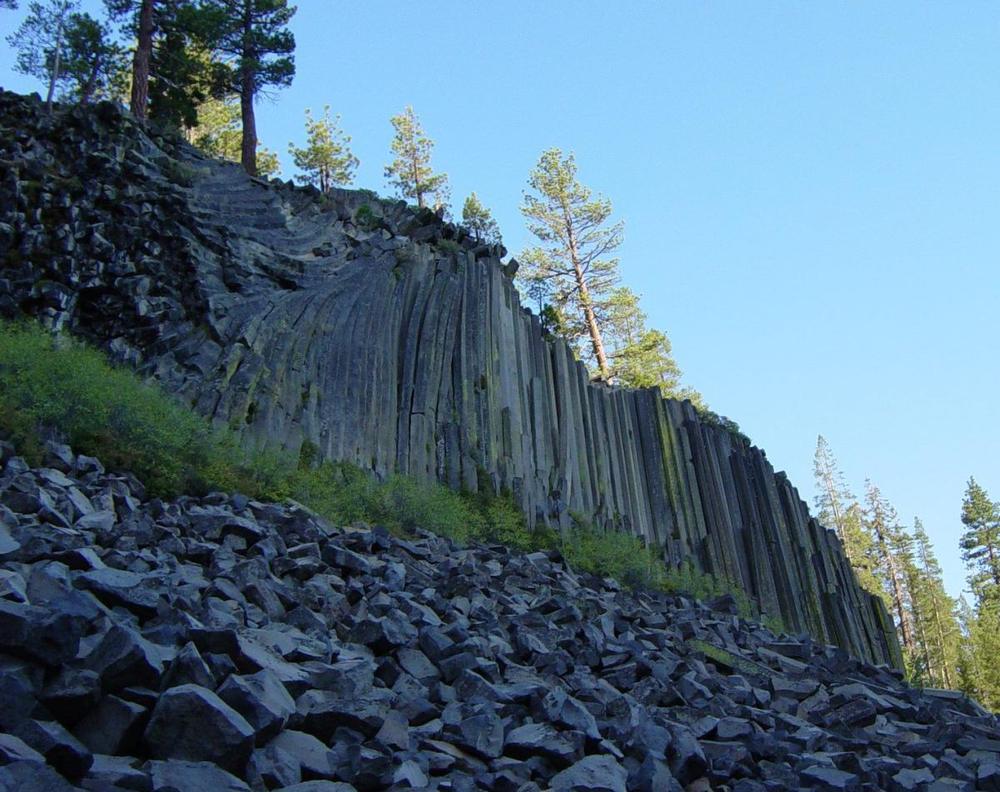 Daniel Mayer (CC BY-SA 3.0)
Devils Postpile National Monument basalt columns
Mount Whitney
- Alabama Hills: half a day; free
- Summit hike: 1 to 2 days, wilderness permit required
- Best months: July to September, the only snow-free window on the summit trail
- Plan it: California travel guide
Mount Whitney is the highest point in the contiguous United States at 14,505 feet. Most visitors see the peak instead from Lone Pine, the town below it, or from the rounded rock formations of the Alabama Hills just outside town.
Those formations have stood in for the American West in Hollywood westerns for decades, with Mount Whitney's snowcapped ridge as a backdrop in countless shots. Sunrise and sunset light the arches and boulders best.
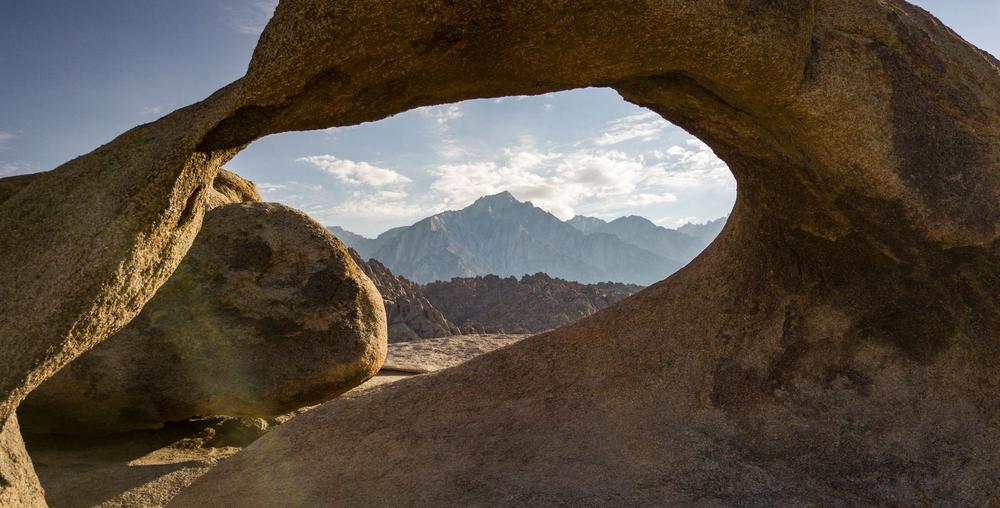 Photo by Stephen Leonardi on Pexels
Mount Whitney above the Alabama Hills
Point Reyes National Seashore
- Entry: free, no entrance fee
- Best months: year-round
- Plan it: California travel guide
Point Reyes sits north of San Francisco on a peninsula of cliffs, ranchland and protected coastline, close enough for a day trip from the Bay Area. Its elk herds and seasonal whale sightings draw hikers to trails that run along bluffs most of the year.
The historic lighthouse marks the peninsula's windswept tip. With no entrance fee and a short drive from the Bay Area, Point Reyes suits a half-day addition to a San Francisco trip better than an overnight on its own.
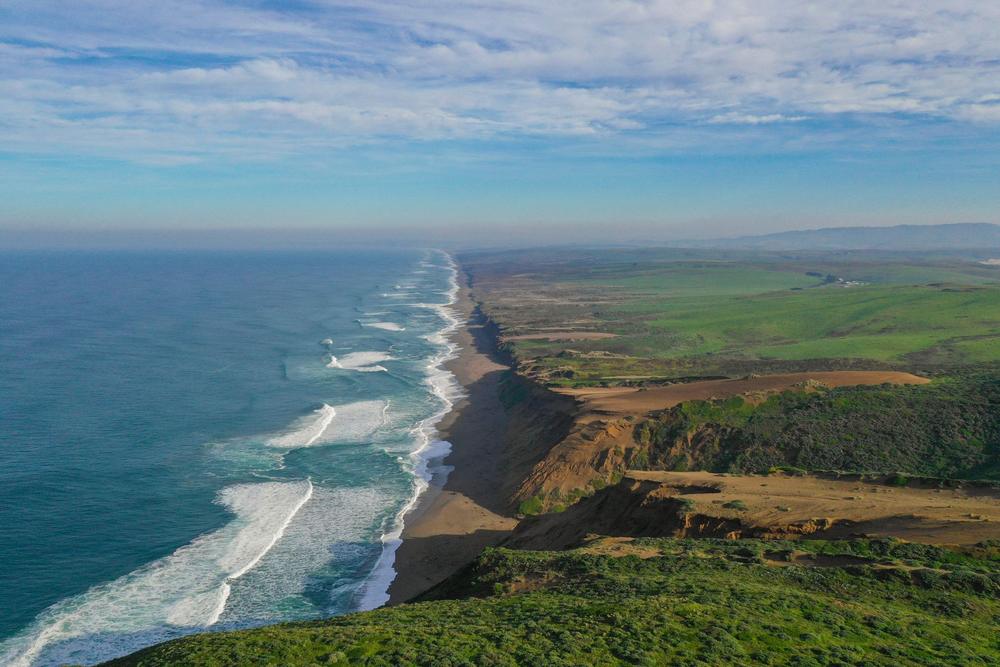 Photo by Stephen Leonardi on Pexels
Cliffs and coastline, Point Reyes National Seashore
Theme parks and family
Disneyland Resort
Must-do
- Disneyland Park and Disney California Adventure: 1 to 2 days per park
- Booking: advance reservation required
- Plan it: 10-day California family itinerary
Disneyland opened in Anaheim in 1955, the original Disney theme park and still the one most visitors mean by the name. Disney California Adventure, built alongside it decades later, shares the resort's entrance plaza and ticketing but runs as a separate park with its own rides.
Weekdays outside school holidays run noticeably lighter than weekends, and advance reservations are required for whichever park you plan to enter that day. Universal Studios Hollywood, Legoland California Resort in Carlsbad and SeaWorld San Diego round out the state's other major theme parks, each built around one Hollywood, Lego-brick or marine-animal theme.
Try free
Plan your California trip in about 2 minutes
Tap through 8 quick cards for a complete itinerary with budget, maps, and packing lists. No account required.
Plan your California trip →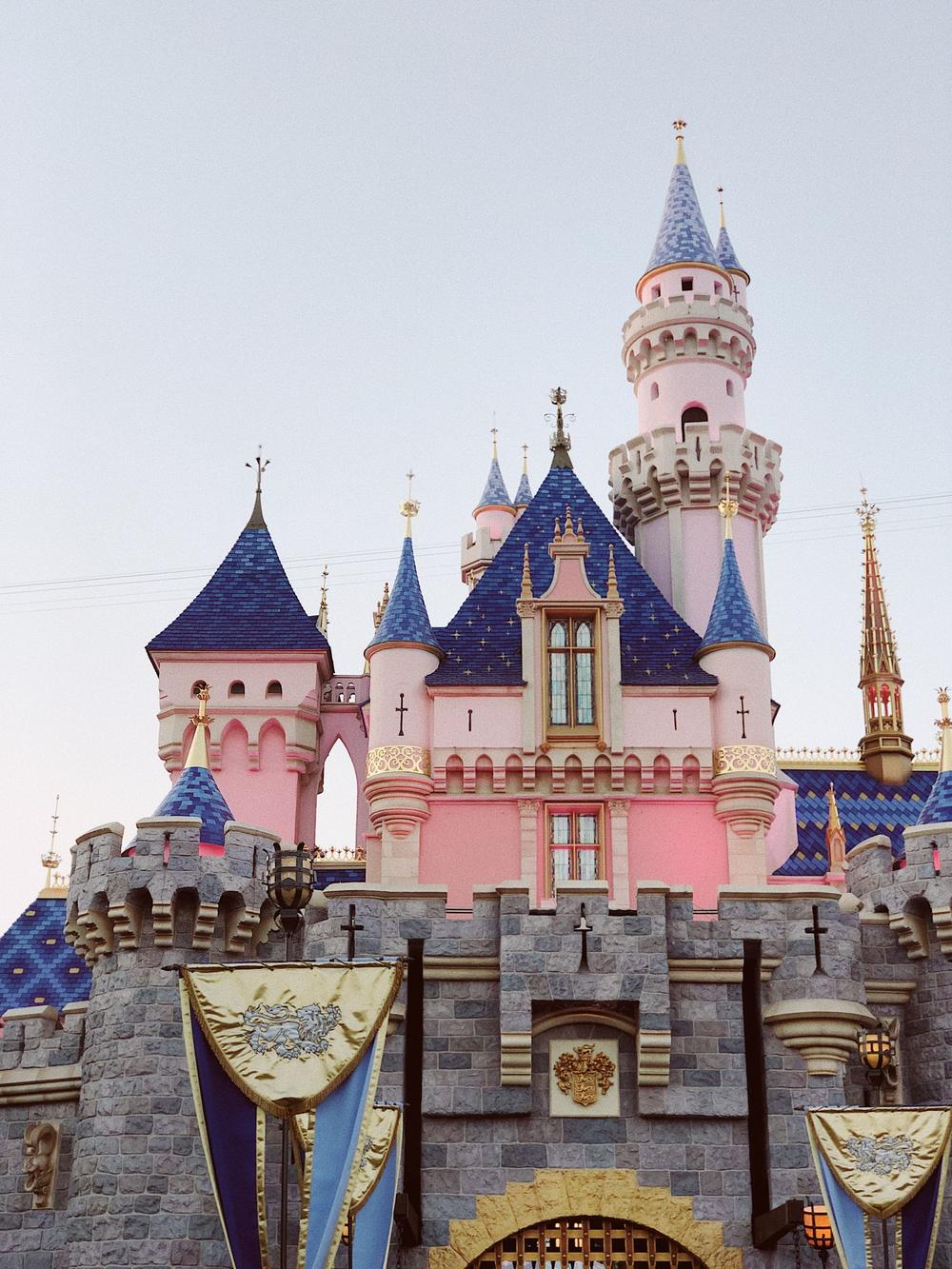 Photo by Liza Lova on Pexels
Sleeping Beauty Castle, Disneyland Park
Scenic drives, coast and wine country
Drive Highway 1 along the Big Sur coast
- Best months: spring or fall, for clearer skies
Highway 1 runs most of California's length along the Pacific, and the stretch through Big Sur is its best-known section. Drive south from San Francisco to keep the ocean on your right and the cliffside pullouts easier to reach.
Storms can close the highway after heavy winter rain, the same risk covered in the Big Sur section above. Driving the full stretch without stopping still covers hundreds of miles of coastline; plan two or three days to actually get out of the car.
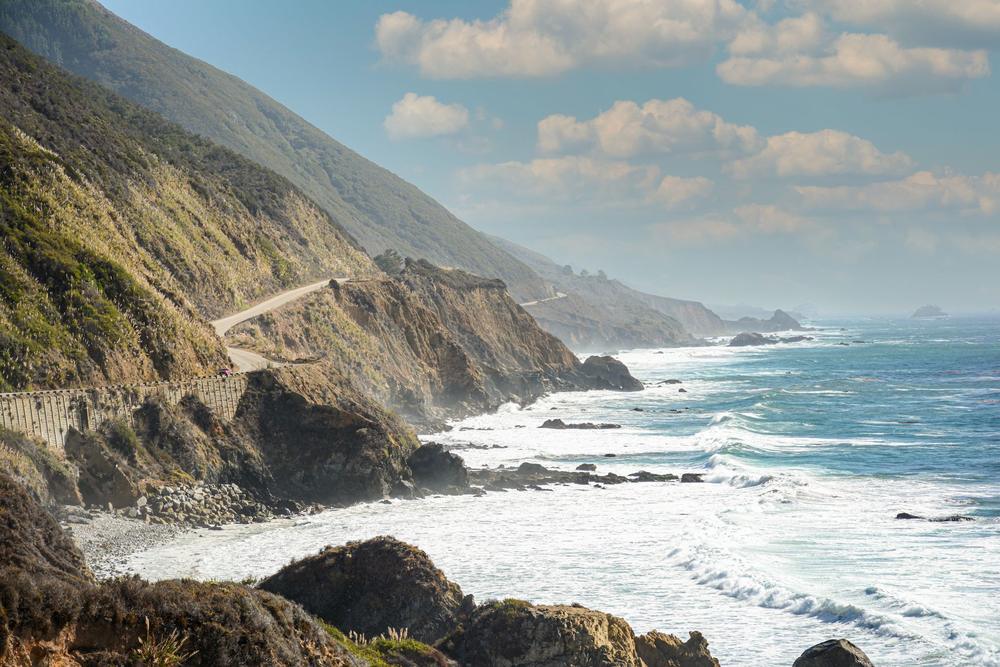 Photo by Filip Filipovic on Pexels
Highway 1 hugging the cliffs of the Big Sur coast
Napa Valley
Must-visit
- Best months: September to October, harvest season
- Plan it: Napa in October
Napa Valley is an hour north of San Francisco and holds more than a hundred wineries along a single valley floor. Harvest in September and October brings the grape crush and the valley's busiest season, so book tastings ahead for a fall visit.
The town of Napa sits at the valley's southern end, where the Napa Valley Wine Train starts its run past the vineyards. St. Helena and Calistoga, farther up the valley, trade some of the crowds for hot springs and smaller family wineries.
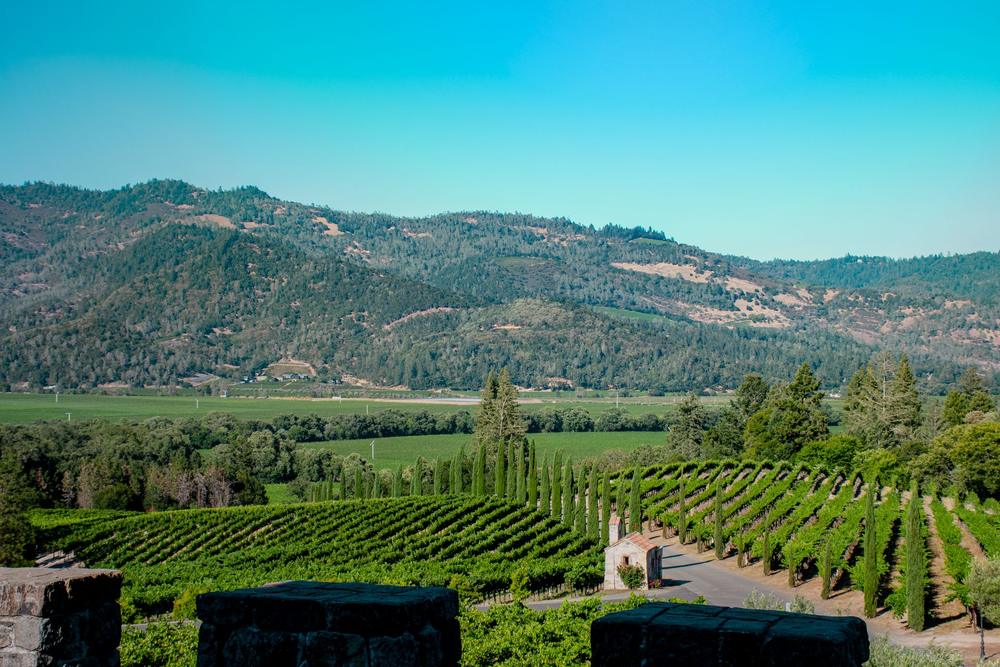 Photo by Gabriel Tovar on Pexels
Vineyards in Napa Valley
Sonoma County
- Best months: September to October, harvest season
- Plan it: California travel guide
Sonoma sits just west of Napa and runs quieter and less expensive. Its valley spreads wider than Napa's single corridor, with vineyards reaching toward the coast.
Sonoma's own town plaza keeps a Spanish mission at its center, the last of the 21 California missions, founded in 1823. Harvest season runs the same months as Napa's, so book ahead here too if a fall trip is the plan.
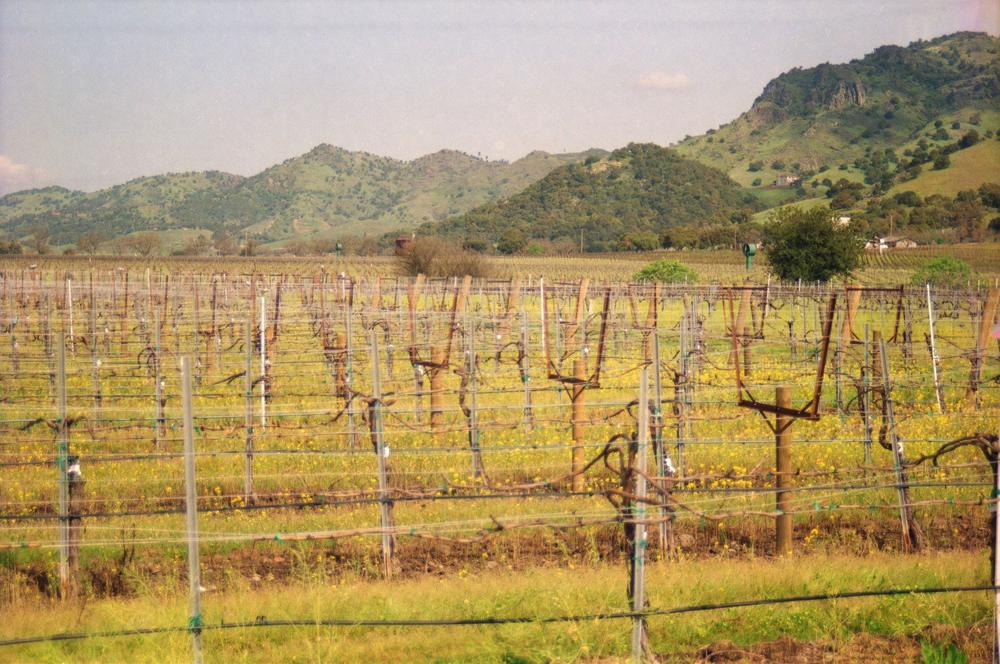 Photo by Tom Fisk on Pexels
Vineyards in Sonoma County
Catalina Island
- Ferry: booking recommended, from the mainland ports near Los Angeles and Long Beach
- Best months: summer and fall
- Plan it: California travel guide
Catalina Island sits 22 miles off the Southern California coast, close enough for a day trip by ferry, with an overnight option in Avalon, its harborside town. Snorkeling in the harbor's clear water and hiking stretches of the Trans-Catalina Trail are the two reasons most visitors come.
Avalon itself runs car-free for the most part, with golf carts doing the work cars would elsewhere, and summer sailings fill up fastest, so book the ferry ahead for that season.
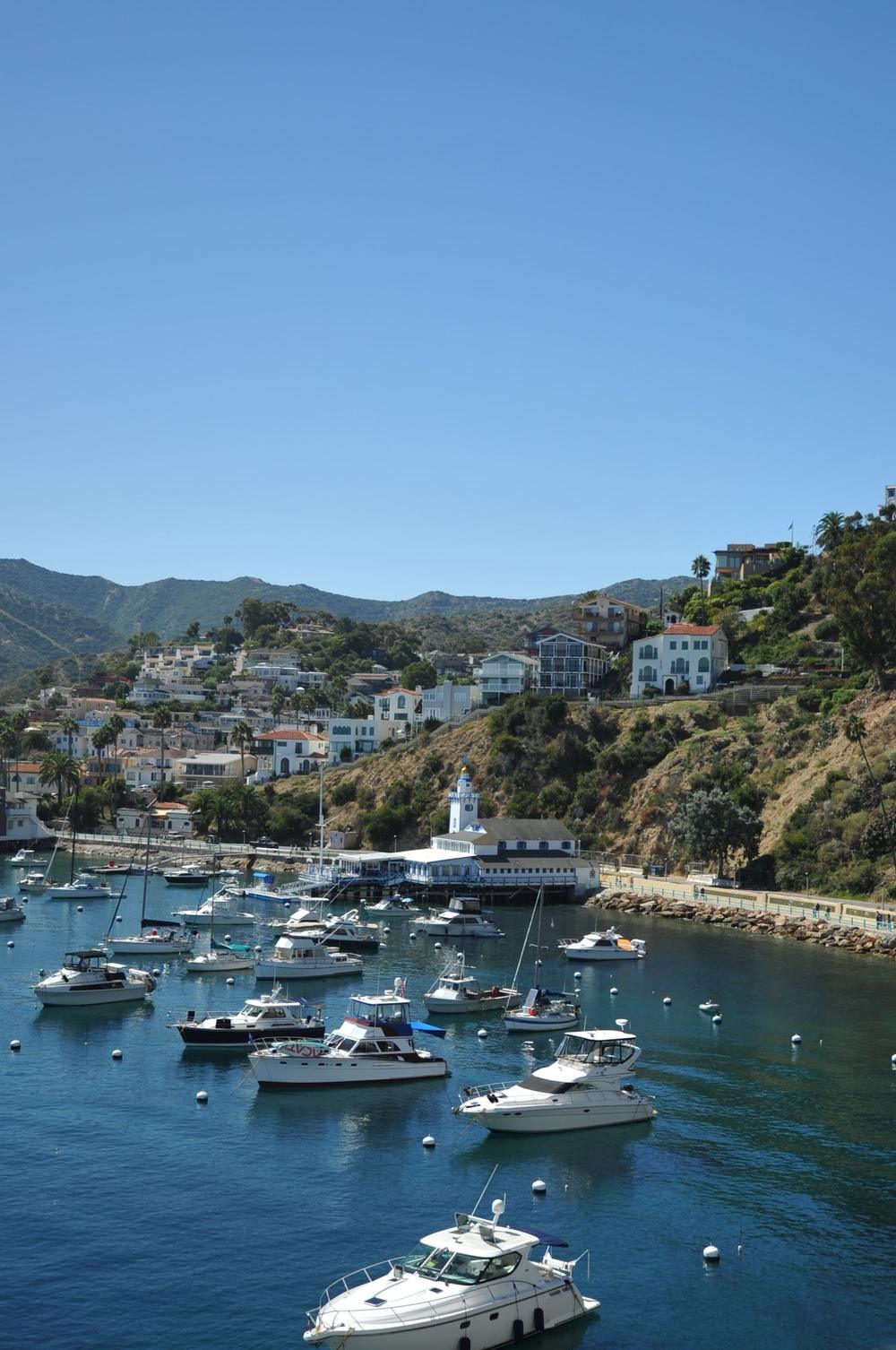 Photo by Sabrina Burgos on Pexels
Avalon harbor, Catalina Island
Hearst Castle
- Tour: 2 to 4 hours; guided tour tickets, booking recommended
- Plan it: California travel guide
Publisher William Randolph Hearst built this hilltop estate above San Simeon. He filled it with a Roman-style indoor pool, a separate outdoor Neptune Pool and galleries of European art and antiques he shipped home by the container load. Hearst Castle is now a California State Historic Monument, toured by guided groups only.
Weekdays run fewer crowds than weekends, and the estate's size means most visitors pick one or two of its several tour routes. San Simeon, at the estate's gate, has only a few places to eat and stay overnight.
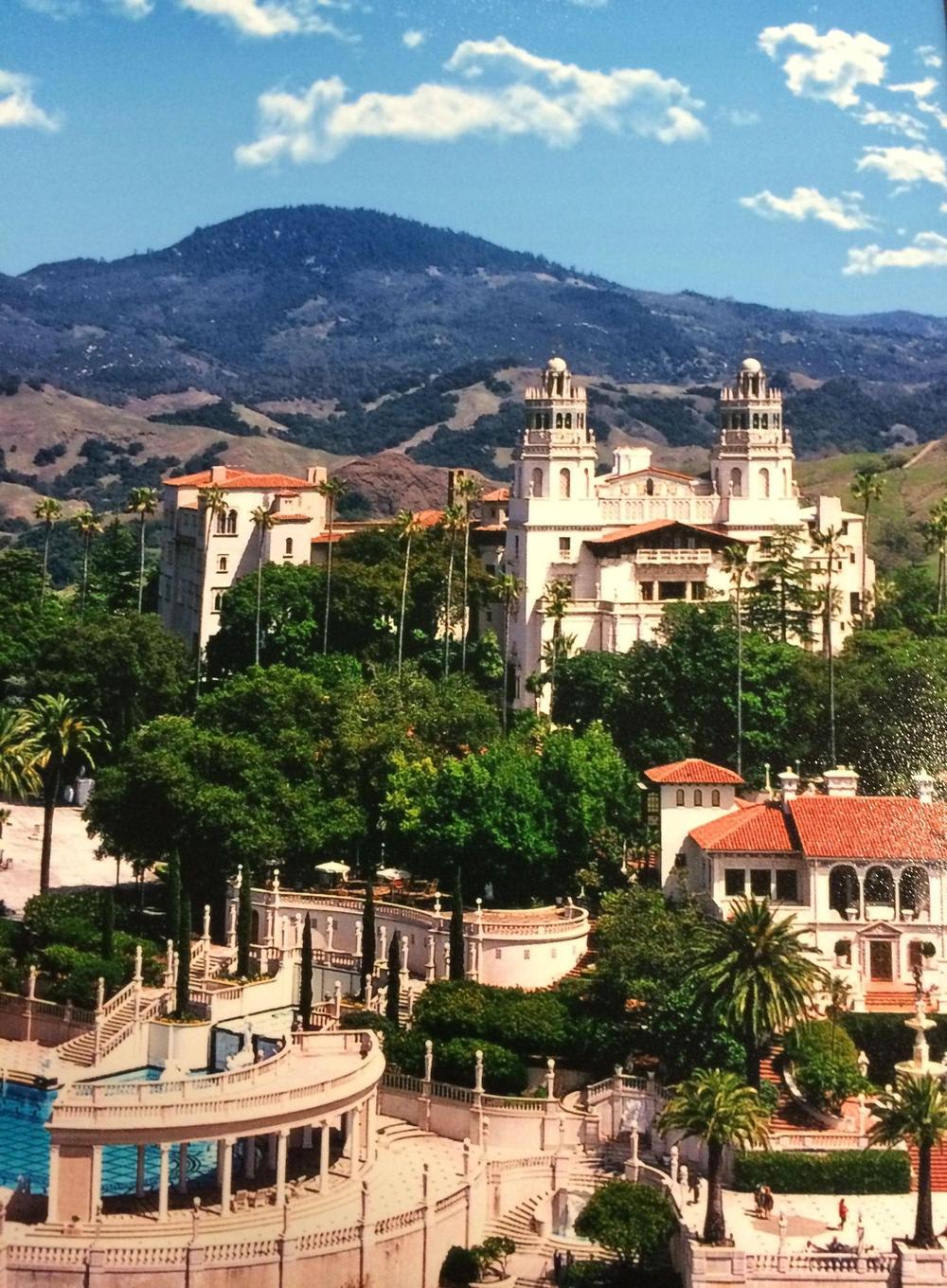 Photo by Gary M. Cohen on Pexels
Hearst Castle's main house above San Simeon
San Luis Obispo
- Best months: spring or fall
- Plan it: California travel guide
San Luis Obispo sits roughly halfway between San Francisco and Los Angeles, a college town once named the happiest city in America. San Luis Obispo works better as a stopping point on a coastal drive than a standalone destination.
Its food and wine scene draws on the surrounding wine country, and the compact downtown makes a good half-day stop before continuing to Morro Bay or Solvang.
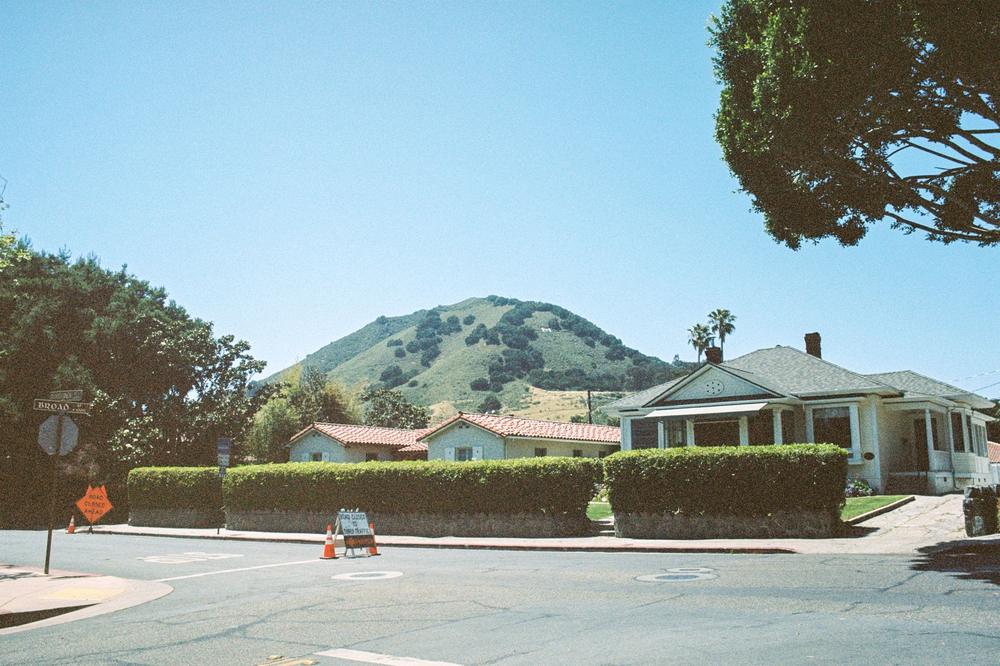 Photo by Harry Tucker on Pexels
A San Luis Obispo street
Morro Bay
- Morro Rock: 1 hour; free, viewable from the harbor
- Best months: year-round
- Plan it: California travel guide
Morro Rock rises 576 feet straight out of the water at the mouth of Morro Bay's harbor, a volcanic plug that gives this fishing town its skyline. You can't climb it, since it's a protected nesting site, but the waterfront path gets you close.
The harbor itself still runs a working fishing fleet alongside the kayak rentals and seafood shacks that line the waterfront. Otters and shorebirds work the shallow bay year-round, visible from almost any point along it.
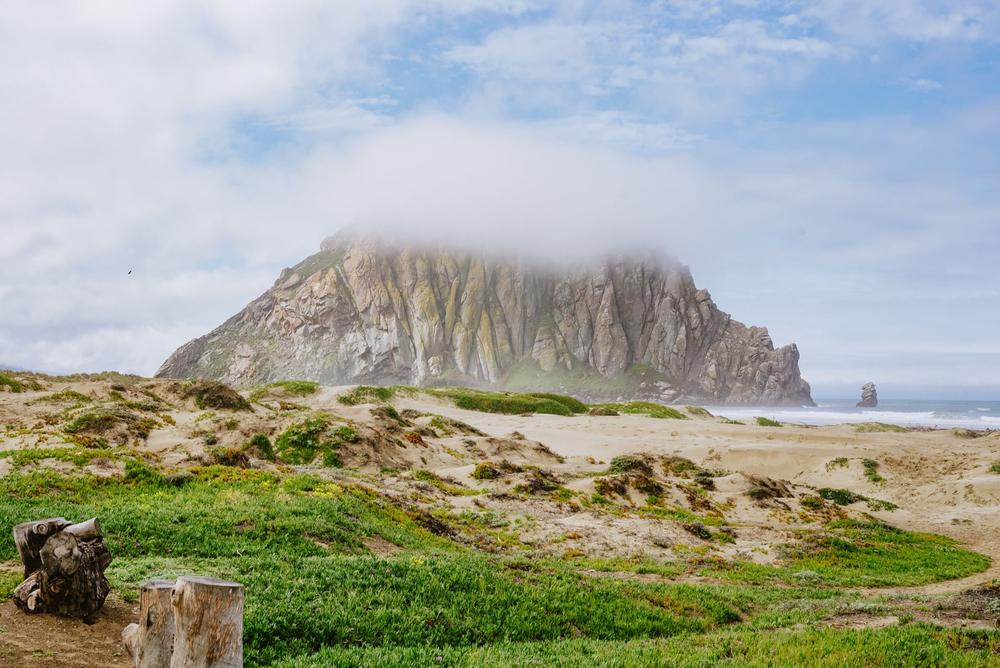 Photo by Josh Hild on Pexels
Morro Rock at the harbor mouth
Solvang
- Best months: year-round
- Plan it: California travel guide
Solvang was founded by Danish immigrants and still builds every new storefront to match, with windmills and half-timbered facades through the Santa Ynez Valley wine country. Bakeries along the main street sell aebleskiver, a round Danish pancake, alongside butter cookies.
Most visitors treat Solvang as a half-day stop, paired with a wine-tasting afternoon in the surrounding valley or a drive from Santa Barbara.
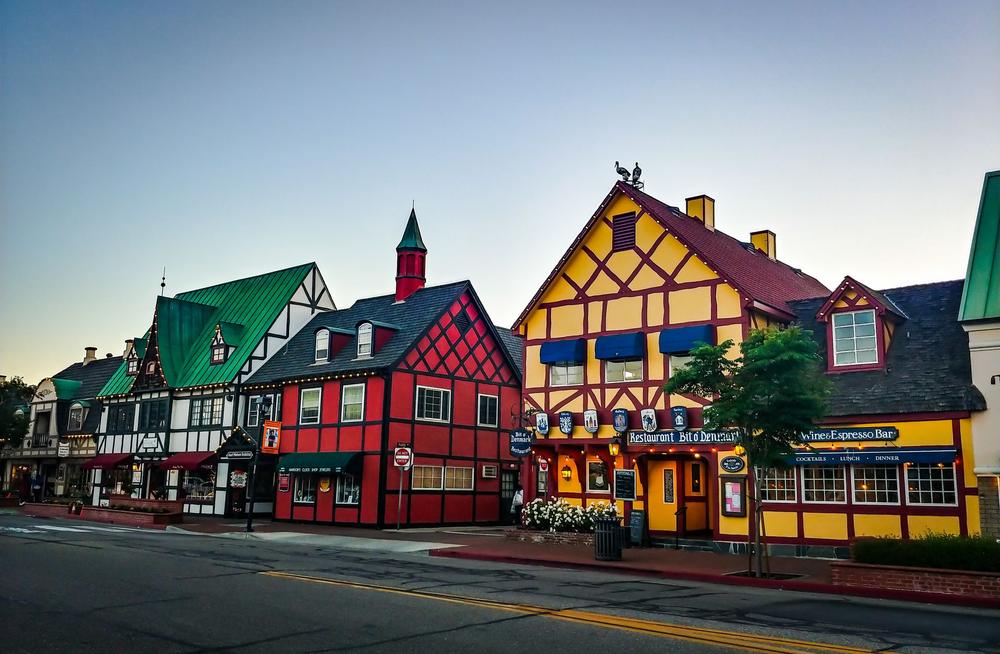 Photo by Soly Moses on Pexels
Danish-style buildings in Solvang
Palm Springs
- Palm Springs Aerial Tramway: 2 to 4 hours; booking recommended
- Best months: October to April, since summer is extremely hot
- Plan it: 3-day Palm Springs itinerary
Los Angeles has long sent its crowds to Palm Springs for a desert escape, drawn by the mid-century modern architecture and pools the town built its reputation on. Palm Canyon Drive runs the length of downtown's shops and restaurants, with resort pools doing most of the daytime work in summer heat.
In winter, the Aerial Tramway swaps cactus for snow-covered pine forest on its climb from the desert floor to the San Jacinto Mountains. Book ahead for the tram and plan a visit between October and April; summer here turns extremely hot.
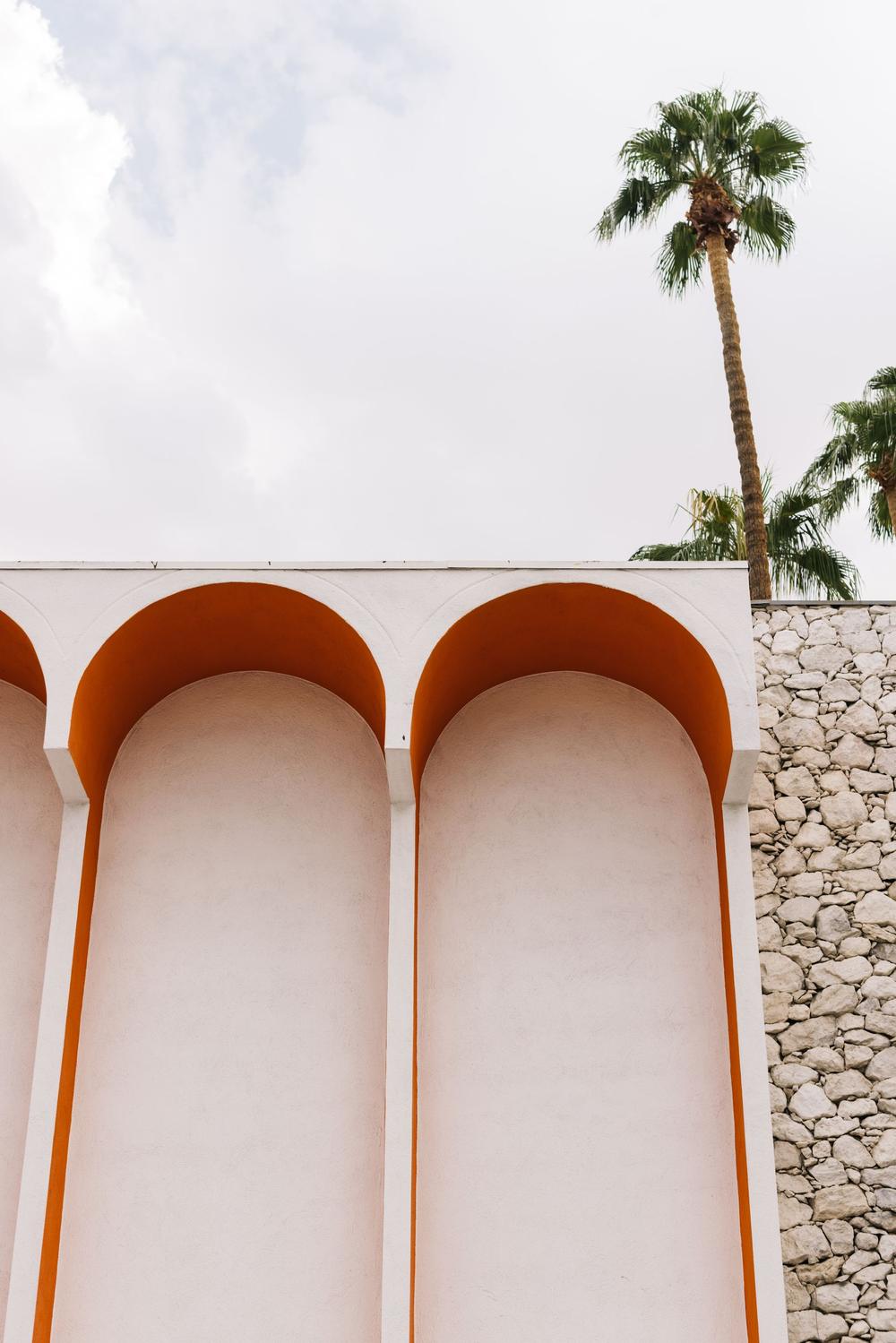 Photo by Alyssa Rose on Pexels
Mid-century architecture in Palm Springs
More places to add to a trip
| Place | Go for | Region |
|---|---|---|
| Mendocino | New England-style coastal village, wine tasting rooms | North Coast |
| Glass Beach, Fort Bragg | a shore covered in decades of smoothed sea glass | North Coast |
| Laguna Beach | hidden coves and tide pools | Southern California |
| Big Bear Lake | cabin stays, skiing in winter, the lake in summer | San Bernardino Mountains |
| Pismo Beach | sand dunes and sandboarding | Central Coast |
| Anza-Borrego Desert State Park | stargazing, spring wildflower blooms | Southern California |
| Antelope Valley Poppy Reserve | spring super-bloom of California poppies | Southern California |
| Channel Islands National Park | undeveloped islands off Santa Barbara and Ventura | Southern California |
| Lassen Volcanic National Park | volcanic fumaroles and hot springs | Shasta Cascade |
| Mount Shasta | climbing and skiing on a 14,179-foot volcanic peak | Shasta Cascade |
The best places to visit in California at a glance
| Place | Go for | Book ahead |
|---|---|---|
| San Francisco | the Golden Gate Bridge, Alcatraz, cable cars | Alcatraz |
| Los Angeles | Hollywood, the Getty Center, Griffith Observatory | no |
| San Diego | Balboa Park, La Jolla, Coronado | no |
| Monterey | the aquarium, Cannery Row, Carmel-by-the-Sea | aquarium timed entry |
| Santa Barbara | the mission, Stearns Wharf, wine country access | no |
| Sacramento | the State Capitol, Old Sacramento | no |
| San Jose | the Winchester Mystery House | house tour |
| Yosemite National Park | Half Dome, El Capitan, Yosemite Falls | no |
| Sequoia and Kings Canyon National Parks | the General Sherman Tree | no |
| Death Valley National Park | Badwater Basin, extreme desert scenery | no |
| Joshua Tree National Park | rock climbing, stargazing | no |
| Lake Tahoe | Emerald Bay, skiing, water sports | no |
| Big Sur | McWay Falls, the Highway 1 drive | no |
| Redwood National and State Parks | the tallest trees on Earth | no |
| Mammoth Lakes and the Eastern Sierra | Devils Postpile, Mono Lake, skiing | no |
| Mount Whitney | the Alabama Hills, the summit hike | summit permit |
| Point Reyes National Seashore | elk, whales, the historic lighthouse | no |
| Disneyland Resort | classic Disney rides and characters | park reservation |
| Drive Highway 1 along the Big Sur coast | ocean-view driving | no |
| Napa Valley | wine tasting at over a hundred wineries | winery tours |
| Sonoma County | wine tasting, a quieter alternative to Napa | winery tours |
| Catalina Island | snorkeling, the Trans-Catalina Trail | ferry |
| Hearst Castle | William Randolph Hearst's hilltop estate | guided tour |
| San Luis Obispo | a Central Coast stop between San Francisco and LA | no |
| Morro Bay | Morro Rock, a working harbor | no |
| Solvang | a Danish-themed town in wine country | no |
| Palm Springs | mid-century architecture, the Aerial Tramway | tramway |
Plan your California trip
For getting around, trip length and costs, start with the California travel guide. When you build a trip with MonkeyEatingMango, the booking checklist lists what to reserve and how many weeks ahead. Every sight on a day's plan is marked Must-do, Maybe or Skip if tired.
Common questions
What is the number one tourist attraction in California?
The Golden Gate Bridge is California's most recognized sight, free to walk or bike across. For a national park, Yosemite draws the most attention, with Half Dome and El Capitan found nowhere else in the state.
Where should a first-time visitor to California go?
A first trip usually pairs San Francisco or Los Angeles with one national park: San Francisco with Yosemite, or Los Angeles with Joshua Tree or Palm Springs.
Where should I go for 2 or 3 days in California?
Two or three days covers one city well: San Francisco with Alcatraz and the Golden Gate Bridge, or Los Angeles with Hollywood and the beaches. Add a single national park only if it sits a reasonable drive away.
What are some hidden gems in California?
Mono Lake's tufa towers near Lee Vining, the Alabama Hills outside Lone Pine, and the sea-glass shore at Fort Bragg's Glass Beach all draw far fewer visitors than the state's headline parks.
What's free to do in California?
Griffith Observatory, the Getty Center and Balboa Park charge nothing to enter, and most of California's beaches are free and public. Walking or biking across the Golden Gate Bridge is also free; only the southbound car toll is charged.
Do I need a reservation for Yosemite in 2026?
No. The National Park Service ended its peak-season timed vehicle reservation system for 2026, as of a February 2026 update to its reservations page. You still need the standard $35 vehicle entrance pass at the gate.
How many UNESCO World Heritage Sites does California have?
California has two: Yosemite National Park, inscribed in 1984, and Redwood National and State Parks, inscribed in 1980. Sequoia and Kings Canyon, Joshua Tree and Death Valley are not on the list.
How many days do I need for a California road trip?
A week covers the coast from San Francisco to Los Angeles or a loop through the national parks. Two weeks lets you combine both: the coast south on Highway 1, then inland to Yosemite or Death Valley.
What is the cheapest time to visit California?
Hotel rates drop outside summer, generally from November through March, away from winter holidays. Desert destinations like Palm Springs and Joshua Tree flip the pattern, since their own busy season runs October through April.
Is it better to visit Northern or Southern California?
Northern California (San Francisco, Yosemite, wine country) and Southern California (Los Angeles, San Diego, the desert parks) rarely fit in one short trip, so most first trips pick one half.
What should I book ahead of time in California?
Book Alcatraz ferry tickets as soon as your dates are set; they sell out in high season. Also book ahead for Hearst Castle's guided tour, Catalina Island's ferry, and a summer weekend at Yosemite or Disneyland.

Written by Shobhit Shrivastava · Founder
Related reading
Things to Do in New Zealand and the Best Places to Visit
Where to go in New Zealand and what to do there: 16 places across the North and South Islands, each with the time it takes, what to book and the official price.
Things to Do in Norway: Fjords, Cities and the Arctic
Where to go in Norway and what to do there: the fjords, the big hikes, five cities and the Arctic north, each with how long it takes, what to book and the price, where there is one.
Things to Do in Puerto Rico and the Best Places to Visit
Where to go in Puerto Rico by region: Old San Juan's forts, El Yunque and the bioluminescent bays to the east, Vieques and Culebra by ferry, and the surf towns and caves of the west and south. Every stop carries its top sights, the official price where one exists, and what to book ahead.