Bali travel guide cover photo

Bali Travel Guide: Ubud, Seminyak, Uluwatu, and Beyond

A first-timer's guide to Bali — the scooter logistics, temple etiquette, and Nyepi-week pricing details everyone gets wrong.

Last updated May 26, 2026 · By Mango

Bali rewards travelers who pick a base and stay. The island is small — 95km north to south — but the road network is two-lane and frequently choked, so the 40km drive from Ubud to Seminyak takes 90-120 minutes most afternoons. First-timers who try to hit four regions in seven days spend half their trip in the back of a car. The travelers who fall in love with Bali split their week between two zones: jungle and beach, or cliff and rice paddy, with a single day trip stitched in.

The friction first-timers underestimate is logistical, not cultural. Bali belly will hit about 40% of you in the first week — bring oral rehydration salts before you fly. Scooter rental requires an International Driving Permit; police roadblocks are routine and your travel insurance is void without it. Nyepi (Day of Silence) shuts down the entire island including the airport for 24 hours, and an embarrassing number of tourists land mid-shutdown. Withdraw cash only from bank-branch ATMs — Bali has Southeast Asia's worst skimming problem.

This guide handles the country-level decisions: budget tiers, when to go, which regions to combine, and what to watch out for. For a day-by-day plan with specific restaurants, drivers, and reservations, the 7-day Bali itinerary is the companion piece.

Choose your trip length

5 days

Just Ubud or just the South Coast

Pick one base — Ubud for jungle, yoga, and rice terraces, or Seminyak/Canggu for surf, beach clubs, and sunsets. Five days is not enough to bounce between them; the transfer eats half a day.

7 days

Ubud + Seminyak/Canggu + Uluwatu day trip

The classic split: 3 nights inland (Ubud + Tegallalang + a waterfall day), 3 nights south (Seminyak or Canggu), one cliff-temple sunset at Uluwatu with the Kecak dance.

See the sample itinerary →

10 days

+ Nusa Penida + East Bali (Sidemen)

Add 2 nights on Nusa Penida (Kelingking, Diamond Beach, Manta Bay snorkel) and 2 nights in Sidemen for rice paddies without the Ubud crowds. The dose of Bali that hooks people for life.

Iconic Sea & Cliff Temples
Wikipedia Commons

Must-have experience 🛕

Iconic Sea & Cliff Temples

e.g., Pura Tanah Lot

Best time to visit
The best time to visit Bali is during the dry season, from April to October. Temperatures average around 27-30 degrees Celsius, with lower humidity and plenty of sunshine, making it ideal for beach activities and exploring. July and August are peak tourist months, leading to higher prices and larger crowds. Shoulder seasons (April-June and September-October) offer excellent weather with fewer crowds and slightly better deals.
Currency
Indonesian Rupiah (IDR)
Visa
Most nationalities, including US, EU, UK, Australia, and Canada, can enter Indonesia visa-free for up to 30 days or obtain a Visa on Arrival (VoA) for 30 days (extendable once for another 30 days) at Ngurah Rai International Airport (DPS). Indian citizens also qualify for VoA. Passports must be valid for at least six months beyond your intended departure date and have at least two blank pages. Other nationalities should check the official Indonesian immigration website.
Tipping
Tipping is not generally expected or mandatory in Bali, but it is appreciated for good service. For restaurants, a 5-10% tip is a generous gesture. For taxi drivers or hotel staff, rounding up the fare or leaving a small amount (e.g., IDR 10,000-20,000) is customary.
Emergency
110 (Police), 118 (Ambulance), 113 (Fire), 115 (Search and Rescue)

Estimated daily cost

Backpacker

$30-50/day

Homestays ($10-15/night), warungs ($2-3 nasi campur), scooter rental ($5-7/day, IDP required). Easy to do for under $40 if you skip beach clubs.

Mid-range

$80-150/day

Boutique villas with private pool ($60-120/night), mix of cafe and fine dining, a few Grab rides plus a private driver day ($40-50). The sweet spot — Bali at this tier is staggering value.

Luxury

$300-800+/day

Five-star jungle resorts in Ubud (Four Seasons Sayan, Mandapa), Bulgari/Six Senses on the cliffs, private drivers, multi-course tasting menus. Cliffside Uluwatu and Sayan jungle villas anchor the high end.

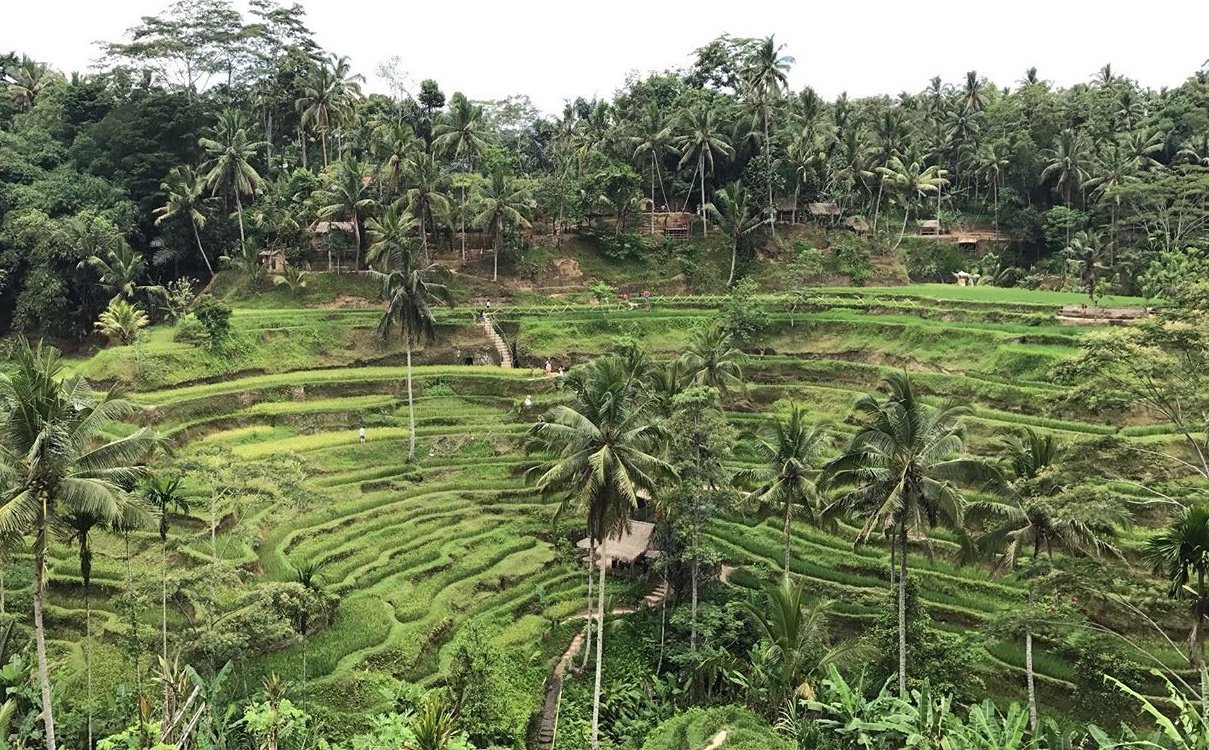
Sacred Rice Terraces
MonkeyEatingMango

Must-have experience 🌾

Sacred Rice Terraces

e.g., Tegallalang Rice Terraces

Jan
O
Feb
O
Mar
O
Apr
S
May
S
Jun
P
Jul
P
Aug
P
Sep
S
Oct
O
Nov
O
Dec
S
Off-peak (cheaper) Shoulder Peak (priciest)Baseline: February

Festivals & timing

March

Nyepi (Day of Silence) + Melasti

Balinese New Year. Airport closes for 24hrs, no lights or noise allowed island-wide. The Ogoh-Ogoh parades the night before are spectacular. Plan around it — either be there for the cultural experience or avoid the travel-day shutdown.

Worth planning around

Varies (every 210 days)

Galungan + Kuningan

Bali's biggest religious festival — towering bamboo penjor decorations line every street, temples are dressed in offerings. Photographically stunning, and many businesses close for a few days.

Worth planning around

June-July

Bali Arts Festival

Month-long traditional dance, music, and craft showcase at the Denpasar Arts Centre. Tickets are cheap, performances are world-class, and most foreigners don't know about it.

Worth planning around

October

Ubud Writers & Readers Festival

Four days of literary talks, workshops, and book launches drawing international authors. Ubud hotels book out — reserve 3+ months ahead if you want this dose of intellectual buzz.

Worth planning around

Dec 20 - Jan 5

Christmas + New Year peak

Hotel rates double or triple in Seminyak, Canggu, and Ubud. Restaurants require reservations weeks out. Beach club lines stretch around the block. Avoid unless this is exactly the scene you want.

Better to avoid

July-August

Australian school holidays

Peak high season — Aussie families fill every Seminyak and Canggu villa, prices stay elevated, and Echo Beach gets crowded. The weather is genuinely best (dry, low humidity) but you're paying a premium for it.

Live events & modern attractions

Beyond classic sightseeing — the show to book, the match to watch, the place that shows you the country's present.

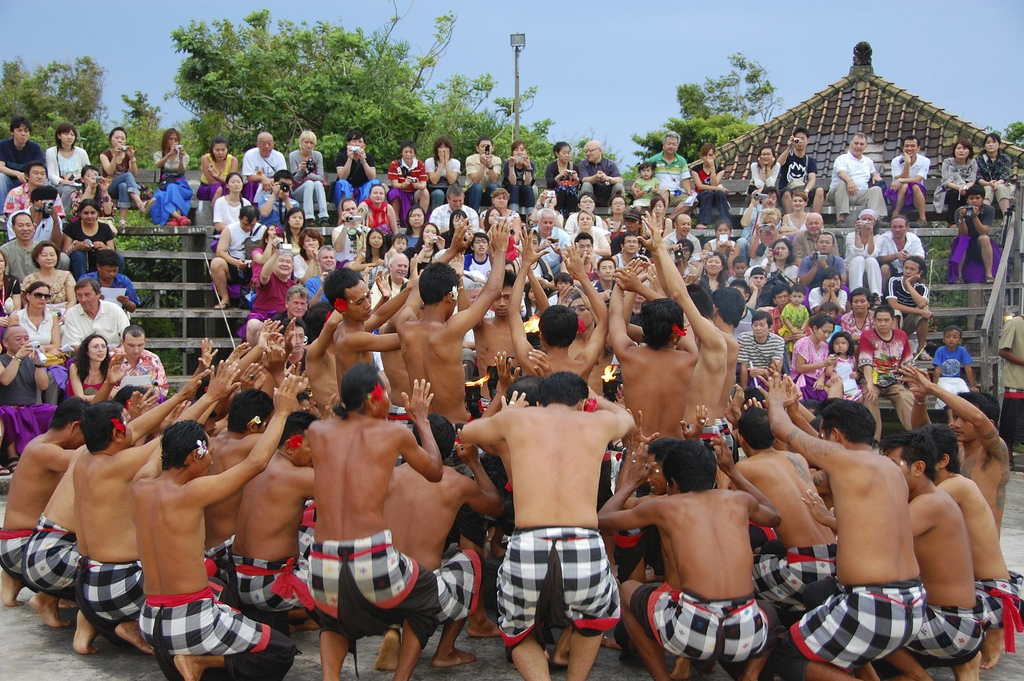
Kecak Fire Dance at Uluwatu

Wikipedia Commons

🎭 Live performance · Uluwatu

Kecak Fire Dance at Uluwatu

A century-old Balinese trance dance performed by 70+ men chanting "cak-cak-cak" — staged nightly at the Uluwatu cliff temple as the sun sets over the Indian Ocean.

When: Nightly · 6:00 PM (one show)

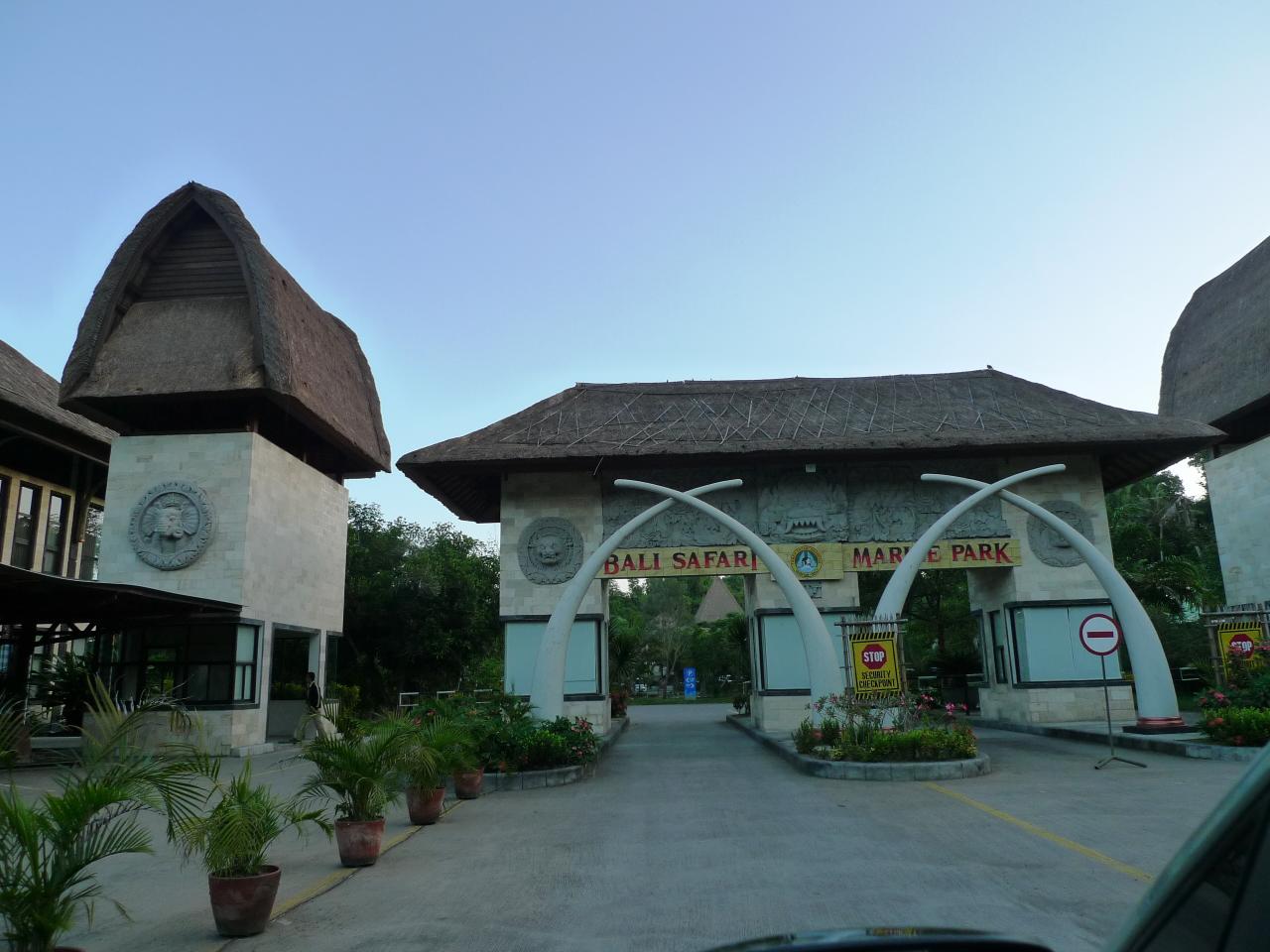
Bali Safari & Marine Park

Wikipedia Commons

🔬 Modern attraction · Gianyar

Bali Safari & Marine Park

80-hectare wildlife park with savanna safari trams, a Bali Agung dance show in a 1,200-seat theatre, and an elephant breeding centre. Best in Bali for families with kids.

When: Daily · 9 AM–5 PM

Major cities at a glance

Ubud
Wikipedia Commons

Ubud

3-4 days

Best for culture, rice terraces, yoga, waterfalls

The cultural heart — Tegallalang and Jatiluwih rice terraces, Sacred Monkey Forest, Tegenungan and Tukad Cepung waterfalls, plus yoga retreats and traditional dance at the palace.

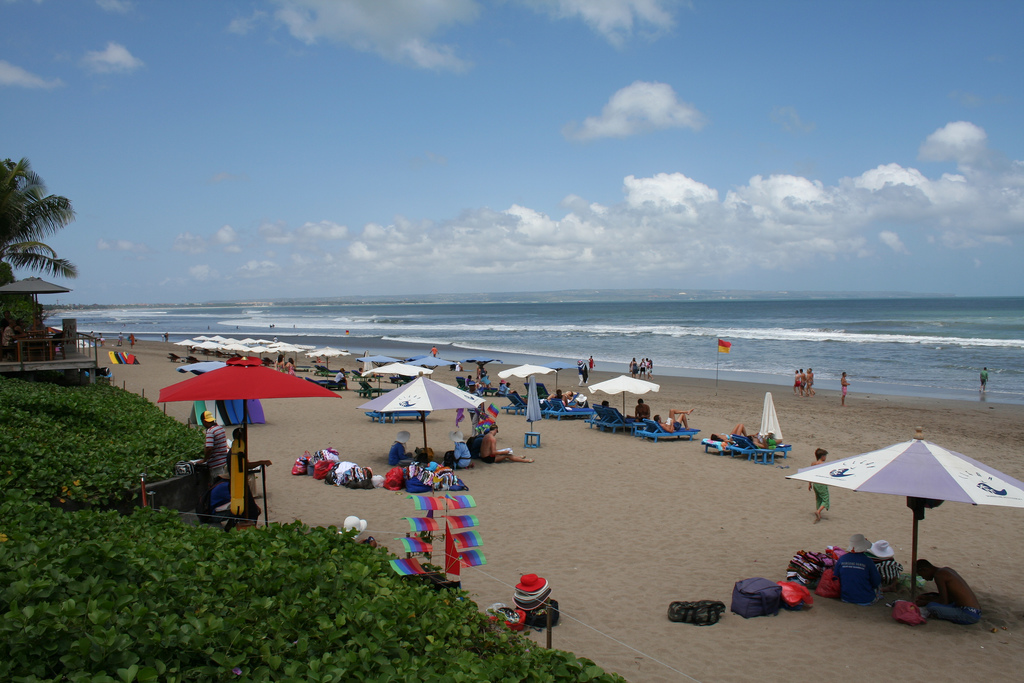
Seminyak & Canggu
Wikipedia Commons

Seminyak & Canggu

2-3 days

Best for beach clubs, surf, cafes, sunsets

The beach scene — Potato Head and Ku De Ta sunset clubs in Seminyak, surf schools and brunch spots in Canggu (Crate, Milk & Madu), plus Echo Beach for sundowners away from the crowds.

Uluwatu
Wikipedia Commons

Uluwatu

1-2 days

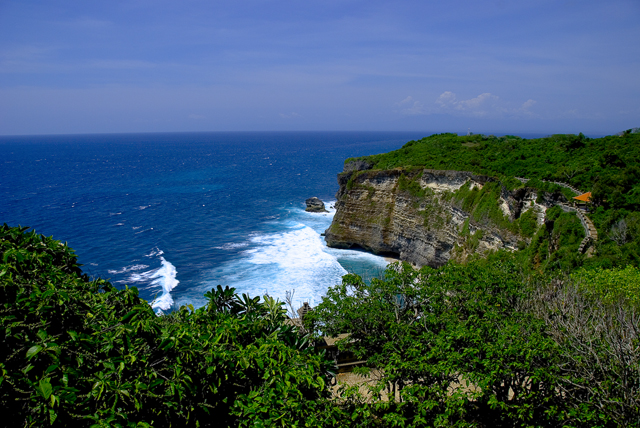
Best for clifftop temple, surf, hidden beaches

South tip of the Bukit Peninsula — Uluwatu Temple Kecak dance at sunset, Padang Padang and Bingin beaches, world-class lefthand surf breaks. Single Fin for sunset drinks.

Nusa Penida
Wikipedia Commons

Nusa Penida

1-2 days

Best for dramatic cliffs, snorkeling, day trips

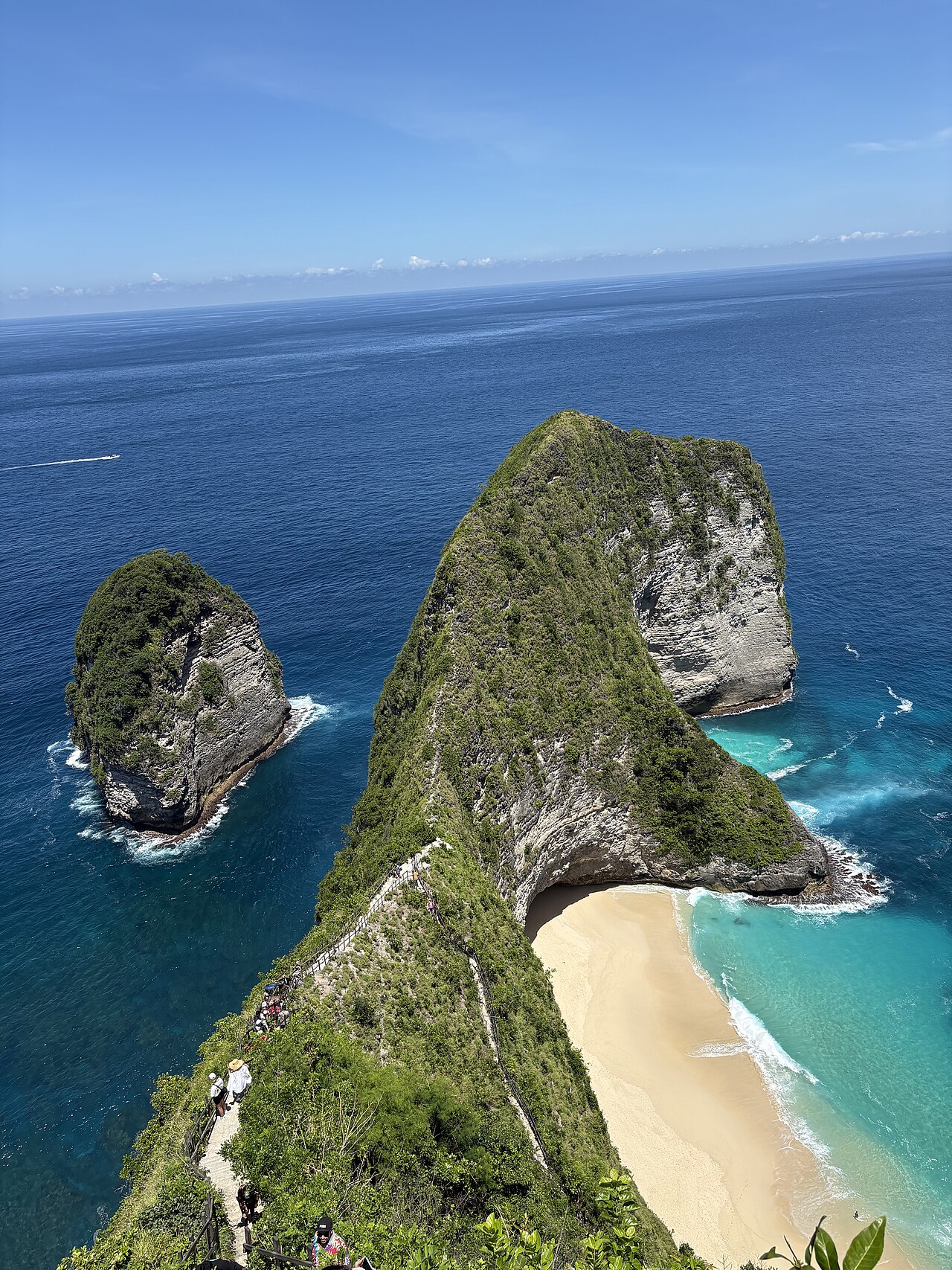
Kelingking Beach (the T-Rex viewpoint), Angel's Billabong, Broken Beach, and Crystal Bay for manta rays. Stay overnight to beat the day-tripper crowds on the trails.

Sidemen & East Bali
Wikipedia Commons

Sidemen & East Bali

2-3 days

Best for non-touristy rice paddies, Mt Agung views

The Ubud-of-15-years-ago — Sidemen valley with views of Mt Agung, Tirta Gangga water palace, Lempuyang gates of heaven, and quiet villas at a third of Ubud's prices.

Sanur & Nusa Dua
Wikipedia Commons

Sanur & Nusa Dua

2-3 days

Best for calm beaches, family-friendly, ferry hub

Sanur for the sunrise side and ferry to the Nusa islands, Nusa Dua for resort-row calm waters and gentler reef snorkeling. Pick this base if you have kids or want zero hassle.

Sunset at the Cliff Temples
MonkeyEatingMango

Must-have experience 🌅

Sunset at the Cliff Temples

e.g., Uluwatu Temple Sunset

Food guide

Bali's culinary heart beats in its warungs and roadside stalls, offering cheap and flavorful Indonesian staples like nasi goreng and mie goreng. Hindu daily offerings (canang sari) are ubiquitous, lending a spiritual backdrop to meals. Denpasar's department store food courts offer surprisingly good value and quality.

Sup Bakso

Sup Bakso

A comforting noodle soup featuring bouncy meatballs (bakso), rice vermicelli, and often tofu or wontons in a clear, savory broth.

Legian beach warungs · 2 USD

Lawar

Lawar

A complex side dish of finely chopped vegetables, grated coconut, and rich spices, often mixed with minced meat (pork or chicken), but also available in vegetarian versions.

Any traditional Balinese warung · 3 USD

Mie Goreng

Mie Goreng

Flavorful stir-fried noodles cooked with sweet soy sauce, vegetables, and usually chicken, beef, or shrimp, a popular and easily accessible dish.

3 USD

Nasi Goreng

Nasi Goreng

Indonesia's national dish of stir-fried rice with sweet soy sauce (kecap manis), egg, and often chicken or shrimp, found everywhere from street stalls to hotels.

3 USD

Sate Lilit

Sate Lilit

Minced fish, chicken, or pork mixed with grated coconut and Balinese spices, then molded around lemongrass stalks or bamboo skewers and grilled, offering a unique texture and aroma.

Sanur · 4 USD

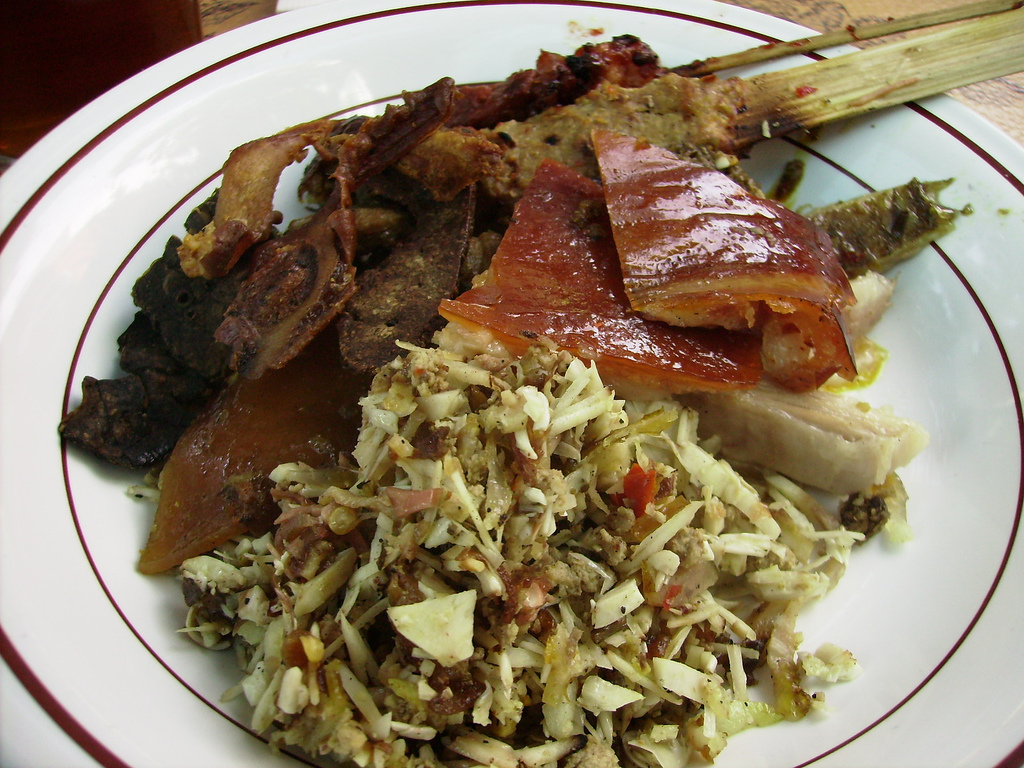
Babi Guling

Babi Guling

Whole suckling pig slow-roasted with a rich blend of Balinese spices (bumbu Bali) until the skin is crispy and the meat tender.

Ubud · 5 USD

Mountain Lake & Volcano Temples
Wikipedia Commons

Must-have experience ⛰️

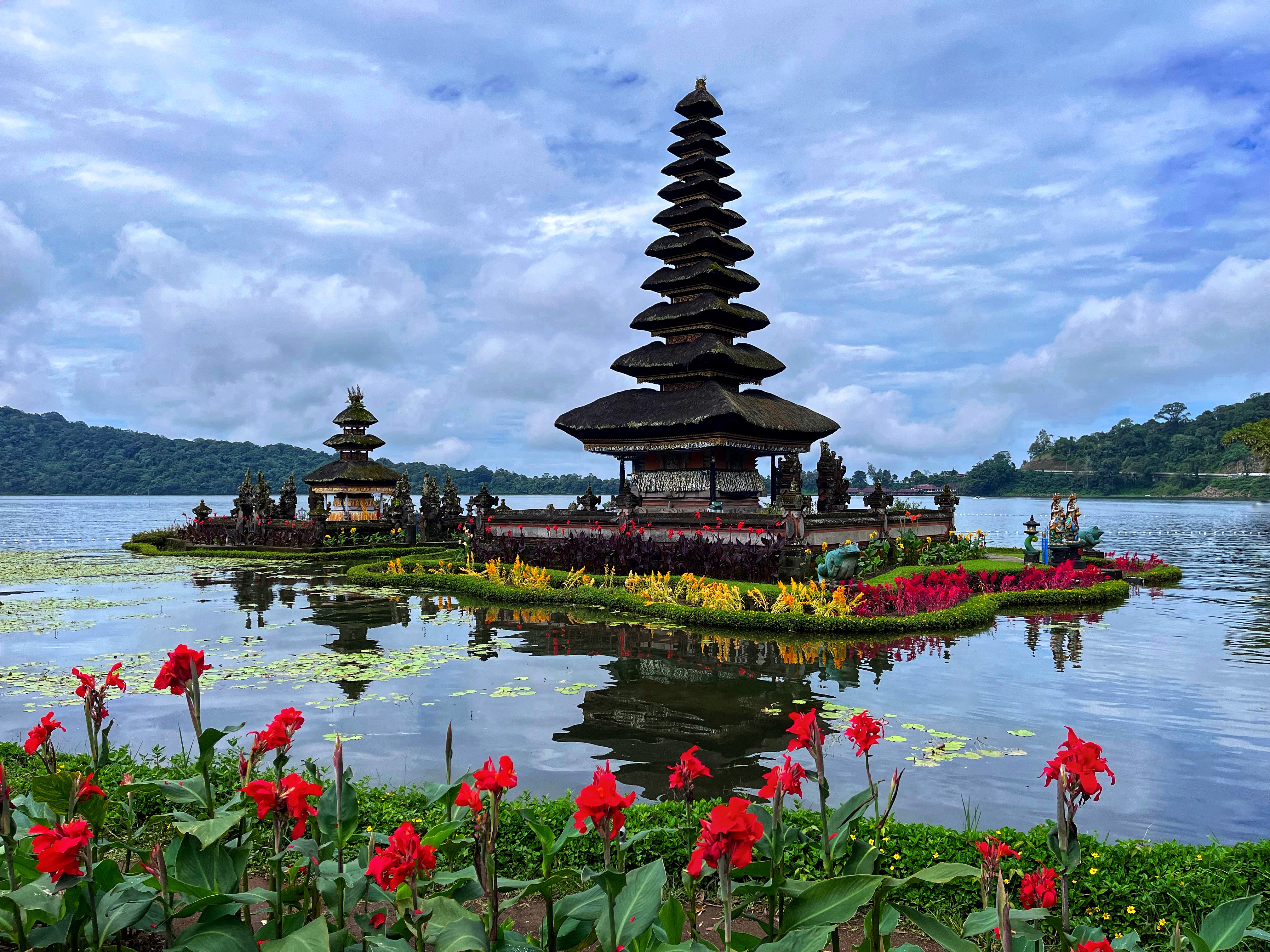
Mountain Lake & Volcano Temples

e.g., Pura Ulun Danu Beratan

Shopping guide

Bali's shopping scene is a vibrant mix of traditional artisan crafts and modern beach-chic boutiques. Ubud is the cultural hub for art and wood carvings, while areas like Seminyak and Canggu offer upscale fashion and homeware. Be prepared for playful haggling at markets but expect fixed prices in modern stores.

Hand-stamped Batik Fabric

Authentic hand-stamped batik fabric, distinct from mass-produced prints, showcases beautiful patterns and traditional Indonesian textile art.

Popiler Batik (Denpasar), Geneve Handicraft Centre (Kerobokan) · 25 USD

Balinese Wood Carvings

Intricate and spiritually themed carvings, often depicting Hindu deities and myths, offer a piece of Balinese artistry for your home.

Mas Village (direct from carvers), Ubud Art Market (for smaller pieces) · 35 USD

Kopi Luwak (Civet Coffee)

Experience the world's most unique and often priciest coffee, sourced from civet droppings, directly from Balinese plantations.

Bali Pulina Agro Tourism, Satria Coffee Plantation (both near Ubud) · 40 USD

Celuk Silver Jewelry

Exquisite handcrafted silver pieces, often adorned with traditional Balinese motifs, are available directly from the skilled artisans in Celuk.

Celuk Village (numerous workshops like UC Silver & Gold) · 60 USD

Balinese Natural Spa Products

Made from local herbs, flowers, and essential oils, these chemical-free products bring the essence of Balinese wellness rituals home.

Utama Spice (Ubud, Seminyak), Blue Stone Botanicals (Ubud) · 20 USD

Balinese Contemporary Art

Discover unique paintings by local artists, often reflecting Hindu spirituality and daily life with vibrant colors, directly from galleries in Ubud.

Neka Art Museum Shop, Seniwati Gallery, Agung Rai Museum of Art (ARMA) Shop · 150 USD

Sacred Monkey Forest & Ubud Jungle
Wikipedia Commons

Must-have experience 🐒

Sacred Monkey Forest & Ubud Jungle

e.g., Sacred Monkey Forest Sanctuary

Travel essentials

Connectivity & SIM

Wi-Fi: Free Wi-Fi is widely available and common in cafes, restaurants, and hotels across Bali. Connection speeds can be inconsistent and unreliable, especially outside main tourist hubs like Kuta or Seminyak.
SIM options
  • Telekomsel Simpati, XL Axiata, IndosatAround IDR 25,000 for the SIM card, plus data package costs (e.g., IDR 50,000-150,000 for 5-15GB)
    Where: Local sundry shops, convenience stores, or mobile phone outlets throughout Bali
Apps to install
  • GojekFor ride-hailing (moto or car), food delivery, grocery shopping, and even massage services.
  • GrabA popular ride-hailing and food delivery app, similar to Gojek, offering competitive prices.
  • Google MapsEssential for navigation, especially with live traffic updates for navigating Bali's congested roads.
  • Google TranslateUseful for translating Bahasa Indonesia, especially with its camera translation feature for menus and signs.
Tip: Ensure your phone is unlocked to use a local Indonesian SIM card. Mobile network coverage can be unreliable and inconsistent in more remote areas, so do not solely rely on it for critical communication.

Cultural notes

The Balinese government is strictly enforcing new tourist conduct rules; always behave respectfully, especially at sacred sites, to avoid fines or deportation. When visiting temples or homes, wear modest clothing (shoulders and knees covered) and remove your shoes before entering. Always use your right hand when giving or receiving items, including money, as the left hand is considered unclean in Balinese culture. Tipping is not mandatory but appreciated for good service; aim for 5-10% in restaurants or a small amount for drivers/hotel staff.

Safety

In Bali, be vigilant against drink spiking, particularly in nightlife areas like Seminyak; never leave your drink unattended and watch it being poured. At Padang Bai ferry dock, decline offers from aggressive porters to carry your luggage to avoid excessive payment demands. Scooter rental in South Bali is extremely dangerous due to poor road infrastructure and erratic driving; consider ride-hailing apps or private drivers instead. Always lock your room, even in safe areas like Nusa Lembongan, as unlocked rooms are targets for opportunistic theft.

What to pack

  • Light, breathable clothing (cotton or linen)
  • Sarong (for temple visits, beach cover-up)
  • Reef-safe sunscreen (mandatory at some marine parks)
  • DEET 30%+ insect repellent (mosquito protection)
  • IDR 500,000-1,000,000 cash (for street food, small shops)
  • Slip-on sandals or flip-flops (easy removal for temples)
  • Waterproof dry bag (for boat trips, sudden rain)
  • Small flashlight or headlamp (for power outages, unlit paths)
  • Small quick-dry towel (beach, temple dips)
  • Travel medication for stomach upset (Bali belly)
  • Wide-brimmed hat (sun protection)

Travel tips

  • At Padang Bai dock, politely decline offers from porters to carry your luggage; they often demand excessive, unagreed-upon payments.
  • When walking in South Bali, particularly at night, use your phone's flashlight and pay close attention to the ground for open drains, missing manhole covers, and uneven footpaths.
  • Always keep your drink in view at bars and clubs in areas like Seminyak or Kuta to prevent drink spiking; do not accept drinks from strangers.
  • In Kuta, strictly observe swimming safety flags on the beach; red flags indicate dangerous currents where swimming is prohibited.
  • Ensure your accommodation room is locked at all times, especially in quieter areas like Nusa Lembongan, as theft from unlocked rooms is a common minor crime.
  • Purchase a local Indonesian prepaid SIM card at any local sundry shop for around IDR 25,000 to get reliable mobile service and data.
  • Avoid renting a scooter in South Bali if you are not an experienced rider; poor road conditions, erratic traffic, and minimal public lighting make it extremely dangerous for tourists.
Nusa Penida Cliff Beaches
MonkeyEatingMango

Must-have experience 🏝️

Nusa Penida Cliff Beaches

e.g., Kelingking Beach

Holy Spring Water Purification
Wikipedia Commons

Must-have experience 💧

Holy Spring Water Purification

e.g., Tirta Empul

Planning checklist

  1. Lock in your visa before you fly.

    Most passports get a 30-day Visa on Arrival at DPS for $35 USD — bring exact change in clean bills. If you want longer than 30 days, apply for the B211A 60-day social visa from your home country *before* travel; in-country extensions are a half-day of queueing at immigration. Check passport validity (must be 6+ months from arrival).

  2. Pick two regions, not four.

    The travelers who get the most out of seven days do 3 nights in Ubud, 3 nights in Seminyak/Canggu, with a single day trip to Uluwatu for sunset. The travelers who try to add Nusa Penida + Sidemen + Munduk on a 7-day trip spend half their time in cars. Add more nights, not more zones.

  3. Get an International Driving Permit before you leave.

    Your home license alone is not valid in Indonesia. The IDP costs ~$20 at home (AAA in the US, post offices in the UK and AU). Without it: void travel insurance and a IDR 250,000-500,000 fine at any police roadblock. Most first-timers either get this or just use Gojek/Grab — both are valid choices, but scooter-on-tourist-license is not.

  4. Book Nyepi-aware.

    Check the lunar calendar (Nyepi 2026 = March 20). If your trip dates touch Nyepi or the day before/after, either build the experience into your plan (book a hotel with a good view of the Ogoh-Ogoh parade) or shift dates by a week — flights are non-functional, no transfers run, and even taxis to the airport stop.

  5. Pre-book private drivers, not group tours.

    A full-day private driver with car runs IDR 600,000-800,000 ($40-50) — cheaper than two group-tour seats, infinitely more flexible. Book through your hotel or a trusted contact (Bali Eco Drivers, Bali Activities, Wayan Lanus on WhatsApp). Group day tours are a tourist tax.

  6. Pack the right small stuff.

    Reef-safe sunscreen (regular is banned at some sites), Imodium + oral rehydration salts, a packable sarong, a quick-dry travel towel, a power bank, and a Type C/F adapter (Indonesia uses 230V, same as Europe). Mosquito repellent with DEET 30%+ for jungle and rice-terrace areas.

  7. Set up Gojek/Grab on the way to baggage claim.

    Both apps need an Indonesian phone number — buy a Telkomsel or XL SIM at the airport ($5-10 for a 7-day data pack), set up the app while you wait for your bag, and you'll have ride-hailing the moment you walk outside. Avoid airport taxi touts; the official Gojek/Grab pickup zone is well-signed.

Volcano Sunrise Treks
Wikipedia Commons

Must-have experience 🌋

Volcano Sunrise Treks

e.g., Mount Batur

Avoid these first-timer mistakes

  • Renting a scooter without an International Driving Permit

    Police roadblocks check daily — fine is IDR 250,000-500,000 ($16-32). More importantly, your travel insurance is void if you crash without a valid IDP, and Bali ER bills are real. Get the IDP at home before you fly.

  • Booking a Canggu hotel 2km from the beach

    Canggu traffic moves at walking pace 4-9 PM. A 'beachfront-ish' hotel 2km inland is a 35-minute Gojek ride at sundown. Either pay up for actual beachfront or stay in walkable Berawa/Echo Beach.

  • Drinking tap water (or ice in tourist warungs)

    Bali belly hits ~40% of first-timers in week one. Bottled water only, brush teeth with bottled, and skip ice in non-chain warungs. Pack Imodium and oral rehydration salts before you fly — you'll thank yourself.

  • Wearing shorts/tank tops at temples

    Every major temple (Uluwatu, Besakih, Tirta Empul, Tanah Lot) requires a sarong tied at the waist. Most rent them for IDR 10,000-20,000 at the gate, but a packable one is $5 and saves the queue. Knees and shoulders covered.

  • Trying to do Ubud and Seminyak in one day

    It's only 40km but the drive is 90-120 minutes in traffic — and the airport is between them. A 'day trip' burns 5 hours of driving for 4 hours on the ground. Split your stay; don't commute it.

  • Showing up during Nyepi without knowing

    Bali's Day of Silence (varies, usually March) shuts down the entire island for 24 hours — no flights in or out, no lights, no leaving your hotel. The day before and after are also restricted. Brilliant cultural experience if planned, disastrous if not.

  • Withdrawing cash from random ATMs

    Bali has the highest ATM skimming rate in Southeast Asia. Stick to ATMs inside bank branches (BCA, Mandiri, BNI), never standalone street-side machines. Cover the keypad. Use a card with no foreign-transaction fees and a separate travel-only account.

Frequently Asked Questions

US, UK, EU, Australian, and most other passport holders can buy a Visa on Arrival at Denpasar (DPS) for $35 USD, valid 30 days. It can be extended once for another 30 days at an immigration office (a hassle — budget half a day or use an agent for ~$50). For longer stays, apply for the B211A social visa before arrival.

April-May and September-October are the sweet spot — dry season, lower prices, and no Aussie-school-holiday surge. July-August is peak dry and best weather but most crowded and expensive. November-March is the wet season (afternoon downpours, occasional flooding), but rain rarely lasts all day and prices drop significantly outside Christmas week.

Scooters are how locals move, but Bali has one of the highest tourist-fatality scooter rates in Asia. Bring an International Driving Permit (your home license alone is not valid), always wear a helmet, check the brakes before you ride off, and pay $5 extra/day for full damage insurance. If you've never ridden a scooter, take a lesson day 1 or use Gojek/Grab instead — both are cheap.

Bottled water only — for drinking AND brushing teeth. Skip ice in non-chain warungs. Eat at busy places with high turnover (food sits less). Pack Imodium and oral rehydration salts before you fly; pharmacies in Bali sell them but you don't want to be hunting at 2 AM. Most cases hit in days 2-4 and last 2-3 days; severe or bloody symptoms = see a doctor at Siloam or BIMC.

Indonesian Rupiah (IDR), roughly 16,000 IDR = $1 USD (April 2026). Cards work at hotels, fine restaurants, and supermarkets, but warungs, markets, scooter rental, and most temples are cash-only. Withdraw from bank-branch ATMs only (BCA, Mandiri, BNI) — never standalone street machines, which have the highest skimming rate in SE Asia. A Wise or Charles Schwab card refunds the IDR 25,000 ATM fee.

It's the cheapest 'world-class destination' on most lists. Budget travelers can do $30/day comfortably (homestays $10, warung meals $2, scooter $5). Mid-range with a private villa and a mix of fancy dining is $100-150/day. The luxury tier — Four Seasons Sayan, Mandapa, Bulgari — runs $1000+/night but is comparable to St-Barths quality at half the price.

Beachwear is fine at the beach, in Seminyak/Canggu, and in your villa. At temples (Uluwatu, Tirta Empul, Besakih, Tanah Lot, and all the smaller village pura) you must wear a sarong tied at the waist and have shoulders covered — both for men and women. Most temples rent sarongs at the entrance for IDR 10-20k or include it in the ticket. In Ubud, modest cotton clothing is normal and respectful.

Nyepi is the Balinese 'Day of Silence' marking the lunar new year — usually in March (March 20, 2026). For 24 hours, the entire island shuts down: no lights, no fires, no leaving your hotel, no flights in or out (Denpasar airport closes). The Ogoh-Ogoh parades the night before are spectacular. Either plan to be present for the cultural experience, or schedule travel days well outside it — many tourists arrive on Nyepi and are stuck at the airport.

No. Use bottled or filtered water for drinking, brushing teeth, and rinsing fruit. Most mid-range and luxury hotels provide bottled water in the room, refilled daily. Many cafes and restaurants now use filtered water and ice — places marked 'safe ice' (clear cubes with holes) are reliable. For environmental reasons, refill stations are everywhere — bring a reusable bottle and use them.

End of the trail

Plan less, do more.