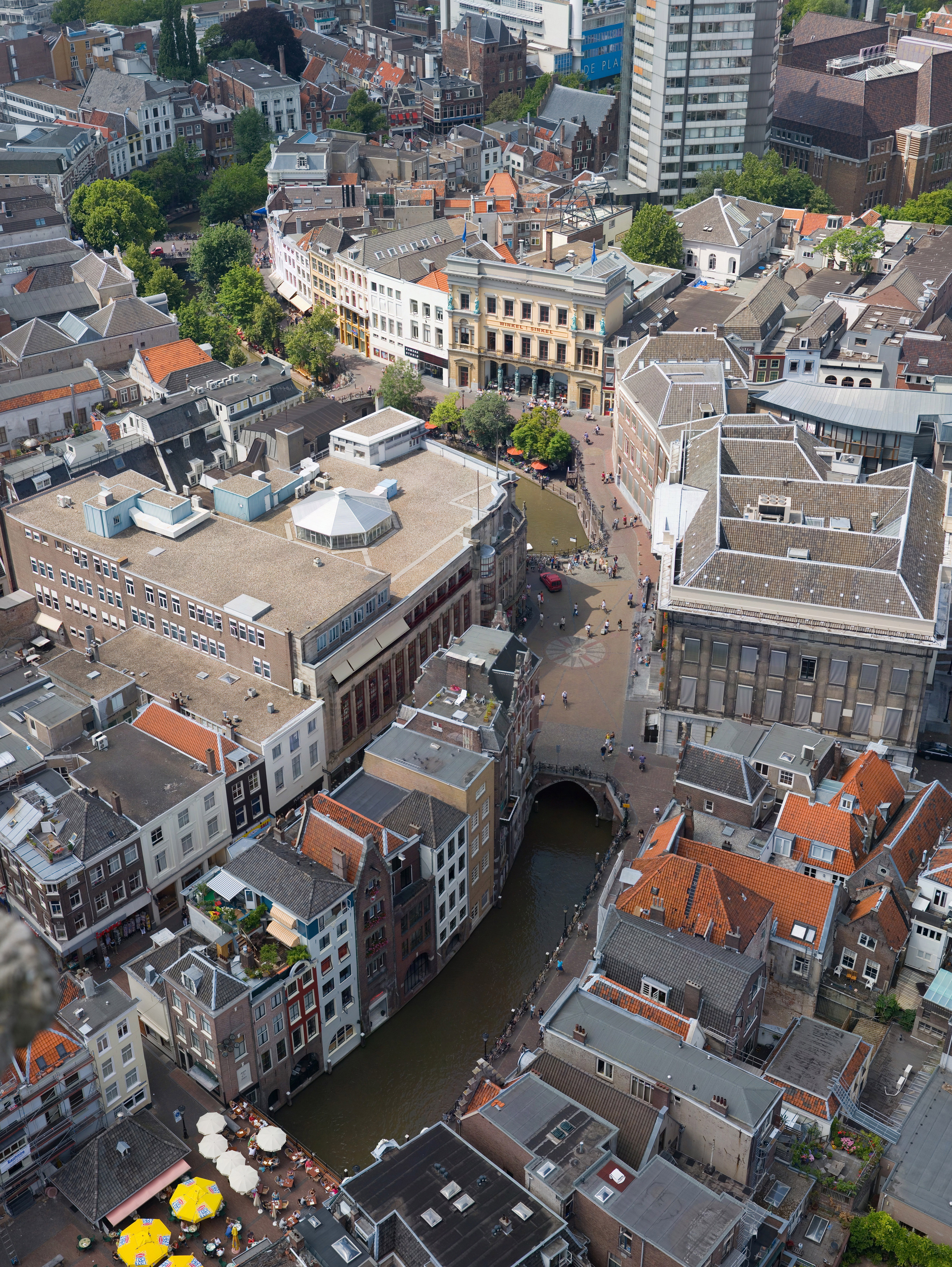
The Netherlands rewards the traveler who treats Amsterdam as the front door, not the whole house. The capital packs the Rijksmuseum, the Van Gogh Museum, the Anne Frank House, and a UNESCO-listed 17th-century canal ring into a walkable centre, and most first-timers never leave it. That is a mistake the rail map fixes for you. Rotterdam's bold post-war architecture sits 40 minutes south. Utrecht's two-level wharf canals are 25 minutes away. The Hague's Mauritshuis, home to the Girl with a Pearl Earring, is under an hour. Haarlem is the canal-town look without the crowds, 15 minutes out. The country is small, flat, and stitched together by trains so frequent you rarely need a schedule.
The friction nobody warns you about is the bikes and the booking. Dutch cyclists own the red-paved lanes and move fast; stepping into one for a photo is the quickest way to a collision. The Anne Frank House sells timed tickets online only, released about six weeks out, and they sell out within hours. The Van Gogh Museum and Rijksmuseum need advance slots too. Tulips bloom for a short window, roughly mid-March to mid-May, peaking in mid-April, so arriving in June for the bulb fields means bare ground. King's Day on 27 April turns the whole country orange and books out hotels months ahead.
This guide is the planning layer above the day-by-day itineraries. Pick your base (Amsterdam handles four to five days of day trips on its own; add Rotterdam or The Hague for a wider loop), book the museum tickets the day they release, and tap onto the trains with a contactless card. For a day-by-day plan with specific hotels, museum bookings, and train times, the 5-day Netherlands itinerary is the companion piece.