When should you go to Iceland, and what will that month cost you in daylight, weather and price? Iceland has two different answers depending on what you want. June through August brings the warmest weather, the longest daylight and full access to the highland F-roads, while September through March brings dark enough nights for the Northern Lights. Reykjavik averages 14.2 °C (58 °F) in July and 4.0 °C (39 °F) in January, and hotel nights run 1.48 times an average month in August against 0.65 in January.
High and sea, °C: lowest 2.4 °C (36 °F), Akureyri (North) in December; highest 15.9 °C (61 °F), Akureyri (North) in June. Wet days: lowest 11, Akureyri (North) wet days in April; highest 18, Reykjavik wet days in September. Days with snow on the ground: lowest 0, Reykjavik snow days in May; highest 31, Akureyri (North) snow days in January. Hotel nights: lowest Low (0.65), Hotel nights in January; highest Peak (1.48), Hotel nights in August. Best months: May, September, October.
The month-by-month table: Iceland month by month at a glance
- Go in June through August for warm weather and open roads: Akureyri reaches 15.9 °C (61 °F) in June, and the F-roads into the highlands are fully open by midsummer.
- Go between September and March for the Northern Lights: Visit Iceland says they are most active around the equinoxes in September and March.
- May, September and October cost less: hotel nights run at 0.94, 1.20 and 1.11 times an average month, well under August's 1.48.
Spring: March to May
Spring moves fast in Iceland: Reykjavik warms from 4.9 °C (41 °F) in March to 9.5 °C (49 °F) in May. The puffins and the first F-roads both arrive by the end of it.
March
Best for a last chance at dark-sky aurora before summer
- Weather: Reykjavik highs 4.9 °C (41 °F), lows 0.3 °C (33 °F); 135.6 mm (5.3 in) of rain over about 16 wet days; Akureyri highs 3.8 °C (39 °F); Hofn highs 4.5 °C (40 °F)
- Season: shoulder, 0.93 times an average month nationwide
- Plan it: Golden Circle itinerary, Iceland guide
The March equinox is one of the two points in the year Visit Iceland names as the best for the Northern Lights. Iceland still has close to 12 hours of darkness a night to see the Northern Lights. Reykjavik's nights stay below freezing, at 0.3 °C (33 °F), so pack for winter even as the days lengthen.
The highland F-roads are still closed in March; the earliest of them does not open until late May. Stay close to Reykjavik and the Golden Circle, where the roads are paved and cleared, and watch the forecast for ice before driving the south coast.
April
Best for puffins returning and the last of the snow
- Weather: Reykjavik highs 7.3 °C (45 °F), lows 2.4 °C (36 °F); 114.9 mm (4.5 in) of rain over about 14 wet days; Akureyri highs 6.2 °C (43 °F)
- Season: low, 0.82 times an average month nationwide
- Plan it: 5-day Iceland itinerary, Iceland guide
April has one of the lowest hotel-night ratios of the year, at 0.82 times an average month. Puffins also start arriving on Iceland's sea cliffs in late April, after spending the winter out at sea.
Reykjavik has snow on the ground for about 5 days in April, far less than Akureyri's near-daily cover in the north. The capital is the easier spring base of the two.
May
Best for the midnight sun's first weeks and the first highland roads
- Weather: Reykjavik highs 9.5 °C (49 °F), lows 4.2 °C (40 °F); sea 6.5 °C (44 °F); Akureyri highs 10.8 °C (51 °F); Hofn highs 8.6 °C (47 °F)
- Season: shoulder, 0.94 times an average month nationwide
- Plan it: 7-day Iceland itinerary, Iceland guide
The midnight sun begins in mid-May, and Reykjavik already has more than 18 hours of daylight by the middle of the month. Whale-watching season also picks up in May.
May is also when the first F-roads reopen. The Sigalda-Landmannalaugar stretch of the F208 has opened as early as May 23 in the past five years. Vegagerdin, the road administration, sets no fixed date. Check road.is before planning a highland trip this early, and never cross a river you are unsure of.
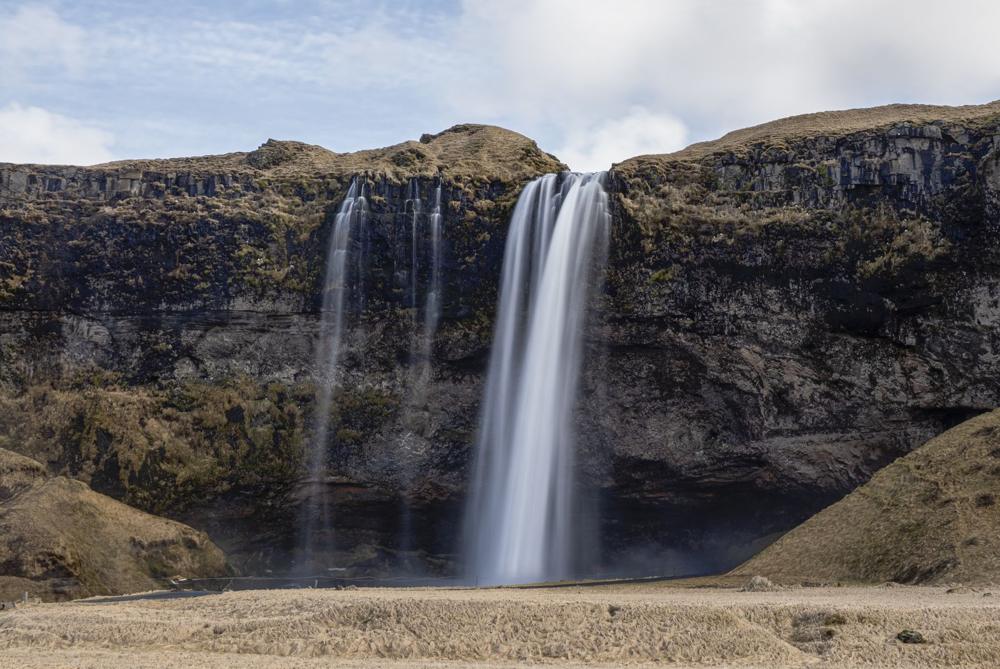 Photo by Rino Adamo on Pexels
A waterfall cascading over cliffs in South Iceland
Summer: June to August
Akureyri reaches 15.9 °C (61 °F) in June, warmer than Reykjavik's 12.3 °C (54 °F). The whole country is at its busiest from June through August, with hotel nights running at 1.18 to 1.48 times an average month.
June
Best for the midnight sun and Iceland's National Day
- Weather: Reykjavik highs 12.3 °C (54 °F), lows 7.5 °C (46 °F); sea 9.1 °C (48 °F); Akureyri highs 15.9 °C (61 °F); Hofn highs 11.6 °C (53 °F)
- Dates: Iceland's National Day, June 17
- Season: peak, 1.18 times an average month nationwide
- Plan it: 10-day ring road itinerary, where to go in June
Reykjavik gets about 21 hours of daylight around the June solstice, and the sun barely dips below the horizon in the north. On June 17, Iceland's National Day fills Austurvollur Square with a scout-led parade, and the surrounding parks add bouncy castles and children's activities.
June is the month to start a ring road trip: Akureyri is already warmer than Reykjavik at 15.9 °C (61 °F), and most of the lowland roads are clear. Book hotels early, since Iceland's hotel nights jump to 1.18 times an average month and keep climbing through August.
July
Best for Iceland's warmest weather and the farthest highland roads
- Weather: Reykjavik highs 14.2 °C (58 °F), lows 9.2 °C (49 °F); sea 10.8 °C (51 °F); Akureyri highs 15.3 °C (60 °F); Hofn highs 13.0 °C (55 °F)
- Season: peak, 1.43 times an average month nationwide
- Plan it: 10-day Reykjavik itinerary, where to go in July
Even the most remote F-roads, like the F26 Sprengisandur, are typically open by July. Almost 20 hours of daylight leave long evenings for driving. July is also Reykjavik's warmest month, at 14.2 °C (58 °F).
Book well ahead: July is one of Iceland's two busiest months for hotels, at 1.43 times an average month. Whale-watching and puffin-viewing are both near their peak, and the sea off Reykjavik is at its warmest of the year outside August.
August
Best for the warmest sea and Reykjavik's Culture Night
- Weather: Reykjavik highs 13.7 °C (57 °F), lows 8.8 °C (48 °F); sea 11.6 °C (53 °F); Akureyri highs 14.5 °C (58 °F); Hofn highs 12.9 °C (55 °F)
- Dates: Culture Night in Reykjavik, August 22, 2026 (2027 not yet published); Thjodhatid in the Westman Islands, July 29 to August 2, 2027
- Season: peak, 1.48 times an average month nationwide, the busiest of the year
- Plan it: 10-day ring road itinerary, where to go in August
Reykjavik's sea warms to 11.6 °C (53 °F) in August, the warmest of the year, while Culture Night turns the city center into one long street festival with a fireworks finale over Arnarholl. Over the same weekend most years, the Westman Islands hold Thjodhatid, a multi-day outdoor festival with camping.
August is Iceland's most expensive month for hotels, at 1.48 times an average month, so book both the capital and the islands well in advance. Puffins start heading back out to sea by mid to late August.
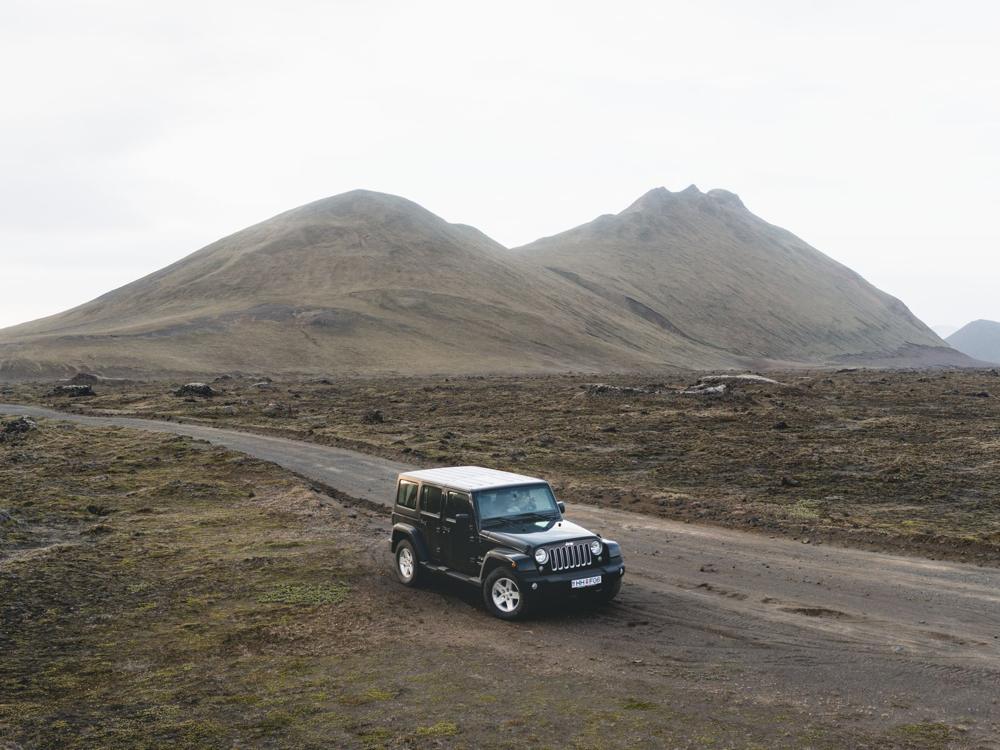 Photo by Matt Hardy on Pexels
A 4x4 on a gravel road in the Icelandic highlands
Autumn: September to November
Reykjavik's highs fall from 11.4 °C (53 °F) in September to 5.8 °C (42 °F) in November, and the Northern Lights return as the nights darken.
September
Best for the Northern Lights' return and fall colors
- Weather: Reykjavik highs 11.4 °C (53 °F), lows 6.5 °C (44 °F); 147.4 mm (5.8 in) of rain over about 18 wet days, Reykjavik's wettest month; sea 10.7 °C (51 °F); Akureyri highs 12.7 °C (55 °F)
- Season: peak, 1.20 times an average month nationwide
- Plan it: 10-day ring road itinerary, Iceland guide
The September equinox brings back dark enough nights for the Northern Lights, and Visit Iceland says the equinoxes in March and September create some of the best conditions of the year for seeing them. Birch and willow scrub across the lowlands turn gold through the month.
September pairs the Northern Lights' return with Reykjavik's wettest weather of the year, at 147.4 mm (5.8 in) of rain over about 18 wet days, more than either November or December. Pack a real rain shell rather than counting on mild shoulder-season weather, and keep a flexible itinerary in case a clear night calls for an aurora detour.
October
Best for Reykjavik below August's prices
- Weather: Reykjavik highs 8.2 °C (47 °F), lows 3.8 °C (39 °F); 123.0 mm (4.8 in) of rain over about 13 wet days; Akureyri highs 7.8 °C (46 °F); Hofn highs 8.2 °C (47 °F)
- Season: peak, 1.11 times an average month nationwide
- Plan it: 10-day Reykjavik itinerary, Iceland guide
By October, Reykjavik's daylight has dropped under 10 hours. The lowland roads are still clear and ice-free for most of the month, making it one of the last easy windows for a self-drive trip before winter weather sets in.
Iceland's highland F-roads start closing from September onward, with no fixed date, so an October trip stays on the ring road and the south coast rather than the interior. October's hotel nights are still at 1.11 times an average month, well under August's 1.48, so book ahead even this late in the year.
November
Best for the Northern Lights and lower prices
- Weather: Reykjavik highs 5.8 °C (42 °F), lows 2.2 °C (36 °F); 120.7 mm (4.8 in) of rain over about 15 wet days; Akureyri highs 4.0 °C (39 °F)
- Dates: Iceland Airwaves, main program November 5 to 7, 2026 (2027 not yet published)
- Season: low, 0.80 times an average month nationwide
- Plan it: 10-day Reykjavik itinerary, Iceland guide
Iceland Airwaves, a multi-venue music festival across downtown Reykjavik, runs its main program in the first week of November. Reykjavik's daylight has dropped to under seven hours by now, which gives long dark evenings for aurora hunting without December's full cold.
Hotel nights fall to 0.80 times an average month, but the highlands are closed and storms can ice the roads with little warning. Drive the south coast in daylight hours only, and check road.is before heading out.
Try free
Plan your Iceland trip in about 2 minutes
Tap through 8 quick cards for a complete itinerary with budget, maps, and packing lists. No account required.
Plan your Iceland trip →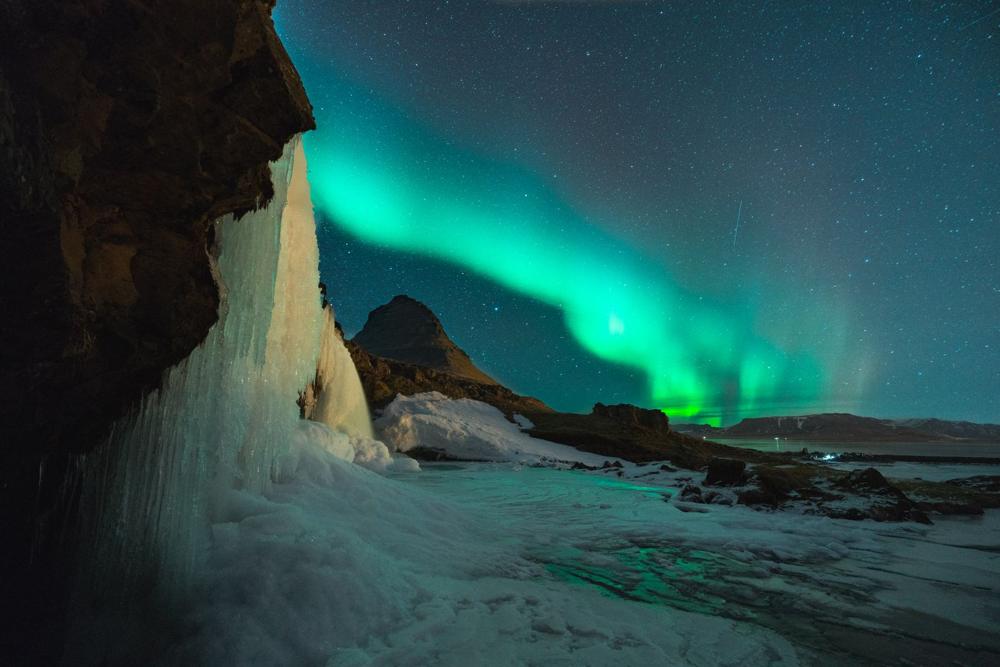 Photo by Simon Migaj on Pexels
The Northern Lights over Kirkjufell mountain
Winter: December to February
Reykjavik's daylight bottoms out at about 4 hours in December, and hotel nights fall to 0.66 and 0.65 times an average month in December and January, the two cheapest months of the year.
December
Best for Christmas lights and the darkest skies
- Weather: Reykjavik highs 3.3 °C (38 °F), lows −0.5 °C (31 °F); 120.8 mm (4.8 in) of rain over about 15 wet days; Akureyri highs 2.4 °C (36 °F)
- Season: low, 0.66 times an average month nationwide
- Plan it: Golden Circle itinerary, Iceland guide
December trades the year's shortest daylight, about 4 hours around the solstice, for close to 20 hours of darkness and some of the clearest Northern Lights skies of the year. Christmas lights fill Reykjavik's main shopping streets from early in the month.
Most Icelanders take Christmas Eve and Christmas Day off work, so some shops and restaurants close on December 24 and 25. The Golden Circle stays reachable on paved roads even now, making it the safer winter day trip from Reykjavik over a full highland drive.
January
Best for the lowest hotel prices and Thorrablot
- Weather: Reykjavik highs 4.0 °C (39 °F), lows 0.1 °C (32 °F); 138.2 mm (5.4 in) of rain over about 17 wet days; Akureyri highs 3.1 °C (38 °F), lows −2.6 °C (27 °F)
- Season: low, 0.65 times an average month nationwide, the cheapest month
- Plan it: where to go in January, Iceland guide
January has the cheapest hotel nights of the year, at 0.65 times an average month. The month also opens Thorrablot, a midwinter food tradition held through Thorri, the old Icelandic calendar's fourth winter month running from mid-January to mid-February. Families, workplaces and clubs hold their own feasts rather than one public event.
Akureyri drops to −2.6 °C (27 °F) at night in January, noticeably colder than Reykjavik's 0.1 °C (32 °F), so pack for the interior separately from the capital. The Northern Lights season is in full swing, even if the days are short.
February
Best for the end of Thorrablot and rising daylight
- Weather: Reykjavik highs 4.0 °C (39 °F), lows −0.4 °C (31 °F); 127.6 mm (5.0 in) of rain over about 15 wet days; Akureyri highs 2.7 °C (37 °F), lows −2.8 °C (27 °F)
- Season: low, 0.81 times an average month nationwide
- Plan it: 3-day Golden Circle itinerary, Iceland guide
Daylight reaches about 8 and a half hours by mid-February, up from about 5 and a half in mid-January, while Reykjavik's highs stay close to freezing. Thorrablot celebrations run through much of the month, since Thorri does not end until mid-February.
February closes out Thorrablot while hotel nights stay low, at 0.81 times an average month, before March's equinox pulls prices up. Akureyri is the coldest of the three cities in the chart, dropping to −2.8 °C (27 °F) at night, so a trip north needs winter tires and flexible plans around storms.
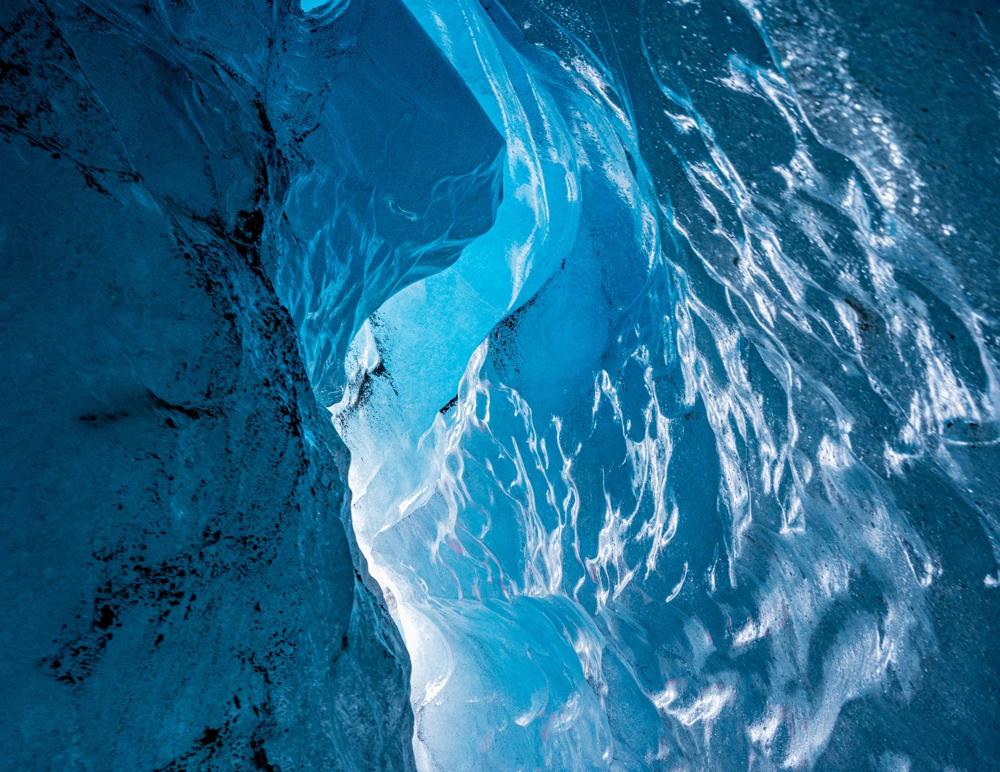 Photo by David Stanfield on Pexels
Blue ice inside an Icelandic glacier cave
Which month suits your trip?
| If you want | Go in | Because |
|---|---|---|
| The Northern Lights | September, October, March | Visit Iceland names the equinoxes as the most active aurora windows |
| Warm weather and open F-roads | June, July, August | Akureyri reaches 15.9 °C (61 °F) in June; most F-roads are open by July |
| The lowest prices | January, April, November | Hotel nights at 0.65, 0.82 and 0.80 times an average month |
| Puffins | May to mid-August | Visit Iceland's arrival-to-departure window for the colonies |
| The ring road, start to finish | June to August | Full lowland and most highland access, longest daylight for driving |
| A short, paved loop in winter | December to February | The Golden Circle stays open on cleared roads when the F-roads do not |
There is no single worst month. December and January have the least daylight of the year, about 4 to 5 hours, and the highest chance of storm-driven road closures. June through August is the most crowded and most expensive season, at up to 1.48 times an average month's hotel nights.
Iceland month by month at a glance
| Month | Reykjavik high | Akureyri high | Hofn high | Reykjavik wet days | Hotel nights vs average | What's on |
|---|---|---|---|---|---|---|
| January | 4.0 °C (39 °F) | 3.1 °C (38 °F) | 3.7 °C (39 °F) | 17 | Low (0.65) | Thorrablot begins |
| February | 4.0 °C (39 °F) | 2.7 °C (37 °F) | 3.7 °C (39 °F) | 15 | Low (0.81) | Thorrablot ends |
| March | 4.9 °C (41 °F) | 3.8 °C (39 °F) | 4.5 °C (40 °F) | 16 | Shoulder (0.93) | Equinox aurora boost |
| April | 7.3 °C (45 °F) | 6.2 °C (43 °F) | 6.3 °C (43 °F) | 14 | Low (0.82) | Puffins arrive |
| May | 9.5 °C (49 °F) | 10.8 °C (51 °F) | 8.6 °C (47 °F) | 15 | Shoulder (0.94) | Midnight sun begins, F-roads start opening |
| June | 12.3 °C (54 °F) | 15.9 °C (61 °F) | 11.6 °C (53 °F) | 13 | Peak (1.18) | National Day, June 17 |
| July | 14.2 °C (58 °F) | 15.3 °C (60 °F) | 13.0 °C (55 °F) | 13 | Peak (1.43) | Warmest month |
| August | 13.7 °C (57 °F) | 14.5 °C (58 °F) | 12.9 °C (55 °F) | 13 | Peak (1.48) | Culture Night, Thjodhatid |
| September | 11.4 °C (53 °F) | 12.7 °C (55 °F) | 11.5 °C (53 °F) | 18 | Peak (1.20) | Northern Lights return |
| October | 8.2 °C (47 °F) | 7.8 °C (46 °F) | 8.2 °C (47 °F) | 13 | Peak (1.11) | F-roads start closing |
| November | 5.8 °C (42 °F) | 4.0 °C (39 °F) | 5.6 °C (42 °F) | 15 | Low (0.80) | Iceland Airwaves |
| December | 3.3 °C (38 °F) | 2.4 °C (36 °F) | 3.4 °C (38 °F) | 15 | Low (0.66) | Christmas lights |
Highs are monthly averages for 2013 to 2022. Hotel nights are each month's 2025 total divided by the average month, from Statistics Iceland. 1.10 or more is Peak, below 0.90 is Low.
Plan the trip
Three days are enough for the Golden Circle, which the 3-day Golden Circle itinerary covers, and it works even in winter since the roads stay cleared. The 10-day ring road itinerary circles the whole country, including Akureyri, and works best in summer when every highland shortcut is open. The Iceland guide covers the rest of the country.
Every MonkeyEatingMango trip plan shows the measured weather for your travel month, so a September plan shows Reykjavik's rain beside the Northern Lights odds. The free packing list generator picks what to bring for that month. A mid-range day in Iceland costs about $311 a person.
Plan your Iceland trip →Choose your month, then plan an Iceland trip.
Last updated November 2026.
Common questions
What is the best month to visit Iceland?
Iceland has two best times depending on the goal. June through August brings the warmest weather, up to 21 hours of daylight and full access to the highland F-roads, while September through March brings dark enough nights for the Northern Lights. May, September and October sit between the two, with lower hotel-night ratios than peak summer.
What is the best time to see the Northern Lights in Iceland?
The best time to see the Northern Lights in Iceland is between September and April, when dark, long nights replace the bright summer ones. Visit Iceland, the national tourism board, says the lights are most active around the September and March equinoxes. Mid-winter's extra darkness helps too.
What is the cheapest month to visit Iceland?
January is Iceland's cheapest month for hotels, with hotel nights at 0.65 times an average month in 2025, and April and November are close behind at 0.82 and 0.80. December looks similar on paper (0.66) but the days around Christmas and New Year push up demand within the month.
Is Iceland too cold to visit in winter?
Iceland's winter is cold but not extreme for a coastal country this far north: Reykjavik averages 3.3 to 4.0 °C (38 to 39 °F) from December through February. The bigger obstacles are the short daylight, about 4 hours in December, and highland roads that stay closed until early summer.
When does the midnight sun happen in Iceland?
The midnight sun runs from mid-May to mid-July. Reykjavik gets about 21 hours of daylight in June, and the sun barely dips below the horizon in the north of the country around the summer solstice.
When do Iceland's highland F-roads open?
Iceland's highland F-roads have no fixed opening date; Vegagerdin, the national road administration, opens each one as snow and river levels allow. The Sigalda-Landmannalaugar section of the F208 opened as early as May 23 in 2025 and as late as June 23 in 2022, averaging June 2 over 2021 to 2025.
Which month is the rainiest in Iceland?
September is Reykjavik's wettest month, with about 18 wet days and 147.4 mm (5.8 in) of rain, more than November or December. On the south coast, Hofn sees even more rain in winter, with about 268 mm (10.5 in) in February.
Is September a good time to visit Iceland?
September works well for travelers who want both mild weather and a chance at the Northern Lights, which return as the nights darken. September is also Reykjavik's wettest month of the year, so it is not a good pick for travelers trying to avoid rain.
When is puffin season in Iceland?
Puffins arrive on Iceland's cliffs in late April or early May and leave by mid to late August, according to Visit Iceland. The best viewing window is May through mid-August, before the birds head back out to sea.
What is the worst time to visit Iceland?
There is no single worst month, but each season has a real cost. December and January have the least daylight of the year, about 4 to 5 hours, and the highest chance of storm-driven road closures. June through August is both the most expensive and most crowded season, with hotel nights at 1.48 times an average month in August.
Is July a good time to visit Iceland?
July is Iceland's warmest month, with Reykjavik averaging 14.2 °C (58 °F) and Akureyri 15.3 °C (60 °F), and almost 20 hours of daylight. July is also one of the busiest and most expensive months, with hotel nights at 1.43 times an average month.

Written by Shobhit Shrivastava · Founder
Related reading
Iceland travel guide
Iceland in 5 Days: Reykjavík, the Blue Lagoon and Day Trips
5 days in Reykjavik focused on geothermal sites and active exploration. Highlights include the Hallgrimskirkja summit, a soak in the Sky Lagoon, and a whale watching cruise from the Old Harbor. This trip keeps a comfortable pace with daily neighborhood walks and easy access to local nature...
A Week in Iceland: Reykjavík, the Blue Lagoon and Hallgrímskirkja
7 days split between Reykjavik and Vik: 3 nights in Reykjavik for Hallgrimskirkja, Sky Lagoon, and local harbor markets, followed by 4 nights in Vik for black sand beaches, Skogafoss waterfall, and glacier hikes. Comfortable pace with private 4x4 rental for flexibility, focusing on a mix of...
3 Days on Iceland's Golden Circle: Gullfoss and Geysir
3 days traversing Iceland: 1 night in Reykjavik (Hallgrimskirkja, Old Harbor) and 2 nights in Laugarvatn (Fontana, Golden Circle landmarks). Includes Thingvellir National Park, Geysir, and Gullfoss. Comfortable pace, rental car required, single driving route.
10 Days on Iceland's Ring Road: Reykjavík to Akureyri and Mývatn
10 days across Reykjavik and Akureyri: 5 nights in Reykjavik (Hallgrimskirkja, Blue Lagoon, Laugavegur street, based in Midborg), then driving north for 5 nights in Akureyri (Arctic Botanical Gardens, whale watching in Eyjafjordur, Myvatn Nature Baths). Comfortable pace -- 2-3 deep adventure...
Banana Pancake Trail: Route, How Long and When to Go
The Banana Pancake Trail in three weeks: eight stops from Bangkok to Angkor, February and March as the one window that is dry at every stop, and why the old overland crossing into Cambodia is closed.
Best Time to Visit Thailand: Month by Month (2027)
When to go to Thailand, month by month: weather for Bangkok, Chiang Mai, Phuket and Ko Samui, the 2027 Songkran and Loy Krathong dates, and why the Andaman and Gulf coasts run different rainy seasons.
Best Time to Visit Australia: Month by Month (2027)
When to go to Australia, month by month: weather for Sydney, Melbourne, Cairns and Darwin, the 2027 Australian Open and Vivid Sydney dates, and when the tropical north's stinger season runs.