Colombia rewards travelers who treat it as several countries stitched together. Bogotá is a cool high-Andes capital at 2,600m, with a colonial old town, a Gold Museum and Sunday mornings when whole avenues close to cars. A 90-minute flight away, Medellín sits in a green valley of permanent spring, famous less for its weather than for the cable cars and outdoor escalators that turned hillside neighborhoods around. Another short hop and you're on the Caribbean coast, walking the 16th-century ramparts of Cartagena at sunset. Most first-timers underestimate this variance. They assume "Colombia" is one trip and try to add the Amazon, the desert and the Pacific to ten days, then spend half of it in airports. The other thing first-timers underestimate is the prep. Colombia is one of the easier countries in the region to travel inside (cheap domestic flights, good city transit, friendly prices, warm hosts) and surprisingly specific to get right. The entry stamp is granted at an officer's discretion, so you have to ask for the days you need. Bogotá's altitude catches people who land and sprint on day one. Street-hailed taxis are best swapped for apps. And the map lies about distances: the country is big and folded by three Andean ranges, so what looks like a short drive is often an overnight bus or a quick flight. This guide is the planning layer that sits above the day-by-day itineraries. Pick your loop (Bogotá plus Medellín plus Cartagena is the proven first-timer triangle, two to three days each), then add one slower nature stop, the coffee region around Salento or the Caribbean beaches of Tayrona near Santa Marta. Sort the entry stamp, the altitude pacing and the regional flights before you land and Colombia delivers a city-and-countryside trip well worth taking.

Colombia Travel Guide: Bogotá, Medellín, Cartagena, and Beyond
A first-timer's guide to Colombia's gateway cities: the 90-day entry stamp, altitude pacing in Bogotá, and the regional-flight math everyone gets wrong.
Last updated June 20, 2026 · By Namrata
Major cities at a glance
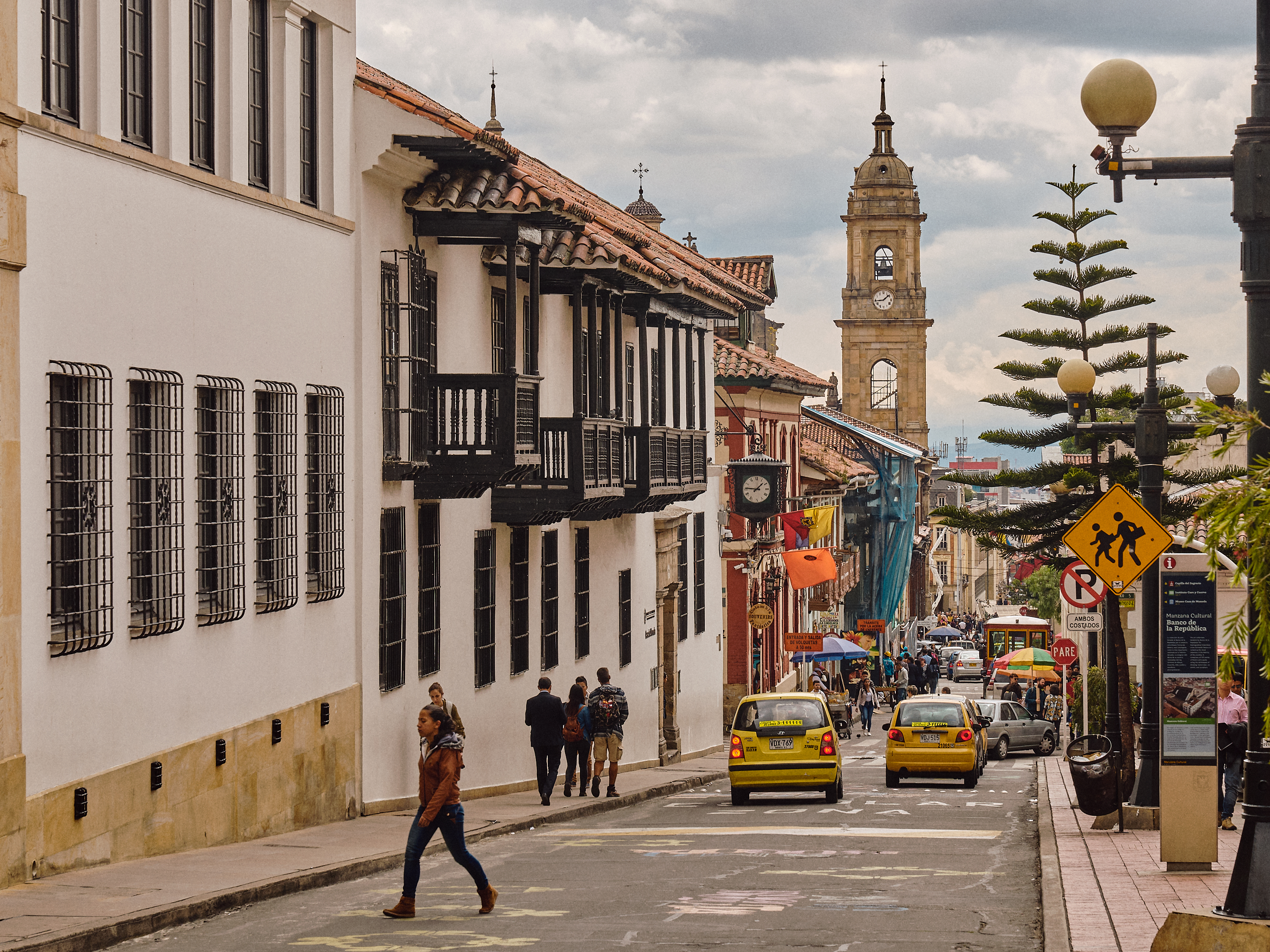
Bogotá
2-3 daysBest for high-Andes capital + museums
The capital at 2,600m. La Candelaria's colonial center, the Gold Museum (Museo del Oro), Monserrate's cable-car summit, Sunday ciclovía when major roads close to cars, Paloquemao market. Pace the first day for the altitude.

Medellín
2-3 daysBest for eternal spring + transformation story
The 'city of eternal spring' in a green valley. Comuna 13's outdoor escalators and street art, the cable-car Metrocable over the hillsides, El Poblado's dining, Botero's plump bronzes in Plaza Botero, Guatapé and El Peñol rock as a day trip.

Cartagena
2-3 daysBest for walled colonial old town + Caribbean
The Caribbean's best-preserved walled city. Sunset walks atop the 16th-century ramparts, Getsemaní's mural-lined lanes, the Castillo San Felipe fortress, plaza dinners, and a boat day to the Rosario Islands. Hot and humid year-round.

Cali
1-2 daysBest for salsa capital + nightlife
Colombia's salsa capital. Take a beginner class in a Juanchito or San Antonio academy, watch a live show at a salsoteca, ride the Cristo Rey viewpoint at dusk, and time a visit to December's Feria de Cali if dates align. A warm, music-first stop.

Santa Marta
2-3 daysBest for Caribbean coast + Tayrona gateway
The oldest surviving Spanish city in Colombia and the base for Tayrona National Park's jungle-backed beaches. Day-hike to Cabo San Juan, snorkel at Taganga, or use it as the trailhead for the multi-day Lost City (Ciudad Perdida) trek. Beach-and-jungle pace.

Salento
2 daysBest for coffee region + Cocora Valley
A pastel-painted town in the coffee axis (Eje Cafetero). Ride a Jeep Willys to the Cocora Valley to walk among the towering wax palms, tour a working coffee finca to see beans picked and roasted, and play a round of tejo, the gunpowder-and-clay national game. The countryside counterweight to the cities.
Top things to do in Colombia

Iconic Historic City Centers
Cartagena's Walled City · La Candelaria · Mompox Historic Centre
Sgonzalezb (CC BY-SA 3.0

The World of Colombian Coffee
Hacienda Venecia · Finca El Ocaso Salento · El Cairo Coffee Farm
JSJS07 (compilation, sources to attribute see above) (CC BY 2.0

Spectacular Nature and Landscapes
Tayrona National Natural Park · Cocora Valley · Guatape and El Penol
Ben Bowes (CC BY 2.0

Pre-Columbian Gold Art and Culture
Gold Museum · Tayrona Gold Museum · Calima Gold Museum
Leandro Neumann Ciuffo (CC BY 2.0

A Preserved Colonial River Town
Santa Cruz de Mompox · Villa de Leyva · Barichara
Einer3088 (Public domain

A Museum Exploring Colombian Art and Modern History
Museo Botero · Museo Nacional de Colombia · Museo de Antioquia
Felipe Restrepo Acosta (CC BY-SA 3.0

A Traditional Colombian Performance
Teatro Colon · Casa Theatrum · Delirio
Trent Chandra (CC BY-SA 2.0

An Accessible Botanical Garden or Ecological Park
Jardin Botanico de Bogota Jose Celestino Mutis · Jardin Botanico de Medellin Joaquin Antonio Uribe · Parque Ecologico Distrital Humedal La Conejera
Jorge Láscar (CC BY-SA 3.0
Food guide

Empanada
Deep-fried cornmeal turnover filled typically with seasoned beef and potato, best enjoyed hot with a dollop of aji (spicy sauce).
1 undefined

Arepa
A versatile corn flour flatbread, often griddled or fried, served plain to accompany meals or stuffed with cheese, egg, or meat for a filling snack or breakfast.
2 undefined

Sancocho
A comforting, hearty soup, often made with chicken, beef, or fish, and a medley of root vegetables like yucca, plantain, and potato.
7 undefined

Ajiaco
A hearty Bogotan chicken and potato soup made with three types of potatoes (creole, sabanera, pastusa), corn, and guascas herb, giving it a unique creamy texture.
La Candelaria or Usaquen · 8 undefined

Bandeja Paisa
The ultimate Antioquian platter, a massive meal combining various proteins, rice, beans, and plantains, meant to fuel a day of hard work.
Envigado or Laureles for traditional spots · 10 undefined
Shopping guide

Aguardiente
Colombia's national alcoholic drink, a potent anise-flavored liqueur, is a unique local spirit not widely available elsewhere.
Any major supermarket like Exito or Carulla, liquor stores · 12 undefined

Colombian Coffee
The fertile soil and ideal climate produce some of the world's most aromatic and flavorful coffee beans, often sold directly from growers or specialized cafes.
Cafe Juan Valdez, Amor Perfecto, Azahar Coffee Shop · 15 undefined

Mochila Wayuu Bag
These colorful, intricately woven shoulder bags are handmade by the Wayuu indigenous women, each telling a unique story through its patterns and colors.
Las Bovedas market in the Walled City, Artesanias de Colombia stores · 60 undefined

Emerald Jewelry
Colombia is renowned for its high-quality emeralds, which can be purchased at better prices and with certified authenticity directly from jewelers in the country.
Emerald Trade Center, La Candelaria district jewelry stores like Green Fire Emeralds · 300 undefined

Colombian Leather Goods
High-quality leather products like bags, belts, and shoes are crafted by skilled artisans, offering excellent value compared to international brands.
Florida Parque Comercial, El Poblado district boutiques · 75 undefined

Ruana (Wool Poncho)
A traditional Colombian woolen poncho, perfect for cooler climates, handcrafted with distinct patterns and known for its warmth and durability.
Usaquen Flea Market, Artesanias de Colombia stores · 80 undefined
Festivals & timing
February
Carnaval de Barranquilla
One of the largest carnivals in the Americas: four days of cumbia, costumed comparsas, and the Batalla de Flores parade on the Caribbean coast. In 2026 the main days run Feb 14-17. The dates shift each year with the pre-Lent calendar, so confirm before booking.
Worth planning around
March - April
Festival Iberoamericano de Teatro (Bogotá)
A vast performing-arts festival staged in theaters, plazas, and parks across the capital, held in even-numbered years (next in 2026, roughly Mar 20-Apr 5). Hundreds of shows, many free and outdoors. Confirm the exact run on the official program before planning around it.
Worth planning around
March / April
Semana Santa (Holy Week)
Popayán and Mompox hold some of South America's most solemn Holy Week processions. Colombians travel domestically this week, so flights and coastal hotels fill and prices climb. Book transport and rooms well ahead if your trip overlaps.
Worth planning around
July - August
Feria de las Flores (Medellín)
Medellín's signature festival, ten days of flower displays, classic-car parades, and concerts. In 2026 it runs July 31-Aug 9, closing with the Desfile de Silleteros, when farmers from Santa Elena carry huge flower arrangements through the streets. Hotels book out; reserve early.
Worth planning around
August
Festival de Verano (Bogotá) + dry-season window
Bogotá's summer festival fills the city's parks with concerts and sports, and July-August is the second dry-season window nationwide. A good time to be in the highlands, with clearer skies for Monserrate and day hikes.
December
Feria de Cali
Cali's salsa fair runs Dec 25-30 every year: the Salsódromo parade, street salsa, and packed clubs end the calendar. It overlaps Christmas, when Colombians travel and prices peak. Plan flights and rooms months ahead if Cali is on your route then.
Worth planning around
Choose your trip length
5 days
Just Medellín + coffee region
Two days in Medellín (Comuna 13, El Poblado, Guatapé day trip), then a short hop to Salento for the Cocora Valley wax palms and a coffee-farm tour. The tightest loop that still mixes city and countryside.
10 days
Bogotá + Medellín + Cartagena
Three faces of Colombia: the high-Andes capital, the eternal-spring valley city, and the Caribbean walled town. Domestic flights link all three in under 90 minutes each. The classic first-timer loop.
See the sample itinerary →
14 days
+ Caribbean coast or coffee region
Add Santa Marta and Tayrona's jungle-meets-sea beaches, or the Salento coffee axis with the Cocora Valley. One slower nature week tacked onto the back of the city loop.
The flagship itinerary
Like this plan? Make it yours
Same destination, your dates, budget, and pace — generated free in about a minute.
Customize this tripFreeEstimated daily cost
Backpacker
COP 160,000-280,000/day
Hostel dorms (COP 45,000-80,000), set-lunch menú del día (COP 15,000-25,000), city buses and the Medellín Metro, the odd shared shuttle. Colombia runs cheaper than Peru or Brazil; Cartagena's walled city is the priciest pocket. Prices as of 2026; verify current rates.
Mid-range
COP 450,000-850,000/day
Boutique 3★ stays (COP 250,000-450,000), a mix of street arepas and proper restaurant dinners, domestic flights between cities, the occasional registered taxi or app ride. The sweet spot for first-timers. Prices as of 2026; verify current rates.
Luxury
COP 1,600,000+/day
Restored-mansion hotels in Cartagena's old town or 5★ international chains, tasting menus at Leo or El Cielo, private guides for Comuna 13 and Tayrona, business-class domestic flights. Sky-high inside Cartagena's walls. Prices as of 2026; verify current rates.
Travel essentials
Connectivity & SIM
- Claro, Tigo, or Movistar physical SIM — Inexpensive, data plans start around $5-10 USD for 5-10GBWhere: Small phone shops in town plazas, malls, or official stores in larger cities
- eSIM provider (e.g., Airalo, Holafly) — Varies; $10-20 USD for 1-2 weeks / 1-3GBWhere: Online purchase before arrival
- Google Maps — Essential for navigation on public transport and walking directions across cities.
- WhatsApp — Widely used for communication with tour operators, hotels, and new acquaintances.
- Uber / Cabify / Didi — Ride-hailing apps provide transparent pricing and added safety in larger cities like Bogota or Medellin.
- Google Translate — Use the offline Spanish pack for menu translation and quick conversations, especially outside major tourist zones.
Cultural notes
When greeted, it's customary to use 'usted' (formal 'you') with elders or strangers, transitioning to 'tu' (informal 'you') once invited. Colombians are proud of their country's progress; avoid tactless remarks about its past violence or drug history. Dress is generally casual, but shorts or Bermuda pants are uncommon on weekdays in cities like Medellin, even for young locals. Locals typically dress more formally than tourists, especially outside coastal areas.
Safety
Colombia's safety has improved greatly, but specific risks remain. In Cartagena, stick to the touristed Old Town at night; walking into peripheral neighborhoods significantly increases robbery risk. Between Cali and Pasto, avoid night buses due to safety concerns. In Medellin, be cautious in less-touristed areas after dark, as opportunistic theft can occur. When losing something, contact the Policia Nacional (112) or your embassy quickly.
What to pack
- Light rain jacket (compact, all seasons)
- Long pants (for evenings, cooler cities)
- Quick-dry shorts (for tropical areas)
- Comfortable walking sandals (for coastal towns)
- Modest swimwear (for public pools/beaches)
- Insect repellent with DEET (tropical zones)
- Sunscreen (high altitude UV)
- Small quick-dry towel (beach, hostels)
- Cross-body bag (security for valuables)
- Cash pouch (separate cash, small notes)
- Hat or cap (sun protection)
- Basic first-aid kit (for minor ailments)
Travel tips
- Always carry small denominations of Colombian Pesos (COP$2,000, COP$5,000, COP$10,000 notes) for street vendors, small shops, and public transport like local buses.
- For intercity travel, book long-distance bus tickets (Bolivariano, Expreso Palmira) online or at the bus terminal a day in advance, especially during holidays.
- When taking taxis in cities like Bogota or Cali, confirm the meter is used or negotiate the fare before starting the ride to avoid overcharging.
- Use local flight search engines like Viva Air or Avianca's direct sites for cheaper domestic flights between major cities rather than international aggregators.
- Stay vigilant about your belongings in crowded markets like Paloquemao in Bogota or central plazas; keep bags zipped and in front.
- Carry your original passport when flying domestically, but a clear photocopy is sufficient for daily outings to avoid loss or theft of the original.
- Try 'Menu del dia' (lunch special) at local restaurants between 12pm and 2pm for a full, inexpensive meal (often COP$15,000-25,000).
Electric Socket Guide(110V · 60Hz)
Socket Types
Two flat parallel pins (North America, Japan)
Two flat pins + round ground (North America)
Planning checklist
Confirm your entry rule and ask for full days at immigration.
Most Western passports get a 90-day PIP stamp on arrival, no advance visa needed, but the officer decides the number written in your passport. State your departure date and ask for the time you want. Check the rule for your nationality on the official Colombia Travel site, and have proof of onward travel ready.
Book domestic flights a couple of weeks ahead.
Bogotá-Medellín-Cartagena legs are 60-90 minutes and cheap when booked early, far better value than 9-17 hour road days. Watch the strict carry-on weight limits on budget fares and factor a checked bag into the price comparison.
Pace the altitude on arrival in Bogotá.
At 2,600m some travelers get headaches or breathlessness the first day. Keep day one light, hydrate, go easy on alcohol, and save Monserrate (3,150m) for day two once you've adjusted.
Use ride-hailing apps, not street taxis.
Hailing off the street risks overcharging and, after dark, worse. App rides log the driver and route. Keep your phone out of sight while walking and follow the local 'no dar papaya' habit of not advertising valuables.
Time the trip around the dry season and the big festivals.
December-March is the main dry window and peak season; July-August is the shorter second one. If Carnaval de Barranquilla (February), the Feria de las Flores (early August), or the Feria de Cali (late December) is on your route, book flights and hotels months ahead, as Colombians travel domestically then and prices climb.
Carry pesos and a card, and stick to bank ATMs.
Cards work in cities, but cash covers street food, taxis, small shops, and the coast. Withdraw larger amounts from ATMs attached to bank branches to limit fees, and drink bottled or filtered water on the Caribbean coast even though Bogotá and Medellín tap water is generally fine.
Avoid these first-timer mistakes
Forgetting to ask for the full 90 days at immigration
The entry stamp (PIP) is granted at the officer's discretion and they sometimes write fewer days than you need. State your departure date and ask for the time you actually want. Overstaying triggers fines from COP 350,000 into the millions plus a possible entry ban, so check the date written in your passport before leaving the booth.
Landing in Bogotá and sprinting on day one
Bogotá sits at roughly 2,600m. Some travelers feel the altitude as headaches, breathlessness, or poor sleep. Keep the first day light, skip alcohol the first night, drink extra water, and save Monserrate (3,150m) for day two. Coca tea (aguapanela con limón is the gentler local fix) helps some people.
Taking street-hailed taxis instead of an app
Hailing a cab off the street in Bogotá or Cali invites overcharging and, rarely, express-kidnapping risk after dark. Use an app (the local rideshare apps and registered radio-taxi lines) so the route and driver are logged. Agree the fare or insist on the meter (taxímetro) if you do flag one.
Underestimating domestic flight time and treating Colombia as small
Bogotá to Cartagena is a 90-minute flight but a 17-hour drive through the Andes. Colombia is bigger and more mountainous than the map suggests. Budget flights between the main cities are cheap when booked a few weeks ahead; relying on overnight buses to save money usually costs you a full travel day instead.
Drinking tap water on the coast
Bogotá and Medellín tap water is generally safe to drink, but on the Caribbean coast (Cartagena, Santa Marta) and in smaller towns, stick to bottled or filtered water. Carrying a filter bottle cuts plastic waste and covers you everywhere.
Flashing phones and jewelry (the 'no dar papaya' rule)
Colombians live by 'no dar papaya', loosely 'don't give an opening'. Keep your phone in your pocket on the street, leave the good watch at home, and don't walk alone with valuables at night. Petty theft, not violent crime, is the realistic risk for most travelers in the main cities.
Only seeing the cities and skipping the countryside
The Bogotá-Medellín-Cartagena loop is the classic intro, but Colombia's pull is in the coffee fincas, the Cocora wax palms, Tayrona's beaches, and the Caribbean islands. Build in at least one nature stop. A trip that's all urban misses what most travelers come back raving about.
Frequently Asked Questions
Most Western passport holders (US, UK, Canada, Australia, New Zealand, and EU citizens) do not need a visa for tourism. You get a 90-day entry permit (Permiso de Ingreso y Permanencia, PIP) stamped on arrival, extendable once at a Migración Colombia office for up to 180 days per calendar year. Your passport must be valid at least six months and have a blank page, and officers can ask for proof of onward travel and sufficient funds. Confirm your nationality's current rule on the official Colombia Travel site before you fly.
The main tourist cities and routes are far safer than Colombia's reputation suggests, and millions visit each year without incident. Petty theft (phone snatching, pickpocketing) is the realistic risk, not violent crime. Follow the local 'no dar papaya' rule: keep your phone away on the street, use ride-hailing apps instead of street taxis, avoid walking alone with valuables at night, and skip unfamiliar rural areas without a guide. Solo and women travelers do this trip routinely. Check your government's current travel advisory for region-specific notes before going.
December to March is the main dry season, with the most reliable weather across the Andes and the Caribbean coast, which makes it peak season and the priciest stretch. July and August are a shorter second dry window, good for the highlands and Medellín's flower festival. April-May and September-November bring more rain (afternoon showers more than all-day washouts) but lower prices and thinner crowds. Because Colombia sits on the equator, temperature depends on altitude, not season: Bogotá is cool year-round, Cartagena is hot year-round.
Ten to fourteen days is the sweet spot. Ten days covers the classic Bogotá-Medellín-Cartagena loop with two-to-three days in each plus the short domestic flights between them. Add the coffee region (Salento, Cocora Valley) or the Caribbean coast (Santa Marta, Tayrona) and you're at fourteen. A five-day trip works for just Medellín plus the coffee axis. Trying to add the Amazon, the Pacific coast, or the desert of La Guajira to a first trip turns most days into transit.
Fly between the main cities. Colombia is large and mountainous, so Bogotá-Medellín-Cartagena hops are 60-90 minutes by air versus 9-17 hours by road. Domestic carriers are cheap when booked a couple of weeks ahead. Within cities, Medellín has an excellent Metro and Metrocable cable cars, Bogotá runs the TransMilenio bus rapid transit, and ride-hailing apps work everywhere. For shorter regional legs (Salento to nearby towns, Santa Marta to Tayrona) shared shuttles and colectivos are the norm. Skip a rental car unless you specifically want a coffee-region road trip.
The currency is the Colombian peso (COP), with prices often in the thousands, so a coffee can read '4,000'. Cards are widely accepted in cities, hotels, and mid-range restaurants, but carry cash for street food, small shops, taxis, rural areas, and the coast. Withdraw from bank ATMs (Bancolombia, Davivienda, BBVA) attached to branches rather than standalone machines, take larger amounts to limit per-withdrawal fees, and tell your bank you're traveling. Nequi and Daviplata are the local phone-payment apps, but a foreign card plus cash covers you.
Possibly. Bogotá sits at about 2,600m, high enough that some visitors feel mild altitude effects: headaches, shortness of breath on stairs, or broken sleep the first night. Take the first day easy, hydrate well, go light on alcohol, and save the Monserrate climb (3,150m) for day two. Most people adjust within a day or so. If you fly straight to higher Andean spots the same applies; ascend gradually where you can.
Eat regionally. Bogotá: ajiaco (chicken-and-three-potato soup) and changua breakfast. Antioquia (Medellín): bandeja paisa, the loaded platter of beans, rice, chicharrón, egg, and arepa. Caribbean coast (Cartagena, Santa Marta): fresh ceviche, coconut rice, fried whole fish, and arepa de huevo. Cali and the southwest: lulada and champús drinks, plus pandebono. Everywhere: arepas, freshly squeezed tropical-fruit juices (try lulo, guanábana, maracuyá), and specialty coffee in the coffee region. Order the menú del día at lunch for the best local value.