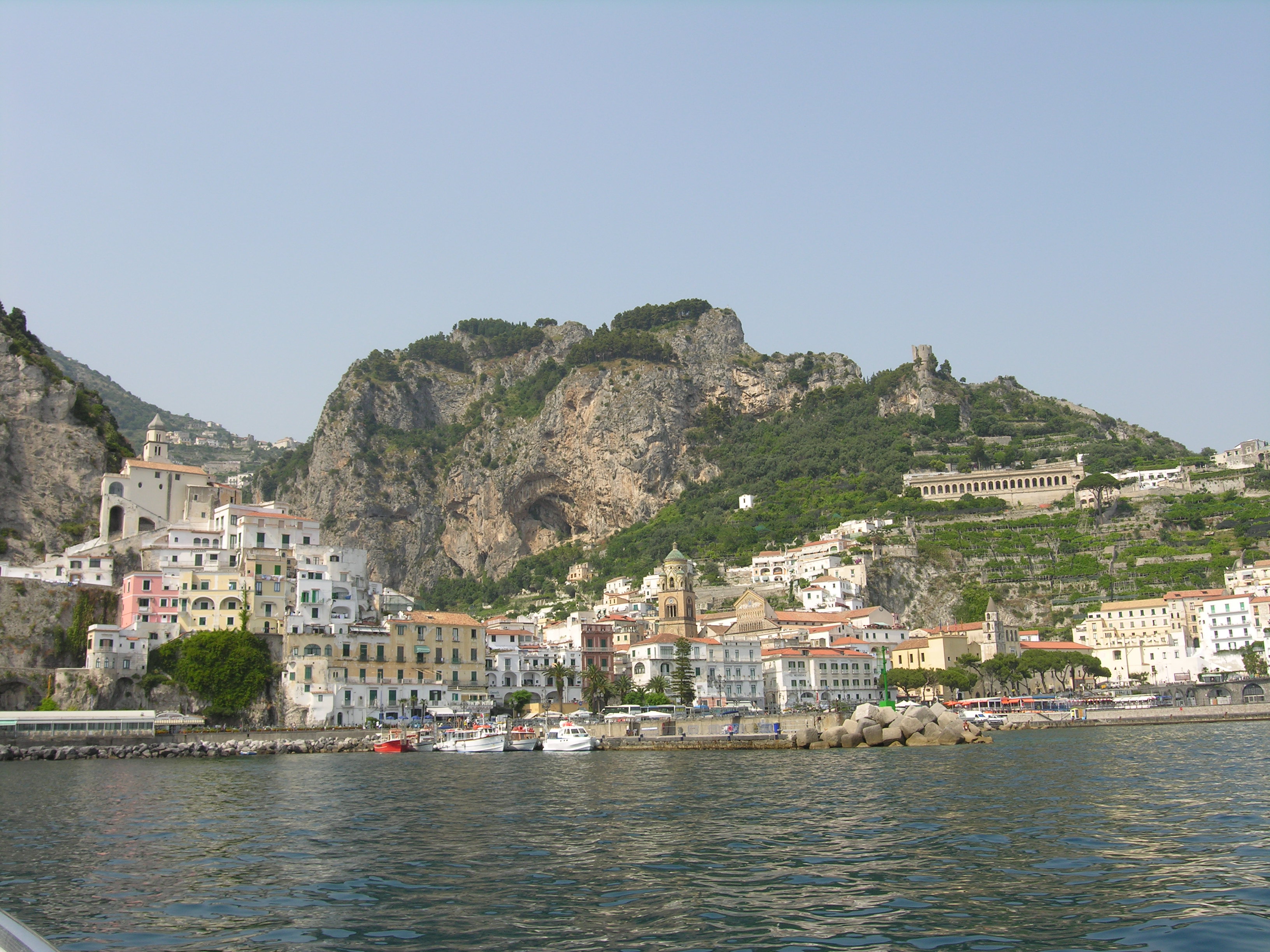
The Amalfi Coast packs an unusual amount into one short, vertical coastline. Positano is the postcard: pastel houses tumbling down a cliff to a single pebble beach, lanes that are really staircases, and ferries waiting at the bottom. Amalfi, just east, is the old maritime town that named the coast, with a striped cathedral above a busy piazza and lemon terraces climbing the valley behind it. High above sits Ravello, cooler and quieter, its two garden villas looking straight down the coast and its summer festival staged on a cliff-edge stage. Most first-timers picture only Positano and underestimate how different the towns a few kilometers apart can feel.
The thing first-timers get wrong most is movement. The SS163 coast road is narrow, cliff-edged, and bumper-to-bumper all summer, with almost no parking and an alternating license-plate rule that limits cars midday from June to September. Ferries are faster, cheaper on the nerves, and far more scenic, but they run mainly April to October and a windy day can cancel them. SITA buses cover the gaps year-round. Add the stairs (Positano and Ravello are built on them), the small pebble beaches mostly given over to paid clubs, and the August crush around Ferragosto, and a little planning pays off more here than on a flatter coast.
This guide is the layer that sits above the day-by-day itineraries. Decide where to base (Sorrento for ease, Positano or Praiano for the cliff-town nights), match the season to what you want (late May to June or September for the sweet spot), and plan around ferries and buses rather than a rental car. Do that and the days go to the trails, the harbors, and the lemon-scented towns you came for, not to a parking search or a stalled queue on the corniche.