Puglia runs the length of Italy's heel, from the Gargano promontory in the north to the Salento peninsula's tip in the south. A first trip rarely needs more than two of its halves. A week covers Bari's old town, the trulli-roofed hill towns of the Valle d'Itria, and Baroque Lecce, the route the 7-day Puglia itinerary follows. The itinerary adds a detour to Matera, just over the border in Basilicata, in the middle.
You'll likely underestimate the logistics on a first visit. Regional trains cover the Adriatic coast and reach into the Valle d'Itria, but Castel del Monte, the Gargano, and the Salento's best beach coves sit well off any rail line. Go in April, May, September, or October to miss the worst of the August heat, when Bari's average high climbs to 31.0 °C (88 °F) and the hill towns run at capacity.
Plan around that shoulder-season window first, then decide which town suits which traveler, what a day actually costs, and which festival dates are worth building a trip around. The Puglia itinerary carries the day-by-day route; the planning choices around it are below.
Choose your trip length
5 days
Bari, the coast, and the Valle d'Itria
Bari as a base for Bari Vecchia and the Basilica di San Nicola, short train rides to Polignano a Mare and Monopoli on the coast, and a day inland for the trulli of Alberobello and the hill towns of Locorotondo and Martina Franca.
7 days
Bari, Matera, Alberobello, and Lecce
Two days in Bari for the old town and the basilica, two days in Matera, just over the border in Basilicata, for the Sassi cave districts, a day in Alberobello for the trulli, and two days in Lecce for its Baroque churches and the Salento coast nearby. The route the 7-day Puglia itinerary follows.
See the sample itinerary →
10 days
The full heel of Italy
Add Ostuni's whitewashed hill and the Salento coast around Otranto and Gallipoli, with a rental car for the beach coves and the Valle d'Itria back roads the trains don't reach.
The flagship itinerary
How much does Puglia cost per day?
Backpacker
€55-90/day
Hostel dorms or simple B&Bs, market lunches and pizza or panzerotti by the slice, regional trains along the coast and inland to the Valle d'Itria, free churches and piazzas. Bari's own average for a budget traveler runs close to €60 a day, reachable without a car if you stick to the coast and the Valle d'Itria's train-linked towns.
Mid-range
€120-180/day
3-star hotels or B&Bs, a mix of trattorias and one nice seafood dinner, a small rental car for the Valle d'Itria and the Salento coast. The sweet spot, and close to Bari's own mid-range average of €137 a day. August pushes Polignano a Mare and Ostuni higher still.
Luxury
€280+/day
Converted-masseria hotels in the Valle d'Itria, private guides and drivers, tasting menus, a driver for the Salento coast. Luxury travelers in Bari average near €265 a day on the same basis; the countryside masserie and private experiences push well past it.
Major cities at a glance

 Benjamin Smith (CC BY-SA 4.0)
Bari
1-2 daysBest for the old town, the basilica, and pasta made in the street
Bari, Puglia's regional capital, splits into two: a modern grid along the seafront, and Bari Vecchia, the old town's knot of lanes behind it. Women still set up tables outside their doors most mornings to hand-roll orecchiette, and the Basilica di San Nicola holds relics that draw Orthodox pilgrims each May alongside the usual crowds. Bari's own airport handles roughly twice Brindisi's passenger traffic, so most Puglia trips start or end here.
 Benjamin Smith (CC BY-SA 4.0)
Lecce
1-2 daysBest for Baroque churches and a Salento base
Lecce earns its nickname, the Florence of the South, for the honey-colored local stone carved into the swirling facade of the Basilica di Santa Croce, finished in 1695 after three centuries of stop-start work. The old town's grid of churches and palazzi makes it the natural Salento base, with a half-buried Roman amphitheatre off the main piazza. Spring and fall keep the stone cool enough to walk for hours; by late August the same streets fill for the Festa di Sant'Oronzo.
 ParisTaras (CC BY-SA 4.0)
Alberobello
1-2 daysBest for the trulli and the Valle d'Itria hill towns
Alberobello is built almost entirely from trulli, the whitewashed, cone-roofed stone houses unique to this stretch of inland Puglia; the Rione Monti and Aia Piccola quarters have carried UNESCO World Heritage status since 1996. Alberobello anchors the Valle d'Itria alongside Locorotondo, a circular hill town ringed by vineyards, and Martina Franca, whose Baroque old town hosts an opera festival each summer. Day-trippers crowd the trulli quarters by midmorning; staying the night, in a trullo if you can, buys back the empty streets.
 Luca Margheriti (CC BY-SA 3.0)
Polignano a Mare
1 dayBest for the cliff beach and a quieter coastal base nearby
Polignano a Mare is anchored by Lama Monachile, a pebble cove wedged between limestone cliffs under the old bridge, with the old town above it a tangle of whitewashed lanes worth an hour of wandering. Monopoli, a short hop down the coast, trades the crowds for a working fishing harbor and its own walled center, and makes the calmer base for day trips to Bari, Alberobello, and Ostuni. Regional trains on the Adriatic line connect both towns straight to Bari.
 ParisTaras (CC BY 4.0)
Ostuni
1 dayBest for the white hill town and Puglia's olive country
Ostuni's whitewashed houses stack up a hill visible for miles across the olive groves below. Locals call it La Città Bianca, the White City. Lanes climb from the lower town past the Cathedral of Santa Maria Assunta to a lookout over the Adriatic and the olive country beyond. Come at golden hour, when the white walls glow and the streets finally cool down.
 Benjamin Smith (CC BY-SA 4.0)
Otranto
1-2 daysBest for Italy's easternmost point and the Salento's sea caves
Italy's easternmost point is Otranto, a fortified port town behind an Aragonese castle and a cathedral whose entire floor is a single mosaic laid in 1163-1165. South of town, the Adriatic coast holds sea caves and swimming coves running toward Castro, including Grotta della Poesia, a natural pool left by a collapsed cave roof where swimming has been banned since 2019 to protect the site. Walk the old town in the shoulder season and save an actual swim for the coves further down the coast. Gallipoli, on the Salento's other coast, trades the caves for an old town built on its own small island and a bridge back to the mainland.
What are the top things to do in Puglia?
 Benjamin Smith (CC BY-SA 4.0)
Trulli Houses of the Valle d'Itria
Trulli of Alberobello
 Calogero77 (CC BY-SA 4.0)
Polignano a Mare's Cliff Beach
Lama Monachile
 Bernard Gagnon (CC0)
Lecce's Baroque Churches
Basilica di Santa Croce
 ParisTaras (CC BY-SA 4.0)
Castel del Monte's Octagonal Geometry
Castel del Monte
 Benjamin Smith (CC BY-SA 4.0)
Ostuni, the White City
Ostuni old town
 Fabien Bièvre-Perrin (CC BY-SA 4.0)
An Archaeological Museum of Magna Graecia
Marta National Archaeological Museum of Taranto · Sigismondo Castromediano Museum · Egnazia Archaeological Museum
 Bernard Gagnon (CC0)
Marine Protected Area Snorkeling
Porto Cesareo Marine Protected Area · Isole Tremiti Marine Reserve · Santa Maria di Leuca Sea Caves
Try free
Plan your Puglia trip in about 2 minutes
Tap through 8 quick cards for a complete itinerary with budget, maps, and packing lists. No account required.
Plan your Puglia trip →Food guide

Fave e Cicorie
This rustic, nutrient-dense puree of dried fava beans served alongside bitter wild chicory greens represents the foundational peasant cooking of the Puglian countryside.
USD 8-12
 Renano (CC BY-SA 3.0)
Pasticciotto
A quintessential Lecce morning pastry consisting of shortcrust dough filled with rich lemon-scented custard, traditionally served warm straight from the oven.
Piazza Sant'Oronzo area · USD 1-3
 Elfmir (CC BY-SA 4.0)
Focaccia Barese
This regional flatbread features a signature topping of halved cherry tomatoes and black olives, pressed into a dough enriched with boiled potatoes for a soft, chewy texture.
Bari Vecchia · USD 2-5
 Valerialucatello (CC BY-SA 4.0)
Ciceri e Tria
A traditional pasta dish from the Salento region consisting of fresh ribbons of pasta, part of which are deep-fried to create a contrast with the soft, boiled noodles and creamy chickpeas.
Centro Storico · USD 10-15
 Photo by Antonio Araujo on Unsplash
Polpo alla Pignata
Octopus slow-cooked in a terracotta pot with tomatoes, onion, and herbs until fork-tender; this technique ensures the tough seafood becomes succulent without added water.
Port area · USD 15-22
 Saggittarius A (CC BY 4.0)
Rustico Leccese
A savory street-food staple made of two puff pastry discs layered with tomato, mozzarella, and béchamel sauce. It is best enjoyed as a quick afternoon snack from a local rotisserie.
USD 2-4
Shopping guide
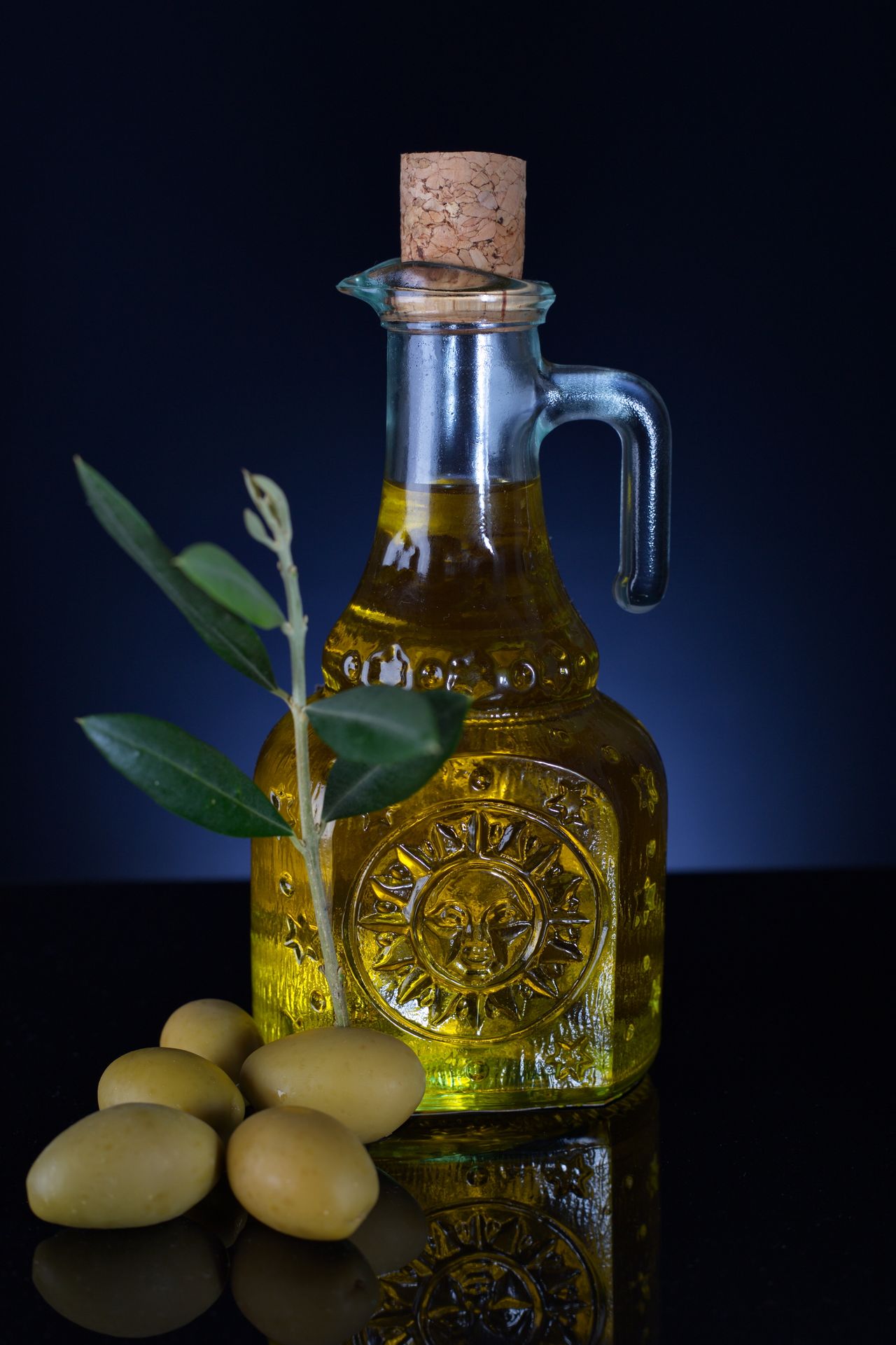 Photo by Damir Mijailovic on Pexels
Apulian Extra Virgin Olive Oil
Puglia produces half of Italy's olive oil and the intense flavor of Coratina olives is.
Masseria Brancati · USD 15-45
 Frank Schulenburg (CC BY-SA 4.0)
Primitivo di Manduria Wine
This bold, high-alcohol red wine is the signature export of the Manduria plains.
Consorzio Produttori Vini Manduria · USD 15-80
 W2k2 (CC BY 4.0)
Ceramic Pumo
This traditional symbol of budding flowers brings luck and is unique to the region.
Ceramics Quarter, Grottaglie · USD 20-100
 Photo by Nina Krivitskaya on Pexels
Grottaglie Ceramic Pottery
Grottaglie has been the heart of Apulian pottery production for centuries with distinct glaze patterns.
Via Crispi pottery workshops · USD 30-300
 Photo by AXP Photography on Pexels
Lecce Stone Carving
This soft, honey-colored limestone is easily carved and defines the baroque architecture of the city.
Artisan workshops near the Basilica di Santa Croce · USD 25-200

Cartapesta Figurine
Master artisans in Lecce transform simple paper and glue into incredibly detailed, lightweight religious sculptures.
Laboratorio di Cartapesta, Lecce historic center · USD 50-500
Festivals & timing
February 1-21
Carnevale di Putignano
Putignano, inland from Bari, runs one of Europe's oldest carnivals, dating to 1394, with allegorical papier-mâché floats parading on four separate dates. The 2026 edition's main parades fall on February 1, 7, 15, and 21, its 632nd year.
April 2-3
Riti della Settimana Santa (Taranto)
Taranto's Holy Week rites move at a famously slow, silent pace: hooded confratelli known as the Perdoni walk the old town for hours, and the Processione dei Misteri carries statues through the night from Holy Thursday into Good Friday, April 2 to 3, 2026.
May 7-9
Festa di San Nicola (Bari)
Bari's biggest feast marks the saint's relics arriving from Myra in 1087, with a historical procession on the first day and the statue carried out to sea and back on the second. The 2026 dates run May 7 to 9. Orthodox pilgrims join the usual crowds for it, so book rooms in the old town ahead.
Worth planning around
July 14-August 2
Festival della Valle d'Itria (Martina Franca)
Martina Franca's Baroque old town turns into an open-air opera house for this annual festival, built around rare and restored works. The 2026 edition runs July 14 to August 2, its 52nd year, when hotel rooms across the Valle d'Itria grow scarce well before the first performance.
Worth planning around
July 30-August 22
La Notte della Taranta (Melpignano)
Puglia's folk-music festival moves through Salento's piazzas for three weeks before closing with a single enormous concert, the Concertone, in Melpignano, set for August 22, 2026. Crowds in the tens of thousands turn up for it, so book Salento accommodation well ahead.
Worth planning around
August 23-27
Festa di Sant'Oronzo (Lecce)
Lecce's patron-saint feast fills the old town with a solemn procession, concerts, and a street fair around Piazza Sant'Oronzo, set for August 23 to 27 in 2026, with the main procession falling on August 24. Book a room inside the old town well ahead if you want to stay through the crowds rather than commute in.
Worth planning around
August
Peak summer heat and crowds
August is Puglia's hottest and busiest month: Bari's average high reaches 31.0 °C (88 °F), the coastal towns and the Valle d'Itria run at capacity, and Italians take their own summer holiday here alongside foreign visitors. Prices peak with the crowds; shift a first trip to the shoulder months if you can.
Better to avoid
Travel essentials
Connectivity & SIM
- Airalo eSIM — $5 to $20 for 7 to 30 daysWhere: Online prior to arrival
- Vodafone Italy physical SIM — $25 to $35 for 30 daysWhere: Vodafone retail stores in city centers
- TIM physical SIM — $30 for 30 days with data bundleWhere: TIM stores at airports or main train stations
Cultural notes
At any church or cathedral, keep shoulders and knees covered to gain entry; pashmina shawls are essential accessories. Never order a milky coffee like a cappuccino after 11am, as it is considered a morning-only drink. When entering a restaurant, acknowledge the staff with a polite greeting, but do not expect them to initiate small talk as they view service as a professional, efficient transaction.
Safety
Violent crime is rare, but pickpocketing is a daily risk on crowded transit routes like Rome's Metro Line A and Milan's busy central stations. Keep bags zipped and in front of you while on crowded buses or standing in monument queues. If you need police assistance for a theft, head to the nearest station to file a formal report immediately for insurance purposes.
Electric Socket Guide(230V · 50Hz)
Socket types
Two round pins (most of Europe, South America)
Two round pins + side earth clips (Germany, Europe)
Three round pins in a row (Italy, Chile)
Planning checklist
Pick a coast before plotting days.
Puglia is long and thin, and a first trip does better anchored on the Adriatic side, Bari, the Valle d'Itria, and the northern Salento, than trying to add the Gargano or the deep south in the same week.
Take the train along the coast and inland to the Valle d'Itria, and rent a car for the rest.
Trenitalia's regional trains run Bari to Lecce via Polignano a Mare, Monopoli, and Ostuni, and Ferrovie del Sud Est reaches Alberobello, Locorotondo, and Martina Franca. Save the rental car for Castel del Monte, the Gargano, and the Salento's beach coves.
Travel in April, May, September, or October.
Bari's August high averages 31.0 °C (88 °F) and the hill towns run at capacity. The shoulder months keep the sea swimmable without the peak crowds or prices.
Treat Matera as a day trip from Bari or Alberobello.
The Sassi sit just over the border in Basilicata; fold a day or an overnight into your itinerary rather than counting it toward your Puglia days.
Eat where the street does, not only where the menu is in English.
Bari Vecchia's pasta-makers, the panzerotti stands, and the markets carry Puglia's best and cheapest food; orecchiette con cime di rapa, burrata, and bombette are the dishes locals actually eat.
Book around the region's big feasts and verify their dates each year.
San Nicola in Bari (early May), the Valle d'Itria opera festival in Martina Franca (July-August), and Sant'Oronzo in Lecce (late August) fill their towns' hotels. Confirm the year's exact dates before locking plans, since several move from year to year.
Pick your month.
Lecce is a pick on the where-to-go pages for July. The entry there carries the month's measured weather, a daily budget, its season, and its dated events.
What mistakes do first-timers make in Puglia?
Counting Matera as part of Puglia
Matera's cave-cut Sassi districts sit just over the border in Basilicata, not Puglia, though almost every multi-day Puglia itinerary detours there, including the flagship 7-day route. The Sassi earned UNESCO status in 1993, three years before the Alberobello trulli. Treat the detour as a worthwhile day trip or overnight from Bari or Alberobello.
Defaulting to a rental car for the whole trip
Most Puglia write-ups assume you'll drive everywhere. Trenitalia's regional trains run the length of the Adriatic coast from Bari through Polignano a Mare, Monopoli, and Ostuni to Brindisi and Lecce. Ferrovie del Sud Est reaches inland to Alberobello, Locorotondo, and Martina Franca. A car earns its keep for Castel del Monte, the Gargano, and the Salento's beach coves, not for the stops most first trips actually make.
Treating Castel del Monte as a quick photo stop
Castel del Monte sits alone on a hilltop in the Alta Murgia countryside, a 13th-century octagonal hunting lodge built for Emperor Frederick II with no agreed original purpose. The castle sits about an hour from Bari by car, with no train station nearby. Entry runs €10 full, €2 reduced for EU visitors 18-25, free under 18. Pair the castle with a rental car day through the rest of the Alta Murgia and the Valle d'Itria, rather than a dedicated round trip from the coast.
Going in July or August without planning
Midsummer in Puglia is hot: Bari's August high averages 31.0 °C (88 °F), and Polignano a Mare, Alberobello, and Ostuni all run at capacity. April, May, September, and October give warm, swimmable weather without the peak crowds or prices. If you must travel in August, book accommodation and any trullo stay in the Valle d'Itria well ahead.
Skipping the markets for restaurants only
Bari Vecchia's pasta-makers, the panzerotti stands, and focaccia barese sold by the slice are as much the food of this region as any sit-down meal. Orecchiette con cime di rapa, burrata from Andria, taralli, and fave e cicoria show up on market stalls and bakery counters long before they show up on a tourist menu, and most cost less standing up than they do at a sit-down restaurant.
Ordering sea urchin pasta expecting a local catch
Linguine ai ricci, tossed with sea urchin roe, is a genuine Salento classic, but Puglia's own regional council banned harvesting, transporting, or selling sea urchins from the region's coast in 2023, a ban extended to June 30, 2029. The dish is still worth ordering for the flavor; any version served today is legally sourced from elsewhere.
Assuming every beach is free and easy to reach
Puglia's coast is a mix. Pescoluse and most of the Salento's sandy stretches are free to access with paid parking around €4 a day. Grotta della Poesia bans swimming and diving entirely to protect the archaeological site beside it, and many coastal towns charge for a central beach club in summer. Check access and parking before building a day around one spot, especially in July and August.
Frequently asked questions
Five days covers Bari, the coast, and the Valle d'Itria hill towns; seven links Bari, Matera, Alberobello, and Lecce, the route the 7-day Puglia itinerary follows; ten adds Ostuni and the Salento coast around Otranto and Gallipoli. Decide between the regional trains and a rental car early, since it shapes which towns fit. Budget around €55-90 a day as a backpacker, €120-180 mid-range, or €280+ for luxury.
No. Puglia is part of Italy, in the EU's Schengen Area, so US, UK, Canadian, and Australian passport holders can visit visa-free for up to 90 days in any 180-day period, shared across all Schengen countries combined. The EU's ETIAS online travel authorization, a roughly €20 form rather than a visa, is not yet running; check the official EU ETIAS site for the current start date before you book.
Yes. Violent crime against tourists is rare across the region. The practical risks are petty theft in crowded old towns and train stations, hot and shadeless archaeological sites like Castel del Monte in summer, and driving in Bari's and Lecce's historic centers, where narrow one-way streets and limited-traffic zones catch first-time renters out. Sea caves and cliff-jumping spots like Lama Monachile and Grotta della Poesia carry real injury risk, so heed any posted access limits.
April, May, September, and October give the best mix of warm weather and thinner crowds. Bari's sea is swimmable from June through September, but its August high averages 31.0 °C (88 °F) with the coast and the Valle d'Itria at capacity. Winter is mild and inexpensive for the towns and the food, but too cool for the beaches.
Plan on a minimum of five days; fewer than that means dropping either the coast or the Valle d'Itria, since the two sit on opposite sides of Bari. Spend two to three nights per base, Bari, then a Valle d'Itria or Lecce base, rather than changing hotels daily. The hill towns and old towns reward a slow morning as much as a checklist of sights. Add nights for Matera, the Salento coast, or the Gargano as time allows, rather than squeezing them into the core loop.
Not for the main loop. Trenitalia's regional trains run the Adriatic coast from Bari through Polignano a Mare, Monopoli, and Ostuni to Brindisi and Lecce, and Ferrovie del Sud Est reaches inland to Alberobello, Locorotondo, and Martina Franca. A rental car earns its keep for Castel del Monte, the Gargano, and the Salento's beach coves and sea caves, none of which sit on a rail line.
Bari. Bari Karol Wojtyła Airport handles roughly twice Brindisi's passenger traffic and sits closest to the Adriatic coast and the Valle d'Itria, the region's main gateway. Brindisi's airport, further south, is the more convenient choice if your trip is Salento-only, built around Lecce, Otranto, and Gallipoli.
No. Matera and its cave-cut Sassi districts sit in neighboring Basilicata, not Puglia, though almost every multi-day Puglia itinerary, including the flagship 7-day route, detours there. The Sassi earned UNESCO World Heritage status in 1993, three years before the Alberobello trulli.
Start with orecchiette con cime di rapa, ear-shaped pasta with turnip tops and Puglia's single most famous dish, and burrata, the cream-filled mozzarella that originates in nearby Andria. Bari's street food runs on panzerotti and focaccia barese. The Valle d'Itria grills bombette, pork rolls stuffed with cheese. The Salento serves ciceri e tria, a chickpea-and-pasta dish, and pasticciotto, a custard pastry eaten for breakfast in Lecce. Taralli, the ring-shaped cracker, travels well as a snack anywhere in the region.
Olive oil and a bottle of Primitivo or Negroamaro wine are the easiest edible souvenirs, both produced across the region. Grottaglie, inland from Taranto, is Puglia's historic ceramics town, with workshops still firing the glazed pottery style the area is known for; a small piece packs safely if wrapped well.
Related reading
A Week in Puglia: Bari, the Sassi of Matera, Alberobello and Lecce
7 days itinerary
Italy Trip Planner: Rome, Florence, Venice, and Beyond
How to plan a first trip to Italy: which cities to pick, how many days to give them, when to go and what to book first.
Sicily Trip Planner: Palermo, Taormina, the Valley of the Temples, and Beyond
A first-timer's guide to Sicily: how to split a week across the coasts, when to go before the summer heat, and why you take the train between cities but rent a car for the west.
Amalfi Coast Trip Planner: Positano, Amalfi, Ravello, and Beyond
A first-timer's guide to the Amalfi Coast: how to split your time between the cliff towns, when to go, and the driving, ferry, and bus rules everyone gets wrong on the SS163.