Patagonia travel guide cover photo

Patagonia Travel Guide: El Calafate, Torres del Paine, Ushuaia, and Beyond

A first-timer's guide to Patagonia: the two-country logistics, the park reservations, and the wind-and-weather timing everyone underestimates.

Last updated June 20, 2026 · By Namrata

Patagonia rewards travelers who plan around the land rather than fight it. The Perito Moreno Glacier calves blocks the size of buildings into a milky lake, the granite spires of Fitz Roy and the Torres del Paine catch first light pink above the steppe, and at Ushuaia the road simply runs out at the end of the world. The region straddles two countries, Argentina and Chile, and ranges from glacier fields to lake forests to sub-Antarctic islands. Most first-timers underestimate the variance and the sheer scale, picturing one neat loop and trying to stitch the far north to the far south in a single short trip.

The thing first-timers underestimate most is logistics and weather. Distances are vast, the southern icons sit on either side of an international border, and the two countries use different currencies with rates that move fast. The wind is a constant force that decides when boats sail and when ridge hikes are worth it, and a single day can serve sun, rain, and cold. Chile's Torres del Paine now caps daily entries and requires an advance online reservation, refuge beds sell out months ahead, and the border bans fresh food. None of it is hard; it just rewards booking early and leaving slack in the schedule.

This guide is the layer that sits above the day-by-day itineraries. Choose your region (the southern glaciers and towers, or the northern Lake District), match the season to what you want (November-March for the hikes), fly between hubs to save road days, and pre-book the parks and border-crossing transfers. Do that and you'll spend your days at the glaciers, towers, and trails you came for, not stuck at a bus terminal or a closed park gate.

Choose your trip length

7 days

The Argentine icons

El Calafate for the Perito Moreno Glacier, then El Chaltén for the Fitz Roy and Cerro Torre trails. The tightest first trip that still pairs a glacier with the best day-hikes in Argentine Patagonia.

10 days

El Calafate + El Chaltén + Torres del Paine

Add the Chilean side: cross to Puerto Natales and Torres del Paine for the W-trek viewpoints. The classic two-country loop, glaciers plus granite towers. Needs one border crossing and advance park reservations.

See the sample itinerary →

14 days

+ Ushuaia or the Lakes

Tack on Ushuaia and Tierra del Fuego at the end of the world, or swing north to Bariloche and the Lake District for forests, lakes, and chocolate. One extra region on either tip.

The flagship itinerary

Best time to visit
The Patagonian summer (December to February) offers the best hiking weather, with average temperatures from 10-20°C (50-68°F), but expect strong winds and larger crowds. Shoulder seasons (November, March) have fewer visitors, still good hiking, and average temperatures from 5-15°C (41-59°F). Winter (June to August) is for skiing, with temperatures often below freezing and many trails inaccessible.
Currency
Argentine Peso (ARS)
Visa
US, UK, EU, Australian, and Canadian citizens can enter Argentina visa-free for up to 90 days. Indian citizens require a visa, typically obtainable through an embassy or consulate before travel. Passports must be valid for at least six months beyond your intended departure date. Always check the latest requirements on the official Argentine immigration website for your specific nationality.
Tipping
Tipping is customary in Argentina. At restaurants, leave 10% of the bill for good service. For taxis, round up the fare, but no specific percentage is expected.
Emergency
911 (police, fire, ambulance)

Estimated daily cost

Backpacker

ARS 90,000-150,000/day (~USD 75-125)

Hostel dorms, supermarket cooking, long-distance buses (Bus-Sur, Marga, Cootra), and self-guided day-hikes from town. Patagonia is the priciest part of Argentina, so even budget travel runs higher here than Buenos Aires. Prices as of 2026; verify current rates.

Mid-range

ARS 220,000-380,000/day (~USD 180-320)

3★ hotels or cabañas, a small rental car or shared transfers, a glacier boat trip, a parrilla dinner with Malbec. The sweet spot. Costs peak December-February. Prices as of 2026; verify current rates.

Luxury

ARS 700,000+/day (~USD 600+)

All-inclusive estancia or park lodges (EOLO, Explora, Awasi), private guides, helicopter and 4x4 excursions, fine dining. Peak-season park lodges are among the most expensive stays in South America. Prices as of 2026; verify current rates.

Jan
P
Feb
P
Mar
S
Apr
S
May
O
Jun
O
Jul
O
Aug
O
Sep
S
Oct
S
Nov
P
Dec
P
Off-peak (cheaper) Shoulder Peak (priciest)Baseline: June

Festivals & timing

January - February

Peak summer season

The high season across Patagonia: long daylight, open trails, and every glacier boat and park transfer running. It is also the most crowded and expensive window, when accommodation in El Calafate, El Chaltén, and Puerto Natales books out far ahead.

Worth planning around

Mid-February

Fiesta Nacional del Lago (El Calafate)

El Calafate's biggest annual festival on Lago Argentino, with free outdoor concerts, regional food, and folk and rock acts over several nights at the forest amphitheatre. The town's population roughly doubles, so beds get scarce.

Worth planning around

March

Fiesta Nacional del Trekking (El Chaltén)

El Chaltén's trekking festival celebrates the village's hiking culture with guided walks, climbing demonstrations, and live music. A good time to be there if you want the trails plus a local event, with autumn color starting on the slopes.

March - April

Autumn color (lenga forests)

The southern beech (lenga) forests around El Chaltén, Torres del Paine, and Ushuaia turn deep red and gold. Fewer crowds, cooler air, and some services winding down. A quieter alternative to peak summer for hikers who don't mind shorter days.

Easter (March/April)

Fiesta Nacional del Chocolate (Bariloche)

Bariloche's Easter chocolate festival is one of Argentina's sweetest events, with a giant chocolate bar, an Easter-egg hunt, and street stalls. Semana Santa is a busy domestic-travel week across Patagonia, so book the Lake District ahead.

Worth planning around

May - September

Winter / ski season

Cerro Catedral near Bariloche and Cerro Castor near Ushuaia open for skiing, while most southern trails, refuges, and boat tours close. Good for a snow trip, the wrong window for the marquee Fitz Roy and Torres del Paine hikes.

Better to avoid

Major cities at a glance

El Calafate
Wikipedia Commons (CC BY-SA)

El Calafate

2-3 days

Best for the Perito Moreno Glacier

Argentine Patagonia's main gateway, on Lago Argentino in Los Glaciares National Park. Day-trip to the Perito Moreno Glacier's boardwalks, take a boat among the icebergs, or strap on crampons for a glacier mini-trek. The regional airport (FTE) connects to Buenos Aires.

El Chaltén
Wikipedia Commons (CC BY-SA)

El Chaltén

2-3 days

Best for Fitz Roy day-hikes

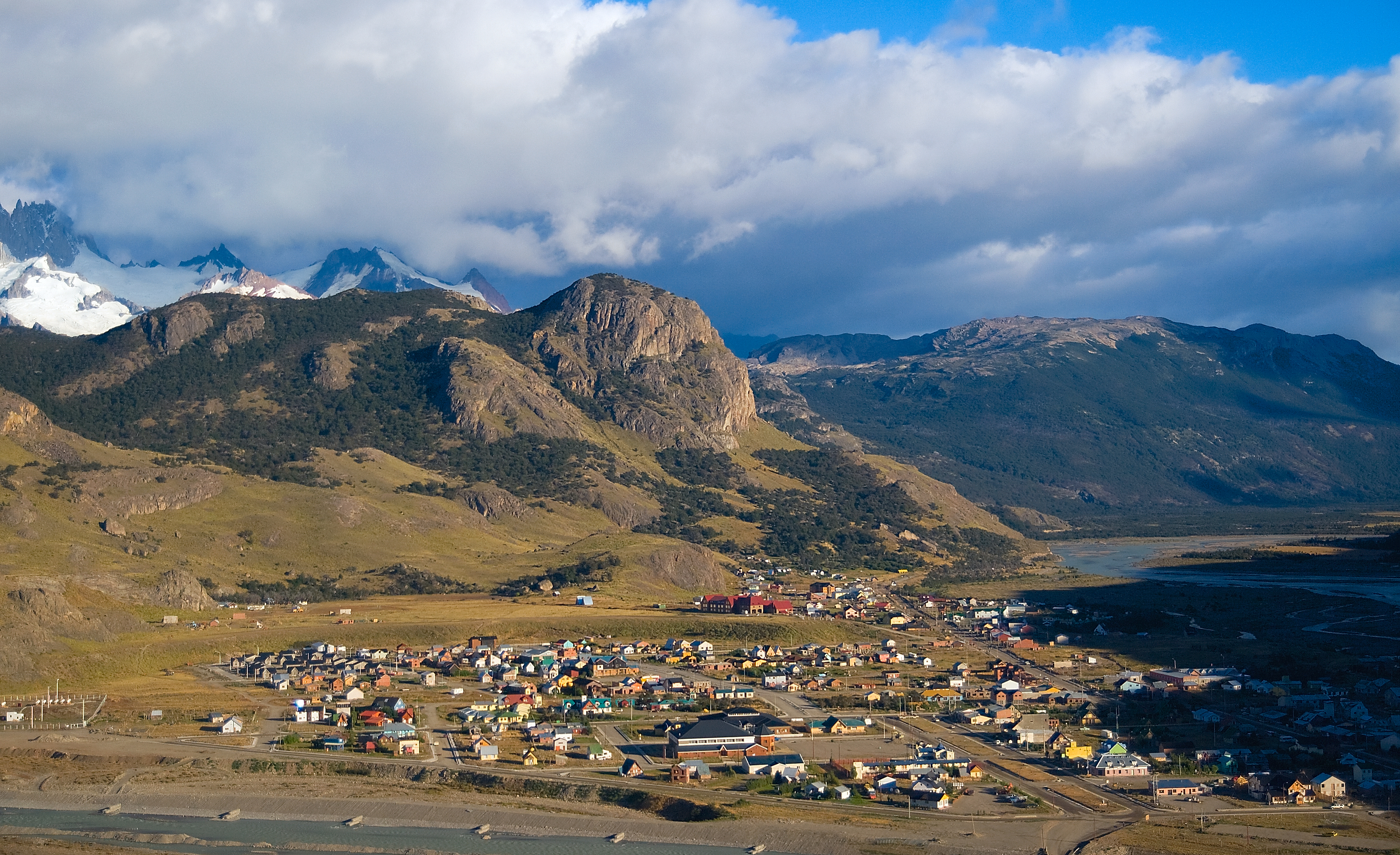
Argentina's self-styled trekking capital, a three-hour drive north of El Calafate. The Laguna de los Tres hike to the foot of Mount Fitz Roy and the Laguna Torre trail both start right from the village, no guide or fee required.

Puerto Natales
Wikipedia Commons (CC BY-SA)

Puerto Natales

1-2 days

Best for gateway to Torres del Paine

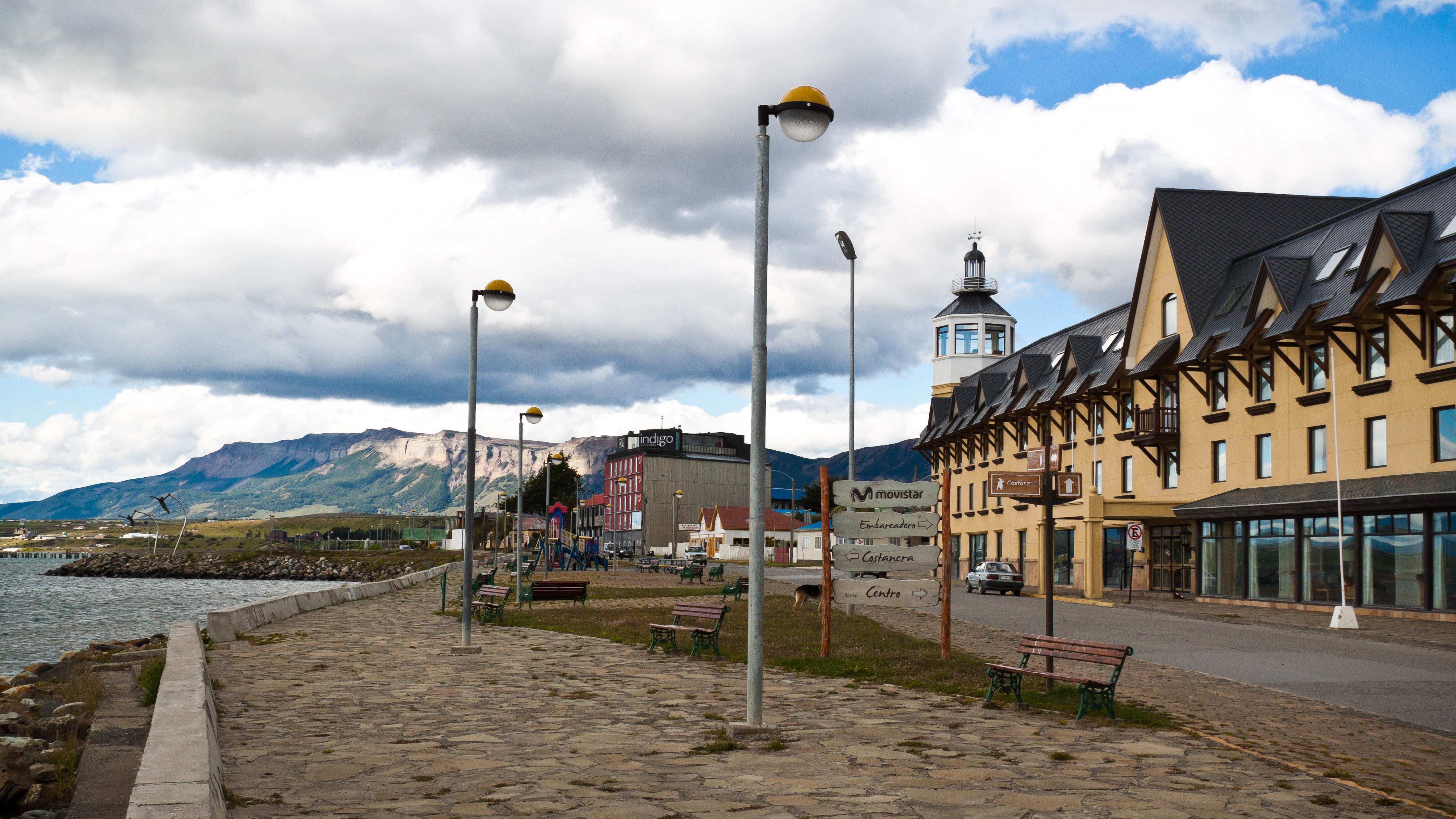
The Chilean port town on Última Esperanza Sound that serves as the base for Torres del Paine. Stock up on supplies, sort park reservations and bus transfers here, and walk the waterfront past the Milodón sculptures before heading into the park.

Torres del Paine
Wikipedia Commons (CC BY-SA)

Torres del Paine

2-5 days

Best for granite towers + the W-trek

Chile's flagship national park: the three granite Torres, the Cuernos peaks, glacier-fed lakes, and guanacos on the steppe. Day-trip the viewpoints by car, or walk the multi-day W or O circuits. Entry requires an advance online reservation.

Ushuaia
Wikipedia Commons (CC BY-SA)

Ushuaia

2-3 days

Best for the end of the world

The southernmost city on earth, on the Beagle Channel in Tierra del Fuego. Boat tours to the Les Éclaireurs lighthouse and penguin colonies, the Tierra del Fuego National Park, and the End of the World Train. The main port for Antarctica cruises.

Bariloche
Wikipedia Commons (CC BY-SA)

Bariloche

2-3 days

Best for the Lake District

The hub of northern Patagonia's Lake District, on Lake Nahuel Huapi with an alpine, chocolate-shop feel. The Circuito Chico drive, Cerro Catedral for skiing or summer hiking, and lake kayaking. A long way from the southern parks, so usually a separate trip leg.

Top things to do in Patagonia

Glacial Exploration

Glacial Exploration

Perito Moreno Glacier · Upsala Glacier · Spegazzini Glacier

Fernando (CC BY-SA 4.0

Andean Mountain Trekking

Andean Mountain Trekking

Mount Fitz Roy · Cerro Torre · Laguna de los Tres

Lionel Terray (CC0

Lakes and Scenic Drives

Lakes and Scenic Drives

Nahuel Huapi Lake · Carretera de los Siete Lagos · Lago Argentino

David (CC BY 2.0

Wildlife and Nature Observation

Wildlife and Nature Observation

Punta Tombo · Peninsula Valdes · Parque Nacional Tierra del Fuego

Carolaxis (CC BY-SA 4.0

Regional Museums of Patagonian History and Indigenous Culture

Regional Museums of Patagonian History and Indigenous Culture

Museo de la Patagonia · Museo Regional Provincial Padre Manuel Jesus Molina · Museo Historial Regional El Calafate

Deensel (CC BY 2.0

Immigration and Settler History Sites

Immigration and Settler History Sites

Museo del Inmigrante 'Hotel de Inmigrantes' · Colonia Galesa Gaiman · La Trochita Esquel Station

A S (CC BY 2.0

A Patagonian Fly Fishing Excursion

A Patagonian Fly Fishing Excursion

Rio Limay · Rio Manso · Lago Roca

Profgeo96 (CC BY-SA 4.0

A Lake or River Kayaking Trip

A Lake or River Kayaking Trip

Lago Nahuel Huapi · Lago Argentino · Rio de las Vueltas

David (CC BY 2.0

Food guide

Patagonia's food culture is deeply tied to its rugged landscape and European settler history, focusing on hearty meats and simple preparations. Expect open-fire lamb feasts (asados) and fresh lake trout. Bariloche is the region's chocolate capital, while smaller towns like El Chalten offer casual hiker fare.

Empanada

Empanada

Hand-sized baked or fried pastry pockets filled with savory ingredients like spiced ground meat, chicken, cheese, or vegetables; perfect for a quick bite.

Bakeries, cafes, and specialized empanada shops everywhere · 4 undefined

Choripan

Choripan

The quintessential Argentine street food: a grilled chorizo sausage split lengthwise, served in crusty bread, usually topped with chimichurri sauce.

Roadside stalls, parks, and 'al paso' eateries across Patagonia · 6 undefined

Milanesa

Milanesa

A popular dish brought by Italian immigrants, this is a thin cut of beef or chicken, breaded and fried, often served with a squeeze of lemon or topped with a fried egg.

Many local diners, restaurants, and 'al paso' spots · 15 undefined

Cordero Patagonico al Asador

Cordero Patagonico al Asador

Slow-roasted Patagonian lamb, butterflied and cooked on an iron cross over open flames for hours, resulting in incredibly tender and smoky meat.

Estancias and specialized asado restaurants across Patagonia · 30 undefined

Shopping guide

Patagonia's shopping scene leans towards practical, outdoor-focused gear and locally crafted goods that reflect its rugged landscape and traditional heritage. Bariloche is the commercial hub, offering high-quality chocolates and artisan items, while smaller towns like El Chalten focus more on outdoor essentials and a few unique regional edibles. Look for genuine handmade products in dedicated artisan shops rather than generic souvenir stalls.

Calafate Berry Products

Take home jams, liqueurs, or sweets made from the distinct and tart Calafate berry, a native Patagonian fruit rumored to guarantee your return to the region.

El Calafate's main street (Libertador General San Martin) at local souvenir shops and gourmet food stores. · 15 undefined

Bariloche Chocolate

Indulge in high-quality artisan chocolates, from classic milk and dark bars to unique flavors infused with local berries, produced by famed chocolatiers in Argentina's 'Chocolate Capital'.

Mamuschka (Mitre 298), Rapanui (Mitre 202), Abuela Goye (Mitre 300) · 25 undefined

Patagonian Wool Garments

Discover exceptionally soft and warm sweaters, ponchos, and blankets woven from local Merino or Corriedale sheep wool, perfect for cold climates and often naturally dyed.

Feria Artesanal Bariloche (local artisan market); Manos Patagonicas (Bustillo Km 11.5) · 80 undefined

Artisan Beer

Sample and purchase unique craft beers brewed with pristine Patagonian glacier water and sometimes incorporating local ingredients, a growing trend in the region.

Cerveceria Patagonia (Circuito Chico Km 24.7) for their full selection; Antares (Mitre 510) or Berlina (Av. Bustillo Km 11.5) · 10 undefined

Leather Belts and Wallets

Acquire durable, handcrafted leather goods such as gaucho-style belts with intricate buckles or wallets, reflecting Argentina's strong tradition of quality leatherwork.

Various artisan shops along Avenida del Libertador in El Calafate; some larger markets in Bariloche. · 60 undefined

Travel essentials

Connectivity & SIM

Wi-Fi: Hotels and hostels generally offer Wi-Fi, but speeds can be very slow and unreliable in remote Patagonian towns like El Chalten, especially during peak season. Cafes and restaurants in larger cities like Bariloche often provide free Wi-Fi with a purchase. Outside of major towns, expect little to no Wi-Fi.
SIM options
  • Claro, Movistar, or Personal physical SIMStarts around $10 for 5GB / 30 days
    Where: Major airports (Buenos Aires), carrier stores in large Patagonian towns (Bariloche, Ushuaia)
  • Airalo eSIM (or similar provider)Varies; example: $20 for 10GB / 30 days
    Where: Online via app before your trip
Apps to install
  • Google MapsDownload offline maps for navigation, as cellular coverage is sparse outside towns.
  • Google TranslateDownload the Spanish offline pack for translating signs and basic communication.
  • Whats AppCommonly used for communication with guides, tour operators, and accommodation hosts.
  • Omio or Plataforma 10Book long-distance bus tickets between Patagonian towns and cities.
Tip: Cellular coverage is often limited to 2G/GPRS in smaller towns like El Chalten, and disappears quickly once you leave populated areas. Plan your routes offline and do not rely on streaming or heavy data use.

Cultural notes

Patagonian culture, particularly in Andean regions, is influenced by its history as a frontier. When meeting locals, a simple 'Hola' and 'Gracias' are always appreciated. Eating late is common; dinner often starts after 9pm. When interacting with local authorities, be patient as they may not be accustomed to dealing with foreign travelers. Tipping in restaurants is customary for good service, but avoid over-tipping or displaying large amounts of cash publicly.

Safety

While Patagonia's crime rates are generally low, especially in regions like Tierra del Fuego, tourists carrying hard currency for unofficial exchange rates can be targets of opportunistic crime in larger cities like Buenos Aires. Do not go alone to exchange money at unofficial street changers. In Torres del Paine, keep food and belongings secured, as foxes have been known to steal items and occasionally bite small children. When hiking, be aware of rapid weather shifts and strong winds that can make balancing difficult on exposed ridges, especially in John Gardner Pass.

What to pack

  • Waterproof shell jacket (Gore-Tex or similar)
  • Waterproof hiking pants
  • Wool base layers (top and bottom)
  • Insulated down jacket
  • Grippy waterproof hiking boots
  • Windproof hat and gloves
  • Eye mask (for long summer daylight)
  • Small dry bag (for electronics)
  • Sunscreen (SPF 50+)
  • Polarized sunglasses
  • Reusable water bottle
  • Headlamp with spare batteries

Travel tips

  • Carry Argentine pesos for small purchases, local buses, and many remote shops; some smaller vendors may not accept cards.
  • Withdraw cash at major bank ATMs in larger towns like Ushuaia or El Calafate, as smaller towns may only have one ATM or none at all.
  • Always check road.is for Chilean Patagonia or speak with local tourist information for Argentine road conditions before driving, especially on gravel routes like Ruta 40.
  • Learn basic Spanish phrases for driving signs and asking directions, as English proficiency is low outside tourist centers.
  • Book popular treks like the 'W Trek' in Torres del Paine National Park 6+ months in advance, securing campsites or refugios as slots fill quickly.
  • Pre-book bus tickets between major Patagonian towns (Bariloche, El Calafate, Ushuaia) a few days ahead, especially during peak summer season.
  • Carry a small dry bag for electronics and important documents when hiking, as weather can change rapidly from sun to heavy rain/snow.
  • Use a Blue Dollar exchange (informal market) in Buenos Aires for a better rate on USD cash, but exercise caution and do not go alone.

Electric Socket Guide

Socket Types

Type C - Europlug

Two round pins (most of Europe, South America)

Type I

Two angled flat pins + ground (Australia, China)

Voltage

220V

Frequency

50Hz

Planning checklist

  1. Pick a region, not the whole map.

    Patagonia is huge and split across two countries. A first trip is better spent on the southern icons (El Calafate, El Chaltén, Torres del Paine) or the northern Lake District (Bariloche) than racing between the two. Combining the far north and far south needs two weeks or more.

  2. Travel in the November-March window.

    That's when trails, refuges, and glacier boats run. December to February is peak summer with the best weather and the biggest crowds and prices; November and March are quieter, with autumn color late in the season. Winter is for skiing, not the marquee hikes.

  3. Book Torres del Paine entry and beds early.

    Chile caps daily numbers and sells entrance tickets online through CONAF at pasesparques.cl. If you're walking the W or O, reserve refuges or campsites months ahead. Day-trippers still need advance entry and the QR code saved offline.

  4. Fly between the hubs to save days.

    Domestic flights link Buenos Aires with El Calafate (FTE), Ushuaia (USH), and Bariloche (BRC), turning multi-day drives into short hops. Use buses and shared transfers for the shorter legs (El Calafate-El Chaltén-Puerto Natales).

  5. Plan the border crossing with buffer.

    The El Calafate-to-Torres del Paine route crosses into Chile, where lines and luggage checks take time and fresh food is banned. Eat or bin produce beforehand, carry both currencies, and if you're in a rental, get the notarized cross-border permit from the rental company.

  6. Pack for four seasons and serious wind.

    Sun, rain, and cold can all arrive in one day, and gusts of 50-100 km/h are normal in summer. Bring a real waterproof and windproof shell, warm layers, gloves, and broken-in boots no matter the month.

Avoid these first-timer mistakes

  • Underestimating the distances

    Patagonia is enormous and spread across two countries. El Calafate to Ushuaia is a full day by road or a flight; Bariloche is over 1,500 km north of the southern parks. Don't try to combine the far north and far south in one short trip; pick the southern icons or the Lake District.

  • Skipping the Torres del Paine reservation

    Chile's Torres del Paine now requires an advance online entrance ticket through CONAF at pasesparques.cl, and daily numbers are capped. Refuge and campsite beds on the W and O treks sell out months ahead. Book park entry, transport, and any overnight stays well before you arrive.

  • Ignoring the wind

    Patagonian wind is relentless, routinely 50-100 km/h in summer, strong enough to knock you off balance on exposed trails. It shapes when boats sail and when summit hikes are worth attempting. Pack a real windproof shell, secure your hat, and build flexible days so you can swap the order around the weather.

  • Booking a tight border-crossing connection

    The El Calafate-to-Torres del Paine route crosses the Argentina-Chile border, where lines and luggage checks add time. Chile bans bringing in fresh fruit, meat, dairy, and seeds, with on-the-spot fines if you forget to declare. Eat or bin produce before the crossing and leave buffer time.

  • Carrying the wrong currency or relying on cards

    The Argentine and Chilean pesos are different currencies, and Argentina's exchange rate moves fast. Carry some cash in each country's currency for small towns, park kiosks, and bus tickets; cards work in hotels and bigger restaurants but not always at trailheads or rural estancias.

  • Going in winter expecting the trails open

    Many southern trails, refuges, and boat services shut from roughly May to September, and some mountain roads close with snow. Winter is for skiing at Bariloche or Ushuaia, not for hiking Fitz Roy or the W. If you want the marquee hikes, come in the November-March window.

  • Packing for one season

    Patagonia delivers sun, rain, wind, and a temperature swing in a single day, even in summer. Travelers who pack only for 'summer' get caught out on exposed ridges. Bring layers, a waterproof shell and trousers, gloves, and broken-in boots regardless of the calendar month.

Frequently Asked Questions

Patagonia spans Argentina and Chile, and both countries are visa-free for US, UK, EU, Canadian, and Australian travelers for stays of up to 90 days. Your passport should be valid for at least six months beyond your travel dates, and you'll pass through immigration again if your trip crosses between the two countries (for example, El Calafate to Torres del Paine). Check your nationality's current rules on Argentina's official migration site and Chile's before you book.

Patagonia is one of the safest regions in South America: violent crime is rare, towns like El Calafate, El Chaltén, and Puerto Natales are small and relaxed, and solo travelers are common. The real risks are environmental, not criminal: sudden weather, fierce wind on exposed trails, river crossings, and cold. Hike within your limits, check forecasts, register on longer treks, and carry layers and water.

November to March is the season, with the warmest, longest days and open trails. December to February is peak summer: best weather, biggest crowds, highest prices. The shoulder months of November and March give you fewer people, autumn color in late March, and slightly cooler, less windy conditions. Winter (May-September) is for skiing at Bariloche or Ushuaia, as most southern hikes and boat tours close.

Seven days covers the Argentine icons: the Perito Moreno Glacier from El Calafate and the Fitz Roy hikes from El Chaltén. Ten days lets you add the Chilean side, crossing to Torres del Paine for the W-trek viewpoints. Two weeks is enough to also reach Ushuaia at the southern tip or swing north to Bariloche's Lake District. Distances are huge, so resist trying to see the whole region in a short trip.

Fly into the regional hubs (El Calafate's FTE, Ushuaia's USH, Bariloche's BRC) to skip long road days, then use a mix of long-distance buses, shared transfers, and rentals. Buses link El Calafate, El Chaltén, and Puerto Natales reliably. A rental car gives freedom around Torres del Paine and the Lake District, but crossing the border in a rental needs a notarized permit from the rental company plus the car's papers and insurance.

Yes. Chile requires an advance online entrance ticket for Torres del Paine through CONAF at pasesparques.cl, and daily visitor numbers are capped. If you're doing the multi-day W or O circuits, you also need to book refuge or campsite beds, which sell out months ahead in peak season. Day-trippers should still buy entry in advance and keep the QR code on their phone.

It's the priciest part of both Argentina and Chile, because everything is remote and seasonal. Backpackers can manage on roughly USD 75-125 a day with hostels, self-catering, and buses; mid-range travelers do well around USD 180-320 with cabañas, a glacier boat, and the occasional rental car. Park lodges and all-inclusive estancias run USD 600 and up. Argentina's exchange rate shifts fast, so verify current rates close to your trip.

Most first trips do both. The Argentine side has the Perito Moreno Glacier (El Calafate) and the free, town-start Fitz Roy hikes (El Chaltén). The Chilean side has Torres del Paine, with the three granite towers and the W-trek. They sit close together near the southern border, so a ten-day loop combining El Calafate, El Chaltén, and Torres del Paine is the classic route, one border crossing and two currencies.

Patagonian cooking leans on lamb and the sea. Try cordero al palo (whole lamb slow-roasted over open fire), a parrilla mixed grill with Argentine Malbec, and king crab (centolla) in Ushuaia and the Chilean fjords. In Bariloche, the artisan chocolate and craft beer are the draw. Calafate berries turn up in jams and ice cream, and a Chilean curanto or seafood stew is worth seeking out on the Chilean side.

Plan less, do more.

Plan a trip