20 places across Seoul, Busan and 4 more cities — ranked by traveler ratings, with photos and where to find each one.
1
N Seoul Tower
Seoul · Seoul · tourist attraction · ★ 4.5 · 67,944 reviews ·
Open in Google Maps ↗Namsan Seoul Tower, aka the YTN Seoul Tower, Namsan Tower, Seoul Tower or N Seoul Tower, is a communication and observation tower located on the summit of Namsan in central Seoul, South Korea.

kallerna (CC BY-SA 4.0)
2
Everland
Yongin · Gyeonggi Province · amusement park · ★ 4.5 · 64,066 reviews ·
Open in Google Maps ↗Everland is South Korea's largest theme park. It is located at the Everland Resort in Yongin, Gyeonggi Province. In 2018, it received 5.85 million visitors and was ranked 19th in the world for amusement park attendance. As of 2010, Everland is measured to be approximately 1,200,000 square yards.

by Nagyman (CC BY-SA 2.0)
3
Gyeongbokgung Palace
Seoul · Seoul · cultural landmark · ★ 4.6 · 46,781 reviews ·
Open in Google Maps ↗Gyeongbokgung is a former royal palace in Seoul, South Korea. Established in 1395, it was the first royal palace of the Joseon dynasty, and is now one of the most significant tourist attractions in the country.

서울관광 아카이브 (KOGL Type 1)
4
teamLab Seoul
Seoul · Seoul · art museum · ★ 4.5 · 57,160 reviews ·
Open in Google Maps ↗5
National Museum of Korea
Seoul · Seoul · museum · ★ 4.7 · 29,024 reviews ·
Open in Google Maps ↗The National Museum of Korea is the flagship museum of Korean history and art in South Korea. Since its establishment in 1945, the museum has been committed to various studies and research activities in the fields of archaeology, history, and art, continuously developing a variety of exhibitions and education programs.

Jinah78 (CC BY-SA 3.0)
6
Lotte World Tower
Seoul · Seoul · tourist attraction · ★ 4.4 · 51,124 reviews ·
Open in Google Maps ↗Lotte World Tower is a 123-story, 555 metres (1,821 ft) supertall skyscraper, located in Sincheon-dong, Songpa District, Seoul, South Korea. It is the sixth-tallest building in the world, the tallest in OECD countries and in South Korea, and also the first in South Korea to be over 100 stories tall.

kallerna (CC BY-SA 4.0)
7
Nami Island
Chuncheon · Gangwon Province · nature preserve · ★ 4.4 · 37,613 reviews ·
Open in Google Maps ↗A moon-shaped island of 4 km in diameter, resulting from the construction of a dam in 1944. Great nature, with metasequoias. You can enter this island by boat, taking less 10 min. If you enter the island, you can see huge nut pines along the both paths. It is full of green, very nice for holiday spot.

Minseong Kim (CC BY-SA 4.0)
8
Haedong Yonggungsa Temple
Busan · Busan · buddhist temple · ★ 4.5 · 27,612 reviews ·
Open in Google Maps ↗Haedong Yonggung Temple is a Buddhist temple in Gijang-gun, Busan, South Korea.

Londenp (CC BY-SA 3.0)
9
Gamcheon Culture Village
Busan · Busan · tourist attraction · ★ 4.4 · 33,188 reviews ·
Open in Google Maps ↗Gamcheon Culture Village is a town within Gamcheon-dong, Saha District, Busan, South Korea. The area is known for its layered streets, twisted labyrinth-like alleys, and brightly painted houses, which have been restored and enhanced in recent years to attract tourism.

Christophe95 (CC BY-SA 4.0)
10
Deoksugung Palace
Seoul · Seoul · cultural landmark · ★ 4.6 · 20,378 reviews ·
Open in Google Maps ↗Deoksugung, also called Deoksu Palace or Deoksugung Palace, is a former royal palace in Seoul, South Korea. It was the main palace during the Korean Empire (1897–1910) and is now a major tourist attraction. It has a mix of traditional Korean and Western architecture that reflects its history.
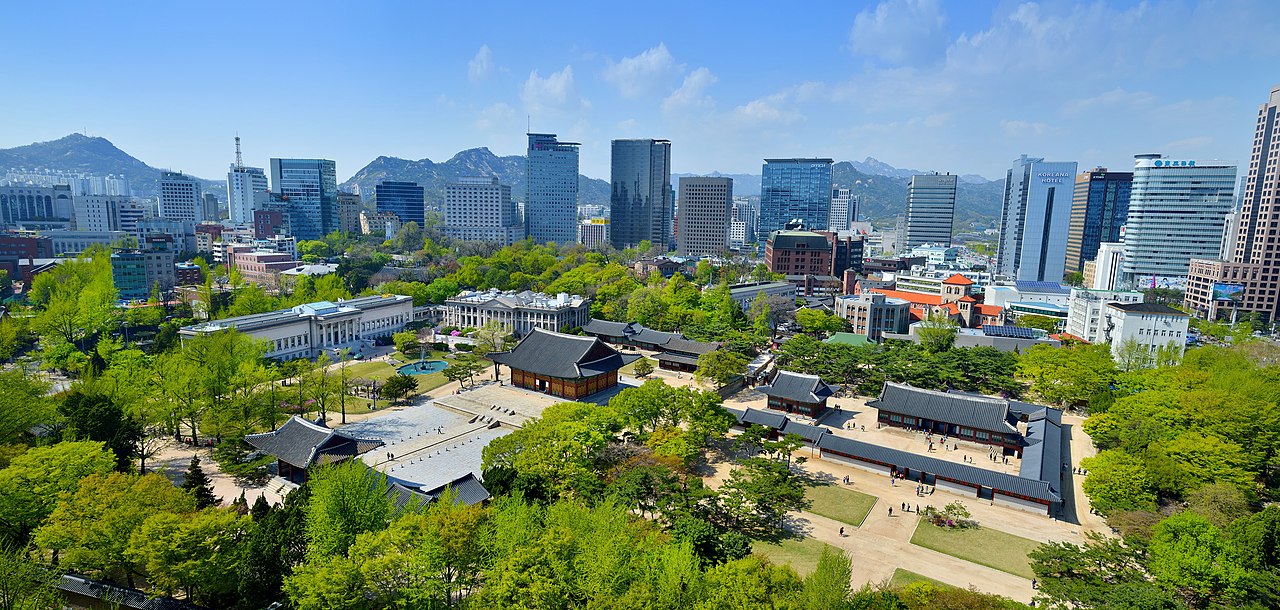
문화재청 (KOGL Type 1)
11
Dongdaemun Design Plaza
Seoul · Seoul · cultural center · ★ 4.4 · 31,934 reviews ·
Open in Google Maps ↗Dongdaemun Design Plaza is a major urban development landmark in Seoul, South Korea, designed by Zaha Hadid and Samoo, with a distinctively neofuturistic design characterized by the "powerful, curving forms of elongated structures."

Eugene Lim (CC BY 2.0)
12
War Memorial of Korea
Seoul · Seoul · museum · ★ 4.6 · 18,169 reviews ·
Open in Google Maps ↗The War Memorial of Korea is a museum located in Yongsan-dong, Yongsan-gu, Seoul, South Korea. It opened in 1994 on the former site of the army headquarters to exhibit and memorialize the military history of Korea.
13
Bulguksa
Gyeongju · North Gyeongsang Province · buddhist temple · ★ 4.6 · 18,132 reviews ·
Open in Google Maps ↗Bulguksa is a Buddhist temple on Tohamsan, in Jinhyeon-dong, Gyeongju, North Gyeongsang Province, South Korea.

Bernard Gagnon (CC0)
14
Gwangjang Market
Seoul · Seoul · market · ★ 4.2 · 44,254 reviews ·
Open in Google Maps ↗Gwangjang Market, previously Dongdaemun Market (동대문시장), is a traditional street market in Jongno District, Seoul, South Korea. The market is one of the oldest and largest traditional markets in South Korea, with more than 5000 shops and 20,000 employees in an area of 42,000 m2 (450,000 ft2).

Rystheguy (CC BY-SA 4.0)
15
Donggung Palace and Wolji Pond
Gyeongju · North Gyeongsang Province · historical landmark · ★ 4.5 · 20,671 reviews ·
Open in Google Maps ↗Donggung Palace and Wolji Pond are a Silla-era former palace and artificial pond in Gyeongju, South Korea. They were part of the palace complex of ancient Silla. It was constructed by order of King Munmu in 674 CE.

Basile Morin (CC BY-SA 4.0)
16
Bukchon Hanok Village
Seoul · Seoul · landmark · ★ 4.4 · 24,445 reviews ·
Open in Google Maps ↗Bukchon Hanok Village is a residential neighborhood in Jongno District, Seoul, South Korea. It has many restored traditional Korean houses, called hanok. This has made it a popular tourist destination.

kallerna (CC BY-SA 4.0)
17
Yeouido Hangang Park
Seoul · Seoul · park · ★ 4.5 · 18,357 reviews ·
Open in Google Maps ↗Hangang Park is a park that consists of 12 parks in Seoul, South Korea. It consists of Gwangnaru Park, Jamsil Park, Ttukseom Park, Jamwon Park, Ichon Park, Banpo Park, Mangwon Park, Yeouido Park, Nanji Park, Gangseo Park, Yanghwa Park, and Seonyudo Park.

Kimhs5400 (CC BY 4.0)
18
Changdeokgung
Seoul · Seoul · cultural landmark · ★ 4.6 · 13,931 reviews ·
Open in Google Maps ↗Changdeokgung is a former royal palace in Seoul, South Korea. A UNESCO World Heritage Site and a Historic Site of South Korea, it is among the best preserved of all Korean palaces. It and its neighboring palace Changgyeonggung have together been called the "East Palace".

Historiographer at English Wikipedia (CC BY-SA 3.0)
19
COEX
Seoul · Seoul · point of interest · ★ 4.3 · 24,757 reviews ·
Open in Google Maps ↗Starfield COEX Mall is an underground shopping mall in Samseong-dong, Gangnam-gu Seoul, South Korea. The name "COEX" is derived from "COnvention centers" and "EXhibition halls".

Wpcpey (CC BY-SA 4.0)
20
Gwangalli Beach
Suyeong, Busan · South Gyeongsang Province · beach · ★ 4.5 · 10,387 reviews ·
Open in Google Maps ↗The Gwangalli Beach or Gwangan Beach is a beach in Gwangan 2(i)-dong, Suyeong District, Busan, South Korea. It is west of Haeundae Beach.

Rémi Cormier (CC BY-SA 3.0)