20 places across Paris, Marne-la-Vallee and 8 more cities — ranked by traveler ratings, with photos and where to find each one.
1
Eiffel Tower
Paris · Île-de-France · historical landmark · ★ 4.7 · 493,993 reviews ·
Open in Google Maps ↗The Eiffel Tower is a lattice tower on the Champ de Mars in Paris, France. It is named after the engineer Gustave Eiffel, whose company designed and built the tower from 1887 to 1889.

Benh LIEU SONG (Public domain)
2
Louvre Museum
Paris · Île-de-France · art museum · ★ 4.7 · 375,166 reviews ·
Open in Google Maps ↗The Louvre, or the Louvre Museum, is a national art museum in Paris, France. The Louvre, a former royal palace, is known for its collection of celebrated paintings collected by the French kings, including the Mona Lisa of Leonardo Da Vinci.
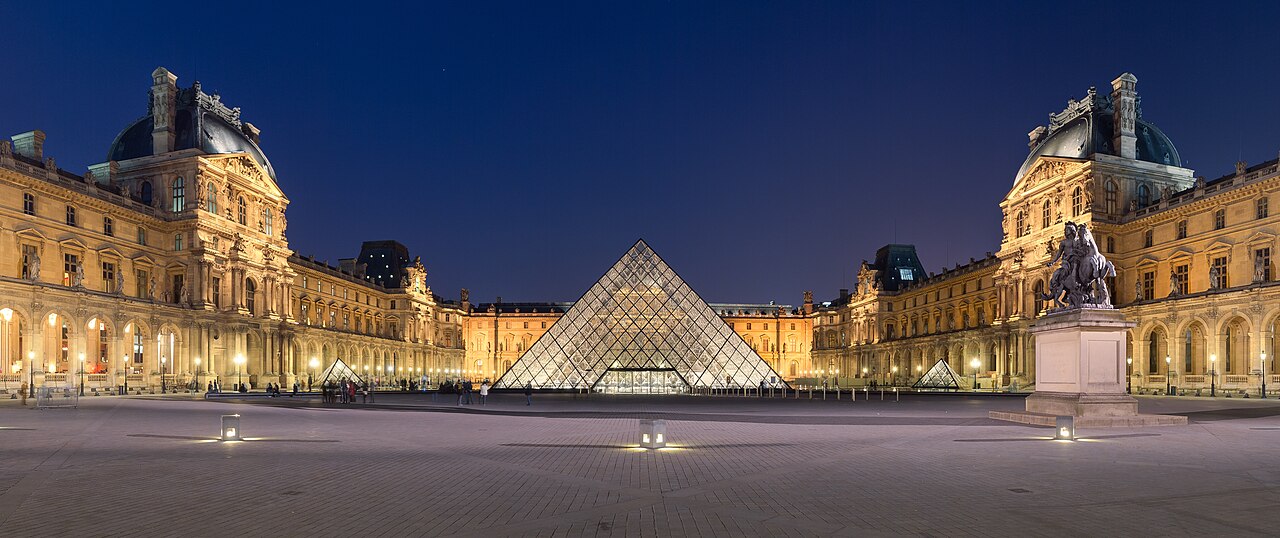
Benh LIEU SONG (Flickr) (CC BY-SA 3.0)
3
The Arc de Triomphe
Paris · Île-de-France · monument · ★ 4.7 · 297,542 reviews ·
Open in Google Maps ↗The Arc de Triomphe de l'Étoile, often simply called the Arc de Triomphe, is one of the most famous monuments in Paris, France.

Alvesgaspar (CC BY-SA 3.0)
4
Disneyland Paris
Marne-la-Vallee · Île-de-France · amusement center · ★ 4.5 · 321,208 reviews ·
Open in Google Maps ↗Disneyland Paris is an entertainment resort in Marne-la-Vallée, France, located about 32 kilometres east of the city centre of Paris. It encompasses two theme parks, seven Disney-owned hotels, two convention centers, a golf course, an arena, and a shopping, dining and entertainment complex.

flightlog (CC BY 2.0)
5
Champ de Mars
Paris · Île-de-France · park · ★ 4.6 · 224,715 reviews ·
Open in Google Maps ↗The Champ de Mars is a large public greenspace in Paris, France, located in the seventh arrondissement, between the Eiffel Tower to the northwest and the École Militaire to the southeast. The park is named after the Campus Martius in Rome, which was dedicated to the god Mars.

Mattgirling (CC BY-SA 3.0)
6
Sacre-Coeur
Paris · Île-de-France · church · ★ 4.7 · 167,213 reviews ·
Open in Google Maps ↗The Basilica of the Sacred Heart of Montmartre, commonly known as Sacré-Cœur Basilica or simply Sacré-Cœur, is a Catholic church and minor basilica in Paris dedicated to the Sacred Heart of Jesus.

Terragio67 (CC BY-SA 4.0)
7
Musée d'Orsay
Paris · Île-de-France · art museum · ★ 4.8 · 116,662 reviews ·
Open in Google Maps ↗The Musée d'Orsay is a museum in Paris, France, on the Left Bank of the Seine. It is housed in the former Gare d'Orsay, a Beaux-Arts railway station built from 1898 to 1900. The museum holds mainly French art dating from 1848 to 1914, including paintings, sculptures, furniture, and photography.

Bretwa (CC BY-SA 4.0)
8
Puy du Fou
Les Epesses · Pays de la Loire · amusement center · ★ 4.8 · 103,661 reviews ·
Open in Google Maps ↗Le Puy du Fou () is a theme park in Les Epesses, in the Pays de la Loire region of western France. It receives more than 2 million visitors every year, making it one of the most popular theme parks in France. In 2025, it was the second most visited theme park in France, behind Disneyland Paris.

Pierre André Leclercq (CC BY-SA 4.0)
9
Luxembourg Gardens
Paris · Île-de-France · garden · ★ 4.7 · 128,543 reviews ·
Open in Google Maps ↗The Jardin du Luxembourg, known in English as the Luxembourg Garden, colloquially referred to as the Jardin du Sénat, is located in the 6th arrondissement of Paris, France. The creation of the garden began in 1612 when Marie de' Medici, the widow of King Henry IV, constructed the Luxembourg Palace as her new residence.
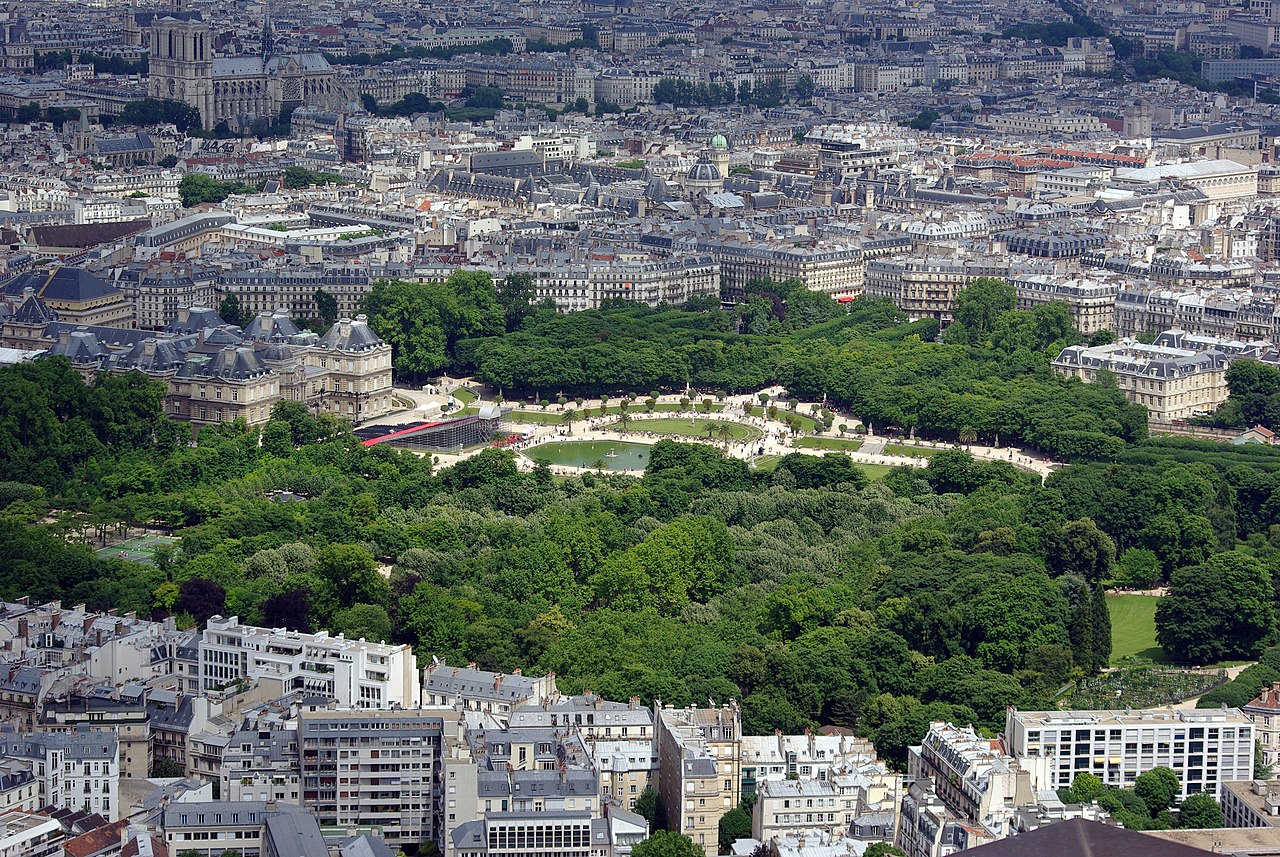
Kirua (Public domain)
10
Palace of Versailles
Versailles · Île-de-France · castle · ★ 4.6 · 165,664 reviews ·
Open in Google Maps ↗The Palace of Versailles is a former royal residence commissioned by King Louis XIV located in Versailles, about 18 kilometres (11 mi) west of the city centre of Paris, in the Yvelines department of Île-de-France region in France.

ToucanWings (CC BY-SA 3.0)
11
Mont Saint-Michel
Mont Saint-Michel · Normandy · place of worship · ★ 4.7 · 123,132 reviews ·
Open in Google Maps ↗
Lynx1211 (CC BY-SA 4.0)
12
Jardins du Trocadero
Paris · Île-de-France · park · ★ 4.6 · 152,004 reviews ·
Open in Google Maps ↗The Jardins du Trocadéro is a public space in the 16th arrondissement of Paris, France. It is bounded to the northwest by the wings of the Palais de Chaillot and to the southeast by the Seine and the Pont d'Iéna at the Place de Varsovie, with the Eiffel Tower on the opposite bank of the Seine.

Another one of my pictures:
This photograph was taken by Medium69 (William Crochot) and released under the license stated below. You are free to use it for any purpose as long as you credit the author (William Crochot), the Source (Wikimedia Commons) and the license (CC-BY-SA 4.0) in close relation to the image.
Please do not upload an updated image here without consultation with the Author. The author would like to make corrections only at his own source RAW. This ensures that the changes are preserved.Please if you think that any changes should be required, please inform the author.Otherwise you can upload a new image with a new name. Please use one of the templates derivative or extract. (CC BY-SA 4.0)
13
Cathedrale Notre-Dame de Strasbourg
Strasbourg · Grand Est · church · ★ 4.8 · 77,842 reviews ·
Open in Google Maps ↗
Diliff (CC BY-SA 3.0)
14
Notre-Dame Cathedral of Paris
Paris · Île-de-France · church · ★ 4.7 · 98,659 reviews ·
Open in Google Maps ↗Notre-Dame de Paris, often referred to simply as Notre-Dame, is a medieval Catholic cathedral on the Île de la Cité, in the 4th arrondissement of Paris, France. It is the cathedral church of the Roman Catholic Archdiocese of Paris.

Ali Sabbagh (CC0)
15
Tuileries Garden
Paris · Île-de-France · garden · ★ 4.6 · 119,251 reviews ·
Open in Google Maps ↗The Tuileries Garden is a public garden between the Louvre and the Place de la Concorde in the 1st arrondissement of Paris, France. Created by Catherine de' Medici as the garden of the Tuileries Palace in 1564, it was opened to the public in 1667 and became a public park after the French Revolution.

Tangopaso (Public domain)
16
Cité de Carcassonne
Carcassonne · Occitanie · ★ 4.7 · 92,544 reviews ·
Open in Google Maps ↗The Cité de Carcassonne is a medieval citadel located in the French city of Carcassonne, in the Aude department, Occitania region. It is situated on a hill on the right bank of the river Aude, in the south-eastern part of the city proper.

Jondu11 (CC BY-SA 4.0)
17
Disney Adventure World
Marne-la-Vallee · Île-de-France · amusement center · ★ 4.6 · 84,443 reviews ·
Open in Google Maps ↗18
Notre-Dame de la Garde
Nice · Provence-Alpes-Côte d'Azur · church · ★ 4.8 · 51,124 reviews ·
Open in Google Maps ↗Notre-Dame de la Garde, known to local citizens as la Bonne Mère, is a Catholic basilica in Marseille, France, and the city's best-known symbol. The site of a popular Assumption Day pilgrimage, it is the most visited site in Marseille.

kallerna (CC BY-SA 4.0)
19
Dune of Pilat
Gujan-Mestras · Nouvelle-Aquitaine · wildlife refuge · ★ 4.8 · 38,798 reviews ·
Open in Google Maps ↗The Dune of Pilat, also called Grande Dune du Pilat, is the tallest sand dune in Europe. It is located in La Teste-de-Buch in the Arcachon Bay area, France, 60 km (37.2 mi) southwest of Bordeaux along France's Atlantic coastlines.

Jörg Braukmann (CC BY-SA 4.0)
20
Beach of Malo-les-Bains
Dunkirk · Hauts-de-France · beach · ★ 4.5 · 10,360 reviews ·
Open in Google Maps ↗
Alexandre Ultré (CC BY-SA 3.0)