14 Days in Japan & South Korea: From Kinkaku-ji to Myeongdong

Gyeongbokgung Palace · Bulguksa · Myeongdong · Seongsan Ilchulbong · Kinkaku-ji · Mount Fuji
14-day Japan trip — Tokyo to Kyoto to Seoul. Day-by-day route, attractions & food.
Part one
Is this trip for you?
This itinerary chooses Tokyo and Kyoto over an all-Japan trip like Tokyo + Osaka, as Kyoto provides an unmatched concentration of pre-modern Japanese temple districts and traditional arts, a character Osaka, while food-centric, largely lacks. Pairing Japan's distinct historical and technological identities with South Korea's Seoul offers a compelling East Asian cultural contrast. Seoul's ancient palaces alongside its hyper-modern districts and unique K-culture distinctively differentiate it from Japan's offerings, providing a different flavor of urban experience than a second Japanese city.
Your itinerary covers 11 must-have experiences

Ancient Temples & Shrines
✓ Day 1: Sensō-ji Temple

Immerse in Vibrant Urban Life & K-Culture
✓ Day 2: Experience Shibuya Crossing

A Modern Art Gallery or Architectural Landmark
✓ Day 3: Immersive Art at teamLab Planets TOKYO DMM

A Serene Traditional Japanese Garden Experience
✓ Day 5: Shinjuku Gyoen National Garden
A Hands-On Japanese Cooking Class
✓ Day 5: Wagashi (Japanese Sweets) Making Class

A Historic Japanese Castle Tour
✓ Day 7: Nijō Castle

Iconic Natural & Scenic Views
✓ Day 8: Arashiyama Bamboo Grove

Embark on an Authentic Korean Culinary Journey
✓ Day 10: Dinner & Explore Gwangjang Market

Explore Ancient Royal Palaces
✓ Day 11: Gyeongbokgung Palace

An Immersive Traditional Hanok Village Stroll
✓ Day 11: Bukchon Hanok Village
A Hands-On Korean Culinary Workshop
✓ Day 13: Korean Cooking Class
Photos from Wikimedia Commons, used under Creative Commons licenses. Individual credits shown on each photo.
📅 Best Time to Visit
The best times to visit Japan and South Korea are spring (late March to May) for cherry blossoms and autumn (September to November) for stunning fall foliage. Spring temperatures range from 10-20°C, while autumn is similar, offering pleasant, clear weather. Both seasons attract large crowds, so book accommodations and popular attractions months in advance. Summers (June-August) are hot and humid (25-35°C), often with rainy seasons, while winters (December-February) are cold (0-10°C) and suitable for snow sports in mountainous regions, with fewer tourists in cities.
Part two
The plan, day by day
14-day trip
This trip prioritizes seeing the iconic urban and historical contrasts of East Asia, covering Japan's traditional heart in Kyoto and modern pulse in Tokyo, then shifting to Seoul's ancient palaces and K-culture. You skip Nara, missing Japan's first capital where 1,200 wild sika deer roam temple grounds and Tōdai-ji houses a 15-meter bronze Buddha. Also left out are the serene hot springs of Hakone and classic views of Mt.
Fuji from Lake Ashi, along with the coastal charm and distinct seafood cuisine of Busan in South Korea. Add 2 days from Kyoto to visit Nara, where you can feed the sacred deer at Todai-ji Temple, marvel at its colossal Buddha statue, and wander through serene ancient parklands. This adds a unique spiritual and historical dimension that Kyoto's temples, while abundant, cannot replicate by offering a glimpse into Japan's very first capital with distinct natural and architectural wonders, all with minimal added transit from Kyoto itself.
It feels like a natural extension of your Japan segment. This itinerary follows a balanced pace — intense sightseeing days alternate with recovery days for rest and spontaneous exploration. Want a different pace?
Create a custom version with your preferences.
- Morning
08:00 AM - Arrive at Narita International Airport (NRT) & Transfer to Hotel· 3 hrs
USD 30 (~KRW 40K)
Upon arrival at Narita International Airport (NRT), clear customs and immigration. Take the Narita Express (N'EX) train to your hotel's area (e.g., Ginza, Shinjuku), offering comfortable direct service. Expect the total process from landing to hotel area to take approximately 2-3 hours.
11:00 AM - Hotel Check-in / Luggage Drop· 1 hr
FREECheck into your hotel or drop off your luggage if check-in is not yet available. Take some time to freshen up after your flight.
- Afternoon
12:30 PM - Lunch: Tonkotsu Ramen in Asakusa· 1 hr
USD 15 (~KRW 20K)Enjoy a hearty bowl of Tonkotsu Ramen, known for its rich, cloudy pork-bone broth, at a local noodle shop in the vibrant Asakusa neighborhood.
- 🕐 Monday: 9:00 AM – 8:00 PM; Tuesday: 9:00 AM – 8:00 PM; Wednesday: 9:00 AM – 8:00 PMConfirm hours on Maps
03:30 PM - Nakamise-dori Market· 1 hr 30 min
USD 5 (~KRW 6,600)Check availability on Klook → - Evening🕐 Monday: 10:00 AM – 10:00 PM; Tuesday: 10:00 AM – 10:00 PM; Wednesday: 10:00 AM – 10:00 PMConfirm hours on Maps
05:00 PM - Tokyo Skytree· 1 hr 30 min
USD 25 (~KRW 33K)Check availability on Klook → 07:00 PM - Dinner: Yakitori in Sumida· 1 hr
USD 18 (~KRW 24K)Savor authentic Yakitori, grilled chicken skewers, at a local izakaya in the Sumida area near the Tokyo Skytree. Enjoy a variety of seasoned skewers with a refreshing drink.
Ginza
Ginza offers a central location with excellent subway connections to all major districts like Asakusa, Shibuya, and Shinjuku. It boasts an upscale atmosphere, renowned shopping, diverse dining options, and is generally safe and pleasant for evening strolls.
- Morning
- 🕐 Monday: Open 24 hours; Tuesday: Open 24 hours; Wednesday: Open 24 hoursConfirm hours on Maps
11:00 AM - Stroll through Yoyogi Park· 1 hr
FREE - Afternoon🕐 Monday: Open 24 hours; Tuesday: Open 24 hours; Wednesday: Open 24 hoursConfirm hours on Maps
12:00 PM - Explore Takeshita Street· 1 hr 30 min
USD 5 (~KRW 6,600)Check availability on Klook → 01:30 PM - Lunch: Vegetable Set Meal in Harajuku· 1 hr
USD 15 (~KRW 20K)Vegetable Set Meal (Teishoku)Enjoy a healthy and balanced Japanese Vegetable Set Meal (Teishoku) at a local diner in the Harajuku area. This traditional meal typically includes a main dish, rice, miso soup, and several small vegetable side dishes.
Best around Harajuku- 🕐 Monday: 10:00 AM – 10:30 PM; Tuesday: 10:00 AM – 10:30 PM; Wednesday: 10:00 AM – 10:30 PMConfirm hours on Maps
03:00 PM - Shibuya Sky Observation Deck· 1 hr 30 min
USD 25 (~KRW 33K)Check availability on Klook → - Evening
07:30 PM - Dinner: Sushi in Shinjuku· 1 hr 15 min
USD 30 (~KRW 40K)Indulge in fresh and expertly prepared Sushi or Sashimi at a renowned local restaurant in the vibrant Shinjuku district. Enjoy the delicate flavors of Tokyo's seafood specialties, satisfying your 'food' interest.
Ginza
Ginza remains an excellent central base for exploring Tokyo, offering convenient access to multiple subway lines, upscale shopping, and a wide array of dining options within easy reach of various city neighborhoods.
- Morning🕐 Monday: 9:30 AM – 5:00 PM; Tuesday: 9:30 AM – 5:00 PM; Wednesday: 9:30 AM – 5:00 PMConfirm hours on Maps
09:30 AM - Tokyo National Museum· 2 hrs 30 min
USD 10 (~KRW 13K)Check availability on Klook → - Afternoon
12:00 PM - Lunch: Tempura in Ueno· 1 hr
USD 18 (~KRW 24K)Savor freshly fried tempura, a classic Japanese dish of lightly battered seafood and vegetables, at a local eatery in the Ueno area.
- 🕐 Monday: 5:00 AM – 11:00 PM; Tuesday: 5:00 AM – 11:00 PM; Wednesday: 5:00 AM – 11:00 PMConfirm hours on Maps
01:00 PM - Stroll through Ueno Park· 1 hr
FREE - 🕐 Monday: 8:30 AM – 10:00 PM; Tuesday: 8:30 AM – 10:00 PM; Wednesday: 8:30 AM – 10:00 PMConfirm hours on Maps
02:45 PM - Immersive Art at teamLab Planets TOKYO DMM· 2 hrs
USD 35 (~KRW 46K)Check availability on Klook → - 🕐 Monday: Open 24 hours; Tuesday: Open 24 hours; Wednesday: Open 24 hoursConfirm hours on Maps
04:45 PM - Unicorn Gundam at DiverCity Tokyo Plaza· 1 hr
FREE - Evening🕐 Monday: Open 24 hours; Tuesday: Open 24 hours; Wednesday: Open 24 hoursConfirm hours on Maps
05:45 PM - Enjoy Views at Odaiba Seaside Park· 1 hr
FREE 07:15 PM - Dinner: Monjayaki in Tsukishima· 1 hr
USD 20 (~KRW 26K)MonjayakiExperience a unique Tokyo specialty, Monjayaki, a savory pancake cooked on a teppan grill at your table, best enjoyed in its birthplace, Tsukishima.
Ginza
Ginza offers excellent transit connections to all major Tokyo areas, high-end shopping, and a wide variety of dining options, while remaining central and walkable to some attractions.
- MorningConfirm hours on Maps
09:00 AM - Tsukiji Outer Market· 1 hr 30 min
USD 15 (~KRW 20K)Check availability on Klook → - 🕐 Monday: 9:00 AM – 5:00 PM; Tuesday: 9:00 AM – 5:00 PM; Wednesday: 9:00 AM – 5:00 PMConfirm hours on Maps
10:30 AM - Hama-rikyu Gardens· 1 hr 30 min
USD 5 (~KRW 6,600)Check availability on Klook → - Afternoon
12:00 PM - Lunch: Traditional Japanese Set Meal near Ginza· 1 hr
USD 18 (~KRW 24K)Savor a traditional Japanese set meal featuring seasonal ingredients in the sophisticated Ginza district. Look for local eateries offering balanced and authentic flavors.
- Closes 4 PM · 3h here⚠️ Closed on Monday, Friday🕐 Monday: Closed; Tuesday: 9:00 AM – 4:00 PM; Wednesday: 9:00 AM – 4:00 PMConfirm hours on Maps
01:00 PM - Imperial Palace East Garden· 1 hr 30 min
FREE - Confirm hours on Maps
02:30 PM - Akihabara Electric Town· 3 hrs
USD 25 (~KRW 33K)Check availability on Klook → - Evening
07:30 PM - Dinner: Izakaya Dining in Kanda· 1 hr
USD 20 (~KRW 26K)Enjoy a casual Izakaya dinner experience in the Kanda area, known for its traditional eateries. Sample a variety of Japanese small plates, from grilled skewers to fresh sashimi, in a relaxed setting.
Ginza
Ginza offers a central and upscale base with excellent transport links, a wide range of dining options, and easy access to multiple subway lines for exploring Tokyo. It's also close to the Imperial Palace and Tsukiji area.
- Morning🕐 Monday: 9:00 AM – 6:00 PM; Tuesday: 9:00 AM – 6:00 PM; Wednesday: 9:00 AM – 6:00 PMConfirm hours on Maps
10:00 AM - Shinjuku Gyoen National Garden· 3 hrs
USD 5 (~KRW 6,600)Check availability on Klook → - Afternoon
01:00 PM - Lunch: Udon in Shinjuku· 1 hr
USD 18 (~KRW 24K)Savor a comforting bowl of thick, chewy udon noodles in a savory broth at a local eatery in Shinjuku, a popular and satisfying Japanese dish.
02:30 PM - Wagashi (Japanese Sweets) Making Class· 2 hrs
USD 65 (~KRW 86K)Check availability on Klook →Engage in a hands-on workshop to learn the intricate art of crafting traditional Japanese confections (wagashi). These beautiful sweets often reflect the changing seasons and are typically served with matcha tea, offering a unique cultural and culinary experience.
- Evening
07:30 PM - Dinner: Japanese Cuisine in Shibuya· 1 hr
USD 18 (~KRW 24K)Enjoy a delicious Japanese dinner in the lively and fashionable Shibuya district, offering a diverse array of local culinary delights.
Ginza
Continues to be a convenient base for exploring Tokyo with excellent transit connections, upscale shopping, and a variety of dining options for all tastes.
- Morning🕐 Monday: 7:00 AM – 11:00 PM; Tuesday: 7:00 AM – 11:00 PM; Wednesday: 7:00 AM – 11:00 PMConfirm hours on Maps
08:30 AM - Ginza Six Rooftop Garden· 1 hr
FREE - 🕐 Monday: 5:45 AM – 11:30 PM; Tuesday: 5:45 AM – 11:30 PM; Wednesday: 5:45 AM – 11:30 PMConfirm hours on Maps
10:30 AM - Shinkansen to Kyoto· 2 hrs 30 min
USD 100 (~KRW 132K)Check availability on Klook → - Afternoon
01:30 PM - Lunch: Kyoto-style Ramen in Higashiyama· 1 hr
USD 18 (~KRW 24K)Kyoto-style RamenSavor a bowl of Kyoto-style ramen, known for its distinct, often lighter broth, in a local shop after arriving and settling into Kyoto.
- Closes 6 PM · 3.5h here🕐 Monday: 6:00 AM – 6:00 PM; Tuesday: 6:00 AM – 6:00 PM; Wednesday: 6:00 AM – 6:00 PMConfirm hours on Maps
02:30 PM - Kiyomizu-dera· 2 hrs 30 min
USD 5 (~KRW 6,600)Check availability on Klook → - Evening🕐 Monday: Open 24 hours; Tuesday: Open 24 hours; Wednesday: Open 24 hoursConfirm hours on Maps
05:00 PM - Stroll Sannenzaka & Ninenzaka streets· 1 hr 30 min
FREE 07:30 PM - Dinner: Obanzai in Gion· 1 hr
USD 20 (~KRW 26K)ObanzaiEnjoy Obanzai, a selection of traditional Kyoto home-style dishes using seasonal ingredients, for a delicious and authentic local dining experience in the Gion area.
Higashiyama
Ideal for exploring historic temples like Kiyomizu-dera, scenic walking streets like Sannenzaka and Ninenzaka, and traditional cultural experiences, with good access to Gion for evening dining.
- Morning🕐 Monday: 8:30 AM – 5:00 PM; Tuesday: 8:30 AM – 5:00 PM; Wednesday: 8:30 AM – 5:00 PMConfirm hours on Maps
09:00 AM - Sanjūsangendō Temple· 1 hr 30 min
USD 5 (~KRW 6,600)Check availability on Klook → - Confirm hours on Maps
11:00 AM - Explore Nishiki Market· 1 hr 30 min
USD 15 (~KRW 20K)Check availability on Klook → - Afternoon
12:30 PM - Lunch: Traditional Tsukemono in Nishiki Market· 1 hr
USD 18 (~KRW 24K)TsukemonoEnjoy a light and flavorful lunch of traditional Japanese pickles (Tsukemono), a Kyoto specialty, alongside other local street food finds directly from the market stalls.
Best around Nishiki Market - Closes 4:20 PM · 2.8h here⚠️ Closed on Monday🕐 Monday: Closed; Tuesday: 9:00 AM – 4:20 PM; Wednesday: 9:00 AM – 4:20 PMConfirm hours on Maps
01:30 PM - Stroll Kyoto Imperial Palace Park· 1 hr
FREE - Closes 5 PM · 2.5h here🕐 Monday: 8:45 AM – 5:00 PM; Tuesday: 8:45 AM – 5:00 PM; Wednesday: 8:45 AM – 5:00 PMConfirm hours on Maps
02:30 PM - Nijō Castle· 2 hrs 30 min
USD 12 (~KRW 16K)Check availability on Klook → - Evening
07:30 PM - Dinner: Nishin Soba in Pontocho· 1 hr
USD 20 (~KRW 26K)Nishin SobaEnjoy a comforting bowl of Nishin Soba (buckwheat noodles with sweetened dried herring) in the atmospheric Pontocho alley, known for its traditional wooden architecture and diverse dining options.
Best around Pontocho
Higashiyama
Centrally located in a historic district, providing easy access to many major temples and shrines by foot or short public transport rides, with a charming traditional atmosphere and numerous local dining options.
- Morning🕐 Monday: 9:00 AM – 5:00 PM; Tuesday: 9:00 AM – 5:00 PM; Wednesday: 9:00 AM – 5:00 PMConfirm hours on Maps
09:00 AM - Kinkaku-ji (Golden Pavilion)· 2 hrs
USD 7 (~KRW 9,240)Check availability on Klook → - 🕐 Monday: Open 24 hours; Tuesday: Open 24 hours; Wednesday: Open 24 hoursConfirm hours on Maps
11:45 AM - Arashiyama Bamboo Grove· 1 hr 30 min
FREE - Afternoon
01:15 PM - Lunch: Yudofu in Arashiyama· 1 hr
USD 30 (~KRW 40K)YudofuEnjoy a traditional Yudofu (simmered tofu) meal, a local specialty highlighting Kyoto's delicate tofu, in a serene setting in Arashiyama.
Best around Arashiyama - Closes 5 PM · 2.8h here🕐 Monday: 8:30 AM – 5:00 PM; Tuesday: 8:30 AM – 5:00 PM; Wednesday: 8:30 AM – 5:00 PMConfirm hours on Maps
02:15 PM - Tenryū-ji Temple and Garden· 1 hr 30 min
USD 8 (~KRW 11K)Check availability on Klook → - Closes 5 PM · 1.2h here🕐 Monday: 9:00 AM – 5:00 PM; Tuesday: 9:00 AM – 5:00 PM; Wednesday: 9:00 AM – 5:00 PMConfirm hours on Maps
03:45 PM - Hozugawa River Walk· 1 hr
FREE 04:45 PM - Matcha Tea Experience in Arashiyama· 45 min
USD 15 (~KRW 20K)Check availability on Klook →MatchaParticipate in a traditional Matcha tea ceremony, learning about the art of preparing and enjoying Japan's ceremonial green tea.
Best around Matcha Tea Experience in Arashiyama- Evening
07:00 PM - Dinner: Kyoto-style Izakaya in Shijo-Kawaramachi· 1 hr
USD 35 (~KRW 46K)Savor a variety of small, flavorful dishes at a local Kyoto-style Izakaya, a casual Japanese gastropub, in the lively Shijo-Kawaramachi area.
Higashiyama
Continues to provide convenient access to many of Kyoto's most important temples and cultural sites, with traditional charm and dining options.
- Morning🕐 Monday: Open 24 hours; Tuesday: Open 24 hours; Wednesday: Open 24 hoursConfirm hours on Maps
09:30 AM - Fushimi Inari-taisha· 3 hrs
FREE - Afternoon
01:00 PM - Lunch: Kyoto-style Udon in Fushimi· 1 hr
USD 18 (~KRW 24K)Enjoy a comforting bowl of Kyoto-style Udon, known for its light dashi broth, at a local eatery in the Fushimi neighborhood, offering a perfect respite after your walk.
- Closes 5:30 PM · 3h here🕐 Monday: 8:45 AM – 5:30 PM; Tuesday: 8:45 AM – 5:30 PM; Wednesday: 8:45 AM – 5:30 PMConfirm hours on Maps
02:30 PM - Byōdo-in Temple· 2 hrs
USD 7 (~KRW 9,240)Check availability on Klook → 04:30 PM - Uji Matcha Tea Ceremony· 1 hr
USD 30 (~KRW 40K)Check availability on Klook →MatchaImmerse yourself in the world of Japanese tea with a traditional Uji Matcha tea ceremony. Learn about the rituals and enjoy the serene atmosphere in the region famous for its green tea.
Best around Uji Matcha Tea Ceremony- Evening
07:30 PM - Dinner: Kyoto-style Teishoku in Kyoto Station Area· 1 hr 15 min
USD 25 (~KRW 33K)TeishokuConclude your day with a satisfying Kyoto-style Teishoku set meal in the lively Kyoto Station area, featuring a balanced assortment of local dishes.
Higashiyama
Central to many historic sites, temples, and cultural experiences in Kyoto. Good access to dining and public transport within Kyoto.
- Morning🕐 Monday: 8:00 AM – 5:00 PM; Tuesday: 8:00 AM – 5:00 PM; Wednesday: 8:00 AM – 5:00 PMConfirm hours on Maps
08:30 AM - To-ji Temple· 1 hr 30 min
USD 5 (~KRW 6,600)Check availability on Klook → - 🕐 Monday: 4:30 AM – 10:10 PM; Tuesday: 4:30 AM – 10:10 PM; Wednesday: 4:30 AM – 10:10 PMConfirm hours on Maps
10:30 AM - Travel from Kyoto to Kansai International Airport (KIX)· 1 hr 30 min
USD 35 (~KRW 46K) - Afternoon
12:30 PM - Lunch: Airport Dining at KIX· 1 hr
USD 15 (~KRW 20K)Enjoy a quick and convenient Japanese meal at one of the many restaurants or food stalls within Kansai International Airport before your flight.
- Confirm hours on Maps
02:30 PM - Flight from Osaka Kansai (KIX) to Seoul Incheon (ICN)· 2 hrs
USD 100 (~KRW 132K) - EveningConfirm hours on Maps
05:30 PM - AREX Train from Incheon International Airport to Seoul Station· 1 hr
USD 10 (~KRW 13K) - Closes 10:30 PM · 3h here🕐 Monday: 9:00 AM – 10:30 PM; Tuesday: 9:00 AM – 10:30 PM; Wednesday: 9:00 AM – 10:30 PMConfirm hours on Maps
07:30 PM - Dinner & Explore Gwangjang Market· 1 hr 30 min
USD 20 (~KRW 26K)
Insadong / Jongno
Central location offering excellent access to historical sites like Gyeongbokgung Palace, cultural experiences in Insadong, and diverse food options. Well-connected by subway for further exploration.
- Morning⚠️ Closed on Tuesday🕐 Monday: 9:00 AM – 5:00 PM; Tuesday: Closed; Wednesday: 9:00 AM – 5:00 PMConfirm hours on Maps
09:00 AM - Gyeongbokgung Palace· 3 hrs
USD 2 (~KRW 2,640)Check availability on Klook → - Afternoon🕐 Monday: 10:00 AM – 5:00 PM; Tuesday: 10:00 AM – 5:00 PM; Wednesday: 10:00 AM – 5:00 PMConfirm hours on Maps
12:00 PM - Bukchon Hanok Village· 1 hr 30 min
FREE 01:30 PM - Lunch: Traditional Korean Soup near Samcheongdong· 1 hr
USD 20 (~KRW 26K)SamgyetangEnjoy a hearty and comforting bowl of traditional Korean soup, such as Samgyetang (ginseng chicken soup) in the charming Samcheongdong area, known for its quaint cafes and eateries.
- 🕐 Monday: 10:30 AM – 10:30 PM; Tuesday: 10:30 AM – 10:30 PM; Wednesday: 10:30 AM – 10:30 PMConfirm hours on Maps
03:30 PM - N Seoul Tower· 2 hrs
USD 22 (~KRW 29K)Check availability on Klook → - Evening🕐 Monday: Open 24 hours; Tuesday: Open 24 hours; Wednesday: Open 24 hoursConfirm hours on Maps
05:30 PM - Explore Namsan Park and Trails· 1 hr 30 min
FREE - 🕐 Monday: Open 24 hours; Tuesday: Open 24 hours; Wednesday: Open 24 hoursConfirm hours on Maps
07:00 PM - Myeongdong Shopping Street & Street Food· 1 hr 30 min
USD 10 (~KRW 13K)Check availability on Klook → 08:30 PM - Dinner: Korean BBQ in Myeongdong· 1 hr
USD 30 (~KRW 40K)Korean BBQSavor an authentic Korean BBQ experience in the vibrant Myeongdong district, grilling various cuts of marinated meat at your table.
Insadong / Jongno
This central area offers a blend of traditional culture with easy access to major palaces like Gyeongbokgung, Bukchon Hanok Village, and vibrant markets. Excellent transit connections and a wide range of dining options.
- Morning🕐 Monday: 4:00 AM – 11:00 PM; Tuesday: 4:00 AM – 11:00 PM; Wednesday: 4:00 AM – 11:00 PMConfirm hours on Maps
09:00 AM - Jogyesa Temple· 1 hr
FREE - 🕐 Monday: 10:00 AM – 10:30 PM; Tuesday: 10:00 AM – 10:30 PM; Wednesday: 10:00 AM – 10:30 PMConfirm hours on Maps
10:15 AM - Explore Insadong Street· 2 hrs
USD 15 (~KRW 20K)Check availability on Klook → - Afternoon⚠️ Closed on Monday🕐 Monday: Closed; Tuesday: 9:00 AM – 9:00 PM; Wednesday: 9:00 AM – 9:00 PMConfirm hours on Maps
12:15 PM - Deoksugung Palace· 1 hr 30 min
USD 1 (~KRW 1,320)Check availability on Klook → 01:45 PM - Lunch: Korean Kimchi Jjigae in City Hall Area· 1 hr
USD 20 (~KRW 26K)Enjoy a comforting and hearty bowl of Kimchi Jjigae, a spicy and savory kimchi stew, at a local restaurant near the City Hall area.
- 🕐 Monday: 10:00 AM – 8:00 PM; Tuesday: 10:00 AM – 8:00 PM; Wednesday: 10:00 AM – 8:00 PMConfirm hours on Maps
03:00 PM - Dongdaemun Design Plaza (DDP)· 2 hrs
USD 20 (~KRW 26K)Check availability on Klook → - EveningCloses 7 PM · 1.8h here⚠️ Closed on Sunday🕐 Monday: 9:00 AM – 7:00 PM; Tuesday: 9:00 AM – 7:00 PM; Wednesday: 9:00 AM – 7:00 PMConfirm hours on Maps
05:15 PM - Dongdaemun Market· 1 hr 30 min
USD 15 (~KRW 20K)Check availability on Klook → 07:30 PM - Dinner: Dakgalbi in Dongdaemun· 1 hr
USD 30 (~KRW 40K)DakgalbiSavor Dakgalbi, a popular Korean dish of stir-fried marinated chicken, vegetables, and gochujang sauce, cooked right at your table in the lively Dongdaemun area.
Insadong / Jongno
Excellent base for exploring historic sites like Gyeongbokgung and Insadong, with vibrant street life, traditional tea houses, and easy subway access to other parts of Seoul.
- Morning
10:00 AM - Korean Cooking Class· 2 hrs 30 min
USD 80 (~KRW 106K)Check availability on Klook →Bibimbap, Kimchi, BulgogiImmerse yourself in Korean culinary traditions by learning to prepare popular dishes such as Bibimbap, Bulgogi, and Kimchi. Many classes include a brief market visit to source fresh ingredients.
Best around Central Seoul - Afternoon
12:30 PM - Lunch: Enjoy Your Homemade Korean Dishes· 1 hr
FREEDishes prepared in cooking classSavor the authentic Korean dishes you prepared during your cooking class, a delicious and rewarding culmination of your culinary efforts.
- Closes 4 PM · 2.5h here⚠️ Closed on Monday🕐 Monday: Closed; Tuesday: 10:00 AM – 4:00 PM; Wednesday: 10:00 AM – 4:00 PMConfirm hours on Maps
01:30 PM - Changdeokgung Palace & Huwon (Secret Garden)· 2 hrs 30 min
USD 8 (~KRW 11K)Check availability on Klook → - Confirm hours on Maps
04:00 PM - Stroll Samcheongdong-gil Road· 1 hr 30 min
USD 5 (~KRW 6,600)Check availability on Klook → - Evening
07:30 PM - Dinner: Traditional Korean Cuisine in Hongdae· 1 hr
USD 18 (~KRW 24K)Enjoy a hearty traditional Korean meal in the lively Hongdae neighborhood, known for its youthful energy and diverse food scene.
Insadong / Jongno
Continues to provide central access to cultural sites, art galleries, and diverse dining options. Excellent subway connections.
- Morning⚠️ Closed on Monday🕐 Monday: Closed; Tuesday: 9:30 AM – 6:00 PM; Wednesday: 9:30 AM – 6:00 PMConfirm hours on Maps
09:30 AM - War Memorial of Korea· 3 hrs
FREE - Afternoon
12:30 PM - Lunch: Korean Army Stew (Budae Jjigae) in Yongsan· 1 hr
USD 18 (~KRW 24K)Budea JjigaeSavor a hearty Budae Jjigae, a popular Korean stew with ham, sausage, ramen, and kimchi, perfect for a warming lunch in the Yongsan area.
- Closes 5 PM · 3.2h here⚠️ Closed on Sunday🕐 Monday: 9:00 AM – 5:00 PM; Tuesday: 9:00 AM – 5:00 PM; Wednesday: 9:00 AM – 5:00 PMConfirm hours on Maps
01:45 PM - Namdaemun Market· 2 hrs
USD 15 (~KRW 20K)Check availability on Klook → 03:45 PM - Hotel Checkout & Luggage Collection· 30 min
FREEReturn to your hotel in Insadong/Jongno to complete check-out procedures and collect your luggage before heading to the airport.
- 🕐 Monday: Open 24 hours; Tuesday: Open 24 hours; Wednesday: Open 24 hoursConfirm hours on Maps
04:15 PM - Depart from Incheon International Airport (ICN)· 4 hrs 45 min
USD 60 (~KRW 79K)
Insadong / Jongno
Continues to offer easy access to major palaces, traditional markets, and excellent dining options, while also providing convenient subway connections for airport transfer.
Part three
Food, shopping & festivals
Japan offers a spectrum from Michelin-starred ramen and tempura lunch sets to depachika food halls and yakitori alleys in Shinjuku's Omoide Yokocho, with an early morning ramen breakfast near Tsukiji being a Tokyo tradition. South Korea thrives on communal dining and robust street food, from sizzling Korean BBQ to bustling market alleys in Myeongdong and Hongdae, with dishes like Gyeranppang, Tteokbokki, and Kimchi Jjigae enjoyed across both countries.
Top 14 dishes to try
 USD 1-3
Gyeranppang (계란빵)
A popular street snack featuring a small, fluffy loaf of bread with a whole egg baked inside, often with a hint of sweetness.
 USD 1-4
Onigiri
Portable rice balls, often triangular, filled with various ingredients like salted salmon, pickled plum (umeboshi), or tuna mayo, wrapped in nori seaweed.
 USD 3-6
Kimbap (김밥)
Seaweed rice rolls filled with various ingredients like pickled radish, spinach, egg, and often ham or bulgogi, sliced into bite-sized pieces.
 USD 3-6
Tteokbokki (떡볶이)
Chewy cylindrical rice cakes simmered in a vibrant, sweet, and spicy gochujang-based sauce, often with fish cakes and boiled eggs.
 USD 4-8
Mandu (만두)
Handmade dumplings filled with various ingredients like minced meat, tofu, kimchi, or vegetables, either steamed, boiled, or pan-fried.
 USD 4-9
Gyudon
Thinly sliced beef and onions simmered in a sweet soy sauce broth, served over a bowl of rice; a quick, affordable, and satisfying staple often found at 24/7 chains.
 USD 5-10
Bindaetteok (빈대떡)
Savory mung bean pancakes, typically pan-fried until crispy and golden, often with kimchi, meat, or vegetables mixed into the batter.
 USD 6-12
Kimchi Jjigae (김치찌개)
A staple, hearty stew made with aged kimchi, tofu, pork or tuna, and vegetables, often served bubbling hot in an earthenware pot with rice.
 USD 6-12
Kitsune Udon
Thick wheat noodles in a dashi broth, topped with sweet deep-fried tofu pockets (aburaage) that soak up the flavorful soup.
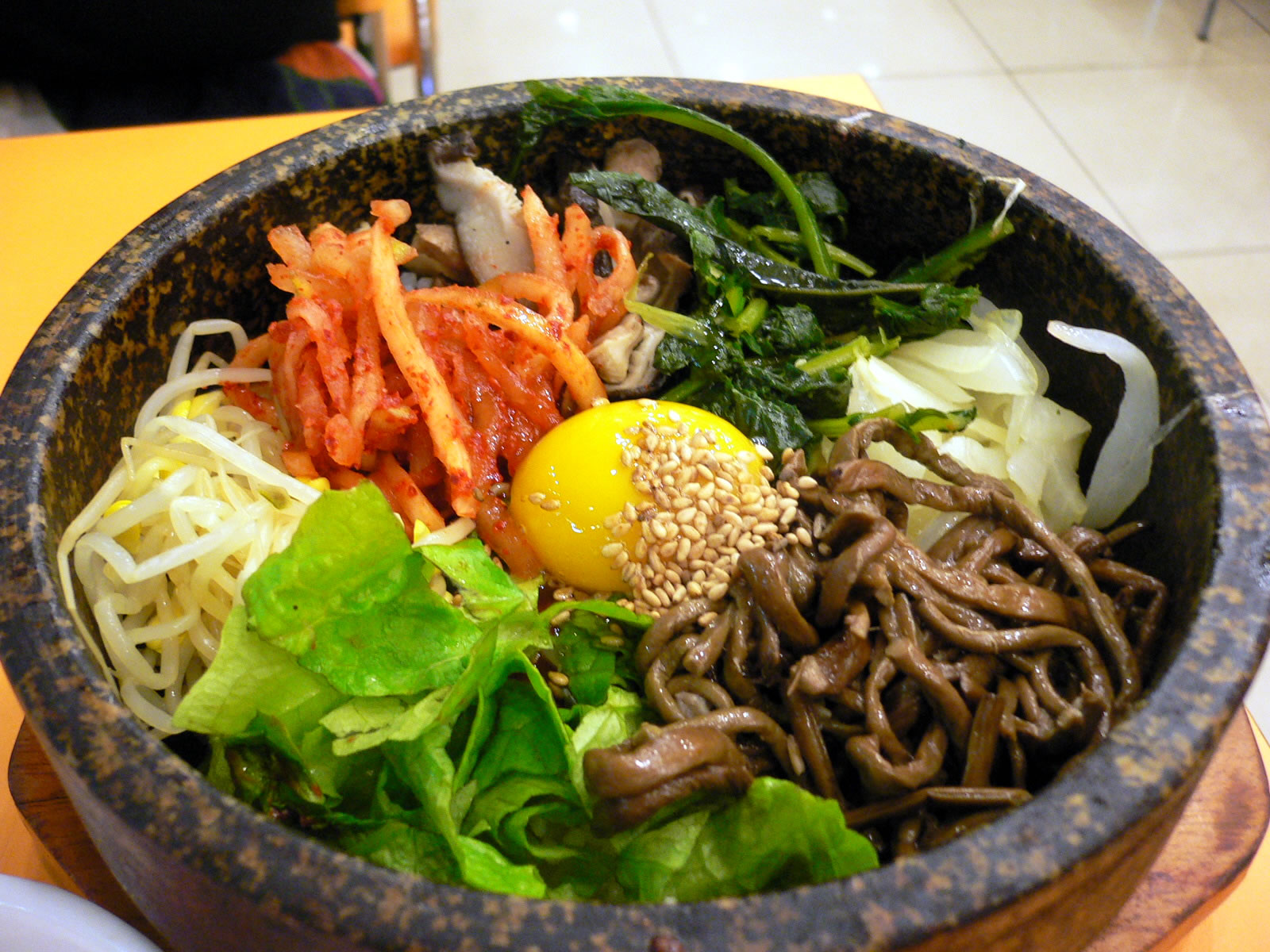 USD 7-14
Bibimbap (비빔밥)
A visually stunning bowl of warm rice topped with sautéed vegetables, gochujang (chili pepper paste), a fried egg, and often sliced beef, all mixed together before eating.
 USD 7-13
Sundubu Jjigae (순두부찌개)
A spicy, comforting stew made with uncurdled soft tofu, vegetables, often seafood or meat, and topped with a raw egg cracked in just before serving.
 USD 8-15
Tonkotsu Ramen
A rich, milky broth made from simmered pork bones, often served with thin, firm noodles and chashu pork; Fukuoka is its birthplace, but it's perfected in various styles across Japan.
 USD 15-25
Samgyeopsal (삼겹살)
Thick slices of uncured pork belly, grilled at your table, then cut into bite-sized pieces and wrapped in lettuce with garlic, ssamjang, and kimchi.
 USD 12-35
Tempura
Japan
Lightly battered and deep-fried seafood and seasonal vegetables, served immediately for crispness; look for dedicated tempura-ya for the best experience where the chef fries each piece individually.
Markets & neighborhoods
Known as 'Kyoto's Kitchen', offering a wide array of traditional Kyoto foods, fresh produce, pickles, sweets, and snacks from centuries-old vendors.
Authentic and economical traditional market food stalls, handmade mandu, bindaetteok, and tteokbokki.
Fresh seafood stalls, sushi breakfasts, ramen, and street food. It's the go-to for fish, though the main wholesale market moved to Toyosu.
Osaka's vibrant street food scene, famous for Okonomiyaki, Takoyaki, and Kushikatsu, with flashy neon signs and a lively atmosphere.
A youthful and vibrant district with numerous casual restaurants, Korean BBQ joints, trendy cafes, and late-night dining options.
Bustling street food alleys offering a wide array of snacks like Gyeranppang, Hotteok, and various skewers, alongside casual eateries.
Yakitori alleys (Omoide Yokocho), diverse ramen shops, bustling nightlife with endless dining options from casual to high-end.
Good to Know
Japan
South Korea
Japan offers a shopping experience where quality is paramount, from Tokyo's specialized districts like Akihabara for anime to Kyoto's traditional markets for matcha, with generally fixed prices. In South Korea, Seoul blends ultra-modern trends like K-beauty in Myeongdong with traditional crafts in Insadong, providing efficient shopping experiences for items ranging from K-Pop merch to Korean ceramics.
Top 13 souvenirs
Korean Beauty Products (K-Beauty)
SeoulUSD 5-15KKorean beauty products offer innovative formulations and high quality at competitive prices, making them highly sought after globally.
📍 Myeongdong (Olive Young, innisfree, Etude House flagships); Gangnam (Aritaum Live, chicor)
Anime/Manga Merchandise
TokyoUSD 10-200Character goods, official figures, and limited-edition merchandise from series that often never leave Japan are abundant and of high quality.
📍 Akihabara Radio Kaikan, Nakano Broadway, Animate Ikebukuro, Mandarake.
K-Pop Idol Merchandise
SeoulUSD 10-200Official K-Pop merchandise allows fans to connect with their favorite idols through unique albums, lightsticks, and exclusive fan goods.
📍 SMTOWN Store (COEX Artium); Line Friends Store (Gangnam, Myeongdong); Myeongdong Underground Shopping Center
Matcha & Ceremonial Green Tea
KyotoUSD 15-150Experience the depth of flavor and quality of genuine ceremonial grade matcha and single-origin green teas that are unparalleled outside Japan.
📍 Ippodo Tea Kyoto Main Store; Uji region tea shops; various tea specialty stores in department stores.
Korean Red Ginseng Extract & Candy
SeoulUSD 15-300Korean ginseng is renowned for its health benefits and superior quality, available in various convenient forms like extracts and candies.
📍 Cheong Kwan Jang (Jung-gu, Myeongdong); Namdaemun Market (specialized ginseng shops)
Korean Ceramics (Celadon/Buncheong)
SeoulUSD 30-500Korean celadon and buncheong ceramics showcase centuries of refined artistry, often featuring distinct glazes and patterns unlike any other.
📍 Insadong Street (various galleries); Yeoju Ceramic World (Gyeonggi Province) for a wider selection
Japanese Kitchen Knives
TokyoUSD 60-600Hand-forged carbon steel blades with a sharpness and balance that Western knives can't match; many makers have been in business for generations.
📍 Kappabashi Kitchen Town; Aritsugu in Nishiki Market for Kyoto.
Hanji Paper Crafts
SeoulUSD 10-200Traditional handmade hanji paper crafts offer unique durability and aesthetic beauty, from stationery to intricate lamps.
📍 Insadong Ssamziegil; Hanji Chul Gallery (Jongno-gu)
Muji Homeware & Stationery
TokyoUSD 5-80Minimalist notebooks, pens, and household items are 30-50% cheaper than abroad with a much broader catalog than any non-Japanese Muji store.
📍 Muji flagship Ginza (6 floors); Muji Yurakucho for the largest food section.
Artisanal Korean Tea
SeoulUSD 10-100High-quality Korean teas, especially green tea from Jeju and unique traditional blends, provide a refined taste experience and cultural insight.
📍 Insadong (O'sulloc Tea House, various traditional tea shops); Lotte Department Store food halls
High-Quality Japanese Stationery
TokyoUSD 5-100Discover exquisitely designed pens, notebooks, and paper goods from brands like Pilot, Platinum, Midori, and Traveler's Company that offer unmatched quality and user experience.
📍 Itoya Ginza, Tokyu Hands, Loft, or specialist stationery shops.
Uniqlo Heattech or Ultralight Down Jacket
TokyoUSD 15-80Stock up on Uniqlo's innovative thermal wear or lightweight down jackets, which offer superior quality, design, and a wider range of colors/sizes than international stores, often at better prices.
📍 Uniqlo Ginza Global Flagship Store, Shinjuku West Gate Store, or any large Uniqlo outlet.
Modern Korean Fashion (Homegrown Brands)
SeoulUSD 30-500Discover unique and trendy apparel from innovative Korean designers, offering distinct styles not easily found elsewhere.
📍 Garosu-gil (Sinsa-dong); Hongdae Street; Common Ground (Gwangjin-gu)
Markets & districts
Traditional Kyoto foods, fresh produce, local sweets, tea, sake, pickled vegetables, some pottery and craft items.
A lively, narrow covered market known as 'Kyoto's Kitchen,' excellent for sampling local delicacies and finding high-quality food souvenirs, though it can get crowded.
Traditional Korean crafts, hanji paper goods, ceramics, artisanal teas, and traditional art.
A cultural hub featuring traditional tea houses, art galleries, and craft shops in a charming, pedestrian-friendly setting that can get busy on weekends.
Professional-grade kitchen knives, Japanese pottery, lacquerware, chef's tools, plastic food samples.
A specialized street lined with stores catering to restaurants and home cooks, offering high-quality, practical goods with less tourist pressure than central districts.
Anime figures, manga, electronics, video games, idol merchandise, model kits.
A neon-soaked 'Electric Town' bustling with multi-story stores dedicated to otaku culture, electronics, and arcades; can be very crowded, especially on weekends.
Upscale fashion from local designers, unique lifestyle goods, and design-focused boutiques.
A chic, tree-lined street known for its sophisticated fashion boutiques, art galleries, and stylish cafes, with a more relaxed and upscale atmosphere.
Youth fashion, indie designer goods, K-Pop merchandise, unique accessories, and art supplies.
A trendy, energetic area popular with university students, offering eclectic shops, street performances, and a lively nightlife.
K-Beauty products, trendy fashion, street food, and K-Pop merchandise.
A bustling, vibrant district known for its endless cosmetic shops, fashion boutiques, and street food stalls, often very crowded with tourists.
Good to Know
Japan
South Korea
Cherry Blossom Season
HanamiPeak cherry blossom viewing season with picnics under blooming trees.
Note: Book 3+ months ahead - hotels sell out quickly
Golden Week
Japan's longest holiday period with multiple national holidays. Domestic travel surge.
Note: Book 3+ months ahead or avoid entirely
Autumn Leaves Season
KoyoPeak autumn foliage viewing with stunning red and gold colors across Japan.
Note: Book 2 months ahead for Kyoto
Obon Festival
ObonBuddhist festival honoring ancestors with bon dances, floating lanterns, and the spectacular Daimonji fire on Kyoto's mountainsides.
Note: Book 2+ months ahead - major domestic travel period
Public Holidays(34)
Part four
Costs & booking
- Total for a couple — 14 days mid-range trip, excludes international flights
- Accommodation assumes 1 shared room
- Rough estimates — actual prices vary by season and availability
Local Transport
Accommodation
AI estimated based on typical hotel costs
Food
Activities
Mid-priced overall for hotels ($100-180/night for decent options) in both countries, but food can be very affordable in Japan via konbini meals ($4-7) and in South Korea at local eateries; tap water is safe in both countries.
For inter-city travel within Japan, a 7-day JR Pass (approximately $200-250 USD) typically only pays off for extensive long-distance routes; for a simple Tokyo-Kyoto return, individual Shinkansen tickets may be more cost-effective.
Secure an eSIM for Japan before your trip, as physical SIM card acquisition can be complex on arrival. In Seoul, take advantage of the ubiquitous free public Wi-Fi available in most cafes, hotels, and public zones to save on data costs.
Indulge in a traditional multi-course kaiseki dinner in Kyoto, a refined culinary experience unique to Japan. Budget $120-200 per person for an authentic, high-quality meal that doubles as a cultural immersion.
Utilize Japan's convenience stores (konbini) for delicious and budget-friendly meals often priced between $4-7. In Seoul, explore local markets and street food stalls for satisfying meals like kimbap or tteokbokki, typically costing under $10.
Tokyo Skytree Observation DeckDay 1
Book 3 days ahead — Timed entry helps avoid long queues, especially on weekends or evenings.
Shibuya Sky Observation DeckDay 2
Book 3 days ahead — Tickets are timed and sell out quickly, particularly for sunset slots.
teamLab Planets TOKYO DMMDay 3
Book 1 month ahead — This popular immersive art museum often sells out, especially on weekends and holidays.
Shinkansen (Bullet Train) from Tokyo to Kyoto (Reserved Seat)Day 6
Book 1 week ahead — Secure reserved seats for your preferred train time on this busy route, especially during peak travel hours.
AREX Express Train from Incheon International Airport (ICN) to Seoul StationDay 10
Book 2 days ahead — Ensure a comfortable, non-stop journey to Seoul Station immediately upon arrival.
N Seoul Tower Observation DeckDay 11
Book 3 days ahead — Timed entry is recommended for popular times, especially for sunset views, to avoid queues.
Changdeokgung Palace & Huwon (Secret Garden) Guided TourDay 13
Book 1 week ahead — The Huwon (Secret Garden) can only be visited via a limited-capacity guided tour, which often sells out.
The practical bits — connectivity, getting around, and flights. These are partner links; we may earn a commission, at no cost to you.
Part five
Before you go
World-class public transport with punctual trains and buses
Suica / Pasmo / ICOCA
Get a Japan Rail Pass for multi-city travel. Trains stop around midnight.
- Pre-load Mobile Suica or Pasmo to Apple Pay / Google Pay before arriving in Japan — it works on all Tokyo/Kyoto transit and at most konbini/vending machines.
- Withdraw Japanese Yen cash at 7-Eleven or Japan Post ATMs — these accept foreign cards 24/7; most local bank ATMs often don't.
- Purchase a T-Money card at any Incheon Airport convenience store upon arrival in South Korea — it's essential for all Seoul subway and bus travel.
- For Japan, use Google Maps' 'transit' directions for Tokyo/Kyoto, and pre-download the Japanese offline pack for Google Translate's camera tool.
- For South Korea, prioritize KakaoMap or Naver Map over Google Maps for accurate public transport and walking directions in Seoul.
- Carry a small plastic bag in Japan — public trash cans are genuinely rare, and you are expected to carry your own trash until your hotel.
- Set phones to silent ('manner mode' in Japan, '매너 모드' in South Korea) on public transport — loud calls are considered impolite.
- Book popular Japanese attractions like the Ghibli Museum exactly 1 month in advance on the 10th of the month at 10am JST via Lawson Ticket; it sells out rapidly.
- 1¥20,000-¥30,000 cash in yen (Japan, many places card-refusal)
- 2Slip-on shoes (Japan, frequent removal at temples, ryokans)
- 3Small quick-dry towel (Japan, sento, onsen, public restrooms)
- 4Small plastic bag (Japan, public bins are rare)
- 5Comfortable walking shoes (both countries, extensive walking)
- 6Compact umbrella (both countries, sudden rain)
- 7KRW ₩50,000 cash (South Korea, street food, smaller shops)
- 8Reusable shopping bag (South Korea, plastic bags often charged)
- 9Layered clothing (both countries, temperature fluctuations)
- 10Portable power bank (both countries, heavy phone use for navigation)
Note: Travel conditions, regulations, and local customs may change. We recommend verifying essential details — such as visa requirements, emergency contacts, and payment options — closer to your travel date.
Visa & Entry Requirements
For Japan: US, UK, EU, Australia, Canada citizens typically receive a 90-day visa-free stay. Indian citizens require an e-Visa through the official Japanese government website. A passport valid for at least six months beyond your intended stay is generally required. For South Korea: US, UK, EU, Australia, Canada citizens typically receive a 90-day visa-free stay. Indian citizens usually need to apply for a K-ETA (Korea Electronic Travel Authorization) online before arrival, along with a visa for longer stays. A passport valid for at least six months beyond your intended stay is required for both countries. Other nationalities should check the respective embassy websites.
SIM & Connectivity
SIM Options
📍 Online before departure via provider's app/website
📍 Narita Airport, Haneda Airport arrivals hall; online pre-order
📍 Incheon Airport (ICN), Gimpo Airport (GMP) arrival halls; online pre-booking
📍 Incheon Airport (ICN), Gimpo Airport (GMP) arrival halls; online pre-booking
In Japan, free public Wi-Fi is not ubiquitous; registration is often required even if available, though hotels typically offer reliable connections. In South Korea, free public Wi-Fi is widely available in cities at major spots like train stations, bus terminals, cafés, and accommodations. Both countries offer excellent fixed-line and mobile internet speeds.
Useful Apps
Pre-load a Mobile Suica or Pasmo to your smartphone's wallet before arriving in Japan for immediate public transport access. For South Korea, consider pre-booking a SIM/eSIM for airport pickup as it's more convenient than local purchases. Download offline maps and translation packs for both countries before arrival, especially in Japan where public Wi-Fi can be sparse.
Electric Socket Guide
Socket Types
Two flat parallel pins (North America, Japan)
Two flat pins + round ground (North America)
Two round pins (most of Europe, South America)
Two round pins + side earth clips (Germany, Europe)
100V / 220V
50/60Hz / 60Hz
Tipping Etiquette
Japan
Not expected — tipping can be considered rude
Not expected
Not expected; leave a tip in an envelope if desired
Japan has a no-tipping culture. Excellent service is the standard.
South korea
Not expected — can be considered rude
Not expected
Not expected
South Korea has a no-tipping culture. Service is included.
Safety & Travel Advisories
Check official government advisories for the latest safety information, entry requirements, and travel warnings before your trip.
Emergency Numbers
Japan
110
119
119
South korea
112
119
119
112 is the pan-European emergency number and works in all EU/EEA countries.
Payments
Cash is still widely used, especially at small shops and rural areas
Accepted at major stores and hotels; less common at small restaurants
IC cards (Suica/Pasmo) widely accepted at convenience stores and transit
Carry cash — many places are cash-only. 7-Eleven ATMs accept foreign cards.
Most major nationalities (US, UK, EU, Australia, Canada) can enter Japan and South Korea visa-free for short tourist stays (typically up to 90 days). Indian citizens generally require an e-Visa for Japan and a K-ETA (Korea Electronic Travel Authorization) for South Korea, often alongside a visa for longer stays. Always check the specific requirements for your nationality with the respective country's embassy or consulate well before your trip, as regulations can change.
Both Japan and South Korea are among the safest countries globally, including for solo female travelers. Violent crime is extremely rare. In major cities like Tokyo, Kyoto, Osaka, and Seoul, public transport is safe and well-lit even at night. For Japan, be aware of specific 'tout' bar scams in areas like Roppongi. For South Korea, the general safety is excellent, with high public security. Standard precautions apply, but serious threats are minimal.
Japan uses the Japanese Yen (JPY), and cash is essential, as many smaller businesses, especially outside major cities, are cash-only. South Korea uses the South Korean Won (KRW). While cards are widely accepted in South Korea, having some cash is useful for street food vendors and smaller local shops. ATMs accepting foreign cards are available in both countries, particularly at 7-Eleven and Japan Post in Japan, and major banks in South Korea.
No, tipping is not customary in either Japan or South Korea. In both countries, excellent service is considered standard, and attempts to leave a tip at restaurants, hotels, or for taxi drivers are often met with confusion and can even be politely refused. A service charge may be included in some higher-end establishments, but no additional gratuity is expected.
Beyond general travel essentials, consider packing slip-on shoes for Japan due to frequent shoe removal at temples, ryokans, and traditional restaurants. A small quick-dry towel is useful for Japanese onsen/sento as public restrooms may lack paper. For both countries, a compact umbrella is essential due to sudden rain. Carry some cash in both JPY and KRW for smaller vendors. A portable power bank is highly recommended given heavy reliance on phones for navigation and translation.
The prime seasons for visiting both Japan and South Korea are spring (late March to May) for the iconic cherry blossom season, and autumn (September to November) for vibrant fall foliage. Both periods offer mild and pleasant weather, averaging 10-20°C. These are also the busiest tourist seasons, requiring early bookings. Summer (June-August) can be hot, humid, and rainy, while winter (December-February) brings cold weather, ideal for snow activities in specific regions but with fewer crowds in cities.
In Tokyo, the public transport system (JR trains, Tokyo Metro, Toei Subway) is highly efficient. Pre-loading Mobile Suica or Pasmo to your phone is key. For Seoul, the subway and bus systems are excellent; purchase a physical T-Money card or use a digital version for seamless travel. Both cities are very walkable, but public transport covers vast distances. Use Google Maps for Tokyo and KakaoMap/Naver Map for Seoul for accurate directions.
From Narita (NRT) to central Tokyo: The Narita Express (N'EX) train is efficient (approx. 53 mins to Tokyo Station, ¥3,070). The Keisei Skyliner is faster to Nippori/Ueno (approx. 41 mins, ¥2,570). From Incheon (ICN) to Seoul: The AREX (Airport Railroad Express) offers both express (43 mins to Seoul Station, ₩9,500) and all-stop services, directly connecting the airport to Seoul's city center. Taxis are available at both airports but are significantly more expensive.
These 3 experiences didn't make it into this itinerary

🛕Discover Serene Buddhist Temples
e.g., Bulguksa, Seokguram Grotto

🏝️Experience the Scenic Nature of Jeju Island
e.g., Seongsan Ilchulbong, Hallasan National Park

♨️A Relaxing Onsen Hot Spring Experience
e.g., Hakone Yuryo, Arima Onsen
Create Your Custom Version
You Might Also Like

Beijing, China; Shanghai, China; Kyoto, Japan; Tokyo, Japan
Japan
This 14-day trip spans China and Japan, starting with 4 nights in Beijing to explore the Forbidden City and Great Wall, followed by 3 nights in Shanghai to see The Bund and Pudong skyline. A flight then takes you to Japan for 4 nights in Kyoto (Fushimi Inari Shrine, Arashiyama Bamboo Grove), and...

Taipei, Taiwan; Tokyo, Japan
Taiwan And Japan
This 10-day balanced trip for a couple explores two dynamic East Asian capitals: Taipei and Tokyo. Spend 4 nights in Taipei (Shilin Night Market, Chiang Kai-shek Memorial Hall, Taipei 101), then fly to Tokyo for 6 nights (Shibuya Crossing, Senso-ji Temple, teamLab Planets). This trip uses one...
Kyoto, Japan; Tokyo, Japan
Japan
This packed 7-day journey spans Kyoto and Tokyo for a couple, beginning with 3 nights in Kyoto to explore Fushimi Inari Shrine, Kiyomizu-dera, and the Arashiyama Bamboo Grove, based in the Gion area. A Shinkansen ride then transports you to Tokyo for 4 nights, immersing you in Shibuya Crossing,...

Busan, South Korea
South Korea
5 days across Busan's distinct coastal districts: 2 nights in Haeundae (Haeundae Beach, Haedong Yonggungsa Temple, The Bay 101 Yacht Club), then move to Nampo-dong for 3 nights (Gamcheon Culture Village, Jagalchi Market, BIFF Square). This packed itinerary blends iconic beaches and vibrant night...
Prefer to plan it yourself?
Start from a free, no-signup travel itinerary template. The Excel and Google Sheets versions auto-total the budget and split costs by who paid.