5 Days in Beijing: From Forbidden City to Quanjude Roast Duck

Forbidden City · Mutianyu Great Wall · Yonghegong Lama Temple · Nanluoguxiang · 798 Art Zone · Liyuan Theatre
5-day Beijing itinerary. Day-by-day route, attractions & food.
Part one
Is this trip for you?
Beijing is chosen over a city like Shanghai because it offers unparalleled access to China's imperial past, featuring the Forbidden City and the readily accessible Mutianyu section of the Great Wall. While Shanghai boasts modern architecture and colonial history, it lacks Beijing's profound connection to ancient dynasties, traditional hutong neighborhoods, and the unique culinary heritage of imperial court cuisine like Peking Duck. This itinerary focuses on the capital's distinct historical and cultural grandeur, which Shanghai cannot replicate.
Your itinerary covers 8 must-have experiences

Imperial Palaces & Historic Sites
✓ Day 1: Forbidden City

Beijing's Traditional Hutongs & Local Life
✓ Day 1: Shichahai Hutongs Exploration

Ancient Temples & Religious Sites
✓ Day 2: Yonghegong Lama Temple

Iconic Beijing Cuisine
✓ Day 2: Guijie Street (Ghost Street) Food Exploration
A Vibrant Local Food Market Exploration
✓ Day 2: Guijie Street (Ghost Street) Food Exploration

The Great Wall of China
✓ Day 3: Mutianyu Great Wall

A Contemporary Art District Exploration
✓ Day 3: 798 Art Zone

An Evening of Traditional Chinese Performing Arts
✓ Day 4: Laoshe Teahouse
Photos from Wikimedia Commons, used under Creative Commons licenses. Individual credits shown on each photo.
📅 Best Time to Visit
Beijing has a monsoon-influenced continental climate with distinct seasons. The best time to visit is during the 'Golden Autumn' (金秋) in September and October, when temperatures are pleasant (around 15-25°C) and skies are often clear, ideal for sightseeing. Spring (March-May) brings temperatures of 10-20°C but can also experience dust storms from the Gobi Desert. Summers (June-August) are hot and humid, frequently exceeding 30°C, while winters (November-February) are cold and dry, often dropping below freezing.
Part two
The plan, day by day
This 5-day trip prioritizes Beijing's iconic imperial history, core cultural experiences in the hutongs, and essential local cuisine. You will experience the grandeur of the Forbidden City and ascend the Great Wall at Mutianyu, but this focused pace means skipping a deeper dive into Beijing's contemporary art scene, like the 798 Art Zone. It also means forgoing other ancient sites further afield, such as the sprawling Tanzhe Temple or a leisurely exploration of the Summer Palace's extensive gardens and pavilions beyond a quick visit.
Consider adding 2 days to explore Beijing's modern art district, the 798 Art Zone, where old factory buildings have been transformed into contemporary galleries, unique boutiques, and cafes. This allows you to experience a different, more avant-garde side of Beijing beyond its imperial past, offering a stark contrast of artistic expression and urban renewal that a shorter trip cannot accommodate without rushing through the core historical sites. This itinerary follows a packed pace (5-6 activities per day).
Day 1 and the last day are lighter to account for arrival and departure. Want a different pace? Create a custom version with your preferences.
- Morning
08:00 AM - Arrive at Beijing Capital International Airport (PEK) & Transfer to Hotel· 2 hrs
USD 45 (~CNY 324)
Clear immigration and customs at Beijing Capital International Airport (PEK). Take a pre-booked private transfer or taxi to your hotel in central Beijing for a comfortable start to your trip.
10:00 AM - Hotel Check-in & Freshen Up· 1 hr
FREECheck into your hotel in the Dongcheng district and take some time to freshen up and settle in after your international flight. This area is ideal for exploring Beijing's historic core.
- Afternoon
12:00 PM - Lunch: Local Noodles in Dongcheng· 1 hr
USD 18 (~CNY 130)ZhajiangmianSavor a hearty bowl of Zhajiangmian, hand-pulled wheat noodles topped with savory fermented soybean paste, stir-fried ground pork, and fresh vegetables, at a local noodle shop in the Dongcheng area.
- Closes 4 PM · 3h here⚠️ Closed on Monday🕐 Monday: Closed; Tuesday: 8:30 AM – 4:00 PM; Wednesday: 8:30 AM – 4:00 PMConfirm hours on Maps
01:00 PM - Forbidden City· 3 hrs
USD 9 (~CNY 65)Check availability on Klook → - EveningConfirm hours on Maps
05:00 PM - Shichahai Hutongs Exploration· 1 hr 30 min
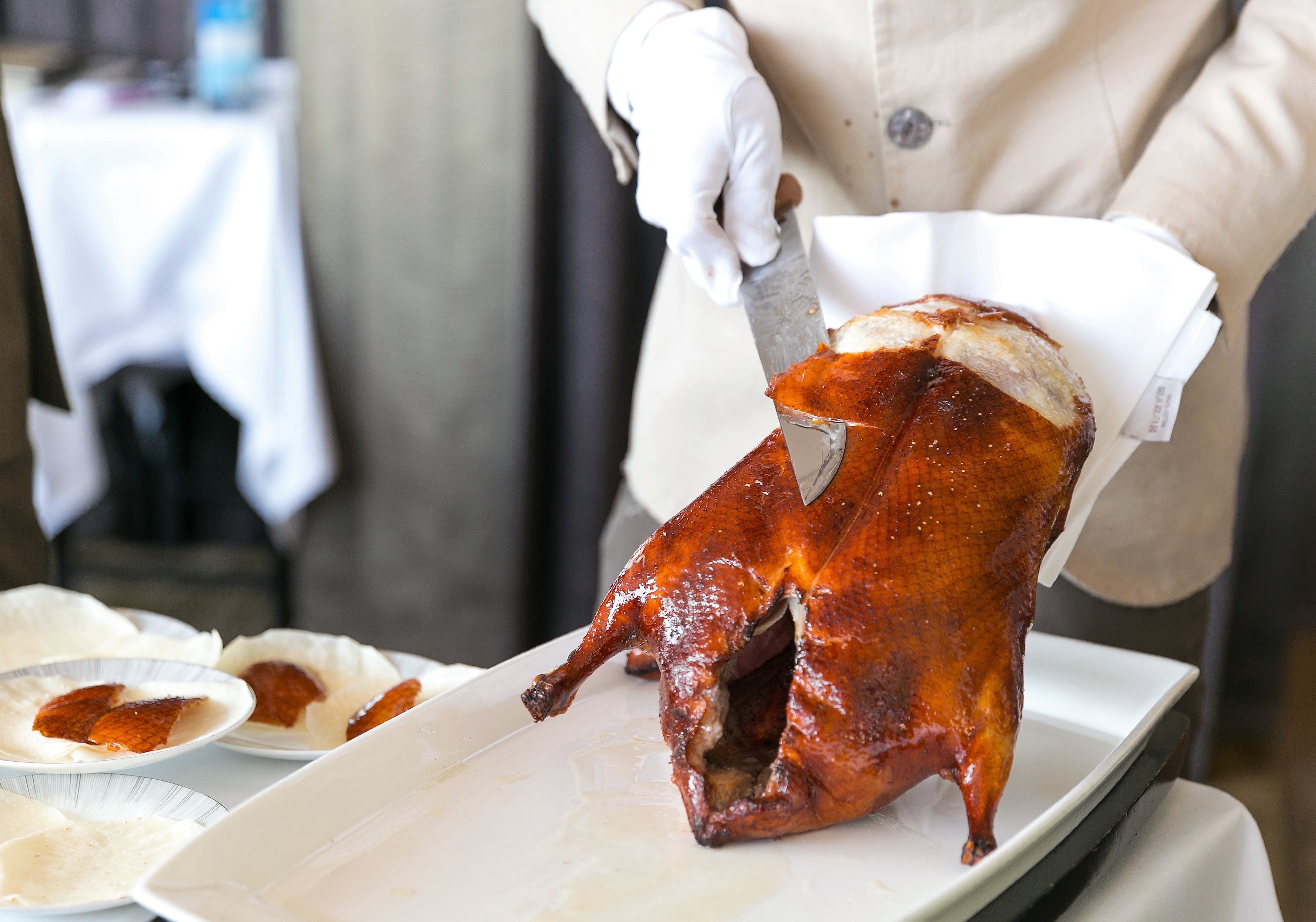
USD 20 (~CNY 144)Check availability on Klook → 07:30 PM - Dinner: Peking Duck in Dongcheng· 1 hr 30 min
USD 45 (~CNY 324)Peking duckIndulge in Beijing's most famous dish, Peking Duck, roasted to crispy, lacquered perfection and carved tableside. Enjoy this iconic culinary experience at a renowned restaurant in the Dongcheng district.
Dongcheng
The Dongcheng district offers a central location with excellent access to major historical sites like the Forbidden City, Tiananmen Square, and is well-connected by metro. It boasts numerous dining options and a vibrant local atmosphere, making it an ideal base for exploring Beijing's core attractions.
- Morning🕐 Monday: 6:00 AM – 9:00 PM; Tuesday: 6:00 AM – 9:00 PM; Wednesday: 6:00 AM – 9:00 PMConfirm hours on Maps
09:00 AM - Temple of Heaven· 3 hrs
USD 15 (~CNY 108)Check availability on Klook → - Afternoon
12:00 PM - Lunch: Zhajiangmian in Chongwen· 1 hr
USD 8 (~CNY 58)ZhajiangmianSavor a traditional bowl of Zhajiangmian, hand-pulled wheat noodles topped with savory stir-fried soybean paste and an array of fresh, raw vegetables, a classic Beijing dish.
- Closes 5 PM · 4h here🕐 Monday: 9:00 AM – 5:00 PM; Tuesday: 9:00 AM – 5:00 PM; Wednesday: 9:00 AM – 5:00 PMConfirm hours on Maps
01:00 PM - Yonghegong Lama Temple· 2 hrs
USD 10 (~CNY 72)Check availability on Klook → - Confirm hours on Maps
03:15 PM - Confucius Temple and Guozijian Museum· 1 hr 30 min
USD 8 (~CNY 58)Check availability on Klook → - EveningConfirm hours on Maps
05:00 PM - Guijie Street (Ghost Street) Food Exploration· 2 hrs
USD 15 (~CNY 108)Check availability on Klook → 07:45 PM - Dinner: Shuàn Yángròu (Beijing Hot Pot) in Dongcheng· 1 hr 15 min
USD 25 (~CNY 180)Shuàn yángròuExperience authentic Beijing hot pot, where thinly sliced lamb is quickly cooked in a simmering copper pot of clear broth and then dipped in a rich, complex sesame-peanut sauce, a true local specialty.
Dongcheng
Central to many imperial sites and traditional hutongs, with excellent subway connections and a variety of dining options.
- Morning
07:00 AM - Travel to Mutianyu Great Wall· 1 hr 30 min
USD 20 (~CNY 144)Begin the scenic journey to the iconic Mutianyu section of the Great Wall, one of the best-preserved and most beautiful sections, known for its lush natural surroundings and watchtowers.
- Confirm hours on Maps
08:30 AM - Mutianyu Great Wall· 3 hrs 30 min
USD 30 (~CNY 216)Check availability on Klook → - Afternoon
12:00 PM - Lunch: Local Chinese Cuisine near Mutianyu· 1 hr
USD 18 (~CNY 130)Enjoy a hearty lunch featuring authentic local Chinese dishes at a restaurant located at the base of the Mutianyu Great Wall. Try some comforting dumplings, a staple of Chinese cuisine.
02:30 PM - Travel back to Beijing· 1 hr 30 min
USD 20 (~CNY 144)Check availability on Klook → N509FZ (CC BY 4.0
Conclude your memorable visit to the Great Wall and begin the journey back to Beijing city center, allowing time to relax after the morning's adventure.
- Evening
07:30 PM - Dinner: Sichuan Cuisine in Chaoyang· 1 hr 15 min
USD 25 (~CNY 180)Savor the bold and spicy flavors of authentic Sichuan cuisine at a popular local restaurant in the lively Chaoyang district, offering a contrast to Beijing's more northern flavors.
Dongcheng
This area remains an excellent base for exploring Beijing's historical sites, offering great transit connections and a wide array of dining options within easy reach.
- Morning🕐 Monday: 6:00 AM – 7:00 PM; Tuesday: 6:00 AM – 7:00 PM; Wednesday: 6:00 AM – 7:00 PMConfirm hours on Maps
08:00 AM - Summer Palace· 3 hrs 30 min
USD 15 (~CNY 108)Check availability on Klook → - Afternoon
12:00 PM - Lunch: Beijing Street Snacks in Haidian· 1 hr
USD 10 (~CNY 72)Enjoy a casual lunch featuring authentic Beijing street snacks, like savory jiaozi or local noodles, in the Haidian district after exploring the Summer Palace.
- Confirm hours on Maps
02:00 PM - Prince Gong Mansion· 2 hrs
USD 10 (~CNY 72)Check availability on Klook → - 🕐 Monday: 10:00 AM – 9:30 PM; Tuesday: 10:00 AM – 9:30 PM; Wednesday: 10:00 AM – 9:30 PMConfirm hours on Maps
04:30 PM - Laoshe Teahouse· 2 hrs
USD 25 (~CNY 180)Check availability on Klook → - Evening
07:30 PM - Dinner: Authentic Northern Chinese Cuisine in Xicheng· 1 hr
USD 20 (~CNY 144)Savor a dinner of classic Northern Chinese cuisine, perhaps delicious jiaozi or hearty noodle dishes, in the lively Xicheng district.
Dongcheng
Central to many historical sites like the Forbidden City and Temple of Heaven, with diverse dining options and excellent metro connections, balancing tourist access with local atmosphere.
- Morning⚠️ Closed on Monday🕐 Monday: Closed; Tuesday: 9:00 AM – 4:30 PM; Wednesday: 9:00 AM – 4:30 PMConfirm hours on Maps
09:00 AM - National Museum of China· 3 hrs
FREE - Afternoon
12:00 PM - Lunch: Local Beijing Noodles in Qianmen· 1 hr
USD 18 (~CNY 130)ZhajiangmianSavor a traditional bowl of Zhajiangmian, a savory noodle dish with fermented soybean paste, ground pork, and fresh vegetables, at a local eatery near the historic Qianmen area.
- Confirm hours on Maps
01:00 PM - Wander Beijing Dashilan· 2 hrs
USD 15 (~CNY 108)Check availability on Klook → 03:00 PM - Hotel Checkout & Luggage Collection· 30 min
FREEReturn to your hotel in Dongcheng to check out and collect your luggage, preparing for your departure from Beijing.
- Confirm hours on Maps
03:30 PM - Depart from Beijing Capital International Airport (PEK)· 5 hrs 30 min
USD 40 (~CNY 288)
Part three
Food, shopping & festivals
Beijing's culinary heart beats with robust Northern Chinese flavors, heavy on wheat-based staples and imperial legacies. Old-school hutongs like Gulou offer traditional snacks and noodle shops, while Qianmen holds grand Peking Duck restaurants. Look for local-favorite Zhajiangmian and Beijing Hot Pot in more casual eateries.
Top 8 dishes to try
 USD 1-3
Tanghulu (糖葫芦)
Candied hawthorn berries, or sometimes other fruits, on a stick – a delightful sweet and tangy winter street snack.
 USD 2-6
Jiaozi (饺子)
Boiled or pan-fried dumplings filled with various combinations of meat (pork, beef) and vegetables (cabbage, chives) – a comforting and ubiquitous meal.
 USD 30-70
Peking Duck (北京烤鸭 - Běijīng Kǎoyā)
Beijing
Roasted to a crispy, lacquered perfection and carved tableside, this duck is rolled in thin pancakes with scallions and hoisin sauce for an iconic experience.
 USD 1-3
Aiwowo (艾窝窝)
Beijing
Steamed glutinous rice balls with various sweet fillings like sesame, walnuts, or fruit, often found at traditional snack shops.
 USD 1-3
Douzhi (豆汁儿) and Jiaoquan (焦圈)
Beijing
A unique, sour fermented mung bean drink, famously paired with crispy fried dough rings – the true taste of old Beijing breakfast.
 USD 1-3
Lǘdagun (驴打滚)
Beijing
Sweet glutinous rice rolls filled with red bean paste and generously coated in toasted soybean flour, a classic Beijing dessert snack.
Chao Gan (炒肝)
Beijing
A thick, garlicky stew of pork liver and intestines, typically consumed standing, often paired with baozi or jiaozi for a hearty local meal.
📍 Old Beijing breakfast joints, particularly in old districts, Beijing
 USD 3-8
Zhajiangmian (炸酱面)
Beijing
Hand-pulled wheat noodles topped with a savory fermented soybean paste, stir-fried with ground pork and an array of fresh, raw vegetables.
Markets & neighborhoods
General area for classic Beijing dining, including traditional hot pot restaurants, noodle shops, and older establishments serving local specialties.
Traditional hutong alleyways with small, local eateries, street food, and authentic Beijing snacks, especially breakfast items.
A concentrated area for traditional Beijing snacks (xiaochi), including Lǘdagun, Aiwowo, and various breakfast items.
Good to Know
Beijing's shopping scene is a fascinating blend of ancient traditions and modern trends. While department stores offer global brands and fixed prices, the real treasures are found in specialized markets and cultural streets where you can discover unique Chinese crafts, high-quality teas, and contemporary art; be prepared to bargain hard in many of these local markets to get a fair price.
Top 6 souvenirs
Calligraphy Brush Set & Inkstone
BeijingUSD 20-100KTake home a genuine set of brushes, ink stick, ink stone, and paper, fundamental tools for China's revered art of calligraphy, perfect for practice or display.
📍 Liulichang Cultural Street
High-Quality Chinese Tea
BeijingUSD 20-80KExperience China's ancient tea culture with freshly sourced leaves directly from dedicated tea merchants, offering a far superior quality and variety than what's available abroad.
📍 Maliandao Tea Street
Beijing Cloisonné Ware
BeijingUSD 30-50KAcquire a distinctive piece of Beijing's imperial artistry, featuring intricate enamel designs on copper, crafted using techniques perfected over centuries.
📍 Beijing Enamel Factory
Custom-Tailored Qipao/Cheongsam
BeijingUSD 150-50KCommission a bespoke Qipao or Cheongsam, a beautifully fitted traditional dress made from high-quality silk, offering an elegant and personalized garment unique to your measurements.
📍 Sanlitun Village, specific tailors like Dave's Custom Tailoring (though check current locations as stores change)
Contemporary Chinese Art Prints
BeijingUSD 50-20KDiscover unique perspectives on modern Chinese society and culture through affordable prints or small sculptures by emerging artists from Beijing's vibrant contemporary art scene.
📍 798 Art District (Dashanzi Art District)
Freshwater Pearl Jewelry
BeijingUSD 50-30KPurchase lustrous freshwater pearls at a fraction of international prices, choosing from strands or custom-designed jewelry straight from the world's largest producer.
📍 Hongqiao Pearl Market (third floor and above)
Markets & districts
Freshwater and saltwater pearls (loose or set in jewelry), jade, and other precious stones and accessories.
A multi-story, bustling market famous for its extensive pearl selection; expect persistent vendors and be prepared to bargain aggressively for the best prices.
Contemporary Chinese art, paintings, sculptures, avant-garde design goods, and art books.
A former factory complex repurposed into a vibrant hub of galleries, studios, and cafes, offering modern Chinese art in an an industrial-chic setting where art prices are generally fixed.
Traditional calligraphy supplies, antique books, brush paintings, traditional Chinese art, and unique folk crafts.
A historic, pedestrian-friendly street evoking old Beijing, featuring galleries, artisan workshops, and traditional shops, where prices are generally fixed but some smaller vendors may allow slight haggling.
Good to Know
Chinese New Year
ChunjieMost important Chinese holiday with fireworks, dragon dances, and family reunions.
Note: Book flights/hotels 2 months ahead
Lantern Festival
Yuanxiao JieMarks the end of Chinese New Year celebrations with spectacular lantern displays, lion dances, and sweet rice ball eating.
Note: Book 2-3 weeks ahead
Dragon Boat Festival
Duanwu JieAncient festival featuring thrilling dragon boat races on rivers and lakes, with zongzi rice dumplings and folk performances.
Note: Book 2 weeks ahead for riverside hotels
Golden Week National Day
Guoqing JieChina's biggest holiday week with 800+ million domestic trips. Major tourist sites are extremely crowded and prices peak across the country.
Note: Book 2+ months ahead or avoid entirely
Public Holidays(21)
Part four
Costs & booking
- Total for a couple — 5 days mid-range trip, excludes international flights
- Accommodation assumes 1 shared room
- Rough estimates — actual prices vary by season and availability
Local Transport
Accommodation
AI estimated based on typical hotel costs
Food
Activities
Moderate overall – budget around $100/night for comfortable hotels. Food can be very cheap at local eateries ($3-8 per meal) or moderate for sit-down restaurants. Bottled water is a must; look for busy food stalls with high turnover.
The Beijing Subway is incredibly efficient and cheap, with most rides costing ¥3-6 ($0.40-$0.85). Consider purchasing an Yikatong (transport card) for convenience, which requires a ¥20 deposit and can be topped up easily.
Leverage Beijing's vibrant street food scene and local eateries for delicious, budget-friendly meals. You can find substantial dishes like jianbing or noodles for ¥15-30 ($2-4) per person, stretching your daily food budget considerably.
Allocate a portion of your activities budget (around $400 for 5 days) for one truly unique cultural experience. A traditional Peking Opera show or a refined tea ceremony can range from ¥150-300 ($20-40) per person and offers deep cultural immersion.
While major hotels accept international cards, local vendors often prefer cash or mobile payment. Always carry smaller Chinese Yuan notes (¥50 or ¥100) for easier transactions. Also, a reliable VPN is essential in China for accessing many international websites and apps.
China Tourist VisaDay 1
Book 2 months ahead — Visa application processes can be lengthy, requiring appointments and document submission well in advance of travel. Confirm current requirements with your local Chinese embassy or consulate.
eSIM for China connectivityDay 1
Book 1 week ahead — Purchase and activate an eSIM or arrange for a local SIM card. Foreign SIM cards often have limited access to certain internet services in China without a VPN.
Forbidden City Timed EntryDay 1
Book 1 week ahead — Tickets are released 7 days prior to the visit date at 8 PM Beijing time on the official Palace Museum website. Peak slots sell out within minutes, so book as soon as released.
Temple of Heaven Timed EntryDay 2
Book 1 week ahead — Timed entry tickets are typically released 7 days prior to the visit date. Booking via official WeChat mini-program or website is common.
Yonghegong Lama Temple Timed EntryDay 2
Book 1 week ahead — Timed entry tickets are often released 7 days in advance via official channels.
Confucius Temple and Guozijian Museum Timed EntryDay 2
Book 1 week ahead — Timed entry tickets are often released 7 days in advance via official channels.
Mutianyu Great Wall Entry (and optional cable car/chairlift)Day 3
Book 1 week ahead — Entry tickets and optional cable car/chairlift tickets are released 7 days in advance via official channels. Booking ahead secures preferred time slots and transport.
Summer Palace Timed EntryDay 4
Book 1 week ahead — Timed entry tickets are released 7 days in advance via official channels.
Prince Gong Mansion Timed EntryDay 4
Book 1 week ahead — Timed entry tickets are released 7 days in advance via official channels.
Laoshe Teahouse Show and Dinner ReservationDay 4
Book 1 week ahead — Reservations for shows and preferred seating, especially for evening performances, are highly recommended to ensure availability.
The practical bits — connectivity, getting around, and flights. These are partner links; we may earn a commission, at no cost to you.
Part five
Before you go
Extensive high-speed rail and metro systems in major cities
City-specific transit cards or Alipay QR codes
Download DiDi for ride-hailing. Book train tickets in advance on 12306 or Trip.com.
- For the Great Wall, especially in chillier seasons, pack extra layers; expect temperatures at the Wall to be at least 5°C colder than in central Beijing, exacerbated by wind chill.
- Carry pocket tissue or a small roll of toilet paper everywhere; many public toilets, particularly in older establishments, do not provide it.
- Always negotiate tuk-tuk (sanlunche) or unmetered taxi fares before starting your journey; agree on a price verbally or in writing to avoid disputes.
- Use WeChat Pay or Alipay for most transactions in Beijing; cash is increasingly less accepted in daily life, though small amounts are useful for street vendors.
- Book popular attractions like the Forbidden City and Mutianyu Great Wall tickets online several days in advance, as same-day tickets often sell out or require complex registration.
- Pre-download Baidu Maps for offline navigation as Google Maps functionality is limited without a VPN and may not offer comprehensive public transport routes.
- Familiarize yourself with the Beijing Metro map and buy a reloadable Yikatong card at any station; it's the most efficient and cost-effective way to get around the city.
- At Beijing Capital International Airport (PEK), be aware that porters may expect a ¥10 fee to assist with luggage to check-in, even for short distances.
- 1Warm jacket (for Great Wall, colder seasons)
- 2Layered clothing (for indoor/outdoor temperature shifts)
- 3Pocket tissues (public toilets)
- 4N95 mask (air quality fluctuations)
- 5Small hand sanitizer (squat toilets)
- 6Reliable VPN subscription (pre-installed on devices)
- 7Offline Baidu Maps (pre-downloaded regions)
- 8Small denomination CNY cash (for street vendors)
- 9Slip-on shoes (cultural sites, easy removal)
Note: Travel conditions, regulations, and local customs may change. We recommend verifying essential details — such as visa requirements, emergency contacts, and payment options — closer to your travel date.
Visa & Entry Requirements
Most nationalities, including US, EU, UK, Australia, and Canada, require a visa in advance to enter China. Visa-free transit policies (e.g., 72/144-hour) apply only for direct transit through specific cities like Beijing with an onward ticket. Indian citizens also require a visa. Apply well in advance at a Chinese embassy or consulate in your home country. Passports must be valid for at least 6 months beyond your intended stay.
SIM & Connectivity
SIM Options
📍 Official China Mobile stores in major cities or at some airport convenience stores
📍 Official China Unicom stores in major cities or at some airport convenience stores
📍 Official China Telecom stores in major cities or at some airport convenience stores
Reliably free in most public places like malls, cafes, and hotels, but often requires registration with a local phone number or passport scan to comply with local laws. Free Wi-Fi at Beijing Capital International Airport (PEK) also follows these registration requirements.
Useful Apps
Many Western apps and websites (including Google services, Facebook, Instagram, WhatsApp) are blocked in China; a reliable VPN is essential for accessing these services. Public Wi-Fi often requires a Chinese phone number for registration, which can be difficult for short-term visitors without a local SIM card.
Electric Socket Guide
Socket Types
Two flat parallel pins (North America, Japan)
Two round pins (most of Europe, South America)
Two angled flat pins + ground (Australia, China)
220V
50Hz
Tipping Etiquette
Not expected — may be refused
Not expected; round up fare if desired
Not expected in most hotels
Tipping is not part of Chinese culture. High-end international hotels may accept tips.
Safety & Travel Advisories
Check official government advisories for the latest safety information, entry requirements, and travel warnings before your trip.
Emergency Numbers
110
120
119
Limited English support — have your hotel address written in Chinese
Payments
China is nearly cashless — mobile payment dominates
International cards rarely accepted outside luxury hotels
WeChat Pay and Alipay are essential; some now allow foreign card linking
Set up Alipay or WeChat Pay before arrival. Carry some cash for rural areas.
Most foreign nationals, including those from the US, EU, UK, Australia, and India, need to obtain a visa in advance for China. There are limited visa-free transit options (e.g., 144-hour) if you have an onward ticket and are transiting directly through Beijing, but for a standard visit, a pre-arranged visa is required. Always check the latest requirements with your local Chinese embassy or consulate.
Beijing is generally very safe for solo female travelers, with violent crime being rare. Public transport is reliable and well-lit. The main considerations are being aware of your surroundings in crowded markets and exercising caution with online access due to internet restrictions. Stick to well-trafficked areas, especially at night.
The currency used in Beijing is the Chinese Yuan Renminbi (CNY). While cash is useful for small street vendors or older establishments, mobile payments via WeChat Pay or Alipay are dominant. It is advisable to have some small denomination CNY cash, but rely more on digital payments if you can set them up.
No, tipping is generally not expected or customary in Beijing. In most restaurants, taxis, and hotels, tips are often refused and can cause confusion or awkwardness. Focus on receiving good service rather than offering a tip.
Essential packing includes layered clothing, a warm jacket for cooler seasons (especially for the Great Wall), pocket tissues, and a reliable N95 mask for varying air quality. A pre-installed VPN subscription is crucial for internet access. Small denomination CNY cash for local vendors and slip-on shoes for cultural sites are also recommended.
From Beijing Capital International Airport (PEK), the Airport Express train is efficient, taking about 20-30 minutes to Dongzhimen or Sanyuanqiao Metro stations. Airport shuttle buses are also available to various city points. A taxi is an option but can be expensive (¥100-¥150+) and subject to traffic. Always ensure taxis use their meters or agree on a price beforehand.
Key cultural norms include not tipping as it's not customary, and removing shoes when entering traditional homes or some establishments. Haggling is common in markets and smaller shops. Be mindful that many common Western websites and apps are blocked; a VPN is necessary for access to them.
To stay connected, consider purchasing a local SIM card from China Mobile, China Unicom, or China Telecom upon arrival. Public Wi-Fi is widely available in hotels, cafes, and malls but often requires registration with a Chinese phone number or passport. Crucially, a reliable VPN is essential to access services like Google, WhatsApp, and Facebook, which are otherwise blocked.
These 2 experiences didn't make it into this itinerary
🍜An Upscale Regional Chinese Dining Experience
e.g., Jing Yaa Tang, King's Joy

🏛️A Glimpse into Beijing's Modern History through Notable Residences
e.g., Lu Xun Museum, Soong Ching-ling Former Residence
Create Your Custom Version
You Might Also Like

Chengdu, China
China
This packed 4-day journey delves into the heart of Chengdu, China, splitting time between the bustling city and the serene mountains of Dujiangyan. Experience giant panda encounters at the Chengdu Research Base of Giant Panda Breeding, explore ancient Taoist temples on Qingcheng Mountain, and...

Hong Kong, China
China
This packed 4-day trip to Hong Kong for a couple explores the city's dynamic blend of heritage and modernity. Based in Tsim Sha Tsui, you'll ascend Victoria Peak for iconic skyline views, delve into the traditional street food and cultural atmosphere of the Temple Street Night Market, and...

Shanghai, China
China
This packed 4-day Shanghai journey immerses a couple in the city's diverse heritage, from The Bund's colonial architecture to Pudong's soaring Shanghai Tower and the traditional Yu Garden complex. The itinerary covers key districts including the Old City and Former French Concession, with a busy...

Kunming, Shangri-La, China
China
This 7-day trip explores Yunnan's capital, Kunming, then ascends to the Tibetan plateau in Shangri-La, before looping back to Kunming for departure. Highlights include Kunming's Stone Forest, the spiritual Ganden Sumtseling Monastery, and the charming Dukezong Ancient City. The packed pace...
Prefer to plan it yourself?
Start from a free, no-signup travel itinerary template. The Excel and Google Sheets versions auto-total the budget and split costs by who paid.