Your 7 Days in Yunnan: Kunming Stone Forest to Lijiang Old Town

Shilin Stone Forest · Yuantong Temple · Green Lake Park · Kunming Flower and Bird Market · Dali Ancient City · Erhai Lake
7-day China trip — Kunming to Shangri-La. Day-by-day route, attractions & food.
Part one
Is this trip for you?
This itinerary focuses on the distinct character of Yunnan's capital, Kunming, and the high-altitude Tibetan culture of Shangri-La. Compared to a route including Lijiang, this selection prioritizes the unique spiritual grandeur of Tibetan monasteries and the raw beauty of high-altitude national parks, a stark contrast to Lijiang's Naxi old town experience. While Lijiang offers the popular Tiger Leaping Gorge, Shangri-La provides equally dramatic mountainous landscapes and unparalleled immersion in Tibetan traditions and cuisine, which Lijiang's primarily Naxi culture does not provide.
Your itinerary covers 8 must-have experiences

Serene Urban Green Spaces
✓ Day 1: Green Lake Park (Cuihu Park)

Vibrant Markets and Pedestrian Areas
✓ Day 1: Wander Nanping Pedestrian Street and Jinma Biji Archway

Historic Temples and Monasteries
✓ Day 2: Explore Western Hills Forest Park and Dragon Gate

Exploring Ancient Bai Culture and Old Towns
✓ Day 3: Dinner: Momo and Rubing in Dukezong Ancient City

Local Markets and Tibetan Delicacies
✓ Day 3: Shangri-La Local Market

Grand Tibetan Monasteries
✓ Day 4: Explore Ganden Sumtseling Monastery

High-Altitude Natural Parks
✓ Day 4: Visit Napahai Lake Nature Reserve
Trekking Tiger Leaping Gorge
✓ Day 5: Tiger Leaping Gorge Upper Trail Trek
Photos from Wikimedia Commons, used under Creative Commons licenses. Individual credits shown on each photo.
📅 Best Time to Visit
The best time to visit Yunnan, especially the Kunming-Dali-Lijiang-Shangri-La route, is generally spring (March-May) and autumn (September-November). Kunming, known as the 'Spring City', enjoys mild weather year-round, averaging 15-20 degrees Celsius. Dali and Lijiang are also pleasant during these times, with temperatures around 10-25 degrees Celsius. Shangri-La, at over 3,200 meters, is best in late spring/early summer (May-June) or autumn (September-October) to avoid deep snow in winter (Dec-Feb) and heavy rains/potential landslides in summer (July-August). Spring offers blooming flowers, while autumn has clear skies and vibrant foliage.
Part two
The plan, day by day
7-day trip
This itinerary prioritizes the diverse urban and natural attractions of Kunming, alongside an immersive experience in Shangri-La's Tibetan culture and high-altitude trekking at Tiger Leaping Gorge. However, it intentionally bypasses the historic charm of Dali, known for its ancient city walls and tranquil Erhai Lake. You will also miss Lijiang's UNESCO World Heritage Old Town, with its unique Naxi architecture and the majestic backdrop of Jade Dragon Snow Mountain.
This choice provides focused exploration but means sacrificing two iconic destinations in Yunnan. To enrich your journey, consider extending your trip by two to three days to include Lijiang. This would allow you to wander through its UNESCO World Heritage Old Town, a maze of ancient canals and traditional Naxi architecture.
You could also take in the dramatic vistas of Jade Dragon Snow Mountain, adding another distinct cultural and natural landscape to your Yunnan adventure. This itinerary follows a packed pace (5-6 activities per day). Day 1 and the last day are lighter to account for arrival and departure.
Want a different pace? Create a custom version with your preferences.
- Morning
08:00 AM - Arrive at Kunming Changshui International Airport (KMG) and Transfer to Hotel· 2 hrs
USD 20 (~CNY 144)
Arrive at Kunming Changshui International Airport (KMG). Take Airport Metro Line 6 to Tangzixiang (20 min, ~$5), then connect to a local taxi or bus to reach your hotel area (~30 min, ~$15). Alternatively, Airport Express Bus Line 2 offers direct service to downtown (~45 min, ~$8), or a taxi directly to your hotel (~45 min, ~$25).
10:00 AM - Hotel Check-in and Refresh· 30 min
FREECheck into your hotel in the city center of Kunming and take some time to refresh after your international flight.
- Confirm hours on Maps
10:30 AM - Zhuanxin Integrated Wholesale Market· 1 hr 30 min
USD 5 (~CNY 36)Check availability on Klook → - Afternoon
12:30 PM - Lunch: Guoqiao Mixian (Across the Bridge Noodles)· 1 hr
USD 15 (~CNY 108)Guoqiao mixianSavor Kunming's most famous dish, Guoqiao Mixian, a flavorful noodle soup where ingredients are cooked in a piping hot broth right at your table. Find a local eatery in Xishan District.
- Evening🕐 Monday: Open 24 hours; Tuesday: Open 24 hours; Wednesday: Open 24 hoursConfirm hours on Maps
05:00 PM - Wander Nanping Pedestrian Street and Jinma Biji Archway· 2 hrs
FREE 07:30 PM - Dinner: Yunnanese Wild Mushroom Stir-fry· 1 hr
USD 20 (~CNY 144)Yewei jun chao caiIndulge in Yunnan's famous wild mushrooms with a delicious stir-fry, a regional specialty highlighting the unique flavors of the province's diverse fungi. Enjoy at a local restaurant in Wuhua District.
08:30 PM - Evening Relaxation at a Local Tea House· 1 hr
USD 10 (~CNY 72)Wind down your day with a relaxing visit to a traditional tea house, experiencing local tea culture in a tranquil setting in Wuhua District.
Kunming City Center (Wuhua District)
The Wuhua District is central to many of Kunming's main attractions like Green Lake Park and Nanping Pedestrian Street, offers a wide range of dining options, and provides convenient access to public transport for exploring further.
- Morning
08:00 AM - Travel to Western Hills Forest Park· 45 min
USD 5 (~CNY 36)Begin the day with a scenic transfer to the Western Hills, located on the western outskirts of Kunming, offering stunning natural beauty.
- Confirm hours on Maps
08:45 AM - Explore Western Hills Forest Park and Dragon Gate· 4 hrs
USD 40 (~CNY 288) - Afternoon
01:30 PM - Lunch: Guoqiao Mixian in Wuhua District· 1 hr
USD 18 (~CNY 130)Guoqiao mixianSavor a traditional bowl of Guoqiao Mixian (Across the Bridge Noodles), a famous Yunnanese specialty, at a local eatery in the central Wuhua District after descending from the hills.
02:30 PM - Yunnanese Cooking Class· 3 hrs
USD 40 (~CNY 288)Check availability on Klook →Learn to prepare authentic Yunnanese dishes, such as spring rolls or stir-fries, in a hands-on cooking class led by local chefs. Discover the unique flavors and ingredients of the region. This activity fulfills the 'food' and 'cultural' interests.
- Evening
08:00 PM - Dinner: Yunnanese Flavors in Guandu District· 1 hr
USD 20 (~CNY 144)Yewei jun chao caiConclude the day with a delicious dinner featuring a diverse range of Yunnanese dishes, perhaps including the famous wild mushroom stir-fry, in a lively restaurant in Kunming's Guandu district.
Kunming City Center (Wuhua District)
This area is centrally located, offering easy access to major attractions, numerous dining options, and good public transport connections for exploring Kunming.
- Morning
07:00 AM - Breakfast: Yunnanese Steamed Buns in Kunming· 30 min
USD 8 (~CNY 58)Start your transit day with a quick and delicious local breakfast of fresh steamed buns (baozi) from a street vendor or small eatery.
- Confirm hours on Maps
07:30 AM - Yuantong Temple (Kunming)· 2 hrs
USD 5 (~CNY 36)Check availability on Klook → 09:30 AM - Inter-City Bus: Kunming to Shangri-La· 8 hrs 30 min
USD 35 (~CNY 252)Check availability on Klook →Embark on a scenic full-day bus journey from Kunming to Shangri-La. This 8.5-hour experience includes travel to the bus station, the comfortable ride through diverse Yunnan landscapes with a local lunch stop en route, and arrival at Shangri-La with transfer and hotel check-in.
- EveningCloses 8 PM · 2h here🕐 Monday: 8:00 AM – 8:00 PM; Tuesday: 8:00 AM – 8:00 PM; Wednesday: 8:00 AM – 8:00 PMConfirm hours on Maps
06:00 PM - Shangri-La Local Market· 1 hr
USD 4 (~CNY 29)Check availability on Klook → 07:00 PM - Dinner: Momo and Rubing in Dukezong Ancient City· 1 hr
USD 18 (~CNY 130)Enjoy a traditional Tibetan dinner within Dukezong Ancient City, sampling delicious Momo (dumplings) and Rubing (local fried goat cheese) at a local eatery.
Dukezong Ancient City
Staying near Dukezong Ancient City offers excellent access to historic sites, local markets, and a wide range of Tibetan eateries. Its central location makes it a convenient base for exploring Shangri-La and provides a culturally immersive experience.
- MorningConfirm hours on Maps
08:30 AM - Explore Ganden Sumtseling Monastery· 4 hrs
USD 25 (~CNY 180)Check availability on Klook → - Afternoon
01:00 PM - Lunch: Tibetan Yak Stew· 1 hr
USD 18 (~CNY 130)Yak StewEnjoy a hearty Tibetan yak stew at a local eatery, a warming and flavorful staple perfect for the high-altitude climate.
- Confirm hours on Maps
02:30 PM - Visit Napahai Lake Nature Reserve· 3 hrs
USD 15 (~CNY 108)Check availability on Klook → - Evening
06:00 PM - Tibetan Cooking Class and Dinner Experience· 3 hrs
USD 50 (~CNY 360)Momo, yak stewParticipate in a hands-on cooking class at the Shangri-La Cultural Centre, learning to prepare traditional Tibetan dishes like momo (dumplings) or yak stew, culminating in enjoying the delicious meal you prepared.
Best around Shangri-La Cultural Centre
Dukezong Ancient City
Centrally located within the historic area, offering easy access to traditional Tibetan culture, local eateries, and proximity to major attractions like Ganden Sumtseling Monastery. Provides a charming and authentic atmosphere for exploring Shangri-La.
- Morning
08:00 AM - Breakfast: Tibetan Noodles or Bread in Dukezong Ancient City· 30 min
USD 5 (~CNY 36)Enjoy a hearty local Tibetan breakfast with options like thukpa (noodle soup) or steamed bread at a small eatery.
08:30 AM - Travel to Tiger Leaping Gorge· 2 hrs 30 min
USD 30 (~CNY 216)Depart from Shangri-La city by shared van or bus towards Qiaotou, the starting point for the Upper Trail of Tiger Leaping Gorge. This scenic drive offers initial glimpses of the dramatic landscapes.
- Confirm hours on Maps
11:00 AM - Tiger Leaping Gorge Upper Trail Trek· 5 hrs
USD 20 (~CNY 144)Check availability on Klook → - Afternoon
04:00 PM - Lunch: Simple Trailside Meal near Tiger Leaping Gorge· 1 hr
USD 15 (~CNY 108)Yunnanese Mountain CuisineEnjoy a well-deserved late lunch with simple local fare at one of the guesthouses or small restaurants near the gorge's trail exit or entrance.
Best around Tiger Leaping Gorge area - Evening
05:00 PM - Travel back to Shangri-La· 2 hrs 30 min
FREEBegin the return journey from Tiger Leaping Gorge back to Shangri-La city, reflecting on the day's adventure.
07:30 PM - Dinner: Yunnanese Hot Pot near Shangri-La Market· 1 hr
USD 20 (~CNY 144)Yunnanese Hot PotSavor a comforting Yunnanese hot pot, a communal and flavorful dining experience, in an area outside Dukezong Ancient City, perhaps near the Shangri-La Market area.
Best around Shangri-La City Center
Dukezong Ancient City
Staying in Dukezong Ancient City offers a charming atmosphere with easy access to Tibetan cultural sites, local markets, and traditional dining options, serving as a perfect base for exploring Shangri-La's unique landscape and heritage.
- Morning
07:30 AM - Breakfast: Local Tibetan flavors in Shangri-La· 1 hr
USD 8 (~CNY 58)Enjoy a hearty breakfast featuring local Tibetan specialties to fuel up before your journey.
08:30 AM - Travel to Shangri-La Bus Station· 30 min
FREETransfer from your accommodation in Dukezong Ancient City to the Shangri-La bus station for your inter-city journey.
09:00 AM - Inter-City Bus: Shangri-La to Kunming· 8 hrs 30 min
USD 40 (~CNY 288)Check availability on Klook →Embark on an approximately 8.5-hour scenic bus journey from the high altitudes of Shangri-La back to the spring city of Kunming.
- Evening
05:30 PM - Hotel Check-in in Kunming· 30 min
FREEArrive in Kunming and check into your hotel in the central Wuhua District, allowing time to freshen up after your long journey.
07:30 PM - Dinner: Guoqiao Mixian in Panlong District· 1 hr
USD 18 (~CNY 130)Guoqiao mixianEnjoy a delicious bowl of Guoqiao Mixian, Kunming's famous 'Across the Bridge Noodles', served at a local eatery in the Panlong District.
08:30 PM - Attend a Local Yunnanese Cultural Performance· 1 hr 30 min
USD 25 (~CNY 180)Check availability on Klook →Experience the vibrant traditional dances and music of Yunnan's diverse ethnic groups in a captivating evening show, showcasing the rich cultural heritage of the region.
Wuhua District
The heart of Kunming, offering easy access to Green Lake Park, local markets, and a variety of dining options. Well-connected for exploring the city.
- Morning
07:30 AM - Breakfast: Local Steamed Buns· 45 min
USD 8 (~CNY 58)Local Steamed BunsEnjoy a traditional Kunming breakfast with freshly steamed buns (baozi) and a local beverage in the Wuhua District.
- Confirm hours on Maps
08:45 AM - Explore Golden Temple Park (Jin Dian Park)· 5 hrs 15 min
USD 10 (~CNY 72)Check availability on Klook → - Afternoon
02:00 PM - Lunch: Yunnanese Hot Pot in Panlong District· 1 hr
USD 18 (~CNY 130)Yunnanese Hot PotSavor a flavorful Yunnanese hot pot, a communal dining experience featuring fresh local ingredients cooked in a simmering broth, in a restaurant in Panlong District.
03:30 PM - Hotel Checkout & Luggage Collection· 30 min
FREEReturn to your hotel in Wuhua District to check out and collect your luggage, preparing for your departure.
- Confirm hours on Maps
04:00 PM - Depart from Kunming Changshui International Airport (KMG)· 5 hrs
USD 30 (~CNY 216)
Part three
Food, shopping & festivals
Across Yunnan, expect a food journey centered on fresh mountain ingredients and diverse regional flavors. Kunming is famous for Guoqiao Mixian and street carts, while Dali blends Bai traditions with local cheeses like Rubing in its Old Town eateries. Lijiang's Naxi cuisine shines in Dayan Old Town, offering Lijiang Baba, and Shangri-La warms with hearty Tibetan staples like Momo and yak meat dishes. Look for authentic local spots by observing where locals eat, especially in morning markets or smaller guesthouse kitchens.
Top 14 dishes to try
 USD 1-2
Yak Butter Tea
Shangri-La
This warming, salty, and energy-dense tea made with yak butter is a staple for Tibetans living in high-altitude regions like Shangri-La.
Tsampa
Shangri-La
This roasted barley flour, often mixed with yak butter tea, cheese, or sugar, is the quintessential staple food of Tibetan culture, providing sustained energy.
 USD 2-4
Momo
Shangri-La
These steamed or fried Tibetan dumplings, filled with yak meat, pork, or vegetables, are a popular and satisfying meal or snack across the Tibetan plateau.
 USD 3-6
Thenthuk
Shangri-La
A hearty, hand-pulled flat noodle soup with vegetables and often yak or mutton, perfect for Shangri-La's cool, high-altitude climate.
 USD 0-1
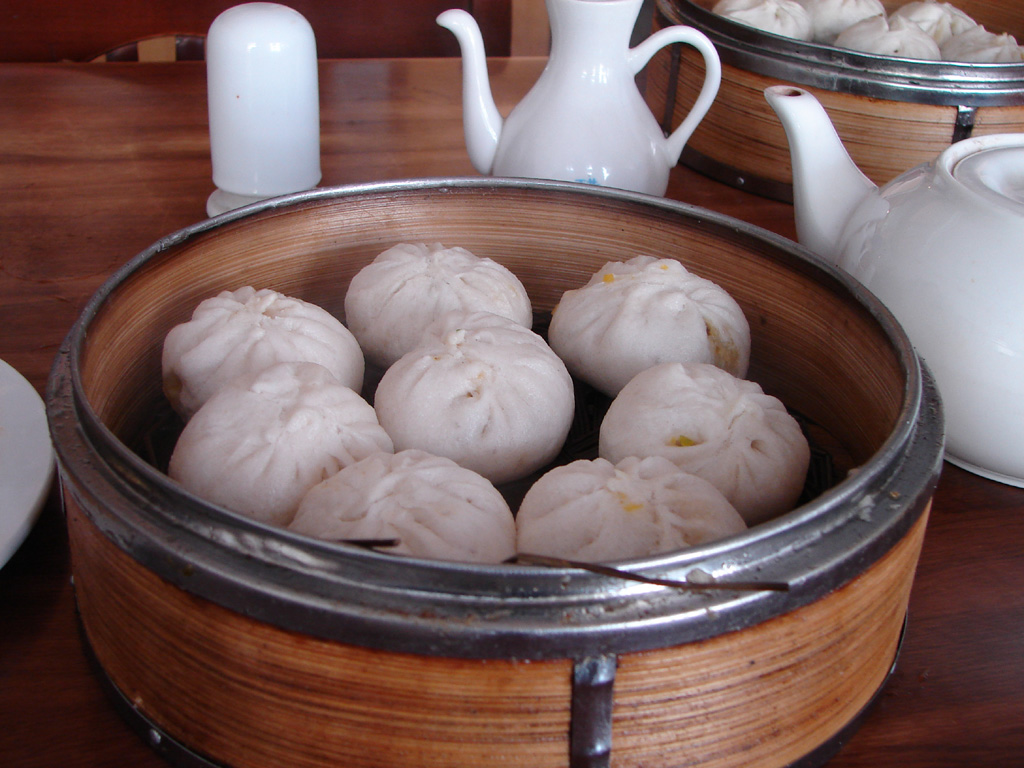
Baozi
A staple Chinese breakfast, these soft, fluffy steamed buns come with various savory (pork, vegetable) or sweet fillings, perfect for a quick, cheap start to the day.
 USD 5-12
Guoqiao Mixian
While originating in Kunming, this iconic Yunnan 'crossing the bridge' rice noodle soup is widely enjoyed in Lijiang, famous for its elaborate presentation and rich, hot broth.
Lijiang Baba
Lijiang
A savory or sweet flaky flatbread, often pan-fried, representing a staple snack of the Naxi people unique to the Lijiang region.
📍 Dayan Ancient City, Lijiang
Xian Hua Bing
Yunnan Province
A delicate pastry filled with sweetened rose petals, this fragrant and popular treat is a true specialty of Yunnan province.
📍 Dali Old Town, Yunnan Province
 USD 2-4
Jidou Liangfen
Lijiang
A refreshing and savory cold chickpea jelly salad, a staple Yunnan snack often dressed with chili oil, vinegar, and herbs, perfect for a light meal.
 USD 3-6
Rubing
Dali
A unique Bai ethnic specialty, this goat cheese is often grilled or pan-fried until golden, sometimes served with sugar or savory spices for a distinct local flavor.
Naxi Chuanwei Xiangchang
Lijiang
This Naxi cured and smoked sausage, typically made with pork and spices, offers a distinct regional flavor profile found specifically in Lijiang and surrounding Naxi areas.
📍 Sifangjie (Square Street), Lijiang
 USD 4-8
Er Kuai
Yunnan Province
A versatile Yunnan staple made from sticky rice, typically served stir-fried with vegetables and a savory sauce, offering a satisfyingly chewy texture.
 USD 8-18
Wild Mushroom Stir-fry
Lijiang
Yunnan is renowned for its diverse wild mushrooms, and a seasonal stir-fry highlights these earthy flavors, often cooked with local peppers and garlic.
Yewei Jun Chao Cai
Kunming
Yunnan is renowned for its incredible variety of wild mushrooms, often stir-fried simply with garlic and peppers to highlight their earthy, unique flavors.
📍 Restaurants specializing in Yunnan cuisine, Kunming
Markets & neighborhoods
Excellent spots for breakfast items like baozi, fresh snacks, and quick, affordable meals from street vendors.
Authentic and cheaper Naxi dishes, fresh produce, and ingredients for local cooking, often where residents shop for daily meals.
More rural, often family-run establishments offering fresh produce and local dishes, sometimes featuring unique ingredients from the lake or surrounding farms.
A wide array of restaurants, including specialized Guoqiao Mixian establishments and general Yunnanese cuisine.
Traditional Bai ethnic eateries, street food stalls, and local snacks; this is the central hub for tourist-friendly dining experiences and regional specialties.
Street food stalls, traditional Naxi restaurants, and tourist-friendly dining options are abundant, especially around Sifangjie (Square Street).
More modern Chinese restaurants, some larger eateries, and convenience stores, catering to a broader range of tastes.
Traditional Tibetan guesthouses and small family-run restaurants serving local dishes, often with wood-fired stoves.
Good to Know
Across Yunnan, shopping offers a fascinating journey from modern plazas in Kunming to the ancient towns of Dali, Lijiang, and Shangri-La. Explore traditional markets like Kunming's Jianhua Jie Flower and Bird Market for local produce and artisan crafts, while Dali's Renmin Road and Lijiang's Qiyi Street offer authentic ethnic textiles and jewelry. In Shangri-La, focus on reputable shops in Dukezong Ancient Town for Tibetan silver, being mindful of pushy vendors. Look for specialty items like Pu-erh tea, Yunnan flower cakes, and Naxi Dongba calligraphy throughout your trip.
Top 14 souvenirs
Yunnan Flower Cakes (Rose Cakes)
KunmingUSD 5-20These delicate pastries are filled with fragrant, candied rose petals, a local specialty that captures Kunming's 'City of Eternal Spring' essence.
📍 Jianhua Jie Flower and Bird Market, any local bakery like Jia Hua Food, or most supermarkets.
Bai Tie-Dye Textiles (Zha Ran)
DaliUSD 15-50Hand-dyed by Bai artisans using natural indigo, creating unique patterns unlike any mass-produced fabric.
📍 Xizhou Village (many workshops), Renmin Road in Dali Old Town.
Ethnic Minority Textiles and Embroidery
KunmingUSD 10-200The diverse ethnic groups of Yunnan, like the Yi, Bai, and Hani, create vibrant, hand-stitched textiles and intricate silver jewelry reflecting unique cultural motifs.
📍 Jianhua Jie Flower and Bird Market, Yunnan Nationalities Village (Yunnan Minzu Cun) artisan shops.
Tibetan Silver Jewelry
Shangri-LaUSD 15-200Handcrafted silver pieces often set with vibrant turquoise or red coral, reflecting traditional Tibetan aesthetics and intricate symbolism.
📍 Local artisan shops along Sifangjie in Dukezong Ancient Town
Dali Marble Decor
DaliUSD 30-200Features natural, unique landscape patterns within the stone, making each piece a miniature work of art native to Dali.
📍 Marble shops on Renmin Road or Fuxing Road in Dali Old Town.
Naxi Dongba Calligraphy and Paintings
LijiangUSD 15-375Acquire unique artworks featuring the ancient Naxi pictographic script, a rare surviving hieroglyphic system often painted on traditional paper or cloth.
📍 Lijiang Old Town (Dayan Ancient City) art shops, Dongba Culture Museum shop, Shuhe Ancient Town artisan studios.
Pu-erh Tea
KunmingUSD 15-375Yunnan is the birthplace of Pu-erh, a fermented tea known for its distinct earthy flavor and health benefits; aged cakes are highly prized.
📍 Kunming Tea Market (Kangleyuan Tea Market), Laojie Tea Market
Yunnan Pu-erh Tea
DaliUSD 20-100Aged, fermented tea from ancient trees unique to Yunnan, known for its distinct earthy flavor and health benefits.
📍 Tea shops on Fuxing Road in Dali Old Town; local markets.
Hand-crafted Naxi Silver Jewelry
LijiangUSD 25-300Discover intricate handmade silver jewelry, often featuring Naxi cultural motifs and symbols, from skilled local artisans.
📍 Qiyi Street in Lijiang Old Town, individual silver workshops in Shuhe Ancient Town.
Bai Ethnic Silver Jewelry
DaliUSD 40-200Hand-crafted by Bai silversmiths, featuring traditional motifs and intricate filigree unique to the local culture.
📍 Shops on Renmin Road, Fuxing Road in Dali Old Town; sometimes in Xizhou Village.
Tibetan Thangka Painting
Shangri-LaUSD 30-750Intricate hand-painted Buddhist scrolls on cotton or silk, deeply spiritual and artistic, often depicting mandalas or deities, representing centuries of Tibetan art.
📍 Artisan galleries within Dukezong Ancient Town
Highland Barley Flour (Tsampa)
Shangri-LaUSD 2-10Roasted barley flour (tsampa) is a staple of the Tibetan diet, offering a unique and nutritious local food product that is easy to transport.
📍 Local grocery stores or food stalls in Dukezong Ancient Town
Tibetan Herbal Incense
Shangri-LaUSD 3-30Hand-rolled from a blend of local herbs and natural ingredients found in the high-altitude regions, offering distinct, calming, and often woody or earthy aromas.
📍 Small stalls and dedicated incense shops in Dukezong Ancient Town
Yunnan Rose Flower Cakes (Hua Gao)
DaliUSD 5-15Delicate pastries filled with fresh rose petals from Yunnan, offering a sweet and fragrant taste unique to the region.
📍 Many bakeries and specialty food shops throughout Dali Old Town, such as Jiahua.
Markets & districts
Ethnic textiles, handicrafts, flower cakes, small antiques, local snacks, and a wide array of flowers.
A bustling, eclectic market experience with many vendors selling traditional goods, though some sections cater to pets and common market fare; good for bargaining on crafts.
A mix of everything sold in the Old Town, from tea to textiles, but often with higher tourist prices.
The central square and market heart of Lijiang Old Town, extremely lively and bustling, particularly in the evenings, but bargaining is often required.
Bai Tie-Dye, Dali Marble, Pu-erh Tea, Bai Silver Jewelry, Flower Cakes.
Lively and bustling, especially on Fuxing Road; can be touristy but side streets like Renmin Road offer more artisan shops and a relaxed atmosphere.
Artisan crafts, Naxi pottery, silverwork, handmade leather goods, local snacks, some tea.
Less crowded and often perceived as more tranquil and authentic than Dayan, with a good concentration of artisan studios and local eateries.
Tibetan Thangka paintings, silver jewelry, local teas, yak wool textiles, and various small handicrafts.
A charming and historic area with cobblestone streets, traditional architecture, bustling with small shops, cafes, and guesthouses, but can be crowded with tourists.
Naxi Dongba crafts, Pu-erh tea, silver jewelry, embroidered textiles, local snacks.
A UNESCO World Heritage site, it's bustling with tourists, shops, cafes, and restaurants; the main streets can be very crowded and tourist-oriented, but quieter lanes hide more authentic shops.
Modern fashion, electronics, international brands, and contemporary local retail.
A lively, modern commercial hub that is well-maintained and offers a glimpse into contemporary Chinese city life with many fixed-price stores and food options.
Traditional Bai Tie-Dye (Zha Ran) textiles, local snacks, and appreciate Bai architecture.
A well-preserved Bai ethnic village with traditional architecture, quieter than Dali Old Town, offering a more authentic craft shopping experience.
Good to Know
Chinese New Year
ChunjieMost important Chinese holiday with fireworks, dragon dances, and family reunions.
Note: Book flights/hotels 2 months ahead
Lantern Festival
Yuanxiao JieMarks the end of Chinese New Year celebrations with spectacular lantern displays, lion dances, and sweet rice ball eating.
Note: Book 2-3 weeks ahead
Dragon Boat Festival
Duanwu JieAncient festival featuring thrilling dragon boat races on rivers and lakes, with zongzi rice dumplings and folk performances.
Note: Book 2 weeks ahead for riverside hotels
Golden Week National Day
Guoqing JieChina's biggest holiday week with 800+ million domestic trips. Major tourist sites are extremely crowded and prices peak across the country.
Note: Book 2+ months ahead or avoid entirely
Public Holidays(21)
Part four
Costs & booking
- Total for a couple — 7 days mid-range trip, excludes international flights
- Accommodation assumes 1 shared room
- Rough estimates — actual prices vary by season and availability
Estimated flights
Round-trip for the group, separate from the budget below. Actual prices vary by season & booking timing.
Local Transport
Accommodation
AI estimated based on typical hotel costs
Food
Activities
Moderate overall -- expect $80-120/night for comfortable hotels and $8-18 for sit-down meals, with street food often under $5. Be mindful of altitude sickness in Shangri-La (3,200m); stick to bottled water throughout your trip.
For inter-city travel between Kunming, Dali, Lijiang, and Shangri-La, opt for overnight hard-sleeper trains (around $30-50 per person for longer routes) or long-distance buses ($10-25) over flights to save significantly.
Avoid purchasing a SIM card at Kunming Changshui Airport, where convenience stores charge a hefty CNY100. Instead, buy from an official China Mobile or China Unicom store in the city for a better value, like a 10GB data plan for around CNY50-70.
In Lijiang, bypass online bookings for guesthouses. Head to the train station bus drop-off (east of the water-wheels central square) where local owners offer clean rooms for $30-50/night.
Maximize your food budget by exploring local street food stalls and small eateries in Dali Old Town or Kunming, where delicious and authentic dishes typically cost just $2-5 each, significantly lowering meal costs.
China Tourist Visa (L Visa)Day 1
Book 2 months ahead -- Apply for a China Tourist Visa (L Visa) at your nearest Chinese embassy or consulate. Requirements vary by nationality, often including flight/hotel bookings and itinerary. Start early as processing can take several weeks.
Domestic Flight: Kunming (KMG) to Diqing Shangri-La (DIG)Day 3
Book 1 month ahead -- Domestic flight from Kunming Changshui (KMG) to Diqing Shangri-La (DIG). Prices tend to rise closer to departure, especially during peak travel times.
Tibetan Cooking Class and Dinner ExperienceDay 4
Book 1 week ahead -- Reserve your spot for the Tibetan Cooking Class and Dinner Experience. These popular local experiences can fill up quickly, especially for specific dates.
Tiger Leaping Gorge Upper Trail Trek Tour/TransportDay 5
Book 1 week ahead -- Arrange a guided tour or transport to Tiger Leaping Gorge (often departing from Lijiang or Qiaotou). While independent travel is possible, organized tours simplify logistics for this trek.
Domestic Flight: Lijiang Sanyi (LJG) to Kunming Changshui (KMG)Day 6
Book 1 month ahead -- Domestic flight from Lijiang Sanyi (LJG) to Kunming Changshui (KMG). Prices tend to rise closer to departure, so secure this flight in advance.
China Data SIM Card or eSIMDay 1
Book 2 weeks ahead -- Purchase an international eSIM for China (e.g., Airalo, Holafly) or plan to buy a local SIM card upon arrival. Essential for navigation, translation, and using local payment apps (WeChat Pay/Alipay). Remember a VPN is needed for many international websites and apps.
The practical bits — connectivity, getting around, and flights. These are partner links; we may earn a commission, at no cost to you.
Part five
Before you go
Extensive high-speed rail and metro systems in major cities
City-specific transit cards or Alipay QR codes
Download DiDi for ride-hailing. Book train tickets in advance on 12306 or Trip.com.
- For high-altitude areas like Shangri-La (3,200m) and Lijiang's surrounding mountains (up to 4,000m), ascend gradually from Kunming (1,900m) or Dali (2,000m) to acclimatize; avoid strenuous activity on your first day.
- Always carry some cash (Chinese Yuan) in smaller denominations (Y10, Y20, Y50) for local markets, street food vendors, and small guesthouses, especially outside major city centers.
- Download offline maps (e.g., Baidu Maps, Maps.me) and a translation app (e.g., Pleco) before travel, as internet access can be spotty and Google services are blocked without a VPN.
- If taking overnight buses, keep all valuables on your person rather than in overhead storage or luggage compartments, as razor attacks on bags for theft have been reported in this region.
- When approached by touts at Kunming Changshui Airport, Kunming Railway Station, or tourist attractions, politely decline and walk away; they often offer overpriced services or lead to scams.
- In Lijiang Old Town, explore accommodations by asking around at the train station bus drop-off (East of the water-wheels square) as many clean, budget-friendly Chinese hotels are not listed online.
- In Shangri-La, beware of persistent men selling nuts and sweets by weight at outrageous prices; firmly decline or walk away. Also, avoid unsolicited visits to 'Tibetan herbal museums' arranged by guides, which are often tourist traps.
- Utilize the cheap laundry services available in Shangri-La, such as those on Dawa Lu near the old district, typically costing around Y2-3 per piece.
- 1Warm layers (wool or fleece for Shangri-La altitude)
- 2Altitude sickness medication (Acetazolamide, consult doctor)
- 3VPN-enabled smartphone (pre-installed)
- 4Small cash denominations (Y50, Y20, Y10 notes)
- 5Sturdy walking shoes (cobblestones, mountain trails)
- 6Compact umbrella or light rain jacket (summer showers)
- 7Sunscreen, hat, sunglasses (high altitude UV)
- 8Hand sanitizer (public restrooms often lack soap)
- 9Small quick-dry towel (public restrooms often lack paper)
- 10Passport photos (for SIM registration, if buying physical)
- 11Padlock (for hostel lockers, bus luggage)
- 12Small plastic bag (for trash; public bins rare)
Note: Travel conditions, regulations, and local customs may change. We recommend verifying essential details — such as visa requirements, emergency contacts, and payment options — closer to your travel date.
Visa & Entry Requirements
Most nationalities, including US, EU, UK, Australia, and India citizens, require a visa to enter mainland China. A single-entry L (tourist) visa is the most common, typically allowing 30-90 days. Apply at a Chinese Embassy or Consulate in your home country well in advance. E-visas are generally not available for individual tourists. Your passport must be valid for at least 6 months beyond your intended departure date and have at least one blank page for the visa. Always confirm specific requirements with your nearest Chinese diplomatic mission.
SIM & Connectivity
SIM Options
📍 Purchase eSIM online before travel or physical SIM at official China Mobile/Unicom stores in city centers (not Kunming Changshui Airport).
Free WiFi is common in hotels, many cafes, and some public spaces like Dali Old Town (network 'DaliTravel'). However, a VPN is essential to access most international websites and apps. Public WiFi often requires a Chinese phone number for verification, which can be challenging for visitors.
Useful Apps
Acquire a VPN subscription and install the app on your devices *before* arriving in China, as many VPN websites are blocked within the country. Be aware that most Google services (Maps, Gmail, search) are inaccessible without a VPN.
Electric Socket Guide
Socket Types
Two flat parallel pins (North America, Japan)
Two round pins (most of Europe, South America)
Two angled flat pins + ground (Australia, China)
220V
50Hz
Tipping Etiquette
Not expected — may be refused
Not expected; round up fare if desired
Not expected in most hotels
Tipping is not part of Chinese culture. High-end international hotels may accept tips.
Safety & Travel Advisories
Check official government advisories for the latest safety information, entry requirements, and travel warnings before your trip.
Emergency Numbers
110
120
119
Limited English support — have your hotel address written in Chinese
Payments
China is nearly cashless — mobile payment dominates
International cards rarely accepted outside luxury hotels
WeChat Pay and Alipay are essential; some now allow foreign card linking
Set up Alipay or WeChat Pay before arrival. Carry some cash for rural areas.
Yes, most foreign nationals, including those from the US, EU, UK, Australia, and India, require a visa for mainland China. A tourist (L) visa usually grants 30-90 days. Apply at a Chinese Embassy or Consulate well in advance. An onward ticket and proof of accommodation may be required. Your passport must have at least 6 months validity remaining and blank pages.
Yunnan is generally very safe, even for solo female travelers. Violent crime is rare in Kunming and Dali. However, exercise caution in Lijiang Old Town's smaller streets at night, as they are reported to be less safe. Always keep an eye on your belongings in crowded areas and on public transport due to petty theft. Avoid engaging with persistent touts or unsolicited offers for tours and medical advice.
The currency used throughout Yunnan is the Chinese Yuan (CNY). Tipping is not customary in China and is often politely refused. This applies to restaurants, taxis, and hotel staff. In some upscale establishments, a service charge may already be included in your bill.
Pack warm layers, including wool or fleece, especially if visiting Shangri-La (3,200m) or higher Lijiang mountains, as temperatures drop significantly. Sturdy walking shoes are essential for exploring old towns and trails. Bring altitude sickness medication if advised by your doctor, and high-SPF sunscreen, a hat, and sunglasses for strong high-altitude UV rays. A light rain jacket or compact umbrella is useful for unpredictable weather.
The ideal times are spring (March-May) and autumn (September-November). Kunming enjoys mild weather year-round. Dali and Lijiang offer pleasant temperatures (10-25 degrees Celsius) in these seasons. For high-altitude Shangri-La, late spring/early summer (May-June) and autumn (September-October) provide the best weather, avoiding winter snow and summer rains which can lead to road closures and make hiking difficult.
From Kunming Changshui Airport (KMG), you can take the Metro Line 6 directly to the city. Airport express buses are also available, offering routes to various points in central Kunming, including the Kunming Railway Station and specific hotels. Taxis are also readily available, but ensure the meter is used or agree on a price beforehand to avoid inflated fares.
Be wary of specific scams like men in Shangri-La selling overpriced nuts and sweets by weight. Avoid 'Tibetan medical men' in herbal museums often included in guided tours, as they push expensive, unproven treatments. Also, decline unsolicited invitations for tea ceremonies from strangers in tourist areas, which are typically schemes to overcharge. Always be cautious of touts at transport hubs and attractions who offer inflated prices.
To access international websites and apps (like Google services, WhatsApp, Instagram), a Virtual Private Network (VPN) is essential. Purchase and install a reliable VPN app (e.g., ExpressVPN, Astrill) on your devices *before* arriving in China, as VPN websites are often blocked within the country. Local SIM cards from China Mobile or China Unicom provide reliable 4G/5G, but still require a VPN for unrestricted internet.
These 6 experiences didn't make it into this itinerary

A UNESCO Geological Wonder
e.g., Shilin Stone Forest, Naigu Stone Forest

Scenic Exploration of Erhai Lake
e.g., Erhai Lake, Jinsuo Island
Visiting Iconic Temples and Pagodas
e.g., Three Pagodas of Chongsheng Temple, Gantong Temple
Cangshan Mountain Panoramas and Nature
e.g., Cangshan, Cangshan

Majestic Alpine Landscapes
e.g., Jade Dragon Snow Mountain, Blue Moon Valley
Naxi Dongba Cultural Immersion
e.g., Dongba Culture Museum, Baisha Murals
Create Your Custom Version
You Might Also Like

Chengdu, China
China
This packed 4-day journey delves into the heart of Chengdu, China, splitting time between the bustling city and the serene mountains of Dujiangyan. Experience giant panda encounters at the Chengdu Research Base of Giant Panda Breeding, explore ancient Taoist temples on Qingcheng Mountain, and...

Beijing, China
China
This packed 5-day journey for a couple delves deep into Beijing's imperial history, vibrant culture, and renowned food scene. Explore the Forbidden City and the vast expanse of the Mutianyu Great Wall, then wander through the narrow alleys of a Hutong neighborhood like Nanluoguxiang. The trip...
Beijing, Xi'an, and Shanghai, China
China
This 10-day journey for a couple spans China's historical and modern heart, moving from Beijing to Xi'an, then Shanghai. Experience Beijing's Forbidden City, Xi'an's Terracotta Army and bustling Muslim Quarter, then Shanghai's iconic Bund, all at a balanced pace. High-speed rail efficiently...

Hong Kong, China
China
This packed 4-day trip to Hong Kong for a couple explores the city's dynamic blend of heritage and modernity. Based in Tsim Sha Tsui, you'll ascend Victoria Peak for iconic skyline views, delve into the traditional street food and cultural atmosphere of the Temple Street Night Market, and...
Prefer to plan it yourself?
Start from a free, no-signup travel itinerary template. The Excel and Google Sheets versions auto-total the budget and split costs by who paid.