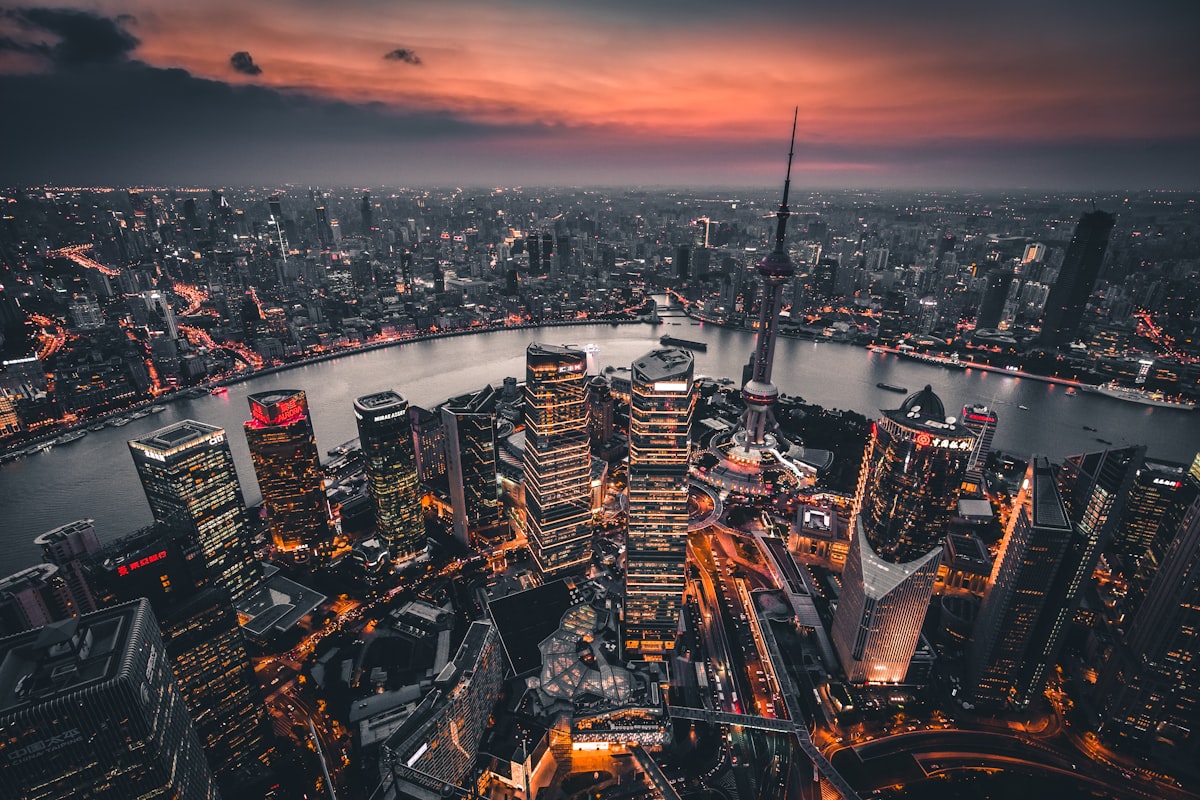
Shanghai is where 1930s Art Deco meets glass-and-steel supertalls. It's a city of contrasts — incense drifting from temples next to Michelin-starred restaurants, century-old lanes a block away from the world's second-tallest building. Four days gives you enough time to cover the highlights without rushing.
When to Go
Shanghai has hot, humid summers and cold winters. Shoulder seasons are significantly more comfortable for walking-heavy sightseeing:
| Season | Months | What to expect |
|---|---|---|
| Spring | March – May | Best season. Mild temps (15-25°C), cherry blossoms in parks, comfortable humidity. |
| Summer | June – August | Hot and humid (35°C+). Plum rain season in June. Air-conditioned malls become refuges. |
| Autumn | September – November | Second-best season. Clear skies, comfortable temperatures. Hairy crab season peaks in October. |
| Winter | December – February | Cold (0-8°C), grey, damp. Lowest prices and fewest tourists. Indoor attractions still worthwhile. |
Our recommendation: Late March to May or October to November. You get clear skies for Bund photos and comfortable temperatures for walking the French Concession. See our weather-smart travel planning guide for more on timing trips around weather.
How Many Days Do You Need?
Three to four days covers the core Shanghai experience. Here's what each range gets you:
- 2 days: The Bund, Yu Garden, and one neighborhood. Feels rushed.
- 3-4 days: The Bund, Pudong, French Concession, museums, and proper food exploration. The sweet spot.
- 5-6 days: Add day trips — Zhujiajiao water town (1 hour by bus), Suzhou gardens (30 min by bullet train), or Hangzhou's West Lake (1 hour by bullet train).
This guide covers a 4-day itinerary. You can generate a custom Shanghai itinerary based on your exact dates and budget.
Day-by-Day Highlights
Day 1: Arrival and Old City
Start in the historic core. Yu Garden is a Ming Dynasty classical garden — compact but beautiful, with rockeries, pavilions, and koi ponds. Entry is ¥40 ($5.50). Go early morning to avoid crowds.
Walk to the City God Temple bazaar next door for street food and souvenirs. It's touristy but atmospheric, and the xiaolongbao stalls here are decent.
Save the Bund for evening. The Pudong skyline lit up at night — Oriental Pearl Tower, Shanghai Tower, the bottle opener (Shanghai World Financial Center) — is one of the most recognizable city views on earth. Walk the full 1.5 km promenade along the Huangpu River.
Day 2: Pudong Skyline
Cross the river to Pudong. The Shanghai Tower observation deck (floor 118, 632 meters) offers the highest view in the city. Entry is ¥180 ($25). On a clear day you can see the entire metropolis.
The Oriental Pearl Tower is iconic but the observation deck is less impressive than Shanghai Tower's. Worth seeing from outside. The Shanghai Ocean Aquarium nearby is solid if you're traveling with kids.
Walk the Lujiazui elevated pedestrian bridge for street-level views of the towers. Lunch in the IFC Mall food court — surprisingly good and reasonably priced.
Day 3: French Concession
The French Concession is Shanghai's most walkable neighborhood. Tree-lined streets, 1920s European architecture, independent cafes, and boutique shops. No single "must-see" attraction — the point is to wander.
Tianzifang is a lane complex of art studios, cafes, and small shops inside a shikumen (stone-gate house) neighborhood. Visit in the morning before it gets packed. Afternoon: explore Fuxing Road, Wukang Road, and the leafy side streets.
Evening: the French Concession has Shanghai's best cocktail bars and restaurant scene. Yongkang Road and the streets around Ferguson Lane have plenty of options from Sichuan hotpot to craft cocktails.
Day 4: Culture, Shopping, Departure
Start at the Shanghai Museum on People's Square — free entry, world-class collection of Chinese bronzes, ceramics, and calligraphy. Allow 2-3 hours.
Walk up Nanjing Road — China's most famous shopping street. The pedestrian section stretches 1.5 km. It's crowded and commercial, but worth seeing once. For better shopping, head to Nanjing West Road or Jing'an Temple area.
If your flight is evening, there's time for the Jing'an Temple (¥50/$7) or the Propaganda Poster Art Centre — a quirky basement museum of Mao-era propaganda art.
Budget Breakdown
Shanghai is affordable compared to most global cities of its size. Here's what to expect per person per day:
| Category | Budget ($60-80/day) | Mid-range ($100-150/day) | Luxury ($250+/day) |
|---|---|---|---|
| Sleep | Hostel dorm ¥50-100 ($7-14) | 3-star hotel ¥300-500 ($42-70) | 5-star hotel ¥1,500+ ($210+) |
| Eat | Street food + noodle shops ¥60-100 ($8-14) | Sit-down restaurants ¥150-250 ($21-35) | Fine dining ¥500+ ($70+) |
| Transport | Metro only ¥15-30 ($2-4) | Metro + occasional taxi ¥50-80 ($7-11) | Private car/taxi ¥200+ ($28+) |
| Activities | Free parks, walking, Bund ¥0-50 ($0-7) | 1-2 paid attractions ¥100-200 ($14-28) | VIP experiences, private tours ¥500+ ($70+) |
4-day total: Budget $250-320, Mid-range $400-600, Luxury $1,000+. Add flights and you're looking at $600-1,000 total for a mid-range 4-day trip from most Asian cities.
Getting Around Shanghai
The Shanghai Metro is the best way to get around. It's cheap (¥3-9 per ride), clean, air-conditioned, and covers the entire city with 20+ lines. Signs and announcements are in English and Chinese.
From the airport: Pudong International Airport connects to the city via the Maglev train — 8 minutes to Longyang Road station at 430 km/h (¥50/$7). From there, transfer to the metro. A taxi from Pudong to central Shanghai costs ¥150-200 ($21-28) and takes 45-60 minutes. Hongqiao Airport is directly on the metro (Line 2, 10).
Taxis are cheap (¥14 base fare, about ¥30-50 for most trips within the city) but drivers rarely speak English. Have your destination written in Chinese characters — your hotel can help, or use a translation app.
Payment: Cash is increasingly difficult to use in Shanghai. Most vendors only accept Alipay or WeChat Pay. Set up Alipay before you arrive — it now supports international credit cards. This is not optional; many places genuinely cannot process cash.
Food Guide
Shanghai's food scene ranges from ¥10 street snacks to world-class fine dining. The local Shanghainese cuisine (benbangcai) is sweeter and more oil-based than other Chinese regional styles.
Must-try dishes:
- Xiaolongbao (soup dumplings): The signature dish. Thin wrapper, pork filling, hot broth inside. Bite a small hole, sip the soup, then eat. Din Tai Fung is reliable; Jia Jia Tang Bao on Huanghe Road is the local favorite.
- Shengjianbao (pan-fried buns): Like xiaolongbao's crispy cousin. Yang's Fried Dumplings (Xiao Yang Sheng Jian) has locations everywhere.
- Red-braised pork (hong shao rou): Sweet, sticky, melt-in-your-mouth pork belly. A Shanghai comfort food staple.
- Scallion oil noodles (cong you ban mian): Simple, cheap, perfect. Available at most neighborhood noodle shops for ¥10-15 ($1.50-2).
- Hairy crab (da zha xie): Seasonal delicacy, September-November. Steamed and eaten with vinegar-ginger dipping sauce. Best at Wang Bao He restaurant.
Where to eat: Yunnan Road (south of People's Square) for cheap local food. City God Temple for street snacks. French Concession for international options. Pudong IFC Mall for convenient mid-range meals between sightseeing.
What to Book Ahead vs. Skip
Book ahead:
- Shanghai Tower observation deck — long queues without pre-booked tickets, especially weekends
- Hotel in French Concession — the best boutique hotels sell out during autumn and spring peak
- Maglev + metro combo ticket — saves time at Pudong Airport arrival
- Visa or transit exemption verification — check 144-hour transit visa requirements well in advance
Skip booking:
- Most restaurants (walk-in culture, even popular ones have fast turnover)
- Yu Garden (buy tickets at the gate, queues move quickly)
- Metro cards (buy at any station in minutes)
- Day trips to Suzhou/Zhujiajiao (frequent trains and buses, no reservation needed)
Common Mistakes
Not setting up mobile payment before arrival. Alipay and WeChat Pay dominate Shanghai. Many small restaurants, shops, and even some taxis don't accept cash or international cards. Set up Alipay's international option before your trip.
Spending a full day in Pudong. The skyline is best viewed from the Bund, not from within it. Pudong is impressive for the observation deck and the river walk, but it's a business district — half a day is plenty unless you're visiting museums.
Visiting Yu Garden at midday. It's a small garden that gets extremely crowded. Go when it opens (8:30 AM) or skip to the bazaar area outside, which is open and free.
Ignoring the French Concession for "bigger" attractions. The tree-lined streets and cafe culture are what make Shanghai different from other Chinese megacities. Budget at least half a day for wandering — it's not about checking boxes.
Plan Your Shanghai Trip
Ready to build a detailed day-by-day plan? Generate a custom Shanghai itinerary with your dates, budget, and travel style. Or check out our curated 4-day Shanghai itinerary for a ready-made plan with maps, costs, and restaurant picks.
More Destination Guides
- Guilin & Yangshuo Travel Guide — Li River, rice terraces, and karst mountains
- How to Plan a Trip to Japan — Tokyo, Kyoto, Osaka, and the JR Pass
- 3 Days in Tokyo — day-by-day plan with budget and neighborhood tips
Written by
Mango
Photos from Wikimedia Commons, used under Creative Commons licenses
Popular Itineraries
Hand-crafted day-by-day travel plans
Japan
7-day itinerary
Tokyo, Kyoto & Osaka
Paris
5-day itinerary
Perfect for couples
Bali
7-day itinerary
Temples, rice fields & beaches
Italy
10-day itinerary
The Italian grand tour
Want More Travel Tips?
Browse our collection of travel guides, tips, and inspiration for your next adventure.